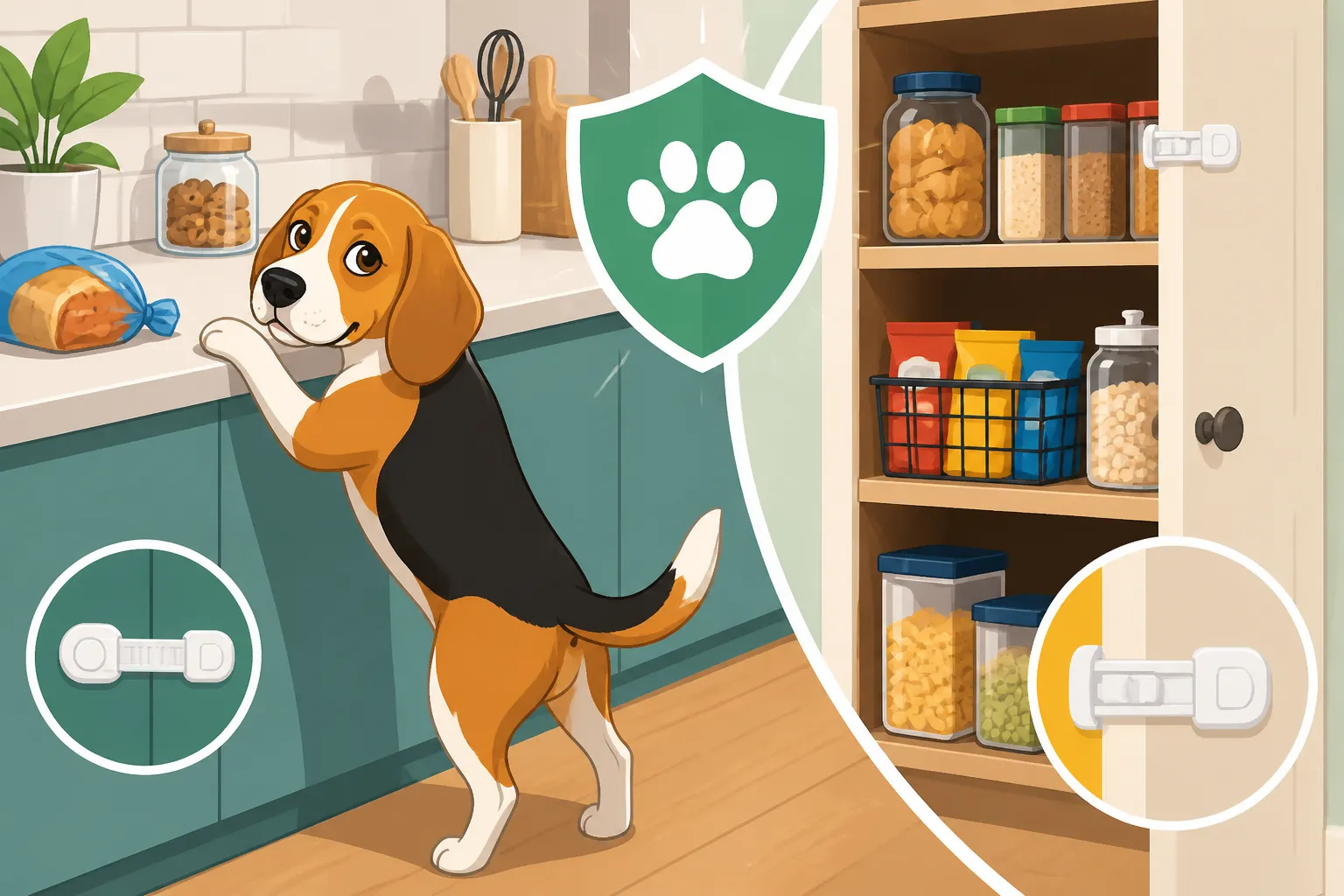
Beagle-Proofing the Kitchen and the Pantry
Ah, the Beagle kitchen raid. It's a tale as old as time for those of us who share our homes with these incredibly intelligent, scent-driven, and perpetually hungry hounds. You step away for just a moment, turn your back to grab a forgotten ingredient, or simply leave the room for two minutes, and poof – the unattended sandwich, the freshly baked cookies cooling on the counter, or even the entire trash can has become fair game. This guide is all about tackling that universal Beagle challenge: how to truly secure your kitchen and pantry against their cunning noses and relentless determination, preventing both frustration and potential veterinary emergencies.
Understanding the Beagle's Food Drive and Motivation
Before we can even begin to "Beagle-proof," we have to understand why they do what they do. It's not out of spite, dear friends, nor is it a sign of a poorly behaved dog, necessarily. It's deeply ingrained in their very being, a blend of centuries of selective breeding and primal instinct that makes them incredibly efficient food-seeking missiles.
The Unbeatable Beagle Nose and Its Call to Adventure
Let's face it, your Beagle's nose isn't just a nose; it's a super-powered sensory organ designed for one primary purpose: finding things. And what's the most exciting "thing" in their world? Food! They have around 220 million scent receptors, compared to our mere 5 million, and their olfactory bulb is significantly larger. This isn't just trivia; it means they perceive the world through smell in a way we can barely comprehend. That leftover crumb from your toast? To them, it's a booming siren song of deliciousness. The faint aroma of chicken wafting from a closed oven? It's a full-on concert.
When your Beagle sniffs out something enticing on the counter or tucked away in the pantry, it's not a casual interest. It's a powerful, almost irresistible, urge to follow that scent to its source. Their brains are hardwired to process and track these smells with incredible precision. You might think a plastic container is sealed, but your Beagle can still detect the ghost of last night's dinner. This makes "out of sight, out of mind" a fallacy for a Beagle. They know it's there, and their incredible sense of smell gives them a constant, tantalizing reminder. It’s part of Why a Beagle Walks With Its Nose to the Ground and why every walk is an olfactory adventure.
The Instinct to Scavenge and Satisfy Hunger
Beagles were originally bred as hunting dogs, specifically to track rabbits and hares. This job required them to be tenacious, independent problem-solvers, and always, always driven by their nose. When they found their quarry, they were rewarded. This instinct has translated into a modern household scenario where any discovery of food, whether on the counter, in the trash, or a forgotten lunch bag, is its own reward. They are, by nature, scavengers, always on the lookout for an opportunistic meal.
This isn't just about being "hungry" in the typical sense; it's about their fundamental nature. A Beagle's metabolism is often quite efficient, and they can genuinely feel a constant urge to eat, leading to a tendency towards obesity if not managed carefully. Every perceived food opportunity is a chance to fulfill that deep-seated instinct. They're not being "bad"; they're being Beagles! It’s also why The Beagle Food Drive That Empties Your Counters is a common frustration, and why owners often ask Whether a Beagle Can Ever Be Too Thin. They often maintain an athletic build only through careful portion control and consistent exercise.
Strategies for Securing Your Kitchen Counters and Surfaces
Knowing why they do it helps us approach the problem with empathy, but action is still required. The kitchen counter is often the first line of defense, and it's where many Beagle owners face their biggest challenges.
Clear Countertops and the "Nothing on the Edge" Rule
This is the golden rule, the absolute foundation of Beagle-proofing. If it's not there, they can't get it. Sounds simple, right? It's harder than it seems. We all get complacent. We leave a plate cooling for "just a minute," or set our coffee cup down while we answer the door. These are the moments a Beagle lives for.
- Zero Tolerance Policy: Adopt a strict "nothing on the edge, or even the middle, of the counter" policy. This means putting away groceries immediately, clearing dishes directly into the sink (or dishwasher), and placing all food items securely in the fridge or cabinets the moment they're not actively being used. Think like a Beagle – if you can smell it, they can definitely smell it.
- Elevated Storage: For items you use frequently but don't want to put away every time, consider truly elevated storage. Wall-mounted shelves that are genuinely out of reach (not just a high counter) can be a good option for fruit bowls or spice racks. Even small appliances, if they're not in use, should be unplugged and stored or pushed far back against the wall, as some enterprising Beagles might attempt to use them as stepping stones.
- The Power of Habit: Consistency is key. Every family member needs to be on board with this rule. A single lapse can reinforce the behavior for your Beagle. Imagine you've been diligently clearing the counters for weeks, then one afternoon, someone leaves a piece of toast out. Your Beagle snatches it, and suddenly, all that training is undermined, because they just hit the jackpot! This can be particularly frustrating when you're managing Beagle Obesity and the Diseases It Brings On and trying to control every calorie.
Physical Barriers and Deterrents
Sometimes, despite our best efforts, we need a little extra help. Physical barriers or mild deterrents can be useful in specific situations, especially if you have a particularly persistent counter-surfer.
- Baby Gates or Exercise Pens: These aren't just for puppies! If your kitchen allows for it, a baby gate across the doorway can physically block access to the kitchen when you can't supervise directly. An exercise pen (often called an X-pen) can also be used to create a "safe zone" for your Beagle just outside the kitchen, where they can still see and hear you, but can't reach tempting surfaces. This is a great management tool during meal prep or when guests are over and distractions are high.
- Motion-Activated Alarms or Sprays (Use with Caution): Some owners have tried motion-activated devices that emit a loud, startling sound or a puff of air when triggered. The idea is to create a negative association with jumping on the counter. However, these must be used with extreme caution and never in a way that causes fear or anxiety in your Beagle. The goal is to interrupt the behavior, not to punish the dog. Ensure the deterrent is always linked to the act of jumping on the counter, not to you or their presence in the kitchen. Many Beagles are too smart and will quickly learn that the deterrent is only active when you're not around. For the adventurous Beagle, a better strategy is often Impulse Control Exercises That Suit a Beagle.
- Placing "Unpleasant" Items on the Edge: A classic trick for counter-surfing is to place something harmless but unpleasant right at the edge of the counter where the dog jumps up. Think aluminum foil (the crinkling sound can be startling) or a cookie sheet with a few pennies that will clatter. Again, the timing is crucial: the dog needs to associate the unpleasantness with the act of jumping, not with you.
Managing Meal Prep and Post-Meal Cleanup
These are peak danger times for a Beagle. The smells are intense, and there's a lot of activity, often with food items temporarily out of their usual secure spots.
- Crate or Pen During Prep: For the safety of your Beagle (and your sanity), consider having them in their crate or a secure ex-pen during active meal preparation. This prevents them from snatching raw ingredients (some of which can be toxic, like onions or garlic – see The Foods That Are Toxic to a Beagle), or getting underfoot when you're handling hot pans or sharp knives. You can give them a safe chew or a puzzle toy to keep them happily occupied.
- Immediate Cleanup: As soon as a meal is over, or even mid-prep, clean as you go. Scrape plates directly into the trash, wipe down counters, and put away leftovers in secure containers. Don't let dirty dishes sit on the counter. A quick wipe-down with a scented cleaner can also help remove residual food odors that might tempt your Beagle.
- Secure Dishwasher/Sink Access: If your Beagle is particularly keen, they might even try to "pre-wash" dishes in the sink or dishwasher. Keep the dishwasher closed securely and ensure the sink is clear or has a strainer in place to prevent them from getting at food scraps.
Fortifying Your Pantry and Cabinets Against a Determined Beagle
So, you've mastered the counter. What about the pantry? Oh, the pantry – a Beagle's treasure trove of hidden delights. They'll use their nose, their paws, and sometimes even their entire body weight to access what they believe is rightfully theirs.
Locks, Latches, and Child-Proofing for Your Cabinets
Regular cabinet latches are often no match for a motivated Beagle. They learn quickly how to nudge, paw, or even chew at weak points.
- Child-Proof Locks: These are your best friend! The magnetic or spring-loaded child-proof locks that require a specific action to open (like pressing a button or using a magnetic key) are often very effective. There are various styles available, from hidden magnetic locks that install inside the cabinet to external strap locks. Brands you find on sites like Amazon offer a wide variety, from simple adhesive straps to more robust drilling options. For a truly determined Beagle, the internal, magnetic types are often the most secure.
- Sliding Door Locks: For pantry doors or sliding cabinets, invest in specific sliding door locks. These typically involve a simple mechanism that prevents the doors from sliding past each other.
- Heavy-Duty Latches: If you have traditional cabinet doors, consider adding a sturdy hook-and-eye latch or a barrel bolt to the lower cabinets where food is stored. Yes, it might feel a little excessive, but when you're dealing with a Beagle who can smell a bag of treats through solid wood, it's necessary.
- Door Knob Covers: If your pantry has a standard doorknob, a child-proof doorknob cover can prevent a Beagle from turning the handle and letting themselves in. Some Beagles are quite adept at manipulating knobs!
| Security Measure | Description | Beagle-Proofing Grade | Notes |
|---|---|---|---|
| Clear Counters | No food left unattended on surfaces. | A+ | Requires strict human consistency. |
| Baby Gates | Physical barrier at kitchen entry. | A | Effective when supervision is not possible. |
| Magnetic Cabinet Locks | Installed inside, requires magnetic key to open. | A+ | Hidden, secure, great for persistent Beagles. |
| Strap/Adhesive Locks | External straps that secure cabinet/appliance doors. | B+ | Easier to install, but visible; some Beagles can chew through weak ones. |
| Door Knob Covers | Prevents rotation of doorknobs. | B | Only works for Beagles that open doors by turning knobs. |
| Heavy-Duty Latches | Manual hook-and-eye or barrel bolt for cabinets. | A | Very secure, but less convenient for daily access. |
| Secure Trash Can | Locking lid, heavy base, pedal-operated. | A+ | Essential for preventing dangerous foraging. |
| Motion-Activated Sprays | Emits air when triggered by counter-jumping. | C | Can be effective for some, but use with caution; easily circumvented. |
Smart Storage Solutions and Elevated Pantries
Beyond locking mechanisms, where you store food within your pantry matters.
- Upper Shelves for Tempting Treats: Any food item that is particularly appealing, or particularly dangerous, should be stored on the highest shelves, well out of reach. This includes dog treats, human snacks, chocolate, xylitol-containing products, and any medication. Think of it this way: if your Beagle somehow gets past the locks, you want the least harmful items to be the most accessible.
- Airtight Containers: Even if a bag of kibble or a box of crackers is on a high shelf, your Beagle's nose can still detect it. Invest in sturdy, airtight containers made of metal, thick plastic, or glass. Not only do these keep food fresh, but they also mask odors, making the contents less tempting to a sniffing Beagle. Brands like Chewy and Amazon offer many types of dog food storage containers that are specifically designed to be airtight and difficult for pets to open. Some pet food brands, like Ollie, even come in their own robust, sealed packaging, which is a good start.
- No Floor Storage: Never store open bags of food, kibble, or even sealed containers of treats directly on the floor of the pantry or any low shelf. This is an open invitation for a Beagle to investigate. Everything should be elevated.
Securing the Trash Can and Recycling
The trash can is often a treasure trove for a Beagle, offering a smorgasbord of forbidden delights and potentially toxic hazards. This is one of the most important areas to secure.
- Locking Lid Trash Cans: Forget open bins or simple swing-top lids. You need a trash can with a secure, locking lid mechanism. Many companies design these specifically to be pet-proof. Look for pedal-operated cans where the lid actually latches shut, or ones with a manual locking feature. The heavier the base, the better, as a lightweight can is easily tipped over and raided.
- Under-Sink or Cabinet Placement: If your kitchen allows for it, tucking the trash can inside a secured cabinet (again, with child-proof locks) is an excellent layer of protection. This completely removes the visual and physical access.
- Immediate Disposal of Hazardous Items: Don't let empty containers of toxic foods (like chocolate wrappers or avocado pits) linger in an unsecured bin. Take these directly out to your outdoor garbage bin immediately. Also, think about cooked bones, corn cobs, or anything else that could cause a blockage or splintering – A Beagle Vomiting After Eating Something Outside can be a serious emergency.
- Recycling Bins: Don't forget the recycling! Empty yogurt containers, soda cans, and even cardboard can be interesting to a Beagle and pose choking hazards. Secure recycling bins just as diligently as your trash.
Training and Management to Reinforce Good Behavior
Physical barriers are crucial, but training provides long-term solutions and strengthens your bond with your Beagle. It's about teaching them what to do, rather than just preventing what they shouldn't.
"Leave It" and "Drop It" as Essential Life Skills
These two commands are not just tricks; they are vital life-saving skills for any Beagle owner. Given their intense food drive and tendency to scavenge, mastering "Leave It" and "Drop It" can prevent ingestion of toxic items and reinforce appropriate behavior around food.
- "Leave It": Start practicing "Leave It" in a low-distraction environment with low-value treats. Place a treat on the floor, cover it with your hand, and say "Leave It." Reward them when they look away from the treat and at you. Gradually increase the value of the treat and the level of distraction. Eventually, you want them to be able to "Leave It" when something tempting is on the counter, on the floor, or out on a walk. This takes consistent, patient repetition. Learning Beagle Leave It Training With Real Food Down is critical to making it stick.
- "Drop It": "Drop It" is for when your Beagle already has something in their mouth. Practice by offering a higher-value treat in exchange for something they have. For example, if they have a toy, say "Drop It," present a tasty treat, and as they release the toy to take the treat, praise them. Make the "Drop It" exchange always positive, ensuring they associate releasing an item with getting something even better. This is key to Teaching Drop It Before a Beagle Swallows something dangerous.
Providing Appropriate Outlets for Their Food Drive
You can't eliminate a Beagle's food drive, but you can redirect it. Give them acceptable, enriching ways to use their nose and satisfy their hunger without raiding your pantry.
- Puzzle Feeders and Snuffle Mats: Instead of just putting their kibble in a bowl, make them work for it! Puzzle feeders require manipulation to release food, engaging their minds and keeping them occupied. Snuffle mats allow them to use their nose to sniff out scattered kibble. This slows down their eating (reducing gulping and choking risks – a topic often discussed, see Beagle Gulping Food and the Choking Risk) and provides mental stimulation. Many varieties are available on Chewy or Amazon.
- Scent Games: Turn mealtime or treat time into a game. Hide small portions of their kibble around a room (starting with easy spots) and let them "hunt" for it. This harnesses their natural scenting abilities in a constructive way. You can even take this outside into a safe, fenced yard. It's an excellent way to provide mental enrichment and can be as tiring as a physical walk. Scent Work as the Job a Beagle Was Built For is a fantastic activity for this breed.
- Appropriate Chews: Provide long-lasting, safe chews that can occupy them when you're busy in the kitchen. Always supervise with new chews to ensure they are safe and not a choking hazard.
Managing Opportunity and Supervision
Ultimately, vigilance and proactive management are your greatest tools. An ounce of prevention is worth a pound of cure, especially with a Beagle's tendency to get into things that can lead to expensive vet bills for Surgery After a Beagle Swallows Something Outside.
- "Tethering" in the Kitchen: If you're cooking and your Beagle just can't resist being underfoot, consider tethering them to a piece of furniture a safe distance away from the counters and stove. This allows them to be with you but prevents them from being a hazard.
- Designated "Kitchen Off-Limits" Time: Establish clear times when the kitchen is a no-go zone for your Beagle, such as during active cooking, during family meals, or when the counters are cooling after baking. Use a consistent cue like "kitchen off-limits" and direct them to their bed or crate with a high-value chew.
- Supervised Access: When your Beagle is in the kitchen, they should always be under direct supervision. Don't assume they won't try something new or exploit a momentary lapse in your diligence. Remember, they are always learning, and one successful counter-surf can undo weeks of good habits.
Beagle-proofing your kitchen and pantry might feel like an ongoing battle of wits, but with a combination of physical barriers, smart storage, and consistent training, you can create a safe environment for your beloved hound and peace of mind for yourself.
Disclaimer
This article is for general informational purposes only and does not constitute professional advice. Laws, prices and regulations vary by location and change over time. Consult a qualified professional for guidance on your specific situation.