Beagle Leave It Training With Real Food Down
Oh, that Beagle nose! It's a marvel, truly, with its incredible ability to pick up even the faintest of scents, but for us owners, that same superpower can lead to frantic lunges for dropped food, forgotten picnic scraps, or even questionable treasures on the sidewalk. The struggle is real when your beloved hound turns into a vacuum cleaner, and many of us have faced that heart-stopping moment when they're about to swallow something they absolutely shouldn't. This guide is all about mastering the vital "Leave It" command, teaching your Beagle to politely ignore those irresistible temptations, whether it's a dropped treat indoors or a mystery item on your evening walk, helping to keep them safe and your household a little more peaceful.
The Critical Importance of "Leave It" for Your Beagle
For a Beagle owner, the "Leave It" command isn't just a party trick; it's an essential life skill that can genuinely prevent emergencies. Beagles were quite literally bred to follow their noses, and that intense scent drive means they are powerfully drawn to investigate, and often ingest, anything that smells remotely interesting. Their world is a buffet of scents, and their natural inclination is to sample everything they find. This inherent trait, while charming in its dedication, can be incredibly dangerous in a modern home or urban environment.
Imagine for a moment you drop a piece of dark chocolate, a grape, or even a medication tablet on the kitchen floor. A split second is all it takes for a Beagle to vacuum it up. Without a rock-solid "Leave It" command, you're left scrambling, trying to physically intervene, which often results in your Beagle swallowing the item even faster to prevent you from taking it. This isn't just about preventing them from eating your dinner; it's about protecting them from toxic substances, choking hazards, or even dangerous foreign objects they might pick up on a walk. Teaching your Beagle to disengage from tempting items on command is one of the most powerful tools you can have for their safety and your peace of mind. Without this control, every walk becomes a minefield of potential dangers, and your home becomes a constant game of "what did the Beagle just sniff out?" You'll soon discover just how quickly a Beagle can get into trouble when Beagle Scavenging on Every Walk.
Building the Foundation: Indoor "Leave It" Mastery
Teaching "Leave It" effectively means starting in a controlled, low-distraction environment and gradually increasing the challenge. Think of it like building a house: you need a strong foundation before you can add the fancy trimmings. For a Beagle, with their intense focus on food, this foundation needs to be particularly robust.
Starting Simple with Non-Tempting Items
Begin your "Leave It" training indoors, in a quiet room with minimal distractions. You'll want a handful of low-value, boring treats—your Beagle's regular kibble works perfectly for this—and a few high-value treats that your Beagle absolutely adores for rewards.
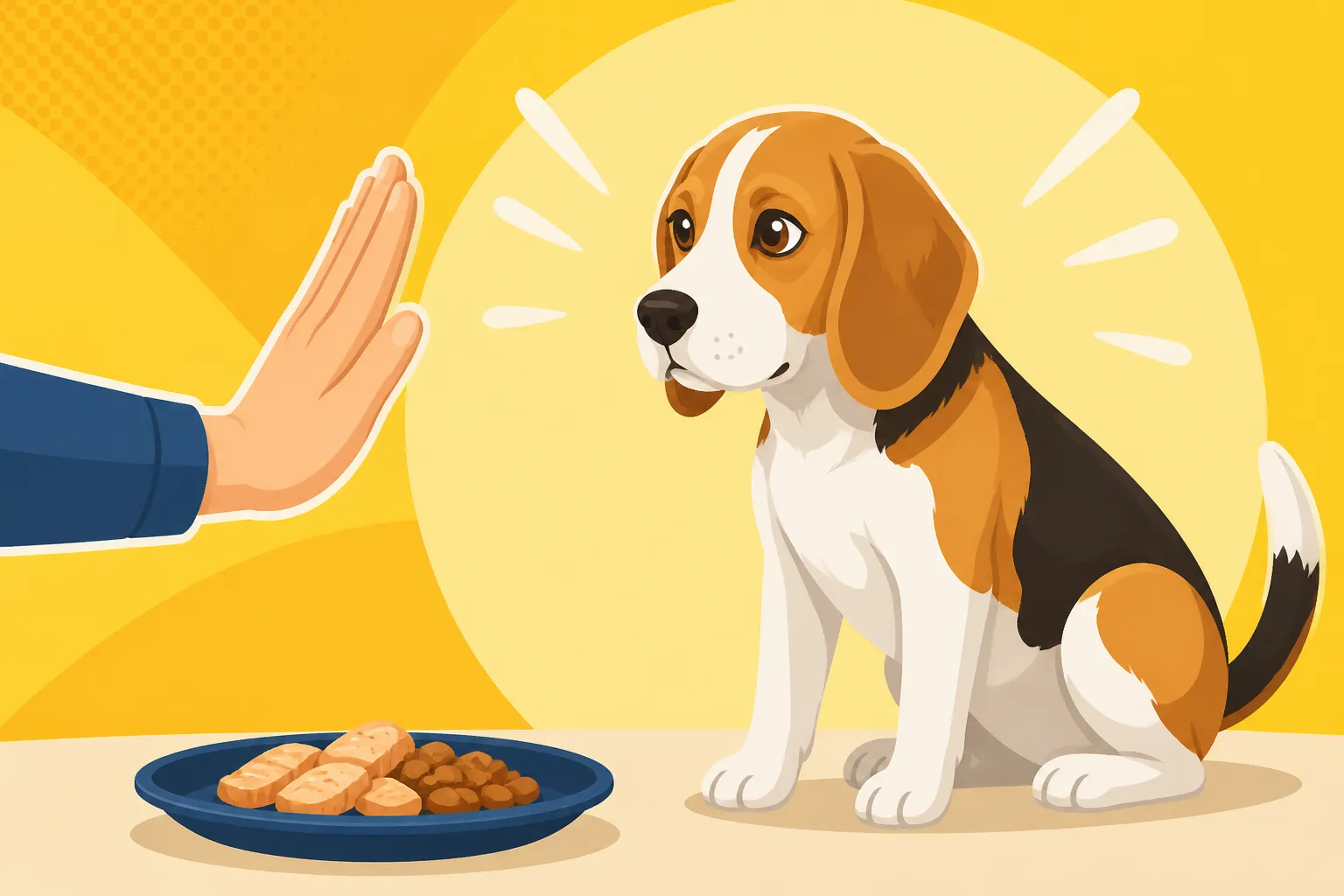
Start by holding a piece of your Beagle's kibble in a loose fist. Let your Beagle sniff your hand. The moment they disengage and look away from your fist, even for a second, open your hand and give them a high-value treat from your other hand, praising them calmly with a "yes!" or "good!" Repeat this several times until they consistently look away from your closed fist. Next, place the kibble on the floor and immediately cover it with your hand. When your Beagle tries to get to it, keep your hand covering it. The second they back away or look up at you, mark the behavior ("yes!") and reward them with a high-value treat from your clean, empty hand, away from the covered kibble. Gradually increase the time your hand is covering the kibble before they look away. The key here is not to let them get the item under your hand, ever. This teaches them that the way to get a reward is by not getting the tempting item.
Upping the Ante with Tempting Treats
Once your Beagle understands that ignoring the covered item brings a better reward, it's time to introduce higher-value temptations, but still keep them covered initially. Use a small, irresistible treat, something really delicious.
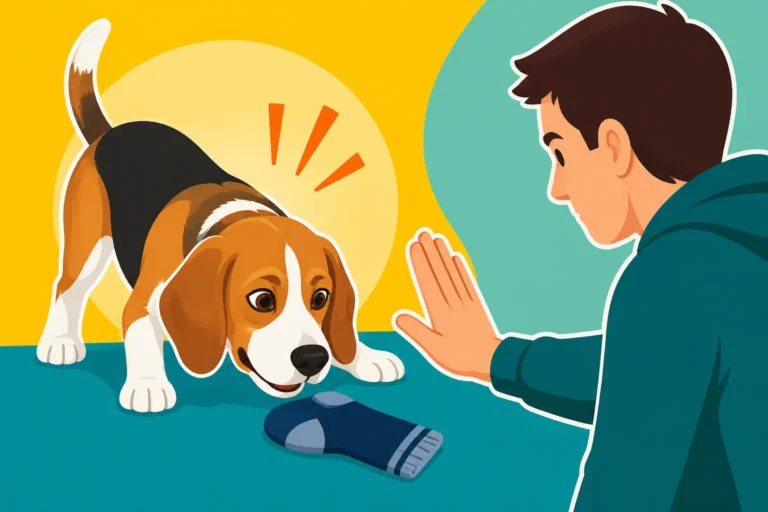
Place the tempting treat on the floor and cover it with your hand. When your Beagle tries to nudge, lick, or paw at your hand, just keep it covered. The moment they pull back, even slightly, or shift their gaze towards you, say "Leave It!" in a calm, clear voice, then immediately reward them with a super high-value treat from your other hand. The verbal cue "Leave It" is introduced right before they make the choice to disengage, helping them associate the words with the action of ignoring. Slowly increase the time your hand is over the treat before you give the "Leave It" command and reward. The goal is for them to hear "Leave It" and immediately know that ignoring the item on the floor will lead to a better, guaranteed reward from you. This practice also strengthens their impulse control, a skill that is invaluable for Beagles who often Beagle Gulping Food and the Choking Risk due to their enthusiastic eating habits.
The Uncovered Treat Challenge
This is where the real magic begins, and it requires patience. With your Beagle on a leash (even indoors, for initial control), place a low-value treat on the floor, about a foot away. Say "Leave It!" If your Beagle moves toward it, gently step on the leash or physically block them from getting it. The second they look at you, even briefly, praise them and reward them with a high-value treat from your hand.
Gradually, as your Beagle starts to understand, you can let go of the leash (but keep it nearby for quick intervention). Place the low-value treat down, say "Leave It!" and wait. If they walk past it without sniffing or trying to eat it, reward them lavishly! Slowly increase the duration they have to "Leave It," the distance from the treat, and the value of the treat itself. You can find a wide array of excellent training treats, from soft and chewy to crunchy, that your Beagle will go wild for on Amazon. Remember, the reward for "leaving it" must always be more appealing than the item they are leaving. This crucial step is about teaching them self-control around desirable items, a skill that needs constant reinforcement and patience.
| Training Stage | Item Value | Distraction Level | Method | Reward |
|---|---|---|---|---|
| Foundation | Low (Kibble) | None | Hand over treat, reward for looking away | High-value treat |
| Verbal Cue | Medium | Low | Hand over treat, "Leave It" when disengaging | High-value treat |
| Uncovered & Distant | Low to Medium | Low | Treat on floor, "Leave It", block if needed | High-value treat |
| Duration & Distance | Medium to High | Medium | Treat on floor, "Leave It", wait longer | Super high-value treat |
| Real World | High | High | Varied objects, environments | Super high-value treat |
Taking "Leave It" to the Real World: Proofing and Generalization
Once your Beagle is consistently performing "Leave It" indoors, it's time to test their skills in increasingly distracting and realistic environments. This process, known as "proofing," is vital because a command learned in your living room doesn't always transfer to a bustling park.
Introducing More Distractions Gradually
Start by adding controlled distractions within your home. Have a family member walk by the "Leave It" item, or drop a toy nearby. Practice in different rooms, then move to your fenced backyard. The key is to introduce one new distraction at a time and only progress when your Beagle is successful at the current level. If they fail, go back a step or two and build up again.
Once they're reliable in your yard, try a quiet park or a sidewalk with minimal foot traffic. Keep your Beagle on a leash and use a long line for extra safety, especially if you're working near roads. Amazon offers a great selection of long lines that give your Beagle freedom to sniff while still keeping them safely connected to you. Drop various safe, but tempting, items like leaves, sticks, or even a piece of plain bread (if safe for your dog). As they approach, say "Leave It!" and reward them for ignoring it. Remember that Sniffing Walks and Why They Tire a Beagle Out are essential, but also present many opportunities for this vital training.
Outdoor Scenarios and Unexpected Temptations
This is where "Leave It" truly earns its stripes. On walks, your Beagle will encounter countless tempting items: discarded food, dead leaves, trash, and who knows what else. When you spot something ahead, say "Leave It!" proactively before your Beagle even gets a chance to focus on it. If they start to lunge, a quick, gentle tug on the leash combined with the verbal cue should redirect their attention back to you, at which point you reward them.
Practice in different locations – busy streets, quiet trails, pet-friendly stores. The more varied the environments, the better your Beagle will generalize the command. This isn't just about food either; "Leave It" can apply to anything you don't want your Beagle to interact with, from another dog's discarded toy to a patch of potentially irritating plants. Consistency is paramount here. Every time you see something your Beagle shouldn't touch, it's an opportunity to reinforce "Leave It." Training resources from platforms like BAXTER & Bella often include detailed guides and videos on proofing commands in real-world scenarios, which can be incredibly helpful for visual learners and those looking for structured programs.
"Leave It" for People and Other Dogs
The "Leave It" command can extend beyond just objects on the ground. You can use it to teach your Beagle to ignore things like other people's dropped items, or even to disengage from another dog that's getting too boisterous. If your Beagle tends to jump on guests, you can use "Leave It" to redirect their attention away from the person's hands or clothing.
Practice this by having a friend act as a "distraction." Ask your friend to walk by, perhaps holding a treat or even just their hand out. The moment your Beagle starts to focus on them in an undesirable way, give the "Leave It" command and reward them for turning back to you. This broadens the scope of the command and teaches your Beagle that "Leave It" means disengage from that thing and focus on me. This level of control is crucial for managing a Beagle's curiosity in a variety of social settings. When your Beagle is learning Impulse Control Exercises That Suit a Beagle, "Leave It" becomes a foundational skill that opens the door to so much more.
Overcoming the Beagle's Legendary Food Drive
Let's be honest: Beagles and food are a legendary combination. Their incredible sense of smell and their history as scent hounds mean they are hardwired to find and consume anything edible. This strong drive can make "Leave It" training particularly challenging, but it's not impossible.
Why Beagles Are So "Stubborn" About Food
It's easy to call a Beagle "stubborn" when they ignore your pleas and dive for that dropped crumb. But from their perspective, they're simply doing what they were bred to do: follow a scent trail to its delicious conclusion. Their "stubbornness" is actually intense focus and a deeply ingrained instinct. This isn't a malicious act; it's a testament to their powerful olfactory system. Understanding this helps you approach training with more empathy and strategic thinking, rather than frustration.
Instead of fighting against their nature, we leverage it. We make you the most rewarding part of the equation. The "Leave It" command works because you are offering something even better than what they are being asked to ignore. For a Beagle, the value of that "something better" often has to be very, very high. This is why The Treats a Beagle Will Work Hardest For are essential to effective "Leave It" training. Without truly motivating rewards, the siren song of that discarded chicken bone will always win out.
When "Leave It" Fails: Management is Key
Even with the best training, there will be times when your Beagle, distracted or overwhelmed, might still try to snatch something. This is where management comes in. Prevention is always better than intervention.
- In the Home: Keep counters clear and trash cans secured. Invest in sturdy, Beagle-proof bins. If you're cooking or eating, put your Beagle in their crate or behind a gate. For an especially curious hound, Beagle-Proofing a Kitchen Counter is an ongoing battle that requires vigilance.
- On Walks: Always keep your Beagle on a leash. A good quality harness can prevent them from pulling too hard if they do lunge. Be proactive: scan ahead for potential hazards and issue the "Leave It" command before they even register the item. If they manage to grab something, the "Drop It" command, trained separately but just as vital, can save the day. You can learn more about Teaching Drop It Before a Beagle Swallows for those emergency situations.
- Environment Control: Remember that Beagles are master excavators and climbers. Ensure your yard is securely fenced, perhaps even with a wire skirt buried along the bottom to prevent digging out. This helps prevent them from finding and eating unknown items that might be in your neighbor's yard or out in the wider world if they escape.
Consistency and Patience: The Beagle Way
Training a Beagle takes time, patience, and unwavering consistency. Every family member needs to be on board with using the "Leave It" command the same way, every time. A single lapse, where your Beagle successfully grabs something they "left," can undo days or weeks of progress.
Think of "Leave It" as a muscle that needs regular exercise. Practice it daily, even for just a few minutes, in various settings. Celebrate every success, no matter how small, and don't get discouraged by setbacks. A Beagle's learning curve might sometimes feel like a flat line, but they are incredibly smart and food-motivated. With persistence, you can teach your Beagle to respect boundaries and, most importantly, keep themselves safe from tempting dangers. It's a journey, not a destination, and a well-trained "Leave It" command will be a gift that keeps on giving for the entirety of your Beagle's happy, healthy life.
Disclaimer
This article is for general informational purposes only and does not constitute professional advice. Laws, prices and regulations vary by location and change over time. Consult a qualified professional for guidance on your specific situation.