A Beagle Vomiting After Eating Something Outside
There are few things more alarming than watching your beloved Beagle scarf down some mysterious object or dubious morsel on a walk, only to then come home and promptly throw up. That sudden, gut-wrenching sight of your dog retching, often followed by a puddle of vomit on your favorite rug, can send any Beagle owner into a spiral of worry and panic. This guide is here to walk you through exactly what to do when your curious hound ingests something questionable and ends up sick, helping you distinguish between a minor upset and a true emergency.
Why Your Beagle is a Walking Vacuum Cleaner
Let's be honest, Beagles are born scavengers. Their entire existence, from centuries ago to the modern-day, has been driven by their incredible noses and their powerful food drive. It’s not just a cute quirk; it’s deeply ingrained in their genetics and their very anatomy. Understanding this is the first step in managing their propensity for eating anything and everything they come across.
The Unparalleled Power of the Beagle Nose
Your Beagle's nose isn't just good; it's phenomenal. With an estimated 220 million scent receptors, compared to our measly 5 million, they live in a world of smells we can barely comprehend. When a Beagle puts its nose to the ground, it's not just sniffing; it's compiling a complex database of scents, a veritable "scent-scape" that tells them stories about everything that has passed through that spot. This is why a Beagle on a walk often appears utterly deaf to your calls once a compelling scent trail grabs them. For more on this incredible ability, you might find our article on Training a Beagle Around 220 Million Scent Receptors insightful.
This extraordinary olfactory ability means that even the tiniest crumb or the faintest whiff of something decaying or discarded will register. To a Beagle, that old chicken bone half-buried in the park, the dropped piece of pizza crust on the sidewalk, or even that clump of mystery grass by the curb isn't just "there"—it's screaming to be investigated, and often, consumed. Their breed history as scent hounds, designed to tirelessly follow game trails for miles, means they are hardwired to process and follow these scent cues above almost all else. This instinct can make walks a constant battle of wits and lead management.
The Beagle's Insatiable Appetite and Food Drive
Beyond the nose, there's the stomach. Beagles are notoriously food-motivated, and their drive to eat is legendary. This isn't necessarily a flaw; it's part of what makes them so trainable and eager to please when food is involved. However, this same drive often translates into a lack of discretion when it comes to what they decide is "food." To a Beagle, almost anything that smells vaguely edible is edible, or at least worth a taste. This can be anything from discarded fast food wrappers to toxic mushrooms, or even non-food items like socks or small toys if they carry an interesting scent.
Their quick eating habits, often described as "inhaling" food, also mean they don't always chew thoroughly or consider the consequences. They’re bred to compete for scraps in a pack environment, leading to a "eat it now, ask questions later" mentality. This drive is so powerful that many Beagle owners lament how their dogs seem to have a second stomach, or perhaps, no sense of "full." If you've ever had your counter-surfed or your trash raided, you know exactly what we mean. Our article on The Beagle Food Drive That Empties Your Counters delves deeper into this common Beagle behavior. This combination of an unparalleled nose and an unyielding appetite makes them particularly vulnerable to ingesting things outside that can make them sick.
Immediate Steps When Your Beagle Vomits After Eating Something Suspicious
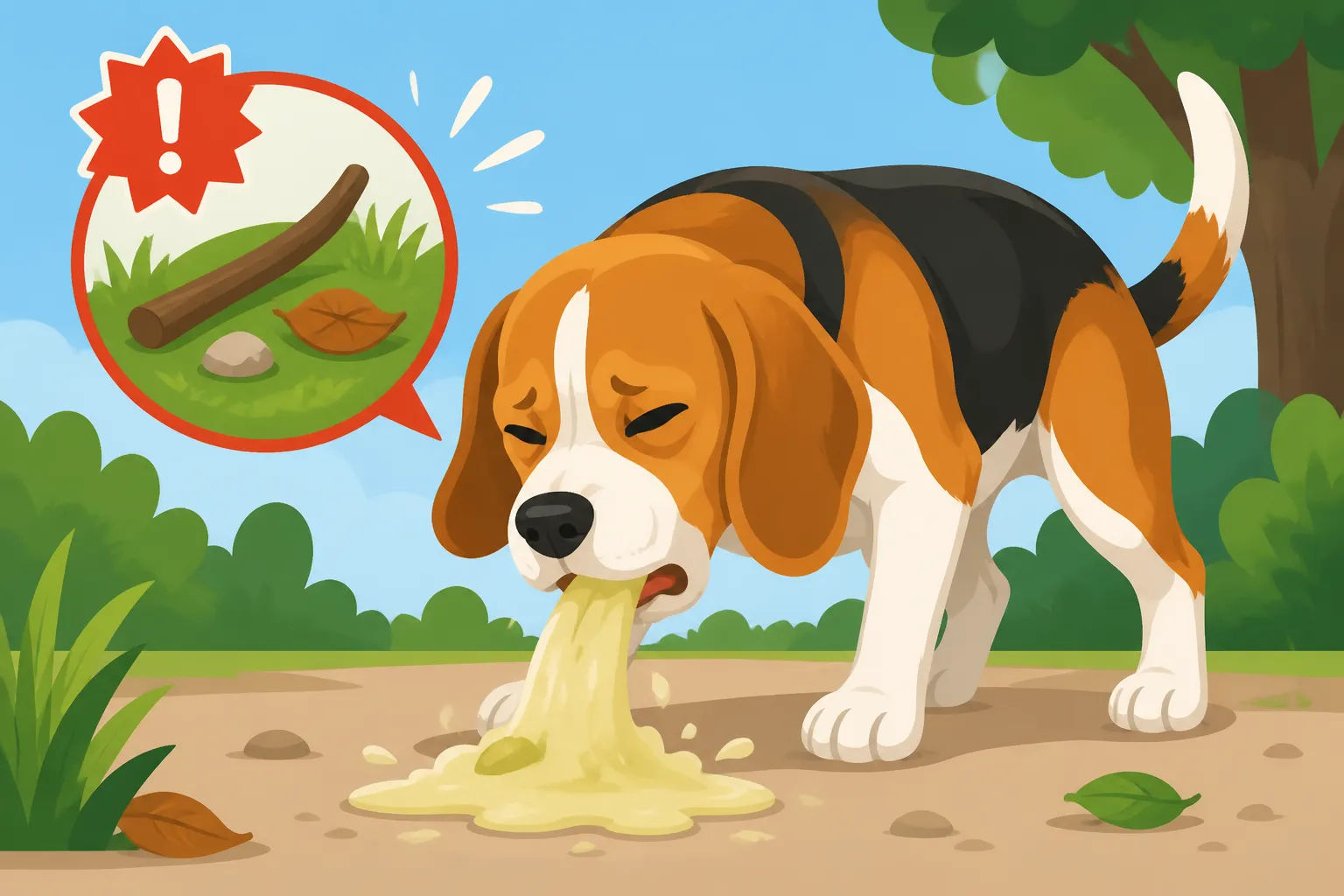
The moment your Beagle throws up after a suspicious outdoor snack, it’s natural to feel a surge of panic. But taking a few calm, immediate steps can provide crucial information to your vet and help ensure your dog's safety.
Don't Panic and Secure Your Dog
First and foremost, take a deep breath. While it’s terrifying to see your dog unwell, staying calm helps you think clearly and act effectively. Your immediate priority should be to prevent your Beagle from eating more of whatever made them sick, or from consuming their own vomit, which some dogs will do instinctively. Gently but firmly lead them away from the area, or if you’re still outside, secure them on a short leash. If you suspect they ingested something toxic, try to stop them from licking their paws or muzzle, as this can lead to further ingestion.
Once they are secure, give them a quiet space to settle. Further stress can exacerbate their nausea. You want them to be as comfortable and still as possible so you can monitor them without adding to their distress. Offer comfort, but avoid fussing excessively, as this can sometimes inadvertently reinforce anxious behaviors.
Assess the Vomit and Identify Potential Culprits
This might sound gross, but carefully examining your Beagle's vomit can provide invaluable clues. Take note of:
- Color and Consistency: Is it yellow bile, clear liquid, foamy, or does it contain food particles? Is there blood (which can appear bright red or dark, coffee-ground-like)?
- Contents: Can you identify any pieces of what they ate? Bones, plants, plastic, fabric, or any part of an animal carcass? Even small fragments can tell a story.
- Quantity and Frequency: Was it a single vomit, or are they vomiting repeatedly? Is it a small amount or a large puddle?
If you can, take a photo or even collect a sample (in a Ziploc bag) for your vet. It might feel extreme, but this visual evidence can be incredibly helpful for diagnosis. Next, try to retrace your steps. Where were you walking? What areas did your Beagle show particular interest in? Did you see them snatch something specific? Check your yard if that's where the incident occurred. Look for missing toys, chewed plants, opened trash cans, or anything unusual. Knowing what they might have ingested helps your vet narrow down possibilities, from a simple upset stomach to something far more serious like The Foods That Are Toxic to a Beagle or Garden Plants a Beagle Should Never Reach.
Observe Your Beagle for Further Symptoms
After the initial vomit, your job shifts to vigilant observation. Keep a close eye on your Beagle for any changes in their behavior or physical state. This includes:
- Continued Vomiting: How often? Is it getting worse or better?
- Diarrhea: Is it present? What does it look like?
- Lethargy or Weakness: Are they unusually tired, unresponsive, or struggling to stand?
- Abdominal Pain: Do they cry out when you touch their belly, or are they hunching over?
- Changes in Gums: Are their gums pale, white, blue, or excessively red? Healthy gums are typically pink and moist.
- Swelling: Any swelling around the face, neck, or paws?
- Tremors or Seizures: These are severe signs that require immediate intervention.
- Loss of Appetite/Thirst: Are they refusing food or water after the episode?
A single vomit, followed by a return to normal behavior, might just indicate a mild stomach upset, perhaps from eating something mildly irritating. However, any persistent or worsening symptoms are a red flag. Write down what you observe, including times and descriptions. This detailed account will be crucial when you speak to your veterinarian.
When to Call the Vet: Understanding Emergency Signs
While some episodes of vomiting might resolve on their own, there are critical times when you simply cannot wait. Recognizing the difference between a minor upset and a serious emergency is vital for your Beagle's health and can literally be the difference between life and death. When in doubt, it’s always better to err on the side of caution and contact your vet.
Specific Symptoms That Demand Immediate Veterinary Attention
You should call your veterinarian immediately if you observe any of the following symptoms after your Beagle vomits:
- Repeated or Projectile Vomiting: If your Beagle vomits multiple times in a short period (e.g., more than twice in an hour), or if the vomit is expelled with force.
- Attempts to Vomit Without Success: This is a classic sign of bloat (gastric dilatation-volvulus or GDV), especially in deep-chested breeds, which can be fatal. The dog may appear restless, pace, drool, or try to vomit without bringing anything up.
- Lethargy, Weakness, or Collapse: If your Beagle is unusually tired, unresponsive, can’t stand, or collapses.
- Severe Abdominal Pain: Whining, crying, hunching, resisting touch around the belly.
- Blood in Vomit or Stool: Bright red blood or dark, coffee-ground-like vomit/stools. This indicates bleeding somewhere in the digestive tract.
- Pale Gums: Gums that are white, blue, or very pale pink can signal shock, internal bleeding, or severe dehydration.
- Swelling or Distended Abdomen: A visibly bloated or hard abdomen.
- Tremors, Seizures, or Disorientation: Neurological symptoms are always an emergency.
- Known Ingestion of a Toxic Substance: If you know or strongly suspect your Beagle ate something poisonous (e.g., rat bait, antifreeze, certain medications, specific plants like sago palm, or chocolate). Our article on What to Do When a Beagle Eats Something Toxic offers more detailed guidance on this specific emergency.
- Foreign Body Ingestion: If you saw them eat something non-food like a toy, sock, or part of a blanket, as this can cause an obstruction.
These symptoms indicate a serious underlying problem that requires prompt professional veterinary care. Delaying can lead to worsening conditions, increased pain, and a more complicated recovery. Our comprehensive guide on Beagle Emergency Signs That Cannot Wait Until Morning provides further details on these critical indicators.
What Information to Gather for the Vet
When you call your vet or emergency clinic, being prepared with key information will help them assess the situation quickly and accurately. Have these details ready:
- What was ingested (if known): Be as specific as possible. If it was a mushroom, describe it. If it was a discarded food item, mention what it looked like.
- When was it ingested: An approximate time helps determine how far along digestion has progressed.
- Symptoms observed: List everything you've seen, including onset, frequency, and severity (e.g., "vomited three times in the last hour," "very lethargic since dinner").
- Description of the vomit/stool: Color, consistency, any foreign objects.
- Your Beagle's general health: Any pre-existing conditions, medications they are on, recent changes in diet or routine.
- Your Beagle's vaccination status: Important for ruling out infectious diseases.
Veterinarians like those covered by pet insurance plans such as Healthy Paws often recommend coming in for examination based on these details. Having a plan like Beagle Pet Insurance and What It Runs a Month in place can offer immense peace of mind, knowing that if your Beagle needs emergency care, the financial burden will be significantly eased. Pet insurance can literally save your dog's life by allowing you to make medical decisions based on need, not just cost, especially in emergency scenarios.
The Dangers of Waiting: Why Timely Care Matters
Waiting to see if your Beagle "gets better on their own" can be incredibly risky. A seemingly minor issue can quickly escalate. For instance, a foreign body that might have passed could become lodged, causing a life-threatening intestinal obstruction. A mild toxin could lead to organ damage if not treated promptly. Dehydration from persistent vomiting can rapidly become severe, especially in smaller or younger Beagles.
Veterinary professionals are equipped to run diagnostic tests like X-rays or blood work to identify the problem and initiate appropriate treatment, whether it's inducing vomiting (only under vet supervision!), administering anti-nausea medication, providing IV fluids for dehydration, or even performing emergency surgery. Don't hesitate to reach out to them. Their expertise is invaluable when your Beagle is in distress.
Proactive Prevention: Safeguarding Your Scent-Driven Sidekick
As much as we love their goofy, inquisitive nature, a Beagle's powerful nose and even more powerful appetite mean that prevention is truly the best medicine. While you can't wrap them in bubble wrap, you can take significant steps to minimize the chances of them eating something outside that makes them sick.
Leash Management and Yard Inspection
This is perhaps the most fundamental step: always keep your Beagle on a leash when outside a securely fenced area. We know, it sounds obvious, but a Beagle's nose can override even the best recall training when a particularly intriguing scent presents itself. That delicious-smelling, decaying squirrel carcass or discarded chicken wing bone will always win over your voice, no matter how much you practice. Using a sturdy leash and harness (rather than just a collar) gives you better control and reduces strain on their neck if they suddenly lunge for something. For further guidance on preventing these sorts of incidents, our article Beagle Scavenging on Every Walk offers practical tips.
Beyond walks, make sure your own yard is a safe haven. Conduct daily "Beagle sweeps" of your outdoor space, especially before letting them out unsupervised. Look for:
- Dropped items: Toys, tools, gardening supplies.
- Toxic plants: Familiarize yourself with common poisonous plants in your area.
- Pest control products: Rat bait, snail pellets, weed killers.
- Wild animal droppings or carcasses: These can carry parasites or bacteria.
- Mushrooms: Some wild mushrooms are highly toxic. If you see them, remove them.
Even if you have a securely fenced yard, a determined Beagle can still find trouble. Keep an eye on what they're sniffing, and be ready to intervene.
Essential Training: "Leave It" and "Drop It"
These two commands are absolute lifesavers for a Beagle owner. They need to be practiced religiously, both indoors with low distractions and gradually moving to higher distraction environments outdoors.
- "Leave It": This command teaches your Beagle to ignore an item, even if it's right in front of them. Start with something boring, then gradually introduce higher-value treats, always rewarding them for turning away from the forbidden item and looking at you instead. The goal is for them to understand that ignoring the tempting item leads to an even better reward from you. You can learn more about effective techniques in our guide to Beagle Leave It Training With Real Food Down.
- "Drop It": This teaches your Beagle to release something they already have in their mouth. This is particularly crucial if they've managed to snatch something dangerous. Practice by trading: offer a high-value treat in exchange for them dropping a toy, then gradually move to dropping other items.
Consistency and high-value rewards are key. Remember, for a Beagle, a tiny, smelly piece of cheese or cooked chicken is often a better motivator than a dry kibble.
Tools for Enhanced Safety: Muzzles and Secure Storage
For Beagles who are persistent scavengers or have a history of eating dangerous items, considering a basket muzzle can be a game-changer. A well-fitted basket muzzle allows your dog to pant, drink water, and even take treats through the openings, but it prevents them from picking up and ingesting items from the ground. It's a tool for safety, not punishment, and can provide incredible peace of mind during walks or in new environments. Introduce it gradually and positively, making it a comfortable experience.
At home, Beagle-proofing is a continuous process.
- Secure your trash cans: Use cans with locking lids or keep them in a pantry or cupboard.
- Keep counters clear: Don't leave food unattended, even for a moment. Beagles are master counter-surfers.
- Store all medications, chemicals, and toxic foods (like chocolate, grapes, onions) in high, closed cupboards that your Beagle cannot access.
- Ensure house plants are non-toxic or kept completely out of reach.
Health and Wellness: Parasite Prevention and Pet Insurance
Lastly, don't forget the broader picture of your Beagle's health. Dogs that scavenge are at a higher risk of ingesting parasites. Ensure your Beagle is on a consistent, year-round parasite prevention program for fleas, ticks, heartworm, and intestinal worms. Your vet can recommend the best products for your area and your dog's lifestyle. Our article on Year-Round Parasite Prevention for a Beagle offers further insights into this crucial aspect of care.
And, of course, there's the unexpected. Even with the best precautions, accidents happen. This is where pet insurance becomes invaluable. Having a policy from providers like Healthy Paws means you're prepared for those sudden, expensive emergencies, allowing you to focus on your Beagle's recovery rather than worrying about the vet bill. When a foreign body needs surgical removal, or a serious toxin requires extensive treatment, a good pet insurance plan can cover a significant portion of the costs, making critical care accessible.
| Potential Outdoor Danger | Common Symptoms | Immediate Action | Vet Urgency |
|---|---|---|---|
| Old Food/Garbage | Vomiting, diarrhea, lethargy, sometimes fever | Observe, offer small amounts of water, bland diet after vomiting stops | Moderate to High |
| Bones (cooked/raw) | Vomiting, choking, lethargy, abdominal pain, constipation, blood in stool | Prevent further ingestion, check for choking | High (obstruction, perforation) |
| Toxic Plants/Mushrooms | Vomiting, diarrhea, tremors, seizures, liver/kidney damage | Identify plant if possible, call vet with plant name | Emergency |
| Rodenticides/Pesticides | Internal bleeding, neurological signs, organ failure | Identify product if possible, bring packaging to vet | Emergency |
| Foreign Objects (toys, socks) | Vomiting (especially after eating), abdominal pain, lethargy, no stool | Prevent further ingestion, check for signs of choking | High (obstruction) |
| Animal Carcasses/Feces | Vomiting, diarrhea, parasites, bacterial infection | Prevent further ingestion, note exposure | Low to Moderate |
Disclaimer
This guide is intended for informational purposes only and is not a substitute for professional veterinary advice. If your Beagle is vomiting after eating something outside, especially if exhibiting any severe symptoms, please contact your veterinarian or an emergency veterinary clinic immediately. Only a qualified veterinary professional can accurately diagnose and treat your pet.