Stairs and the Load They Put on a Beagle Spine
It’s a sight many of us know and love: our energetic Beagle bounding up and down the stairs, a blur of motion and happy enthusiasm. But underneath that joyful exterior, those daily leaps can be putting an immense, often invisible, strain on their delicate spines. This guide dives deep into why stairs pose a particular risk for Beagles and, more importantly, what you can do to protect your beloved companion from discomfort and serious injury.
The Hidden Stress of Stairs on a Beagle's Spine
Many Beagle owners don't realize that the very structure of their dog's body, while perfectly suited for scent tracking and navigating brush, isn't always built for the repeated impact and twists of climbing stairs. It’s not just about age; even young, seemingly robust Beagles can be laying the groundwork for future spinal issues with regular stair use. Understanding this unique vulnerability is the first step in prevention.
Understanding Beagle Back Anatomy
Beagles possess a relatively long back for their height, a characteristic that, while not as exaggerated as a Dachshund, still contributes to certain predispositions. Their vertebral column, the series of bones protecting the spinal cord, is cushioned by intervertebral discs. These discs act as shock absorbers, allowing for flexibility and movement. However, in breeds like Beagles, these discs can be more susceptible to degeneration, a condition known as intervertebral disc disease (IVDD). This isn't always obvious; a Beagle might appear perfectly fine, but the cumulative stress on these discs from everyday activities can slowly weaken them over time.
You see, a Beagle's back isn't just a straight line; it has natural curves and segments, each designed for specific movements. When you factor in their dense muscle mass and often enthusiastic, slightly clumsy gait, any activity that puts uneven pressure or sudden torsion on these discs can be problematic. This is why discussing Beagle Disc Disease and That Slightly Long Back is so crucial; understanding the inherent risks helps us tailor our care to their specific needs. It's about proactive care, recognizing that our furry friends might not show pain until a significant problem has already developed, making prevention even more vital.
The Mechanics of Climbing and Descending Stairs
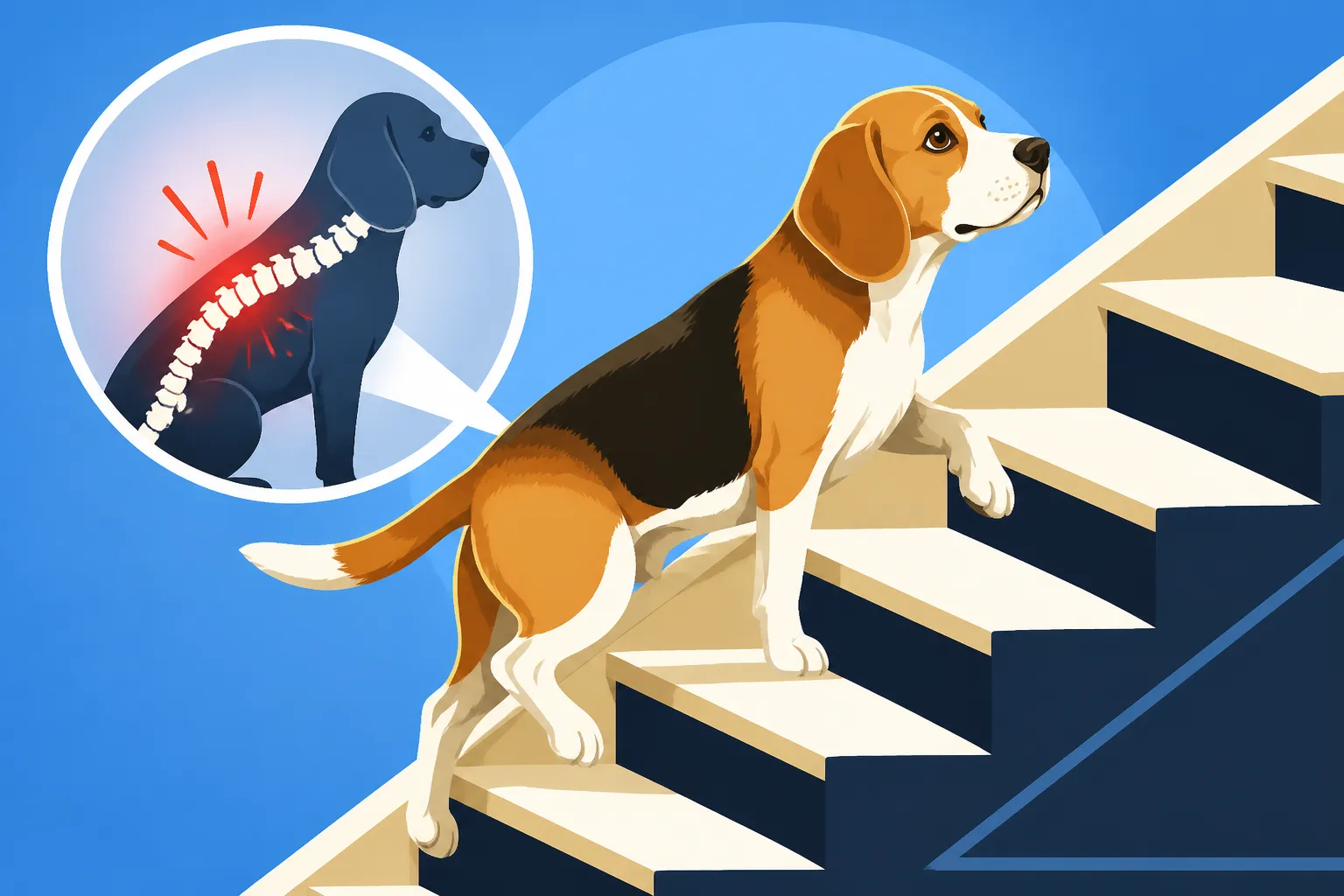
Imagine yourself trying to climb a flight of stairs on all fours, then doing it repeatedly throughout the day, often at speed. That's essentially what a Beagle does. When a Beagle ascends stairs, they push off with their hind legs, launching their body upwards. This creates a compressional force on their spine, particularly in the lumbar (lower back) region. Their front legs then pull their body up to the next step, putting strain on their neck and shoulders. It's a series of jerky, uneven movements, especially when they take multiple steps in quick succession.
Descending stairs is arguably even more damaging. As they go down, Beagles tend to lean forward, using their front legs to brake and absorb impact. This motion places significant concussive force on their elbows, shoulders, and, critically, the cervical (neck) and thoracic (mid-back) regions of their spine. There's also a twisting component as they adjust their balance, which can torque already vulnerable discs. Over time, these repetitive micro-traumas can lead to inflammation, disc bulging, or even herniation, where the soft inner part of the disc pushes out, potentially compressing the spinal cord. It's not a single dramatic fall that causes the problem, but the relentless, day-in, day-out grind of those steps.
Recognizing the Warning Signs of Spinal Strain
One of the biggest challenges as a Beagle owner is that our dogs are often stoic and experts at hiding pain. They might continue to wag their tails and greet you at the door even when they're in significant discomfort. This means we have to become detectives, keenly observing their behavior and physical cues for even the most subtle changes. Catching these signs early can make all the difference in preventing a minor issue from escalating into a serious spinal emergency.
Subtle Behavioral Changes to Watch For
If your Beagle is starting to experience spinal strain, you might notice small shifts in their usual routine. Perhaps they hesitate for a moment before jumping onto the couch, or they might try to find an alternative route around the stairs instead of using them directly. They might seem a little more reluctant to play their usual energetic games, or their enthusiasm for walks might slightly wane. It’s not a sudden refusal, but a gradual diminishment of their willingness to engage in activities that were once second nature. Pay close attention if they start to avoid certain positions, like sitting up straight or lying in a specific way. These subtle changes are often the Early Beagle Disc Signs Long Before Paralysis and are crucial indicators that something is amiss with their comfort levels. For instance, if your usually boisterous Beagle suddenly seems content to stay on the ground when you come home, rather than leaping to greet you, it’s worth investigating. You might also notice them being less eager to perform tricks that involve bending or twisting their back.
Another common sign, and one that often catches owners off guard, is a change in their sleeping habits. Are they struggling to get comfortable? Are they restless at night? These could all be indicators of underlying back pain. They might also appear stiff in the mornings, taking longer to "warm up" before moving freely. If your Beagle used to jump off the bed or couch with ease but now looks for a gentler way down, or whines subtly when doing so, it’s a red flag. This hesitation, that moment where they consider the jump or the stairs, is their body telling them it hurts.
Physical Indicators of Discomfort
Beyond behavioral shifts, there are more overt physical signs that your Beagle might be suffering from spinal issues. One of the clearest is a change in their gait or posture. They might walk with a slightly hunched back, or their tail might be held lower than usual. You might notice a subtle lameness in one of their legs, or a general stiffness when they move. If your Beagle is suddenly reluctant to jump, a common occurrence addressed in A Beagle That Suddenly Will Not Jump on the Couch, it's a strong indicator of pain.
Another significant sign is pain upon touch. Gently run your hands along your Beagle's spine, from their neck down to their tail. If they flinch, yelp, or try to pull away, it indicates a sensitive spot. Watch for muscle tremors, especially in their back legs or flanks, which can be a sign of pain or weakness. In more advanced cases, you might observe a wobbly or uncoordinated gait, or even dragging of their paws. Sometimes, a Beagle suffering from neck pain might hold their head low, refusing to lift it, as detailed in Beagle Neck Pain and a Head Held Low. They might also resist having their collar or harness put on because it exacerbates the discomfort. If you see any of these signs, it's not something to wait on; a veterinary visit is absolutely essential.
Practical Strategies to Protect Your Beagle's Back
The good news is that preventing spinal strain and managing existing issues in your Beagle is largely within your control. With some conscious effort and the right tools, you can significantly reduce the risks associated with stairs and promote a healthier, more comfortable life for your furry friend. It's all about making their environment safer and their movements less impactful on their precious spine.
Rethinking Stair Access and Training
The most direct way to eliminate stair-related risks is to prevent your Beagle from using them altogether. This isn't always easy, especially if you live in a multi-story home, but it's a vital consideration. Baby gates or pet gates are your best friends here. Install them at the top and bottom of every staircase, effectively blocking access. This requires consistency, as a determined Beagle can often find a way around or through flimsy barriers. Look for sturdy gates that latch securely and are tall enough that your Beagle can't easily jump over them.
For getting up to furniture or into vehicles, ramps are an absolute game-changer. Don't underestimate the impact of those daily jumps on and off the couch or bed. Investing in Ramps for a Beagle's Bed and Car can save their spine years of wear and tear. When introducing a ramp, start with positive reinforcement. Lure your Beagle with high-value treats and praise, gradually encouraging them to walk up and down. Make it a fun, rewarding experience, not a stressful one. Some Beagles take to ramps immediately, while others might need a bit more patience and practice. You can start by laying the ramp flat on the ground and having them walk over it, slowly increasing the incline. For stairs that simply cannot be gated off, or for an older, less mobile Beagle, consider carrying them. Always support their body evenly, cradling their chest and hindquarters, to avoid twisting their spine.
Supportive Measures and Lifestyle Adjustments
Beyond physical barriers, several lifestyle adjustments can significantly support your Beagle's spinal health. First and foremost, weight management is critical. An overweight Beagle carries extra strain on every joint and every disc in their spine. Every extra pound increases the pressure, making them more susceptible to disc issues. If you're concerned about your Beagle's weight, exploring How Extra Weight Raises Beagle Disc Pressure can provide valuable insights and practical tips. Working with your vet to establish a healthy weight goal and a tailored diet plan is one of the best things you can do for their long-term spinal health.
Proper lifting techniques are also paramount, especially for Beagles prone to back issues or those already showing signs of discomfort. Never lift your Beagle by grabbing only their front legs or under their armpits, as this puts immense strain on their neck and shoulders. Instead, always support their hindquarters with one hand and their chest/abdomen with the other, keeping their spine as straight as possible. For walks, consider a harness instead of a collar. A good quality, well-fitting harness distributes pressure across their chest and shoulders, rather than concentrating it on their neck, which can pull and strain the cervical spine, especially if they pull on the leash. This is why Why a Harness Protects a Beagle's Neck is such a crucial piece of advice for Beagle owners. Furthermore, ensure their bedding is supportive, not just soft. Orthopedic dog beds can provide much-needed joint and spinal support, especially for older Beagles. Even if you're lucky enough to have pet insurance like Healthy Paws, which can help cover unexpected medical costs, preventative measures are always the best first line of defense.
| Activity | Spinal Load (Ascending) | Spinal Load (Descending) | Overall Impact | Prevention/Mitigation |
|---|---|---|---|---|
| Stairs | Moderate to High | High (concussive) | High risk of disc compression, twisting, joint strain | Gate access, carry dog, use ramps |
| Jumping (on/off furniture) | Moderate to High | High (concussive) | High risk of sudden impact injury, disc herniation | Use ramps/steps, lift dog, provide orthopedic beds |
| Running on uneven surfaces | Moderate | Moderate | Moderate risk of twists, falls, strain | Supervise, choose flat terrain, keep on leash |
| Using Ramps | Low | Low | Very low risk | Gradual introduction, positive reinforcement |
| Being Carried | Negligible | Negligible | None, if done correctly | Proper lifting technique, support entire body |
When to Seek Veterinary Intervention
Even with the best preventative care, sometimes spinal issues can arise or worsen. Knowing when a situation warrants an immediate vet visit versus a routine check-up is vital. Time can be of the essence when it comes to spinal injuries, and prompt action can significantly improve your Beagle's prognosis and quality of life.
Understanding When It's an Emergency
If you notice any of the following signs, do not wait – seek emergency veterinary care immediately:
- Sudden Weakness or Paralysis: Your Beagle suddenly cannot use one or more of their legs, particularly their hind legs. They might drag their paws or collapse when trying to walk.
- Severe Pain: Intense yelping, howling, or crying, especially when touched or moved. They might tremble uncontrollably or refuse to move at all.
- Loss of Bladder or Bowel Control: This is a critical sign of severe spinal cord compression. If your Beagle is suddenly incontinent, it's an emergency.
- Uncoordinated Movements: Extreme wobbliness, stumbling, or inability to stand upright.
- Head or Neck Held in an Unusual Position: Any rigid or twisted head or neck posture, coupled with pain.
These symptoms can indicate a severe disc herniation, spinal cord injury, or other neurological emergency. In such cases, surgical intervention, as discussed in Beagle Disc Surgery and the Odds of Recovery, might be necessary, and the sooner treatment begins, the better the chances of a successful outcome. Diagnostic tests like X-rays, MRI, or CT scans will be crucial to determine the exact nature and location of the problem. Having a robust pet insurance plan, such as one from Healthy Paws, can be incredibly reassuring during these stressful and often costly emergency situations, allowing you to focus on your Beagle's care rather than the immediate financial burden.
Long-Term Management and Preventative Care
For less acute or chronic spinal issues, or for Beagles recovering from an injury, long-term management is key. Regular veterinary check-ups are essential to monitor their condition, adjust medications if needed, and assess their overall mobility. Your vet might recommend anti-inflammatory medications, pain relievers, or muscle relaxants to manage discomfort. For Beagles facing chronic pain or recovering from surgery, Beagle Physical Therapy After a Back Injury can be incredibly beneficial. This often involves specific exercises, massage, hydrotherapy (swimming in a controlled environment), or even acupuncture to strengthen muscles, improve range of motion, and reduce pain.
Dietary supplements like glucosamine and chondroitin, or omega-3 fatty acids, might be recommended to support joint and disc health, although always consult your vet before adding any supplements to your Beagle's regimen. Maintaining a lean body weight, as mentioned earlier, remains a cornerstone of long-term spinal health. Continue using ramps, gates, and proper lifting techniques consistently throughout their life, especially as they enter their senior years. Senior Beagles, like all dogs, can develop arthritis and other age-related mobility issues, making these precautions even more critical for Senior Beagle Care After the Age of Ten. Proactive discussions with your vet about their mobility and potential issues will become a regular part of their Beagle Lifespan and the Twelve to Fifteen Year Range. And remember, if you have a Healthy Paws policy, many of these ongoing therapies and medications might be eligible for reimbursement, providing crucial financial support for continued optimal care.
Disclaimer
This article is intended for informational purposes only and does not constitute veterinary advice. Always consult with a qualified veterinarian for any health concerns or before making any decisions about your Beagle's health or treatment plan.