Why Beagle CHIC Asks for Hips, Eyes and MLS
When you're looking to bring a Beagle into your life, the sheer number of health tests a reputable breeder provides can feel overwhelming. It's not just about getting a cute puppy; it's about ensuring that puppy grows into a healthy, happy companion for years to come. This guide will walk you through exactly why the Canine Health Information Center (CHIC) program specifically asks for hip, eye, and Musladin-Lueke Syndrome (MLS) testing for Beagles, helping you understand the crucial role these screenings play in your furry friend's future.
Understanding CHIC and Its Purpose for Beagles
Navigating the world of dog breeding can feel like a labyrinth, especially when it comes to understanding all the acronyms and certifications. However, programs like CHIC exist to simplify this process and provide transparency for prospective owners and responsible breeders alike.
What is the CHIC Program?
The Canine Health Information Center (CHIC) is a centralized database for canine health information, established by the Orthopedic Foundation for Animals (OFA) and the AKC Canine Health Foundation. Its primary goal is to provide a reliable source of health information for owners and breeders to make informed decisions. Essentially, for a dog to receive a CHIC number, it must undergo a specific set of health screenings recommended by its parent club – in our case, the National Beagle Club of America. This means that when you see a Beagle with a CHIC number, you know that breeder has gone the extra mile to screen for the most prevalent and serious hereditary conditions in the breed. It's a hallmark of a breeder who prioritizes the long-term health and well-being of their dogs, not just their appearance. You can learn more about this crucial program in our deep dive on Beagle Health Testing Under CHIC.
The beauty of the CHIC program lies in its transparency. All results, both normal and abnormal, are publicly accessible through the OFA database. This isn't about shaming breeders whose dogs might have a less-than-perfect result; it's about providing a complete picture. This open access allows the entire breeding community to track genetic diseases, understand their prevalence, and make more educated breeding choices. For you, as a future owner, it means you can verify the health claims made by a breeder, giving you peace of mind that you're choosing a puppy from lines that have been proactively screened for known issues. Without such transparency, it would be much harder to know if a breeder is truly addressing potential health concerns.
Why Specific Tests for Beagles?
Every dog breed has its own unique genetic predispositions and health challenges. A Great Dane, for example, will have a different set of primary concerns than a Chihuahua. The parent club for each breed, like the National Beagle Club, works diligently with canine geneticists and veterinarians to identify the most significant hereditary conditions affecting their specific breed. These are the conditions that have a demonstrable impact on a Beagle's quality of life and that can be screened for effectively. It’s not just a random selection of tests; it’s a carefully considered list based on scientific evidence and historical data within the breed. These recommendations are outlined in resources such as National Beagle Club Health Recommendations.
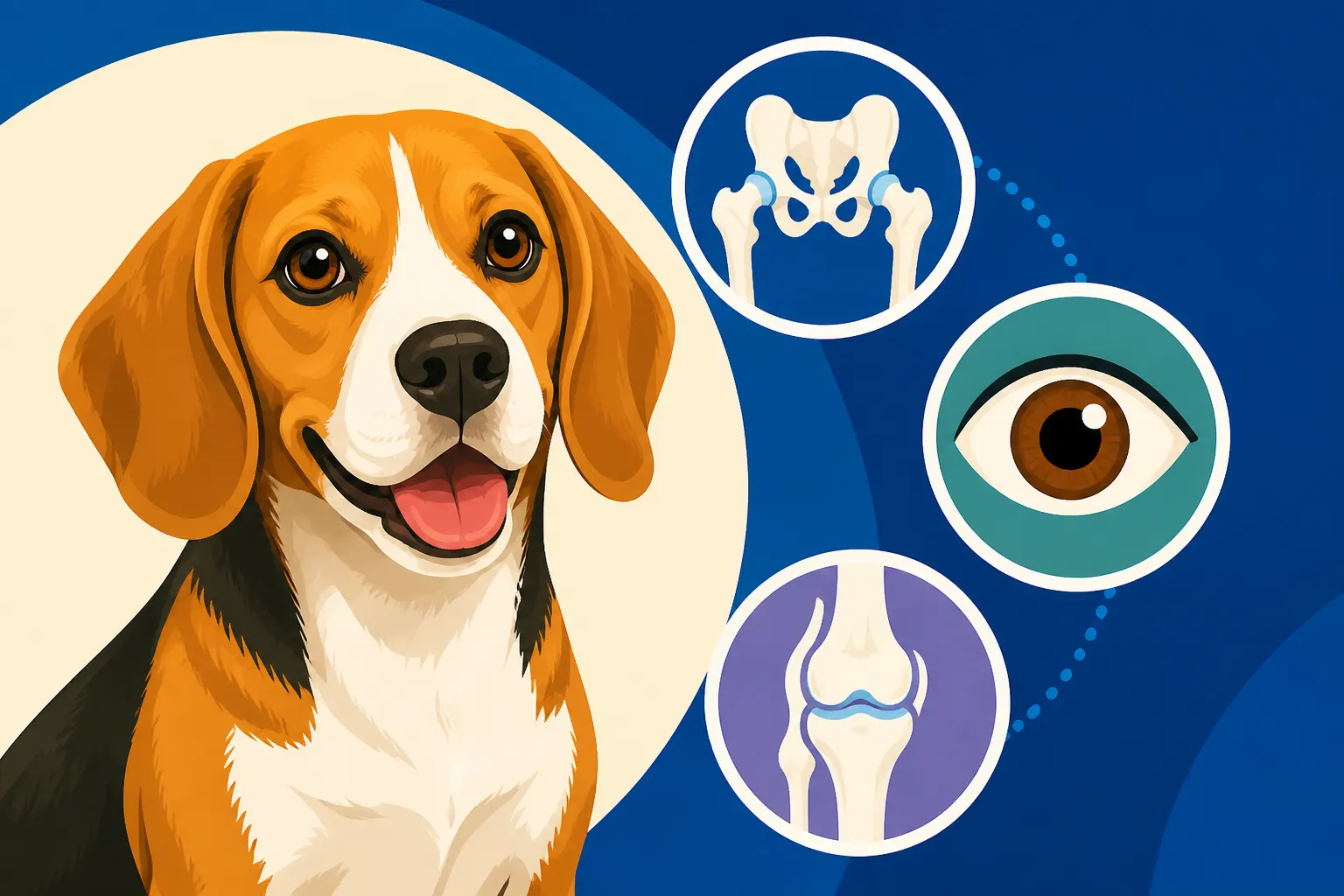
For Beagles, the core tests — hips, eyes, and MLS — address conditions that are either relatively common, severely debilitating, or both. These aren't tests for minor cosmetic issues; they target problems that can cause significant pain, lead to expensive veterinary care, or drastically shorten a dog's healthy lifespan. By focusing on these specific conditions, CHIC ensures that breeders are tackling the most impactful health hurdles head-on. This proactive approach helps reduce the incidence of these diseases across the entire Beagle population, ultimately benefiting every Beagle owner and every Beagle puppy born.
The Crucial Role of Hip and Eye Screenings
While Beagles might not be as prone to certain orthopedic issues as some giant breeds, they are certainly not immune. Similarly, eye health is paramount for any dog, but Beagles can face specific hereditary ocular conditions that demand attention.
Why Hip Evaluations Matter for a Beagle
When people think of hip dysplasia, they often picture large breeds like German Shepherds or Labradors. However, Beagles can absolutely suffer from this debilitating condition, which is characterized by the abnormal formation of the hip socket. Instead of a smooth fit, the ball and socket grind against each other, leading to pain, lameness, and degenerative arthritis. Imagine your cheerful, outgoing Beagle, usually eager for an adventure, becoming reluctant to jump onto the couch or climb stairs – that's often an early sign of hip discomfort or Beagle Hip Dysplasia and Everyday Joint Wear.
A CHIC-required hip evaluation involves X-rays of the hip joints, which are then expertly reviewed by veterinary radiologists. The most common methods are through the Orthopedic Foundation for Animals (OFA) or PennHIP. OFA assigns a rating (Excellent, Good, Fair, Borderline, Mild, Moderate, or Severe), while PennHIP measures laxity. Both methods provide valuable insight into the structural integrity of a dog's hips, allowing breeders to make informed decisions about who to breed. A dog with hip dysplasia, even if mild, should not be bred as it can pass on the genetic predisposition to its offspring. This testing helps ensure that the athletic, energetic Beagle you bring home has the best possible chance at strong, pain-free hips for a long life of sniffing and exploring. For a deeper dive, check out Beagle Hip Screening by OFA or PennHIP.
Protecting Beagle Vision with Eye Exams
A Beagle's world is largely experienced through its incredible nose, but its eyes are just as vital for navigating the world, playing with family, and enjoying daily life. Unfortunately, Beagles are predisposed to several hereditary eye conditions that can range from irritating to completely blinding. This is why a thorough eye examination by a board-certified veterinary ophthalmologist is a mandatory part of the CHIC program. It's not enough for a regular vet to take a quick peek; a specialist has the equipment and expertise to detect subtle signs of disease that might otherwise go unnoticed until they become severe.
Common eye conditions seen in Beagles include glaucoma, where increased pressure in the eye can lead to vision loss; cataracts, which cloud the lens and impair sight; and progressive retinal atrophy (PRA), a degenerative disease that eventually causes blindness. Early detection is key for many of these conditions. For instance, if glaucoma is caught early, medication can sometimes manage the pressure and preserve vision longer. Similarly, hereditary cataracts can be identified before they significantly impact a dog's sight. If you were to face an unexpected diagnosis and treatment for a serious eye condition, having a robust pet insurance plan like one from Healthy Paws could be a real lifeline for managing those specialized veterinary costs. Understanding Beagle Eye Conditions and the Board-Certified Exam and The Eye Exam Required Before Breeding a Beagle highlights the rigorous nature of these screenings.
The Importance of Musladin-Lueke Syndrome MLS Testing
While hip and eye conditions are found in many breeds, Musladin-Lueke Syndrome (MLS) is particularly devastating and unique to Beagles, making its inclusion in the CHIC requirements absolutely critical for the breed's health.
What is Musladin-Lueke Syndrome?
Musladin-Lueke Syndrome (MLS), sometimes referred to as "Beagle Pain Syndrome," is a serious, inherited connective tissue disorder specific to the Beagle breed. It's caused by a genetic mutation that affects the development of various tissues throughout the body, leading to a host of debilitating symptoms that often manifest in puppyhood. Imagine a puppy that struggles to move freely, with tight, rigid skin, and an unusual gait – this is the reality for Beagles affected by MLS. The signs are distinctive, though sometimes subtle at first, and can include thick, taut skin, unusually high-set and sometimes slanted eyes, and a characteristic "tip-toe" gait due to tight tendons.
Affected puppies might also exhibit a splayed toe appearance, ear deformities, and even internal organ abnormalities, though these are less commonly observed by owners. This syndrome causes chronic pain and significantly compromises a Beagle's quality of life, making it heartbreaking for both the dog and its family. The good news is that unlike some other complex genetic diseases, MLS is preventable through simple DNA testing. For a more detailed look at the symptoms, refer to Musladin-Lueke Syndrome Signs in a Beagle Puppy and Musladin-Lueke Syndrome and the Beagle DNA Test. Without prior screening, if you found yourself with a puppy exhibiting these concerning symptoms and needing extensive diagnostic work, having pet insurance like Healthy Paws could help cover the significant veterinary expenses associated with identifying and managing such a complex condition.
The Impact of MLS Testing on Breeding
MLS is inherited in an autosomal recessive manner. This means a puppy must inherit two copies of the mutated gene—one from each parent—to be affected by the syndrome. Dogs that inherit only one copy of the mutated gene are considered "carriers"; they don't show symptoms themselves but can pass the gene on to their offspring. Dogs with two normal copies are "clear." This understanding is powerful because it means breeders can completely eliminate the risk of producing affected puppies through responsible breeding practices.
A simple DNA test can determine if a Beagle is clear, a carrier, or affected. For CHIC certification, breeders must submit the results of this test. The ethical responsibility then lies with the breeder to only breed clear dogs to other clear dogs, or to carefully breed carriers to clear dogs (which will produce a mix of clear and carrier puppies, but no affected ones). They must never breed two carriers together, as this carries a 25% chance of producing affected puppies with each litter. This DNA testing, like The MLS DNA Test Required for Beagle CHIC, is a game-changer for the breed, allowing dedicated breeders to actively breed away from this painful and entirely preventable disease. You can also explore What an MLS Carrier Result Means for a Beagle and How Musladin-Lueke Syndrome Passes Through Beagle Lines to understand the inheritance patterns.
Why These Three Tests are "Required" for CHIC
The selection of hip, eye, and MLS screenings as mandatory CHIC requirements for Beagles is not arbitrary. It's a strategic decision based on the prevalence, severity, and preventability of these specific conditions within the breed.
The Rationale Behind Mandatory Screenings
The National Beagle Club, in consultation with veterinary geneticists, carefully selects the health tests that are required for CHIC certification. This list represents the minimum health screenings that address the most significant and common hereditary health issues currently affecting the Beagle population. The rationale is multifaceted:
Firstly, these conditions (hip dysplasia, various eye diseases, and MLS) have a demonstrable genetic component, meaning they can be passed down from parent to offspring. Secondly, they are conditions for which reliable and effective screening methods exist. For example, OFA/PennHIP for hips, board-certified ophthalmologist exams for eyes, and a DNA test for MLS provide clear, actionable results. Thirdly, these conditions can severely impact a Beagle's quality of life, leading to chronic pain, blindness, or debilitating physical abnormalities. By making these tests mandatory, CHIC ensures that breeders are actively working to reduce the incidence of these painful and often costly diseases. It provides a baseline of health responsibility that helps safeguard the future of the breed, promoting health and longevity over merely desirable appearances.
Beyond the Minimum: Other Recommended Beagle Health Tests
While hips, eyes, and MLS are the mandatory core for CHIC in Beagles, many highly responsible breeders go above and beyond these minimum requirements. They recognize that a truly comprehensive health program involves screening for other conditions that, while perhaps less common or less severe than the "required three," can still impact a Beagle's well-being. These additional screenings demonstrate an even deeper commitment to producing the healthiest puppies possible.
For instance, hypothyroidism is a common endocrine disorder in Beagles that can lead to weight gain, lethargy, and skin issues. Regular thyroid panels, especially before breeding, can identify affected dogs. Similarly, some breeders opt for cardiac screenings, particularly looking for congenital heart defects or murmurs that could impact a dog's health or ability to tolerate anesthesia later in life. Factor VII deficiency, a bleeding disorder, is another condition that can be screened for via DNA test, preventing serious complications during surgery or injury. These extra efforts, while not CHIC-mandated, contribute significantly to the overall health picture of a breeding line. While Healthy Paws helps cover unforeseen illnesses and accidents, comprehensive health testing upfront from breeders helps prevent many of these issues from arising in the first place, or at least gives you more information for proactive care. You can find out more about these other important health considerations in articles like Beagle Hypothyroidism and the Weight It Puts On, Beagle Heart Disease and Murmurs, and Factor VII Deficiency in Beagles.
Here's a quick overview of the key CHIC required tests for Beagles:
| Test Category | Specific Test / Method | What it Screens For | Why it's Important for Beagles |
|---|---|---|---|
| Hips | OFA or PennHIP Radiographic Evaluation | Hip Dysplasia (abnormal hip joint development) | Prevents chronic pain, arthritis, and mobility issues; genetic. |
| Eyes | CERF/OFA Eye Examination by Ophthalmologist | Glaucoma, Cataracts, PRA, other hereditary eye diseases | Preserves vision, prevents blindness, identifies inherited conditions. |
| Musladin-Lueke Syndrome (MLS) | DNA Test | Genetic connective tissue disorder | Prevents severe pain, physical deformities, and poor quality of life; entirely preventable genetically. |
Making Informed Choices as a Prospective Beagle Owner
Understanding the CHIC program and its specific requirements for Beagles empowers you to make a more informed decision when choosing a puppy. It's about being an advocate for your future pet's health.
Asking the Right Questions to a Breeder
When you're speaking with a prospective breeder, don't be shy about asking direct questions about health testing. A truly reputable breeder will welcome your questions and be transparent with their results. Always ask for proof of CHIC certification for both the puppy's parents. A CHIC number signifies that all the required breed-specific tests have been completed and the results are publicly available. If a breeder provides individual OFA or CERF numbers, you can look them up yourself on the OFA website to verify the results. Don't just take their word for it, and certainly don't accept vague assurances like "my vet checked them." Insist on seeing official documentation.
Specifically, for MLS, ask to see the DNA test results for both parent dogs. You need to know if they are "clear," "carrier," or "affected." A responsible breeder will be able to explain the implications of these results and how they ensure no affected puppies are produced. You can read more about what to specifically request in What to Ask a Beagle Breeder About Genetics and The MLS Result a Beagle Breeder Must Show You. This due diligence on your part can save you from future heartbreak and significant veterinary bills. It’s also wise to research pet insurance providers like Healthy Paws early on, even before bringing a puppy home, to understand coverage options for new additions and any potential hereditary conditions that might arise later.
The Long-Term Benefits of Responsible Breeding
Choosing a Beagle from a breeder who adheres to CHIC standards and conducts thorough health testing is one of the best investments you can make in your dog's future. While no breeder can guarantee a dog will never experience a health issue, these proactive screenings significantly reduce the likelihood of your Beagle developing debilitating and expensive hereditary conditions like severe hip dysplasia, early-onset blindness, or MLS. It means you're far more likely to welcome a puppy who has the genetic potential for a long, healthy, and happy life.
Think about it: preventing a severe case of hip dysplasia can save you thousands of dollars in surgeries, pain management, and physical therapy down the road. Avoiding MLS means your puppy won't suffer from a chronic, painful genetic disorder. These efforts contribute directly to your Beagle's overall Beagle Lifespan and the Twelve to Fifteen Year Range and can dramatically impact The Lifetime Bill for a Beagle That Reaches Fifteen. Beyond the financial aspect, it means less stress, less worry, and more joyful years spent with your beloved companion. While comprehensive pet insurance from a provider like Healthy Paws can certainly help manage unforeseen medical costs throughout your Beagle's life, starting with a puppy from health-tested parents lays the best possible foundation for well-being.
Disclaimer
This article is for general informational purposes only and does not constitute professional advice. Laws, prices and regulations vary by location and change over time. Consult a qualified professional for guidance on your specific situation.