Beagle CHIC Numbers and What They Actually Prove
Bringing a new Beagle into your life is an incredibly exciting time, full of dreams of long walks, happy tail wags, and endless cuddles. But the joy can quickly turn to worry when you start diving into the world of canine genetics and health clearances, trying to decipher what all those acronyms and numbers really mean. It can feel like navigating a complex medical labyrinth just to ensure you’re getting a healthy puppy, and frankly, it's frustrating when you just want clear answers. This guide is here to untangle the mystery of Beagle CHIC numbers, explaining what they represent and why they’re such a valuable tool for responsible owners and breeders alike.
Understanding the CHIC Program for Beagles
The world of dog breeding and health testing can feel a bit overwhelming, especially when you encounter terms like "CHIC number." For many first-time Beagle owners, or even seasoned dog lovers new to the breed, it’s not immediately clear what this number signifies. However, understanding it is a crucial step in ensuring the long-term health and well-being of your beloved companion, and helps you make informed choices when selecting a breeder.
What Exactly is a CHIC Number?
CHIC stands for the Canine Health Information Center. It's a centralized public database, co-sponsored by the Orthopedic Foundation for Animals (OFA) and the American Kennel Club (AKC) Canine Health Foundation. Its primary purpose is to provide a reliable and consistent method for owners and prospective buyers to research the health testing done on individual dogs. When a Beagle earns a CHIC number, it doesn't mean it's "perfect" or guaranteed to be free of all future health issues. Instead, it proves that the dog has undergone all the health screenings recommended by the National Beagle Club of America for the breed and that those results are publicly available in the OFA database.
Think of it less as a gold star for perfect health and more as a badge of transparency and diligence. A breeder who has obtained CHIC numbers for their breeding stock is demonstrating a commitment to openly sharing their dogs' health information, both good and bad. This is incredibly important because it allows for a more comprehensive understanding of a dog's genetic health profile, which ultimately benefits the breed as a whole. All the specific test results, whether they indicate a clear status or a condition, are included, allowing potential owners to see the full picture.
The Importance of Breed-Specific Health Recommendations
You might wonder why Beagles, or any specific breed, have their own set of recommended health tests. The simple answer is that, due to centuries of selective breeding, different dog breeds have developed predispositions to certain genetic health conditions. The National Beagle Club of America, as the parent club for the breed, works closely with veterinary geneticists and the OFA to determine which health conditions are most prevalent and impactful in Beagles. These become the "required" tests for a CHIC number.
For Beagles, some of these conditions include orthopedic issues like hip dysplasia, various eye conditions, and a specific genetic disorder called Musladin-Lueke Syndrome (MLS). Without these breed-specific recommendations, breeders might only test for general canine health issues, potentially missing those unique to the Beagle. The goal is to identify potential problems in breeding dogs before they pass those genes onto their offspring. By having a standardized set of required tests, the CHIC program helps ensure that breeders are consistently evaluating for the most significant health concerns, thereby making strides toward reducing the incidence of these conditions over generations. This proactive approach is a cornerstone of responsible breeding practices and helps protect the Beagle Lifespan and the Twelve to Fifteen Year Range.
The Core Health Tests Required for a Beagle CHIC Number
To earn a CHIC number, a Beagle must undergo specific health screenings as mandated by the National Beagle Club of America. These aren't just arbitrary tests; they target the most common and impactful genetic health issues identified within the breed. Understanding these tests is key to appreciating the value a CHIC number brings.
Hip Dysplasia Screening
Hip dysplasia is a condition where the hip joint doesn't form correctly, leading to looseness, pain, and eventually arthritis. While Beagles are generally not as prone to severe hip dysplasia as some larger breeds, it's still a significant concern, especially given their active nature and potential for long-term comfort issues. To address this, hip screening is a mandatory component of the Beagle CHIC program. The most common method for screening is through the Orthopedic Foundation for Animals (OFA) evaluation, though PennHIP is another recognized method.
For an OFA hip evaluation, X-rays of the dog's hips are taken and submitted to a panel of veterinary radiologists. These experts then grade the hip joint conformation as Excellent, Good, Fair, Borderline, Mild, Moderate, or Severe. Only dogs with a rating of Fair or better are typically recommended for breeding, as these indicate healthy hip joints. This screening is usually performed when the Beagle is at least 24 months old, ensuring that their skeletal system is fully mature. While no test can absolutely guarantee offspring won't develop hip issues, selecting parents with good hip scores significantly reduces the risk. This proactive measure aims to mitigate issues like Beagle Hip Dysplasia and Everyday Joint Wear and is why breeders will proudly show their OFA certifications. For those keen to understand the nuances, we have a detailed guide on Beagle Hip Screening by OFA or PennHIP.
Eye Examinations
Those soulful Beagle eyes are definitely a highlight of the breed, but they are also susceptible to a range of genetic conditions that can impact vision and overall health. Therefore, comprehensive eye examinations are another critical requirement for a Beagle to obtain a CHIC number. These are not just routine vet checks; they must be performed by a board-certified veterinary ophthalmologist.
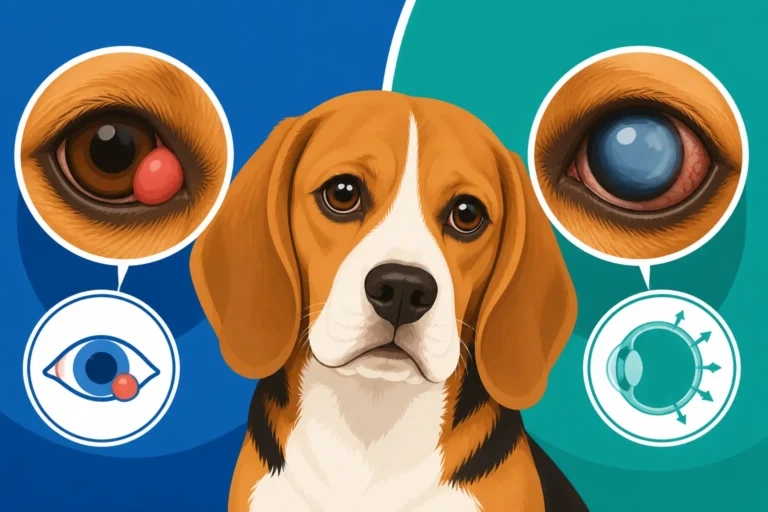
During this specialized exam, the ophthalmologist uses various instruments to thoroughly check all parts of the eye, from the eyelids and cornea to the lens and retina. They are looking for signs of inherited eye diseases such as glaucoma, cataracts, progressive retinal atrophy (PRA), and cherry eye. While some conditions, like Beagle Cherry Eye and Glaucoma, might be treatable, hereditary forms can lead to significant vision impairment or even blindness. The results of these exams are registered with the OFA's companion eye database (formerly CERF, now part of OFA), and a dog needs to be re-examined annually to maintain current certification. This ensures that any conditions that may develop later in life are also identified. It's an essential step, especially if you're looking into The Eye Exam Required Before Breeding a Beagle.
Musladin-Lueke Syndrome MLS DNA Test
Musladin-Lueke Syndrome, often referred to simply as MLS, is a specific genetic connective tissue disorder that primarily affects Beagles. It's an inherited condition that can cause a range of physical abnormalities, including thick, taut skin, joint contractures, a distinctive "tip-toe" gait, and skeletal deformities that give the face a unique, often slanted appearance. Because it is an autosomal recessive genetic condition, a Beagle can be a "carrier" without showing any symptoms themselves, but can still pass the gene on to their puppies.
The good news is that there's a highly accurate DNA test available for MLS. This test is a mandatory requirement for Beagles to receive a CHIC number. By testing breeding dogs, breeders can identify if a dog is clear, a carrier, or affected by MLS. Responsible breeders will ensure that at least one parent in a breeding pair is "clear" of the gene, meaning they do not carry the gene for MLS, preventing any puppies from being affected by the condition. Even carriers can be bred, provided they are bred to a clear dog, as no affected puppies will result from such a pairing. This DNA test has been a game-changer for the breed, significantly reducing the incidence of MLS over recent years. For more in-depth information on this crucial test, check out our piece on Musladin-Lueke Syndrome and the DNA Test and specifically The MLS DNA Test Required for Beagle CHIC. Understanding How Musladin-Lueke Syndrome Passes Through Beagle Lines is vital for any prospective owner.
Beyond the Basics: Optional but Recommended Beagle Health Tests
While the core tests for hips, eyes, and MLS are mandatory for a Beagle CHIC number, many responsible breeders go above and beyond. They choose to screen for additional health conditions that, while not universally required by the parent club, are still significant concerns within the breed. These optional tests further demonstrate a commitment to producing the healthiest possible puppies and protecting the breed's future.
Thyroid Screening for Hypothyroidism
Hypothyroidism, an underactive thyroid gland, is a condition where the thyroid gland doesn't produce enough crucial hormones. In Beagles, this can manifest in various ways, often subtly at first. Symptoms can include unexplained weight gain, lethargy, poor coat quality (dry, brittle hair, or hair loss), and even skin issues. It's one of the more common endocrine disorders in dogs, and Beagles do have a known predisposition to it.
Screening for hypothyroidism involves a blood test, usually performed when the Beagle is at least two years old. Veterinarians typically look at a panel of thyroid hormones, including T4, Free T4, TSH, and sometimes TgAA antibodies, to get a comprehensive picture of thyroid function. While hypothyroidism is manageable with daily medication, identifying affected dogs before breeding is crucial to prevent passing on this predisposition. Many breeders consider this an important "optional" test because it adds another layer of insight into their dog's overall health and helps them make more informed breeding decisions. If you notice signs of Beagle Hypothyroidism and the Weight It Puts On, early testing is key, and getting a baseline at a young age is something we discuss in Thyroid Testing a Beagle at Twenty-Four Months.
Cardiac Evaluations
Heart health is another area where responsible Beagle breeders often choose to perform additional screenings. While not always mandatory for CHIC, certain heart conditions, such as congenital heart defects or murmurs, can be present in Beagles and may have a genetic component. These conditions can range from mild and asymptomatic to severe, impacting a dog's quality of life and lifespan.
A cardiac evaluation typically involves a physical examination by a board-certified veterinary cardiologist, including auscultation (listening to the heart) for murmurs or abnormal rhythms. If a murmur is detected, further diagnostics like an echocardiogram (an ultrasound of the heart) might be recommended to determine the exact cause and severity. Clearing breeding dogs of significant cardiac issues helps reduce the risk of passing on these conditions to their offspring. This is particularly important for a breed as active as the Beagle, as undetected heart conditions can limit their ability to exercise and enjoy life to the fullest. More information on identifying issues can be found in Beagle Heart Disease and Murmurs.
Other DNA Tests and Their Value
The landscape of canine genetic testing is constantly evolving, with new DNA tests becoming available for various breed-specific conditions. For Beagles, some of these "other" tests might include screening for Factor VII deficiency, a bleeding disorder, or Lafora Disease, a late-onset form of epilepsy. While these are not part of the mandatory CHIC panel, a dedicated breeder might still test for them to gather even more information about their dogs' genetic makeup.
The value of these additional DNA tests lies in providing a more complete genetic profile. Knowing if a dog is a carrier for a condition like Factor VII Deficiency in Beagles allows a breeder to make careful pairing choices, even if the condition is rare or has mild expression. Similarly, understanding the genetic risks for conditions like Lafora Disease, which can be identified with The Lafora DNA Test Available for Beagles, helps safeguard future generations. While these tests aren't factored into the CHIC number itself, a breeder who performs them demonstrates an exceptional level of commitment to transparency and health. When you're talking to a breeder, asking about their approach to both mandatory and optional health screenings, and how they use this information, can tell you a lot about their program. It's one of the key questions to ask, as covered in What to Ask a Beagle Breeder About Genetics.
What a CHIC Number Doesn't Guarantee (and Why It Still Matters)
It's easy to look at a CHIC number and assume it's a magical stamp of perfection, guaranteeing your Beagle will live a long, perfectly healthy life free from any issues. While it's a monumental step towards responsible breeding and provides invaluable information, it's essential to understand its limitations. A CHIC number is a powerful tool, but it's not a crystal ball.
It's Not a "Perfect Health" Stamp
One of the biggest misconceptions about a CHIC number is that it guarantees perfect health in a Beagle puppy or its parents. This isn't quite right. What a CHIC number actually proves is that the required health tests for the breed have been performed, and the results have been openly recorded in a public database. It indicates transparency and due diligence on the part of the breeder, not necessarily a completely clear bill of health for every single test. For instance, a dog might have "Fair" hips or be a "carrier" for a specific genetic condition, yet still earn a CHIC number because all the required tests were completed and the results were published.
While responsible breeders strive to breed only "clear" dogs or carefully pair carriers with clear mates to avoid producing affected offspring, the CHIC system fundamentally focuses on making the information available. This means that a dog with a CHIC number could still carry genes for certain conditions, or even develop non-genetic health issues later in life. Environmental factors, diet, exercise, and just plain bad luck can all contribute to a dog's health over its lifetime, regardless of its parents' CHIC status. It’s important to remember that pet insurance providers like Healthy Paws exist precisely because even the most responsibly bred dog can still face unexpected health challenges. They can help cover those unforeseen veterinary expenses that sometimes arise, providing peace of mind even when all the right breeding steps have been taken.
How to Use CHIC Numbers When Choosing a Breeder
Even with its limitations, a CHIC number is an incredibly valuable asset when you're searching for a reputable Beagle breeder. It serves as a strong indicator of a breeder's commitment to the health of their lines and their transparency with potential buyers. When evaluating breeders, always ask if their breeding stock has CHIC numbers, and then ask to see the actual OFA and eye certifications. Don't just take their word for it, as all results are publicly searchable on the OFA website using the dog's registered name or registration number.
Here's how to use this information effectively:
| Test Category | Required for CHIC | What It Proves | What to Look For (Ideally) |
|---|---|---|---|
| Hip Evaluation | Yes | X-ray results publicly recorded on OFA. | OFA certification of "Good" or "Excellent" |
| Eye Examination | Yes | Annual ophthalmologist exam results publicly recorded on OFA. | "Normal" or "Clear" findings |
| MLS DNA Test | Yes | DNA test result publicly recorded on OFA. | "Clear" status, or "Carrier" paired with a "Clear" |
| Thyroid Panel | Optional | Blood test results, often recorded on OFA. | "Normal" thyroid function |
| Cardiac Evaluation | Optional | Cardiologist exam results, often recorded on OFA. | "Normal" heart status |
If a breeder has CHIC numbers for their breeding dogs, it signifies that they've invested the time and resources into these important health screenings. It means they're not hiding information, and they care enough about their puppies' future health to participate in a recognized health program. This level of transparency is a hallmark of an ethical breeder and should be a significant factor in your decision-making process. Even with the best breeding practices, a comprehensive pet insurance plan from providers like Healthy Paws can act as a crucial safety net, particularly for an active breed like the Beagle.
The Long-Term Benefits for the Breed and Your Beagle
The true power of the CHIC program lies in its long-term impact on the Beagle breed as a whole. By consistently requiring and promoting health testing, and by making those results public, CHIC helps responsible breeders make more informed decisions about which dogs to breed. Over many generations, this collective effort works to reduce the incidence of heritable diseases, leading to a healthier overall gene pool for Beagles. This proactive approach contributes significantly to improving the average health and potentially extending the Beagle Lifespan and the Twelve to Fifteen Year Range.
For your individual Beagle, choosing a puppy from CHIC-certified parents dramatically increases the likelihood that your dog will inherit healthy genes for the conditions screened. While it doesn't eliminate all risk, it significantly reduces the odds of your dog developing debilitating and costly genetic diseases that could have been avoided. This translates to fewer heartaches for you, potentially fewer unexpected veterinary bills, and a greater chance for your Beagle to live a long, active, and joyful life. Even with all these preventative measures, life happens, and having a plan for unexpected veterinary costs is wise. Exploring options like Healthy Paws can complement the benefits of a well-bred Beagle by providing support if any unforeseen health issues emerge, ensuring you can always provide the best care. It's a testament to the dedication of breeders who utilize programs like CHIC that we see an improvement in the breed's health, ensuring many more years of happy Beagles bringing joy to families.
Disclaimer
The information provided in this article is intended for general informational purposes only and does not constitute veterinary advice. Always consult with a qualified veterinarian for any health concerns or before making any decisions related to your Beagle's health or treatment.