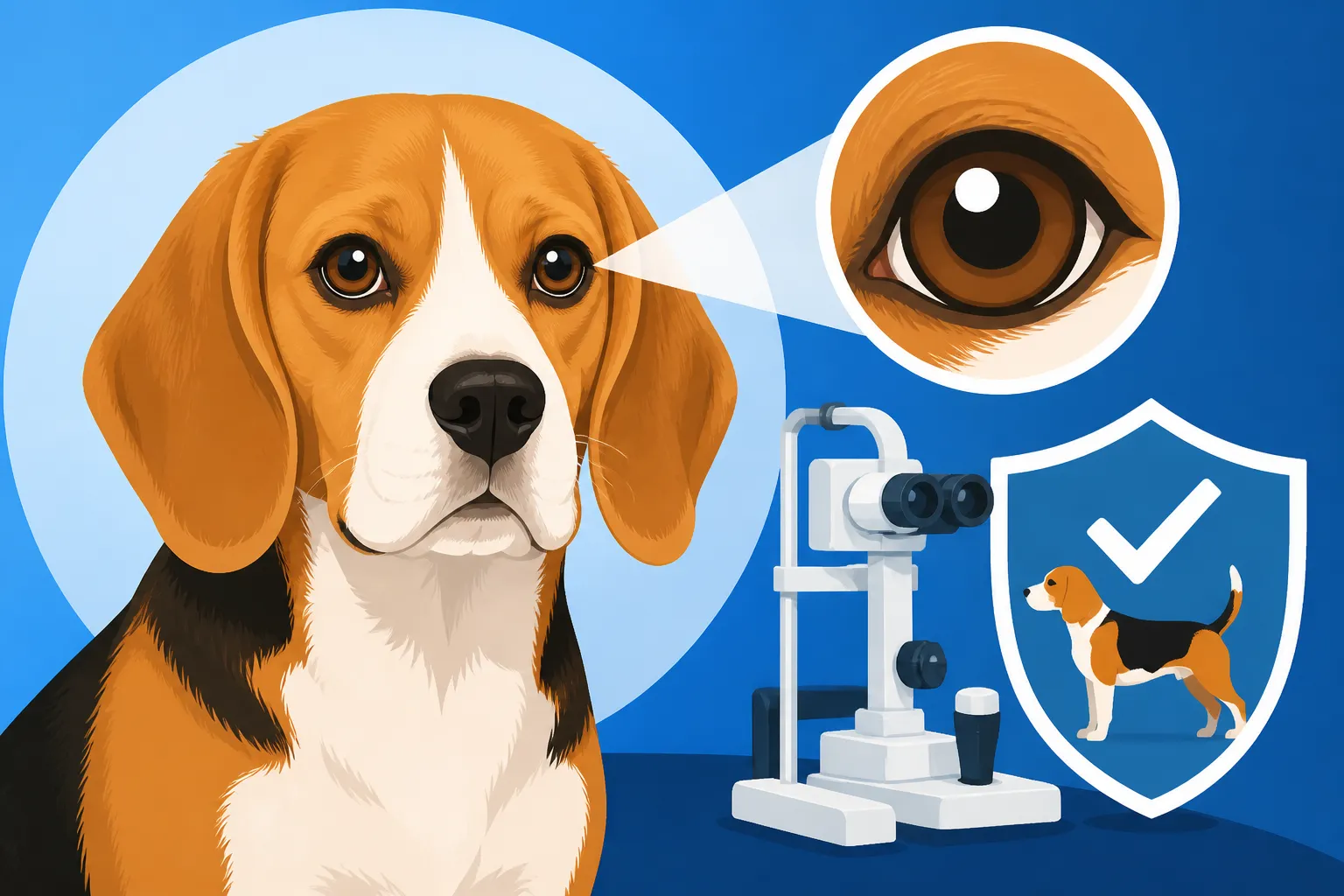
The Eye Exam Required Before Breeding a Beagle
It's incredibly disheartening when you bring a Beagle puppy into your home, full of hopes and dreams, only to discover later that they’ve inherited a painful or debilitating eye condition from their parents. As someone deeply invested in the health and happiness of Beagles, I know the frustration and heartbreak this can cause. This guide is dedicated to shedding light on the crucial eye exam required for Beagles before breeding, ensuring that future generations start with the best possible chance at clear vision and comfortable lives.
Why Eye Health is Paramount in Beagle Breeding
The decision to breed Beagles carries immense responsibility, not just for the puppies themselves, but for the families who will welcome them. Overlooking genetic predispositions to health issues, especially those affecting something as fundamental as sight, is a disservice to the breed and to every future owner. Good breeders understand that health testing, including comprehensive eye exams, is not optional; it's a cornerstone of ethical practice.
The Ethical Imperative for Eye Screening
Imagine a lively Beagle puppy, all wiggles and wet nose, exploring its new world, only for its vision to slowly degrade due to a genetic condition. This isn't a hypothetical fear; it's a reality for far too many dogs when breeders cut corners on health screening. The ethical imperative stems from the understanding that many eye conditions are hereditary, meaning they are passed down from parent to offspring. A responsible breeder aims to improve the breed, and that means striving to eliminate genetic diseases, not perpetuate them.
It's a huge commitment to bring a Beagle into your life, and part of that commitment involves knowing you’ve done everything possible to ensure their well-being from the very start. For breeders, this translates into meticulous health checks that go beyond basic vet visits. It means investing time and resources into understanding the genetic landscape of their breeding lines and making informed decisions that prioritize health above all else. Failing to screen for hereditary eye conditions can lead to puppies born with progressive diseases that impact their quality of life, often requiring expensive treatments or leading to blindness.
Passing on Healthy Genes vs. Genetic Predisposition
Every dog carries a unique genetic blueprint, and with it, the potential for both desirable traits and inherited diseases. When it comes to eye health, Beagles, like many purebred dogs, have specific conditions they are more prone to. These aren't just random occurrences; they are often linked to specific genes that can be passed down from parents who might not even show symptoms themselves (carriers).
The goal of pre-breeding eye exams is to identify these genetic predispositions before they are passed on. By screening potential breeding dogs, breeders can make informed choices about pairings, avoiding combinations that are likely to produce affected puppies. This proactive approach helps to gradually reduce the prevalence of these conditions within the breed over time, strengthening the Beagle's genetic health. It's about consciously selecting for healthy genes and actively working to breed away from those that cause suffering. When you find a breeder who prioritizes these checks, you know they are truly invested in the long-term health of their puppies and the integrity of the breed.
Understanding the OFA Eye Certification Registry Exam
For years, the Canine Eye Registration Foundation (CERF) was the gold standard for certifying the eye health of breeding dogs. While the name has changed, the importance of this certification has not. Today, the Orthopedic Foundation for Animals (OFA) administers the Eye Certification Registry (EYE), carrying on the legacy of comprehensive eye screening. This isn't just a regular vet check-up; it's a specialized examination performed by an expert who knows exactly what to look for in a Beagle's eyes.
What the OFA Eye Certification Registry Involves
The OFA Eye Certification Registry (OFA EYE) is a formal examination designed to detect observable, inherited eye diseases. It's a snapshot of your Beagle's eye health at the time of the exam, which is why repeat examinations are often recommended for active breeding dogs. The process involves a thorough inspection of all parts of the eye, from the eyelids and tear ducts to the retina and optic nerve. The findings are then submitted to the OFA, and if the dog is found to be free of significant inherited eye disease, they receive an OFA EYE certification number.
This certification is a publicly verifiable record, which is incredibly valuable for prospective puppy buyers and for breeders looking to make responsible pairing decisions. It provides a level of transparency and accountability that helps ensure breeders are upholding high standards. Think of it as a quality stamp, confirming that the potential parent has undergone a rigorous inspection by a specialist. Without this certification, there's no official record of the breeding dog's eye health, leaving too much to chance.
The Role of a Board-Certified Veterinary Ophthalmologist
You wouldn't ask a general practitioner to perform complex heart surgery, and the same principle applies to specialized eye exams for breeding dogs. The OFA EYE certification can only be performed by a board-certified veterinary ophthalmologist. These are veterinarians who have undergone extensive additional training, residencies, and rigorous examinations to specialize exclusively in the diagnosis and treatment of eye diseases in animals.
Their expertise is critical because many hereditary eye conditions have subtle signs that might be missed by a general veterinarian. An ophthalmologist possesses the specialized knowledge, diagnostic equipment, and experience to identify these nuanced indicators. They understand the specific genetic predispositions within breeds like Beagles, allowing them to conduct a more targeted and accurate examination. When you're dealing with the potential for lifelong vision problems, having an expert's eye on the matter is absolutely non-negotiable. It's their detailed report that forms the basis of the OFA EYE certification, offering peace of mind that a truly qualified professional has assessed your Beagle's vision.
Common Beagle Eye Conditions Screened During the Exam
Beagles are generally a hardy breed, but like all purebreds, they have certain genetic predispositions. When it comes to their eyes, there are a handful of conditions that a board-certified veterinary ophthalmologist will be specifically looking for during the OFA EYE examination. Understanding these conditions helps breeders appreciate the depth of the screening process and the potential impact on future generations. This diligent screening helps avoid situations where a Beagle might develop conditions like Glaucoma, for which a specific internal link article about Glaucoma in Beagles and Losing Vision exists.
Progressive Retinal Atrophy PRA in Beagles
Progressive Retinal Atrophy (PRA) is a heartbreaking group of genetic diseases that lead to the degeneration of the retina, eventually causing blindness. In Beagles, there are specific forms of PRA, such as rod-cone degeneration (rcd4 PRA), that have been identified. The "progressive" part of the name means that the disease worsens over time. A dog might have normal vision as a puppy, but slowly, their night vision deteriorates, followed by day vision, ultimately leading to complete blindness.
During the eye exam, the ophthalmologist will meticulously inspect the retina for any early signs of this degeneration. While some forms of PRA can be detected through DNA testing (which is an excellent complementary tool for breeders), the clinical eye exam is still vital for identifying the physical manifestation of the disease or other forms of PRA for which a DNA test might not yet exist. A Beagle diagnosed with PRA should never be bred, as it carries the high risk of passing this debilitating condition to its offspring. It's a devastating diagnosis for any owner, and avoiding it through responsible breeding is a top priority.
Beagle Glaucoma and Its Devastating Effects
Glaucoma is another serious eye condition that Beagles can be predisposed to, and it's particularly insidious because it often progresses rapidly and can cause extreme pain and permanent blindness. This condition involves an increase in pressure within the eye, which damages the optic nerve and retina. The pain associated with glaucoma can be intense, causing dogs to rub their eyes, become withdrawn, or show signs of discomfort.
The ophthalmologist will measure intraocular pressure during the exam, a crucial step in screening for glaucoma. They'll also examine the drainage angles of the eye, looking for anatomical abnormalities that might predispose a Beagle to developing the condition. Early detection is paramount because, while there's no cure, treatment can help manage the pain and preserve some vision, though often it's a battle against time. Knowing that a potential breeding dog carries a risk for glaucoma is a huge red flag, as this is a condition no puppy should have to face. For more information on this specific concern, you can read our detailed article on Beagle Cherry Eye and Glaucoma.
Cataracts and Their Impact on Vision
Cataracts are opacities that develop within the lens of the eye, similar to those seen in humans. They can range from small, non-vision-impairing opacities to dense, large cataracts that cause significant vision loss or even complete blindness. While cataracts can be caused by injury, diabetes, or old age, many are hereditary. In Beagles, identifying inherited cataracts is a key part of the pre-breeding eye exam.
The ophthalmologist uses specialized equipment, like an ophthalmoscope, to look deep into the lens and identify even very small cataracts that might not be visible to the naked eye. The presence of hereditary cataracts in a potential breeding dog is a serious concern, as it directly impacts the vision of affected puppies and can lead to a lifetime of challenges. While surgical removal is possible, it's an expensive and invasive procedure, highlighting why preventing inherited cataracts through careful breeding is always the best approach.
Other Conditions Like Distichiasis and Ectropion/Entropion
Beyond PRA, glaucoma, and cataracts, there are several other structural and functional eye conditions that an ophthalmologist will screen for in Beagles. These might not be as severely vision-threatening as some other conditions, but they can cause chronic irritation, pain, and secondary infections, significantly impacting a dog's quality of life.
- Distichiasis: This condition involves extra eyelashes that grow from an abnormal location on the eyelid, often irritating the cornea. It can cause constant tearing, squinting, and corneal ulcers. While often treatable with surgery, it's a hereditary trait that ideally should not be passed on.
- Ectropion and Entropion: These are eyelid abnormalities. Ectropion is an outward rolling of the eyelid, leaving the inner surface exposed and prone to dryness and irritation. Entropion is an inward rolling of the eyelid, causing the eyelashes to rub against the cornea, leading to pain, ulcers, and potential blindness if severe. Both can be corrected surgically, but are often inherited.
- Persistent Pupillary Membranes (PPMs): These are remnants of fetal tissue in the eye that usually disappear shortly after birth. If they persist, they can attach to various parts of the eye and, in some cases, cause vision impairment.
- Retinal Dysplasia: This refers to abnormal development of the retina. It can range from small folds that don't affect vision to severe, widespread dysplasia that causes significant vision loss.
The ophthalmologist meticulously checks for all these conditions, documenting any findings in the OFA EYE report. This comprehensive approach ensures that all observable hereditary eye issues are considered before a Beagle is given the green light for breeding. It also ties into the broader picture of responsible breeding practices, as discussed in our guide on Beagle Health Testing Under CHIC, which covers multiple health clearances.
The Examination Process: What to Expect
Preparing your Beagle for a specialist eye exam might sound daunting, but knowing what to expect can make the process much smoother for both you and your furry friend. It's a professional and thorough procedure, designed to be as stress-free as possible while gathering critical information about your dog's ocular health.
Preparing Your Beagle for the Eye Exam
When you schedule an appointment with a board-certified veterinary ophthalmologist for an OFA EYE exam, they will likely give you specific instructions. Typically, you'll be asked to withhold food for a few hours prior to the appointment, primarily in case any sedation is needed, though this is rare for a standard eye exam. More importantly, you'll usually be asked not to use any eye drops or ointments for at least 24-48 hours before the exam, as these can interfere with the diagnostic tests and dilating drops.
Beyond these practical steps, preparing your Beagle involves making sure they are comfortable and as relaxed as possible. Beagles are often quite amenable, especially if there's a treat involved! Bring their favorite high-value treats to help them stay calm during the examination. Keeping them on a leash and familiarizing them with the clinic environment beforehand, if possible, can also help. Remember, the ophthalmologist is a specialist, accustomed to working with all kinds of dogs, and will strive to make the experience positive.
The Examination Steps and Diagnostic Tools
Upon arrival, the ophthalmologist or a technician will take your Beagle's history, focusing on any previous eye issues, family history of eye disease, or general health concerns. The actual examination typically involves several steps:
- Initial External Examination: The ophthalmologist will first visually inspect your Beagle's face, eyelids, and surrounding structures for any obvious abnormalities, discharge, or signs of discomfort.
- Schirmer Tear Test: This simple test measures tear production to check for dry eye (Keratoconjunctivitis Sicca or KCS), where the eyes don't produce enough tears. A small strip of paper is placed in the lower eyelid for a minute.
- Fluorescein Stain: A fluorescent orange dye is applied to the eye. This dye adheres to any damaged areas on the cornea (the clear outer layer), revealing corneal ulcers or abrasions under a special blue light.
- Pupil Dilation: This is a crucial step. Eye drops are administered to dilate your Beagle's pupils. This takes about 20-30 minutes, during which you might wait in the waiting room. Dilation allows the ophthalmologist to get a clear view of the deeper structures of the eye, such as the lens and retina.
- Indirect Ophthalmoscopy: Once the pupils are dilated, the ophthalmologist uses an indirect ophthalmoscope (a special head-mounted light and lens system) to examine the retina, optic nerve, and other structures at the back of the eye. This is where conditions like PRA and retinal dysplasia are detected.
- Slit Lamp Biomicroscopy: This specialized microscope allows for a magnified, detailed examination of the front parts of the eye, including the cornea, iris, and lens, where cataracts, PPMs, and other anterior segment issues can be identified.
- Tonometry: This involves using a tonopen or similar device to measure the intraocular pressure (IOP) of each eye. This is vital for detecting glaucoma. The device gently taps the cornea, and the measurement is quick and painless.
Throughout this process, the ophthalmologist will be looking for any signs of the inherited conditions we discussed, as well as any other anomalies that could impact your Beagle's health or suitability for breeding. Many responsible breeders will also ensure their Beagles undergo DNA testing for known genetic diseases, which complements the physical exam. For example, a DNA test for Musladin-Lueke Syndrome and the Beagle DNA Test is often performed alongside eye and hip screenings.
Receiving and Interpreting the Results
After the examination, the ophthalmologist will discuss their findings with you. They will complete an OFA Eye Certification Registry form, noting any abnormalities found. If your Beagle passes the examination without any detectable hereditary eye diseases, they will be certified, and the results submitted to the OFA. This will lead to an OFA EYE certification number being issued, which can then be listed on public databases.
It's important to understand that a "clear" certification means no observable signs of hereditary eye disease were found at the time of the examination. It doesn't guarantee your Beagle will never develop any eye problem, nor does it guarantee that every puppy produced will have perfect eyes (some conditions can have complex inheritance patterns, or manifest later in life). However, it significantly reduces the risk.
If an abnormality is found, the ophthalmologist will explain the condition, its implications, and whether it's considered hereditary and potentially disqualifying for breeding. This information is crucial for making responsible breeding decisions. Remember, the goal is to improve the breed, and sometimes that means making difficult choices to ensure healthier future generations.
Beyond the Exam: Responsible Breeding Decisions
The OFA EYE certification exam is not merely a checkbox to tick; it's a vital tool in a breeder's arsenal for making informed, ethical decisions. The results of this examination should guide every aspect of a breeding program, from selecting suitable mates to ensuring the long-term health of the Beagle breed.
Using OFA Eye Certification Results for Breeding Pair Selection
Once you have your Beagle's OFA EYE certification, this information becomes a critical piece of the puzzle when planning a litter. Responsible breeders use these results, alongside other health clearances like those for hips and elbows (which you can learn more about in resources like Beagle Hip Dysplasia and Everyday Joint Wear), to select the most appropriate breeding partners. The aim is to pair two Beagles who are both certified clear of hereditary eye diseases, thereby maximizing the chances of producing puppies with excellent eye health.
If one parent has a condition that is considered a "breeder option" (meaning it's a mild, non-vision-threatening hereditary condition), a responsible breeder would then carefully select a mate that is completely clear of that specific condition, and ideally, has several generations of clear ancestors for it. The goal is always to reduce the prevalence of genetic issues, not just maintain it. This level of foresight and planning helps to ensure the continued vitality and health of the Beagle lineage, ensuring that the puppies are as healthy as possible.
The Importance of Re-certification
A Beagle's eye health isn't static. While a certification is valid for a year, some conditions can develop later in life, or progress over time. This is why annual or bi-annual re-certification for active breeding Beagles is highly recommended. For instance, some forms of cataracts might not be present in a young dog but could develop as they mature. Similarly, the onset of conditions like glaucoma can occur at various ages.
Regular re-examinations ensure that a breeding dog continues to be free of observable hereditary eye diseases throughout their breeding career. This commitment to ongoing screening demonstrates a breeder's dedication to maintaining the highest standards of health for their line. It's a continuous process of vigilance and care, recognizing that eye health is a lifelong journey for our Beagles, not just a one-time check. This is also important when considering the broader health picture and managing conditions such as Beagle Epilepsy and Seizures From Six Months On, which also require ongoing monitoring.
Supporting Lifelong Eye Health in Beagles
Even with diligent screening and responsible breeding, supporting a Beagle's eye health extends beyond the breeding program. As owners, there's much we can do to ensure our Beagles maintain good vision throughout their Beagle Lifespan and the Twelve to Fifteen Year Range. Regular veterinary check-ups are fundamental, as are being observant of any changes in your Beagle's eyes or behavior that might indicate a problem.
For instance, keeping the fur around their eyes clean and trimmed can prevent irritation. Protecting them from eye injuries during play or walks is also important. If you notice excessive tearing, redness, squinting, cloudy eyes, or if your Beagle seems to be bumping into things, don't hesitate to seek veterinary attention. Early intervention can make a significant difference in managing or treating many eye conditions. While a clean bill of health at the time of breeding is critical, ongoing care and awareness are key to ensuring our Beagles enjoy clear vision and comfort throughout their lives, right through to concerns such as Senior Beagle Vision and Hearing Loss in their later years.
Summary of Beagle Eye Conditions and Breeding Implications
To help visualize the importance and impact of the OFA Eye Certification Registry, here's a summary of some key hereditary eye conditions in Beagles and their implications for breeding:
| Condition Name | Description | Inheritance Pattern | Impact on Beagle | Breeding Implication (if positive) |
|---|---|---|---|---|
| Progressive Retinal Atrophy (PRA) | Degeneration of the retina, leading to progressive night and then day blindness. | Autosomal Recessive | Eventual blindness, loss of quality of life. Often no pain. | Affected dogs should not be bred. Carriers should only be bred to clear mates with caution. |
| Glaucoma | Increased pressure within the eye, damaging optic nerve and retina. | Often Polygenic/Complex | Pain, rapid vision loss, potential blindness. | Affected dogs should not be bred. Careful consideration for at-risk lines. |
| Cataracts (Hereditary) | Opacities in the lens, ranging from small to severe, impairing or blocking vision. | Variable (often dominant) | Vision impairment to complete blindness. | Affected dogs should not be bred. Mild, non-progressive forms may be "breeder option" with clear mates. |
| Distichiasis | Extra eyelashes growing from abnormal spots, irritating the cornea. | Likely Polygenic | Chronic eye irritation, pain, corneal ulcers. | "Breeder option" – affected dogs can be bred to clear mates if condition is mild and manageable. |
| Ectropion/Entropion | Outward (ectropion) or inward (entropion) rolling of the eyelids, causing exposure or irritation. | Polygenic | Chronic irritation, dryness, infections, corneal damage. | "Breeder option" – affected dogs can be bred to clear mates if condition is mild and manageable. |
| Persistent Pupillary Membranes (PPMs) | Remnants of fetal eye tissue. | Variable | Usually benign, but can impair vision if severe. | Typically considered minor. Severe cases should be carefully evaluated for breeding. |
| Retinal Dysplasia | Abnormal development of the retina. | Variable | Ranges from no impact to severe vision loss/blindness. | Affected dogs should not be bred if severe. Mild cases (folds) are often "breeder option." |
Note: This table summarizes general information. Specific genetic tests are available for some conditions, and breeders should consult with their veterinary ophthalmologist and genetic counselors for individualized advice.
This table illustrates why a thorough, comprehensive eye exam is so important. A single dog can potentially carry genes for multiple conditions, and only a specialist can truly assess the full picture. Investing in this kind of health screening is just one example of the critical preventative care measures that can save both Beagles and their owners from significant pain and expense down the line. It's also why having pet insurance, such as through providers like Healthy Paws, can be a sensible choice for owners, helping to cover unforeseen medical costs, even with the best breeding practices.
Disclaimer
The information provided in this article is for educational and informational purposes only and does not constitute veterinary advice. Always consult with a qualified veterinary professional for any health concerns or before making any decisions related to your Beagle's health or breeding.