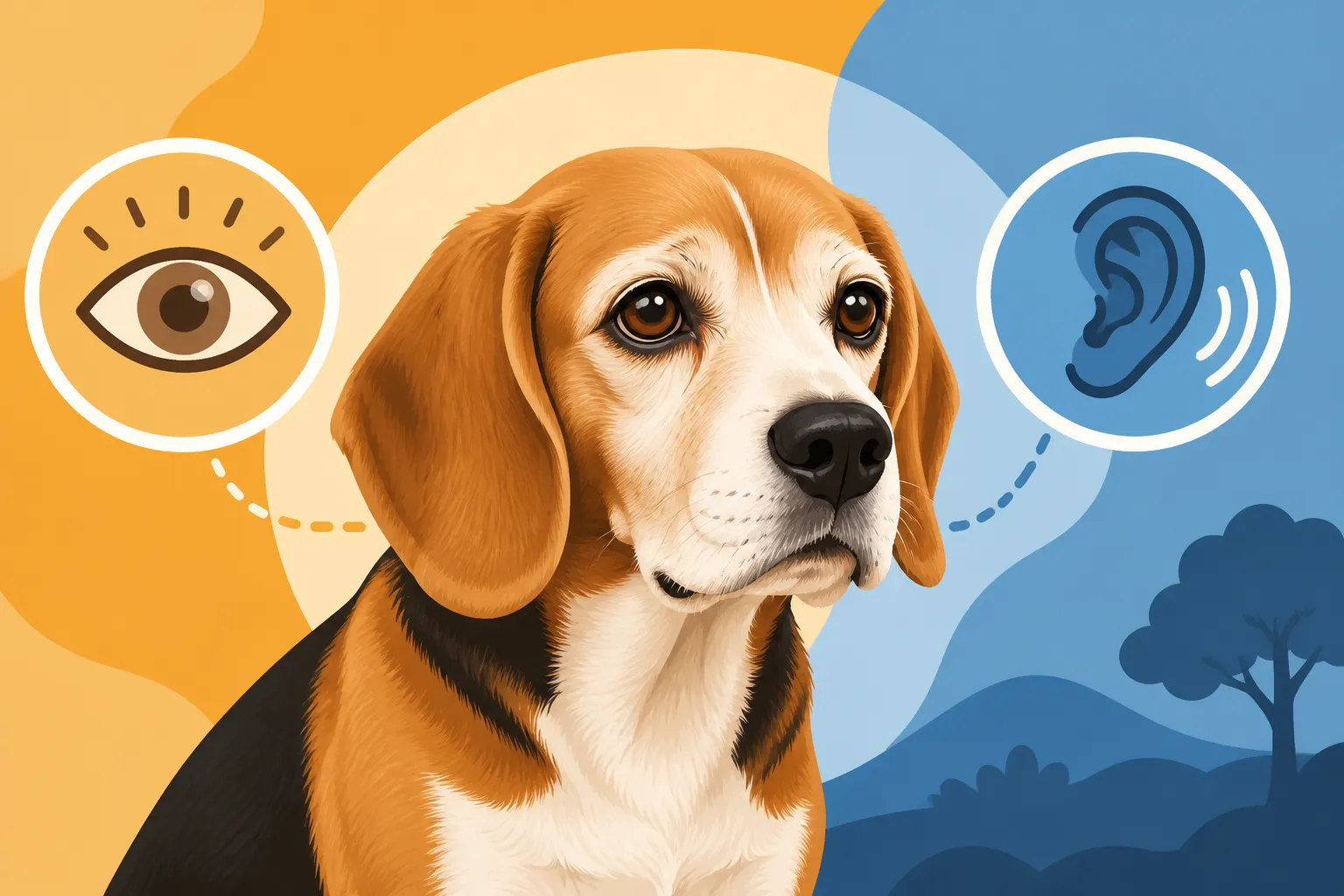
Senior Beagle Vision and Hearing Loss
It’s truly heartbreaking to watch our beloved Beagles enter their golden years and witness the inevitable changes that come with age. One of the toughest parts is seeing their sharp senses, once so vital to their very Beagleness, begin to dim. When your senior Beagle starts bumping into furniture or sleeping through the doorbell, it’s a clear sign that vision and hearing loss are becoming a daily reality. This guide is here to walk you through understanding these age-related changes, recognizing the subtle and not-so-subtle signs, and most importantly, how to adapt your home and routine to keep your senior companion feeling safe, loved, and confident as their world shifts.
Understanding Normal Aging Changes in Beagles
Aging is a natural part of life, and for our Beagles, it often brings a gradual decline in sensory perception. It’s a transition that can be both challenging and confusing for us as owners, especially when our once vibrant, scent-driven hounds start to lose their bearings. It’s easy to feel a pang of sadness, or even frustration, when your long-time routines suddenly hit a snag because your senior Beagle can’t quite see or hear like they used to. But understanding this process is the first step toward making their later years as comfortable and joyful as possible.
The Gradual Onset of Sensory Decline
Unlike a sudden injury or illness, age-related vision and hearing loss typically creep up slowly, almost imperceptibly at first. You might notice small things: your Beagle hesitates on stairs they once bounded up, or they don’t greet you at the door with their usual enthusiastic bay. It’s not like flipping a switch; it’s more like a dimmer being slowly turned down. This gradual nature can make it difficult to pinpoint exactly when the changes began, and it often means your Beagle has been compensating for a while before you even realize anything is truly amiss. Their incredible sense of smell and their memory of your home layout can mask early vision issues, just as their ability to feel vibrations in the floor can sometimes make up for failing hearing. It's easy to dismiss these early signs as just "being old" or "being stubborn," but often, it's their senses telling a different story.
You might find yourself calling their name repeatedly, only for them to remain blissfully asleep or focused on a phantom scent. Or perhaps they used to track a tossed treat through the air with laser focus, and now it just plunks to the ground unnoticed. These are not signs of disobedience; they are indicators that their sensory input is changing. It's a journey, not an event, and it requires us to adjust our expectations and our approach to communication. This slow progression also means there’s time for adaptation, both for you and your furry friend, so don't feel like you've missed a critical window if you're just starting to notice these shifts now.
Distinguishing Age-Related Changes from Illness
It’s crucial to remember that while some sensory decline is a normal part of aging, not every change in your senior Beagle's vision or hearing is benign. Sometimes, what looks like "just old age" can actually be an underlying medical condition that is treatable. This is why regular veterinary check-ups are so incredibly important, especially for our senior Beagles. A trip to the vet can rule out a range of issues that might mimic age-related sensory loss, giving you peace of mind and potentially improving your Beagle’s quality of life. For instance, ear infections can cause temporary or even permanent hearing loss if left untreated, and certain eye diseases can lead to rapid blindness if not addressed promptly.
Conditions like glaucoma, which involves increased pressure in the eye, can cause pain and vision loss and often require immediate veterinary intervention. Similarly, untreated cataracts, while sometimes an age-related change, can be removed surgically in many cases, restoring significant vision. Even something as simple as excessive earwax buildup can impair hearing. Your vet can perform thorough examinations, including eye exams and otoscopic evaluations of the ears, and may recommend blood tests to check for systemic diseases that can impact neurological function or cause inflammation. It’s important to discuss any changes you observe with your vet so they can help you distinguish between normal aging and something more serious that needs specific medical attention. Staying proactive with check-ups means catching things early, and a good pet insurance plan, like one from Healthy Paws, can be invaluable for covering the costs of these diagnostic tests and potential treatments. For more on what to expect, you might find our guide on Beagle Vet Visit Frequency After the Age of Ten helpful.
Deciphering Vision Loss in Senior Beagles
As your Beagle ages, their once keen eyesight, though never as powerful as their nose, can begin to fade. It’s a common occurrence, and it can be disorienting for them and concerning for you. Understanding the specific conditions that often affect senior Beagle eyes and knowing what signs to look for will empower you to provide the best possible care and adaptations for your loyal companion.
Common Ocular Conditions in Older Beagles
One of the most frequent changes you'll notice in an older Beagle's eyes is a cloudy appearance. Often, this is due to a condition called nuclear sclerosis, sometimes referred to as lenticular sclerosis. It’s essentially a natural hardening and thickening of the lens of the eye, similar to how human eyes change with age. While it certainly looks dramatic, making the pupil appear bluish-gray and hazy, nuclear sclerosis typically doesn't cause significant vision impairment. Your Beagle might have a slightly harder time focusing on objects up close or in dim light, but it’s usually not a cause for major concern, just a normal part of getting older.
However, a more serious condition that can also cause cloudiness is cataracts. Unlike nuclear sclerosis, cataracts involve a true opacity of the lens, which blocks light from reaching the retina and can lead to significant vision loss or even complete blindness. Cataracts can develop due to genetics, diabetes, injury, or simply old age. If you notice a dense, white, or icy cloudiness in your Beagle's eyes, especially if it seems to be progressing quickly or impacting their ability to navigate, it's vital to have them examined by a vet or a veterinary ophthalmologist. There are surgical options for removing cataracts, which can restore vision in suitable candidates. Another critical eye condition to watch for is glaucoma, which is caused by increased fluid pressure within the eye. This can be extremely painful and lead to rapid, irreversible blindness if not treated promptly. Signs of glaucoma can include a cloudy or bluish appearance, redness, squinting, excessive tearing, or your Beagle rubbing their eye. Since vision is so precious, a board-certified eye exam is always recommended for a clear diagnosis, and our article on Beagle Eye Conditions and the Board-Certified Exam delves deeper into these topics.
Recognizing the Signs of Worsening Eyesight
Your Beagle can't tell you in words that their vision is failing, so it's up to us to become keen observers of their behavior. One of the most common and undeniable signs is bumping into familiar objects. This might start subtly, a slight misjudgment of a doorway, or a stumble over a toy left in an unexpected spot. As their vision declines further, you might see them walk straight into furniture, walls, or even you. This is particularly noticeable in dim lighting or when transitioning from bright to dark areas.
Another strong indicator is a reluctance to navigate unfamiliar environments or even familiar ones at night. If your Beagle used to confidently explore the backyard after sunset but now seems hesitant, moves slower, or sticks close to you, it's likely they're struggling with reduced night vision. They might also become more startled when approached from the side or behind, as they can't see you coming. You might also observe changes in their eye appearance beyond just cloudiness, such as dilated pupils even in bright light, tearing, discharge, or redness. If you notice any of these signs, especially if they appear suddenly, a vet visit is essential. Early detection and diagnosis can make a significant difference in managing discomfort and preserving any remaining vision.
Creating a Safe Environment for a Vision-Impaired Beagle
Living with a vision-impaired Beagle means making some thoughtful adjustments to your home, but it doesn't have to be overwhelming. The goal is to create a predictable and safe environment where your Beagle can move with confidence and independence. The most crucial step is to maintain consistency in furniture placement. If your Beagle has memorized the layout of your home over the years, suddenly moving a coffee table or a chair can lead to unnecessary collisions and anxiety. Try to keep pathways clear and free of clutter. If you must rearrange, do it gradually and guide your Beagle through the new layout several times.
Consider using scents or textures to help them navigate. Placing a specific mat with a unique texture at the bottom of the stairs, or a few drops of a pet-safe essential oil (like lavender, diluted) near their water bowl can act as sensory markers. You can also use baby gates to block off stairs or dangerous areas, preventing falls. When you're approaching your vision-impaired Beagle, always speak to them softly before touching them, so you don't startle them. A gentle touch on their shoulder rather than their head can also be less intimidating. Investing in good lighting, especially ambient night lights around the house, can also make a difference if they still have some residual vision. Should your Beagle need extensive veterinary care or ongoing management for an eye condition, remember that having pet insurance from a provider like Healthy Paws can significantly ease the financial burden.
Navigating Hearing Loss in Your Aging Beagle
While a Beagle's nose is legendary, their ears, those long, floppy flaps, are also incredibly important for their perception of the world. As they age, hearing loss, just like vision loss, can become a reality. This shift can be just as disorienting for them and challenging for us, especially when their vibrant baying might become a bit more unmodulated, or they just don't seem to "hear" you anymore.
The Different Types of Deafness in Senior Dogs
Just like with vision, not all hearing loss is the same. The most common type of age-related hearing loss in senior dogs, including Beagles, is presbycusis. This is a gradual, progressive degeneration of the structures within the inner ear, specifically the tiny hair cells that convert sound vibrations into electrical signals the brain can interpret. It typically affects higher frequencies first, meaning your Beagle might still hear low rumbles but miss your higher-pitched voice or a squeaky toy. Presbycusis is almost always bilateral, affecting both ears, and is irreversible. It’s simply a consequence of wear and tear over a lifetime of listening.
Beyond presbycusis, other types of deafness can affect senior Beagles. Conductive deafness occurs when something physically blocks the transmission of sound waves to the inner ear. This could be due to excessive earwax buildup, a foreign object lodged in the ear canal, a ruptured eardrum, or chronic ear infections leading to scarring or thickening of the ear canal. Many of these causes are treatable, sometimes with simple cleaning, medication, or in rare cases, surgery. Then there's nerve deafness, which can be congenital (present from birth, though less common in senior Beagles as a new onset) or acquired due to certain medications, toxins, trauma, or tumors. It involves damage to the auditory nerve or the part of the brain that processes sound. Differentiating these types often requires a veterinary examination, and sometimes specialized tests like a Brainstem Auditory Evoked Response (BAER) test, which measures the electrical activity in the brain in response to sound, might be recommended.
Identifying the Subtle and Obvious Clues
Recognizing hearing loss can be tricky, especially in its early stages. Beagles are often quite adept at compensating, using their other super-senses to navigate their world. One of the most obvious initial signs is a lack of response to their name or familiar commands. You might find yourself shouting "Come!" several times before they finally look up, or they might completely miss the distinct jingle of their leash, which used to send them into a frenzy of excitement.
Other tell-tale signs include not reacting to the doorbell, the mail carrier, or other sudden household noises that once would have elicited a bark or a bay. You might notice they sleep more soundly, seemingly oblivious to loud sounds around them, and are easily startled when approached from behind because they didn't hear you coming. Their bark or bay might even change pitch or volume, becoming either louder and more insistent (because they can't hear themselves) or quieter. It's common for owners to initially attribute these changes to stubbornness or selective listening, which Beagles are certainly capable of! But if it's a consistent pattern, it's more likely a sign of genuine hearing decline. It can be frustrating when you feel like your communication is breaking down, but remember, your Beagle isn't trying to ignore you; they genuinely can't hear you. Getting these changes checked out by a vet is wise, and if diagnostics or specialist visits are needed, a pet insurance plan from Healthy Paws can really make a difference.
Adapting Communication and Daily Routines
Once you've identified that your Beagle's hearing is on the wane, it's time to adapt your communication strategies. This doesn't mean giving up; it means learning a new language together. Hand signals are your new best friend. If you've already taught your Beagle some hand signals alongside verbal cues, you're ahead of the game! If not, now is the time to start. Use clear, consistent hand gestures for common commands like "sit," "stay," "come," and "potty." Pair them with a treat and praise to reinforce the learning. Remember that Beagles are highly food-motivated, so this can be a very effective method.
For getting their attention, you can try vibration cues. A gentle foot stomp on the floor can create vibrations they'll feel, prompting them to look at you. Some owners use vibrating collars (not shock collars!) for specific, attention-getting cues, but these require careful and ethical training by a professional. Always approach your hearing-impaired Beagle from the front or side, where they can see you, rather than startling them from behind. Maintain a consistent routine for feeding, walks, and bedtime, as predictability can greatly reduce anxiety. Your Beagle relies on consistency more than ever when their sensory world is less clear. To learn more about navigating the overall care for your aging companion, refer to our article on Senior Beagle Care After the Age of Ten.
Managing a Beagle with Dual Sensory Loss
Imagine a world where the vibrant colors start to blur, and the familiar sounds become muffled. This is the reality for many senior Beagles experiencing both vision and hearing loss. It’s an incredibly challenging transition, not just for them, but for us as their caregivers. The good news is that Beagles are resilient, and with our help, they can still lead rich, fulfilling lives.
The Challenges of Both Vision and Hearing Decline
When both vision and hearing diminish, your Beagle's world can feel incredibly disorienting and even scary. They rely heavily on these senses to understand their environment, locate you, and feel secure. Losing both simultaneously can lead to increased anxiety, confusion, and a reluctance to explore or even move around their familiar spaces. They might become more clingy, constantly wanting to be near you for reassurance, or conversely, they might withdraw, finding comfort in their bed. You might notice them startle much more easily when touched, even if you’ve announced your presence verbally, because they didn’t see you approaching and then didn’t fully process your voice.
This dual loss means their primary remaining sense – their extraordinary sense of smell – becomes even more vital. They’ll start to rely on scent to a degree you might not have observed before, carefully sniffing their way through rooms and around objects. Their internal clock and sense of routine also become paramount for maintaining a sense of safety and predictability. As owners, it can feel overwhelming trying to bridge this communication gap, and the frustration of feeling disconnected from your beloved companion is real. It takes immense patience and a willingness to adapt everything you thought you knew about interacting with your dog.
Strategies for Enrichment and Mental Stimulation
Just because your Beagle can't see or hear well doesn't mean their mind has stopped working! In fact, mental stimulation becomes even more critical for a dual-sensory-impaired Beagle to prevent boredom, cognitive decline, and anxiety. Their incredible nose, already a Beagle's superpower, now steps up to the plate as their primary tool for engaging with the world. Scent games are an absolute must. Hide treats around the house, starting with easy spots and gradually making them harder. Use different valued treats to keep them interested. Snuffle mats and puzzle toys that dispense kibble or treats are also fantastic for mental engagement, turning mealtime into a stimulating activity.
Consistency in routine is also a form of mental stimulation. Knowing when food, walks, and cuddle times are coming helps build anticipation and a sense of order. Introduce new, interesting smells on walks – safely letting them explore a patch of grass or a tree trunk (while still on a secure leash, of course). Offer different textures for them to explore with their paws and nose, like a new blanket or a soft bed. Even though their eyes and ears are failing, their brain is still hungry for input. Engaging their powerful nose gives them purpose and confidence, reminding them they are still Beagles at heart. Our guide on Scent Work as the Job a Beagle Was Built For can offer more ideas for activities tailored to their nose.
When to Seek Professional Veterinary Support
Managing a senior Beagle with vision and hearing loss is truly a team effort, and your veterinarian is an indispensable part of that team. Regular check-ups are more important than ever. These visits aren't just for vaccinations; they're an opportunity for your vet to assess the progression of sensory loss, check for any underlying health issues that might be worsening the problem (like ear infections or glaucoma), and discuss pain management for potential conditions like Beagle Arthritis Arriving in Middle Age. Your vet might recommend a referral to a veterinary ophthalmologist for a comprehensive eye exam or to a veterinary neurologist if there are concerns about cognitive decline or other neurological issues that could be affecting their senses.
Sometimes, medication might be necessary to manage secondary issues, such as anxiety that stems from their disorientation. Your vet can discuss safe anti-anxiety medications or supplements that might help your Beagle feel more calm and secure. It's also an excellent time to talk about their overall quality of life. The vet can help you assess their comfort levels, mobility, and happiness, and guide you on when certain interventions are appropriate. Having a comprehensive pet insurance plan, such as one from Healthy Paws, can be incredibly beneficial for covering the costs associated with specialist consultations, diagnostic tests, medications, and any potential surgeries or treatments that might arise. This allows you to focus on your Beagle's well-being without undue financial stress.
Enhancing Quality of Life and Maintaining Independence
The goal for any senior Beagle, especially one navigating significant sensory challenges, is to ensure they continue to live a life filled with joy, dignity, and as much independence as possible. It takes a conscious effort, but seeing your Beagle thrive despite their limitations is incredibly rewarding.
Building Confidence and Reducing Anxiety
A Beagle with impaired vision and hearing can easily become anxious or fearful. Their world feels less predictable, and unfamiliar situations can be terrifying. Your calm demeanor and consistent presence are their anchors. Always use a gentle touch and speak softly before making physical contact to avoid startling them. Establish clear, predictable routines for everything: mealtimes, potty breaks, walks, and even cuddle times. This predictability creates a framework of safety. When introducing anything new, whether it's a new person, a different walking route, or a new toy, do it slowly and calmly, allowing your Beagle to approach and investigate at their own pace, primarily through scent.
Positive reinforcement, using high-value treats and loving praise, is key to building confidence. Celebrate every small victory, whether it's navigating a tricky corner without bumping or responding to a new hand signal. When out on walks, keep them on a short leash in familiar areas, acting as their guide. A well-fitted harness, rather than a collar, can also provide better control and comfort, reducing strain on their neck. Your calm confidence will rub off on them, helping them trust that you are their eyes and ears in a confusing world.
Utilizing Assistive Devices and Home Modifications
Modern technology and thoughtful design can significantly enhance the life of a senior Beagle with sensory loss. For Beagles with severe vision impairment, a "halo" vest can be a game-changer. These lightweight devices feature a hoop that extends around the dog's head, bumping into objects before their face does, acting as a gentle bumper and preventing painful collisions. This allows them to navigate more confidently indoors. For navigating obstacles like stairs or getting onto the couch, strategically placed ramps and steps can prevent falls and reduce strain on aging joints. Our guide on Ramps for a Beagle's Bed and Car provides specific advice on these crucial aids.
A safe, enclosed yard is still a treasure, but ensure the perimeter is secure, checking regularly for new escape routes, as a disoriented Beagle might wander further than before. Indoors, clear pathways are vital, and you might even consider using non-slip rugs on slick floors to improve traction and prevent falls. For hearing loss, as mentioned before, a vibrating collar (used for cues, not punishment) can be a useful tool for getting their attention when they're out of sight. Small, motion-activated lights can also be helpful in dimly lit hallways or near their bed, offering a visual cue if they still have some residual vision. The goal is to make their environment as navigable and predictable as possible, allowing them to retain a sense of autonomy within their familiar spaces.
The Emotional Toll on Owners and How to Cope
Let's be real, watching your once vivacious, boisterous Beagle struggle with vision and hearing loss can be absolutely heartbreaking. It’s okay to feel a profound sense of sadness, grief for the dog they once were, and even frustration at the communication barriers that arise. You might feel guilty, wondering if you missed early signs or if you could have done more. These emotions are entirely normal and valid. Caring for a dog with special needs, especially in their senior years, is emotionally taxing.
Remember that you are doing your absolute best, and your Beagle still feels your love, perhaps even more acutely now. Focus on the quality of the time you have together. Celebrate the small victories – a successful navigation of a room, a happy tail wag when they sniff out a hidden treat, or a deep cuddle. Maintain physical contact through gentle strokes and massages, which can be incredibly soothing and reaffirming for them. Seek support from other Beagle owners in similar situations, either online or in person. Sharing experiences and tips can be incredibly validating. Most importantly, continue to talk to your vet about your concerns, both for your Beagle's physical and emotional well-being, and for your own. Our Beagles give us so much joy throughout their lives, and caring for them in their twilight years, with all its challenges, is the greatest gift we can give back. It's a testament to the incredible bond you share, a bond that transcends physical limitations. You are their world, and your steady love and patience are what truly keep them going. For more on this difficult topic, our article on Judging Quality of Life in a Beagle's Last Year can offer further perspective.
Disclaimer
The information provided in this article is for general informational purposes only and is not a substitute for professional veterinary advice, diagnosis, or treatment. Always seek the advice of your veterinarian or other qualified animal health provider with any questions you may have regarding a medical condition or the health and welfare of your pet.