Cerebellar Degeneration Appearing in a Beagle Litter
Discovering a neurological condition in a litter of bouncy Beagle puppies is heartbreaking and incredibly confusing. You’re watching these tiny, joyful creatures develop, and then you start noticing something isn't quite right – a wobbly gait, tremors, or an inability to coordinate their movements. This guide is here to walk you through understanding cerebellar degeneration in Beagle puppies, what to look for, how it’s diagnosed, and the steps you can take if you ever face such a challenging situation.
Understanding Cerebellar Degeneration in Beagle Puppies
When you first bring home a Beagle puppy, or if you're a breeder watching a new litter grow, you anticipate the typical puppy antics: clumsy romping, playful nips, and boundless energy. It’s devastating when, instead of normal development, you begin to see concerning neurological signs. Cerebellar degeneration is one such condition that can manifest early in a Beagle litter, striking at the very core of a puppy's ability to move and coordinate itself.
What the Cerebellum Does for a Beagle
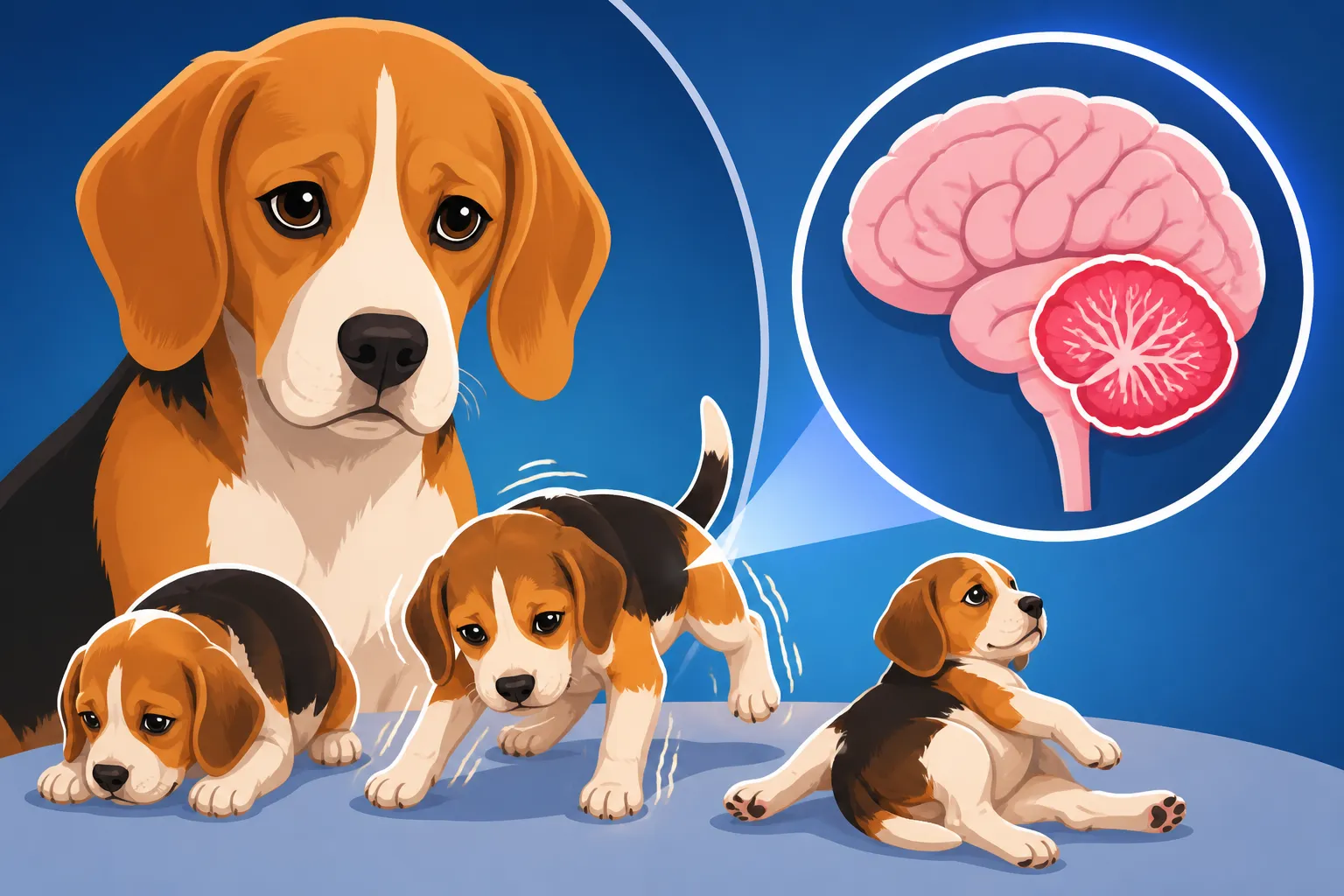
To truly grasp cerebellar degeneration, it helps to understand what the cerebellum is and why it's so vital. Think of the cerebellum as the brain's tiny, highly specialized coordinator. Located at the back of the brain, nestled above the brainstem, its primary job is to fine-tune voluntary movements. It doesn't initiate movement – that's the cerebrum – but it takes the cerebrum's commands and makes them smooth, precise, and balanced.
For a Beagle, with its boundless energy and characteristic "merry" gait, a healthy cerebellum is crucial. It allows them to navigate uneven terrain with their nose to the ground, to jump and play with agile precision, and to maintain their balance whether they're racing across a field or simply standing still. Without a properly functioning cerebellum, even the simplest actions become a struggle. Imagine trying to walk a straight line after spinning in circles; that's a mild, temporary approximation of what a dog with cerebellar dysfunction experiences. The messages from the brain to the muscles get scrambled, leading to a cascade of coordination problems that impact every aspect of a puppy's life.
The Genetic Link and Its Impact on a Litter
Cerebellar degeneration in Beagles is often linked to genetic factors, meaning it can be inherited from the parents. This is why when it appears, it's often seen in a litter rather than just an isolated puppy. If both parents carry a specific recessive gene, there's a 25% chance with each puppy in the litter that they will inherit two copies of the gene and thus develop the condition. This makes it a particularly cruel blow for breeders who have carefully planned litters, only to see this devastating issue arise.
The genetic basis means that even if the parents themselves show no symptoms (because they are carriers, not affected), they can still pass the gene on. This is a crucial point for anyone involved in Beagle breeding, highlighting the importance of genetic screening. Conditions like cerebellar degeneration underscore why responsible breeders prioritize health testing to ensure they are not inadvertently contributing to the prevalence of such diseases. For prospective puppy owners, understanding this genetic link can empower them to ask important questions about a puppy's parentage and genetic health clearances, safeguarding against future heartache. You want to ask your breeder about things like Beagle Health Testing Under CHIC and what specific genetic panels they run.
Recognizing the Early Signs in a Beagle Litter
The signs of cerebellar degeneration often become apparent as puppies begin to develop their motor skills, typically between a few weeks and a few months of age. It's a period of rapid change, and sometimes it can be hard to differentiate clumsy puppy behavior from genuine neurological issues. However, certain symptoms are red flags that warrant immediate veterinary attention.
Observable Symptoms and When They Appear
The onset of symptoms for cerebellar degeneration can vary, but generally, you'll start to notice issues once the puppies become more mobile, usually around 3 to 6 weeks old, and certainly by 2 to 4 months. One of the most common and striking signs is ataxia, which simply means a lack of muscle coordination. This isn't just a puppy being a bit wobbly; it's a persistent, noticeable imbalance.
Affected puppies might display a wide-based stance, holding their legs further apart than normal to try and maintain stability. When they walk, it often looks like an exaggerated, high-stepping gait, almost as if they're walking on stilts or marching. They might sway or stumble, especially when trying to turn or change direction quickly. You might also notice intentional tremors – a shaking that gets worse when the puppy tries to focus on a movement, like reaching for a toy or bending to drink water. Their head might bob or their limbs might shake. These puppies may also have difficulty judging distances, overshooting or undershooting when they try to step onto something or reach for food. Eating and drinking can become messy and challenging as coordination fails. As a Beagle owner, you know how crucial the nose is; difficulties in tracking a scent or even just putting their head down to eat can be indicators. This is a very different picture than just a clumsy puppy.
Here's a quick comparison of normal vs. concerning puppy behavior:
| Behavior Aspect | Normal Puppy Development | Potential Cerebellar Degeneration |
|---|---|---|
| Gait/Walking | Occasional stumbling, quick recovery, improving with age | Persistent wobbliness, wide-based stance, high-stepping |
| Balance | Might fall when running too fast or playing rough | Frequent loss of balance, swaying, difficulty turning |
| Coordination | Sometimes misses toys, slightly awkward movements | Difficulty judging distances, over/undershooting, clumsy eating |
| Head/Body | Smooth movements, occasional puppy tremors when excited | Head tremors (intention tremors), body swaying at rest |
| Energy Level | Bursts of play, then deep sleep | May be less inclined to play due to movement difficulty |
| Age of Onset | Clumsiness common through early months, gradually improves | Symptoms appear around 3-6 weeks, worsen or persist |
Differentiating From Normal Puppy Clumsiness
It’s crucial to distinguish genuine neurological problems from the adorable, yet often awkward, clumsiness of a normal growing puppy. All puppies, especially Beagles with their long bodies and short legs, can be a bit uncoordinated as they learn to navigate the world. They tumble, trip over their own feet, and occasionally miss a toy they're pouncing on. This is normal, and usually, they learn quickly, improving their motor skills day by day.
The key difference lies in the persistence, severity, and progression of the symptoms. A normal puppy's clumsiness tends to decrease over time as their muscles strengthen and their coordination improves. A puppy with cerebellar degeneration, however, will likely show persistent or even worsening signs. Their movements won't smooth out; instead, they might become more exaggerated, or they might develop additional tremors or an inability to correct their balance.
If you observe any of the concerning signs listed above, especially if they are consistent across multiple puppies in a litter, or if a single puppy seems significantly behind its littermates in terms of motor development, it’s imperative to consult a veterinarian immediately. Don't wait to see if they "grow out of it." Early intervention and diagnosis are critical, not just for the affected puppies, but also for understanding the genetic implications for the entire breeding program. When puppies are young, they can mask problems, so being observant about even subtle signs, especially when they are learning to stand and walk, is really important.
Navigating Diagnosis and Prognosis for Affected Puppies
Receiving a diagnosis of cerebellar degeneration for a beloved Beagle puppy, or an entire litter, is devastating. The road ahead involves careful veterinary assessment and difficult decisions regarding their care and future.
The Veterinary Diagnostic Process
When you bring a puppy exhibiting these concerning symptoms to the vet, the diagnostic process will be thorough. The first step will be a comprehensive neurological exam. Your vet will assess the puppy's gait, balance, reflexes, and coordination. They'll look for specific signs like ataxia, intention tremors, and nystagmus (involuntary eye movements), which are classic indicators of cerebellar dysfunction. They might observe the puppy walking, running, eating, and interacting with toys to get a full picture of their motor skills.
To confirm the diagnosis and rule out other conditions that can cause similar symptoms (such as certain infections, toxins, or other congenital defects), further tests will likely be recommended. These can include:
- Blood tests and urinalysis: To check for metabolic imbalances, infections, or organ dysfunction.
- Imaging: An MRI (Magnetic Resonance Imaging) of the brain is often the most definitive diagnostic tool. It can visualize the cerebellum and show any signs of atrophy (shrinking) or abnormal development. This can be costly, and this is where pet insurance, like a plan from Healthy Paws, can become a real lifesaver for unexpected diagnoses.
- Genetic testing: Since cerebellar degeneration can be hereditary, DNA tests can identify specific gene mutations in both affected puppies and their parents. This is invaluable for breeders to prevent future occurrences. Understanding the results of Reading a Beagle DNA Panel Result Line by Line can provide crucial insights for breeders and owners alike.
It's important to have an honest and open discussion with your veterinarian about the extent of the testing. They will guide you through what's necessary to get a clear diagnosis while considering the puppy's welfare and your financial capabilities.
What Families Can Expect for the Future
The prognosis for puppies diagnosed with cerebellar degeneration varies depending on the specific cause and severity. Unfortunately, many forms of cerebellar degeneration in Beagles are progressive, meaning the condition may worsen over time. There is currently no cure for most forms of inherited cerebellar degeneration, and treatment primarily focuses on supportive care and managing symptoms to improve the puppy's quality of life.
This can mean a lifetime of special considerations:
- Environmental adjustments: Making your home safe and accessible. This might involve ramps instead of stairs, non-slip flooring, and padded areas to prevent injury from falls.
- Physical therapy: Gentle exercises can help maintain muscle strength and flexibility, and improve balance to some extent.
- Nutritional support: Ensuring the puppy can eat and drink adequately, perhaps with elevated bowls or assistance.
- Medication: While there's no specific medication for the degeneration itself, some puppies might benefit from medications to manage secondary symptoms like tremors or discomfort.
The discussion about a puppy's quality of life is difficult and deeply personal. It's about balancing the puppy's comfort, joy, and ability to engage with the world against the challenges and potential suffering caused by the condition. Some puppies might have a milder form and live many years with adjustments, while others might have severe, rapidly progressing forms that limit their ability to thrive. These conversations with your vet will be crucial in making informed, compassionate decisions for your beloved Beagle. It might feel like a whirlwind, but remembering that you're doing your best for your furry family member is paramount.
Breeding Practices and Preventing Future Occurrences
The heartache of discovering cerebellar degeneration in a Beagle litter is a stark reminder of the immense responsibility involved in breeding. Ethical breeding practices are the cornerstone of preventing such inherited diseases from continuing through future generations. For both breeders and prospective puppy owners, understanding these practices is vital.
The Importance of Genetic Screening
For genetic conditions like cerebellar degeneration, prevention is almost entirely dependent on robust genetic screening. Reputable Beagle breeders understand that their role extends far beyond producing adorable puppies; it's about safeguarding the health and future of the breed. This means thoroughly testing all breeding stock for known genetic conditions, even if the parent dogs appear perfectly healthy. As mentioned, two seemingly healthy carriers can produce affected offspring.
The process of genetic screening typically involves collecting a DNA sample (often a cheek swab or blood sample) from potential breeding dogs. This sample is then sent to a specialized veterinary genetics laboratory, like those offered by institutions or companies such as Embark or Wisdom Panel, to analyze for specific gene mutations associated with various inherited diseases, including forms of cerebellar degeneration that have been identified in Beagles. If a dog is found to be a carrier, even if asymptomatic, a responsible breeder will make informed decisions about their breeding program. This might mean only breeding carriers to dogs that are clear (not carriers) to ensure no affected puppies are produced, or removing affected carriers from the breeding program entirely, depending on the specific gene and its prevalence. Genetic testing is a powerful tool, allowing breeders to make proactive choices that eliminate the risk of passing on devastating conditions to future generations. Asking What to Ask a Beagle Breeder About Genetics is a really smart move as a potential puppy owner.
Ethical Considerations for Breeders
Beyond the scientific aspect of genetic screening, ethical considerations play a huge role in responsible breeding. Breeders who encounter cerebellar degeneration in their lines face a difficult, but vital, decision-making process.
Firstly, they must be transparent with any prospective puppy buyers about the health history of their breeding dogs and previous litters. This includes openly discussing any genetic test results and explaining the implications. Integrity builds trust and ensures that new owners are fully informed.
Secondly, and perhaps most importantly, ethical breeders will take immediate steps to prevent future occurrences. This means carefully reviewing their breeding stock. If a specific genetic mutation is identified as the cause, then any carriers or affected dogs should be removed from the breeding program to avoid perpetuating the problem. This can be a financially and emotionally challenging decision, especially if a beloved champion dog is found to be a carrier. However, the long-term health of the breed and the well-being of individual puppies must always take precedence over personal attachment or show ring success.
Thirdly, breeders should actively seek advice from veterinary geneticists and breed clubs. Organizations like the National Beagle Club of America often have health committees that can provide guidance and resources for managing genetic health issues within the breed. Collaborating with other breeders and sharing information (while respecting privacy) can also contribute to a broader understanding and solution for genetic diseases. Ultimately, ethical breeding is about minimizing suffering and ensuring that every Beagle puppy has the best possible chance at a long, healthy life, free from inherited burdens like cerebellar degeneration. While pet insurance companies like Healthy Paws can help cover the costs of unexpected illnesses, preventing them through ethical breeding is always the first and best line of defense.
Disclaimer
The information provided in this article is for general informational purposes only and is not a substitute for professional veterinary advice, diagnosis, or treatment. Always seek the advice of your veterinarian or other qualified health provider with any questions you may have regarding a medical condition.