Beagle Field Trials and Running With a Pack
It’s a common frustration for many Beagle owners: you take your beloved hound to the park, let them off leash (if you dare!), and suddenly they’re gone, nose to the ground, utterly deaf to your frantic calls. This isn't stubbornness, but a deep-seated instinct passed down through generations. For these Beagles, a field trial isn't just a sport; it's a profound connection to their heritage, offering an outlet for their incredible scent drive and a chance to truly shine. This guide will walk you through the fascinating world of Beagle field trials, explaining what they are, why your Beagle might thrive in them, and how you can get started.
The Enduring Legacy of the Beagle's Hunting Instinct
Before Beagles became cherished family pets, they were, first and foremost, working hounds. Their entire physiology and personality were selectively bred for one purpose: to hunt small game, particularly rabbits and hare, in packs. Understanding this fundamental aspect of their history is crucial to appreciating why field trials are such a natural fit for the breed.
Understanding the Beagle's Ancestry and Purpose
Imagine the English countryside centuries ago, where hunters on foot would follow packs of small hounds, listening to their melodious cries as they pursued a rabbit through brush and field. This is the world from which the Beagle emerged. They weren't bred for speed or for visual tracking, but for their incredible nose and their ability to work cooperatively within a group. Early breeders focused on intelligence, stamina, and that distinctive bay that allowed hunters to follow the chase from a distance. The Beagle's very existence is tied to this specific form of hunting, where the dog's job was to find the scent, follow it meticulously, and "drive" the game back towards the hunters. It's a rich history that continues to influence every aspect of their behavior today. You can read more about The Beagle From English Rabbit Packs to American Homes.
The Unmistakable Scent Drive and Its Power
Ask any Beagle owner, and they'll tell you about the nose. It's legendary, almost supernatural in its ability to lock onto a scent and follow it relentlessly. Beagles possess an astonishing number of olfactory receptors – around 220 million – far surpassing our own. This isn't just a physiological quirk; it's the core of their being. When a Beagle puts its nose down, the world around it fades away. The scent trail becomes its entire universe, a complex tapestry of information that guides its every step. This intense focus, often mistaken for stubbornness, is actually the breed operating at its peak potential. It's Why a Beagle Walks With Its Nose to the Ground and why they often ignore your calls when a good scent takes hold.
This profound drive means that traditional obedience training, while necessary, often doesn't fully satisfy a Beagle's deepest urges. They need to use their nose, to solve scent puzzles, and to follow a trail. Field trials provide that outlet in a controlled, sporting environment, tapping directly into the genetic blueprint that makes a Beagle a Beagle. It’s not just a walk; it’s a mental marathon for them, deeply tiring and profoundly satisfying. This is also Why a Scent Walk Tires a Beagle Faster Than Running and why incorporating scent work into their daily routine is so beneficial.
Why the Pack Mentality Still Matters Today
Beagles were always pack animals. They hunted in groups, slept in groups, and relied on each other for survival. While our modern pet Beagles might be the sole canine in a household, that ingrained desire for companionship and cooperative work still runs deep. In a field trial, especially the pack formats, Beagles get to express this fundamental aspect of their nature. They learn to read other dogs, to work in concert, and to contribute to a collective goal. This isn't about being the fastest or the loudest, but about being a cohesive unit, following a common trail, and "giving tongue" (baying) to communicate their progress to their human companions.
This pack drive can manifest in unexpected ways at home, too. A Beagle suffering from Beagle Separation Anxiety in a Pack Breed might find immense comfort and purpose in regularly engaging with other Beagles in a structured activity like field trials. It fulfills an ancient longing, providing a sense of belonging and a vital job that satisfies their core instincts. Observing a pack of Beagles working together, their individual barks weaving into a harmonious chorus as they pursue a scent, is truly a sight to behold and a testament to their enduring heritage.
Deciphering Beagle Field Trials: Types and Formats
Beagle field trials are organized events where hounds compete to demonstrate their ability to trail rabbits (or sometimes hare) and work as a pack. These events are not about catching or harming the game; rather, they are judged on the dogs' scenting ability, persistence, voice, and cooperation. The focus is on showcasing the Beagle's natural instincts in a sporting context. There are generally two main categories: brace trials and pack trials.
Brace Trials: A Test of Partnership
Brace trials involve two Beagles working together, usually off-leash, to find and follow a rabbit scent. The dogs are released in a designated area, and judges follow on foot or horseback, observing their every move. The emphasis in brace trials is on the individual dog's ability to pick up a cold trail, work it out methodically, and communicate their progress through their unique bay. It's a test of focus, endurance, and harmonious cooperation between the two hounds and often, their handler.
In a brace trial, you're looking for precision. Does the Beagle cast efficiently to find the line? Do they stay on the correct line, even through difficult cover or when the scent is faint? How clear and distinct is their "chop" or "bay" as they work the trail? While they work as a pair, the judges are often evaluating each dog's performance individually, looking for steady, consistent work. This format is a wonderful way to showcase the nuanced skill of individual Beagles while still allowing them to work alongside a companion, echoing their natural inclination for teamwork.
Small Pack and Large Pack Hunts: Embracing the Chorus
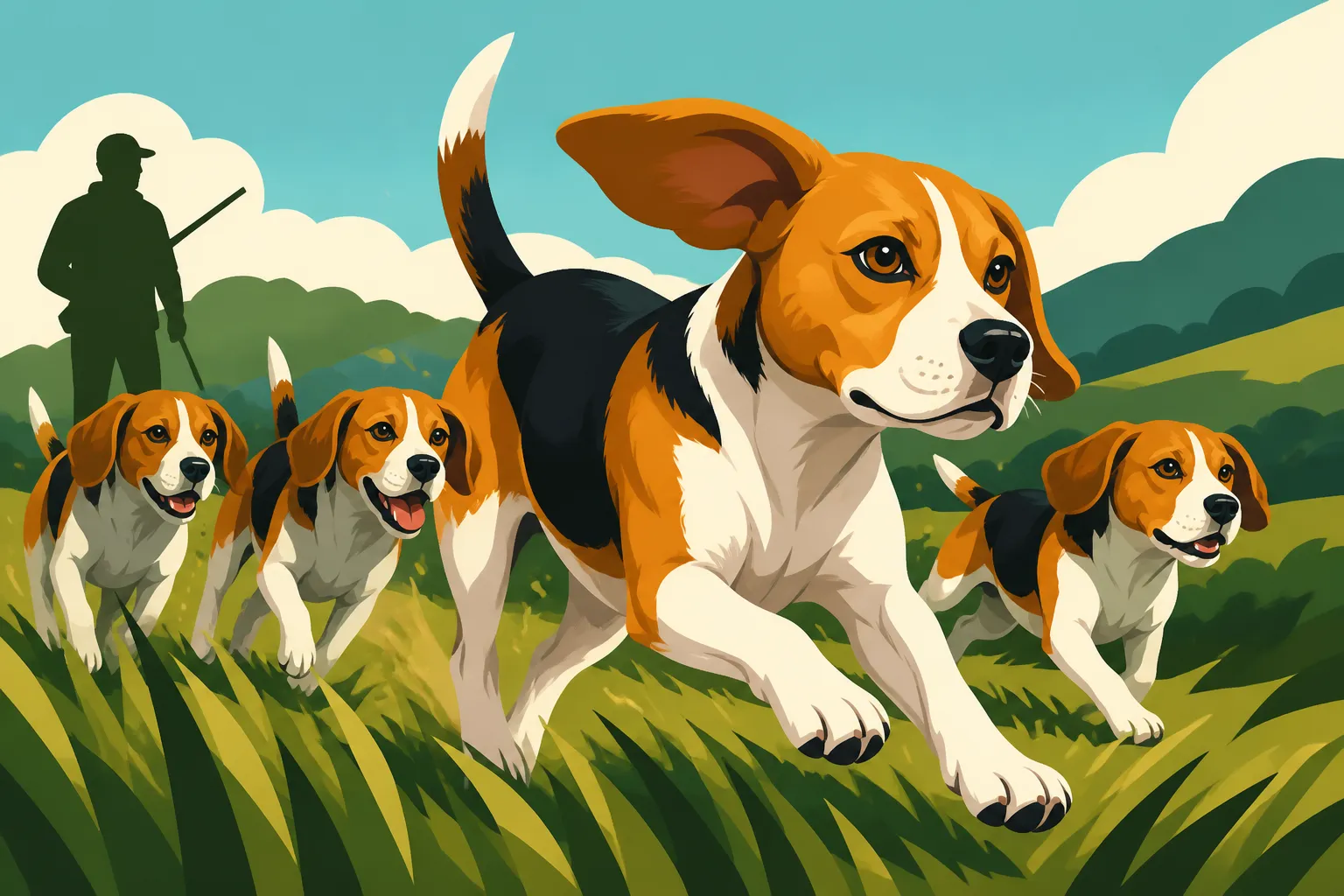
Pack trials take the concept of cooperative hunting to a grander scale. Small pack hunts typically involve groups of 4-8 Beagles, while large pack hunts can feature 10 or more. Here, the emphasis shifts slightly from individual precision to the collective harmony and efficiency of the pack. Judges assess how well the pack works as a unit, how they honor each other's finds, and the overall drive and voice of the group. It's a symphony of scent and sound.
Imagine a line of judges slowly making their way through fields and woods, listening for the distinctive sound of the pack. When one dog strikes a fresh scent and bays, the other dogs should immediately "honor" that call, converging on the line and lending their voices to the chorus. A good pack moves with purpose, pushing the trail, and maintaining a consistent bay. It’s less about a single standout performer and more about the cohesive, flowing movement and sound of the entire group. This truly embodies the traditional purpose of Beagles, as described in their breed history, where the entire pack contributed to the hunt. For an owner, watching their Beagle integrate into and contribute to such a powerful unit is incredibly rewarding. Beagle Packs and How a Hunt Was Run provides even more context on this fascinating tradition.
The Rules of the Game: What Judges Look For
While specific rules can vary slightly between organizations and regions, the fundamental criteria for judging Beagle field trials remain consistent. It’s all about evaluating how effectively and instinctively a Beagle performs its historical job.
Key Judging Criteria often include:
- Scenting Ability (Nose): The ability to find a cold trail, work out difficult scent lines, and differentiate between fresh and old scent.
- Voice (Tongue): The distinctive baying or "chop" a Beagle uses to announce a find and mark progress on the trail. Judges look for a clear, resonant voice that is consistently given when on a fresh line. Why Hunting Beagles Were Bred to Bay at All explains the importance of this trait.
- Drive/Desire: The hound's persistence and enthusiasm to keep working the trail, even when it's challenging or the game seems to have vanished.
- Teamwork/Pack Manners: How well individual dogs cooperate in a brace or pack, honoring each other's work, and staying together without undue squabbling or individual "running off" a separate line.
- Handling: While Beagles are meant to work independently, a handler's ability to guide, encourage, and safely manage their dogs without excessive interference is also subtly evaluated.
Judges are looking for the pure, unadulterated Beagle instinct in action. It's not about speed or flash, but about methodical, persistent, and vocal trailing. Dogs that consistently perform well in these areas are awarded points, ribbons, and often, titles that acknowledge their prowess in the field.
| Trial Type | Number of Beagles | Focus | Key Traits Judged |
|---|---|---|---|
| Brace Trial | 2 | Individual skill & partnership | Scenting accuracy, clear voice, cooperative work |
| Small Pack | 4-8 | Pack harmony & collective drive | Group cohesion, honoring finds, consistent pack voice |
| Large Pack | 10+ | Overwhelming pack performance | Strong collective drive, unified voice, sustained chase |
Getting Your Beagle Started in the World of Field Trials
The idea of field trials might sound intimidating, but it's a rewarding journey that many Beagle owners discover after realizing their dog needs more than just walks. It's about channeling that incredible drive into a constructive and historically accurate activity.
Building Foundational Skills for Field Work
Before you even think about entering a trial, your Beagle needs a solid foundation of basic obedience and good manners. This isn't just about control, but about creating a dog that is a joy to work with and safe in a variety of environments. Crucially, a strong recall is non-negotiable, even if your Beagle won't be off-leash during actual trials initially. Work on Building Beagle Recall Before the Nose Takes Over diligently, starting in low-distraction environments and gradually increasing the challenge.
Consider an online dog training program like BAXTER & Bella, which offers comprehensive resources for foundational obedience, polite leash walking, and building a strong relationship with your dog. While not specifically geared towards field trials, their approach to positive reinforcement and clear communication will set your Beagle up for success in any canine endeavor. You'll also want to practice Impulse Control Exercises That Suit a Beagle because while you want them to be driven, you also need them to be able to pause and listen to you when necessary. A Beagle needs to know its name, respond to basic commands, and be comfortable with handling by strangers (like judges!).
Finding a Mentor and a Local Club
The absolute best way to get into Beagle field trials is to find an experienced mentor and join a local Beagle field trial club. These communities are often incredibly welcoming to newcomers, eager to share their knowledge and passion for the sport. A mentor can guide you through the intricacies of the rules, help you understand what judges look for, and even help you find suitable training grounds. They can also offer invaluable advice on What a Beagle Experiences on a Scent Trail from a practical perspective.
Search online for "Beagle field trial clubs" or "Beagle hunting clubs" in your area. Attending a trial as a spectator first is highly recommended. It allows you to see the different formats, observe the dogs and handlers, and soak in the atmosphere. Don't be shy; approach club members and ask questions. Most are thrilled to talk about their Beagles and the sport they love. Local clubs often host training days or informal "fun runs" where you can introduce your Beagle to the field in a low-pressure setting, allowing them to practice their Beagle Tracking and Nose Work Titles skills in a natural environment.
Essential Gear and Safety Considerations
While Beagles are relatively low-maintenance, venturing into field trials does require some specific gear, primarily for safety and effective handling.
Essential Gear:
- Long Line: Even if your Beagle has decent recall, a long line (often 30-50 feet) is invaluable for training in open spaces, allowing your dog freedom to explore scents while still maintaining a connection to you. You can find a wide variety of durable long lines on Amazon. The Long Line Length a Beagle Actually Needs is a helpful resource for understanding this.
- GPS Collar/Tracker: Given a Beagle's intense focus on scent, a GPS tracker is a smart investment, especially when training in unfamiliar territory. It provides immense peace of mind should your dog get too far afield or you lose sight of them in dense cover.
- Comfortable Harness: A well-fitting harness protects your Beagle's neck and throat, especially if they tend to pull when excited by a scent. Avoid collars that put pressure on the trachea. Why a Harness Protects a Beagle's Neck highlights the importance of this.
- High-Value Treats: Even in the field, positive reinforcement is key. Bring plenty of small, irresistible treats for rewarding good behavior, especially during initial training sessions. You can learn more about The Treats a Beagle Will Work Hardest For.
- Water and Bowl: Field work is physically demanding. Always carry plenty of water for your Beagle, especially on warmer days.
- First Aid Kit: A basic canine first aid kit for minor cuts, scrapes, or burrs picked up in the field is always a good idea.
Safety is paramount. Always be aware of your surroundings, potential hazards like roads or livestock, and the weather conditions. Ensure your Beagle is up-to-date on all vaccinations and year-round Year-Round Parasite Prevention for a Beagle, as they'll be spending a lot of time in natural environments. Remember, the goal is a fun and safe experience for both you and your hound.
Beyond Competition: The Holistic Benefits of Field Trials
While the thrill of competition and the pursuit of titles are certainly appealing, the benefits of engaging your Beagle in field trials extend far beyond the winner's circle. It's a holistic experience that profoundly enriches a Beagle's life and strengthens the bond you share.
Mental and Physical Fulfillment for Your Scent Hound
Beagles are working dogs. They thrive when they have a job to do, and very few "jobs" are as perfectly suited to a Beagle as scent work. Field trials provide an unparalleled level of mental stimulation, challenging their incredible noses to solve complex puzzles, differentiate scents, and navigate varied terrain. This kind of intense focus and problem-solving is far more tiring and satisfying for a Beagle than a simple walk around the block. A Beagle that regularly engages in field work is often a much calmer, happier, and better-behaved companion at home. It addresses the very core of their being, fulfilling their genetic imperative.
Physically, field trials offer excellent exercise. Following a scent line, even at a relatively slow pace, requires stamina, agility, and endurance. They navigate uneven ground, push through dense undergrowth, and use every muscle in their body. This regular, sustained exercise contributes to their overall health and well-being, helping to maintain a healthy weight and strong musculature. It's a key component in keeping a Beagle fit, and preventing issues like Beagle Obesity Treated as a Health Problem, which can contribute to other health concerns like Beagle Arthritis Arriving in Middle Age.
Strengthening the Bond Between You and Your Beagle
There's something incredibly special about watching your Beagle do what they were born to do. When you engage in field trials, you're not just exercising your dog; you're connecting with their deepest instincts. You learn to read their body language, to anticipate their movements, and to understand the subtle cues they give when they're on a hot trail. This shared experience, working together towards a common goal (even if it's just following a scent), creates an unbreakable bond of trust and mutual respect.
For the Beagle, it's also about partnership. While they work with their nose, they are aware of their handler's presence, encouragement, and guidance. This collaborative effort deepens their understanding of you as their leader and companion, fostering a relationship built on shared adventure and profound understanding. The moments of watching your Beagle proudly baying on a fresh line, knowing you helped facilitate that joy, are truly priceless.
Contributing to the Preservation of the Working Beagle
By participating in Beagle field trials, you're doing more than just enjoying a sport; you're actively contributing to the preservation of the Beagle breed's working heritage. These events help to ensure that the vital instincts and characteristics that define a Beagle – their incredible nose, their melodious voice, their stamina, and their cooperative nature – are maintained and celebrated. It's a testament to the breed's origins and a way to honor the dogs that came before, keeping those crucial traits alive for future generations.
Breed clubs and organizations dedicated to field trials often work tirelessly to protect natural habitats for rabbits and hare, ensuring there are places for these dogs to continue honing their skills. You become part of a community that values not just the pet Beagle, but the working Beagle, recognizing the importance of nurturing these ancient instincts. It's a way to give back to the breed and ensure that the "merry little hound" continues to embody its true purpose.
Disclaimer
This article is for general informational purposes only and does not constitute professional advice. Laws, prices and regulations vary by location and change over time. Consult a qualified professional for guidance on your specific situation.