Gate Latches That Actually Hold a Beagle
Oh, the sheer anxiety of stepping outside for just a second, turning your back, and realizing the gate to your yard isn't quite as secure as you thought. Many Beagle owners know that heart-stopping moment when their furry, scent-driven companion makes a break for it, following an irresistible trail only they can detect. This guide is all about tackling that common nightmare by exploring the most effective gate latches and containment strategies that actually stand a chance against a determined Beagle.
The Great Escape Artist: Why Standard Latches Fail the Beagle Test
If you've ever owned a Beagle, you know they possess a unique blend of charm, intelligence, and an unshakeable determination when it comes to following their nose. This combination, while endearing in many ways, also makes them champion escape artists. What looks like a perfectly secure latch to us can often be a mere suggestion to a Beagle who has a mission.
Driven by Scent: The Irresistible Call of the Wild Outside the Gate
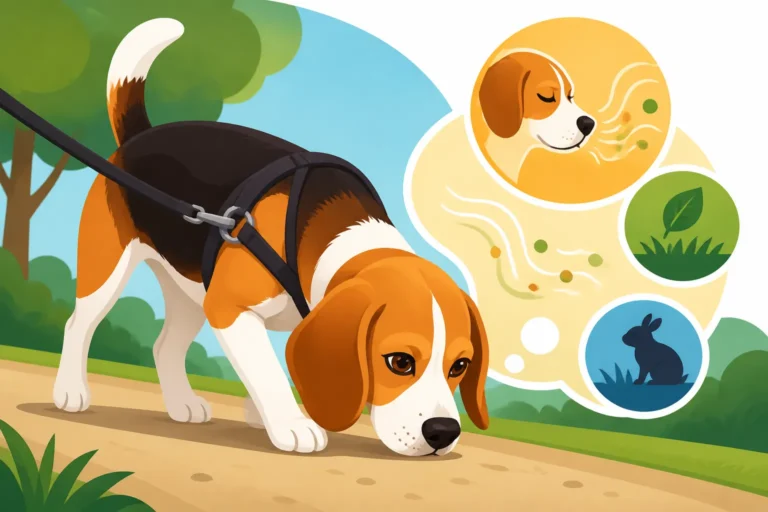
At the core of every Beagle's escape artistry is their nose. These hounds were bred for centuries to track game, primarily rabbits and hare, and their olfactory senses are legendary. We're talking about a dog with an estimated 220 million scent receptors, compared to our mere 5 million. When a compelling scent wafts from beyond your yard – perhaps a rabbit has recently crossed the property line, or a neighborhood cat has left its mark – it creates an almost magnetic pull for your Beagle. That scent becomes an all-consuming quest, overshadowing everything else, including your perfectly trained recall (at least, temporarily!).
Imagine trying to ignore the smell of your favorite food cooking when you're absolutely ravenous; that's a fraction of what a Beagle experiences when a captivating scent hits their nostrils. This inherent drive means they aren't just casually exploring; they are intensely focused on a goal. A flimsy latch or a gate that offers even a slight challenge is simply a puzzle to be solved on the way to their aromatic prize. It's not defiance; it's instinct. It’s why you'll often hear that Why a Beagle Should Never Be Off Leash Unfenced is practically a golden rule among Beagle owners.
A Beagle's Ingenuity: Paws, Noses, and Persistence
It's not just the scent drive; Beagles are smart, observant, and incredibly persistent. They watch how you open the gate, even if you think they aren't paying attention. A pawing motion, a nudge with the nose, a jump against the gate – they will try every trick in their book, and if one doesn't work, they'll move on to the next with relentless optimism. I've seen Beagles figure out complex lever mechanisms that stumped some humans! They can often learn to manipulate simple latches by bumping them with their bodies, pushing them up with their noses, or even using their paws to depress a lever. Their compact, muscular build allows them to exert surprising force, and their relatively short legs mean they can often get leverage against the lower parts of a gate.
This persistence is legendary. They don't just try once and give up; they will work at it, sometimes for extended periods, especially if that tantalizing scent is still drawing them forward. They thrive on problem-solving, and escaping the yard quickly becomes the most engaging puzzle of all. This is precisely why we spend so much time discussing Beagle Escape Artistry and How to Contain It with new owners. Understanding this innate drive is the first step to truly securing your perimeter.
Deconstructing Latch Weaknesses: What Your Beagle Already Knows
Before we dive into solutions, let's confront the common types of latches that Beagles consistently outsmart. Knowing their weaknesses is key to choosing a better defense.
The Simple Thumb Latch: An Open Invitation
The classic thumb latch, often seen on wooden gates, is probably the number one offender. You know the one: a simple lever you press with your thumb, which lifts a bar on the other side. From the inside, it’s just a bar resting in a catch. For a Beagle, this is hardly a challenge. They can often jump up, hit the lever with a paw, or even push the gate hard enough to make the bar bounce out of its resting place.
Even if they can't manage the lever directly, many Beagles learn to wiggle the gate. If the latch has any play, repeated pushing and pulling can eventually cause the bar to dislodge. These latches are primarily designed for convenience and a visual cue that the gate is "closed," not for holding back a determined canine Houdini. If your yard currently features one of these, consider it a temporary placeholder, not a permanent solution for your Beagle.
Spring-Loaded Snaps: The Illusion of Security
Spring-loaded gate snaps or carabiners might seem more secure at first glance, especially if you've clipped them through a hole. The issue is two-fold. Firstly, many of these only clip on one side, meaning a person inside the yard cannot easily open it from their side without reaching over or going around. This is inconvenient and often leads to the latch being left undone. Secondly, and more importantly for Beagles, some spring-loaded mechanisms, especially those with a simple 'pull-back' action, can be manipulated. A clever Beagle might learn to pull the gate inwards slightly, creating just enough slack to disengage the spring mechanism with their nose or a well-placed paw.
While a heavy-duty carabiner attached correctly can offer good temporary security, relying on a simple spring clip for daily use, especially on a frequently used gate, is risky. It’s an extra step that busy humans often forget, and even if remembered, a sufficiently motivated Beagle might just find a way. For more insights into these gaps in security, you might want to read about How a Beagle Finds the One Gap in a Fence.
Human Error: The Unlatched Gate
Perhaps the biggest "latch weakness" isn't the latch itself, but the human operating it. How many times have we been in a hurry, juggling groceries, kids, or just lost in thought, and simply forgotten to fully engage the latch? Or maybe we thought it clicked, but it didn't quite catch. Beagles, with their quick observations and even quicker dash, will exploit this oversight every single time. A gate left ajar, even for a split second, is an open invitation for a Beagley adventure.
This isn't about blaming anyone; it's about acknowledging a fundamental truth of busy lives. Our gates and latches need to be as foolproof as possible, minimizing the chances of human error. A latch that automatically secures itself, or one that provides a clear visual and auditory cue when properly engaged, can be a lifesaver for a Beagle owner's peace of mind.
Fortifying Your Perimeter: Latch Types That Actually Work for Beagles
Now, let's talk about the good stuff: latches designed to keep your Beagle where they belong. The key here is not just "stronger," but "smarter" – latches that require multiple steps, adult dexterity, or automatic engagement.
Double-Sided Deadbolts and Keyed Latches for Maximum Control
For ultimate security, especially on gates that aren't frequently used for quick access, a double-sided deadbolt or a keyed gate latch is incredibly effective. These latches require a key or specific manipulation from both sides of the gate, making it impossible for a Beagle to open.
- Double-sided deadbolts: These are essentially door locks for your gate. They require a key to lock and unlock from both the inside and outside. This completely eliminates a Beagle's ability to bump, paw, or push their way out. The downside? You'll always need a key, which can be inconvenient for quick trips in and out of the yard. However, for a side gate that's rarely used but needs absolute security, this is a top-tier choice. Many hardware stores or online retailers like Amazon offer robust gate deadbolts.
- Keyed gate latches: Similar to deadbolts, but often integrated into a more traditional latch style. These might have a lever on the inside that can be locked with a key, and a corresponding keyed entry on the outside. They provide excellent security and ensure that only those with a key can gain access or allow egress. The critical factor is remembering to lock it!
The benefit of these is that they actively prevent canine manipulation. There’s no lever to nudge, no spring to unhook. If it’s locked, it’s locked, full stop.
Gravity and Self-Latching Mechanisms: When You Forget, They Don't
This category is fantastic for gates you use frequently, offering an extra layer of protection against human oversight. These latches are designed to engage automatically when the gate closes.
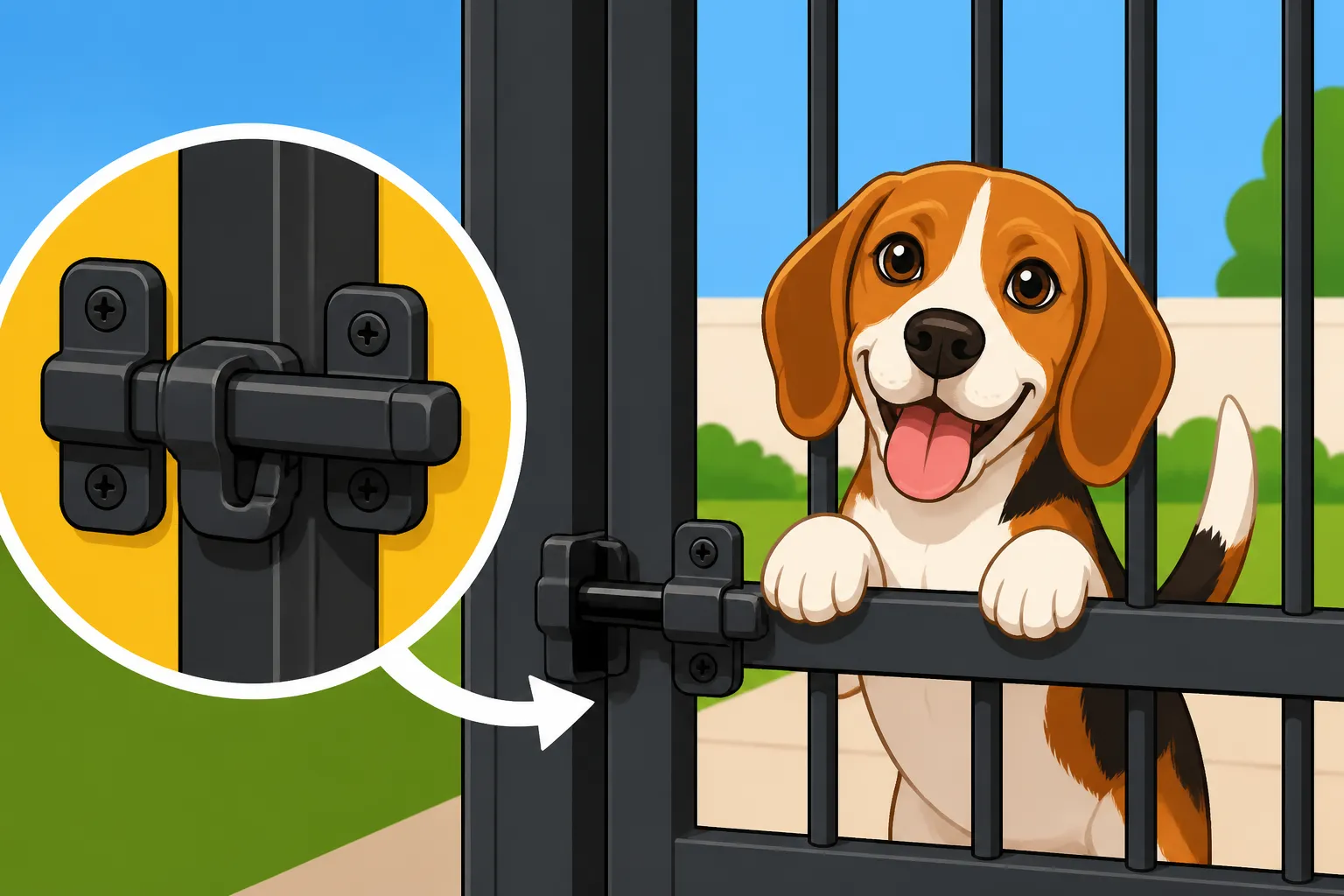
- Gravity Latches: These typically involve a U-shaped bar or a bolt that drops into a receiver when the gate swings shut. The weight of the bar or bolt does the work, making it incredibly difficult for a Beagle to dislodge it from the outside or inside. To open, you usually have to lift the bar straight up and back, a motion that's generally beyond a Beagle's capabilities. Look for sturdy metal versions that resist bending or breaking.
- Self-Latching Gate Hardware: These are systems where a spring-loaded bolt or hook automatically engages with a strike plate when the gate closes. Many come with a release lever on one side and can sometimes be adapted with a separate pull-string or handle on the other side. The key is to ensure the mechanism is robust and the release lever is positioned high enough or designed in a way that a Beagle cannot activate it. Brands like D&D Technologies offer options specifically designed for child and pet safety, often requiring a two-step action or a high-placed release. This means no more hoping you remembered to latch the gate properly; it does it for you.
When choosing a self-latching mechanism, always consider the build quality. A cheap plastic version might break under pressure from a determined Beagle, whereas a solid metal one will hold firm.
Supplemental Security: Padlocks, Carabiners, and Chain Reinforcement
Sometimes, the best solution isn't a new latch, but an enhancement to an existing one. Think layers of security.
- Padlocks: For any gate with a suitable hasp, a simple padlock can be an inexpensive but highly effective deterrent. This is especially good for gates that are less frequently used. Just make sure to get a weather-resistant lock for outdoor use. The obvious drawback is the need for a key and the time it takes to unlock and relock every time.
- Heavy-duty Carabiners or Snaps: While I cautioned against simple spring clips earlier, a very strong, lockable carabiner or bolt snap, like those used for rock climbing or heavy industrial applications, can be an excellent addition. These can be clipped through existing gate rings, chains, or purpose-drilled holes, effectively securing the gate. The key is "lockable" – some carabiners have a twist-lock sleeve that adds a layer of security. You can find robust options for these on Amazon. These are quick to open and close for a human, but virtually impossible for a Beagle.
- Chain and Hook: A sturdy chain wrapped around the gate post and secured with a hook or snap can reinforce a weaker latch. This adds another layer of manual security that requires human dexterity to undo. Again, for less frequently used gates, this is a solid backup.
Here's a quick comparison of popular latch types:
| Latch Type | Pros | Cons | Beagle Security Rating |
|---|---|---|---|
| Simple Thumb Latch | Easy to use, inexpensive | Very easy for Beagles to manipulate, prone to human error | 1/5 (Very Low) |
| Spring-Loaded Snaps (Basic) | Inexpensive, somewhat better than thumb latch | Can be manipulated, inconvenient, prone to human error | 2/5 (Low) |
| Gravity Latch | Self-latching, hard for dogs to manipulate | Requires proper gate alignment, can be stiff | 4/5 (High) |
| Self-Latching Gate Hardware | Automatically secures, often child/pet safe design | Can be more expensive, installation can be particular | 4.5/5 (Very High) |
| Double-Sided Deadbolt | Maximum security, impossible for dogs to open | Requires a key for both sides, inconvenient for frequent use | 5/5 (Excellent) |
| Keyed Gate Latch | Excellent security, human-controlled | Requires a key, risk of forgetting to lock | 4.5/5 (Very High) |
| Padlock/Locking Carabiner | Inexpensive, high security addition | Requires manual locking, can be slow to operate | 4/5 (High, as backup) |
Beyond the Latch: A Holistic Approach to Beagle Containment
A secure latch is critical, but it's only one piece of the puzzle. For a Beagle, you need a comprehensive strategy that addresses their intelligence, physical capabilities, and relentless drive.
Installation Matters: No Gaps, No Wiggle, No Excuses
Even the best latch in the world won't matter if your gate itself isn't properly installed. This means:
- Sturdy Posts: The gate posts must be firmly anchored in the ground, preferably with concrete, to prevent leaning or wiggling. A wobbly gate creates gaps and puts undue stress on the latch.
- Tight Fit: The gate should fit snugly within the frame, with minimal gaps around the edges. A Beagle can squeeze through surprisingly small openings, or work their nose into a gap to try and lever the gate open. This also includes the space under the gate. Ensure there's no more than an inch or two of clearance, ideally less, to prevent them from pushing their way under or getting their head stuck.
- Proper Latch Alignment: The latch and its receiver must align perfectly when the gate is closed. If they're off-kilter, the latch won't engage fully or can be easily dislodged. Take your time during installation to get this right.
- Quality Hinges: Don't overlook the hinges! Flimsy hinges can warp, sag, or break, compromising the entire gate's integrity. Invest in heavy-duty, rust-resistant hinges appropriate for the size and weight of your gate.
I can't stress this enough: a perfectly installed, solid gate makes the latch's job infinitely easier. The Fence Height That Actually Holds a Beagle and ensuring the gate matches that height and solidity are crucial.
The Human Element: Consistent Habits and Vigilance
Even with the best hardware, consistency from you and your family is paramount. Every single person who uses the gate needs to understand the importance of fully securing it every time.
- "Check the Latch" Rule: Make it a habit, a mantra, a family rule. "Did you check the latch?" should be as common as "Did you lock the front door?"
- No Propping: Never prop a gate open, even for a moment. This is how escapes happen.
- Visual Confirmation: Look at the latch. Does it look secure? Is it fully engaged? Don't just rely on the sound.
- Communication: If someone is going in or out of the yard, communicate with anyone else nearby, especially if there's a Beagle waiting by the door.
Training your Beagle not to "door dash" is also a huge part of this. Using positive reinforcement methods, like those advocated by BAXTER & Bella, to teach a "wait" cue at doorways and gates can drastically reduce the risk of them bolting the second a latch is undone. Beagle Door Dashing and Gate Safety is a concept that needs constant reinforcement.
Additional Layers of Protection: Collars, Cameras, and Backup Plans
No system is 100% foolproof, especially with a Beagle involved. Having backup plans can provide peace of mind and significantly improve the chances of a happy reunion should an escape occur.
- GPS Collars and Tags: These are indispensable for Beagles. If your escape artist does manage to slip past your defenses, a Beagle GPS Collars and Tracking Tags can be a literal lifesaver, helping you pinpoint their location quickly. Many devices connect to your smartphone and offer real-time tracking.
- Microchipping and ID Tags: This is basic, non-negotiable security. Ensure your Beagle is microchipped and that their ID tags are current with your phone number.
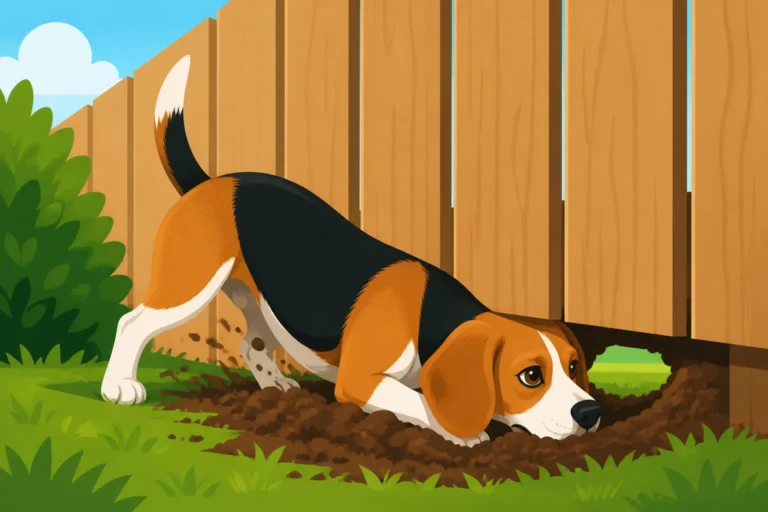
- Regular Fence Line Checks: Walk your fence line regularly, perhaps Walking the Beagle Fence Line Every Spring or even more often. Look for loose boards, damaged wire, or signs of digging. Beagles are known to exploit any weakness, including those they create themselves by Beagle Digging Under the Fence Line.
- Crate Training: A well-crate-trained Beagle has a safe, secure place to be when you can't supervise them directly, or when the gate might be open for extended periods. This isn't just about escape prevention; it's about their safety. Read more about Crate Training a Beagle Bred to Sleep in a Pack for tips.
- Emergency Recall: While a Beagle's nose can sometimes override their ears, a truly solid, emergency recall cue, trained diligently with high-value treats, is your ultimate backup. Practicing Beagle Recall and Why Your Voice Stops Registering is vital for those moments when instinct takes over.
- Cameras: Consider installing a motion-activated camera pointed at your gate. Not only can this alert you if someone opens the gate or if your Beagle is trying to escape, but it can also help you understand how they're attempting to get out, allowing you to reinforce specific weaknesses.
Ultimately, preventing a Beagle escape from your yard requires a multi-pronged approach. It starts with selecting the right, secure gate latches, ensuring they're installed flawlessly, maintaining vigilant human habits, and having backup safety measures in place. It's a bit of work, but the peace of mind knowing your beloved companion is safe and sound within your yard is absolutely priceless.
Disclaimer
This article is for general informational purposes only and does not constitute professional advice. Laws, prices and regulations vary by location and change over time. Consult a qualified professional for guidance on your specific situation.