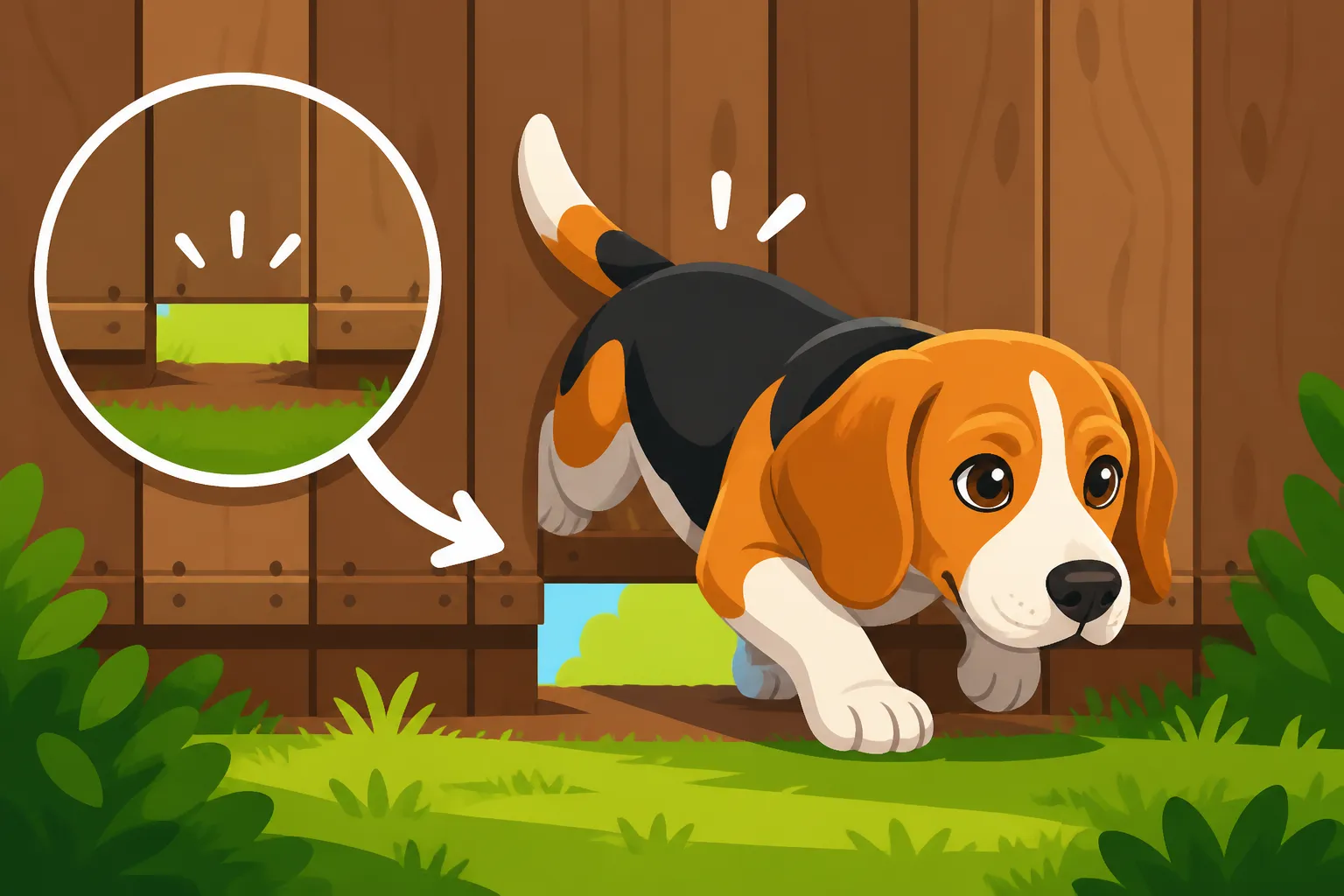
How a Beagle Finds the One Gap in a Fence
Oh, the sheer ingenuity of a Beagle determined to explore! Many of us have felt that heart-stopping moment when we realize our beloved hound has vanished from the seemingly secure yard. It’s a frustrating and often terrifying experience, leaving you wondering how on earth they managed to find that one gap. This guide delves into the masterful escape tactics of Beagles and, more importantly, how you can fortify your home against their incredible nose-driven adventures.
The Beagle's Innate Drive to Explore
It's not mischief; it's instinct. Beagles were quite literally bred for a job that demands relentless pursuit of scent, often over vast distances and through challenging terrain. This deep-seated drive means that their entire world revolves around what their nose tells them, and a fence, no matter how sturdy it seems to us, is often just a minor suggestion in the face of a captivating new smell. Understanding this fundamental aspect of their nature is the first step in effective containment.
The Power of Their Nose
Imagine having 220 million scent receptors, compared to our mere 5 million. That's the Beagle advantage. Their world is an intricate tapestry of odors, and a scent trail can be as compelling as a siren song. When a new smell wafts in from beyond the fence line – perhaps a rabbit, a squirrel, or even just another dog – it becomes an irresistible invitation. This isn't stubbornness; it's pure, unadulterated sensory absorption. For a Beagle, following that trail is simply doing what they were born to do.
This intense focus means that when their nose is engaged, the visual and auditory cues we use to train them often fall by the wayside. Your calls of "Come!" or "Stay!" might genuinely not even register in their brain, which is entirely consumed by processing that fascinating new aroma. It's why Why a Beagle Ignores You Halfway Down a Trail is such a common complaint among Beagle owners. Their world shrinks to the scent, and anything else fades into the background.
Intelligence and Problem-Solving
Beyond their noses, Beagles are remarkably intelligent problem-solvers. They are not just blindly following a scent; they are assessing their environment for obstacles and finding ways around them. A small crack in a wooden fence, a slightly loose gate latch, or even a patch of soft earth near the bottom of a chain-link fence can be meticulously investigated and exploited. They learn quickly through trial and error, remembering what works and what doesn't.
Think of it like this: if you were trying to reach a treasure on the other side of a wall, you wouldn't just give up if you couldn't jump over it. You'd look for a door, a window, or even a weak spot you could dig under. A Beagle approaches a fence with a similar mindset, especially when motivated by an enticing odor. They are constantly testing boundaries, both literally and figuratively. This is why Beagle Escape Artistry and How to Contain It is such a critical topic for new and experienced owners alike.
Common Fence Weaknesses Beagles Exploit
Most fences are designed to keep things in or out, but they aren't always designed with a Beagle's specific capabilities in mind. These clever hounds have an uncanny ability to find the tiny imperfections that other dogs might miss or simply ignore.
The Invisible Fence Fallacy
Many owners consider invisible fences, but for a Beagle, they are notoriously ineffective. An electronic fence delivers a static correction when the dog crosses a boundary, but it relies on the dog being deterred by that uncomfortable sensation. For a Beagle, the pull of a strong scent is often far more powerful than the temporary discomfort of a static shock. They might bolt right through it, especially if the motivation is high.
Once they've experienced the zap and are on the other side, often the fear of the static correction prevents them from coming back into the yard. So, you end up with a loose Beagle who is now afraid to return home. It creates a double-edged problem that can be incredibly distressing. This is why Why Invisible Fences Fail With a Beagle needs to be understood by anyone considering this option for their scent-driven companion.
Gaps, Cracks, and Loose Boards
Even the most well-built physical fence can have vulnerabilities. A Beagle will patrol the perimeter, testing every inch with their nose and paws. A gap that seems too small for them to squeeze through might be just enough for a determined Beagle to widen. Over time, wood fences can warp, pickets can loosen, and small gaps can appear at the bottom where the fence meets uneven ground. A Beagle will find these.
Imagine a section of your wooden fence where a board has slightly pulled away from the post, creating a vertical sliver. To us, it might look like nothing. To a Beagle, it's a potential doorway, especially if they can wedge their head in and push. They will use their strong necks and shoulders to apply pressure, slowly but surely expanding the opening until they can shimmy through. Inspecting your fence regularly, not just for large holes but for these subtle weaknesses, is paramount.
Digging Under the Fence Line
This is perhaps the most classic Beagle escape strategy. Given their history as scent hounds, digging is a natural behavior, often associated with tracking prey or creating a den. When a tantalizing scent passes under the fence, a Beagle’s instinct is to follow it, and their powerful front paws are perfectly designed for excavation. They can dig surprisingly quickly and deeply, especially in soft soil.
It doesn't take much for a determined Beagle to create an escape tunnel. They'll often start by pushing their nose and head under the fence, testing the ground. Once they feel a bit of give, the digging begins in earnest. Even if you see a small mound of dirt, assume it's part of a larger, more elaborate escape route. You might come out one morning to find a perfectly formed Beagle-sized tunnel beneath what you thought was a secure perimeter. This behavior is precisely why understanding Digging Barriers Along a Beagle Fence Line is so crucial.
Climbing and Jumping
While Beagles aren't typically known as climbers or high jumpers in the same vein as a greyhound or certain terrier breeds, a motivated Beagle can surprise you. They might not scale a six-foot fence, but they can certainly leverage anything nearby. A pile of firewood, an outdoor planter, a forgotten trash bin, or even a sturdy bush near the fence can provide just enough elevation for them to get a pawhold and scramble over.
They are also surprisingly agile, especially the smaller 13-inch variety. Some Beagles, particularly younger, more athletic ones, can jump higher than you might expect, especially if there's a compelling reason on the other side. A lower fence, say four feet, can sometimes be cleared with enough motivation and a running start. This is why considering The Fence Height That Actually Holds a Beagle is not just about their standing height, but their athletic potential when driven by scent.
The Art of the Beagle Escape: How They Survey and Execute
It's not usually a spontaneous act. A Beagle's escape is often a well-researched, patient, and highly motivated endeavor. They observe, they test, and they learn, perfecting their methods over time.
The Reconnaissance Phase
Before an actual escape attempt, a Beagle will often spend significant time surveying their territory. They'll walk the fence line repeatedly, nose to the ground, taking in all the smells. This isn't just a casual walk; they are mentally mapping the boundaries, identifying weak points, and registering scents that lead beyond their current confines. They're like canine detectives, gathering intelligence.
During this reconnaissance, they'll often test various sections of the fence. A little nudge here, a tentative paw scrape there, a sniff deep into a gap. They are gathering data on where the soil is softest, where a plank might be loose, or where a gate latch makes a slightly different sound when rattled. This phase is crucial because it gives them the information they need to plan their next move.
Trial and Error and Learning
Beagles are quick studies. If a small prod at a fence post yields a little give, they'll remember that. If digging at a certain spot starts to yield loose soil, they'll return to that spot. Each unsuccessful attempt provides valuable feedback, and each successful escape reinforces the behavior. They don't give up easily; persistence is a hallmark of the breed.
This learning process is why a fence that has been "Beagle-proof" for years might suddenly become vulnerable. Over time, a small weakness can become a larger one, and your Beagle, having observed it, will eventually exploit it. They learn from the environment, from our actions (or inactions), and from their own successes. This makes consistent vigilance and reinforcement on our part absolutely necessary.
Motivation: The Ultimate Driver
Ultimately, the driving force behind any Beagle escape is motivation. A strong, irresistible scent is often all it takes. Whether it’s the fresh trail of a rabbit, the lingering aroma of discarded food, or the presence of a neighboring dog, their inherent desire to follow that scent can override everything else. Without a compelling reason to stay, they will pursue the scent.
This motivation is why distractions within the yard sometimes aren't enough. While a stimulating environment with plenty of toys and companionship can help, it often won't negate the siren call of a powerful outdoor scent. We need to remember that their primary motivation is not necessarily to leave us, but to follow a scent. The escape is merely a means to an end. This is a key reason why Why a Beagle Should Never Be Off Leash Unfenced is a mantra for Beagle owners worldwide.
Beagle-Proofing Your Yard: Proactive Solutions
Knowing why and how Beagles escape is the first step; the next is implementing effective, proactive solutions to secure your yard. This often requires thinking like a Beagle and anticipating their moves.
Reinforcing the Fence Line
The most critical area to secure is the bottom of your fence. For diggers, a wire skirt or "L-footer" made of galvanized wire mesh can be incredibly effective. This involves burying a section of wire horizontally, extending outwards from the bottom of the fence, and attaching it to the fence itself. When your Beagle tries to dig, they'll hit the wire and be deterred. This barrier needs to extend at least 18-24 inches horizontally from the fence line and be buried deep enough to resist their digging efforts.
Alternatively, you can bury a physical barrier like concrete blocks, large rocks, or even a solid concrete footer along the entire fence line. This provides an impenetrable barrier. For wooden fences with gaps, reinforcing with additional pickets, hardware cloth, or even burying the bottom edge of the fence itself slightly into the ground can help. Regularly check for loose boards and nail them securely.
Gate Security Measures
Gates are often the weakest point in any fence system. Beagles are notoriously good at figuring out latches. Standard gravity latches can be easily nudged open if they're not fully engaged. Consider adding secondary locks, such as a barrel bolt or a carabiner clip, to all gates. Better yet, install a spring-loaded latch that automatically closes and locks, and then add a secondary manual lock.
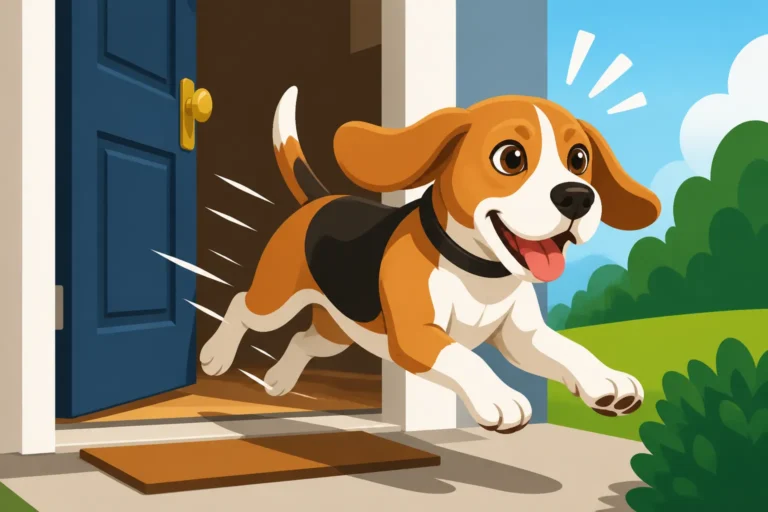
Also, check the gaps around your gate. If there's enough room for a Beagle to squeeze through the side, or if the bottom of the gate has a significant gap, those need to be addressed. Adding a piece of wood or metal flashing to cover these gaps can be a simple fix. Remember, a Beagle will often test the gate first, so making it absolutely secure is essential. Beagle Door Dashing and Gate Safety highlights just how quickly they can exploit a momentary lapse.
Adding Height and Obstacles
If your fence is on the lower side (e.g., 4 feet), and you have an athletic Beagle, consider increasing its height. Adding latticework extensions or another row of fencing material can elevate it. For Beagles who might use nearby objects to climb, eliminate those "boosters." Move firewood piles, garden furniture, or large planters away from the fence line. Trim back any bushes or trees that offer a jumping-off point.
For some, an inward-angled fence extension (a "coyote roller" or similar) can prevent climbing without significantly increasing the overall fence height. This makes it harder for them to get a grip on the top of the fence. While this might seem excessive, for a persistent escape artist, these measures can be game-changers.
Supervision and Training
Even the most fortified fence is no substitute for supervision. Whenever your Beagle is in the yard, especially if it's unsupervised for any length of time, it's an opportunity for them to plan and execute an escape. Active supervision means you're outside with them, engaging in play, training, or simply observing them.
Training plays a role too. While you can't train away their scent drive, you can build a strong foundation of recall and attention. Practicing Beagle Recall That Works Before the Nose Wins in a secure area and rewarding them heavily for checking in with you can make a difference. Even if they get out, a strong recall could be their ticket back to safety. Using positive reinforcement and high-value treats will make training more effective for a food-motivated Beagle. BAXTER & Bella offers online puppy training programs that emphasize positive reinforcement and building a strong bond, which can be invaluable for a Beagle's sometimes independent nature.
What to Do When the Escape Happens
Despite your best efforts, sometimes a Beagle still manages to slip through. It's a horrible feeling, but quick action and preparation can make all the difference in a safe return.
Immediate Action and Search Protocol
The moment you realize your Beagle is gone, time is of the essence. Don't panic, but act swiftly. Start by calling their name loudly and clearly, using your emergency recall word if you have one. Often, a Beagle won't go far initially, especially if they've just embarked on a scent trail. Check immediately around your property, in dense bushes, under sheds, and in any nearby familiar areas they might frequent.
Alert neighbors immediately. A friendly face or a familiar voice can sometimes coax a confused or focused Beagle. If you have another dog, sometimes bringing that dog out on a leash can help, as the missing Beagle might respond to their packmate's presence. Every minute counts, so don't delay in starting your search. The First Hour After a Beagle Goes Missing provides more detailed steps for this critical period.
Utilizing Technology for Recovery
Modern technology offers some valuable tools for Beagle owners. A GPS tracking collar can be a lifesaver, providing real-time location data for your escaped hound. Products available on Amazon, for example, offer various GPS tracking solutions that can be attached to your Beagle's collar. These devices can give you peace of mind and significantly reduce search times.
| Device Type | Description | Pros | Cons |
|---|---|---|---|
| GPS Tracker | Attaches to collar, uses cellular network/GPS for real-time location. | Real-time tracking, wide range, historical data. | Subscription fees, battery life, might be bulky. |
| Bluetooth Tracker | Small tag, uses Bluetooth to connect to your phone when within range. | No subscription, small, inexpensive. | Limited range (e.g., 100-300 ft), relies on others' phones for wider tracking. |
| RFID Microchip | Implanted under skin, read by scanner. | Permanent ID, required by many rescues/shelters, no battery. | Not a tracker, only identifies after found and scanned. |
| Engraved ID Tag | Standard tag on collar with name and contact info. | Immediate visual identification, no tech needed. | Can fall off, info can become outdated, not a tracker. |
Beyond GPS, ensure your Beagle is microchipped and that your contact information is always up-to-date with the microchip registry. This greatly increases the chances of a safe return if your dog is found and taken to a shelter or vet clinic. Always ensure your Beagle wears a sturdy collar with an Beagle ID Tags and Which Collar to Use that includes your current phone number and address.
Prevention Reinforcement
Once your Beagle is safely back home, it's time for a thorough re-evaluation of your fence security. Don't just patch the obvious hole; assume there might be other weak spots they were planning to exploit next. Walk the entire perimeter of your yard, looking for even the smallest vulnerabilities.
Consider adding new deterrents or reinforcements. If digging was the issue, implement a more robust digging barrier. If a low spot was the problem, add height or a physical block. This is also a good time to reinforce your training. Practice recall and engagement in the yard, making your presence and interaction more rewarding than any outside scent. Regularly inspect your fence, especially after heavy rains or strong winds, as these can create new weaknesses. Remember, a Beagle's curiosity and drive are relentless, and so should be your vigilance.
Disclaimer
This article is for general informational purposes only and does not constitute professional advice. Laws, prices and regulations vary by location and change over time. Consult a qualified professional for guidance on your specific situation.