Beagle Crate Size and Crying Through the Night
Bringing home a new Beagle puppy is one of the most exciting times, but it can quickly turn into a sleepless nightmare when those adorable little barks and whimpers turn into full-blown cries echoing from their crate all night long. You’re exhausted, worried about your new furry family member, and perhaps wondering if you’ve made a terrible mistake. Trust me, you haven't! That nighttime crying is a completely normal, albeit frustrating, part of puppyhood, especially for a pack-oriented breed like the Beagle. This guide is here to walk you through understanding why your Beagle is crying in their crate and, more importantly, how to choose the right crate size and implement strategies to help both of you get some much-needed sleep.
Understanding Why Your Beagle Puppy Cries at Night in the Crate
It’s easy to feel frustrated when you’re staring at the ceiling at 2 AM, listening to your puppy cry. But understanding the root causes of their distress can help you approach the situation with more empathy and a clearer strategy. Beagles, with their rich history as pack hounds, often struggle with being alone, especially in a new, unfamiliar environment.
The Beagle's Innate Pack Mentality
Think about a Beagle's ancestry for a moment. These dogs were bred for centuries to hunt in packs, always surrounded by their littermates and other hounds. From the moment they were born, they've known warmth, touch, and the comforting sounds and smells of their canine family. When you bring a tiny eight or ten-week-old Beagle puppy home, you've plucked them from that constant companionship and placed them in an entirely new world, often in a crate by themselves.
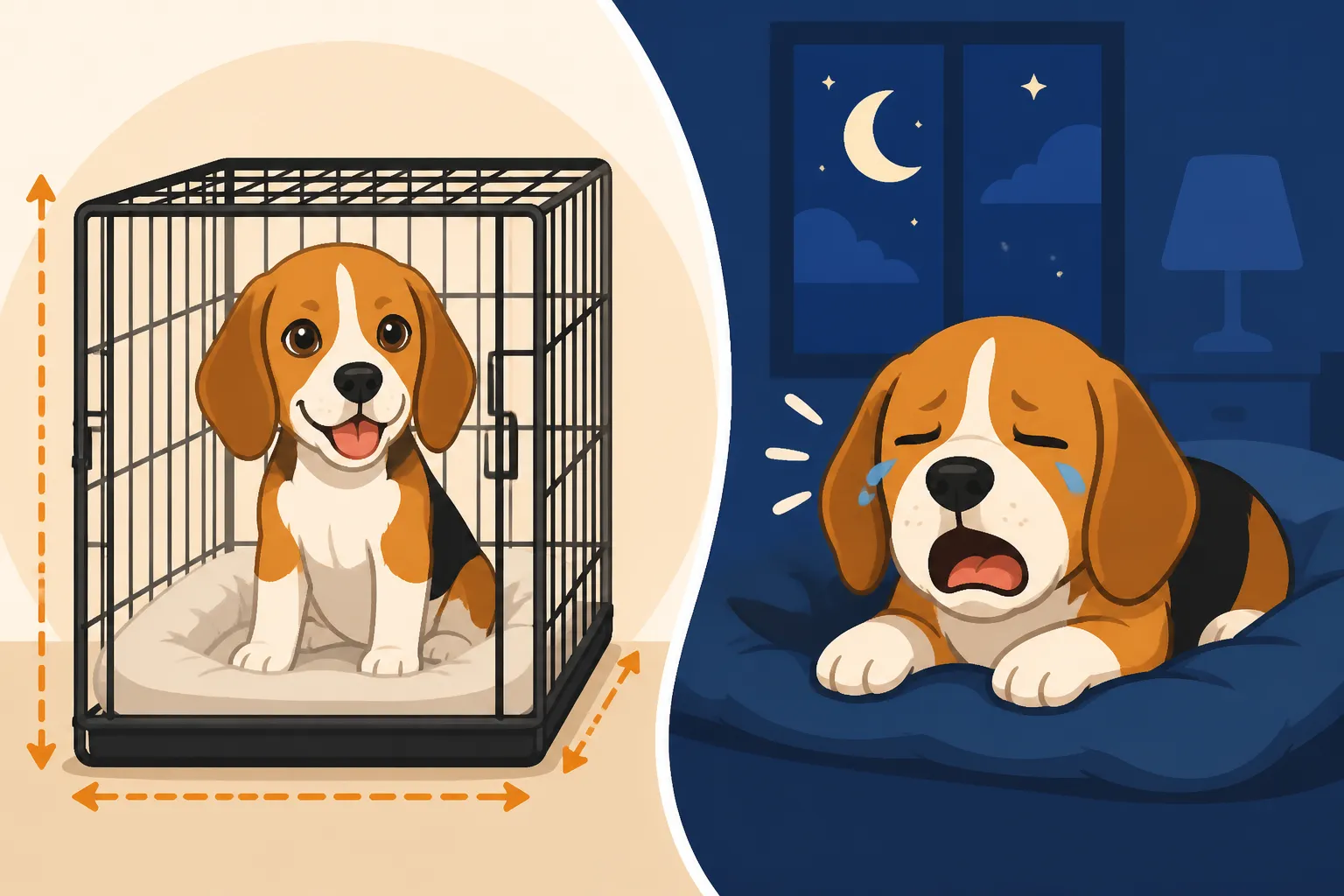
For a Beagle, crying isn't just a tantrum; it's a primal instinct, a call for their pack. In their natural world, a solitary puppy is vulnerable, and vocalizing is how they seek comfort and security. That little whimper or full-blown baying is their way of saying, "Hey! Where is everyone? I'm alone and I need my pack!" It’s crucial to remember this isn't personal, nor is it a deliberate attempt to manipulate you; it’s a deep-seated behavioral response.
Potty Needs and Physical Discomfort
Beyond the emotional need for companionship, there are very real physical reasons why your Beagle puppy might be crying. Puppies, especially young ones, have incredibly tiny bladders and bowels. They simply cannot hold it for a full eight hours, or even six, especially after a day of eating, drinking, and playing. What sounds like a desperate plea for attention might very well be a genuine, urgent need to relieve themselves. Ignoring these cries can lead to accidents in the crate, which is counterproductive to house training efforts.
It's also worth checking for other physical discomforts. Is the crate too hot or too cold? Does their bedding feel right, or is it bunched up? Are they hungry or thirsty? Even a small itch or an uncomfortable position can be enough to make a puppy fuss and cry. Before assuming it's just loneliness, rule out these basic needs first. A quick, quiet potty break can often resolve the issue, and if not, you can then focus on comfort.
Fear, Anxiety, and Unfamiliarity
Imagine being taken from everything you’ve ever known and placed into a strange, dark box in an unfamiliar house filled with new sounds and smells. That’s essentially what your Beagle puppy experiences. The new home, your scent (or lack thereof compared to their mother and siblings), and the unfamiliar sounds of your household can all contribute to fear and anxiety. The darkness of night can amplify these feelings, making every rustle outside or creak in the house seem terrifying.
The crate itself, even if presented positively during the day, can feel intimidating at night when they are truly alone. They might not yet associate it purely with safety and comfort. This is particularly true if they haven't had much positive exposure to the crate during their waking hours. A lack of proper Crate Training a Beagle Bred to Sleep in a Pack during the day can exacerbate these nighttime fears, making the crate feel less like a den and more like a prison.
Choosing the Right Crate Size for Your Beagle
Getting the crate size right is absolutely critical, not just for your Beagle's comfort but also for successful house training. Many new owners mistakenly get a crate that's too large, thinking they're being generous, but this can actually hinder progress.
The "Just Right" Rule: Enough Room, But Not Too Much
The golden rule for crate sizing is simple: a crate should be just large enough for your Beagle to stand up comfortably, turn around easily, and lie down fully stretched out. That's it. Any more space than this, especially in the early stages of house training, can create problems. The logic behind this is that dogs, by nature, are clean animals who prefer not to soil their sleeping area. If a crate is too big, your puppy might use one end as a bed and the other end as a bathroom, defeating the purpose of house training.
Conversely, a crate that is too small is inhumane. Your Beagle needs to be able to shift positions, stretch out their limbs, and not feel cramped or uncomfortable. A puppy forced into a tiny space for extended periods can develop physical issues and severe anxiety around the crate. It's a fine balance, but one that is essential to get right from day one.
Grow-With-Me Crates and Dividers
Since your Beagle puppy will grow surprisingly quickly, investing in a "grow-with-me" crate that includes a divider panel is a smart move. These crates are designed to accommodate your puppy's growth, allowing you to gradually expand their living space as they get bigger and more reliably house-trained. This means you buy one crate that lasts their entire puppyhood and into adulthood.
Many wire crates, which are a popular choice for Beagles, come with these adjustable dividers. You can find a wide range of options on platforms like Amazon, offering different strengths and features. The divider simply slides into place, effectively shrinking the usable space within the crate. As your puppy grows, and their bladder control improves, you can move the divider back, giving them more room without compromising your house training efforts.
Measuring Your Beagle for a Proper Fit
To determine the ideal crate size, you’ll need a measuring tape and your Beagle. Don’t just guess or rely solely on their current age. Here’s how to do it:
- Length Measurement: Have your Beagle stand up. Measure from the tip of their nose to the base of their tail (do not include the tail itself). Add 2-4 inches to this measurement. This will be the minimum interior length of the crate.
- Height Measurement: Have your Beagle sit or stand naturally. Measure from the top of their head to the floor. Add 2-4 inches to this measurement. This will be the minimum interior height of the crate.
Once you have these measurements, you can compare them to the dimensions provided by crate manufacturers. Remember, these are minimums, and a little extra wiggle room within these guidelines is always good for comfort, provided you’re using a divider if the crate is ultimately too large for their current size.
Here's a general guideline for Beagle crate sizes, though always measure your individual dog:
| Beagle Age/Size | Typical Weight Range | Approximate Crate Length | Approximate Crate Height | Notes |
|---|---|---|---|---|
| Puppy (8-12 weeks, small) | 5-10 lbs | 24 inches | 18-20 inches | Use divider for smaller initial space |
| Puppy (3-6 months, growing) | 10-20 lbs | 30 inches | 21-23 inches | Adjust divider as puppy grows |
| Adolescent/Adult (13-inch) | 18-25 lbs | 30 inches | 21-23 inches | Can use full 30-inch crate |
| Adolescent/Adult (15-inch) | 25-30+ lbs | 36 inches | 24-26 inches | Offers more room for larger individuals |
| Senior Beagle | 20-30 lbs | 30-36 inches | 21-26 inches | Comfort and ease of entry/exit are key |
Strategies to Minimize Nighttime Crying in the Crate
Once you have the right-sized crate, the next step is to implement consistent strategies to help your Beagle puppy feel secure and comfortable enough to sleep through the night. This isn't just about the crate itself, but the routine and environment you create around it.
Establishing a Solid Pre-Bedtime Routine
Consistency is a Beagle's best friend. A predictable routine signals to your puppy what to expect, reducing anxiety. About an hour or two before bedtime, you should:
- Limit food and water: This helps reduce the likelihood of needing to go potty in the middle of the night. Offer their last meal a few hours before bed, and take up the water bowl about an hour before their final potty break.
- Engage in calming activities: A vigorous play session an hour or two before bed can help burn off excess energy, but wind down with calmer activities right before crating. Gentle belly rubs, a quiet chew toy, or a short cuddle session can help them relax. Avoid highly stimulating games or training right before lights out.
- Last potty break: Take your puppy out for one final, no-nonsense potty break right before putting them in the crate. Make it all business—no play, no excitement. Reward them calmly if they go. This helps empty their bladder and reinforces that this is the last chance until morning. For more tips on this, read House Training a Beagle Against Outdoor Distraction.
Making the Crate a Cozy, Safe Den
The crate should be a haven, not a punishment. The way you set it up and where you place it significantly impacts how your Beagle perceives it.
- Comfortable bedding: Line the crate with soft, comfortable bedding. For puppies prone to chewing, choose durable, chew-resistant options. An old blanket or towel that smells like you can also provide comfort.
- Cover the crate: Many Beagles feel more secure if their crate is covered with a blanket or a specific crate cover. This creates a den-like atmosphere, blocking out visual distractions and making it feel more private and safe, mimicking the cozy, enclosed spaces dogs naturally seek.
- Location, location, location: For the first few nights, place the crate in your bedroom, right next to your bed. Your scent and the sound of your breathing will be incredibly comforting to a puppy who just left its pack. This close proximity reassures them that they are not truly alone. As they gain confidence, you can gradually move the crate further away, if that's your long-term goal.
- Something familiar: A soft toy or a puppy-safe chew can provide a distraction and comfort. Some people even use "snuggle puppies" with a heartbeat simulator to mimic the presence of a littermate.
Gradual Crate Training During the Day
Nighttime success heavily relies on positive crate associations built during the day. If the only time your Beagle sees their crate is when you're putting them in it for the night, they're going to associate it with abandonment.
- Short, positive intervals: Encourage your puppy to go into their crate during the day for short periods. Use high-value treats and praise. Start with just a minute or two, then gradually increase the time.
- Meals in the crate: Feeding your Beagle puppy their meals inside the crate can create a strong positive association. Close the door while they eat, then open it immediately afterward. This helps them view the crate as a place where good things happen.
- "Crate Games": Make the crate fun! Toss toys inside for them to retrieve. Teach them a "crate" cue and reward them for entering. The goal is for them to willingly and happily go into their crate. This proactive, positive approach is what organizations like BAXTER & Bella emphasize in their online puppy training programs, teaching owners how to build a strong foundation of positive associations.
Responding to Crying: When to Ignore, When to Act
This is arguably the trickiest part of nighttime crate training, and where many owners falter due to exhaustion and guilt.
- Distinguish cries: Over time, you'll start to learn the difference between a "potty cry" (often urgent, persistent, and might escalate quickly) and a "lonely cry" (sometimes a whine, a howl, or a more drawn-out, attention-seeking sound).
- Potty breaks: If you suspect it's a potty cry, take them out immediately. Don't make a fuss, don't play, don't talk much. Just pick them up, carry them outside to their designated potty spot, let them do their business, reward quietly, and immediately put them back in the crate. This teaches them that crying gets them out to relieve themselves, but not for fun or attention. If you let them play or give them too much attention, you risk reinforcing the idea that crying gets them out for fun time. For more on nighttime wakings, check out Beagle Puppy Sleep and Waking at Three.
- Ignoring lonely cries: This is tough, but crucial. If you've ruled out potty needs, thirst, hunger, or discomfort, and you believe it's a "lonely cry," it’s important to resist the urge to immediately let them out or comfort them with cuddles outside the crate. Doing so teaches them that crying will get your attention, reinforcing the behavior. Acknowledge their fear, but don’t give in to the attention-seeking.
- Gentle reassurance (briefly): If the crying is intense and prolonged, you can try a very brief, low-key reassurance. Place your hand near the crate, speak in a soft, calm voice, or even give a gentle shhh sound. Do not open the crate door. The goal is to let them know you’re there without rewarding the crying itself. Sometimes, simply knowing you’re near is enough for them to settle. If they continue, you may need to commit to ignoring for a period, remembering that this phase does pass. Keep in mind that for a breed prone to separation anxiety, like Beagles, you want to differentiate between a normal puppy adjusting and a dog genuinely distressed by being alone, which might lead to behaviors like Beagle Howling the Moment You Leave.
Long-Term Crate Success and Transitioning
Crate training isn't a one-and-done event; it's a process that builds over time. Your consistency and patience are the cornerstones of success, moving your Beagle from nightly cries to peaceful slumber.
Consistency is Key for Nighttime Comfort
I can’t stress this enough: consistency is paramount. Every family member needs to be on the same page regarding the crate rules, the bedtime routine, and how to respond to crying. If one person lets the puppy out for cuddles after crying, while another is trying to ignore it, your Beagle will become confused and the training will be much harder, if not impossible. Dogs thrive on predictability, and Beagles, being intelligent and somewhat stubborn, will quickly learn which behaviors yield the desired results.
Stick to your routine, maintain the positive associations with the crate, and use it consistently for naps and nighttime sleep. This reinforcement will solidify the crate as a safe, comfortable place for your Beagle, a true den where they can rest without fear or anxiety. Building this positive relationship with the crate helps prevent Beagle Crate Anxiety Against Crate Comfort from taking root.
When to Consider Moving the Crate
Once your Beagle puppy is reliably sleeping through the night without crying in the crate by your bedside, you might consider gradually moving the crate to its permanent location, if that's not your bedroom. This process should be slow and incremental.
- Small steps: Move the crate a few feet further away each night or every few nights.
- Observe and adjust: Pay attention to your Beagle’s response. If they start to regress and cry again, move the crate back to its previous, more comforting position for a few nights before attempting to move it again.
- Don't rush it: There's no set timeline for this. Some Beagles are fine with it after a week or two, others might need a month or more. The goal is to maintain their sense of security and avoid creating new anxieties.
Understanding That Not Every Beagle Loves Their Crate Forever
While crate training is an invaluable tool for puppyhood and can be a lifelong safe space for many dogs, it's also important to understand that not every Beagle will need or want to sleep in a crate their entire life. Many adult Beagles, once fully house-trained and past their destructive chewing phase, will happily sleep on a dog bed, a couch, or even in your bed.
- Individual preference: Some Beagles genuinely love their crate and will seek it out as their personal sanctuary, even with the door open. Others might prefer more freedom once they've matured.
- Alternatives for adult Beagles: If your adult Beagle is consistently well-behaved, not destructive, and reliably house-trained, you might consider leaving the crate door open at night or transitioning them to a dog-proofed room with a comfortable bed. This provides a secure, confined space without the physical enclosure of a crate. However, remember the Beagle's nose and curiosity; a dog-proofed room needs to be truly dog-proofed! For some Beagles, especially those prone to Beagle Separation Anxiety in a Breed Bred for Packs, the structure and security of a crate might always be beneficial when you're not around. For others, the freedom to stretch out might be preferred as long as they aren't going to get into trouble.
Ultimately, the goal is for your Beagle to feel safe, secure, and relaxed when left alone, whether that's in a crate, a designated room, or another trusted space. Your journey with a Beagle is one of patience, understanding, and adapting to their unique personality and needs.
Disclaimer
This article is for general informational purposes only and does not constitute professional advice. Laws, prices and regulations vary by location and change over time. Consult a qualified professional for guidance on your specific situation.