Window Screens and the Second Floor Beagle Risk
It’s a heart-stopping moment many Beagle owners dread: you turn your back for a second, and your sweet hound, driven by an irresistible scent, suddenly launches itself at a window screen. For those living in multi-story homes, the thought of that flimsy screen giving way, especially on a second floor, sends a chill down your spine. This guide is all about understanding why your Beagle is so drawn to windows, the real risks that standard screens pose, and practical steps you can take to keep your curious companion safe.
The Irresistible Pull of the Window for a Beagle
Beagles are extraordinary creatures, isn't that the truth? They are driven by an ancient, powerful instinct that centers around their incredible noses. When it comes to windows, what we see as a clear pane of glass and a mesh barrier, they see as a portal to a rich, unfolding world of information, adventure, and potential "prey."
A World of Scent and Sight
Imagine a world where every gust of wind carries a detailed narrative, a living newspaper written in smells. That's your Beagle's reality. Their olfactory system is mind-bogglingly sensitive, boasting hundreds of millions of scent receptors. For a Beagle, an open window is like turning on "scent TV" in high definition. Every breeze wafts in a symphony of odors – the neighbor's barbecue, a squirrel darting up a tree, another dog walking by, even the faint trail of a rabbit from hours ago. This constant influx of information is fascinating and deeply engaging for them, far more so than for us. This explains How Far a Beagle Can Actually Smell and why they seem to just zone out, nose twitching, taking it all in.
Beyond the smells, there's the visual feast. Birds at the feeder, children playing, cars driving past, the mail carrier approaching – it's all live entertainment. For a breed that was literally bred to track and follow, seeing movement outside can trigger an immediate desire to investigate. They might stand on their hind legs, paws on the sill, tail wagging, completely absorbed. This isn't just casual viewing; for them, it's often an active engagement with the world they instinctually want to be part of. What we see as a quiet moment, they see as potential action.
Instinctive Behaviors and Territoriality
Beagles are hounds, and hounds are vocal. When they’re perched at a window, especially one offering a clear view of the street, they might perceive every passerby or animal as something that needs to be acknowledged or, heaven forbid, chased. This often manifests as their famous baying, howling, or barking. It’s not just a casual sound; it's a deep, resonating vocalization that says, "I'm here! I see you!" or "Let's go hunt that squirrel!" Understanding Telling a Beagle Bark From a Bay From a Howl can help you differentiate between simple alerts and more intense, action-oriented calls.
Their territorial instincts can also kick in. A Beagle might feel a strong urge to "guard" their home or alert you to anything they deem unusual. They want to be involved, to protect, and to respond. This instinct, combined with their incredible scent drive, can lead them to push, scratch, or even jump at a window screen in their eagerness to get closer to whatever has captured their attention. They aren't thinking about gravity or the flimsy nature of a screen; they're operating on pure, unadulterated Beagle drive, which can be an incredibly powerful force.
The Dangers of Standard Window Screens
Let's be brutally honest: most window screens are simply not designed to withstand the determined efforts of a Beagle. We install them to keep out bugs, not to contain a dog with the strength and motivation to get to an intriguing scent or sight. This fundamental mismatch is where the danger lies, especially when you consider windows on higher floors.
The Fragility of Standard Screens
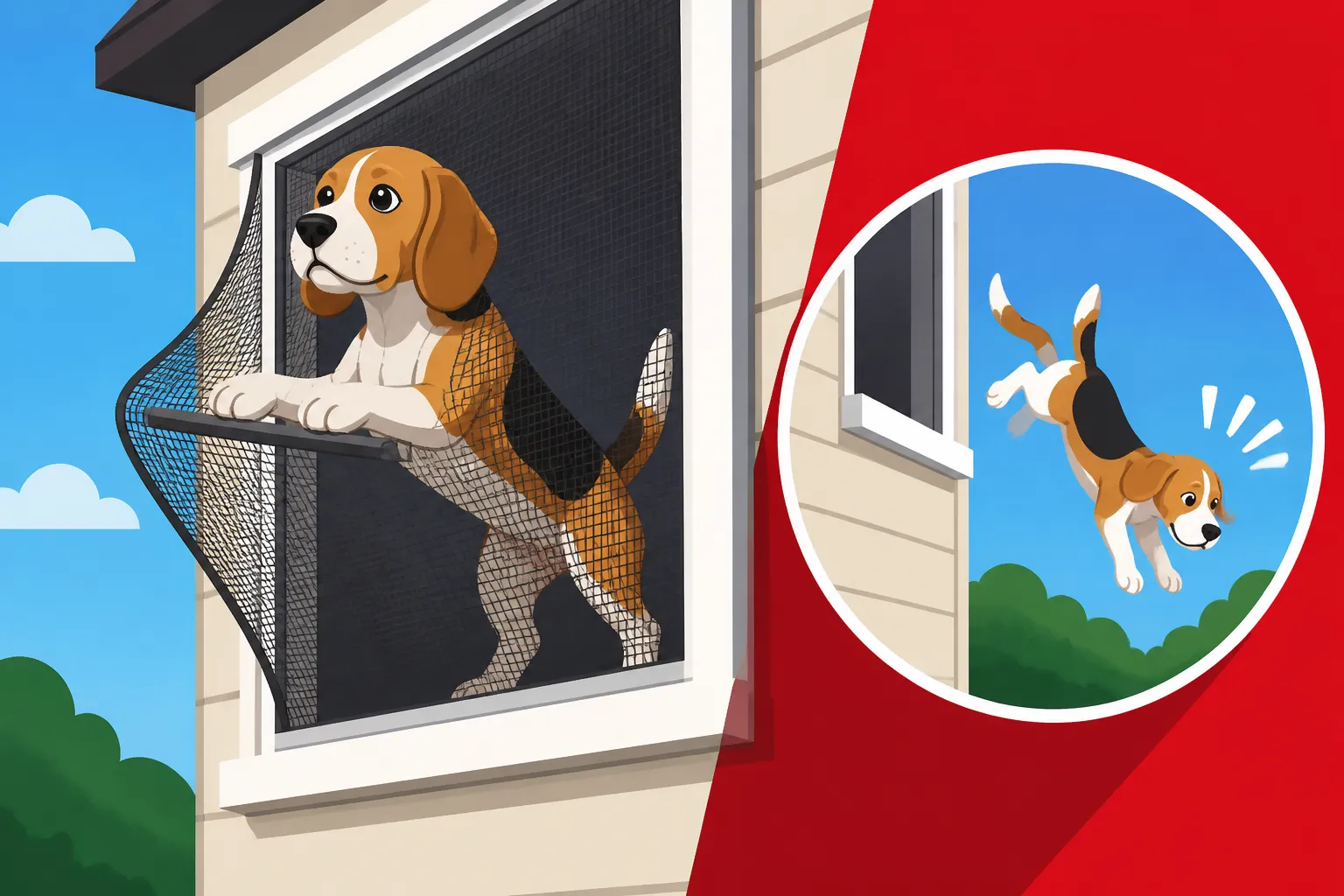
Standard window screens are typically made from lightweight fiberglass mesh or thin aluminum wire. They're held in place by a simple, often plastic, frame and tiny spline. Think about it: how much effort does it take to accidentally poke a hole in one with your finger, or for a strong gust of wind to dislodge it? Now imagine a twenty-five-pound Beagle, with its sharp nails, powerful paws, and single-minded focus, lunging at that same screen. It’s often no contest. The mesh can tear, the frame can pop out, or the entire screen can give way with surprising ease.
It's a common scenario: you leave a window open for a fresh breeze, perhaps on a warm afternoon. Your Beagle, sensing another dog walking past or a squirrel chattering on a nearby branch, jumps up. Its nails quickly find purchase, pulling and tearing the fragile mesh. In its excitement, it might even brace its paws against the sill and push with its powerful hind legs. Suddenly, there’s a gap, or worse, the whole screen detaches. This isn't just a minor inconvenience; it's a serious hazard, particularly if your Beagle is prone to going after The Seizure Triggers Beagle Owners Report Most or responding to other high-excitement events.
The Peril of a Second-Floor Fall
The true horror of a compromised screen becomes terrifyingly real when that window is on a second floor, or even higher. If a standard screen fails, your Beagle could easily fall out. The potential injuries are catastrophic: broken bones, severe head trauma, internal organ damage, or even death. The emotional toll on an owner witnessing or discovering such an accident is unimaginable. It's a scenario that keeps many of us up at night, replaying "what if" scenarios.
Even what seems like a "short" fall to us can be devastating for a dog. Their bone structure is different from ours, and landing incorrectly, even from a relatively low height, can cause significant impact injuries. Beyond the immediate physical trauma, there's the stress and disorientation of being lost and injured, far from home. A Beagle, even if not critically hurt, might run off in fear and pain, becoming a lost dog in a vulnerable state. Beagle Microchips and Getting a Lost Dog Back is always a good backup, but prevention is far better than relying on recovery after such a traumatic event. It's not just about the fall, it's about the entire terrible chain of events that can follow from a simple screen failure.
Reinforcing Screens for Beagle Safety
Given the inherent risks, it’s clear that standard screens aren’t going to cut it in a Beagle household, especially upstairs. The good news is that there are proactive measures you can take to make your windows much safer, turning potential escape routes into secure viewing platforms.
Pet-Proof Screens and Security Grilles
One of the most effective upgrades you can make is to replace your standard fiberglass or aluminum screens with pet-resistant mesh. These aren't your grandmother's screens! They're typically made from vinyl-coated polyester, making them far more durable and resistant to tearing and scratching from dog claws. Brands like Phifer PetScreen, for instance, are widely available and are specifically designed for homes with pets. You can find these materials at most hardware stores or through window installation services, and often, you can order pre-made pet-resistant screens on sites like Amazon to fit your existing window frames.
While pet-resistant screens significantly reduce the risk of tearing, they might not completely prevent a determined, strong Beagle from pushing the entire screen out if the frame itself is flimsy or not securely latched. For an extra layer of protection, particularly on second-story windows, consider installing security grilles or bars. These are physical barriers, often made of steel or sturdy aluminum, that are mounted either inside or outside the window frame. They allow you to open the window for airflow while preventing any pet (or person) from falling out. While they might slightly alter the aesthetic of your window, the peace of mind they offer, knowing your Beagle is secure, is invaluable.
Window Guards and Restrictors
Beyond replacing the screen material, you can also add various window guards and restrictors to limit how far a window can open. Child-safety locks or window restrictors are excellent options. These devices allow the window to open only a few inches – enough for ventilation, but not wide enough for a Beagle to squeeze through or for a screen to be easily dislodged by pushing. Many models can be easily installed on vinyl, wood, or aluminum window frames.
Another effective solution is a robust window guard. These are often metal or heavy-duty plastic barriers that fit into the window opening. They’re usually designed to prevent children from falling out, but they work just as well for preventing a Beagle escape. Look for guards that are designed to withstand significant force and that can be securely installed into the window frame or wall. Always ensure that any such device allows for quick release in case of an emergency, such as a fire. When selecting these, prioritize robust construction over convenience. The goal is to create a physical barrier that even the most determined Beagle can't bypass.
Training and Management to Prevent Screen Incidents
While physical barriers are crucial, addressing your Beagle's behavior and managing their environment effectively will always be your strongest defense. A combination of smart training and careful supervision can prevent many dangerous situations from ever arising.
Managing Access and Supervision
The simplest, yet often most overlooked, solution is constant vigilance. Never leave an open, unscreened, or insecurely screened window unattended when your Beagle has access, especially on upper floors. If you want fresh air, ensure all windows are secured with pet-proof screens and/or window restrictors. When you can’t actively supervise, using a crate or designating a secure, pet-proofed room can be a lifesaver. Your Beagle can relax in a safe space while you’re out, or when you’re preoccupied with tasks that prevent you from keeping a close eye. For tips on making a crate a cozy sanctuary, you might want to read Beagle Crate Size and Crying Through the Night.
It's also incredibly helpful to teach your Beagle specific commands that discourage window-related antics. A solid "leave it" command can redirect their attention away from a squirrel or passing dog. Beagle Leave It Training With Real Food Down emphasizes practicing with high-value distractions, and the window offers a perfect training ground. Similarly, teaching "off" can instruct them to get down from the window sill or stop pawing at the screen. Consistency is key here; every time they get too excited at the window, calmly redirect them and reward them for disengaging.
Providing Alternative Enrichment
A bored Beagle is a mischievous Beagle. Many window-related incidents stem from a hound simply looking for something to do, and the outside world offers endless possibilities for entertainment. Providing ample exercise and mental stimulation can significantly reduce their desire to "break out" for an adventure. Daily, engaging walks are a must. These shouldn't just be potty breaks; let them explore with their noses. Scent Walks That Wear a Beagle Out explains how fulfilling these can be for your dog, tapping into their natural instincts in a safe way.
Beyond walks, incorporate puzzle toys and interactive games into their daily routine. These can keep their minds busy and their bodies engaged. Brands like KONG offer a variety of puzzle feeders that dispense treats slowly, or you can find snuffle mats and other brain games on Amazon. The goal is to make their indoor environment as stimulating as the great outdoors, or at least enough to prevent them from becoming obsessed with what's beyond the window. Our friends at BAXTER & Bella also have fantastic online training resources that focus on enriching activities and redirecting unwanted behaviors through positive reinforcement. This can include anything from learning new tricks to engaging in indoor scent games that challenge their incredible noses.
Addressing Underlying Anxieties
Sometimes, excessive window vigilance or attempts to escape aren't just about boredom or curiosity; they can be symptoms of underlying anxiety or territorial issues. A Beagle that barks relentlessly at every sound or shadows, or desperately tries to dig or scratch its way through a screen, might be feeling stressed or overly protective. If these behaviors are persistent and intense, it’s worth investigating further.
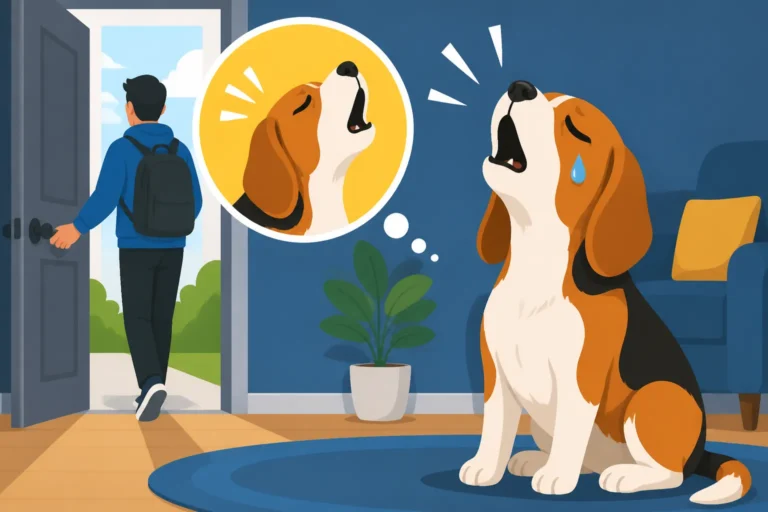
One common culprit could be Beagle Separation Anxiety in a Breed Bred for Packs. If your Beagle’s destructive window behavior happens primarily when you leave the house, they might be trying to follow you or reduce their distress by attempting to escape. In such cases, managing the window itself is only part of the solution. You might need to work on desensitization, counter-conditioning, or even consult with a professional dog trainer or veterinary behaviorist. They can help identify the root cause of the anxiety and develop a tailored plan, which might involve medication in more severe cases. Remember, a happy, secure Beagle is less likely to engage in risky behaviors, even when the lure of an outside scent is strong.
Here's a quick comparison of common screen types:
| Feature | Standard Fiberglass/Aluminum Screen | Pet-Resistant Screen (e.g., Phifer PetScreen) | Security Grille / Bar System |
|---|---|---|---|
| Primary Purpose | Insect barrier, basic ventilation | Pet containment, insect barrier | Intruder deterrence, fall prevention, pet containment |
| Material Strength | Low (easily torn/pushed) | High (vinyl-coated polyester, PVC-coated polyester) | Very High (steel, aluminum) |
| Tear/Scratch Resistance | Poor | Excellent | N/A (physical barrier) |
| Visibility | Excellent | Good (slightly reduced) | Can be obstructed, depends on design |
| Airflow | Excellent | Good (slightly reduced) | Excellent (if open behind bars) |
| Installation Difficulty | Easy (DIY or professional) | Moderate (DIY or professional) | Professional recommended |
| Cost | Low | Moderate | High |
| Beagle Safety Level | Very Low | Moderate to High (prevents tearing) | High (prevents pushing/falls) |
Ultimately, safeguarding your Beagle around windows, especially those on higher floors, requires a multi-layered approach. It’s about understanding their deep-seated instincts, providing physical barriers that actually work, and consistently reinforcing good behavior through training and enrichment. Your peace of mind and your Beagle's safety are absolutely worth the effort.
Disclaimer
This article is for general informational purposes only and does not constitute professional advice. Laws, prices and regulations vary by location and change over time. Consult a qualified professional for guidance on your specific situation.