Telling a Beagle Bark From a Bay From a Howl
One of the biggest surprises, and sometimes frustrations, for new Beagle owners is just how vocal these little hounds can be. It's not just a generic "woof" either; they have a whole repertoire of sounds, each with its own meaning and intensity. Understanding whether your Beagle is barking, baying, or letting out a full-throated howl can feel like trying to decipher a secret language, but knowing the difference is key to understanding their needs and managing their expressive nature. This guide will help you decode your Beagle's unique vocalizations, so you can better communicate with your beloved companion.
The Distinct Sounds of Beagle Communication
Beagles are hounds, through and through, and their voices are their primary tool for communicating in the field and, by extension, in your home. While all dogs bark, a Beagle’s vocal range includes distinct sounds that are ingrained in their genetic makeup as scent-tracking pack animals. Disentangling these sounds is the first step toward understanding your furry friend.
What is a Beagle Bark?
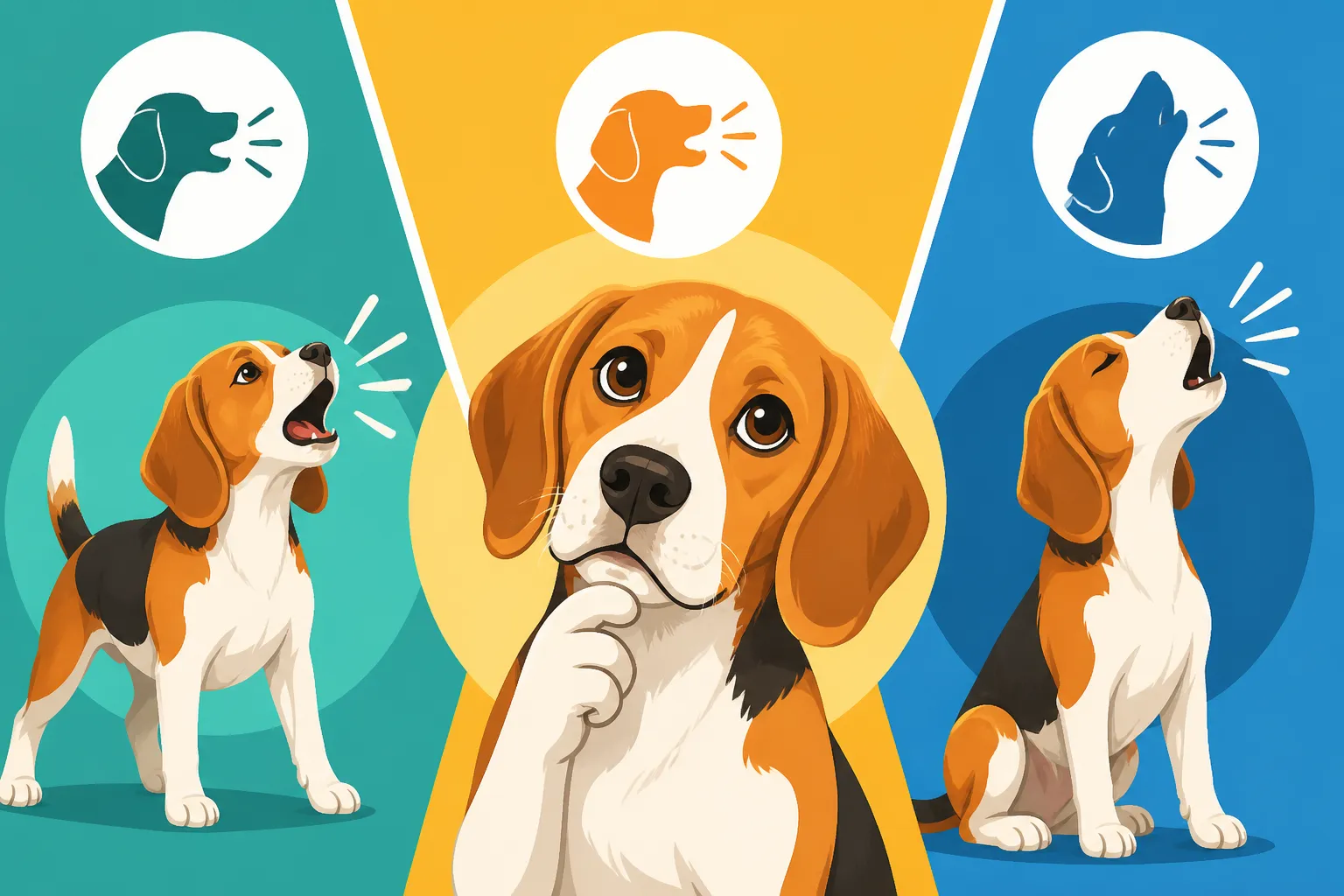
A bark, in the general dog world, is usually a short, sharp burst of sound. For a Beagle, their bark can still be quite distinct. Think of it as their "attention-getter" or "alarm bell." It’s typically more abrupt and repetitive than their other vocalizations. Your Beagle might bark when someone approaches the front door, when they spot a squirrel darting across the yard, or when they want your immediate attention because their food bowl is empty – even if it’s only been five minutes since breakfast.
These barks are usually sharp, can be quite high-pitched, and often come in quick succession. They might sound excited, assertive, or even a bit frantic, depending on the trigger. It’s the sound that says, "Hey, something's happening!" or "Look at me!" If you have a Beagle that stands at the window and barks at every passing leaf or person, you’re experiencing their alert bark firsthand. It’s an essential part of their communication toolkit, signaling changes in their environment or their desire for interaction.
The Iconic Beagle Bay
Now, this is where Beagles really set themselves apart! The bay is the quintessential Beagle sound, the one that makes them recognizable even if you can’t see them. It's a long, drawn-out, almost mournful, yet incredibly melodious sound that carries for a significant distance. Unlike a bark, a bay isn't short and sharp; it's sustained, with a rising and falling pitch that can truly tug at your heartstrings or, depending on the time of day, perhaps your patience! You might hear that unique sound described in more detail in What a Beagle Bay Actually Sounds Like.
A Beagle’s bay is deeply rooted in their hunting heritage. When Beagles were used in packs to track rabbits and hare, the bay was how they communicated their progress to the hunters and to each other. It told the pack, "I've found the scent!" or "The trail is hot!" In your home environment, this often translates to your Beagle baying when they catch a particularly interesting scent in the yard, when they see a squirrel or rabbit, or sometimes, out of sheer excitement during play. It’s an expression of intense focus and sensory engagement, a vocal celebration of their powerful nose at work.
Understanding the Beagle Howl
The howl is another ancient canine vocalization, and Beagles, with their pack-oriented nature, certainly employ it. While often confused with a bay, a howl tends to be even more sustained and usually carries a more melancholic or lonely tone. Picture a wolf howling at the moon; a Beagle's howl has a similar, though smaller, resonance. It’s a prolonged vocalization, often with less of the "sing-song" quality of a bay, and more of a steady, rising and falling tone that feels like it's coming from their very soul.
Howls are typically used for long-distance communication. In the wild, it helps pack members locate each other. For your Beagle, this often means howling when they feel isolated, whether due to separation anxiety, loneliness, or even in response to other sounds like sirens or distant dog howls. If your Beagle starts howling the moment you leave the house, it's a strong indicator they might be feeling anxious about being alone. Understanding Beagle Howling the Moment You Leave is crucial for addressing this particular vocalization, as it often signals a deeper emotional state than a simple bark or bay.
Why Beagles Are So Vocal
It’s not just that Beagles can make these sounds; it’s that they are built to use them. Their vocal nature isn't a flaw, but a feature designed over centuries of selective breeding. Trying to "train out" a Beagle’s voice completely is often an uphill battle and can even be detrimental to their natural instincts.
A History of Hunter's Vocals
Let's remember where Beagles come from. They were bred for centuries in England and later in America to hunt small game, primarily rabbits and hare. These hunts were often conducted on foot, with packs of Beagles working together. In such a scenario, the hunters needed to know exactly what the dogs were doing, even when out of sight in dense cover. The dogs, in turn, needed to communicate with each other.
Their voices became indispensable. The bay signaled the "find" of a scent and the continuation of the chase. A different bark might have indicated a visual sighting or a change in direction. This wasn't just random noise; it was a complex communication system critical for a successful hunt. So, when your Beagle bays at a squirrel in your backyard, they are simply performing a deeply ingrained behavior, carrying out the "job" they were bred for, even if the stakes are now just a chase rather than providing dinner.
Scent-Driven Instincts and Sound
Beagles possess an extraordinary sense of smell, arguably one of the best in the canine world. We're talking about an ability to detect scents thousands of times more acutely than humans. This incredible sense drives their world. When a Beagle's nose locks onto an interesting scent – be it a rabbit trail, a hidden treat, or even a fascinating patch of dirt – their entire being becomes absorbed. You can delve into The 220 Million Receptors Behind a Beagle's Nose to appreciate the sheer power of their olfactory system.
This intense focus on scent often translates into vocalizations. That thrilling moment of discovery, the adrenaline of pursuing a scent trail, naturally expresses itself in their characteristic bay. It’s an involuntary, almost visceral response to their primary sensory input. Imagine being so utterly consumed by a delightful aroma that you just had to sing about it! That's essentially what a Beagle does. This means that a quiet Beagle on a scent walk is a rare creature; they are almost certainly baying internally, if not externally, with every interesting whiff.
Pack Animal Roots and Communication
Beagles are pack animals. Historically, they lived and hunted in groups, relying on each other for survival and cooperation. In a pack environment, vocal communication is paramount for maintaining cohesion, warning of danger, and expressing social status. Your Beagle, even as a pampered house dog, still carries these deeply ingrained instincts.
When your Beagle howls in response to a distant siren, they aren't necessarily distressed; they might just be participating in a "group chorus," instinctively joining what they perceive as another pack's call. When they bay excitedly during a play session with another dog, they're communicating their joy and engagement to their playmate. And when they howl out of loneliness or distress, it's their primal call to their "pack" (you!) to come back and reassure them. This strong pack drive is why some Beagles struggle with Beagle Separation Anxiety in a Pack Breed and might use their voice extensively when left alone.
Common Triggers for Each Vocalization
Understanding when your Beagle uses each sound is just as important as knowing what each sound is. By identifying the triggers, you can better anticipate and, in some cases, manage the noise levels.
Barking Triggers
Beagle barks are often responses to immediate stimuli or attempts to get your attention. They are reactive and usually tied to something happening right now. A classic trigger is the doorbell, or someone knocking. The sudden sound and the perceived intrusion into their territory can prompt a rapid-fire series of barks. Similarly, strangers walking past the window or approaching your property can set off the alarm.
Boredom and attention-seeking are also huge motivators for barking. If your Beagle feels under-exercised or under-stimulated, they might bark at you, their toys, or even seemingly nothing, just to get you to engage with them. It's their way of saying, "I'm bored! Entertain me!" or "Pay attention to me!" If you find yourself consistently responding to these barks, even with a negative reaction, your Beagle learns that barking gets a result, reinforcing the behavior. A quiet moment in the house can quickly be interrupted by a sharp bark simply because your Beagle wants a game or a walk.
Baying Triggers
The bay, as we've discussed, is usually tied to scent. The most common trigger is encountering a "hot" scent trail. This could be a rabbit that just ran through your yard, a deer that passed by on a morning walk, or even the lingering scent of another dog. The moment their powerful nose locks onto that intriguing aroma, the bay often just comes out. It’s not something they consciously decide to do; it's an instinctive, almost involuntary reaction.
Visual sightings of small prey can also trigger a bay. If your Beagle sees a squirrel scrambling up a tree or a rabbit hopping across a field, that visual stimulus can quickly switch on their hunting drive, leading to a vocal expression of excitement and pursuit. Sometimes, Beagles will even bay when they are extremely excited about something non-prey related, like when you pull out their leash for a walk or when a beloved family member arrives home. It’s an overflow of high-energy emotion, a primal declaration of joy and engagement. For more on what specifically makes them bay, read What Sets Off a Beagle Bay Indoors.
Howling Triggers
Howling, while still an ancient canine communication, often carries a deeper emotional weight for Beagles. The most common triggers are related to separation and loneliness. When a Beagle is left alone, especially for extended periods, and particularly if they are prone to separation anxiety, they might resort to howling as a way to call out to their absent pack. This isn't just a minor whine; it's a profound expression of distress and a yearning for companionship.
Another classic trigger for howling is environmental sounds, most notably sirens. Police cars, ambulances, fire trucks, or even distant trains can all prompt a Beagle to join in with a mournful, often synchronized, howl. It’s believed they perceive these sounds as calls from other distant canids and are simply responding in kind. Some Beagles might also howl to certain types of music or other high-pitched sounds. It’s their way of being part of a larger vocal chorus, connecting with sounds in their environment on a primal level.
| Vocalization | Sound Description | Common Triggers | Purpose/Meaning |
|---|---|---|---|
| Bark | Sharp, abrupt, repetitive, can be high-pitched | Doorbell, stranger, alarm, boredom, attention-seeking | Alert, excitement, demand, expressing frustration |
| Bay | Long, drawn-out, musical, mournful, sustained | Hot scent, seeing small prey, intense excitement | Tracking, calling pack, emotional release, focus |
| Howl | Sustained, rising and falling pitch, often melancholic | Sirens, loneliness, separation anxiety, communication | Locating pack, distress, expressing deep emotion |
How Loud a Beagle Really Gets
Let's be honest, Beagles are not known for being quiet, particularly when they get going. This isn't just an anecdotal observation; their vocalizations can indeed reach impressive (or rather, imposing) decibel levels, which can be a real point of contention in many homes and neighborhoods.
Decibel Levels of Beagle Vocals
While I can't provide exact decibel numbers, it's commonly known that a Beagle's bay or howl can be significantly louder than many other dog barks. The unique structure of their larynx and vocal cords, coupled with their breeding to produce a sound that carries across fields, means their voice is designed for projection. A Beagle's bay isn't meant to be subtle; it's designed to be heard by hunters a quarter-mile away. Imagine that kind of power unleashed in your living room! This volume, combined with the sustained nature of the bay and howl, can be startling, especially if you're not used to it. How Loud a Beagle Bay Actually Measures gives a sense of just how much noise these little dogs can produce.
The volume isn't just about the immediate burst of sound, but how long it lasts. A typical bark might be a quick, sharp burst, but a Beagle’s bay or howl can go on for thirty seconds or more, and they can string multiple bays together when excited or focused on a scent. This sustained noise can be far more disruptive than an occasional bark. It's a full-bodied sound that resonates, often with a deep, resonant quality that can vibrate through walls.
Impact on Neighbors and Household
This inherent vocal nature, especially the baying and howling, can create significant challenges for owners. For those living in apartments, townhouses, or close-knit suburban neighborhoods, the noise can quickly become a problem for neighbors. Few things sour neighborly relations faster than a persistent, loud dog next door. I've heard stories of people receiving notes, complaints to HOAs, or even calls to animal control, all stemming from a Beagle's passionate vocalizations. This is a very real frustration many Beagle families face, and it's certainly something to consider before bringing one home.
Within your own household, the constant noise can be stressful. Imagine trying to work from home, conduct a phone call, or simply enjoy a quiet evening when your Beagle is baying at every leaf that blows past the window. It can be difficult to relax, concentrate, or even sleep if your Beagle is particularly vocal, especially if they are prone to howling when left alone. This isn't just an inconvenience; for some, it impacts their quality of life, leading to exhaustion and constant worry about their dog's behavior and the reactions of others. Beagle Noise and the Neighbors Next Door covers these common challenges extensively.
Managing the Noise Without Punishing the Breed
It’s crucial to approach Beagle vocalization with understanding rather than frustration. You can't, and shouldn't, try to completely "silence" a Beagle. Their voice is part of who they are. However, you absolutely can manage and redirect excessive or inappropriate vocalizations. The key is to understand the why behind the noise. If your Beagle is baying out of boredom, more mental and physical exercise, perhaps through scent work games, can help. If they're howling from separation anxiety, addressing the anxiety itself is paramount, rather than just trying to stop the sound.
Punishing a Beagle for baying or howling rarely works long-term and can even damage your bond. They don't understand why they're being reprimanded for an instinctual behavior. Instead, focus on positive reinforcement for quiet behavior, teaching a "quiet" cue, and providing appropriate outlets for their energy and instincts. This might involve creating a sound-buffered space, or using white noise machines if they're particularly sensitive to external triggers. For a deeper dive into solutions, check out Quieting a Beagle Without Punishing the Bay and Soundproofing One Room for a Vocal Beagle.
Practical Tips for Differentiation and Management
Learning to truly hear your Beagle’s different vocalizations takes practice, but it's an invaluable skill. Once you can tell a bark from a bay from a howl, you're halfway to understanding what your dog is trying to tell you.
Active Listening and Context Clues
The best way to differentiate your Beagle's sounds is through active listening and observation. Don't just hear the noise; listen to it. Pay attention to the duration, the pitch, the cadence, and the overall emotional tone. Is it short and sharp? That's likely a bark. Is it long, drawn-out, and melodious? A bay. Is it sustained, perhaps with a mournful quality? A howl.
Beyond the sound itself, look at the context. What is happening in the environment when your Beagle vocalizes? Are they staring intently at a squirrel? That's a bay. Is the doorbell ringing? A bark. Are you leaving the house? A howl is a strong possibility. Also, observe their body language. A Beagle who is barking might have a stiffer posture, ears forward, and tail wagging excitedly or held high. A Beagle who is baying on a scent trail will often have their nose to the ground, tail flagging high, and their entire focus consumed by the scent. A howling Beagle might look more forlorn, perhaps even pacing or exhibiting other signs of anxiety. This holistic approach, combining sound and visual cues, is crucial.
Journaling Vocalizations
It might sound a little intense, but keeping a simple journal or log of your Beagle's vocalizations can be incredibly insightful. You don’t need anything fancy, just a notebook or a note on your phone. Jot down:
- Time of day: When did the vocalization occur?
- Type of sound: Bark, bay, howl?
- What was happening: Doorbell, you leaving, squirrel, another dog barking, silence?
- Your Beagle’s reaction: Body language, what they were looking at, subsequent actions.
- Your response: What did you do?
Over a week or two, you'll start to see patterns emerge. You might discover that your Beagle primarily barks at mail carriers but bays only when they find rabbit droppings. Or that howls are exclusive to when you are gone for more than two hours. This data helps you pinpoint specific triggers and allows you to develop targeted management strategies. It takes the guesswork out of the equation and empowers you to address the root cause of the noise.
Training Strategies for Specific Noises
Once you understand the context and type of vocalization, you can apply appropriate training strategies. For attention-seeking barking, ignore the bark and reward silence. If your Beagle barks at the doorbell, work on desensitization and counter-conditioning, associating the doorbell with a positive, quiet activity. For instance, have someone ring the bell, and immediately give your Beagle a high-value treat before they can bark. Gradually increase the distraction. For general impulse control, Impulse Control Exercises That Suit a Beagle can be very helpful.
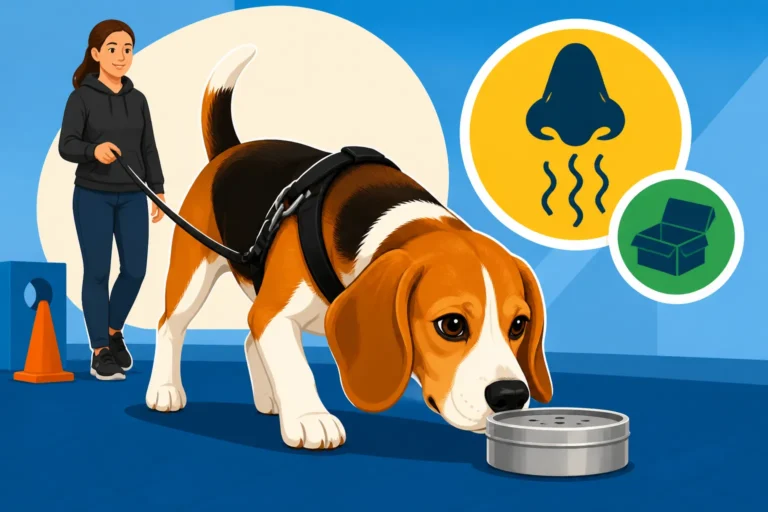
For baying related to scent, remember you can't stop a Beagle from following its nose. Instead, manage the environment. Use a long line on walks in unfenced areas to keep them safe while they indulge their sniffing instincts. Engage them in scent work games, which provide an appropriate outlet for their natural drive. Brands like Amazon offer a wide array of puzzle feeders and snuffle mats that can keep a scent-driven Beagle happily engaged and quiet indoors. For howling due to separation, the focus needs to be on building confidence when alone, gradually increasing alone time, and potentially providing enrichment like Kongs stuffed with frozen treats when you leave. Online dog training platforms, such as those from BAXTER & Bella, often have modules dedicated to managing vocalization and separation anxiety, offering structured plans that can be incredibly valuable.
When to Seek Professional Help
While many Beagle vocalization issues can be managed with consistent effort at home, there are times when it’s best to call in the experts. Don’t feel ashamed or defeated if you reach this point; it shows you’re committed to your Beagle’s well-being.
Excessive or Unexplained Vocalizations
If your Beagle’s vocalizations suddenly become excessive, change in character, or seem to occur without any clear trigger, it's always wise to rule out an underlying medical issue first. A sudden increase in barking or howling might indicate pain, discomfort, hearing or vision loss, or even cognitive decline in older Beagles. For example, a dog with chronic ear pain might vocalize more due to discomfort. A vet check-up should be your first step to ensure there's no physical reason for the change in behavior.
Once medical causes are ruled out, excessive vocalization, particularly if it's new or disruptive, could point to behavioral issues that are beyond simple training. This isn't just about annoyance; it can be a sign your Beagle is genuinely stressed, anxious, or not coping well with their environment. If you've tried basic management strategies and haven't seen improvement, it's time to consider professional help.
Vocalizations Linked to Anxiety or Fear
When barking, baying, or howling is clearly linked to anxiety or fear, such as intense separation anxiety where your Beagle becomes destructive or panics when left alone, it's absolutely crucial to get professional guidance. This isn't just a "naughty" dog; it's a dog experiencing genuine distress. Trying to force a fearful dog to be quiet can exacerbate their anxiety and potentially lead to other behavioral problems.
Similarly, if your Beagle's barking is aggressive (e.g., snarling, lunging, snapping) or indicates genuine fear towards specific people, dogs, or situations, a professional behaviorist or certified trainer specializing in fear-based behaviors is essential. These behaviors are complex and require a nuanced, compassionate approach to help your Beagle feel safer and more secure in their world.
Consulting a Trainer or Behaviorist
A certified professional dog trainer or a veterinary behaviorist can provide tailored strategies and support. They can observe your Beagle in their home environment, accurately assess the triggers and underlying motivations for the vocalizations, and develop a comprehensive behavior modification plan. This plan might include structured training exercises, environmental management techniques, enrichment suggestions, and in some cases, medication to help manage anxiety under the guidance of a vet.
Don't hesitate to seek help. A good professional can offer fresh perspectives and effective tools that you might not have considered. They can help you strengthen your bond with your Beagle by teaching you how to communicate more effectively and address their emotional needs. Investing in professional guidance can transform your household and lead to a happier, quieter life for both you and your beloved, vocal Beagle.
Disclaimer
This article is for general informational purposes only and does not constitute professional advice. Laws, prices and regulations vary by location and change over time. Consult a qualified professional for guidance on your specific situation.