The First Hour After a Beagle Goes Missing
That heart-stopping moment when you realize your beloved Beagle isn't where they're supposed to be – the gate's ajar, the front door was left open just a crack, or they simply vanished while sniffing in the yard – can plunge you into immediate, dizzying panic. It's a truly terrifying feeling, compounded by a Beagle's incredible nose and their tendency to follow a compelling scent for miles. This guide is here to walk you through that crucial first hour, transforming that initial wave of fear into focused, actionable steps to bring your furry family member home.
Immediate Action: The First Fifteen Minutes of Panic and Purpose
When your Beagle goes missing, the first few minutes feel like an eternity. Your heart is pounding, your mind races, and it’s hard to think straight. But this is precisely when quick, decisive action is most important. Don't let the panic paralyze you; channel that energy into a focused search. Every second counts with a Beagle, whose nose can carry them far quicker than you might imagine.
Confirming They're Truly Gone and Not Just Scent-Trailed
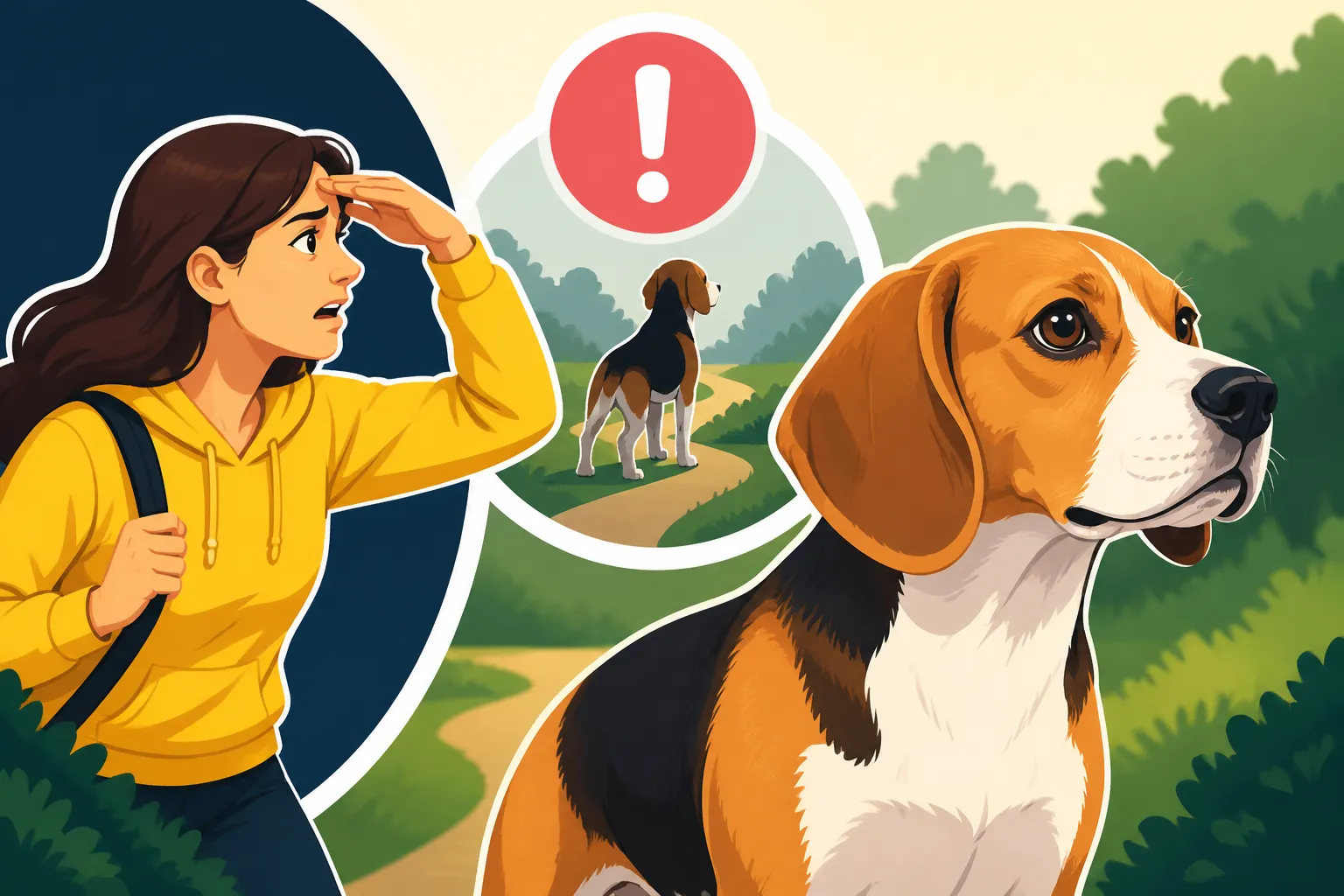
Before you launch into a full-scale neighborhood alert, take a deep breath and do a rapid, systematic check of your immediate surroundings. Beagles are masters of following a scent, and sometimes that scent trail might just lead them to the far corner of your property, under a dense bush, or into a neighbor's tempting flowerbed. They can be incredibly focused, often ignoring your calls when they're "on the job" of sniffing out an intriguing aroma.
Start by quietly walking your entire property line, peering under vehicles, decks, and thick shrubs. If your yard has any accessible sheds or outbuildings, check those too. Beagles are often described as "merry hounds," but they can also be surprisingly stealthy when engrossed in a scent. Call their name in an urgent but not panicked tone, and try shaking a bag of their favorite treats – that distinctive rattle can sometimes cut through their scent-driven tunnel vision. If you have a specific whistle or command you use for recall, try that a few times. Sometimes, they're just out of sight, lost in their own world, and the sound of something familiar might just snap them out of it. It's tough to distinguish a genuine escape from a deep dive into an interesting smell, but that quick check can save precious minutes.
Mobilize Your Household and Nearest Neighbors
Once you've confirmed your Beagle isn't simply hiding in plain sight or momentarily distracted on your property, it's time to expand your immediate search circle and get help. Don't try to do it all yourself. Delegate tasks if there are other adults or responsible older children in the home. Assign someone to start searching outwards from the escape point on foot, while another prepares to spread the word.
Initially, focus on silent searching. Beagles are vocal dogs, known for their distinctive bay, but a lost or scared Beagle might be quiet. Listen intently for any whines, whimpers, or that unmistakable "Arooo!" bay that Beagles emit. Sometimes they might get tangled in something, or perhaps they've found a particularly interesting spot they don't want to leave. Having multiple people walk different immediate directions, fanning out from your home, significantly increases the ground covered in those crucial first few minutes. Let your closest neighbors know immediately – they might have seen your Beagle head in a specific direction, or even taken them in thinking they were just wandering. This immediate human network is invaluable in the very first stages of a search; neighbors can often spot a familiar face where strangers might just see another stray dog.
Rapid Response: Spreading the Word and Preparing for the Search
After the initial on-foot sweep of your immediate area, it's time to leverage technology and prepare for a more extensive search. Time is truly of the essence, as a Beagle's impressive olfactory capabilities mean they can cover significant distances surprisingly quickly once they've picked up a promising trail. The faster you cast a wider net, the better your chances of a swift reunion.
Spreading the Local Alert Instantly
This is where your fingers need to move as fast as your feet. Grab your phone and start broadcasting. The first step is to immediately tap into your local online community networks. Post a clear, recent photo of your Beagle on platforms like Nextdoor, local Facebook groups for lost pets, and community forums. Include their name, your general location (cross streets or nearest park), and a contact number. State when and where they were last seen. Be specific about distinguishing marks, like a particular collar or even their "voice" if they're known for their unique bay. Remember, people often check these platforms frequently.
Simultaneously, make two incredibly important phone calls. First, call your microchip company. Even if your contact information is up to date, report your Beagle as missing. They can flag your pet's microchip number, which is vital if your Beagle is picked up by animal control or a vet clinic. Secondly, contact your local animal shelters, humane societies, and animal control services right away. Provide them with a description and photo. Many will take a "lost report" over the phone, but it’s often best to follow up with an email containing the picture. Don't assume someone will simply call you if they find your dog; actively reaching out to every potential holding facility is critical. The sooner these agencies have your Beagle's information, the better, as Beagle Microchips and Getting a Lost Dog Back is a system that only works if reported.
Gathering Essential Search Supplies
You’ve got people searching and the word is out, now it’s time to prepare for the inevitable: a prolonged search. Even if your Beagle is found quickly, having these items ready saves precious minutes. Think of it like packing a mini-emergency kit for your missing hound.
First, gather a sturdy leash and collar (even if they already have one on, it's good to have a spare if they've slipped theirs). Next, get a handful of their absolute highest-value treats – not just kibble, but something truly irresistible, like small pieces of cheese, hot dogs, or cooked chicken. A Beagle’s food drive is legendary, and the smell of these treats might be what finally coaxes them out of hiding. Have a clear, recent photograph of your Beagle readily available on your phone, and print a few copies if you can, to show people you encounter. It’s also a good idea to bring a favorite toy or a blanket they sleep on; the familiar scent can be a comfort and a beacon. As you're gathering these, consider what's easily accessible. Amazon can be a quick resource for things like a bright, powerful flashlight if your search extends into dusk, or even extra-long lines if you plan to search in open areas. Don't forget a bottle of water for yourself and a small bowl for your dog if you find them. Your phone, fully charged, is indispensable for communication and further social media updates. Lastly, make sure you have your car keys ready; a driving search can cover much more ground than walking alone.
Strategic Search: Where a Beagle is Likely to Roam
Knowing the typical behaviors and instincts of a Beagle can be your greatest asset during a search. They aren't just wandering aimlessly; they are being driven by their extraordinary sense of smell. Understanding this can help you predict their movements and focus your search efforts more effectively.
Prioritizing Known Escape Routes and Scent Trails
Think back to how your Beagle got out. Was it a flimsy gate? A gap under the fence? That's your starting point. Beagles are often like a canine compass, with their nose always pointing them in the direction of the most captivating scent. They will tend to follow a relatively straight line, or a path of least resistance, especially if they've picked up the trail of a rabbit, squirrel, or even another dog. This means they might not necessarily stick to sidewalks or human paths. Check wooded areas, drainage ditches, culverts, and under sheds – anywhere a small prey animal might hide or leave a strong scent. If you live near fields, parks, or even busy roads, consider which direction a scent might naturally lead them.
It's important to remember Why a Beagle Will Follow a Scent for Miles. Their world is primarily defined by smell, and once locked onto an interesting trail, their focus is intense. They often become temporarily "deaf" to human calls because their brain is overwhelmed by olfactory information. Walk and drive slowly, looking under bushes and behind structures. If there are fresh tracks, follow them. Keep calling their name, but also pause frequently to listen for their distinctive bay or any rustling. If you live in an area with a strong hunting presence, even if your Beagle isn't a hunter, they might follow established game trails. This instinct to trail is deeply ingrained.
The "Lost Dog" Mentality and How Beagles Respond
A Beagle, despite its usually merry disposition, can become surprisingly timid and wary when lost. They might be disoriented, scared, and even hide from people, including you. This isn't a sign they don't love you; it's a primal survival instinct. A lost Beagle might not come bounding to your calls, especially if they've been out for a while and are feeling vulnerable. They might even crouch low, attempting to appear smaller or less noticeable.
When searching, try to appear non-threatening. Avoid running towards them or yelling excitedly, as this can make a frightened Beagle bolt. Instead, if you spot them, crouch down, speak in a calm, soothing voice, and offer those high-value treats. You might even turn sideways to them, avoiding direct eye contact, which can be perceived as confrontational by a scared dog. Consider leaving an item with your scent, like a worn t-shirt or a favorite blanket, along with some water and food, near the point where they went missing. This can serve as a beacon to help them find their way back or encourage them to stay in one area if they circle back. People often underestimate the stress a lost dog is under, but understanding this "lost dog" mentality will help you approach your Beagle in a way that encourages them to come to you rather than flee further. Remember What to Do the Moment a Beagle Gets Loose – these immediate actions are crucial because a scared Beagle acts differently than a happy one.
Preventative Measures: Lessons from the First Hour
The immediate aftermath of a missing Beagle is a whirlwind, but once the dust settles, whether through a joyful reunion or continued search efforts, it's a critical time to evaluate and implement preventative measures. This experience, however harrowing, offers invaluable lessons on securing your home and enhancing your Beagle's safety. Even the most dedicated Beagle owner can find themselves in this situation, but taking proactive steps can drastically reduce the chances of a repeat incident.
Ensuring Proper Identification Before Disaster Strikes
The absolute bedrock of recovery for any lost dog, especially a Beagle known for its adventurous spirit, is proper identification. If your Beagle isn't microchipped, or if their microchip registration details are out of date, this is the very first thing to address. A microchip is a permanent form of identification, linking your dog to your contact information. But it's only as good as the information stored with it, so a quick call to the registry to update your address and phone numbers is paramount if you've moved or changed numbers.
Beyond the microchip, a well-fitting collar with up-to-date ID tags is your frontline defense. These tags should clearly display your current phone number and your Beagle's name. Consider adding a tag with "Needs Meds" or "Reward" to encourage a quick return. Make sure the collar is secure enough that it can't easily slip over their head, but not so tight as to be uncomfortable. Many Beagle owners also invest in GPS tracking collars, which can offer real-time location data and immense peace of mind. While they might not last indefinitely on battery, they are incredibly helpful in pinpointing an initial direction of travel. When choosing what to use, remember Beagle ID Tags and Which Collar to Use for optimal safety.
Reinforcing Your Home's Security and Training for Future Safety
The "how" of your Beagle's escape is a crucial data point. Was it a weak fence? A gate left ajar? An open door? Now is the time to reinforce your home's perimeter. Walk your fence line thoroughly, checking for any weak spots, loose boards, or areas where your Beagle might have dug under. Beagles are notoriously good at digging, so burying wire mesh or a "skirt" along the bottom of your fence can be a game-changer. Ensure all gates have secure latches that a clever Beagle can't nudge open. For more detailed insights, check out The Fence Height That Actually Holds a Beagle.
Beyond physical barriers, training plays a monumental role. Teaching your Beagle a solid "wait" at every door and gate, even when excited, can prevent future dashes. This foundational obedience can literally save their life. Think about investing in a good training program, whether online or in-person. Online platforms like BAXTER & Bella offer comprehensive puppy and adult dog training courses that can help build reliable recall and door manners. A strong recall command is perhaps the most vital skill for a Beagle. While it's famously challenging to achieve with their powerful scent drive, consistent, positive reinforcement training can make a huge difference. Start practicing recall in a low-distraction environment and gradually increase the challenges. Even if your Beagle seems to have selective hearing when a good scent is involved, as discussed in Beagle Recall and Why Your Voice Stops Registering, consistent training can build a reflex that might kick in when it matters most. For added safety, particularly if your Beagle is prone to going after scents in open areas, consider using GPS Collars as a Backup for Beagle Recall – they're not a substitute for training, but a powerful safety net.
| Immediate Action | Search Supplies | Preventative Measures |
|---|---|---|
| Confirm disappearance (check yard, bushes) | Sturdy leash/collar | Microchip registration (updated) |
| Call Beagle's name/shake treat bag | High-value treats | Secure ID tags on collar |
| Mobilize household/neighbors for silent search | Recent photo (digital & print) | Inspect/reinforce fence lines & gates |
| Call microchip company immediately | Favorite toy/scent item | Train "wait" at doors/gates (Teaching a Beagle to Wait at Every Doorway) |
| Contact local animal shelters/animal control | Flashlight & water | Work on reliable recall (Beagle Recall and Why Your Voice Stops Registering) |
| Post on local social media groups (Nextdoor, Facebook) | Charged phone & car keys | Consider a GPS tracking collar (GPS Collars as a Backup for Beagle Recall) |
Disclaimer
This article is for general informational purposes only and does not constitute professional advice. Laws, prices and regulations vary by location and change over time. Consult a qualified professional for guidance on your specific situation.