What to Do the Moment a Beagle Gets Loose
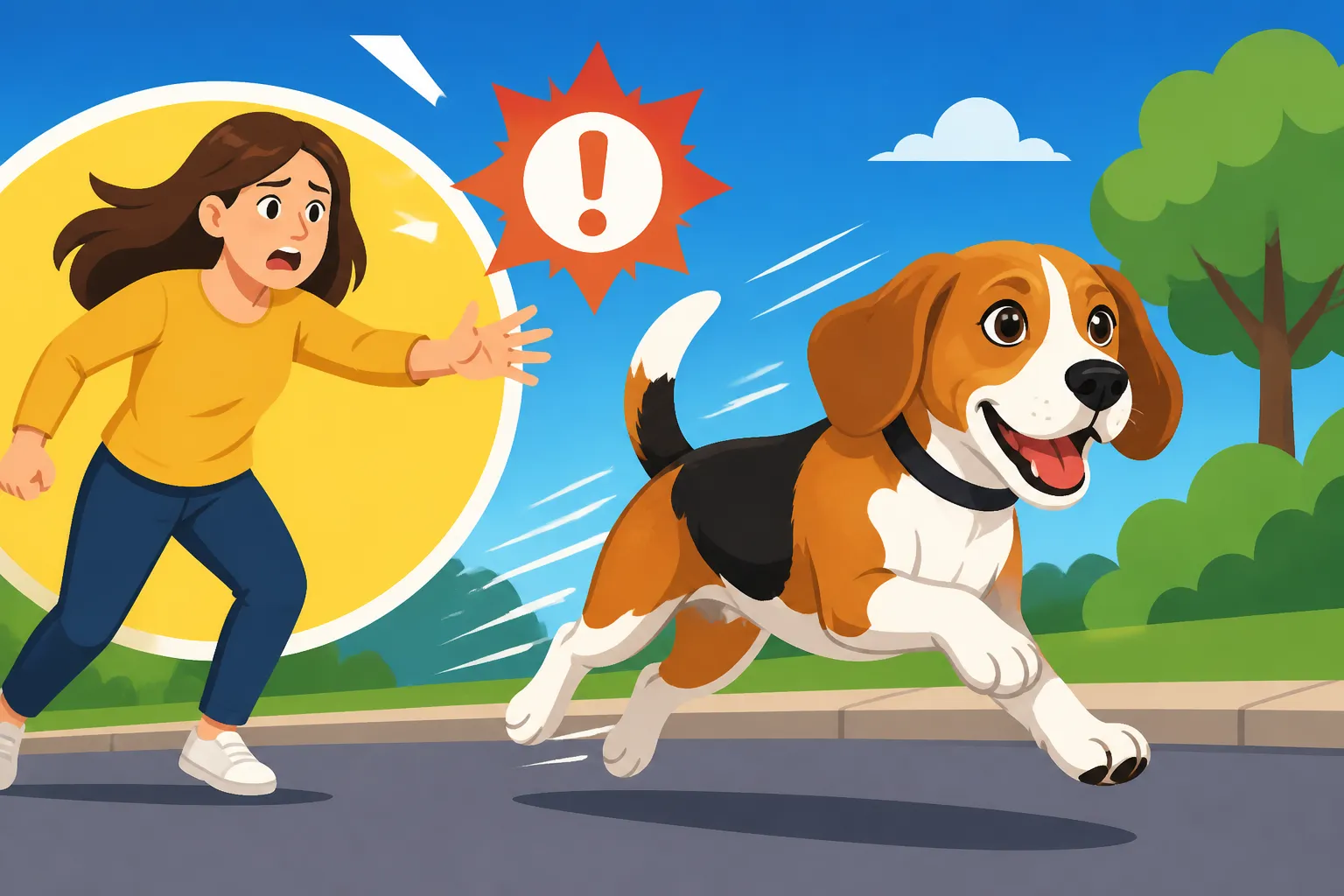
That feeling of your heart dropping into your stomach when you call your Beagle and they don't appear, or worse, you see an open gate and an empty yard – it’s a moment of pure panic that no dog owner wants to experience. Beagles, with their incredible scent drive and boundless curiosity, are notorious for following their noses right into trouble, and sometimes, right out of the yard. This comprehensive guide is here to walk you through exactly what to do in those terrifying first moments, how to keep searching effectively, and most importantly, how to prevent it from ever happening again.
Immediate Actions When Your Beagle Disappears
When your Beagle vanishes, every second feels like an hour. It's crucial to act quickly and methodically, even when your mind is racing. Panic is natural, but clear-headed action is what will bring your beloved hound home.
The Critical First Minutes
The absolute first thing you should do, without hesitation, is drop everything and start searching the immediate vicinity. Don't waste time making phone calls or posting online just yet. Your Beagle is most likely still close by, especially if they've only just gotten out. Yell their name, shake a treat bag, or squeak their favorite toy. Many Beagles, especially young ones, might get a burst of freedom euphoria and then quickly get disoriented or realize they're alone. Check all the usual spots they might sneak into – under hedges, behind sheds, in neighbor's unfenced yards, or even a local park if it's right next door. If you have another dog, bring them along; their scent and presence might help lure your Beagle back.
Think about the routes your Beagle usually takes or where interesting smells might lead them. Is there a nature trail nearby? A creek? A neighbor who always has delicious BBQ smells wafting over? Beagles are driven by their noses above all else, and a fascinating scent could easily pull them further than you'd expect. Remember, a Beagle’s nose is incredibly powerful; they aren't just sniffing the ground, they're creating a detailed map of the world around them through scent. This means they can get truly engrossed and not respond to your calls. Don't assume they heard you and ignored you; they might literally be in a different world of smell.
Utilizing Scent and Sound
Your Beagle knows your scent, and the scent of your home. This can be a powerful tool. Place a familiar, unwashed item of your clothing or their unwashed bedding outside near the escape point. This provides a strong, comforting anchor scent for them to follow back if they become disoriented or decide to return. You might also place their food and water bowls outside. The familiar smell of home, coupled with the promise of food, can sometimes be enough to draw a lost Beagle back. It might feel silly, but this can be a surprisingly effective method, especially in the quiet hours of the night.
Think about the unique sounds of your household too. Do you have a specific whistle you use for them? A particular phrase you always say? Some owners have had success going out with car keys jangling, or even playing a recording of family voices from a speaker. The more familiar and comforting the sound, the better. While Beagles are notoriously stubborn when on a scent, a sudden familiar sound might just break their focus. This is why consistent Beagle Recall That Works Before the Nose Wins is so important in everyday training, but in an emergency, any familiar sound can be a lifeline.
Contacting Local Authorities and Shelters
Once you've done an immediate, thorough sweep of your property and the very close vicinity, it's time to widen your net and make some calls. Contact your local animal control department or humane society immediately. Provide them with a clear description of your Beagle, including their size, color, markings, and any unique identifiers. Make sure to mention if they are microchipped and provide that number. Beagles are often picked up quickly because they are so distinctive, but also because they tend to wander further than many breeds.
Don't stop at your immediate local shelter. Beagles can cover a surprising amount of ground when on a mission, and may end up in a neighboring town or county. Call all shelters and rescues within a 30-50 mile radius, as hard as that might be to imagine. Provide them with the same detailed description and ask if any Beagles matching yours have come in. Many shelters have online databases, but a personal call is always better for unique breeds or mixes. This is also a good time to check in with any local Beagle-specific rescue groups; they often have networks of volunteers who can keep an eye out.
Spreading the Word: Local Search and Online Tools
After the initial panic subsides and you’ve contacted the necessary authorities, the next critical step is to leverage your community and the power of the internet. The more eyes looking for your Beagle, the better the chances of a happy reunion.
Leveraging Social Media and Community Groups
The internet can be an incredibly powerful tool for finding a lost pet. Post immediately on local social media groups – Facebook community pages, Nextdoor, neighborhood forums, and even local lost and found pet groups. Include several clear, recent photos of your Beagle, highlighting any distinctive features. Describe their personality (e.g., "friendly but shy," "loves food," "will follow a scent"). State the exact location and time they went missing, and your contact information.
Ask people to share widely. The more shares, the further your message reaches. Mention that Beagles are known for their strong prey drive and excellent noses, which helps people understand why your dog might be far from home or ignore calls. You might even find someone who saw your Beagle headed in a specific direction. Be prepared for well-meaning but sometimes unhelpful advice, and always prioritize verified sightings. Remember, many pet owners use Amazon for everyday pet supplies, so you can leverage the sheer reach of online communication to get the word out fast.
Creating Effective "Lost Dog" Posters
While online efforts are critical, never underestimate the power of old-fashioned paper posters. Create highly visible "LOST DOG" posters. Use large, clear text and a prominent, recent photo of your Beagle. Include:
- "LOST DOG" in huge letters
- A clear, high-quality color photo of your Beagle
- Their name (and mention if they respond to it, or if they're shy)
- Breed: Beagle (and size, e.g., "15-inch Beagle")
- Distinguishing features (e.g., "white tip on tail," "lemon and white," "tricolor," "scar on nose")
- Last seen location and date/time
- Your phone number (large and easy to read)
- "DO NOT CHASE – call immediately" (crucial for scent hounds)
- Consider offering a reward (don't specify an amount; "Reward" is enough).
Laminate your posters or put them in clear plastic sleeves to protect them from weather. Post them heavily in the area your Beagle went missing, at major intersections, local dog parks, vet clinics, pet supply stores, community centers, and even local coffee shops. Spread them far and wide, remembering that your Beagle could have traveled a considerable distance. Keep a small stack in your car for new areas you search.
| Action Item | Details | Why It's Crucial for a Beagle |
|---|---|---|
| Immediate Local Search | Walk/drive the immediate vicinity, call name, shake treats. | Beagles can get disoriented quickly or be hyper-focused on a scent nearby. |
| Place Scent Markers | Put unwashed bedding/clothing, food, water outside the escape point. | Their powerful nose makes familiar scents a strong draw back to safety. |
| Contact Animal Control/Shelters | Call all local and surrounding shelters, humane societies, and rescues. | Beagles travel far; they might be picked up quickly by concerned citizens or authorities. |
| Social Media Posts | Share clear photos, description, last seen location, and contact on local groups. | Broad reach for community sightings; can quickly mobilize local pet lovers. |
| Create Physical Posters | High-visibility posters with photo, details, "DO NOT CHASE" warning. | Essential for reaching people not online and warning them about approaching a possibly wary, lost hound. |
| Visit Shelters in Person | Go to shelters yourself to visually check for your Beagle. | Descriptions can be subjective; your eyes are the best. This is especially important for Beagle Numbers in American Shelters. |
| Keep Search Areas Fresh | Regularly check new areas, especially where scent trails might lead. | Beagles keep moving, following new smells. |
Reaching Out to Vets and Rescues
Beyond local shelters, make sure to contact all veterinary clinics in your immediate area and surrounding towns. If someone finds your Beagle and they are injured or appear unwell, their first stop might be a vet clinic. Provide the clinics with a "Lost Dog" poster or at least an email with your Beagle's picture and information. Ask them to keep an eye out and to check any found Beagles for a microchip. Many vet offices have community boards where they will happily display a lost pet poster.
Also, reach out to specific Beagle breed rescues. These organizations have a deep understanding of Beagle behavior and often have extensive networks of volunteers and foster homes dedicated to the breed. They might have specific advice for finding a lost Beagle, or even volunteers willing to help with the search. They are also excellent resources if your Beagle is picked up and ends up in a shelter that struggles to identify the breed accurately. These groups understand that Why Beagles Get Surrendered for Howling and Escaping is often due to misunderstood breed traits, and they are usually highly motivated to help.
Prevention is Key: Securing Your Home and Yard
While finding your lost Beagle is the immediate priority, the long-term goal should always be preventing future escapes. Beagles are escape artists, and understanding why they escape is the first step in creating a secure environment.
Fortifying Your Physical Fencing
The most common escape route for a Beagle is through, under, or over a fence. For Beagles, a standard 4-foot fence is often more of a suggestion than a barrier. They are known to be surprisingly agile jumpers and excellent diggers. Inspect your fence line meticulously. Look for loose boards, gaps, or areas where the fence meets the ground and there's a space for a determined nose to start digging. How a Beagle Gets Underneath a Fence is a real concern.
Consider adding a "dig skirt" along the bottom of your fence, which can be made of chicken wire, concrete pavers, or even a buried section of fence material extending inward. For jumpers, a taller fence (at least 6 feet) is ideal, or consider adding angled extensions to an existing fence that make it difficult to get a paw-hold. Regular maintenance is crucial; even a small breach can become a Beagle-sized exit. Remember, a Beagle’s motivation to escape is often driven by an irresistible scent, so no fence is truly Beagle-proof if not properly fortified and regularly checked.
Door and Gate Safety Protocols
Fences aren't the only concern; doors and gates are equally problematic for a quick Beagle. Beagles are masters of the "door dash." They'll wait for the opportune moment, a delivery person at the door, a child running out to play, or even a moment of distraction, and they'll be gone. Establish strict protocols for entering and exiting your home. Always ensure your Beagle is secured (in a crate, behind a baby gate, or on a leash) before opening the front door. This eliminates the opportunity for a bolt.
For gates, ensure they are self-latching and have secondary security measures like a carabiner clip or a padlock. Never rely on just one latch, especially if it can be jostled open. Everyone in the household, including children and visitors, needs to be aware of these gate protocols. A simple mistake can lead to a terrifying search. This is especially critical if you have multiple Beagles, as one might distract you while another slips past.
Microchipping and Up-to-Date ID Tags
These are your Beagle's silent guardians. A microchip is a tiny device implanted under your dog's skin that contains a unique ID number. This number is linked to your contact information in a national database. If your Beagle is found and scanned by a vet or shelter, they can quickly access your details and reunite you. However, a microchip is only useful if your contact information is current! Make it a habit to update your microchip registration whenever you move or change phone numbers.
ID tags, while simpler, are equally vital. A sturdy collar with a tag displaying your current phone number and your Beagle's name is the fastest way for a good Samaritan to contact you directly without needing a scanner. Consider adding a second tag with your address or even a "reward if found" message. While a Beagle's dense coat might sometimes obscure a small tag, ensuring it's always worn and legible is crucial. Many owners also opt for Beagle GPS Collars and Tracking Tags, which can provide real-time location data and peace of mind, though they require battery maintenance.
Training for Emergencies: Building a Reliable Recall
While prevention is paramount, even the best defenses can fail. This is where training becomes your ultimate backup plan. A solid recall, in particular, can be a literal lifesaver for a Beagle.
Reinforcing a Bomb-Proof Recall
Let's be real: training a Beagle to have a "bomb-proof" recall is like trying to teach a fish to climb a tree when there's a giant worm on the ground. Their scent drive is that powerful. However, it's not impossible to build a reliable recall, but it requires consistent, high-value reinforcement and understanding their motivations. Start recall training in a low-distraction environment, like your living room. Use an exciting, unique verbal cue like "COME!" or "HERE!" accompanied by a hand signal. When they come, reward them with the absolute highest value treat you can find – think cooked chicken, cheese, or hot dogs. No dry kibble for this one!
Gradually increase distractions and move to more challenging environments like a fenced yard, then a quiet park on a long line. The key is to make coming to you the most rewarding thing ever, even more rewarding than that squirrel or discarded pizza crust. Practice regularly, even when you don't need them to come. Make it a fun game. Remember, Beagle Recall and Why Your Voice Stops Registering is a common problem, so you need to be louder and more exciting than the scent trail. Online training platforms like BAXTER & Bella offer comprehensive positive reinforcement programs that can help you systematically build this crucial skill, even with a notoriously scent-driven breed.
Emergency Whistles and Unique Cues
Sometimes, your voice just won't cut it, especially if your Beagle is far away or truly engrossed in a scent. This is where an emergency whistle can be invaluable. A whistle carries further and cuts through distractions more effectively than the human voice. Choose a specific whistle tone that you only use for emergency recall. Introduce it just like your verbal recall: blow the whistle, then immediately reward with a super high-value treat when your Beagle comes running.
The key is consistency and association. Your Beagle needs to learn that the whistle always means "come get the best treat ever, right now." Don't overuse it for everyday situations, or it will lose its power. You can also develop unique visual cues or specific hand signals that your Beagle associates with coming back, especially if they have some hearing loss as they age. Practicing these consistently, perhaps starting with a program found on Amazon that offers a range of training whistles, can literally save your Beagle's life if they get loose and you need to get their attention from a distance.
Teaching a Solid "Stay" and "Wait"
While recall is about getting your Beagle to you, a strong "stay" or "wait" can prevent them from getting loose in the first place. Teaching your Beagle to "wait" at open doors or gates is a foundational safety skill. Start by having them sit and wait before you open any entryway. Only release them with a clear "okay" command once the path is clear. This instills impulse control, which is incredibly difficult for an opportunistic Beagle.
Practice "stay" commands for increasing durations and distances, gradually adding distractions. This skill can be invaluable if you accidentally drop the leash or an opportunity for escape arises. A momentary "stay" might be all you need to re-secure them. Remember, Beagles were bred for independence in following a trail, so these commands go against their natural instincts. Patience, consistency, and generous rewards are key. A great training resource like those from BAXTER & Bella often emphasize these foundational control exercises as part of a larger curriculum, understanding the challenges posed by breeds like the Beagle.
Coping with the Stress and Maintaining Hope
Finding a lost pet is an emotionally draining experience, often filled with anxiety, guilt, and fear. It's vital to manage your own well-being while you search, and never give up hope.
Managing Your Own Anxiety
The sheer panic and heartbreak of a lost pet can be overwhelming. It's okay to feel that way. Allow yourself to acknowledge these emotions, but don't let them paralyze you. Take deep breaths. Remember that you are doing everything you can. Enlist the help of friends and family; don't try to go through this alone. They can help with searching, making calls, putting up posters, or simply offering emotional support. Share the workload.
Maintain a sense of routine where possible, even if it's just ensuring you're eating and getting some rest. An exhausted and stressed searcher is less effective. Focus on actionable steps, rather than getting lost in "what if" scenarios. Every lead, every phone call, every poster put up is a step closer to bringing your Beagle home. Knowing that you are actively working towards a reunion can provide a sense of control amidst the chaos.
Understanding Beagle Behavior When Lost
It's important to understand how a Beagle might behave when lost. Unlike some dogs who might try to find their way home directly, a lost Beagle is often driven by scent. They can become so focused on a fascinating trail that they travel miles, losing all sense of direction. They might seem "stubborn" or "ignoring" you, but often, they are simply in a scent-trance. They are also bred to be independent trackers, so they might not immediately seek out human comfort if they're on a "mission."
Lost Beagles can become wary or shy, even if they are typically friendly. They might be frightened, hungry, or confused. This is why the "DO NOT CHASE" instruction on posters is so important. Chasing a scared Beagle will only make them run further. Instead, if you or someone else spots your Beagle, instruct them to get low, offer high-value treats, and try to lure the dog gently. Avoid loud noises or sudden movements. Patience and enticing food are often your best tools when trying to recover a wary Beagle. For more on this, you might review The First Hour After a Beagle Goes Missing.
Staying Persistent and Positive
Never give up hope. Dogs, including Beagles, have been reunited with their families weeks, months, and even years after going missing. Continue your daily search efforts, even if it's just checking the online lost pet groups or updating posters. Re-post on social media regularly. Visit shelters in person weekly, as new dogs arrive constantly, and staff rotations might mean different eyes reviewing descriptions. Your physical presence at the shelter checking every Beagle that comes in can make all the difference, as identification by breed can be subjective.
Keep a detailed log of everywhere you've searched, who you've called, and where you've posted. This helps you track your efforts and ensures you don't miss any areas. The dog community is incredibly supportive, and many people genuinely want to help. Lean on that support, maintain a positive outlook, and stay vigilant. Your Beagle is out there, and your persistence is their best chance of coming home. Sometimes, finding your Beagle Microchips and Getting a Lost Dog Back is the only thing that works after an extensive search.
Disclaimer
This article is for general informational purposes only and does not constitute professional advice. Laws, prices and regulations vary by location and change over time. Consult a qualified professional for guidance on your specific situation.