Beagle GPS Collars and Tracking Tags
That incredible Beagle nose, while endearing when it's sniffing out rogue crumbs or investigating a particularly interesting patch of grass in your yard, can quickly become a source of profound anxiety when it leads your beloved hound on an unexpected adventure. The sheer panic of realizing your Beagle has caught a compelling scent and vanished over the horizon is a feeling no pet parent wants to experience. This guide will delve deep into the world of GPS collars and tracking tags, exploring how these ingenious devices can offer a crucial layer of security, providing peace of mind and significantly increasing the chances of a swift reunion should your scent-driven companion decide to explore a bit too far.
The Inevitable Beagle Escape Artist
Beagles are renowned for many wonderful qualities: their merry disposition, their loyal hearts, and of course, their legendary sense of smell. But this last trait, combined with their inherent hound independence, makes them expert escape artists. It's not about being disobedient; it's about being profoundly, irresistibly drawn to a scent.
Understanding the Scent Drive That Leads Them Astray
Imagine a world where every single whiff is a story, a tapestry of information that demands to be unraveled. That's a glimpse into the life of a Beagle, equipped with around 220 million scent receptors, dwarfing the mere 5 million found in humans. When a Beagle latches onto a potent scent – perhaps a rabbit that dashed through your yard, or even the lingering aroma of a discarded takeout bag – their entire world narrows. Their ears might appear to still be there, but they're effectively 'off-duty.' Their eyes are focused on the ground, their tail is up, and their brain is solely dedicated to tracking that trail. It’s an instinct honed over centuries, a hardwired drive that completely overrides any training, any calls, any human voice. They don't hear you; they hear the scent, loud and clear. This profound absorption is why even the most well-trained Beagle can seem to develop temporary selective hearing when a good trail presents itself. It's not defiance; it's simply their biology taking over, and they literally become engrossed in the pursuit of information, making it incredibly difficult to get their attention back, let alone get them to return. For more on this, consider exploring why Training a Beagle Around 220 Million Scent Receptors is so unique.
Why Traditional Fences Aren't Always Enough
You might have a perfectly respectable fence, six feet tall, sturdy, and seemingly escape-proof. But for a determined Beagle, it's often just a series of puzzles waiting to be solved. Beagles are notoriously clever and persistent. They'll test every latch, every loose board, and every weak spot. They are expert diggers, and if a compelling scent leads them to believe there's something fascinating on the other side of a fence, they will dig underneath it with impressive speed and determination. A small gap that might seem insignificant to a human eye can become a Beagle-sized exit strategy.
Furthermore, some Beagles are surprisingly agile and can even find footholds to climb, especially if there's an object near the fence they can leverage. Invisible fences, while offering a psychological barrier, often prove ineffective against a Beagle's powerful scent drive; the allure of a captivating smell can easily override the momentary discomfort of a static correction, leading them to bolt right through. If you're struggling with containment, our guide on How a Beagle Finds the One Gap in a Fence might offer some invaluable insights, as well as Fencing Costs That Actually Contain a Beagle.
The Sheer Panic of a Missing Beagle
The moment you realize your Beagle is gone is truly terrifying. It starts with a little confusion, then a rising dread, and quickly escalates into full-blown panic. You call their name, scour the yard, then the street, and your heart sinks with every passing minute. Beagles, when on a scent, are surprisingly fast and can cover vast distances in a short amount of time. They don't typically stop to check where they are or look for familiar landmarks; they simply follow their nose wherever it leads. This means that a Beagle that escapes your yard might be several blocks or even miles away before you've even finished your initial search.
The longer they're gone, the greater the risks. They could encounter traffic, get into a scuffle with another animal, become disoriented, or even fall victim to someone with ill intentions. The feeling of helplessness is immense, and the thought of your cherished family member being lost and scared is agonizing. This is precisely why preparation is paramount, and why tools that offer immediate location data become invaluable. Our guide on The First Hour After a Beagle Goes Missing provides critical steps to take in those crucial moments.
What Are GPS Collars and Tracking Tags?
In an age where technology is seamlessly integrated into so many aspects of our lives, it's a huge relief that pet safety has also seen incredible advancements. GPS collars and tracking tags are at the forefront of this, offering a modern solution to the age-old problem of lost pets. However, it's crucial to understand that not all tracking devices are created equal, and their capabilities vary significantly.
Differentiating Between GPS Trackers and Bluetooth Tags
When you start looking into pet tracking devices, you'll primarily encounter two main types: GPS trackers and Bluetooth tags. While both aim to help you find a lost pet, they operate on fundamentally different technologies and, therefore, have very different ranges and functionalities.
GPS Trackers are essentially miniature phones or navigation systems for your dog. They contain a GPS module that receives signals from satellites to pinpoint its exact location, much like the GPS in your car or smartphone. This location data is then transmitted via a cellular network to a corresponding app on your smartphone or computer. The key advantage here is virtually unlimited range, meaning as long as the device has a cellular signal, you can track your Beagle whether it's two blocks away or two towns over. However, this expansive capability comes with the need for a monthly or annual subscription fee to cover the cellular data plan. Popular examples you might find at retailers like Chewy often include brands that offer robust, real-time tracking.
Bluetooth Tags, on the other hand, such as Apple AirTags or Tile devices, work by emitting a low-energy Bluetooth signal. When your pet (wearing the tag) is within a certain proximity (typically up to a few hundred feet) of your smartphone or another compatible device, you can use an app to locate it. The real magic, however, comes from "crowdsourced" networks. If your pet wanders out of your personal Bluetooth range but passes near someone else's smartphone that is part of the same network (e.g., another iPhone user for an AirTag), that phone can anonymously relay your pet's location to you. The downside is that this relies heavily on other people's devices and doesn't provide real-time, continuous tracking over long distances. If your Beagle bolts into a remote area with no other users nearby, a Bluetooth tag quickly becomes useless. They are generally subscription-free, making them a more budget-friendly option for pets that tend to stay closer to home or are only prone to short, contained escapes.
How GPS Technology Works for Pet Tracking
For GPS trackers, the process is quite ingenious, though it seems simple from the user's perspective. The device itself is equipped with a small GPS receiver chip. This chip constantly listens for signals from multiple orbiting GPS satellites. By calculating the time difference in receiving these signals, the tracker can accurately determine its precise latitude and longitude. Once it has this location data, it uses an embedded cellular chip, much like the one in your phone, to connect to nearby cell towers.
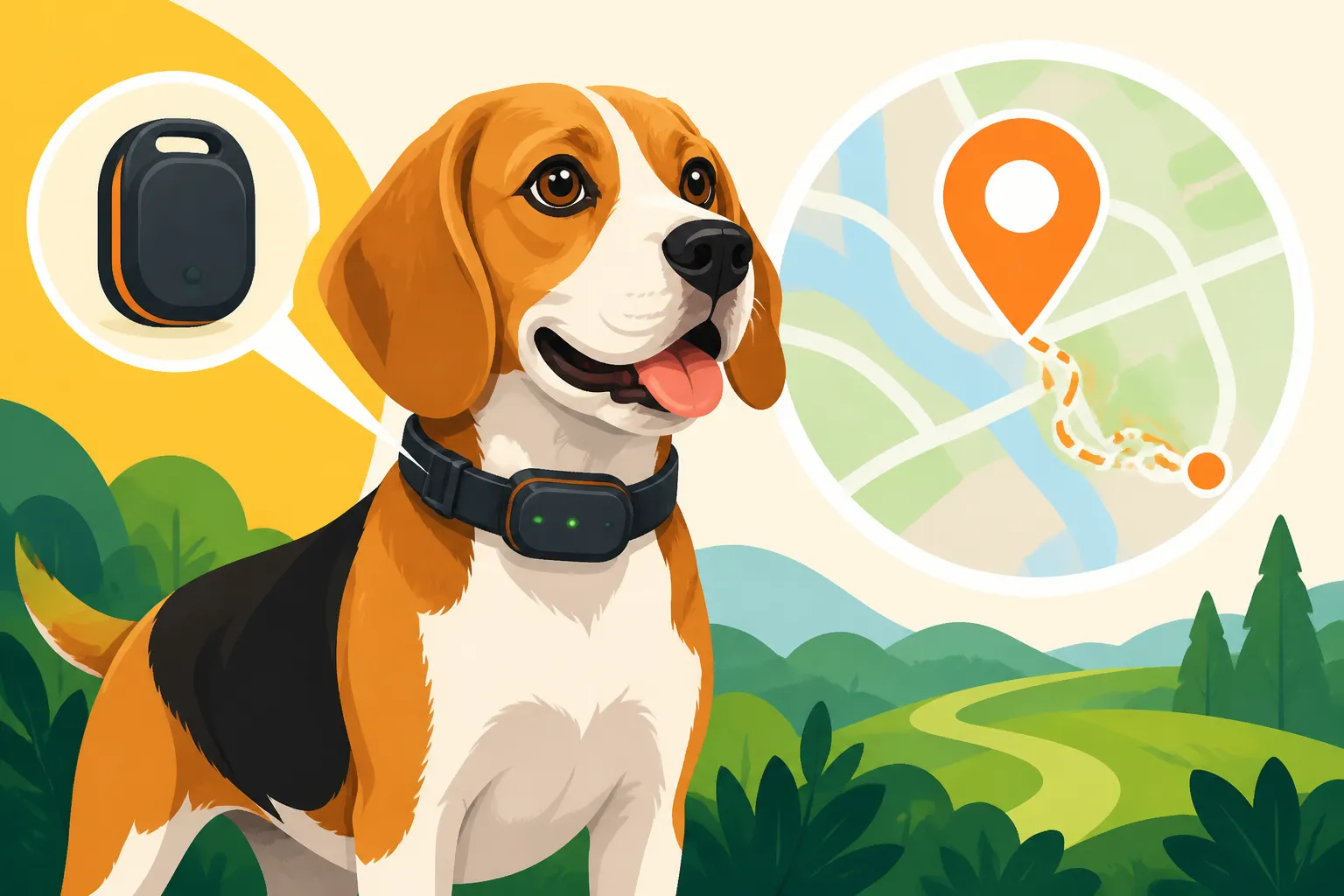
It then sends this location information, along with any other data it collects (like activity levels or battery status), to a secure server. Your smartphone app, which is connected to the same server, then pulls that data and displays your Beagle's location on a map in real-time. This continuous communication loop is what allows you to track your dog's movements, often seeing them as a dot moving across your screen, or receiving alerts if they leave a predefined safe zone.
The Role of Cellular Networks in Real-Time Tracking
The cellular network is the crucial link that transforms a GPS receiver into a real-time tracking device. Without it, the GPS tracker would simply know its own location but have no way to communicate that information to you over distance. Think of it like a tiny phone dedicated solely to sending location data.
If your Beagle, sporting its GPS collar, wanders into an area with poor or no cellular coverage – say, a dense forest, a remote hiking trail, or a dead zone in your neighborhood – the device won't be able to transmit its location data back to you. This doesn't mean the tracker isn't working or that your Beagle is truly lost to the device; it simply means the information can't reach your phone until it re-establishes a connection with a cell tower. Some advanced trackers try to mitigate this by utilizing multiple cellular carriers or by storing location data and uploading it once a connection is restored. When considering a GPS device, it's wise to check the coverage maps of the cellular networks the device uses in the areas where your Beagle spends most of its time, especially if you live in a rural area or frequent large parks with spotty service.
Choosing the Right Tracker for Your Beagle
Selecting the perfect GPS collar or tracking tag for your Beagle isn't a one-size-fits-all decision. Given their active nature, propensity for adventure, and the specific challenges their breed presents, several factors need careful consideration to ensure the device is both effective and comfortable.
Key Features to Look For in a GPS Collar
When investing in a GPS tracker for your Beagle, you'll want to prioritize features that directly address their unique needs.
- Durability and Waterproofing: Beagles love to roll in things, sniff through puddles, and generally get into mischief. A tracker must be robust enough to withstand mud, rain, and possibly even a quick dip in a creek. Look for devices with high IP ratings (e.g., IP67 or IP68) for water resistance. Chew-proof design or a secure attachment that minimizes accessibility for gnawing is also a huge plus, as a bored or frustrated Beagle might try to remove the device with its teeth.
- Size and Weight: While Beagles are sturdy dogs, a tracker should not be cumbersome. Ensure the device is appropriately sized for your Beagle’s neck and doesn’t add undue weight or discomfort. A tracker that’s too large or heavy can chafe, annoy your dog, or even become a safety hazard if it snags on something. Most reputable brands design trackers specifically for smaller to medium-sized breeds, keeping this in mind.
- Real-time vs. Interval Tracking: Most high-quality GPS trackers offer real-time tracking, updating your Beagle’s location every few seconds or minutes when it’s on the move. Some more basic devices might only update every 5-10 minutes, which can feel like an eternity if your Beagle is running. For an escape-prone Beagle, real-time tracking is almost always the preferred option.
- Geofencing: This feature is invaluable. It allows you to set virtual boundaries (like your yard or a safe park zone) on a map. If your Beagle crosses these boundaries, you’ll receive an immediate alert on your phone. This proactive notification can give you crucial extra minutes to intervene before your Beagle gets too far.
- Activity Monitoring: While not strictly for tracking, many GPS collars now integrate activity monitoring, tracking steps, calories burned, and even sleep patterns. This data can be incredibly useful for managing your Beagle's weight, ensuring they get enough exercise, and generally keeping an eye on their overall health. Brands like Whistle and Fi offer robust activity tracking. This holistic approach to pet wellness, from tracking activity to considering their diet with fresh food options like Ollie, demonstrates how modern pet care combines various technologies and insights.
Here's a quick comparison of key features you might encounter:
| Feature | GPS Tracker | Bluetooth Tag (e.g., AirTag, Tile) |
|---|---|---|
| Range | Virtually unlimited (cellular dependent) | Limited (approx. 100-400 ft), relies on crowdsourcing |
| Real-time GPS | Yes, continuous updates (with subscription) | No, only shows last known location within network |
| Subscription | Required (monthly/annual for cellular data) | Generally no |
| Durability | Often rugged, waterproof, pet-specific designs | Varies, usually designed for keys/bags, not pets |
| Geofencing | Yes | No |
| Activity Tracking | Often included | Rarely |
| Size/Weight | Designed for pet collars, can be small/light | Small, lightweight, but not always pet-friendly shape |
| Battery Life | Days to weeks (rechargeable) | Months (replaceable coin cell) |
Battery Life, Range, and Durability Considerations
The triumvirate of battery life, range, and durability are paramount for a Beagle tracker. You don't want a device that dies in a few hours, leaving you blind during a crucial search. Look for trackers that offer at least a few days of battery life on a single charge, and ideally, those with settings that allow you to optimize battery usage (e.g., less frequent updates when your dog is safely at home). Some brands offer extended battery packs or innovative power-saving modes.
While GPS offers theoretical "unlimited" range, remember it's always tethered to cellular service. In dense rural areas, deep valleys, or even concrete jungles with poor signal penetration, the actual communication range can be hindered. Always consider the typical environments your Beagle frequents and research the cellular coverage in those areas for the specific tracker you're considering.
Durability, as mentioned, is non-negotiable. Beagles are not dainty. They’ll roll, dig, rub against bushes, and probably attempt to chew anything foreign on their neck. Invest in a tracker that can withstand these daily rigors. Check reviews specifically mentioning how well the device holds up to an active dog's lifestyle.
Subscription Costs and Data Plans
Almost all true GPS pet trackers come with a mandatory subscription fee, which covers the cost of the embedded cellular data plan and access to the tracking app's full features. These subscriptions can range from around $5 to $20 per month, often with discounts for annual or multi-year plans. It's an ongoing cost that you need to factor into your budget. While pet insurance providers like Healthy Paws can help with unexpected medical bills if your Beagle gets injured during an escape, they typically don't cover the cost of tracking devices or their subscriptions.
Before committing to a particular tracker, always investigate the subscription options. Does it offer flexible plans? Is there a contract? What happens if you cancel? Understanding these financial commitments upfront will prevent any surprises down the line. Sometimes the initial device cost might be low, but the recurring subscription can add up significantly over the lifetime of the device.
Fitting the Device Comfortably and Securely
A tracker is only useful if it stays on your Beagle. The device should be small enough not to impede movement or cause discomfort, but not so small that it’s easily lost or swallowed. It should attach securely to a sturdy collar or harness. Many trackers come with clips or sleeves designed to integrate seamlessly with a standard flat collar. Avoid dangling trackers that can get caught on things or tempt your Beagle to chew at them.
When fitting, ensure the collar itself is snug enough that the tracker can't slip off over your Beagle's head, but loose enough to allow two fingers to comfortably slide underneath. For long-term wear, comfort is key; a Beagle that finds its tracker irritating might try relentlessly to remove it, potentially damaging the device or even injuring itself. Some owners opt for specific Tracker Holders That Stay on a Beagle Collar to ensure maximum security and comfort.
Popular Beagle GPS Tracking Brands and Options
The market for pet tracking devices has grown significantly, offering a range of options to suit different needs and budgets. From robust, long-range GPS solutions to simpler, short-range tags, there's likely a device out there that perfectly fits your Beagle's adventurous spirit and your desire for peace of mind.
Comprehensive GPS Trackers for Wide Area Coverage
For Beagles, whose scent drive can lead them miles away, a comprehensive GPS tracker is often the most sensible choice. These devices provide continuous, real-time location updates over vast distances, giving you the best chance of quickly finding your lost dog.
One of the leading brands in this space is Tractive GPS Dog Tracker. Tractive devices are often lauded for their lightweight, waterproof designs, and excellent battery life. They offer real-time tracking, virtual fences (geofencing) that alert you if your Beagle leaves a safe zone, and a 'Live Tracking' mode that updates the location every 2-3 seconds. Their subscription plans are relatively affordable, and they offer international coverage, which is a bonus for those who travel with their dogs. You can often find Tractive devices available for purchase on large pet supply websites like Chewy, making them easily accessible.
Another strong contender is Whistle GPS Pet Tracker. Whistle devices often combine GPS tracking with advanced activity monitoring. This means not only can you see your Beagle's location, but you can also track their daily steps, calories burned, and even sleep patterns. This data is invaluable for managing a Beagle's tendency towards weight gain and ensuring they get adequate exercise. Whistle also offers customizable safe zones and alerts, alongside a sturdy, waterproof design. Their battery life is generally good, and they integrate well with their user-friendly app.
Fi Smart Dog Collar is another popular option, known for its sleek design, impressive battery life (often lasting weeks on a single charge), and robust tracking capabilities. Fi collars are integrated devices, meaning the tracker is built directly into a durable collar rather than being an attachment. They also feature geofencing and comprehensive activity tracking. Fi collars connect to a proprietary Wi-Fi network for tracking at home, extending battery life by not relying solely on cellular when within your Wi-Fi range.
These brands provide peace of mind by giving you a direct line to your Beagle's whereabouts, no matter how far their nose takes them. They leverage cellular networks (requiring subscriptions) to transmit location data, making them ideal for the truly adventurous Beagle.
Bluetooth Trackers for Everyday Peace of Mind
While GPS trackers are the powerhouse for long-range searches, Bluetooth tags can offer a useful layer of security for more localized needs, or as a secondary device. These are often much more affordable as they don't require a monthly subscription.
Apple AirTags are a prime example. For iPhone users, an AirTag can be attached to your Beagle's collar (using a secure, dedicated holder). If your Beagle wanders off, you can use the "Find My" network to locate it. This works by leveraging the millions of iPhones and other Apple devices worldwide. If your Beagle's AirTag comes within Bluetooth range of another Apple device, its location is anonymously relayed to you. This can be incredibly effective in urban or suburban areas where there are many Apple users. However, in rural or sparsely populated areas, the network coverage can be limited. Also, it's not real-time GPS; it shows the last known location when it pinged an Apple device.
Similarly, Tile Mate and other Tile products operate on a similar crowdsourced Bluetooth network principle, compatible with both iOS and Android devices. They offer a good solution for finding a Beagle that might have slipped out for a short dash or gotten lost within a neighborhood, relying on the Tile community to help pinpoint its location.
These Bluetooth trackers are excellent for scenarios where your Beagle might get lost in a crowded area like a dog park, or if they slip out of your yard but tend to stay within a few blocks. They are compact, lightweight, and relatively inexpensive, but it's crucial to understand their range limitations and dependence on a network of other devices to function effectively over distance. For a Beagle that will Why a Beagle Will Follow a Scent for Miles, relying solely on a Bluetooth tracker is a significant risk.
Integrated Systems with Activity Monitoring
Many of the advanced GPS trackers, such as Whistle and Fi, are moving beyond just location tracking to offer integrated systems that monitor your Beagle's overall health and well-being. These devices track metrics like daily steps, distance traveled, active minutes, and even hours slept.
This comprehensive data can be incredibly beneficial for Beagle owners. Beagles are prone to weight gain, and having clear data on their activity levels can help you make informed decisions about their diet and exercise regimen. If you notice a sudden drop in activity, it could be an early indicator of a health issue, prompting a vet visit. This kind of data can even complement dietary choices, ensuring your Beagle gets the right amount of exercise to balance the calories from their food, whether it's a premium kibble or fresh food options like Ollie.
By combining location tracking with health monitoring, these devices offer a more holistic approach to pet care. They don't just help you find your Beagle when it's lost; they help you keep it healthy and happy every single day, giving you deeper insights into its daily life and routines.
Beyond the Device: Maximizing Tracking Success
While a GPS collar or tracking tag is a powerful tool, it's crucial to remember that it's just one component of a comprehensive safety strategy for your adventurous Beagle. Relying solely on technology without addressing other fundamental safety measures would be a mistake. Maximizing your tracking success involves a multi-layered approach that blends technology with responsible pet ownership practices.
Combining Trackers with Proper Identification
No matter how advanced your GPS tracker is, it's never a substitute for traditional identification methods. In fact, a tracker works best when used in conjunction with these time-tested safeguards.
- ID Tags: Your Beagle should always wear a collar with up-to-date ID tags. At a minimum, this tag should include your phone number and your Beagle's name. Many owners also add their address or an "I'm microchipped!" message. These visible tags are often the quickest way for a good Samaritan to contact you if they find your dog, even before you've noticed they're missing or had a chance to check your tracker app. Our guide on Beagle ID Tags and Which Collar to Use offers more details on selecting the best options.
- Microchips: A microchip is a tiny, rice-sized transponder implanted just under your Beagle's skin, usually between the shoulder blades. This provides permanent identification that cannot be lost or removed. Every vet clinic and animal shelter has a scanner that can read the unique ID number embedded in the chip. This number is linked to your contact information in a national registry. If your Beagle's collar or tracker comes off, the microchip is your last line of defense. Remember to keep your contact information with the microchip registry current, especially if you move or change phone numbers. For a deeper dive into this essential safeguard, consult Beagle Microchips and Getting a Lost Dog Back. The combination of visible tags, a microchip, and a GPS tracker creates an almost foolproof system for identification and recovery.
Creating a Safety Plan for an Escaped Beagle
Even with the best technology, having a pre-planned course of action for when your Beagle goes missing can significantly reduce stress and improve the chances of a quick recovery. Don't wait until panic sets in to figure out what to do.
- Immediate Action: As soon as you realize your Beagle is gone, open your tracking app immediately. While the tracker is doing its job, have family members or neighbors start a physical search in concentric circles around the escape point. Call your Beagle's name calmly but firmly.
- Local Resources: Know the contact information for your local animal shelters, animal control, and police department. Report your lost Beagle as soon as possible, providing a detailed description and recent photos. Also, check their "found pet" listings regularly.
- Social Media and Community Networks: Utilize local lost pet Facebook groups, Nextdoor, and other community forums. Post clear photos and detailed information, including the last known location from your GPS tracker. Many communities have incredibly active groups dedicated to reuniting lost pets.
- "Lost Dog" Posters: Create and distribute clear, concise "Lost Dog" posters in the area where your Beagle was last seen. Include a good photo, your phone number, and a brief description. The more eyes looking, the better.
- Emergency Contact List: Keep a list of emergency contacts, including your vet, trusted neighbors, and family members, readily available.
- It's a distressing thought, but being prepared can make all the difference. Our article, The First Hour After a Beagle Goes Missing, provides a comprehensive checklist to guide you through those critical first moments.
Training Your Beagle to Wear a Tracker
Introducing any new gear to a Beagle requires patience and positive reinforcement. A GPS tracker needs to be worn consistently to be effective, so making it a positive experience is key.
- Start Early and Gradually: If possible, introduce the tracker when your Beagle is a puppy, associating it with pleasant experiences like mealtime or play.
- Positive Association: Put the tracker on for short periods, especially during activities your Beagle enjoys, like walks or treat-giving sessions. Offer high-value treats and praise generously when they're wearing it calmly.
- Comfort First: Ensure the tracker is well-fitted and comfortable. Check for any signs of chafing or irritation, and address them immediately. A comfortable tracker is one your Beagle will barely notice.
- Desensitization: Gradually increase the amount of time your Beagle wears the tracker. Soon, it will become a normal part of their daily attire, just like their regular collar.
- A tracker is a backup, not a primary prevention tool. Consistent recall training is still essential for safety, and a tracker can serve as a vital safety net. You can even use GPS Collars as a Backup for Beagle Recall by practicing recall with the device on, ensuring your Beagle is accustomed to it in all situations. This also reinforces the idea that wearing the tracker is normal, not something to fuss over.
The Peace of Mind a Tracker Provides
In a world full of unpredictable moments, the ability to mitigate the terrifying prospect of a lost pet is a profound comfort. For Beagle owners, this comfort is particularly potent, given the breed's inherent wanderlust and impressive scenting capabilities. Investing in a GPS collar or tracking tag isn't just about buying a gadget; it's about investing in peace of mind, for both you and your beloved companion.
Reducing Anxiety for Both You and Your Beagle
The emotional toll of a lost pet is immense. The constant worry, the frantic searches, the sleepless nights – it can be debilitating for owners. Knowing that you have a device that can pinpoint your Beagle's location in real-time dramatically reduces this anxiety. Imagine the relief of seeing that little dot moving across the map, guiding you directly to your adventurous hound. This not only spares you from agonizing uncertainty but also potentially reduces the time your Beagle spends lost and exposed to dangers.
For your Beagle, a quicker reunion means less time experiencing fear, hunger, or exposure to unfamiliar environments. They are pack animals, and being separated from their human family can be incredibly stressful. A GPS tracker helps shorten that period of distress, bringing them back to the comfort and security of home much faster. This technology allows you to give your Beagle a bit more freedom to explore safely, perhaps on a long line in a new area, knowing you have that vital backup.
The Role of Technology in Responsible Beagle Ownership
Modern technology, particularly GPS tracking, has become an indispensable tool in responsible pet ownership, especially for breeds like the Beagle. It acknowledges their strong natural instincts – that powerful nose and drive to follow a scent – and provides a way to manage the associated risks.
Responsible Beagle ownership extends beyond just food, shelter, and love. It includes understanding their unique traits and proactively protecting them from harm. While a secure fence and diligent supervision are foundational, a GPS tracker adds an invaluable layer of protection, particularly if your Beagle is prone to escaping or if you live near busy roads or wildlife. It’s an admission that even the most dedicated owner can have a momentary lapse, or a Beagle can find an unexpected opportunity for adventure.
These devices empower owners to let their Beagles enjoy safe, stimulating outdoor experiences without the constant dread of them disappearing. It allows for a balance between fulfilling a Beagle's need to explore and ensuring their ultimate safety. By embracing tools like GPS collars, we're not just making our lives easier; we're actively enhancing the safety and well-being of our curious, scent-driven Beagles, allowing them to live richer, more secure lives. It’s a testament to the fact that for a breed where Why a Beagle Should Never Be Off Leash Unfenced is a fundamental truth, technology can offer a safe compromise.
Disclaimer
Please remember that the information provided in this guide is for informational purposes only and should not be considered a substitute for professional veterinary advice. Always consult with your veterinarian regarding any health concerns or before making significant changes to your Beagle's care routine, diet, or exercise regimen. Product recommendations are general and should be researched thoroughly for your specific needs.