GPS Collars as a Backup for Beagle Recall
Every Beagle owner knows the heart-stopping moment: your sweet, goofy hound catches a whiff of something utterly irresistible – a rabbit, a squirrel, last night's takeout that somehow landed on the sidewalk – and suddenly, your voice, your treats, your very existence, cease to register. They are gone, nose to the ground, off on an adventure of pure olfactory bliss, leaving you standing there, calling their name with increasing panic. This guide isn't about replacing recall training, but about finding that crucial safety net, that vital backup plan, in the form of a GPS collar, to help bring your little scent detective safely home.
The Inevitable Reality of Beagle Recall Challenges
Let's be honest, trying to get a Beagle to ignore a prime scent trail is like asking a fish not to swim. It goes against every fiber of their being, the very purpose they were bred for. It's not stubbornness; it's instinct in overdrive, and it's a frustration nearly every Beagle parent understands all too well.
The Power of That Nose
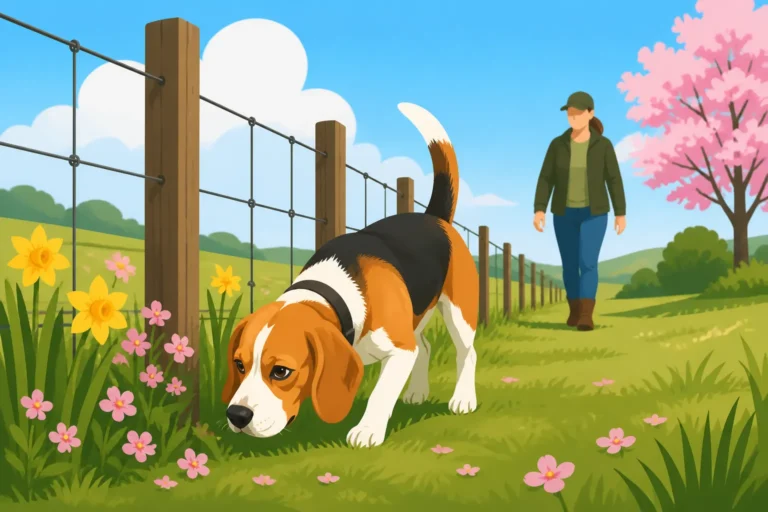
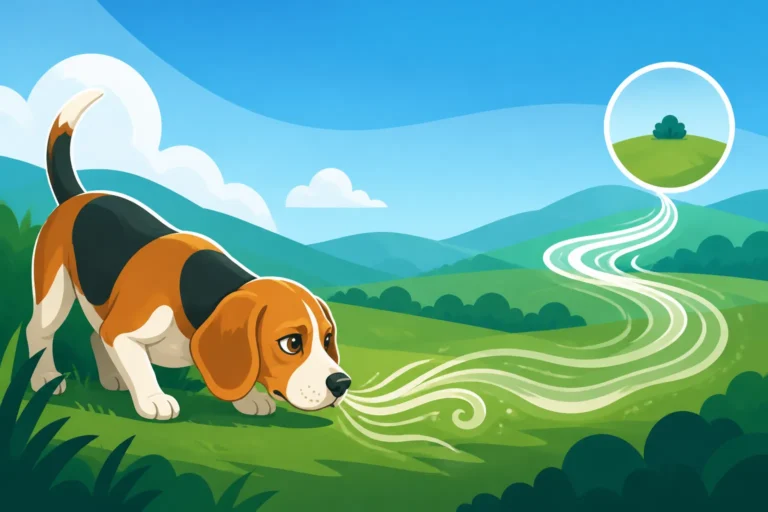
Beagles are, first and foremost, scent hounds. They were literally bred over centuries to follow a scent trail for miles, often ignoring everything else in their environment. Imagine having 220 million scent receptors, compared to our paltry 5 million. Their entire world is an intricate tapestry of smells, and when one particularly enticing thread appears, it's a full-body, all-encompassing experience. Your Beagle isn't being disobedient when they bolt; they're simply being a Beagle, utterly absorbed by the thrilling call of the wild, or rather, the call of the squirrel that ran across the park five minutes ago. This intense focus makes Beagle Recall and Why Your Voice Stops Registering an almost universal challenge.
The visual world and auditory cues, including your distressed shouts, often fade into the background when that powerful olfactory bulb takes over. Owners often describe their Beagle as "going deaf" or "turning into a different dog" the moment they hit a scent. This isn't an exaggeration; their brain is literally re-prioritizing input, with scent taking the absolute lead. It's a fundamental part of their charm, but also their biggest safety risk when off-leash in an unfenced area.
This deep dive into their scent world explains why even the most well-meaning, treat-wielding owner can suddenly feel invisible. Your Beagle isn't doing it to spite you; they're simply following an instinctual drive that is stronger than almost anything else. Understanding this helps us approach their training and safety with more empathy and realistic expectations.
When Training Isn't Enough
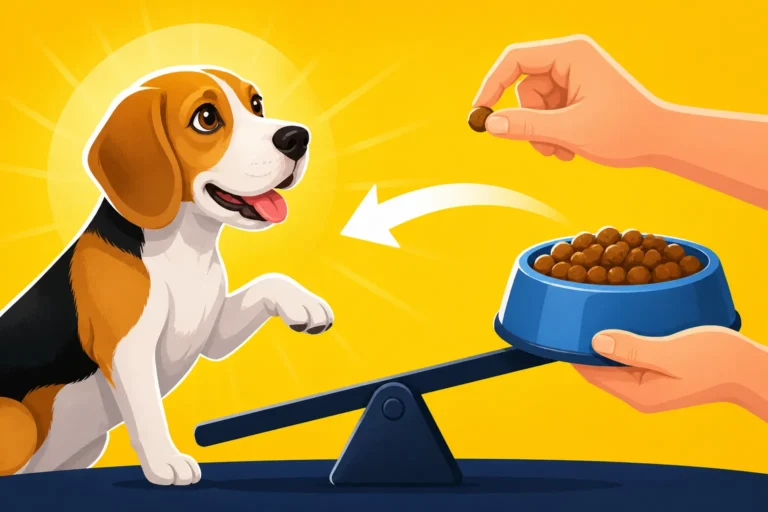
We all strive for that perfect recall, the dog that snaps to attention the moment you call their name. And with Beagles, we often work extra hard, using the highest value treats and endless repetition. Platforms like BAXTER & Bella offer fantastic resources for building a solid foundation, emphasizing positive reinforcement and consistent training. You can teach a Beagle to come when called in a quiet backyard, perhaps even in a mildly distracting park.
However, there comes a point where instinct often trumps even the best training, especially when a high-value scent is involved. A Beagle's genetics predispose them to pursue a scent with single-minded determination. This means that while training is absolutely paramount for safety and good citizenship, it's not a foolproof guarantee that your Beagle will ignore a rabbit bolt across an open field, or the tempting aroma emanating from a distant trash can.
This isn't to say you should give up on training; quite the opposite. A strong foundation in Building Beagle Recall Before the Nose Takes Over is essential. But acknowledging that your Beagle's nose is a force of nature, sometimes beyond even the strongest learned behaviors, leads us to seek additional layers of safety. It's about being pragmatic and understanding the breed's inherent traits, rather than constantly feeling defeated.
The Fear of a Lost Beagle
There are few feelings worse than the sheer terror of realizing your Beagle has slipped out the door, wriggled under a fence, or simply vanished on a walk. That instant surge of panic, the frantic calling of their name, the imagining of all the terrible things that could happen – it's a common nightmare for Beagle owners. Their low-to-the-ground stature and quiet, determined pursuit of scent make them incredibly adept at disappearing quickly and quietly.
The thought of your little hound, with their innocent, curious nature, wandering lost and vulnerable, is enough to keep any owner awake at night. Whether it's the danger of traffic, getting scooped up by a stranger, or simply being unable to find their way home, the risks are very real. Even a few minutes of a Beagle being unaccounted for can feel like an eternity, sparking a full-blown search party and community alerts. This fear is precisely why owners invest so much in secure fencing, long lines, and yes, even emergency backup systems. What to Do the Moment a Beagle Gets Loose becomes a question you hope you never have to answer, but prepare for nonetheless.
How GPS Collars Offer a Lifeline
While the ideal is a perfectly trained Beagle always by your side, reality for a scent hound often dictates a need for extra security. This is where GPS collars step in, offering a technological assist that can turn a frantic search into a rapid retrieval. They're a game-changer for peace of mind.
Real-Time Tracking and Peace of Mind
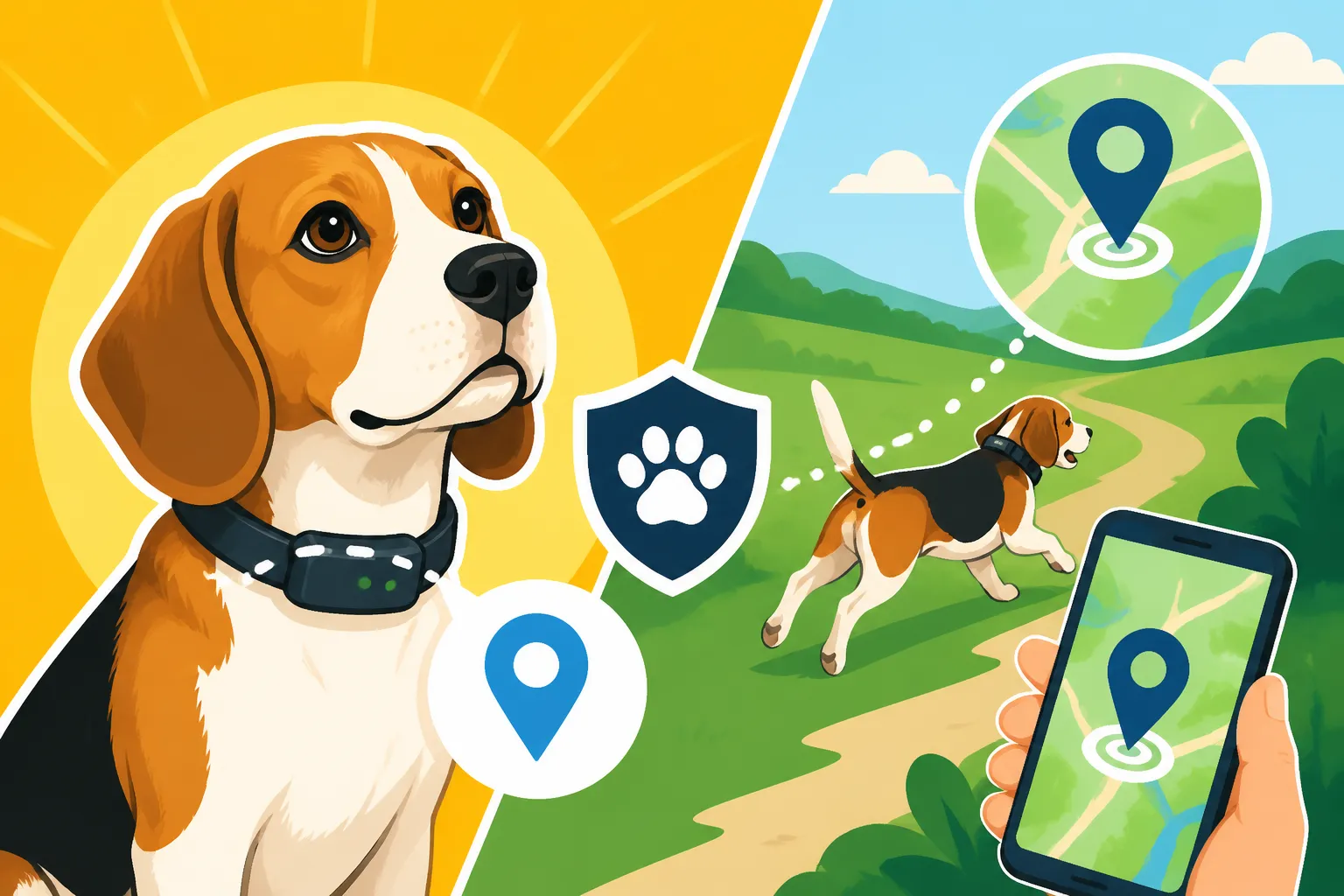
The primary benefit of a GPS collar is its ability to provide real-time location tracking for your Beagle. Imagine the scenario: your Beagle spots a deer, pulls free from a flimsy leash, and takes off into the woods. Instead of blindly shouting their name and crashing through bushes, you can pull out your phone, open an app, and see exactly where they are on a map. This isn't just about finding them; it's about the profound relief of knowing, moment by moment, their precise location.
Many of these devices use a combination of GPS, cellular, and Wi-Fi signals to triangulate your dog's position, often with impressive accuracy. Some even offer "live tracking" modes that update every few seconds, allowing you to follow their path in real-time. This can be crucial in areas with dense foliage or where your Beagle might be on the move. The ability to quickly pinpoint their location can dramatically reduce the time they spend lost and greatly increase the chances of a safe reunion.
This real-time data transforms a situation of sheer terror into one of controlled action. You can direct your search efforts precisely, rather than wandering aimlessly, reducing stress for both you and your adventurous hound. It's about empowering you with information in a high-stress situation, allowing you to react quickly and effectively.
Features to Look For
When choosing a GPS collar, especially for an active and determined breed like a Beagle, certain features become non-negotiable. You need a device that can keep up with their antics and provide reliable information when it matters most.
- Battery Life: This is critical. A collar with a short battery life is useless if your Beagle decides to embark on an all-day scent trail. Look for devices that offer several days of battery on a single charge, or at least features that allow you to optimize battery usage. Some trackers have low-power modes or send alerts when the battery is running low.
- Geofencing: This is a fantastic feature for Beagles. You can set up virtual boundaries (like your backyard or a designated park area) on the app. If your Beagle crosses this "geofence," you'll immediately receive an alert on your phone. This gives you a head start on retrieval before they've gone too far, turning a potential escape into a much quicker recovery.
- Durability and Waterproofing: Beagles love to explore, which often means rolling in mud, splashing through puddles, and digging under things. Your GPS collar needs to withstand this. Look for devices rated as fully waterproof, not just water-resistant, and built with robust materials that can handle impacts and general wear and tear from an active dog.
- Size and Weight: While Beagles aren't tiny, you still want a collar that's comfortable and won't hinder their movement. Ensure the device isn't too bulky or heavy for your specific Beagle, especially if they are on the smaller side of the breed standard.
Considering these features carefully will help you select a GPS collar that truly acts as a reliable safety net for your adventurous Beagle.
Not a Substitute for Training
It's absolutely vital to reiterate this point: a GPS collar is a backup tool, not a replacement for fundamental training and responsible ownership. Thinking you can skip Emergency Recall Cues That Reach a Beagle because you have a tracker is a dangerous misconception. The collar doesn't prevent your Beagle from running off; it just helps you find them after they've done it.
A well-trained Beagle, even one with a powerful nose, is safer and happier. GPS collars are an additional layer of security for those moments when instinct overpowers training, or when an unforeseen event (like a gate left ajar) leads to an escape. They give you a chance to recover your dog quickly, but they don't replace the hours spent on recall practice, boundary training, or ensuring secure physical containment.
The best approach is a layered one: excellent training, a secure environment (like a tall, dig-proof fence), and then a GPS collar as the ultimate fail-safe. Think of it like a seatbelt in a car – you still drive carefully, but it's there for unexpected emergencies.
Choosing the Right GPS Collar for Your Scent Hound
The market for pet GPS trackers has grown significantly, offering a range of options that can be a bit overwhelming. For a Beagle, with their specific needs, it's important to sift through the choices and pick one that truly suits their adventurous spirit.
Device Types and Subscription Models
GPS collars generally fall into a couple of main categories, and almost all of them come with a subscription service. This subscription is what enables the cellular data transfer that allows the device to communicate its location to your phone, so it's a necessary ongoing cost to factor in.
- Dedicated GPS Trackers: These are standalone devices that attach to your dog's existing collar. They are purpose-built for tracking and often offer robust features like long battery life, rugged designs, and comprehensive app functionality. Brands like Tractive and Fi are popular examples in this category, offering monthly or annual plans. The variety available on Amazon allows for easy comparison of features and customer reviews before committing.
- Smart Collars with Integrated GPS: Some companies offer full smart collars that have GPS built directly into the collar itself, along with other features like activity monitoring. These can sometimes be sleeker but might have different battery considerations due to multiple functions running.
When you're looking at these options, pay close attention to the subscription model. Some offer cheaper monthly rates if you commit to a longer-term plan (e.g., 1-year or 2-year). Understand what's included in the plan – real-time tracking frequency, geofencing alerts, activity monitoring, etc. The cost of the device itself is just the initial investment; the subscription is where the ongoing commitment lies.
Key Considerations for Beagle Owners
Because Beagles are such unique, scent-driven escape artists, there are particular aspects to consider beyond just basic tracking capability.
| Feature | Importance for Beagles | Why It Matters |
|---|---|---|
| Durability | High | Beagles dig, roll, and brush against rough surfaces. It needs to withstand wear. |
| Waterproof | High | Puddles, streams, mud, and rain are all part of a Beagle's outdoor adventure. |
| Battery Life | High | A long scent trail could mean hours, or even a full day, away from a charger. |
| Comfort/Fit | High | Must be secure enough not to slip off, but not bulky or chafing. |
| Range | Global (cellular) | Their nose can take them miles; local trackers are insufficient. |
| Geofencing | High | Early warning system if they breach a familiar boundary. |
| App Usability | High | Easy-to-use interface for quick location checks in stressful situations. |
For Beagles, the fit is crucial. Their necks can be deceptively thick, but they are masters of slipping collars. Ensure the tracker mechanism is secure on a well-fitted collar, perhaps even a dedicated tracking collar that clips on robustly. You don't want the tracker to fall off the moment your Beagle squeezes through a tight spot.
Also, consider the weight. While a modern GPS unit is relatively light, every ounce matters on a smaller Beagle. Test how it sits on them, ensuring it doesn't cause any discomfort or rub points, especially if they'll be wearing it for extended periods outdoors.
Integrating with Daily Life
A GPS collar is most effective when it's seamlessly integrated into your daily routine. This means more than just clipping it on once in a while.
- Consistent Wearing: For it to be a reliable backup, your Beagle should wear it whenever there's a risk of escape – which, for many Beagles, is almost any time they are outside or not in a secure indoor space.
- Regular Charging: Make charging a part of your daily or every-other-day routine. Just like charging your phone, establish a habit. A dead battery makes the best tracker useless. Many devices have reminders or low-battery alerts, which are incredibly helpful.
- Testing Geofences: If your device has geofencing, test it regularly. Set up a perimeter around your yard or a local park you frequent and make sure you receive alerts as expected. This helps you understand the system's response time and accuracy.
- Familiarize Yourself with the App: In a panic situation, you don't want to be fumbling with an unfamiliar app. Practice checking your Beagle's location, reviewing their history, and adjusting settings in a calm environment. Knowing how to quickly navigate the app when seconds count is invaluable.
By making the GPS collar a regular and well-understood part of your Beagle's gear, you ensure it's ready to perform its critical function when you truly need it.
Responsible Use and Limitations
While GPS collars are fantastic tools, they aren't magic bullets. Understanding their limitations and using them responsibly is key to maximizing their effectiveness and truly keeping your Beagle safe.
Still Need Physical Containment
This cannot be stressed enough: a GPS collar is a recovery tool, not a containment solution. It helps you find your Beagle after they've gotten out, but it doesn't stop them from getting out in the first place. You still need to invest in secure physical barriers to prevent escapes. This means:
- Fences: A sturdy, tall fence is essential. Many Beagles are surprisingly good climbers or jumpers, and almost all are expert diggers. The Fence Height That Actually Holds a Beagle is a serious consideration. A wire skirt buried along the fence line can deter tunneling.
- Leashes and Harnesses: Always use a leash or a secure harness when outside an enclosed area. Beagles are prone to slipping flat collars, especially when pulling on a scent. A well-fitted harness offers better security. Consider Why a Harness Protects a Beagle's Neck as an added benefit.
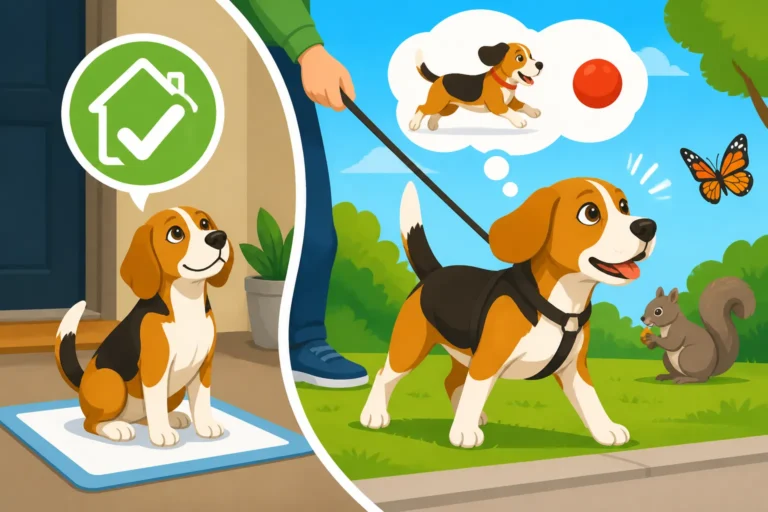
- Door and Gate Safety: Be vigilant about open doors and gates. Beagles are notorious for being "door dashers." Training your Beagle to wait at doorways can help, but human diligence is key.
Relying solely on a GPS collar is like installing an alarm system but leaving your front door unlocked. It's an excellent layer of security, but it needs to supplement, not replace, primary prevention methods.
Battery and Signal Reliability
Even the best technology has its quirks. GPS collars rely on battery power and cellular signals, both of which can have limitations.
- Battery Concerns: As mentioned, battery life varies. If your Beagle is gone for an extended period, or if you forget to charge the device, it could die, rendering it useless. Always have a charging routine, and consider a device with a low-battery alert. Environmental factors like extreme cold can also affect battery performance.
- Signal Gaps: While GPS technology is generally robust, there can be areas with poor cellular coverage, especially in remote rural locations, dense forests, or deep ravines. If the tracker can't get a signal, it can't transmit its location. While most modern trackers can store location data and transmit it once a signal is re-established, there might be temporary blind spots. It's worth considering your typical walking routes and home environment when assessing signal strength.
Understanding these potential points of failure allows you to be more prepared. Always ensure your Beagle is microchipped, even with a GPS collar, as Beagle Microchips and Getting a Lost Dog Back offer another layer of permanent identification.
Building an Emergency Plan
No matter how many precautions you take, owning a Beagle means accepting a small risk of them going missing. A GPS collar significantly reduces that risk, but it's still wise to have a broader emergency plan in place.
- Practice Calling: Even with a GPS, practice your Beagle Recall Games to Play in the Backyard regularly. The faster your Beagle comes back, the less time they spend in a risky situation, even if you can track them.
- Local Resources: Know the contact information for your local animal shelters, humane societies, and animal control. If your Beagle is found by someone else, these are often the first places they'll call.
- Community Network: Alert your neighbors and local dog-walking groups if your Beagle goes missing. A wider network of eyes and ears can be incredibly helpful.
- "Lost Dog" Protocol: Have a plan for creating "lost dog" posters quickly. Include clear photos, your contact information, and mention that your Beagle is chipped (and wearing a GPS collar, if applicable).
A GPS collar is a powerful ally in keeping your adventurous Beagle safe. It offers reassurance and a tangible way to intervene quickly when their powerful nose leads them astray. But remember, it's just one tool in your comprehensive toolkit for responsible Beagle ownership, complementing good training and secure boundaries.
Disclaimer
This article is for general informational purposes only and does not constitute professional advice. Laws, prices and regulations vary by location and change over time. Consult a qualified professional for guidance on your specific situation.