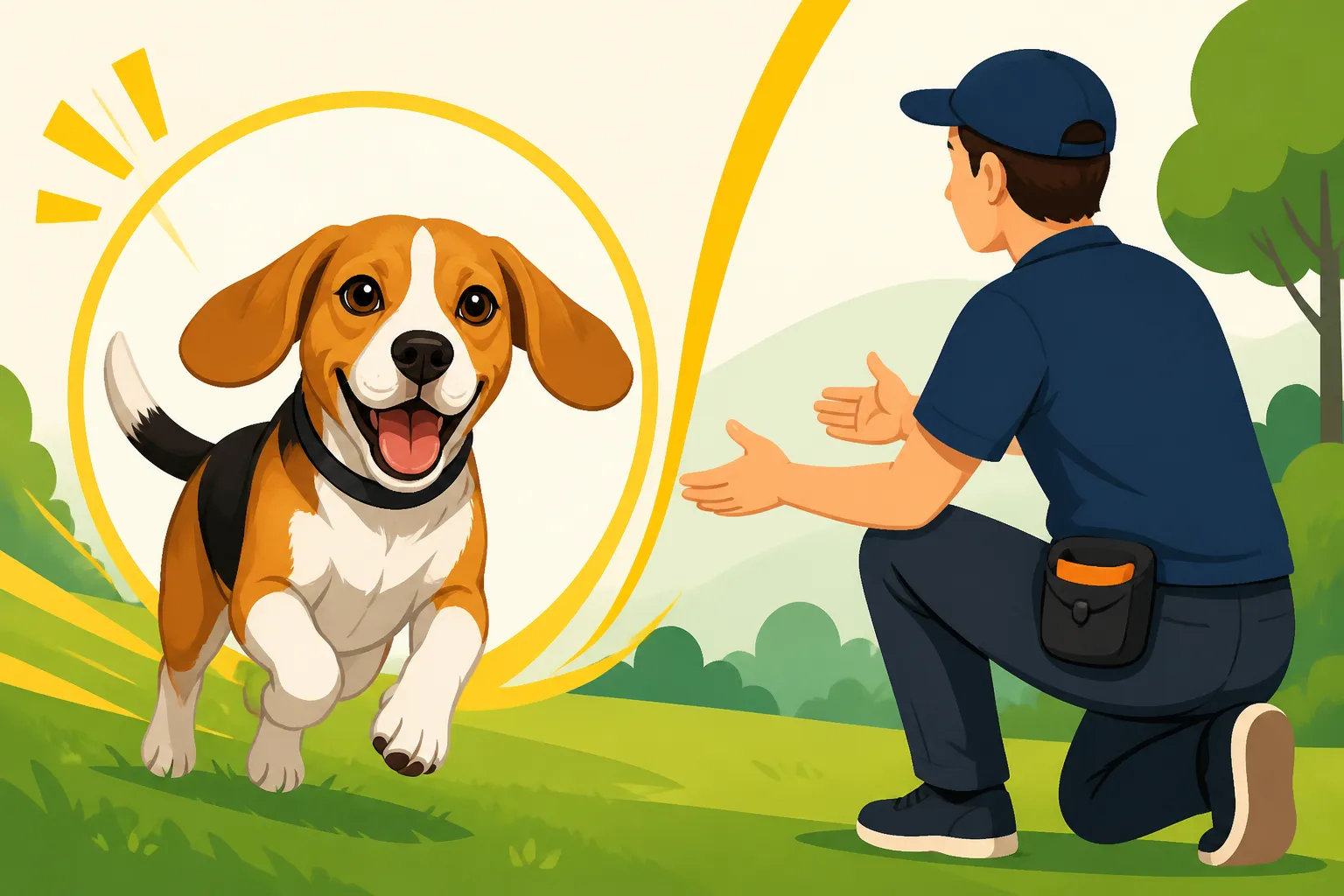
Hiring a Trainer Just for Beagle Recall
It's a familiar scenario for so many Beagle owners: you’re out for a walk, enjoying the fresh air, and suddenly, your beloved hound catches a whiff of something utterly irresistible. In that instant, your voice, your carefully practiced recall cue, everything fades into the background as their powerful nose takes over. You call, you plead, you even try to sound cheerful, but your Beagle is already miles away in their mind, following that invisible trail. It’s frustrating, sometimes terrifying, and it leaves many of us wondering if rock-solid recall is even possible with this breed. This guide is here to tell you that while it takes a unique approach, it absolutely is, and sometimes, the best path forward is bringing in a professional who truly understands the Beagle mind.
Understanding the Beagle's Recall Challenge
Let's be honest, Beagles aren't like some other breeds that seem to live to please and respond to a whisper. They were bred for a job, and that job involves following scent. This deep-seated instinct is what makes them such incredible scent hounds, but it's also why recall can feel like trying to herd cats in a hurricane.
The Unstoppable Power of a Beagle's Nose
The primary reason why your Beagle might seem to have "selective hearing" when a fascinating scent is on the wind isn't defiance; it's pure, unadulterated instinct. Beagles possess an extraordinary olfactory system, boasting an estimated 220 million scent receptors. To put that into perspective, humans have about 5 million. Their world is quite literally a tapestry woven from smells, a vibrant, detailed landscape that we can only begin to imagine. When your Beagle puts their nose to the ground, they're not just sniffing; they're reading a story, a complex narrative left by every creature, person, and plant that has passed by.
This incredible ability means that a fresh rabbit trail or even the lingering scent of a discarded snack can activate their entire being. Their brain's olfactory bulb is significantly larger and more developed than ours, dedicated to processing these intricate smells. For them, ignoring a captivating scent is like asking a human to ignore a blaring fire alarm or a delicious aroma wafting from a bakery. It's almost physically impossible because their entire genetic makeup is screaming, "Follow that scent!" Understanding this fundamental difference is the first step in approaching their recall training with empathy and realistic expectations. Trying to override this instinct with sheer force or punishment rarely works and often damages the bond you share. If you've ever wondered why a Beagle's nose beats ours ten thousand times over, it's because their very survival once depended on it.
The Instinct to Trail and the Selective Hearing
Beyond the sheer power of their nose, Beagles carry a deep-rooted instinct to trail, a behavioral blueprint honed over centuries of selective breeding for hunting. These dogs were designed to follow a scent until they found their quarry, often ranging far from their human companions while doing so. They'd bay to alert the hunters to their progress, but the expectation was never for them to immediately return at a whistle or call if a hot trail presented itself. This historical purpose means that when your Beagle locks onto a scent, they enter a highly focused, almost trance-like state.
In this moment, your voice, no matter how urgent or enticing, becomes background noise. It's not that they don't hear you; it's that their brain prioritizes the primal drive to track over any learned human command. They are quite literally in a different dimension, experiencing a profound sensory immersion in the scent world. This is what we often jokingly call "selective hearing," but it's far more complex than that. It's a deep absorption in their natural calling, a powerful current pulling them forward. This is why a Beagle ignores you halfway down a trail, and understanding this isn't an excuse to give up, but rather a vital piece of information for crafting an effective training strategy. For many owners, it feels like a personal slight, but it’s just your Beagle being exactly what they were bred to be.
When to Consider a Professional Trainer for Recall
Many Beagle owners start with the best intentions, trying various recall techniques they find online or learn in basic obedience classes. And for some Beagles, especially those with a slightly less intense prey drive or those in highly controlled environments, these methods might be enough. But for many, the unique challenges of the breed mean hitting a wall.
Recognizing Persistent Recall Failure
You've tried everything: high-value treats, exciting toys, different tones of voice, even running away from them to spark their interest. Yet, the moment your Beagle catches a compelling scent, they're gone. This persistent recall failure isn't just frustrating; it's a serious safety concern. Perhaps your Beagle has gotten loose more than once, leading to heart-stopping chases through busy streets or dangerous encounters with wildlife. You might find yourself unable to enjoy walks in anything but a fully enclosed, double-fenced area, constantly worrying about a slipped leash or an open gate.
Maybe you’ve even invested in a long line, which is a fantastic safety tool, but you still feel like you're tethered to your dog's whims rather than truly having control. The inability to trust your Beagle off-leash, even in seemingly safe spaces, can severely limit their quality of life and your shared experiences. If your Beagle's recall completely falls apart the moment a squirrel darts by, or if they consistently blow past you in even a low-distraction park, it's a clear sign that you might benefit from specialized help. Knowing why a Beagle should never be off leash unfenced becomes critically important, and professional guidance can help you navigate this safely.
The Limits of DIY Training
For many common obedience issues, diligent DIY training with consistent positive reinforcement can yield fantastic results. You can teach a Beagle to sit, stay, and even master complex tricks with patience and the right motivation (usually food!). However, recall with a scent hound presents a unique obstacle that often goes beyond what even the most dedicated owner can tackle alone. The sheer intensity of their drive to follow a scent is often far stronger than any treat or praise you can offer in that moment.
You might be making progress in your backyard or a quiet room, only to see it all crumble the second you step foot outside. This isn't a reflection of your inadequacy as an owner, but rather the powerful evolutionary programming of your Beagle. A professional trainer, especially one with extensive experience with scent hounds, brings a fresh perspective, specialized techniques, and often, an understanding of canine behavior that can help bridge the gap between instinct and learned behavior. They can identify subtle cues you might be missing, introduce novel training environments, and help you build a recall so strong it can compete with the most enticing smells. Sometimes, the frustration of trying and failing on your own can also start to erode the bond, making external help a valuable investment in your relationship.
Types of Trainers and Training Methods for Beagle Recall
When you decide to seek professional help for your Beagle’s recall, you’ll quickly discover that not all trainers or training methods are created equal. It’s crucial to find an approach that aligns with your values and, most importantly, with your Beagle’s unique personality and drives.
Individual Consultations vs. Group Classes
Choosing between individual consultations and group classes depends largely on your Beagle’s specific needs, your budget, and your comfort level.
Individual Consultations:
These one-on-one sessions offer a highly tailored approach. A private trainer can observe your Beagle in your home environment, assess their specific triggers and distractions, and design a personalized training plan. This is particularly beneficial for Beagles who are easily overwhelmed in group settings, have complex behavioral patterns, or those with very intense prey drives where general advice simply isn't cutting it. The trainer can focus entirely on your dog's learning style and progress, providing immediate feedback and adjustments. They can help you implement techniques for building Beagle recall before the nose takes over, working on scenarios that are most relevant to your daily life, like managing distractions in your local park or during walks. The downside? Private training is typically more expensive per session.
Group Classes:
Group classes offer a more cost-effective option and provide a controlled environment for your Beagle to practice recall around other dogs and people. This can be excellent for socialization and for teaching your Beagle to focus on you despite moderate distractions. It helps generalize their training, meaning they learn that "come" means "come" no matter who or what else is around. However, for a Beagle whose nose is constantly engaged, a group class might present too many overwhelming scents, making it difficult for them to concentrate initially. If you opt for a group class, look for one that specifically addresses advanced recall challenges and understands the unique needs of scent hounds. Sometimes, starting with private sessions to build a strong foundation and then transitioning to group classes for proofing can be a highly effective strategy for Beagle recall games to play in the backyard.
Force-Free, Positive Reinforcement, and Aversive Tools
This is arguably the most critical distinction in dog training today. For a Beagle, a breed known for its sensitive nature despite its stubborn streak, a positive reinforcement approach is almost always the most effective and humane.
Positive Reinforcement:
This method focuses on rewarding desired behaviors. When your Beagle performs a good recall, they get something wonderful – a high-value treat (like small pieces of cheese, boiled chicken, or even specialized training treats from brands like Chewy or Ollie), enthusiastic praise, or a favorite toy. This teaches your Beagle that coming when called leads to positive outcomes, making them want to return to you. For Beagles, whose food drive is legendary, high-value food rewards are incredibly powerful. A skilled force-free trainer will use this drive to their advantage, teaching your Beagle that ignoring a scent and returning to you is the most rewarding choice they can make. They will help you build this foundation slowly, in increasingly distracting environments, ensuring that the recall cue becomes a predictor of something amazing. Rewarding a Beagle every time it checks in builds a strong habit and a positive association with returning.
Aversive Tools and Methods:
These include choke chains, prong collars, e-collars (shock collars), and any technique that uses punishment, fear, or intimidation to suppress unwanted behaviors. While some trainers may advocate for these tools for recall, especially with challenging breeds, they are generally not recommended for Beagles. Beagles are sensitive and can shut down, become fearful, or even develop aggressive tendencies if subjected to pain or fear during training. Moreover, while an e-collar might stop a Beagle in its tracks, it doesn't teach them to want to come back; it only teaches them to avoid a negative sensation. This can severely damage the trust between you and your dog, and it doesn't address the underlying drive that causes them to run off in the first place. A good trainer will emphasize building a positive relationship and motivation, rather than relying on corrections.
Specialty Programs: Scent Work and Tracking Integration
This is where understanding the Beagle's innate drives truly pays off. Instead of constantly fighting against their nose, imagine harnessing it for training! Specialty programs like scent work, nose work, or tracking are designed to engage a dog's natural sniffing abilities in a structured, fun way.
For a Beagle, scent work can be a game-changer for recall training. By allowing them to use their nose in a sanctioned activity, you're not only providing vital mental stimulation and physical exercise that wears them out faster than a typical walk, but you're also building focus and a working relationship. When your Beagle learns that listening to your cues in scent work leads to finding hidden treats or toys, that focus and engagement can transfer to other commands, including recall. It teaches them that you are the source of fun and fulfilling scent opportunities.
A trainer skilled in these disciplines can show you how to integrate scent games into your routine, making you more interesting than the environment. This helps your Beagle develop better impulse control and teaches them to look to you for direction, even when enticing smells are present. It's about channeling that incredible drive into a partnership, rather than suppressing it. For many Beagles, scent work as the job a Beagle was built for becomes a powerful tool for unlocking better overall obedience and a stronger connection. Getting a Beagle started in nose work classes can truly transform their engagement and responsiveness.
Finding the Right Trainer for Your Beagle
Choosing a dog trainer is a significant decision, especially when addressing a critical behavior like recall. It’s not just about finding someone with credentials; it’s about finding the right fit for your specific Beagle and your family.
Qualities of an Effective Beagle Recall Trainer
An effective trainer for a Beagle’s recall needs to possess a very specific set of skills and understanding. It's not enough for them to be a "general dog trainer."
First and foremost, look for a trainer with proven experience with scent hounds, specifically Beagles if possible. They should understand the breed's unique motivations, their deep-seated prey drive, and why their nose can lead them astray. They won't dismiss your frustration but will acknowledge the powerful instinct you're up against. This deep understanding means they can develop strategies that work with the Beagle's nature, rather than trying to force a square peg into a round hole.
Second, they should be a strong advocate for positive reinforcement and force-free methods. As discussed, Beagles are sensitive, and punishment-based training can backfire dramatically, leading to fear, anxiety, and a breakdown of trust. A good trainer will use high-value rewards, engaging games, and patience to motivate your Beagle to choose to return to you. They should be able to explain their methodology clearly and justify why they use certain techniques over others.
Third, look for excellent human communication skills. A trainer isn't just training your dog; they're training you. They need to be able to explain concepts clearly, demonstrate techniques effectively, and provide constructive feedback without making you feel inadequate. You should feel comfortable asking questions and expressing concerns. They should empower you to continue the training long after their sessions are over. What a first-time owner gets wrong with a Beagle often comes down to underestimating their independence and prey drive, and a good trainer will guide you through this.
Finally, a trainer should be patient and realistic. They won't promise instant fixes, especially for something as complex as Beagle recall. They understand that progress is often incremental and requires consistent effort from you. They should set achievable goals and celebrate small victories, building momentum towards a reliable recall.
Interviewing Potential Trainers and Red Flags
Once you’ve identified a few potential trainers, the next step is to interview them. Don't hesitate to ask detailed questions and observe their interactions with dogs, if possible.
Here are some key questions to ask:
| Question | What to Listen For (Good Answer) | Red Flags (Bad Answer) |
|---|---|---|
| "What is your experience with Beagles or other scent hounds?" | Specific examples of successful recall training with scent hounds; understanding of their nose/prey drive. | "A dog is a dog, it's all the same"; no specific breed knowledge. |
| "What training methods do you use for recall?" | Focus on positive reinforcement, high-value rewards, building motivation, gradual distraction increase. | Mentions e-collars, prong collars, alpha rolling, or punishment-based techniques. |
| "Can you describe your approach to handling dogs who are highly distracted by scent?" | Strategies for engaging the dog, using environmental management, working in graduated steps. | "Just yank the leash" or "They need to learn who's boss." |
| "How do you involve the owner in the training process?" | Emphasizes teaching the owner, providing homework, ensuring owner consistency. | Focuses only on what they will do with the dog; minimal owner involvement. |
| "What results can I expect, and in what timeframe?" | Realistic expectations; acknowledges individual dog differences; emphasizes ongoing practice. | Guarantees instant recall or promises a "fixed" dog in just a few sessions. |
| "Can I observe a session or speak to references?" | Welcomes observation; provides contact info for previous clients. | Refuses observation; hesitant about references. |
Be wary of any trainer who makes grand promises of immediate results, especially with Beagles. Reliable recall takes time, consistency, and a deep understanding of the dog. Avoid trainers who use fear, intimidation, or pain. Watch for how they interact with their own dogs or clients' dogs – do they seem happy and engaged, or stressed and shut down? A trainer who discourages questions or makes you feel uncomfortable is also a major red flag. Remember, you're not just hiring a service; you're entering into a partnership for your Beagle's well-being and safety.
What to Expect During and After Training
Hiring a trainer isn't a magic wand that instantly transforms your Beagle into a perfectly obedient robot. It's a collaborative process that requires your active participation and commitment long after the trainer leaves.
The Training Process and Homework
When you begin working with a professional trainer, especially for recall, expect a structured approach that starts with building a strong foundation. This usually means beginning in a low-distraction environment, like your home or a quiet backyard, where your Beagle can focus entirely on you. The trainer will teach you how to use high-value rewards effectively, how to deliver your recall cue clearly, and how to make returning to you the most exciting thing in the world for your Beagle. This often involves practicing Beagle recall indoors first, where success is virtually guaranteed, before gradually increasing the difficulty.
You'll learn various games and exercises designed to build motivation and responsiveness. For instance, a common technique is "the recall game," where you and another person stand a short distance apart, calling your Beagle back and forth with enthusiastic praise and treats. This makes recall a fun, rewarding experience. The trainer will likely assign "homework" – specific exercises to practice daily. Consistency is absolutely key here. Even just five-minute sessions, several times a day, can make a huge difference. Without your consistent follow-through, the progress made during sessions will quickly fade. The goal is not just for your Beagle to respond to the trainer, but for them to respond reliably to you, under various conditions. Building Beagle focus in a distracting place is a gradual process, and the trainer will guide you through each step.
Maintaining and Generalizing Recall Skills
Achieving a reliable recall with a Beagle is an ongoing journey, not a destination. Once you've completed a training program, the real work of maintenance and generalization begins. This means regularly practicing recall in different environments, with varying levels of distraction. Don't just practice in the park; practice at a friend's house, on a quiet trail, or even just in a new part of your neighborhood. The more situations your Beagle succeeds in, the stronger and more reliable their recall will become.
Always carry high-value treats (like small, soft, smelly ones) to reward successful recalls, even if they're impromptu. You want your Beagle to associate coming back with the absolute best possible outcome. For safety, especially when out in new or unfenced areas, continue to use a long line. It gives your Beagle the illusion of freedom while providing you with crucial control if a particularly tempting scent arises. GPS collars are also an excellent backup, offering peace of mind by allowing you to track your dog if they ever do get out of range. Products like the Fi Collar or Tractive GPS Dog Tracker can be invaluable for added security.
Additionally, remember that accidents and unexpected situations can happen. Even with the best training, a determined Beagle with a hot scent can sometimes outsmart us. This is where Beagle Pet Insurance and What It Runs a Month comes into play, with providers like Healthy Paws offering plans that can help cover emergency vet costs if your Beagle gets into trouble while off-leash. Thinking proactively about your Beagle's diet can also help. High-value food from brands like Ollie can serve as irresistible training treats, making your recall game even stronger. Remember, an engaged, well-exercised Beagle (mentally and physically) is generally more responsive, so keep up with their scent work and regular, engaging walks.
Budgeting for Professional Training
Considering professional training for your Beagle’s recall is an investment – an investment in their safety, your peace of mind, and the strength of your bond. It's important to understand the typical costs involved so you can plan accordingly.
Understanding Training Costs
The cost of professional dog training can vary significantly based on the type of service, the trainer's experience, their location, and the duration of the program.
- Private Trainer Rates: Individual consultations are often the most effective for addressing specific, complex behavioral issues like Beagle recall, but they come at a higher price point. Private trainer rates for a Beagle can range anywhere from $75 to $200 per hour or session, with packages often offering a slight discount. A typical recall program might involve 4-8 sessions.
- Group Obedience Classes: These are generally more affordable, with group obedience class prices for a Beagle usually falling between $150 to $300 for a 6-8 week course. While they offer good foundational training and socialization, they might not provide the individualized attention needed for a truly reliable Beagle recall, especially if your dog has a very strong prey drive.
- Board-and-Train Programs: This option involves your Beagle staying with a trainer for an extended period (typically 2-4 weeks) for intensive training. While it can produce quick results, it's also the most expensive option, often costing $1,500 to $4,000 or more. It's crucial to thoroughly vet board-and-train facilities and ensure they use only positive reinforcement methods, as some can employ aversive techniques.
- Specialty Workshops/Camps: Some trainers offer specialized recall workshops or even "scent hound" camps that focus specifically on the challenges of breeds like Beagles. These can range from a few hundred dollars for a weekend workshop to over a thousand for a week-long camp.
Factors like a trainer's certification (e.g., CPDT-KA), years of experience, and whether they specialize in specific breeds or behaviors will also influence their fees. It's always a good idea to get a detailed quote and understand what's included in any package before committing.
Is It Worth the Investment?
When you look at the numbers, professional training can seem like a significant expense. However, it's crucial to view it as an investment in your Beagle's safety and well-being. Consider the alternatives and potential costs associated with poor recall:
- Emergency Vet Bills: If your Beagle runs off and gets hit by a car, gets into a fight with another dog, or consumes something toxic, the emergency vet costs every Beagle owner should expect can easily run into thousands of dollars. A single incident could far exceed the cost of a comprehensive training program. This is where having pet insurance like Healthy Paws could also be a saving grace, but preventing the incident is always better.
- A Lost Dog: The emotional toll and potential costs of trying to find a lost Beagle (posters, search parties, microchip recovery fees, etc.) are immense. More tragically, a lost dog might never be found.
- Stress and Frustration: The constant anxiety of not being able to trust your Beagle off-leash, or the daily frustration of walks becoming a battle, can significantly impact your enjoyment of owning a dog. A reliable recall leads to more fulfilling adventures and a stronger bond.
- Limited Experiences: With poor recall, your Beagle might miss out on opportunities for safe off-leash exercise in appropriate areas, limiting their mental and physical enrichment.
Ultimately, the lifetime bill for a Beagle that reaches fifteen can be substantial, and preventing costly or heartbreaking accidents by investing in training upfront can save you money and heartache in the long run. The peace of mind that comes with knowing your Beagle will reliably return to you, even when their nose is on overdrive, is truly invaluable. It allows you both to experience the world more fully and safely together.
Disclaimer
The information provided in this guide is for general informational purposes only and does not constitute professional veterinary or behavioral advice. Always consult with a qualified veterinarian or certified professional dog trainer for any health or behavior concerns specific to your Beagle. Individual results from training may vary, and consistent effort from the owner is crucial for success.