Training a Beagle Right Before Mealtimes
One of the biggest frustrations for Beagle owners is trying to get their dog to focus when food is involved. Their incredible nose and insatiable appetite can make training feel impossible, especially when you're competing with the allure of their dinner bowl. This guide will help you turn that powerful food drive into your greatest training asset by showing you how to effectively train your Beagle right before mealtimes, leveraging their natural motivation to build focus and obedience.
Understanding the Beagle Food Drive
Anyone who lives with a Beagle knows that food isn't just a meal; it's a sacred quest, a high-stakes adventure. This isn't just them being "greedy"; it's deeply ingrained in their genetics and historical purpose. Understanding this fundamental aspect of their being is the first step to truly effective training.
Why Food is Everything to a Beagle
Let's be honest, your Beagle's nose is a superpower. With an estimated 220 million scent receptors, compared to our mere 5 million, they live in a world of smells we can barely comprehend. They were bred for centuries to follow scent trails, often for hours, to find small game like rabbits. That relentless drive to locate and consume sustenance is hardwired. For a Beagle, detecting the faintest whiff of kibble or a dropped crumb isn't just curiosity; it's a biological imperative, a calling that overrides almost everything else.
Their history as pack hunters meant competition for resources. The dog that found the food, and ate it quickly, was the one that thrived. This isn't about being polite at the dinner table; it's about survival from their ancestral memory. So when you see your Beagle fixated on that bowl, understand that it's a profound instinct at play. It's not personal defiance; it's a primal drive. You might find yourself searching for The Beagle Food Drive That Empties Your Counters for more on this unique trait.
The Challenge of the Ever-Hungry Hound
This intense food drive, while a fantastic motivator, can also be the bane of a Beagle owner's existence. How many times have you turned your back for a second, only to find the entire loaf of bread gone from the counter? Or discovered your meticulously sorted trash can had been skillfully disassembled? Beagle Counter Surfing and Trash Raiding are not just common behaviors; they're almost a rite of passage for many Beagle families.
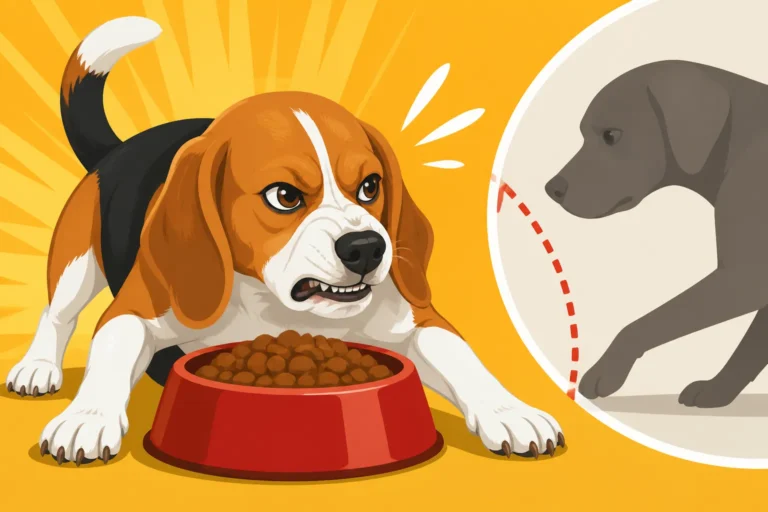
Beyond the frustrating thievery, this relentless pursuit of food can lead to serious health issues, including obesity, which is a major concern for Beagles. An overweight Beagle faces higher risks for conditions like Beagle Hip Dysplasia and Everyday Joint Wear and Beagle Disc Disease and That Slightly Long Back. It can also create tension in multi-dog households if one Beagle guards its bowl or treats from others, an issue often addressed under Beagle Resource Guarding at the Food Bowl. The constant vigilance required to keep them from eating something harmful outdoors or raiding the pantry can be utterly exhausting.
The "Mealtime Training" Advantage
Given their profound connection to food, it might seem counterintuitive to use mealtimes for training. But this is precisely where your Beagle's biggest "flaw" becomes its greatest strength. By strategically structuring training sessions around their meal schedule, you can transform that intense hunger into focused, eager participation.
Harnessing Hunger for Focus
Think about it: when is your Beagle most motivated? Probably when they know food is coming. That slightly hungry state, just before their meal, is prime learning time. Their minds are hyper-focused on one thing: getting that food. Instead of fighting that focus, you're redirecting it. You're telling them, "Yes, that food is coming, but first, let's work for it." This isn't about starving your dog; it's about scheduling. A Beagle who is routinely fed two meals a day will naturally be more receptive to training cues when their stomach starts rumbling.
This approach creates a powerful incentive. Your Beagle learns that performing certain behaviors (like sitting politely, waiting for a release cue, or making eye contact) directly leads to the ultimate reward: their entire meal. This is far more impactful than a tiny training treat because the stakes are much higher. It elevates the value of your command in their mind. You're effectively saying, "I control the most valuable resource, and I'm teaching you the language to earn it."
Building Positive Associations
When you use mealtime as a training opportunity, you're not just teaching commands; you're building a deeper, more positive relationship with your Beagle. They begin to associate you, and the act of training, with profound satisfaction. This isn't just about food; it's about structure, predictability, and positive reinforcement.
Imagine your Beagle excitedly bouncing around, anticipating dinner. Instead of just plopping the bowl down, you ask for a "sit" and a "stay." When they perform it, you release them to their meal. Over time, the anxiety and frantic energy around food start to diminish, replaced by a calm understanding that good things come to those who wait and listen. This consistent practice also reinforces your role as the provider and leader, which is crucial for a breed that thrives on clear communication and routine. This method also helps with Training a Beagle Without Making It Fat since you're using their regular food portions rather than extra treats.
Practical Steps for Pre-Meal Training
Ready to turn those frantic dinner dances into productive learning sessions? Here's how to integrate training right before your Beagle's mealtimes.
Setting the Stage: Preparation and Environment
Before you even think about putting the food bowl down, take a moment to prepare. This isn't just about the food; it's about managing the environment and your own mindset.
First, portion out your Beagle's meal into their bowl. Keep it out of sight for a moment, perhaps on a counter or in a pantry, so the initial sight of it doesn't immediately send them into a frenzy. Gather any other small, high-value training treats you might want to use for quick reinforcement during the session, though the ultimate reward will be the meal itself. For these short, focused sessions, a pouch for treats is helpful, something you can easily find on Amazon.
Choose a quiet area where you typically feed your Beagle. This might be the kitchen, a corner of the living room, or even their crate if they eat there. Minimize distractions. Turn off the TV, ask family members to give you a few minutes, and ensure other pets are secured if they might interfere. You want your Beagle's full attention, or as much of it as you can get when their nose is on overdrive. Remember, a slightly hungry Beagle is focused; an overly excited, frantic Beagle might be too far gone to learn effectively. Your calm, confident demeanor will help set the tone.
Foundational Cues to Practice
The "pre-meal" window is perfect for reinforcing foundational obedience cues. These are the building blocks for a well-behaved Beagle.
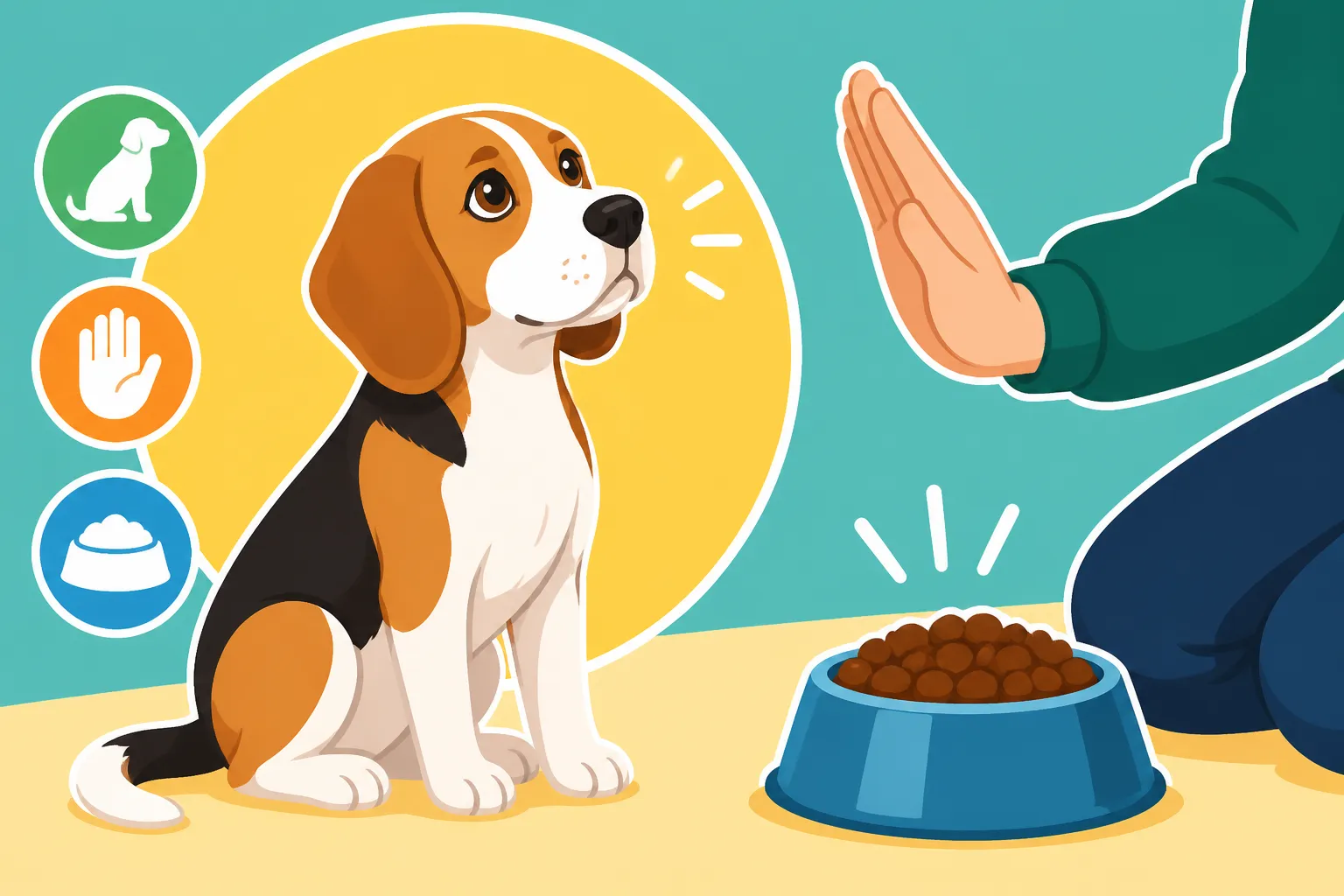
- "Sit" and "Stay": These are paramount. Before you even show the food bowl, ask for a "sit." Once they perform it, present the bowl. Before placing it on the floor, ask for a "stay." Start with very short "stays" (just a second or two) and gradually increase the duration. The goal is for them to hold the "sit-stay" until you give a release cue.
- "Wait": This is similar to "stay" but often specifically used for food or doorway manners. You can ask your Beagle to "wait" as you put the bowl on the floor, or as you open a door to the yard. This teaches impulse control.
- "Look" or "Watch Me": This command teaches your Beagle to make eye contact with you. It's incredibly useful for getting their attention when their nose is glued to the ground or their eyes are fixated on the food bowl. Hold a piece of kibble near your nose and say "look," rewarding them the instant they meet your gaze.
- "Leave It": This is a lifesaver, especially for a breed prone to eating everything. Practice "leave it" by placing a small amount of kibble on the floor a few feet away. When your Beagle moves towards it, say "leave it" and cover the food with your hand or foot. Reward them with a piece of their meal from your other hand when they disengage or look at you. This is an essential skill, particularly after you've read up on Beagle Leave It Training With Real Food Down.
Here's a simple table of ideal cues for pre-meal training:
| Cue | Purpose | How to Practice (Pre-Meal) | Benefit |
|---|---|---|---|
| Sit | Basic politeness, calms excitement. | Ask for a "sit" before presenting or placing the bowl. Reward with food. | Instills good manners, reduces jumping. |
| Stay | Builds impulse control and patience. | After "sit," ask to "stay" as you put the bowl down. Gradually increase duration. | Teaches self-control, prevents dashing for food. |
| Wait | Manages anticipation, especially before high-value rewards. | Use as you prepare or place the bowl, release with a clear cue. | Helps them understand boundaries around desirable items. |
| Look | Focuses attention on you, breaking fixation on food. | Hold a treat near your face, say "look," reward eye contact. | Essential for gaining attention in distracting environments. |
| Leave It | Prevents consumption of undesirable items. | Place small food item on floor, cover if Beagle moves, reward attention to you. | Prevents scavenging, protects against eating harmful things. |
| Down | More relaxed position, good for longer holds. | Ask for "down" before serving, especially if excitement is high. | Promotes calm behavior, good for extended waits. |
Progressive Difficulty and Duration
The key to success is starting easy and gradually increasing the challenge. Don't expect your Beagle to hold a perfect "stay" for five minutes on day one.
- Start Small: Begin with a "sit" before the bowl is even visible. Then, once they sit, bring the bowl out. Ask for a "stay" for just one second while you put the bowl on the floor. Release.
- Increase Duration: Once they reliably hold a one-second "stay," gradually extend it to two seconds, then three, and so on. Only increase the duration if they are consistently successful. If they break, shorten the duration for the next attempt.
- Add Distance: After mastering duration, start adding distance. Ask for a "sit-stay" and take one step back from the bowl. If they hold, step back to the bowl and release. Gradually increase steps.
- Introduce Distractions: Once they're solid with duration and distance, slowly add minor distractions. Maybe another family member walks by quietly, or a toy rolls past. The meal itself is often the biggest distraction, so mastering the "wait" for the bowl is a huge win.
- Vary the Routine: Don't always make them wait for the same amount of time. Sometimes a short wait, sometimes a slightly longer one. This keeps them engaged and prevents them from anticipating a predictable release. This kind of impulse control work is invaluable for all aspects of a Beagle's life. Programs like those offered by BAXTER & Bella can provide structured guidance on how to systematically build these skills.
Consistency is vital. Every single meal, every single day, is an opportunity to reinforce these behaviors. Even small successes add up quickly with a food-motivated Beagle.
Troubleshooting Common Mealtime Training Hurdles
Let's face it, Beagles are not always textbook students, especially when their tummies are rumbling. There will be moments of frustration, but with patience, you can navigate them.
Managing Over-Excitement and Whining
Your Beagle's excitement for food can manifest as jumping, pawing, vocalizing (that classic Beagle bay or whine), or even frantic spinning. This isn't naughty behavior; it's just pure, unadulterated anticipation. The trick is to teach them that calm behavior gets results, while excitement delays the reward.
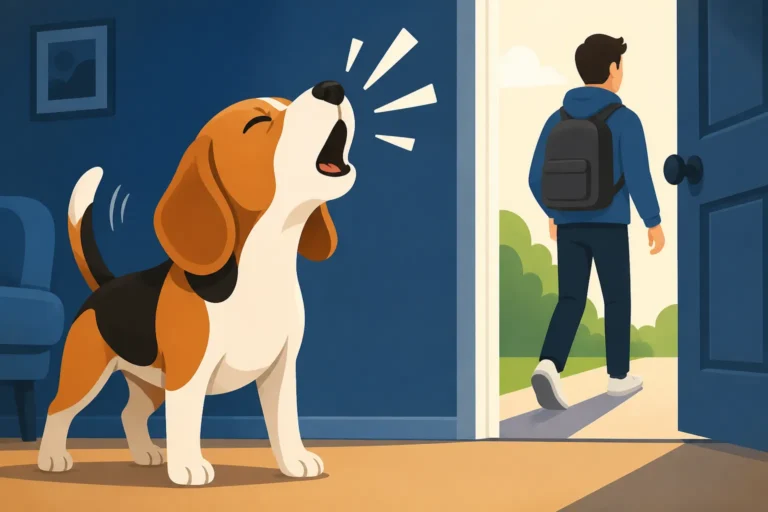
If your Beagle is jumping or pawing, simply stand up straight, turn your back, or even walk away from the food bowl. Do not make eye contact or scold them. Wait until they offer even a brief moment of calm (all four paws on the floor, quiet mouth, relaxed posture). The instant they're calm, turn back and try again with your cue. If they start acting up again, repeat the disengagement. This teaches them that their over-the-top behavior literally makes the food disappear. It takes patience, especially with a Beagle, but they will connect the dots. You might also find help in understanding Beagle Howling the Moment You Leave as the root of some of this vocalization stems from anxiety and excitement.
For whining, the same principle applies. Don't acknowledge it. Wait for silence. Even a half-second of quiet can be rewarded with forward progress towards the meal. Beagles are smart; they'll quickly learn that quiet patience is the key to unlocking dinner.
When the Food Drive Overrides All Else
Sometimes, the smell of dinner is just too overwhelming, and your Beagle might seem completely incapable of focusing. It's like their brain just switches off, and all that's left is a singular, powerful impulse to EAT.
If your Beagle is consistently failing to engage, even with simple cues, here are a few things to consider:
- Is the Hunger Too Intense? Sometimes, a Beagle is just too hungry. If they haven't eaten in a very long time, their primal drive might be too strong for them to process commands. You might need to offer a small, quickly consumed, low-value snack a little while before the main meal, just to take the edge off the extreme hunger, and then proceed with training for the full meal.
- Lower Your Expectations (Initially): If they can't "stay" for two seconds, ask for one. If they can't "sit" with the bowl in front of them, ask for a "sit" when the bowl is still behind your back. Break the behavior down into smaller, more achievable steps. Success breeds confidence, both for you and your Beagle.
- Re-Evaluate Your Reward System: Is the meal truly high-value to them? Most Beagles aren't picky, but occasionally, if their regular food isn't exciting enough, you might need to use a small amount of a truly irresistible treat (like a tiny piece of cooked chicken or cheese) to get their attention, then transition back to their kibble for the main reward. However, using their actual meal is usually the most effective approach.
- Shorten Sessions: Keep training sessions very brief, especially at the start. One to two minutes of focused work is better than five minutes of frustration. You want to end on a positive note.
Consistency is Key
This might sound like a broken record, but with a Beagle, consistency is non-negotiable. Every family member needs to be on the same page. If one person always makes the Beagle "sit" before eating, but another just puts the bowl down, your Beagle will quickly learn that some people are easy marks. They're smart enough to differentiate!
Establish a clear routine and stick to it. Mealtimes happen at roughly the same time each day. The training sequence (e.g., "sit," "stay," then "okay!") remains the same. When everyone in the household understands and applies the same rules, your Beagle will learn much faster and feel more secure in the predictability of their day.
It's also important to be consistent with all aspects of their care and training. For instance, Year-Round Parasite Prevention for a Beagle is a non-negotiable part of their health routine, just as mealtime manners should be a non-negotiable part of their daily training. This holistic approach builds a well-adjusted, healthy, and happy Beagle.
Building good mealtime manners in a Beagle takes time, patience, and a healthy dose of understanding for their unique, scent-driven nature. But by consistently leveraging their incredible food drive, you can transform a chaotic feeding experience into a valuable, bonding, and enriching training opportunity.
Disclaimer
This article is for general informational purposes only and does not constitute professional advice. Laws, prices and regulations vary by location and change over time. Consult a qualified professional for guidance on your specific situation.