Starting Beagle Recall Inside a Fenced Yard
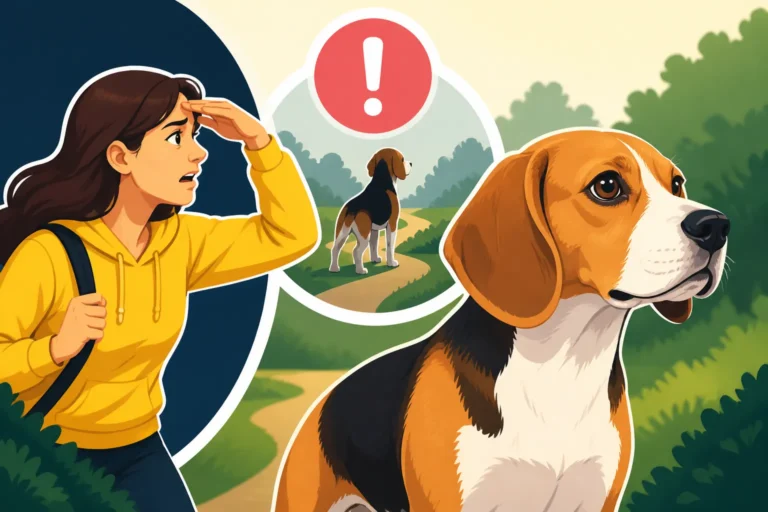
If you're a Beagle owner, you've likely experienced that moment: your sweet, otherwise obedient hound catches a whiff of something utterly fascinating, and suddenly, your calls for "Come!" transform into white noise. It's incredibly frustrating, and often, it feels like an uphill battle. This guide is all about tackling that fundamental challenge head-on, focusing specifically on how to build a rock-solid recall foundation right in the safest, most controlled environment possible: your own securely fenced yard.
The Unique Challenges of Beagle Recall in a Scent-Driven World
Let's be honest, asking a Beagle to ignore an enticing scent is like asking a fish to ignore water. It's against their very nature, and understanding this isn't about making excuses for your dog; it's about setting realistic expectations and tailoring your training approach to their incredible, undeniable drives. You're not dealing with a dog that's being deliberately disobedient; you're dealing with a breed built over centuries for one purpose: to follow its nose.
Understanding the Beagle's Nose-First Approach
Imagine having a superpower, one so potent that it dictates your every move, every thought, every impulse. For a Beagle, that superpower is its nose. With an estimated 220 million scent receptors, compared to our mere 5 million, their world is an intricate tapestry of odors we can't even begin to comprehend. When a Beagle puts its nose to the ground, it's not just sniffing; it's reading a detailed story written in airborne molecules and ground particles.
This intense focus means that once a compelling trail is detected, everything else fades into the background. Your voice, the promise of a treat, even the most exciting toy — all become secondary to the urgent, captivating narrative of that scent. It's an immersive experience for them, and it’s why a Beagle often seems to "go deaf" when a particularly good smell takes hold. They're simply operating on a different frequency than us at that moment, driven by instinct. The 220 Million Receptors Behind a Beagle's Nose can give you a deeper understanding of this incredible capability.
Why Off-Leash Freedom is a Pipe Dream for Most Beagles
Because of this overwhelming scent drive, the romantic ideal of a Beagle frolicking off-leash in an open field, happily returning to your side, is usually just that—an ideal, not a reality. For many, many Beagle owners, attempting off-leash activities in unfenced areas is a recipe for disaster. The moment they catch a scent, they are gone, and their speed and single-mindedness make them incredibly difficult to catch. This isn't a failing on your part or theirs; it's simply acknowledging the breed's inherent traits.
This isn't to say a Beagle can never be trusted off-leash, but it requires an extraordinary amount of consistent, high-level training, and even then, most experienced Beagle owners will tell you it's a risk they rarely take outside of very specific, controlled environments. Instead, a long line or a secure, fenced area becomes your best friend for allowing them freedom of movement while ensuring their safety. Why a Beagle Should Never Be Off Leash Unfenced really drives this point home.
The Importance of a Secure Environment for Early Training
Given their powerful nose and propensity to follow a scent wherever it leads, a securely fenced yard isn't just a convenience; it's a critical component for successful recall training. It provides a safe, contained space where your Beagle can explore, sniff, and engage with the world without the immediate danger of darting into traffic or getting hopelessly lost. This controlled environment allows you to practice recall without the constant anxiety of a potential escape.
Within this secure perimeter, you can gradually introduce distractions and build confidence in your Beagle's ability to respond to your call, knowing that even if they get momentarily sidetracked, they're not in any real peril. It's a low-stakes training ground that fosters learning through positive experiences, rather than relying on stress or fear. This initial phase is crucial for establishing the "come" command as a positive, rewarding experience, laying the groundwork for more advanced recall later on.
Essential Gear and Setting the Stage for Success
Before you even utter your first "Come!", you'll want to gather a few key items and mentally prepare your training space. Having the right tools at hand makes a world of difference, turning potential frustration into productive training sessions.
Choosing the Right High-Value Treats and Toys
For a Beagle, motivation often boils down to two things: food and scent. To make your recall command truly irresistible, you need to arm yourself with treats that are nothing short of spectacular in your Beagle's eyes. Forget the dry, crunchy biscuits for now. We're talking about soft, smelly, incredibly delicious morsels that your Beagle would happily climb mountains for. Cooked chicken, cheese, hot dogs cut into tiny pieces, or even specialized soft training treats from reputable brands found on places like Amazon are excellent choices.
The goal is to make coming to you the most rewarding thing ever. If your Beagle decides a blade of grass is more interesting than your offered reward, then your reward isn't high-value enough. Experiment to find what truly makes their eyes light up. Small, quick-to-eat treats are best so you can offer several repetitions without overfilling their tummy. The Treats a Beagle Will Work Hardest For offers great ideas for this.
The Role of a Long Line Even in a Fenced Yard
You might think a fenced yard eliminates the need for a long line, but think again! A long line, even a shorter one like a 10 or 15-foot lead, is an invaluable safety and training tool. It provides a crucial physical connection to your Beagle, allowing you to gently guide them back to you if they get too engrossed in a scent and "forget" your command. This isn't about yanking them back, but rather providing a subtle, consistent reminder of your presence and direction.
Furthermore, a long line allows you to prevent your Beagle from practicing "running away" if they decide to ignore you. Every time they successfully ignore your recall and continue sniffing, they're reinforcing that undesirable behavior. The long line allows you to interrupt that thought process and ensure they do come back, even if it's with a gentle nudge from the line. It's a safety net that builds confidence for both of you. You can find sturdy long lines on Amazon that are perfect for this kind of work. Long Lines Instead of Off-Leash for a Beagle details how important this tool is.
Creating a Distraction-Reduced Training Zone
While the ultimate goal is recall in a distracted environment, when you're first starting out, you need to minimize competition for your Beagle's attention. Even within a fenced yard, this might mean a few strategic adjustments. Try to train when the neighborhood is quiet, perhaps early in the morning or late in the evening. If possible, remove tempting toys or objects that might divert their focus initially.
The idea is to set your Beagle up for success. If they are constantly distracted by squirrels chattering on the fence or the smell of a neighbor's BBQ, they'll struggle to connect your "Come!" command with the reward. Start simple, in the least distracting corner of your yard, and gradually introduce more stimuli as their understanding and reliability improve. This builds a strong, positive association with the recall cue before you throw too many challenges their way.
Building the "Come" Command: Foundation Games and Positive Reinforcement
Now that you have your tools and your mindset, it's time to make recall training fun and incredibly rewarding. For a Beagle, training should feel like a game, and coming to you should be the best part of that game.
The "Ping-Pong" Recall Game for Multiple People
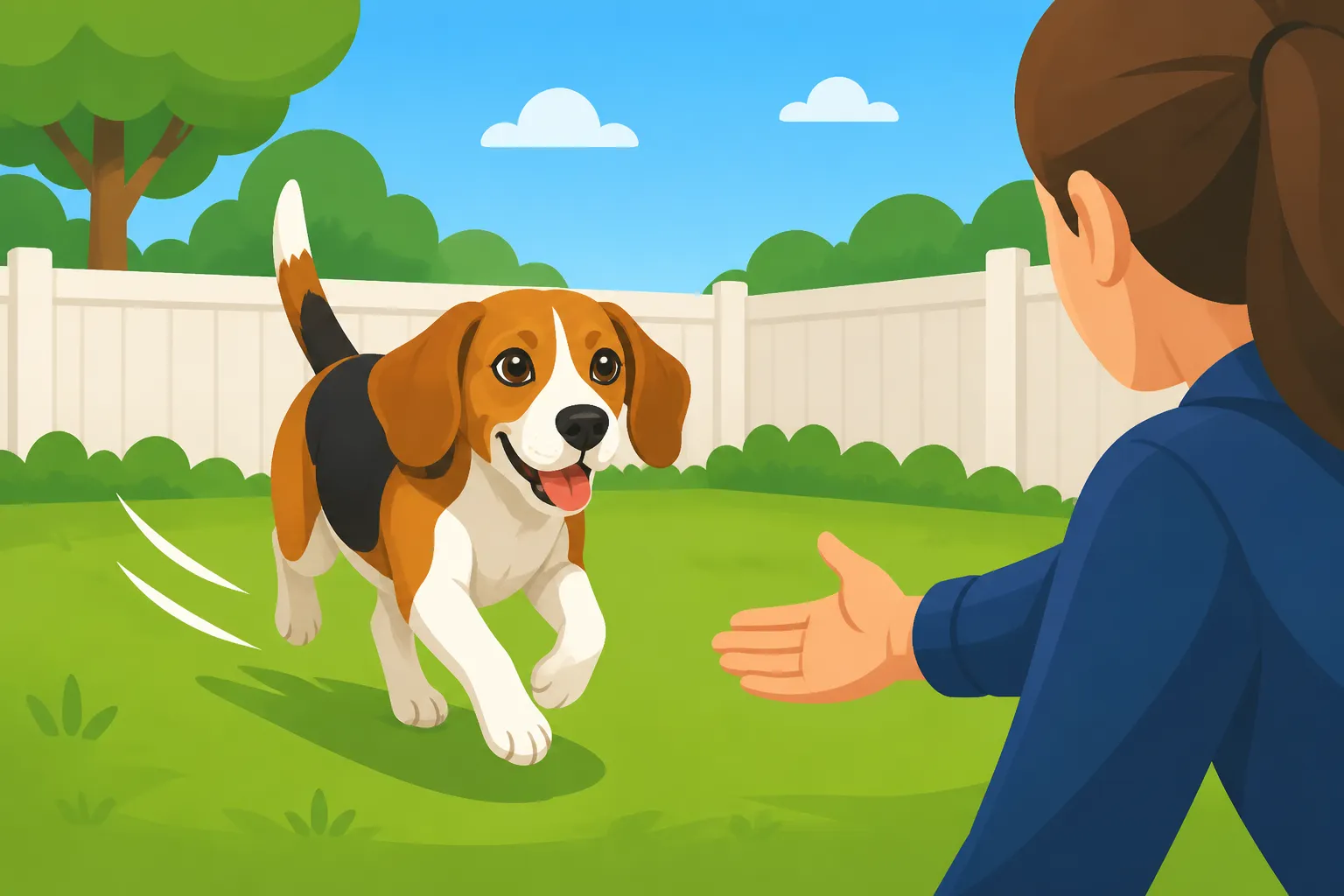
This game is fantastic for building a strong, positive association with coming when called, especially if you have multiple family members. Start with two people, standing about 10-15 feet apart in your fenced yard, your Beagle on its long line. One person kneels down, gets excited, calls the Beagle's name followed by "Come!", and when the Beagle reaches them, they get a jackpot of high-value treats and enthusiastic praise.
Once the Beagle has had its reward, the other person then calls its name and "Come!", and repeats the process. The key is to make it super exciting, like your Beagle is winning the lottery every time it reaches a person. The quick back-and-forth movement and constant rewards keep their attention and build immense value into the "Come!" command. This is where training programs like those offered by BAXTER & Bella can provide structured guidance, even if you adapt them for your fenced yard.
The "Hide-and-Seek" Game for Solo Training
If you're training alone, "Hide-and-Seek" is a wonderful way to teach your Beagle to seek you out. Start in your fenced yard with your Beagle nearby. When it's not looking, quickly hide behind a tree, a bush, or even just duck behind a patio chair. Then, excitedly call its name and "Come!" As soon as your Beagle finds you, reward it with a lavish jackpot of treats and praise. Make it a huge celebration!
Repeat this several times, making your hiding spots a little harder as your Beagle gets the hang of it. This game teaches them that coming to you isn't just about treats; it's about the joy of finding you and the incredible reward that follows. It builds anticipation and a positive search-and-reward pattern that strengthens the recall cue. It’s also a great way to engage their natural sniffing abilities in a positive, human-directed way.
Pairing the Recall Cue with Instant Rewards
The timing of your reward is crucial. As soon as your Beagle's paws touch you, or even as it's making its final approach, you need to deliver that high-value treat. The connection between "Come!" and "treat!" must be instantaneous and clear. This is called positive reinforcement, and it’s the most effective way to train a Beagle.
Avoid making your Beagle sit or perform any other commands before giving the treat during recall training. The act of coming to you is the rewardable behavior. If you add extra steps, you dilute the power of the recall itself. Just "Come!", arrival, and instant party. Over time, your Beagle will associate the sound of "Come!" with the incredible feeling of getting to you and getting that amazing reward. This positive cycle makes them want to return to you, rather than seeing it as an obligation.
Progressing Recall Skills Within Your Fenced Haven
Once your Beagle is reliably zipping to you during those initial games, it's time to gradually increase the challenge within your fenced yard. This progression is about building resilience against distractions.
Gradually Introducing Mild Distractions
Starting with zero distractions is great, but life isn't distraction-free. The next step is to slowly introduce mild distractions within your fenced yard. This could be:
- Having a family member walk by at a distance.
- Placing a favorite, but not too exciting, toy a few feet away.
- Training during a slightly busier time of day.
- Leaving a bowl of kibble (not high-value treats) on the ground further away.
The key here is gradual. Introduce one small distraction at a time, and ensure your Beagle can still successfully respond to "Come!" If they fail, reduce the distraction level and try again. You want them to succeed most of the time, building their confidence and reinforcing the habit of returning to you despite other interesting things happening. Building Beagle Focus in a Distracting Place emphasizes this careful, step-by-step approach.
Practicing Recall from Different Distances and Angles
Don't always call your Beagle from the same spot or when it's facing you. Practice recall when your Beagle is:
- On the opposite side of the yard.
- Around a corner of the house or shed, so it can't see you immediately.
- Sniffing intently at the fence line.
- Running away from you (this is where the long line is essential!).
Varying the distance and angle helps generalize the "Come!" command, teaching your Beagle that it applies no matter where they are or what they are doing. This builds true reliability. Always make it a joyous occasion when they reach you, even if they took a moment longer than you'd hoped. Remember, every successful return, no matter how prompted, is a win.
Integrating Everyday Recall Opportunities
Recall shouldn't just be a formal training exercise; it should be integrated into your daily life within the fenced yard.
- Call your Beagle to you before opening the door to go back inside.
- Call them from another room to come get a special chew.
- If they're happily sniffing, call them, reward, and then release them to sniff again.
These everyday opportunities reinforce the command without making it feel like work. It teaches your Beagle that "Come!" often leads to something good, and sometimes, it doesn't mean the fun is over. In fact, if you call them, reward them, and then immediately tell them "Go sniff!" or "Go play!", it creates an even stronger positive association, showing them that coming to you doesn't always end their outdoor adventure.
Troubleshooting Common Beagle Recall Hurdles
Even with the best intentions and methods, Beagles can throw some curveballs. Understanding these common hurdles and how to address them is key to not getting discouraged.
When Your Beagle Pretends Not to Hear You
Ah, the "selective hearing" phase! This is a classic Beagle move. They're not deaf; they're just making a cost-benefit analysis in their heads: "Is what Mom/Dad is offering better than this amazing squirrel scent/patch of intriguing weeds?" If they "pretend" not to hear you, it's usually a sign that your reward isn't high-value enough, or you've pushed too far, too fast with distractions.
The solution is to reset. Go back to a less distracting environment, use even higher-value treats (think slices of hot dog or leftover steak), and make your recall call even more enthusiastic and inviting. Avoid repeating the command endlessly; if they don't respond after two calls, either gently reel them in with the long line (if they're on one) or calmly go get them. You want "Come!" to mean "come NOW and get something awesome," not "maybe eventually, if I feel like it."
Dealing with Sudden Scent Distractions
This is the Beagle's Achilles' heel. One moment they're meandering, the next their nose hits an irresistible trail, and they're off like a rocket. The best defense is a good offense: keep them on a long line during these training phases, even in the yard. This way, you can prevent them from practicing the undesirable behavior of bolting. If they hit a scent and start to pull, immediately change direction, use your long line to redirect them, and then call "Come!" and reward heavily.
You're teaching them that even when a scent is strong, returning to you still yields the greatest reward. You can also incorporate scent work games into your training, teaching them to work for you even when their nose is engaged. This might be a topic to explore in a Beagle Scent Work Class Costs article for more advanced training.
The Adolescent Recall Regression
Just when you think you've got recall nailed, your Beagle hits adolescence (typically around 6-18 months), and suddenly, it feels like they've forgotten everything! This "teenage phase" is completely normal. Their hormones are surging, they're testing boundaries, and the world suddenly seems much more interesting than you. Beagle Adolescence and Sudden Selective Hearing describes this period perfectly.
The trick during this phase is to regress in your training. Go back to basics, use the absolute highest value rewards, and make every single recall a super positive experience. Be extra patient, consistent, and avoid punishing them for not coming. Just calmly retrieve them (with your long line or by walking over), and try to set them up for success in the next attempt. This phase will pass, but consistent, positive reinforcement is vital to navigating it successfully.
Maintaining a Lifelong, Reliable Recall
Building recall isn't a "one and done" deal. It's a muscle that needs regular exercise and reinforcement to stay strong throughout your Beagle's life.
Regular Practice is Key
Even after your Beagle has a fantastic recall in the fenced yard, you need to keep practicing. Short, fun recall sessions a few times a week will keep the command sharp. Think of it like going to the gym; you don't just go once and expect to be fit for life. Vary your locations within the yard, your rewards, and the types of distractions you introduce.
These regular, positive encounters reinforce that coming to you is always a good choice. It prevents the skill from atrophying and keeps your Beagle engaged and connected to you, even when the world outside the fence is full of captivating smells. Consistent repetition, paired with high-value rewards, solidifies the behavior into a lifelong habit.
Keeping Rewards High-Value and Varied
Don't let your rewards get stale! If you always offer the same dry kibble for recall, your Beagle might eventually get bored and start looking for more exciting options (like rabbit trails). Keep your treat pouch stocked with a variety of irresistible goodies. Rotate through different types of high-value treats, save the absolute best for recall, and occasionally surprise them with a favorite toy or a quick game of tug as a reward.
Sometimes, the reward isn't food at all. For a Beagle that loves to sniff, being released back to a scent after a successful recall can be a powerful reinforcer. The goal is to keep them guessing and always excited about what they might get when they respond to your call. This continuous engagement ensures that coming to you remains the most desirable option.
Knowing When to Seek Professional Guidance
If you've been working diligently in your fenced yard and still feel like you're hitting a wall, or if your Beagle's recall is simply not progressing, don't hesitate to seek professional help. A qualified dog trainer or behaviorist can offer tailored advice, identify specific issues you might be overlooking, and provide hands-on guidance. Sometimes, an objective eye can make all the difference.
They can help you fine-tune your techniques, develop strategies for managing specific Beagle behaviors, and even teach you advanced games or cues to strengthen your bond and your dog's responsiveness. Investing in a Beagle Training Class Fees or a private trainer can be incredibly beneficial for building a truly reliable recall and enhancing your overall relationship with your scent-driven companion. Organizations like BAXTER & Bella offer online resources and courses that can also support your training journey from home.
Here's a quick overview of Beagle recall progression in a fenced yard:
| Stage | Goal | Environment | Distractions | Reward Value | Key Behaviors to Look For |
|---|---|---|---|---|---|
| Foundation | Establish positive association with "Come!" | Quiet, fenced yard | Minimal/None | Very High | Immediate, enthusiastic return; happy demeanor. |
| Building | Generalize "Come!" across distances and mild distractions | Fenced yard, controlled | Mild (e.g., distant family, quiet toy) | High | Consistent return despite minor distractions. |
| Proofing | Strengthen reliability against increasing distractions | Fenced yard, varied locations | Moderate (e.g., light neighbor activity, new scents) | High/Varied | Reliable return even when moderately engrossed in sniffing. |
| Maintenance | Keep recall sharp and reinforce positive habit | Fenced yard, daily life | Everyday (e.g., squirrels, other pets) | Varied/Surprise | Eager, prompt return; clear focus on owner when called. |
Disclaimer
This article is for general informational purposes only and does not constitute professional advice. Laws, prices and regulations vary by location and change over time. Consult a qualified professional for guidance on your specific situation.