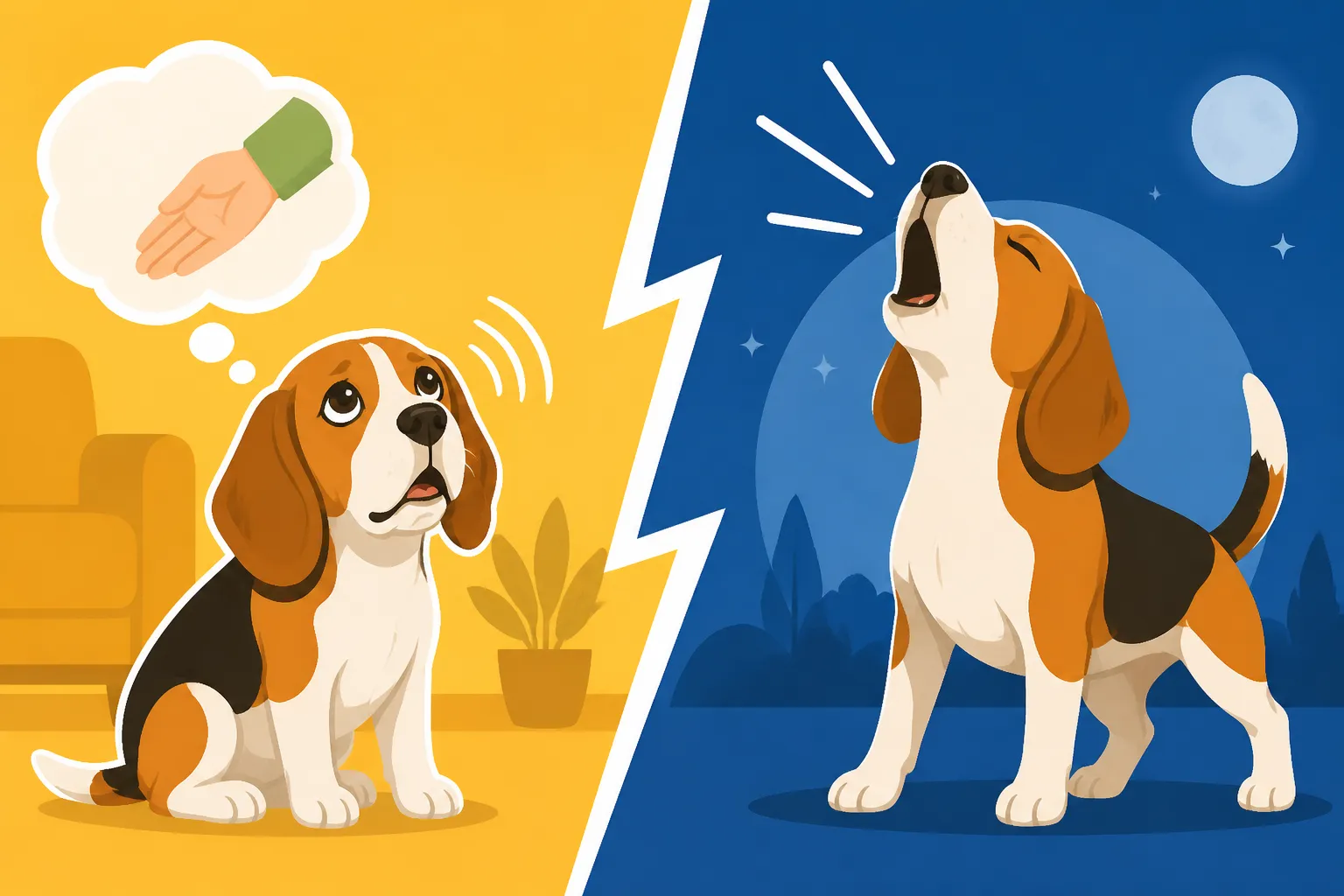
Telling Beagle Whining From Beagle Howling
It's a sound many Beagle owners know intimately: that distinct vocalization that cuts through the quiet of your home, or perhaps drifts over from the backyard. But is it a whine, a howl, or something else entirely? Distinguishing between your Beagle's various vocal expressions is key to understanding what they're trying to tell you, and more importantly, how to respond effectively. This guide will walk you through the subtle (and sometimes not-so-subtle) differences between whining and howling, helping you decipher your furry friend's communication.
Understanding the Beagle Vocal Repertoire
Beagles are hounds, through and through, and their vocalizations are a core part of their heritage. They aren't known for being quiet, and their diverse range of sounds often catches new owners off guard. Beyond a simple bark, a Beagle can employ a symphony of noises, each with its own meaning and intensity. Learning to differentiate these can save you a lot of guesswork and help you address your Beagle's needs or behaviors more quickly.
The Signature Beagle Bay
Before we dive into whining and howling, it’s crucial to mention the Beagle's most famous vocalization: the bay. This is a deep, melodious, prolonged sound that is truly unique to hounds. It's not a bark, nor a whine, nor even a standard howl, though it shares qualities with the latter. The bay is a performance, a full-throated cry that carries for long distances, designed to alert a pack and hunters to the presence of prey. If you've ever heard a Beagle tracking a scent, you've heard the bay, and it's unmistakable. It's often accompanied by excitement and a clear sense of purpose. When your Beagle is out on a scent trail, ignoring your calls, you might hear this enthusiastic sound, and it's a testament to their breeding. We explore this more deeply in Telling a Beagle Bark From a Bay From a Howl.
The Bark: Alert and Attention-Seeking
While less unique than their bay, Beagles certainly bark. Their barks are typically sharp, repetitive, and often used for alertness or attention-seeking. A Beagle might bark at a squirrel outside the window, at the mail carrier, or simply to tell you they want something – food, a walk, or a belly rub. It’s usually a more immediate, less drawn-out sound than a howl, and often has a clear trigger in their environment.
The Nuances of Beagle Whining
Whining is a high-pitched, nasal, and often continuous vocalization that can sound like a pleading cry. It's usually much softer than a bark or a howl, and it communicates a more immediate, personal need or feeling. Think of it as your Beagle's way of saying, "Hey, pay attention to me!" or "I need something!"
Whining as a Plea for Attention or Resources
The most common reason a Beagle whines is to get your attention or to request something. They are incredibly food-motivated and love companionship, so these often top the list. You might hear a whine when you’re preparing their dinner, and they are impatient for you to put the bowl down. This is classic demand whining. Your Beagle might also whine when they want to go outside for a potty break, or when they drop a toy under the couch and can't reach it. It’s their way of communicating a direct, often solvable problem to you. If your Beagle is particularly prone to counter surfing or trash raiding, that food drive can translate into powerful demand whining around mealtimes.
Whining can also be a bid for affection. If you're busy on your computer and your Beagle nudges your hand then whines softly, they're likely asking for a scratch behind the ears or a spot on your lap. They're a pack animal, and they thrive on interaction, so isolation can sometimes prompt this softer vocalization.
Whining as a Sign of Discomfort or Anxiety
Beyond demanding things, whining can also signal that your Beagle is uncomfortable or feeling anxious. This might manifest as a low, persistent whine when they are in pain, perhaps from an injury or an upset stomach. If your Beagle is suddenly whining more than usual and seems restless, it’s worth a quick check-over to see if anything is physically amiss. They might be trying to tell you something hurts.
Anxiety is another big one. A Beagle in a new or overwhelming situation might whine. Think about a trip to the vet, or if they are left alone and developing separation anxiety. This can often escalate to more intense vocalizations, but it can start as a fretful whine. If your Beagle whines in their crate, especially when you first put them in, it could be a sign of crate anxiety rather than just comfort. You might also notice whining mixed with pacing, panting, or trembling if anxiety is the root cause. For Beagles that are less comfortable in their crate, understanding the difference between simple protest and genuine anxiety is important for building positive associations with their den.
The Powerful Echo of a Beagle Howl
A howl is a prolonged, mournful, and often rising and falling vocalization. Unlike a whine, which is typically directed at getting immediate attention or conveying a specific, immediate need, a howl is often a more primal expression, connected to their ancestral roots as pack animals.
Howling as Communication to a Distant Pack
Beagles howl because it's what hounds do. In the wild, wolves and other canids howl to communicate with distant pack members, announce their presence, or rally the group. Your Beagle's howl is often an echo of this ancient instinct. They might howl in response to sirens, other dogs howling in the neighborhood, or even certain types of music. It’s an involuntary response, a deep-seated instinct to join in or to reach out to what they perceive as their pack. The sound can be quite impressive, as discussed in A Beagle Howl Measured in Decibels. It’s a sound that travels far and is meant to be heard.
Sometimes, a Beagle might howl because they hear something that we, with our less sensitive ears, cannot. A distant dog, an animal in the woods that's far off, or even changes in atmospheric pressure can trigger a howl. They are tapping into a communication network that is mostly invisible to us.
Howling Due to Isolation or Distress
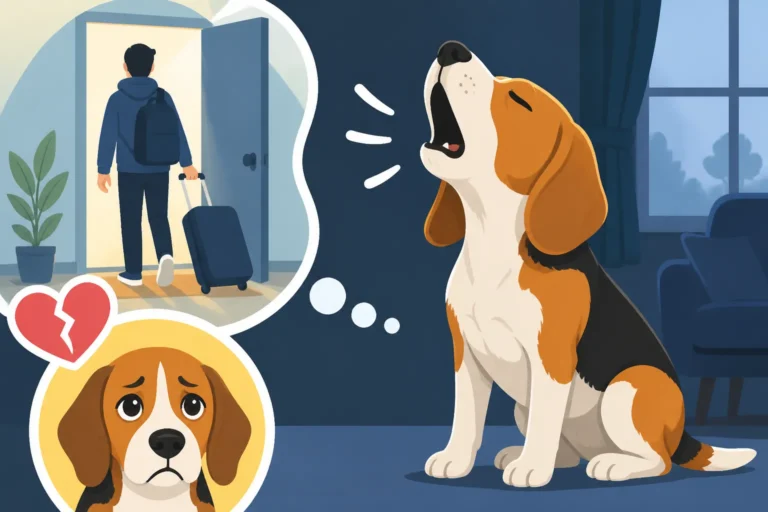
While a whine usually signals an immediate need for your attention, a howl can be a much stronger indicator of distress, particularly when your Beagle feels truly alone. This is where separation anxiety often manifests as howling. If your Beagle starts howling the moment you leave the house, and it continues for extended periods, it’s a clear sign they are struggling with being alone. This isn't just wanting attention; it's a deep-seated panic or loneliness that triggers this ancestral call for their pack. This is a common and heartbreaking issue for many Beagle owners, and it's vital to address it before it becomes a deeply ingrained habit. You can find more specific guidance on this in A Beagle That Howls the Second You Leave and The Howling That Means Beagle Separation Anxiety.
A Beagle may also howl if they are truly stuck or in pain and cannot reach you. If they get tangled in something outside or are in an unfamiliar, scary place, a howl is a desperate cry for help that goes out to anyone within earshot, far beyond just the immediate room.
Distinguishing Between Whining and Howling
Sometimes the line can feel a bit blurry, but there are some clear characteristics to help you tell the difference.
| Feature | Beagle Whining | Beagle Howling |
|---|---|---|
| Sound Quality | High-pitched, nasal, soft, pleading, continuous | Long, sustained, rising and falling, mournful, loud |
| Volume & Intensity | Generally lower volume, less intense | High volume, often intense, carries far |
| Duration | Can be short bursts or prolonged | Usually prolonged, can last for minutes |
| Trigger Examples | Wanting food, needing to potty, seeking pets, mild discomfort, specific requests | Sirens, other distant dogs, perceived isolation, severe anxiety, primal instinct |
| Emotional State | Impatience, demand, mild anxiety, mild pain, desire for interaction | Distress, loneliness, instinctual response, excitement (e.g., response to siren) |
| Body Language | Often accompanied by nudging, pawing, looking at desired object/person | Can be still or pacing, head often tilted back (especially if responding to sound) |
The "Why" Behind the Sound
When your Beagle vocalizes, always try to assess the "why." Is it a direct communication about an immediate, specific want (whine)? Or is it a more general expression of distress, loneliness, or an instinctual response to a distant sound (howl)?
- Whining is often targeted: Your Beagle usually whines at you or at the treat jar. There's a clear objective they're trying to achieve with their whine. If they want a walk, they might whine at the door. If they want to play, they might whine with a toy in their mouth.
- Howling is more broadcast: A howl is generally less about a specific object or person and more about a state of being or a response to an environmental trigger that taps into their pack instinct. When they hear a siren, they're not howling at the siren; they're howling with it, or to it.
Addressing Excessive Vocalizations
Once you can distinguish between whining and howling, you're better equipped to address the underlying causes. Remember, your Beagle isn't trying to annoy you; they're communicating.
Managing Whining for Attention or Demand
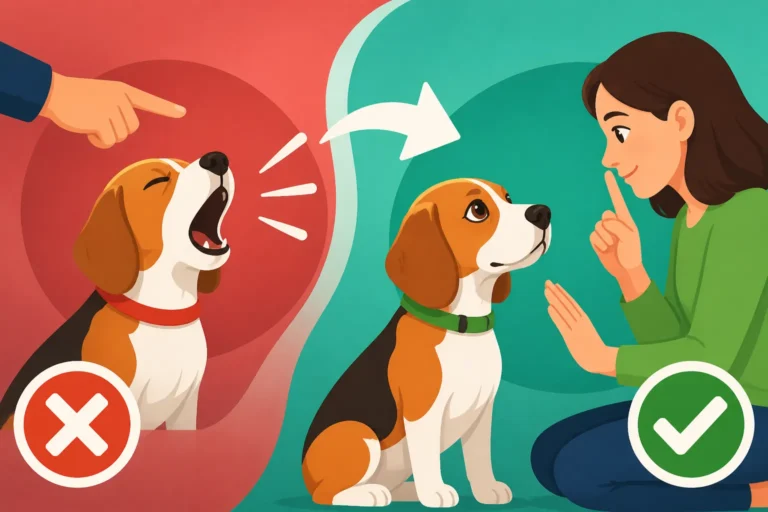
For demand whining, consistency is key. If your Beagle whines for something, avoid giving in immediately. Wait until they are quiet for a moment, then reward the silence. This teaches them that calm behavior gets results, not incessant noise. Puzzle feeders, readily available on Amazon, can also help redirect their food drive into a quieter, more engaging activity, reducing mealtime demand whining. Similarly, ensuring your Beagle gets enough physical and mental exercise can reduce their overall need for "trouble-making" attention. Sniffing Walks and Why They Tire a Beagle Out can be incredibly effective here, as it taps into their natural instincts.
If the whining is due to a perceived need (like wanting to go out), respond promptly. But if it's purely for attention or a forbidden item, teach an incompatible behavior. For instance, if they whine while you're eating, teach them to go to their mat or bed, and reward them there. Consider getting expert help; platforms like BAXTER & Bella offer online training programs that can guide you through managing these common behavioral issues with positive reinforcement.
Responding to Howling Due to Distress or Isolation
Howling, especially if it points to separation anxiety, requires a more comprehensive approach. This isn't something to punish, as punishment only increases anxiety. Instead, focus on building your Beagle's confidence when alone. Start with very short absences and gradually increase the time, ensuring they are comfortable and calm at each step. Provide engaging enrichment toys filled with frozen peanut butter or treats to distract them while you're gone. A white noise machine, easily found on Amazon, can help mask external triggers like sirens and other dogs, which might set off an instinctual howl.
If the howling is a response to environmental sounds, you might not eliminate it entirely—it's so deeply ingrained in their breed. However, you can work on desensitization by playing recordings of common triggers at a low volume and rewarding your Beagle for calm behavior. Teaching your Beagle a "quiet" cue, as explored in Teaching a Beagle a Quiet Cue That Holds, can also be beneficial in managing general noise levels. For persistent issues like severe separation anxiety, consulting a professional behaviorist is often the best course of action.
When Vocalizations Indicate a Problem
Sometimes, excessive whining or howling isn't just a behavioral issue; it's a sign that something is genuinely wrong.
Recognizing Medical Alerts
If your Beagle's vocalizations change suddenly—for example, if a previously quiet dog starts whining persistently, or their howl sounds different and distressed—it's always wise to rule out a medical cause. Pain, discomfort, or an underlying illness can all lead to increased vocalizations. A sudden increase in whining could indicate anything from a urinary tract infection to a pulled muscle to more serious issues like Beagle Back Pain Warning Signs. Pay attention to other symptoms: lethargy, loss of appetite, changes in bathroom habits, or limping. A vet visit is crucial if you suspect a health issue.
Seeking Professional Guidance for Behavioral Challenges
While many behavioral vocalizations can be managed at home with consistent training, some Beagles may benefit from professional intervention. This is especially true for severe separation anxiety, persistent nuisance howling that strains neighborly relations, or any vocalization accompanied by destructive behavior or aggression. A certified professional dog trainer or veterinary behaviorist can help you identify the root cause of the vocalization and develop a tailored management plan. They can provide strategies for behavior modification, environmental management, and sometimes, in cases of severe anxiety, discuss medication options in conjunction with your veterinarian. Don't hesitate to reach out for help; it's often the quickest path to peace for both you and your vocal Beagle.
Disclaimer
This article is for general informational purposes only and does not constitute professional advice. Laws, prices and regulations vary by location and change over time. Consult a qualified professional for guidance on your specific situation.