Teaching a Beagle a Quiet Cue That Holds
One of the most common frustrations Beagle owners face is the sheer volume and persistence of their hound's voice. Whether it's a bark at the mail carrier, a full-throated bay at a squirrel, or an mournful howl when left alone, their vocalizations can be overwhelming, making peaceful moments a distant dream. This guide will walk you through a realistic, empathetic approach to teaching your Beagle a "quiet" cue that genuinely sticks, helping you reclaim some peace and improve your relationship with your talkative companion.
Why "Quiet" Is a Challenge for Beagles
Let's be honest, Beagles were quite literally bred to be loud. Their powerful voices were essential in the field, signaling to hunters where the game was. Expecting a Beagle to be silent all the time is like asking a fish not to swim. It goes against their very nature. Understanding this inherent trait is the first step toward successful training and managing your expectations.
The Instinct to Vocalize
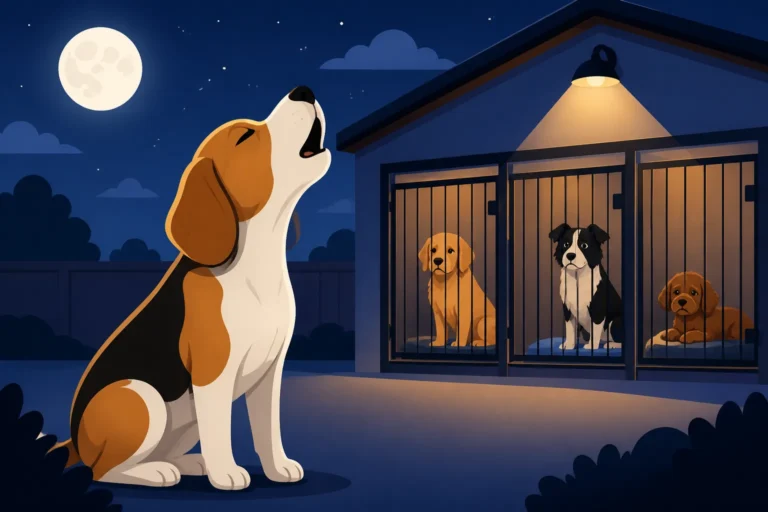
The Beagle's bay isn't just a noise; it's a communication tool refined over centuries. When your Beagle bays at a rabbit scent wafting in the breeze, it's not being disobedient; it's doing precisely what its ancestors were bred to do. This deep-seated instinct makes teaching a "quiet" cue a marathon, not a sprint. You're essentially asking them to override millennia of genetic programming, which is a big ask for any dog, let alone a hound.
Think about it from their perspective: they smell something amazing, their brain screams "HUNT!", and their vocal cords respond with a hearty Arooooo! For them, it's thrilling and perfectly natural. It's our modern, often quiet, suburban environments that clash with this ancient drive. This is why quick fixes rarely work and often lead to frustration for both you and your Beagle. They simply don't understand why something so fundamental to their being is suddenly "wrong." For a deeper dive into their vocal range, check out Beagle Howling, Baying and Barking Explained.
Common Triggers for Beagle Noise
Beagles are sensitive creatures, and their vocalizations often stem from specific triggers. Identifying these is crucial before you even begin training. Is it the mail truck? Other dogs passing by? Loneliness? Or perhaps they hear a distant siren that you barely register? Their sense of hearing is far more acute than ours, picking up sounds that are completely imperceptible to human ears.
Understanding what sets your Beagle off is half the battle. If your Beagle erupts when the doorbell rings, that's a specific trigger. If they start baying as soon as you step out the door, that points to separation anxiety. Sometimes, it's even internal—a rumble in their stomach or a sudden pain can cause a whine or a sharp bark. Keeping a log of when and why your Beagle is vocalizing can provide invaluable insights. You might discover patterns you hadn't noticed before, helping you proactively manage the environment. You can explore more about managing these triggers in Managing the Triggers That Set a Beagle Off.
Foundation Work: Setting the Stage for Silence
Before you can realistically teach a "quiet" command, you need to lay some crucial groundwork. This isn't just about yelling "Quiet!" at a barking dog; it's about creating an environment and a relationship where your Beagle is more inclined to listen and feel secure. This involves managing their environment, ensuring their needs are met, and building a strong foundation of trust and understanding.
Managing the Environment and Routine
One of the quickest ways to reduce unwanted vocalizations is to manage the triggers. If your Beagle barks incessantly at passersby from the window, consider using privacy film on lower windows, closing blinds, or putting up a baby gate to block access to the most stimulating windows. If outdoor noises are a major problem, playing classical music or white noise indoors can help mask some of those sounds.
A consistent routine also provides a sense of security, which can reduce anxiety-induced vocalizations. Beagles thrive on predictability. Regular feeding times, consistent potty breaks, and scheduled exercise can help them feel more settled. An unsettled Beagle is often a noisy Beagle. For Beagles in apartments, this management is even more critical. Living in close quarters with neighbors means every bark and bay is magnified, making proactive management a necessity. Find more tips on this in Living With a Beagle in an Apartment Building.
Meeting Exercise and Mental Stimulation Needs
A tired Beagle is a quieter Beagle. This isn't just about physical exercise; it's about mental exercise too. Beagles need to use their incredible noses! Short, structured sniff walks where they can follow scents (on a long line for safety, of course) can be far more tiring and satisfying than a brisk walk around the block. Puzzle toys, snuffle mats, and scent work games (even simple ones like hiding treats around the house) can engage their minds and reduce their need to create their own "entertainment" through vocalization.
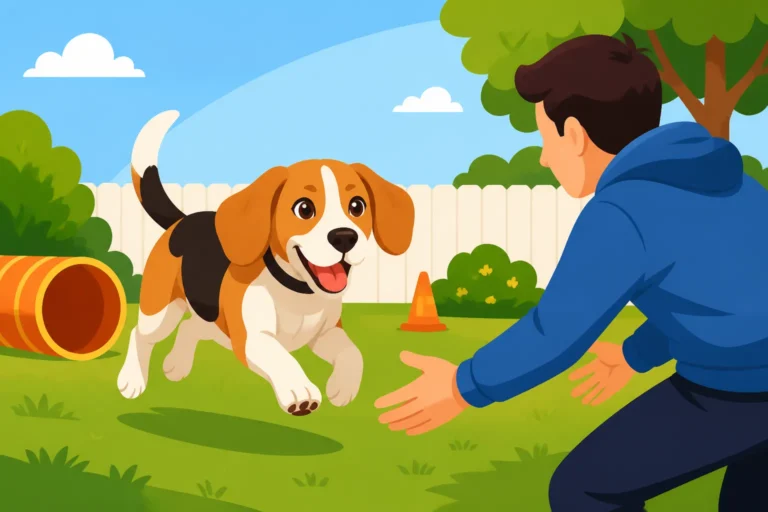
A Beagle with pent-up energy, both physical and mental, is much more likely to resort to barking, baying, or howling out of boredom or frustration. Aim for a good mix of physical activity, like a vigorous game of fetch in a secure yard, and mental enrichment. Think about enrolling in a beginner scent work class; it taps directly into their primary drive and provides immense satisfaction. This kind of work helps them burn off mental steam in a constructive way, leaving them calmer and less prone to excessive noise.
The Step-by-Step Guide to Teaching "Quiet"
Now that we've set the stage, let's get into the actual training. Remember, consistency is key, and positive reinforcement will yield the best results. Punishing barking often backfires, leading to a dog who barks more secretly or out of fear. We want to teach them an alternative, not just suppress a natural behavior.
Step 1: Teach the "Speak" Command First
This might sound counter-intuitive, but teaching your Beagle to "speak" on command is a fantastic first step towards teaching "quiet." It gives you control over their vocalization.
- Find a Trigger: Identify something that makes your Beagle bark or bay, but not excessively. The doorbell, a knock, or even you pretending to bark can work.
- Mark and Reward: As soon as your Beagle barks, say "Speak!" (or whatever cue you choose), then immediately reward them with a high-value treat. Repeat this many, many times.
- Practice: Once they're reliably barking on cue, you can start asking for "Speak!" before the trigger. If they offer a bark, reward. If not, reintroduce the trigger and try again.
The goal here is to put their vocalization under your command. This way, they learn that barking can earn them a reward, but only when you ask for it. For what kind of treats work best, look into High-Value Food and How Fast a Beagle Learns.
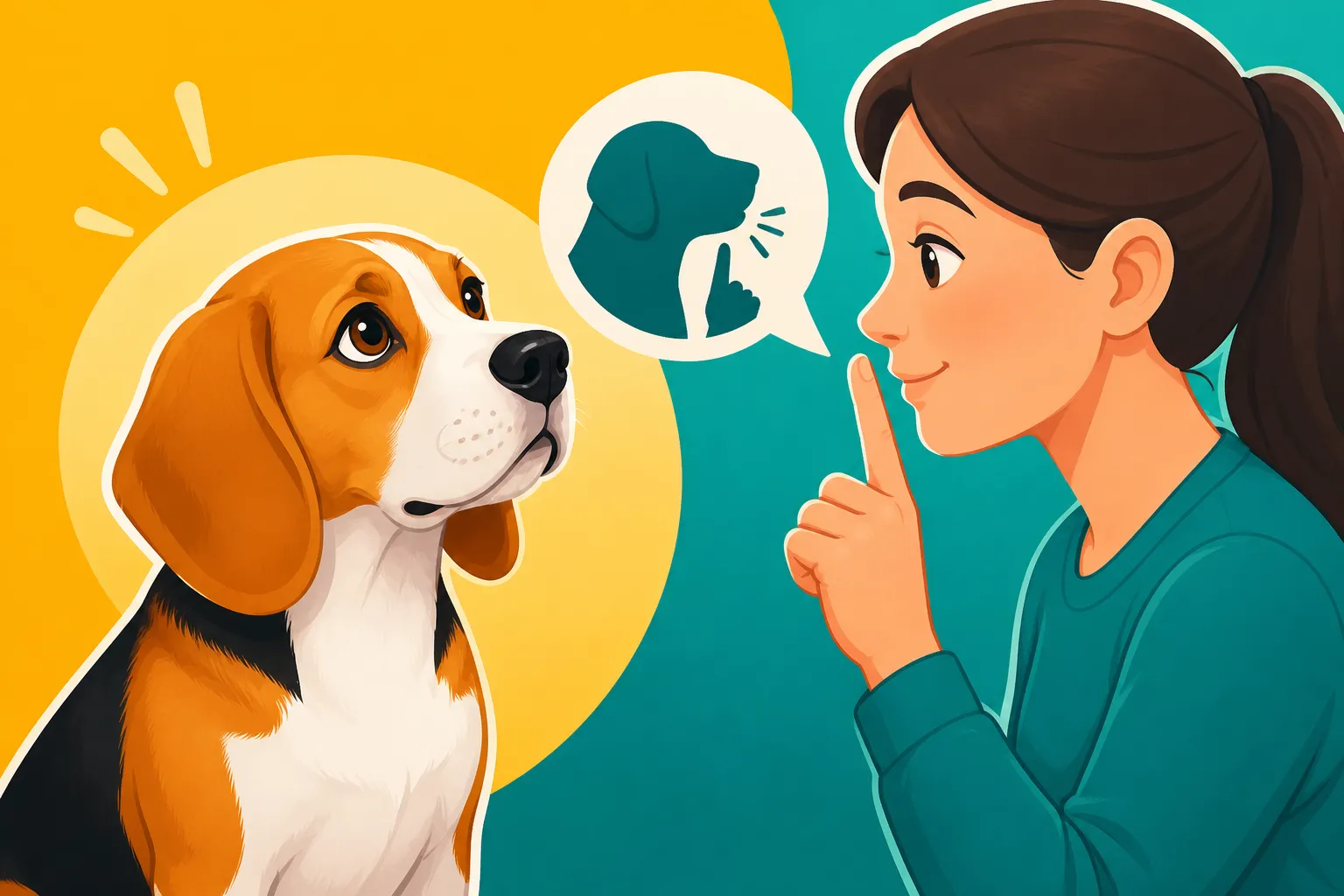
Step 2: Introducing the "Quiet" Command
Once your Beagle understands "Speak," you can introduce "Quiet." This requires precise timing and patience.
- Trigger a Bark: Ask your Beagle to "Speak!" If they don't have a reliable "Speak" yet, use a common trigger that causes them to bark a few times, then stop naturally.
- Wait for a Pause: The moment your Beagle stops barking, even for a split second, say "Quiet!" (or "Shhh," or "Enough"—choose one and stick to it) and immediately reward them with that high-value treat.
- Increase Duration: Gradually increase the duration of silence required before the reward. Start with one second of silence, then two, then three, and so on. If they bark before you reward, simply wait for the next moment of silence.
- No Reward for Barking: Never reward barking, only silence. If they are barking for too long, walk away for a few seconds (turning your back can also work), then return and try again. This teaches them that barking doesn't get your attention, but silence does.
This step is critical. You're rewarding the absence of noise. Many owners accidentally reward the barking by giving attention (even negative attention) or trying to soothe their dog while they're still making noise. The timing is paramount; the treat must appear during the silence. BAXTER & Bella offers some excellent online courses that walk you through these precise timing techniques, which can be invaluable.
Step 3: Practicing in Various Scenarios
Once your Beagle reliably understands "Quiet" in a low-distraction environment, it's time to generalize the command. This means practicing in different locations and with different triggers.
- Change Locations: Practice in different rooms of your house, in the backyard, and eventually, in quiet public places where you can control the triggers.
- Vary Triggers: Work through your list of common triggers. Start with mild triggers (e.g., a quiet knock at the door) and gradually move to more intense ones (e.g., the actual mail carrier). Remember to set your Beagle up for success; don't jump straight to the hardest trigger.
- Enlist Help: Ask a friend or family member to help by knocking on the door or walking past the window. This allows you to control the intensity and duration of the trigger.
During these practice sessions, use your high-value treats. Keep sessions short and positive, ending on a success. Five-minute training bursts are often more effective than one long, frustrating session. Consider incorporating Five-Minute Beagle Sessions Between Sniff Breaks into your routine.
Beyond the Command: Reinforcing Calmness
Teaching a "quiet" command is just one piece of the puzzle. To truly have a calmer, less vocal Beagle, you need to embed calmness into their daily life and consistently reinforce desired behaviors.
Consistency and Patience
This cannot be stressed enough: consistency is paramount. Every family member needs to be on board and use the same cue words and training methods. If one person allows endless barking while another tries to enforce "Quiet," your Beagle will be confused and progress will be slow. Beagles are smart but also opportunistic; they'll quickly figure out who the "easy mark" is.
Patience is also critical. Your Beagle has years, if not centuries, of instinctual vocalization built into them. You won't eradicate it overnight, and expecting perfection is unrealistic. Celebrate small victories – a shorter barking session, a quicker response to "Quiet" – and don't get discouraged by setbacks. Every dog has off days, and that's okay. Just go back to basics and rebuild.
The Role of Management and Redirection
Training takes time, and while your Beagle is learning, you need effective management strategies. This includes preventing situations where they practice excessive barking.
- Doorbell: If the doorbell is a major trigger, consider putting a sign on your door asking visitors to text you instead of ringing. This removes the trigger entirely while you work on training.
- Window Access: As mentioned earlier, restrict access to windows that provide too much stimulation. This isn't permanent; it's a temporary measure to reduce rehearsal of unwanted behavior.
- Redirection: When you anticipate a trigger (e.g., you see a dog approaching on your walk), immediately redirect your Beagle's attention with a treat or a favorite toy before they even have a chance to vocalize. Reward them for focusing on you instead.
These management strategies aren't punishments; they're tools to help your Beagle succeed and give you a break while training takes hold.
Using Training Aids and Resources
There are many tools and resources that can support your efforts, but it's important to use them wisely.
- High-Value Treats: We've talked about these, but they truly are crucial. For a Beagle, something truly irresistible like boiled chicken, cheese, or specialized training treats found on Amazon can make a huge difference in motivation.
- Puzzle Toys: These can keep a bored Beagle busy and quiet for extended periods. Brands like Kong or other interactive feeders can dispense small portions of their meal, turning mealtime into a mental workout.
- Online Training Platforms: As mentioned, BAXTER & Bella is a great example of a resource that offers structured lessons and support for various training challenges, including managing vocalization. Their step-by-step videos can provide visual guidance that complements written instructions.
- Avoid Bark Collars: While tempting, many bark collars (especially those that use static correction) can be detrimental. They often suppress the symptom (barking) without addressing the underlying cause (anxiety, boredom, instinct). This can lead to increased stress, fear, or even new behavioral problems. Focus on positive reinforcement methods instead. For more on this, please read Beagle Bark Collars and What They Do Not Fix.
Building Impulse Control and Settling
Beyond specific commands, focus on teaching your Beagle general impulse control and the ability to settle. This means practicing "wait" at doorways, "leave it" around tempting items, and rewarding them for calm, quiet behavior.
You can actively train for calmness by designating a "place" (a mat or bed) where they go to relax. Reward them for staying there quietly. Start with short durations and gradually extend the time. This gives them a default behavior for when they feel overwhelmed or overstimulated, which can naturally reduce vocalizations. Incorporating Impulse Control Exercises That Suit a Beagle into their routine can greatly aid in this overall calmness.
Teaching a Beagle a reliable "quiet" cue is a journey, not a destination. It requires deep understanding of their breed, consistent effort, and a whole lot of patience and love. By managing their environment, meeting their needs, and systematically teaching and reinforcing the "quiet" command, you'll find that while your Beagle may never be completely silent, they can certainly learn to dial it down when you ask.
| Training Step | Objective | Key Action | Expected Outcome |
|---|---|---|---|
| Understand Beagle Nature | Adjust expectations, identify motivations | Recognize genetic vocal drive; list specific triggers | Realistic approach; targeted training |
| Environmental Management | Reduce trigger exposure, promote security | Privacy films, white noise, consistent routine | Fewer spontaneous vocalizations, lower anxiety |
| Needs Fulfillment | Satisfy physical & mental requirements | Structured sniff walks, puzzle toys, scent games | Tired, stimulated Beagle; less boredom-barking |
| Teach "Speak" | Gain control over vocalization | Prompt a bark, cue "Speak," reward immediately | Beagle barks on command |
| Introduce "Quiet" | Reward cessation of noise | Cue "Speak," wait for silence, cue "Quiet," reward | Beagle associates "Quiet" with reward for silence |
| Generalize Command | Apply "Quiet" in varied contexts | Practice in different places, with various triggers | Reliable "Quiet" response in real-world situations |
| Reinforce Calmness | Build general self-control and relaxation | Reward calm behavior, use "place" command, impulse control | Overall calmer Beagle, less prone to excessive noise |
Disclaimer
This article is for general informational purposes only and does not constitute professional advice. Laws, prices and regulations vary by location and change over time. Consult a qualified professional for guidance on your specific situation.