What a Beagle Experiences on a Scent Trail
It’s incredibly frustrating when you’re out for a walk with your beloved Beagle, calling their name, and they seem to completely ignore you, nose glued to the ground, utterly captivated by some invisible trail. You might feel like they're being stubborn or purposefully disobedient, but the truth is, when a Beagle is on a scent trail, they are experiencing the world in a way we can barely comprehend. This guide will help you understand the profound sensory journey your Beagle takes and why their nose often becomes the undisputed leader of their universe.
The Incredible Anatomy Behind the Beagle's Nose
To truly understand what happens when a Beagle gets on a scent trail, we need to start with the extraordinary biological machinery they possess. Their nose isn't just a nose; it's a super-sensitive, highly specialized organ that processes information in a way that makes our human sense of smell look rudimentary by comparison.
The 220 Million Receptors and Olfactory Bulb
Think about your own nose for a moment. You have around 5 to 6 million olfactory receptors, which allow you to enjoy the aroma of your morning coffee or detect smoke from a distant fire. Now, imagine having 220 million of those same receptors, all dedicated to the singular purpose of analyzing scent. That's the world of a Beagle. This massive increase in receptors isn't just about quantity; it means a Beagle can pick up a much wider spectrum of odors, detect them at far lower concentrations, and differentiate between them with incredible precision. It's like comparing a basic calculator to a supercomputer.
Beyond the receptors, a Beagle's brain dedicates a much larger proportion of its real estate to processing these olfactory signals. Their olfactory bulb, the part of the brain that interprets scent, is proportionately enormous compared to ours. This isn't just about size; it's about neural complexity, allowing for intricate analysis and storage of scent information. So, while you might walk past a bustling coffee shop and smell coffee, sugar, and perhaps a faint hint of diesel from a passing car, your Beagle is registering every dropped crumb of a croissant from an hour ago, the distinct body odor of the person who just walked by, the subtle chemical residue from a recently washed pavement, and the specific brand of coffee beans roasting inside. It's an overwhelming amount of data that they effortlessly sort and understand. The 220 Million Receptors Behind a Beagle's Nose
How the Nose Works: Sorting Scents and Airflow
A Beagle's nose isn't just powerful; it's also incredibly efficient in its operation. Unlike humans who breathe and sniff through the same airway, Beagles have a unique airflow system. When they inhale, air enters their nostrils and is split into two pathways: one for respiration and one exclusively for olfaction. This means they can be breathing normally while simultaneously analyzing a scent trail. Furthermore, when a Beagle exhales, the air doesn't exit straight forward. Instead, it exits through slits on the sides of their nostrils, creating a swirl of air that helps to pull new scent molecules into their nose. This continuous, circular airflow allows them to maintain constant contact with a scent source, essentially creating a scent "tunnel" that they can follow.
This ingenious system enables Beagles to differentiate between the countless individual molecules that make up a complex odor profile. Imagine a busy park where countless dogs, squirrels, rabbits, and humans have passed. To us, it's just a general "park smell." To a Beagle, it’s a living tapestry of individual stories. They can discern the faint, recent trail of a specific rabbit from the older, stronger scent of a common squirrel. They can even identify which direction the rabbit was moving by analyzing the slight differences in scent concentration along the trail. This is why they keep their nose so low to the ground, allowing them to gather the maximum number of scent particles from the immediate environment. Why a Beagle Walks With Its Nose to the Ground
The Mental Landscape of a Beagle on a Trail
When a Beagle's nose engages with a scent trail, their entire mental state shifts. It’s not just a physical act; it’s a profound cognitive experience that reorients their perception of the world.
Hyperfocus and the Tunnel Vision of Scent
For a Beagle, a compelling scent isn't just interesting; it's an imperative. Once they lock onto a trail, they enter a state of hyperfocus that can easily be mistaken for stubbornness or selective hearing. This isn't them choosing to ignore you; it's their brain prioritizing the overwhelming sensory input from the scent. All other stimuli – your voice, the visual of a passing car, the feeling of the leash tightening – fade into the background. Their world literally shrinks to the immediate environment of the scent trail. It's as if someone has put blinders on them, and the only thing they can perceive is the intricate story unfolding beneath their nose.
This tunnel vision is so profound that even if you're yelling their name or offering a treat, the part of their brain dedicated to processing that sound or anticipating that reward is simply overwhelmed by the scent information. They are, in a very real sense, "lost" in the scent. Many owners recount stories of their Beagle being utterly unresponsive, despite their best efforts to break the spell. They aren't trying to be difficult; they are simply fulfilling a deeply ingrained, biologically driven mission. Understanding this can shift your frustration into empathy, recognizing that you're battling millions of years of evolutionary programming. What Happens in a Beagle's Head on a Scent
The Story a Scent Tells: Time, Direction, and Identity
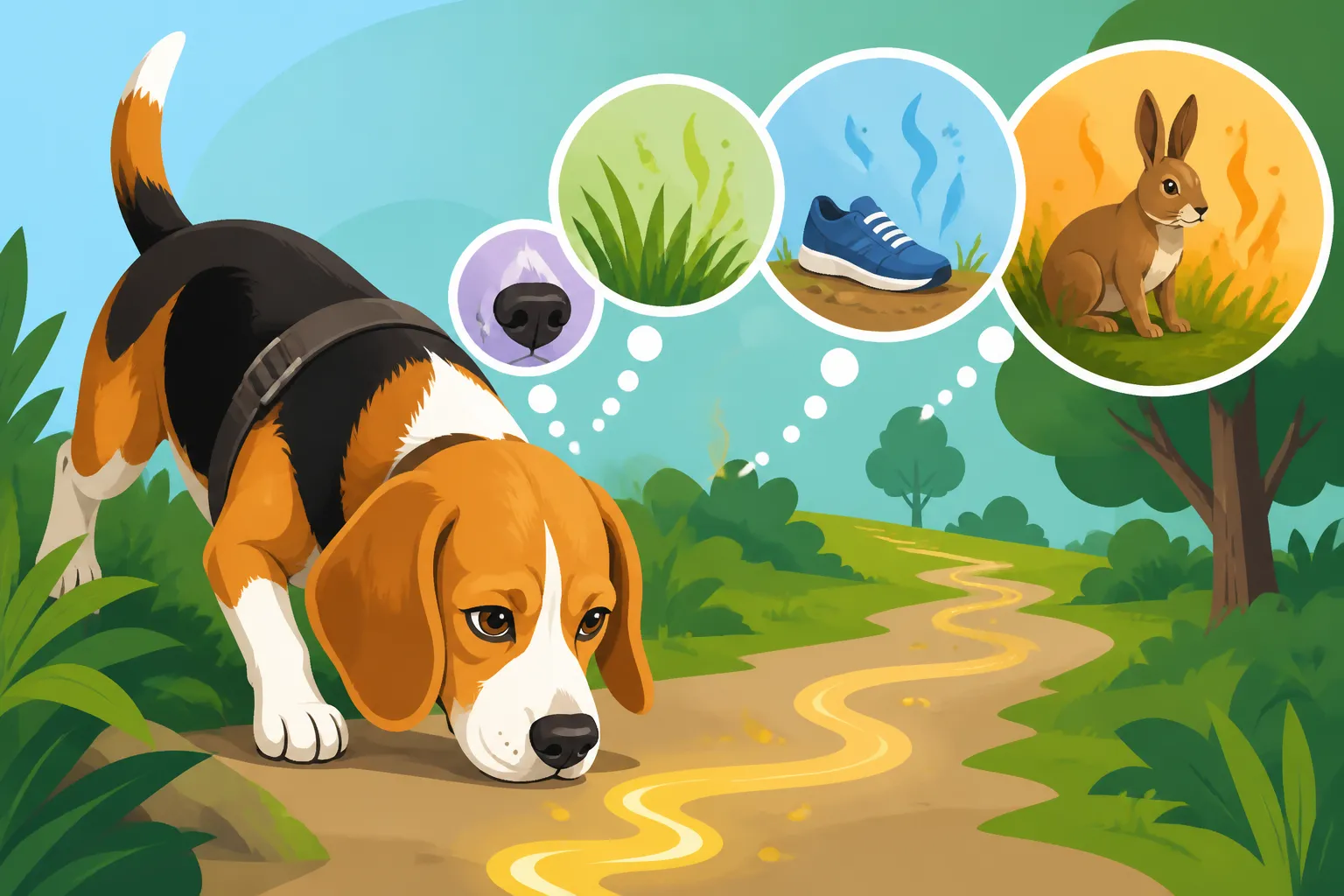
A scent trail isn't just a "smell" to a Beagle; it's a narrative. Their incredible olfactory capabilities allow them to piece together a comprehensive story from the volatile organic compounds left behind by an animal or person. They can discern the age of a scent – knowing if a squirrel passed five minutes ago or an hour ago. This is crucial for their hunting instincts, as a fresher trail means a higher chance of a successful pursuit. They also interpret the direction of travel. Scent molecules are not deposited uniformly; there's a slight gradient that tells the Beagle which way the "story" is moving. This allows them to follow a trail with remarkable accuracy.
Beyond time and direction, a Beagle can identify the species of animal and often the individual animal itself. They can differentiate between the scent of one rabbit and another, or between a specific deer and a coyote. This ability comes from the unique chemical signature each individual carries, similar to how human fingerprints differ. Imagine your Beagle encountering a faint deer trail from the night before, winding through the woods. To your eyes, there's nothing there, but your Beagle is meticulously reading every paragraph of that deer's journey – where it rested, what it ate, and even if it felt threatened. They are reconstructing a miniature, detailed world, one sniff at a time.
| Olfactory Comparison | Humans | Beagles |
|---|---|---|
| Scent Receptors | 5-6 million | 220 million |
| Olfactory Bulb Size | Proportionately small | Proportionately large |
| Airflow Mechanism | Shared (breathing & sniffing) | Separated (breathing & sniffing exits) |
| Discrimination | General odors | Individual chemical signatures |
| Concentration Detection | Low sensitivity | Extremely high sensitivity |
| Scent Memory | Short-term, weaker | Long-term, strong & detailed |
The Instinctual Drive: Why Beagles Follow Their Noses
The Beagle's profound connection to scent isn't an accident; it's the very essence of their being, sculpted by centuries of selective breeding. This instinctual drive is what makes them such unique and sometimes challenging companions.
Bred for the Hunt: Thousands of Years of Selection
For thousands of years, the ancestors of modern Beagles were developed specifically for hunting small game, primarily rabbits and hare. Their job was not to be fast like a Greyhound, but to be relentless, meticulous, and utterly devoted to following a scent trail. Breeders carefully selected individuals who possessed the keenest noses, the strongest drive to track, and the vocalizations (the distinctive Beagle bay) to alert hunters to the progress of the chase. This isn't just a learned behavior; it's deeply hardwired into their DNA. When a Beagle puts its nose down and takes off on a trail, it's not being disobedient; it's simply doing what generations of its ancestors were bred to do.
This ancient programming explains why even a pampered pet Beagle, who has never seen a rabbit in the wild, will instinctively follow a scent with such intensity. It’s an urge that runs deeper than any training command, any treat, or any desire to please their human. It’s a primal call, and when they hear it (or rather, smell it), it's incredibly difficult for them to resist. It’s the difference between asking a child to ignore an ice cream truck and asking them to ignore a fire alarm; one is a preference, the other is an imperative. Understanding this helps us approach their behavior with more patience and respect for their inherent nature.
The Reward Cycle: Success Fuels the Drive
Every time a Beagle successfully tracks a scent, whether it leads to a rabbit, a discarded sandwich, or even a hidden treat in a puzzle toy, their brain releases a burst of dopamine. This isn't just a fleeting moment of pleasure; it's a powerful positive reinforcement that strengthens the behavior. The act of sniffing, tracking, and ultimately locating the source of a scent is inherently rewarding for a Beagle. This internal reward system is far more potent than any external reward we can offer, especially when they are deeply immersed in a trail. It's a natural high, a complete fulfillment of their biological purpose.
This explains why accidental reinforcement can be so detrimental to recall training. If your Beagle slips out of their collar, follows a scent for a thrilling ten minutes, and eventually finds a forgotten picnic lunch, that experience becomes a powerful, self-reinforcing lesson. They learn that following their nose, even if it means ignoring your calls, can lead to incredible rewards. This isn't a fault in the dog; it's simply how learning works. It means that channeling this drive into appropriate outlets is crucial, rather than constantly battling against it in situations where they are set up to fail. Why a Beagle Ignores You Halfway Down a Trail
Managing and Channeling the Scent-Driven Beagle
Living with a Beagle means embracing their extraordinary nose. Rather than fighting against their instincts, the key to a happy life together is understanding, managing, and channeling their natural drive in safe and constructive ways.
Building Reliable Recall Against the Scent Magnet
The classic frustration for any Beagle owner is the seemingly nonexistent recall when their dog is "nose down." It feels like your voice simply stops registering. However, building a reliable recall, while challenging, isn't impossible, but it requires a strategic approach that acknowledges their powerful scent drive. First, establish a solid foundation in a low-distraction environment, like your living room or a securely fenced yard. Use extremely high-value treats – think bits of cooked chicken, cheese, or hot dogs – something your Beagle never gets otherwise. Practice frequently, making recall a game where coming to you always means an amazing reward.
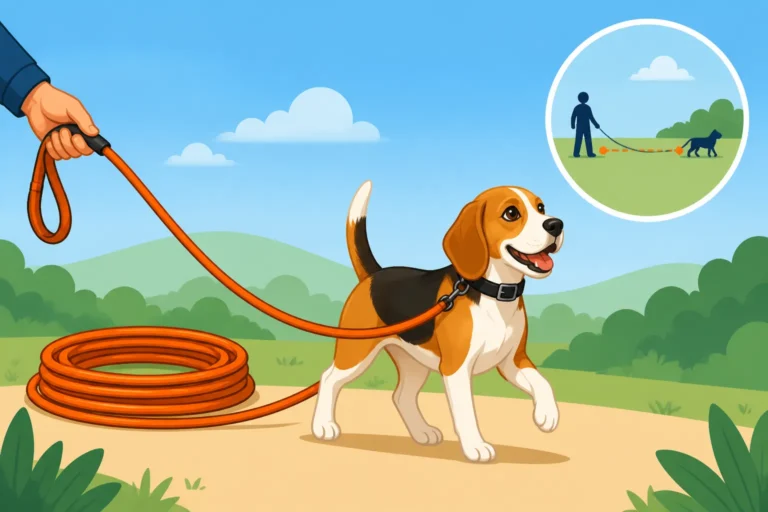
Progress slowly to increasingly distracting environments, but always with safety in mind. A long line (a lightweight leash, 15-30 feet long) is your best friend during this phase. It allows your Beagle to explore scents at a safe distance while still giving you control and the ability to prevent them from "self-rewarding" on a strong trail they've found. Teach an "emergency recall" word that is only used for critical situations and always results in the absolute best reward they can imagine. Consistency is paramount, and every successful recall in a distracting environment helps build that muscle. Many owners find value in structured training programs, such as those offered by BAXTER & Bella, which provide step-by-step guidance on building recall and other essential skills, often with the flexibility of online learning. Beagle Recall That Works Before the Nose Wins
Harnessing the Nose Through Scent Work
Instead of seeing your Beagle’s powerful nose as a problem, consider it their greatest gift. Providing outlets for their natural scenting abilities is one of the most fulfilling things you can do for your Beagle and can significantly reduce unwanted behaviors born from unchanneled energy. Scent work, also known as nose work or K9 Nose Work, is a fantastic dog sport that allows Beagles to use their noses to locate specific target odors, similar to how detection dogs work. It's mentally stimulating, builds confidence, and tires them out in a way that a simple walk often can't.
You can start simple games at home by hiding treats around the house and encouraging your Beagle to find them. Gradually increase the difficulty, hiding treats in more challenging spots or using specific target odors (like essential oils on cotton swabs) once they understand the game. Many communities offer formal scent work classes where Beagles can learn advanced techniques and even earn titles. This kind of activity truly allows a Beagle to do "the job they were built for," leaving them feeling satisfied and less inclined to escape on adventurous scent quests in your neighborhood. Investing in puzzle feeders and sniff mats, readily available on Amazon, can also provide daily mental enrichment by making mealtime a challenging scent game. Scent Work as the Job a Beagle Was Built For
Safety First: Leashes, Fences, and GPS Trackers
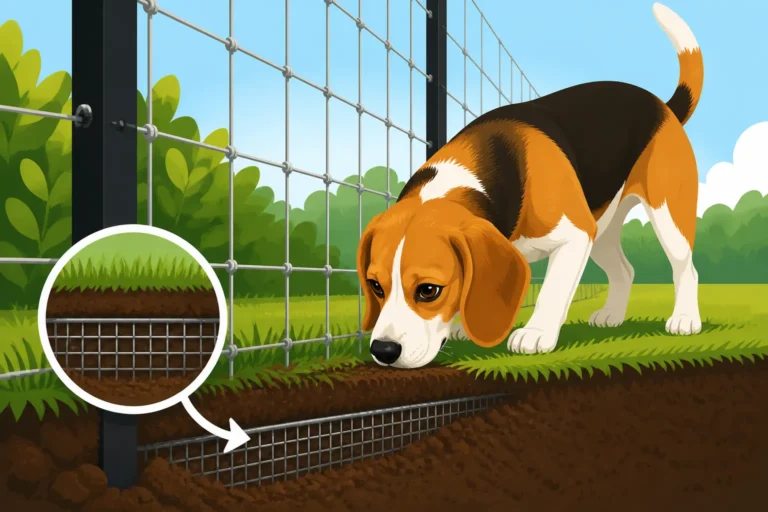
Given their intense focus on scent, it is crucial to accept a fundamental truth about Beagles: they should almost never be off-leash in an unfenced area. Their drive to follow a compelling scent is so strong that it overrides almost everything else, making them oblivious to roads, traffic, or other dangers. A securely fenced yard is essential, and even then, remember that Beagles are expert escape artists, often digging under fences or finding tiny gaps. Regularly inspect your fence line for weaknesses. Why a Beagle Should Never Be Off Leash Unfenced
When outside the yard, a sturdy harness and a good quality leash are non-negotiable. A long line is an excellent tool for giving them more freedom to explore scents in a safe, open area like a park, while still maintaining control. For added peace of mind, especially if you have a known escape artist, consider a GPS tracking collar. These devices, often found on Amazon, can quickly locate your Beagle if they do manage to get loose, providing a critical safety net against their instinct to follow their nose wherever it may lead, sometimes for miles. This proactive approach to safety allows your Beagle to enjoy their world of scent while mitigating the inherent risks that come with their incredible sense of smell. GPS Collars as a Backup for Beagle Recall
Disclaimer
This article is for general informational purposes only and does not constitute professional advice. Laws, prices and regulations vary by location and change over time. Consult a qualified professional for guidance on your specific situation.