Whether Beagles Are Safe Around Toddlers
Bringing a new baby or a curious toddler into a home with a beloved Beagle can feel like navigating uncharted territory. You adore your furry companion, but suddenly you're faced with questions about safety, boundaries, and how these two energetic beings will coexist. It's a completely normal concern for any pet parent, wondering if your sweet-natured hound, known for its incredible nose and vocalizations, will truly be "safe" around those tiny, unpredictable hands. This guide aims to shed light on the Beagle's typical temperament, discuss potential challenges with toddlers, and provide practical, empathetic advice for fostering a harmonious and secure environment for everyone.
Understanding the Beagle Temperament Around Children
Beagles are often celebrated for their generally amiable and cheerful disposition, which makes them a popular choice for families. However, like any breed, their suitability with toddlers isn't a simple yes or no; it depends heavily on individual temperament, socialization, and how their human family manages interactions.
The Merry Hound: Affectionate and Playful Nature
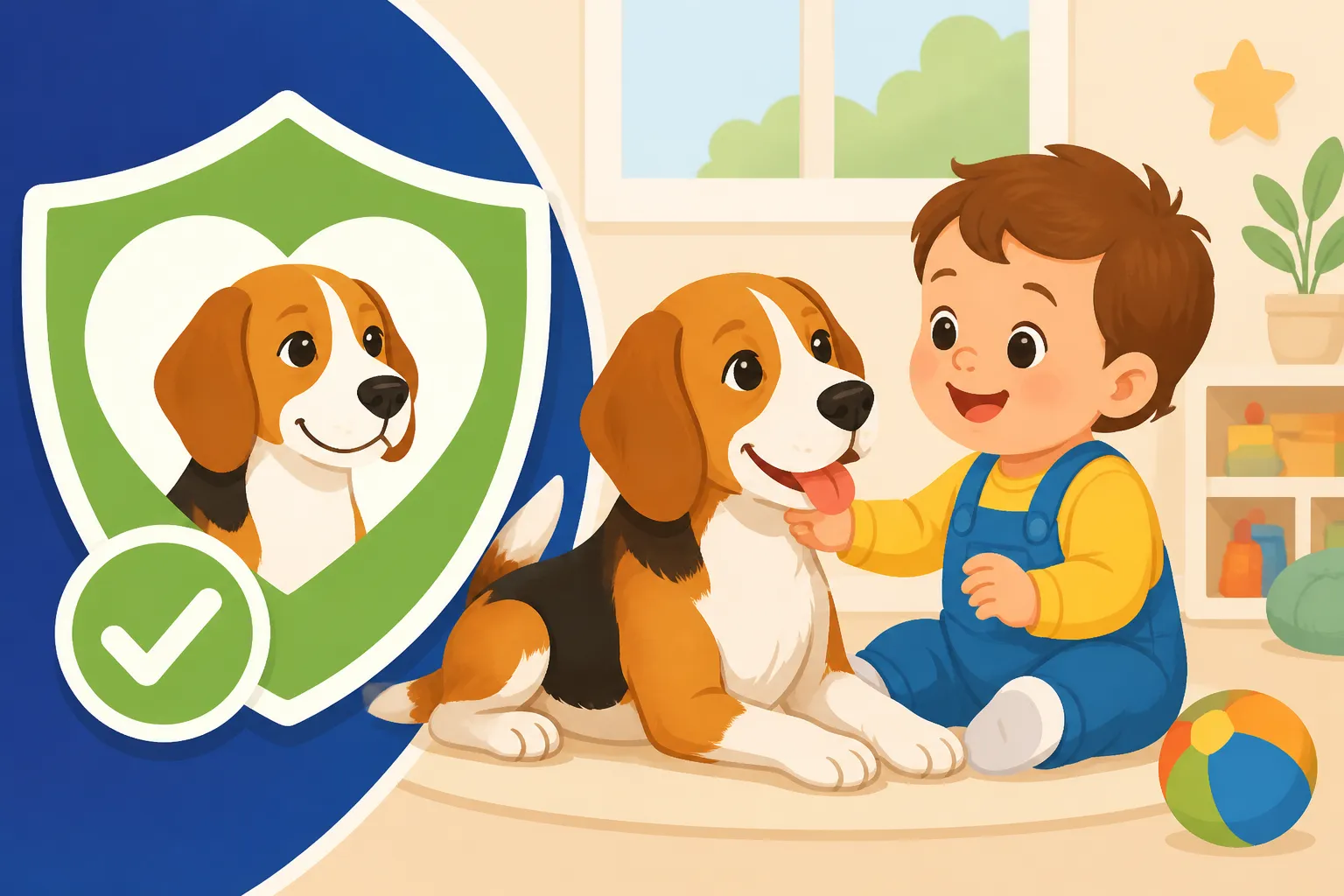
One of the most endearing qualities of a Beagle is its "merry" and affectionate nature. They love to be part of the family, thriving on companionship and playtime. A well-socialized Beagle is typically gentle and tolerant, often enjoying the boisterous energy that children bring to a home. They can be incredibly playful, happy to chase a ball (or a toddler, in a playful way!) around the yard. This inherent playfulness often means they can match a toddler's energy levels, making for some adorable, if chaotic, moments.
However, their playfulness also means they might not always understand their own strength or size compared to a tiny human. A playful nudge or an excited leap that's fine for an adult can easily knock a toddler off balance. It’s important to remember that while a Beagle's intention is never malicious, their exuberance needs careful management when small children are underfoot. Their robust build, meant for trailing through brush and bramble for hours, also means they're not delicate flowers, and they can unintentionally be quite physical.
Pack Mentality and Social Needs
Beagles are historically pack animals, bred to hunt in groups, and this deeply ingrained pack mentality shapes their social needs. They generally crave company and can become quite attached to their human "pack." This is often why they do so well in busy family environments – they love being at the center of the action. For a Beagle, a household with children means more members of the pack to interact with, more hands for petting, and more opportunities for companionship.
However, this pack drive also means they might view themselves as equals, or even superior, to the smallest members of the pack if boundaries aren't clearly established. While they aren't typically dominant or aggressive by nature, a Beagle might try to assert its place in the pecking order or get frustrated if its personal space is repeatedly invaded by a toddler who hasn't learned proper dog etiquette. This pack instinct underscores the need for parents to clearly establish themselves as the leaders for both the dog and the child, ensuring that the Beagle respects the child's presence and space, and vice-versa. Beagles With Children and With Other Dogs often thrive, but careful introductions and consistent management are key.
Historical Context: Bred for Tolerance
For centuries, Beagles were bred not only for their unparalleled scenting abilities but also for their ability to work cooperatively in packs and alongside human hunters. This meant they needed to be resilient, focused on their work, and generally tolerant of close quarters with other dogs and humans, often in bustling, sometimes chaotic, hunting environments. They weren't bred to be guardians or aggressive protectors, which typically contributes to their generally good-natured temperament.
This historical background means that, genetically, a Beagle is less likely to possess innate aggression or react strongly to sudden movements or loud noises compared to some other breeds. Their focus was on the scent trail, not on confronting threats. This inherent tolerance is a significant advantage when introducing them to the unpredictable world of a toddler. However, "tolerance" doesn't mean "invincibility." Even the most tolerant dog has its limits, and a persistent toddler pulling ears or tail can push any dog past its breaking point. It emphasizes that while their breed history leans towards a good disposition, individual training and responsible ownership are always paramount.
Addressing Common Beagle Behaviors and Toddler Interactions
While Beagles are generally sweet, their breed-specific quirks can pose challenges when combined with a toddler's unpredictable behavior. Understanding these potential conflicts is the first step in prevention.
The Beagle's Mouth: Nipping and Chewing Habits
Beagles, especially as puppies and adolescents, can be quite mouthy. They explore the world with their mouths, and this can manifest as nipping, chewing, and playful biting. While an adult understands this is play, a toddler's delicate skin and smaller size make them much more vulnerable. A Beagle puppy's sharp little teeth, even in play, can cause pain and fear in a child. Moreover, Beagles are notorious chewers, and if not provided with appropriate outlets, they might redirect this behavior to household items – or, worryingly, a toddler's toys, which can lead to resource guarding or accidental ingestion.
It's crucial to distinguish between playful mouthing and aggression. Most Beagle nipping around toddlers is likely play-related or a frustrated attempt to communicate. However, a toddler doesn't understand these nuances. Teaching a Beagle good bite inhibition from a young age is vital, even before a toddler is in the picture. This involves consistent redirection to appropriate chew toys and training "leave it" and "drop it" commands. For actual puppies, addressing Beagle Puppy Nipping and Where It Comes From is an early priority. Always have a variety of sturdy chew toys, perhaps from Chewy, readily available to redirect their chewing instincts.
Resource Guarding: Food, Toys, and Personal Space
Beagles are highly food-motivated, a trait that makes them excellent candidates for scent work but also predisposes them to resource guarding. They were historically dogs that had to compete for resources within a pack, so protecting their food bowl, high-value treats, or favorite toys can be an instinctual behavior. A toddler, who doesn't understand "mine," might innocently approach a Beagle's food bowl or try to snatch a cherished toy, potentially triggering a growl, snap, or even a bite.
Resource guarding isn't always about aggression; it's often a dog communicating its discomfort and desire to protect something it values. However, with a toddler, any such display is unacceptable. It's paramount to teach both the Beagle and the child clear boundaries. The Beagle needs to learn that humans are not a threat to its resources, and the toddler needs to understand that a dog's food bowl or toys are off-limits. Never allow a toddler to disturb a Beagle while it's eating or chewing a bone. Feed your Beagle in a designated, safe space where the toddler cannot reach, and teach your dog to happily give up items on command. Beagle Resource Guarding at the Food Bowl is a common challenge that needs proactive management.
Vocalizations: Baying, Howling, and Barking
Beagles are hounds, and they are vocal. Their characteristic bay, howl, and bark are part of their charm for many owners, but they can be startling and overwhelming for a small child. A sudden, loud bay at a squirrel outside the window or at the doorbell can easily frighten a toddler, leading to crying, anxiety, or even a negative association with the dog. While their vocalizations are a natural expression of their breed, they need to be managed in a household with young children.
It's important to remember that you can't "train out" a Beagle's instinct to bay or howl entirely, but you can manage the triggers and teach them a "quiet" cue. Over time, toddlers can also become desensitized to these sounds, but initial exposure needs to be handled gently. Addressing Beagle Howling, Baying and Barking Explained can help owners understand the nuances of these sounds. Distraction with engaging toys or puzzle feeders from Chewy can sometimes redirect a Beagle's attention before a vocal outburst escalates.
The Powerful Nose and Its Distractions
A Beagle's nose is legendary – capable of picking up scents miles away and disentangling one scent from a multitude of others. This incredible olfactory power is central to their being, and it means that once a Beagle is on a scent, the rest of the world, including a child's cries or a parent's commands, can simply cease to exist. A Beagle deep in a scent trail might accidentally bump into a toddler, ignore a child's proximity, or even dart past, causing the child to fall.
When a Beagle is engrossed in a smell, its focus is so intense that it might not even register a toddler's presence or a parent's warning. This isn't malice; it's pure, instinctual drive. This means that parents must be hyper-vigilant during walks or outdoor play when the Beagle's nose is in overdrive. Indoor scent games can be a fantastic way to satisfy their instinct in a controlled environment, such as hiding treats around the house for them to find. Why a Beagle Walks With Its Nose to the Ground and how this impacts their daily life with a family is critical to understand.
Supervision, Training, and Setting Boundaries for Both
Successfully integrating a Beagle and a toddler requires a proactive approach focused on management, education, and creating a safe environment for everyone.
Constant, Active Supervision: The Golden Rule
This cannot be stressed enough: never leave a Beagle unsupervised with a toddler, even for a second. This is the single most important rule for safety. "Supervision" doesn't mean being in the same room while you're scrolling on your phone; it means active supervision, with your full attention on the interactions between your dog and child. Be ready to intervene instantly.
Active supervision allows you to:
- Prevent: Stop a toddler from pulling an ear or tail before it happens.
- Redirect: Guide your Beagle away from a tempting toy or food crumb dropped by the child.
- Teach: Model appropriate interactions for both the child and the dog.
- Recognize warning signs: Learn to read your Beagle's body language – a stiff posture, a yawn, lip-licking, or a subtle turn of the head can indicate stress long before a growl. These are crucial signals that the dog is uncomfortable and needs space.
Always position yourself so you can easily step between them if needed. This level of vigilance is demanding, but it's essential for safety and building positive associations between your Beagle and your child.
Training for Calm Interactions
Consistent training for your Beagle is paramount, focusing on commands that promote calm and respectful interactions. This isn't just about obedience; it's about giving your Beagle the tools to navigate a busy household successfully.
Key training points include:
- "Sit" and "Stay": Essential for keeping your Beagle calm when the toddler is near, especially during exciting moments like meal times or when people enter the house. Practice these in increasingly distracting environments.
- "Leave It" and "Drop It": Critical for preventing resource guarding and stopping your Beagle from picking up dropped food or toys. Beagle Leave It Training With Real Food Down is a practical skill to master.
- "Go to Your Place" or "Mat" training: Teach your Beagle to go to a designated bed or mat and stay there calmly. This provides a safe retreat for your dog and a clear boundary for the toddler. Reward them generously with treats for staying on their place, making it a positive experience.
- Loose-leash walking: While perhaps not directly related to indoor toddler interaction, a Beagle that pulls hard on the leash can inadvertently drag a parent holding a child, leading to falls. Work on Leash Training a Beagle From Eight Weeks to ensure safety outside the home as well.
Use positive reinforcement, high-value treats (Chewy has a great selection!), and short, frequent training sessions to keep your Beagle engaged. Remember, patience is key, especially when dealing with a scent-driven breed.
Creating Safe Spaces for Everyone
Both your Beagle and your toddler need designated safe spaces where they can retreat and be undisturbed. This prevents many potential conflicts before they arise.
- For the Beagle:
- Crate: A crate, properly introduced and made comfortable, can be a wonderful den for your Beagle. It's a place where they can relax, sleep, and feel secure without being disturbed by curious toddler hands. Ensure it's in a quiet part of the house, perhaps with a blanket over it, making it a true retreat. Beagle Crate Size and Crying Through the Night can help ensure you select the right one.
- Dog bed/mat: An elevated dog bed or a comfortable mat in a corner can also serve as a "place" for your Beagle to relax, away from the main thoroughfare. Train your dog to go there on command.
- Baby gates: Install baby gates to create physical barriers between rooms. This allows you to separate your Beagle and toddler when you cannot actively supervise, or when your Beagle needs a break from the activity.
- For the Toddler:
- Playpen: A playpen or a gated-off "toddler zone" gives your child a safe area to play without being inadvertently bowled over by an excited Beagle or having toys snatched.
- High chair: Meal times should always be in a high chair, keeping food out of the Beagle's reach and preventing opportunities for begging or counter-surfing. Beagle Counter Surfing and Trash Raiding are common issues that need proactive management.
These safe spaces are not about punishment but about respect for boundaries and ensuring peace for both parties.
Preparing Your Beagle and Toddler for a Harmonious Home
Successful integration is a journey, not a single event. It involves consistent effort in socialization, education, and maintaining predictable routines.
Socialization from a Young Age
If you have your Beagle from puppyhood, early and ongoing socialization is incredibly important, whether or not a toddler is currently in the picture. Expose your Beagle puppy to a variety of sights, sounds, people, and experiences in a positive way. This includes gentle interactions with children (under strict supervision) who understand how to behave around dogs.
For an adult Beagle, careful and controlled introductions to children are vital. This means short, positive experiences where the Beagle is rewarded for calm behavior. If your Beagle shows any signs of fear or aggression around children, seek professional help from a certified dog trainer or veterinary behaviorist immediately. Understanding Socializing a Beagle Puppy for Pack Life can lay a strong foundation for future interactions. The more positive experiences your Beagle has with children in a controlled manner, the more comfortable and confident they will be around toddlers.
Teaching Toddlers How to Interact Gently
It’s just as important to teach your toddler how to interact appropriately with your Beagle. Toddlers, by nature, are curious and lack impulse control, making them prone to grabbing, pulling, and climbing – behaviors that can be incredibly distressing or even painful for a dog.
Start early with simple rules:
- Gentle hands: Teach your child to pet gently on the back or chest, avoiding the face, ears, and tail.
- Respect space: Explain that when the dog is on its bed or in its crate, it's "sleeping" or "resting" and should not be disturbed.
- No running or screaming at the dog: Loud noises and fast movements can startle a dog.
- No sharing food: Teach your child never to share human food with the dog, nor to take the dog's food.
- Ask first: As your child gets older, teach them to "ask" an adult before approaching or petting any dog.
Model these behaviors yourself. Show your child how to offer a treat gently, how to pet respectfully, and how to give the dog space. Books and videos designed to teach children about dog safety can also be helpful resources.
Consistent Routine and Predictability
Beagles thrive on routine and predictability. A consistent schedule for meals, potty breaks, walks, and playtime can significantly reduce anxiety and help your Beagle feel secure in its environment, especially amidst the unpredictable energy of a toddler. When a Beagle knows what to expect, it's generally calmer and more settled.
Consider how a toddler's schedule might impact your Beagle's routine. If nap times mean quiet house time, that could be a great opportunity for your Beagle to nap too. If mornings are chaotic, ensure your Beagle gets some calm enrichment beforehand. Keeping things as predictable as possible, even with a little one, can minimize stress for your hound. This stability helps them feel safe and less likely to react negatively to sudden changes or perceived threats, such as a toddler's unexpected movements. Maintaining a regular exercise schedule, including plenty of Sniffing Walks and Why They Tire a Beagle Out, also contributes to a calm and well-adjusted dog, better equipped to handle a busy family home.
A Beagle can absolutely be a wonderful, loving companion for a family with toddlers, bringing joy, laughter, and endless tail wags. But it's never a hands-off situation. It requires diligent effort, consistent training for both your dog and your child, unwavering supervision, and a deep understanding of your Beagle's unique breed traits. By prioritizing safety, respect, and clear boundaries, you can cultivate a home where your merry Beagle and your curious toddler can not only coexist but truly flourish together, building a bond that will warm your hearts for years to come.
| Aspect of Interaction | Beagle Behavior (Potential) | Toddler Behavior (Potential) | Recommended Action |
|---|---|---|---|
| Physical Contact | Playful nipping/mouthing, energetic bumping, jumping | Grabbing ears/tail, hugging too tightly, climbing on dog | Teach "gentle hands" to toddler; train Beagle "off," "down"; supervise 100%. |
| Resource Guarding | Guarding food, toys, chew bones | Approaching food bowl, trying to take dog's toy | Feed Beagle in separate, quiet space; teach "leave it," "drop it"; never allow toddler near dog's food/toys. |
| Vocalizations | Loud baying, howling, barking at stimuli | Startled crying, fear response, mimicking dog's sounds | Desensitize Beagle to triggers; teach "quiet" cue; reassure toddler; offer dog puzzle toys from Chewy. |
| Space Invasion | Seeking personal space, retreating, subtle stress signals | Chasing dog, following dog into crate/bed | Teach toddler "dog needs space"; create "safe zones" for dog (crate, mat); use baby gates. |
| Playtime | Rough play, chasing, nipping | Roughhousing, squealing, erratic movements | Redirect to appropriate play (fetch with adult); keep play sessions short; teach gentle play cues. |
Disclaimer
This article is for general informational purposes only and does not constitute professional advice. Laws, prices and regulations vary by location and change over time. Consult a qualified professional for guidance on your specific situation.