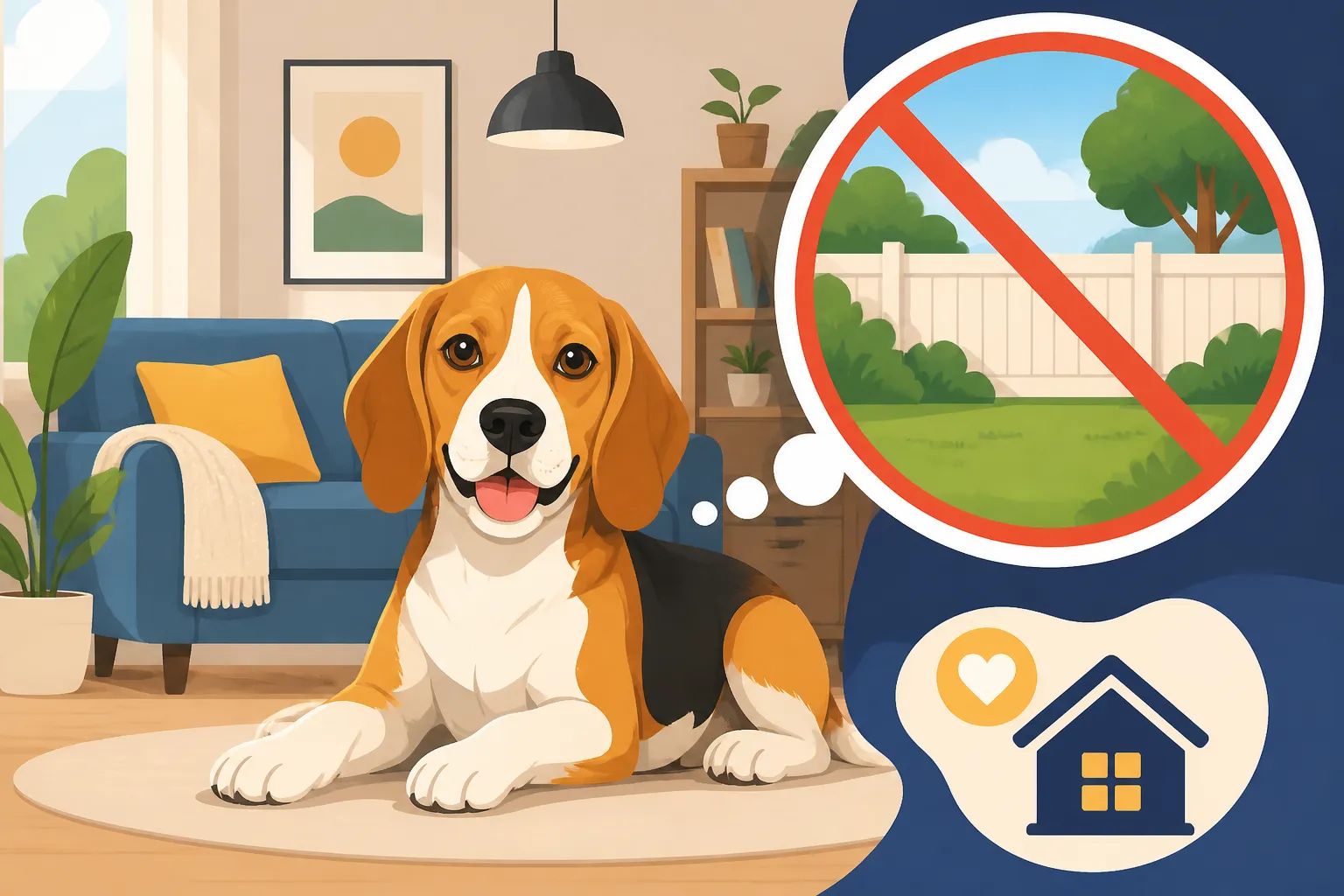
Beagles in Homes Without a Fenced Yard
Bringing a Beagle home is an incredibly exciting time, but if you're living in an apartment or a house without a securely fenced yard, you're likely already feeling a knot of anxiety about how you'll manage your new companion's boundless energy and famous nose. It's a common worry, and one that often leads people to believe a Beagle isn't an option for them. This comprehensive guide will walk you through the realities, challenges, and practical solutions for successfully raising a happy, healthy Beagle without the traditional security of a private, fenced outdoor space.
Understanding the Beagle's Need for Secure Outdoor Space
It's no secret that Beagles are incredible scent hounds, a trait that makes them wonderfully unique but also presents specific challenges for owners without a secure yard. Their very essence is tied to their nose, and understanding this is the first step in creating a fulfilling life for them, no matter your living situation.
The Beagle's Instinctual Drive for Scent
Imagine having 220 million scent receptors, compared to our measly 5 million. That's a Beagle's world. Every walk, every breeze, every dropped crumb is a symphony of smells begging to be investigated. They were bred for centuries to follow a scent trail relentlessly, often for miles, ignoring everything else around them. This deep-seated instinct means that when a Beagle catches a captivating whiff, their ears might as well be turned off, and their focus becomes laser-sharp on that invisible path. They aren't being disobedient; they are simply fulfilling their genetic destiny. This profound drive is why even the most well-trained Beagle can "go deaf" in the face of an irresistible smell, making off-leash freedom in an unfenced area a recipe for disaster. Why a Beagle Ignores You Halfway Down a Trail delves deeper into this fascinating aspect of their behavior.
Why Traditional Fences Are Recommended
For most Beagle owners, a securely fenced yard is seen as almost a non-negotiable. Why? Because it offers a contained, relatively safe space where your Beagle can indulge their sniffing desires, burn off energy, and handle their potty business without the constant management required on a leash. A good fence allows them to explore, roll in the grass, and chase a squirrel for a few moments, all while keeping them safe from roads, other animals, and the temptation of a truly irresistible scent trail that leads far, far away. It provides a level of independence and mental stimulation that's hard to replicate fully on a leash in an open environment. Without this natural boundary, every outdoor moment becomes a deliberate, supervised activity, which is perfectly doable but requires a different approach from the owner.
The Risks of Uncontained Roaming
The primary risk of a Beagle in an unfenced environment is, quite simply, escape. Their keen noses and curious minds mean they will investigate any perceived opening or enticing smell, often without regard for traffic or their own safety. A Beagle can be surprisingly fast and agile when motivated by a scent, making them very difficult to catch once they've taken off. Beyond the obvious danger of cars, there's the risk of getting lost, encountering aggressive wildlife or other dogs, or even picking up parasites or eating something harmful. What a Beagle Vomiting After Eating Something Outside covers some of those dangers. Even if your Beagle is perfectly behaved 99% of the time, that 1% lapse when a rabbit bolts across the street could have devastating consequences. This isn't about blaming the dog; it's about understanding their nature and mitigating those risks responsibly.
Navigating Potty Breaks and Daily Exercise Without a Fence
Living without a fenced yard means you become the primary boundary and supervisor for all outdoor activities. This isn't a limitation if approached thoughtfully; it just requires consistent effort and a clear understanding of your Beagle's needs.
Mastering Leash Walking for Potty Training
Potty training without a fenced yard requires patience and consistency. Every single outdoor excursion for toileting must be on a leash, no matter the weather. For a young Beagle puppy, this means frequent trips – often every hour or two initially, and definitely after waking, eating, and playing. You'll need to develop a consistent routine and a clear "go potty" cue. Reward success enthusiastically with high-value treats to build a strong association. The challenge here is the Beagle's tendency to get distracted by scents. Instead of focusing on the task at hand, they might want to sniff every blade of grass, extending the potty break unnecessarily. You'll need to gently guide them to a designated potty spot, wait for them to relieve themselves, and only then allow a short "sniffing reward" walk. This structure helps them understand the purpose of these quick trips. Beagle Potty Training and How Many Weeks It Takes offers more in-depth advice on this.
Planning for Extensive Daily Exercise
Beagles are active dogs, and they need a significant amount of exercise to stay happy and healthy. Without a yard for them to zoom around in, all their physical activity needs to be structured through walks, runs, and other activities you initiate. This means at least two good walks a day, each lasting 30-60 minutes, and often more. Don't underestimate the power of a "sniffing walk" – allowing your Beagle ample time to follow scents, even if it means a slower pace. These walks are incredibly enriching mentally and can tire them out almost as much as physical running. Sniffing Walks and Why They Tire a Beagle Out explains why. Consider exploring different routes to keep things interesting for their nose. Regular visits to securely fenced dog parks (if your Beagle is social and enjoys them) can also be a fantastic way to let them run freely and burn off steam, but always ensure the fences are genuinely escape-proof for a Beagle. For a quieter option, using a long line in a safe, open field can give them a sense of freedom while you maintain control.
The Importance of Mental Stimulation
Physical exercise alone won't be enough for a smart, scent-driven Beagle. They need mental challenges to prevent boredom, which can lead to destructive behaviors indoors. Since their primary drive is scent, activities that engage their nose are paramount. Incorporate puzzle feeders for their meals, scattering kibble around the house or hiding it in snuffle mats you can find on sites like Chewy. Play hide-and-seek with treats or toys, encouraging them to use their nose to find you or the hidden object. Basic obedience training sessions, even short ones, provide mental engagement and reinforce your bond. Consider trying introductory scent work classes; many communities offer them, and they are perfect for Beagles. These activities provide a "job" for your Beagle and help them feel fulfilled even without a vast outdoor space.
Safety First: Preventing Escapes and Accidental Roaming
The absolute top priority for a Beagle in an unfenced home is safety. Given their strong scent drive and potential for selective hearing, preventing escapes is an ongoing commitment that requires vigilance, the right equipment, and consistent training.
Essential Gear for Unfenced Environments
When you don't have a fence, your gear becomes your safety net. A well-fitting harness is absolutely critical. Beagles have strong necks, and a collar can put undue pressure on their throat if they pull or suddenly lunge after a scent. A front-clip harness can also help manage pulling. Always double-check that the harness is snug enough that they can't back out of it – Beagles are surprisingly adept at Houdini acts. For outdoor adventures beyond a quick potty break, a long line (a lightweight leash 15-50 feet long) is invaluable. It allows your Beagle to explore, sniff, and run in a safe, open area (like a quiet park or field) while you maintain control. This is the closest you'll get to "off-leash" freedom without a fence. A sturdy, non-retractable leash is also a must for everyday walks. Finally, a GPS tracking collar is a smart investment. While it's not a substitute for physical containment, it offers immense peace of mind should your Beagle ever slip away. You can find a wide range of reliable GPS trackers and sturdy harnesses on online pet retailers like Chewy. Beagle GPS Collars and Tracking Tags offers insights into these devices.
Gate and Doorway Protocols
The moment you open a door or gate can be a huge temptation for a Beagle. Their curiosity, combined with their scent drive, makes them prime candidates for "door dashing." To prevent this, strict protocols are necessary. Train your Beagle to "wait" or "stay" at every doorway. Practice opening the door slightly, rewarding them for remaining in place, before you ever step through. Consider using baby gates or a crate near the entryways as an added barrier, especially when guests are coming and going. Teach every family member and visitor these protocols. A simple sign on your front door reminding guests to "Please close the gate/door quickly, Beagle inside!" can also be helpful. This consistent training and management are crucial for preventing quick escapes that can happen in the blink of an eye. A Beagle That Bolts Out the Front Door provides more strategies for this common challenge.
Emergency Preparedness for a Lost Beagle
Despite all precautions, accidents can happen. Being prepared for a lost Beagle is an unfortunate but necessary part of responsible ownership in any home, especially one without a fenced yard. First and foremost, ensure your Beagle is microchipped and that your contact information is always up-to-date with the microchip registry. They should also wear an ID tag with your current phone number on a sturdy collar or harness at all times. Keep a recent, clear photo of your Beagle handy, as well as their general description (color, markings, size) for "lost dog" posters. Know the phone numbers of your local animal shelters and animal control. If your Beagle does go missing, act immediately. Start by searching the immediate area, calling their name in a calm, confident voice. Many Beagles, once the initial chase is over, will become disoriented or scared. Their powerful nose can lead them far astray, but it can also help them find their way back if they're not too stressed.
| Strategy | Description | Best Use Case | Key Considerations |
|---|---|---|---|
| Long Line Walks | Using a 15-50 ft training line to allow supervised exploration in open, safe areas away from traffic. | Parks, open fields, quiet natural trails. | Requires constant attention and strong grip; ensure the line doesn't tangle around obstacles or other people/dogs. Best for solo walks or with one other calm dog. Always use a harness to prevent neck injury. |
| Fenced Dog Park Visits | Taking your Beagle to a securely fenced dog park where they can run and play off-leash with other dogs. | Energy burning, socialization. | Ensure the fences are truly Beagle-proof (no gaps, not too low); monitor interactions closely for safety; ensure your Beagle is up-to-date on all vaccinations and parasite prevention. Not all Beagles enjoy dog parks. |
| Sniffing & Urban Exploration | Structured walks focusing on allowing your Beagle to investigate scents along city streets, sidewalks, and designated sniff zones. | Daily exercise, mental enrichment, reducing frantic pulling. | Requires patience, as walks will be slow; be mindful of potentially dangerous items on the ground; always use a sturdy harness and leash. Vary your routes to keep it interesting for their nose. |
| Indoor Scent Games | Hide-and-seek with treats, snuffle mats, puzzle feeders, or designated "nose work" games within your home. | Rainy days, quick mental stimulation, preventing boredom. | Can replace some outdoor exercise but not all; ensures mental needs are met; useful for quiet time or when outdoor conditions are not ideal. Can easily be sourced from retailers like Chewy. |
| Professional Dog Walking | Hiring a professional dog walker who understands Beagle behavior and can provide structured, safe outdoor exercise. | When you're at work, cannot provide enough exercise, or travel. | Vet and reference checks are crucial; ensure they use appropriate gear (harness, long line); clarify their emergency protocols; ideally, find someone with experience with scent hounds. |
Training and Enrichment for an Unfenced Beagle
Living without a fenced yard means your Beagle relies entirely on you for safe outdoor experiences and rich indoor stimulation. This demands a proactive approach to training and a deep understanding of their innate needs.
Building Bulletproof Recall and Impulse Control
In an unfenced environment, a reliable recall isn't just a convenience; it's a lifeline. Beagle Recall and Why Your Voice Stops Registering explains why this can be particularly challenging for our scent-driven friends. You need a "bulletproof" recall, meaning your Beagle will come back to you no matter the distraction. Start training recall indoors, in a low-distraction environment, using high-value treats (think tiny pieces of cooked chicken or cheese). Make coming to you the most rewarding thing in the world. Gradually introduce distractions and move to outdoor, still contained, spaces. A long line is invaluable here, allowing them more freedom while still giving you control to enforce the recall. Practice consistently, even when you don't need them to come. Impulse control is equally vital – teaching "leave it" and "drop it" with absolute reliability can prevent them from eating something dangerous on a walk or bolting after a squirrel. This takes constant reinforcement and patience, especially through their adolescent phase where selective hearing seems to peak.
Engaging in Scent Work and Indoor Games
Since your Beagle won't have the freedom of a fenced yard to explore scents at will, you need to bring that world indoors and structure it during walks. Scent work is a natural fit for Beagles and is one of the most fulfilling activities you can do together. You can start simple: hide treats around the house and encourage them to find them. Progress to using specific scents (like essential oils) in formal "nose work" or "canine scent detection" classes. These activities tap into their core drive, build confidence, and provide immense mental exhaustion. Beyond scent games, incorporate interactive toys and puzzle feeders into their daily routine. These make them work for their food and prevent gobbling, a common Beagle trait. Look for durable, engaging toys at pet stores or online at Chewy. Regular, short training sessions for tricks or obedience also count as mental enrichment. The goal is to keep their busy minds engaged so they aren't looking for trouble (or an escape route).
Considering Professional Help and Doggy Daycare
Don't hesitate to seek professional help! A certified positive reinforcement dog trainer can provide invaluable guidance in perfecting leash manners, recall, and impulse control specifically for a Beagle's unique challenges. They can offer tailored strategies for managing your Beagle in an unfenced setting and help you find creative ways to enrich their life. Group obedience classes can also be beneficial, providing controlled socialization and training in a distracting environment. If your work schedule is demanding, or your Beagle struggles with Beagle Separation Anxiety in a Pack Breed, a reputable doggy daycare can be a fantastic solution. Choose a daycare that emphasizes supervision, structured play, and has secure, Beagle-proof fencing. A good daycare will ensure your Beagle gets plenty of exercise, mental stimulation, and positive social interaction, helping them burn off energy and come home tired and content, even without a personal yard. It's an investment in their well-being and your peace of mind.
Disclaimer
This article is for general informational purposes only and does not constitute professional advice. Laws, prices and regulations vary by location and change over time. Consult a qualified professional for guidance on your specific situation.