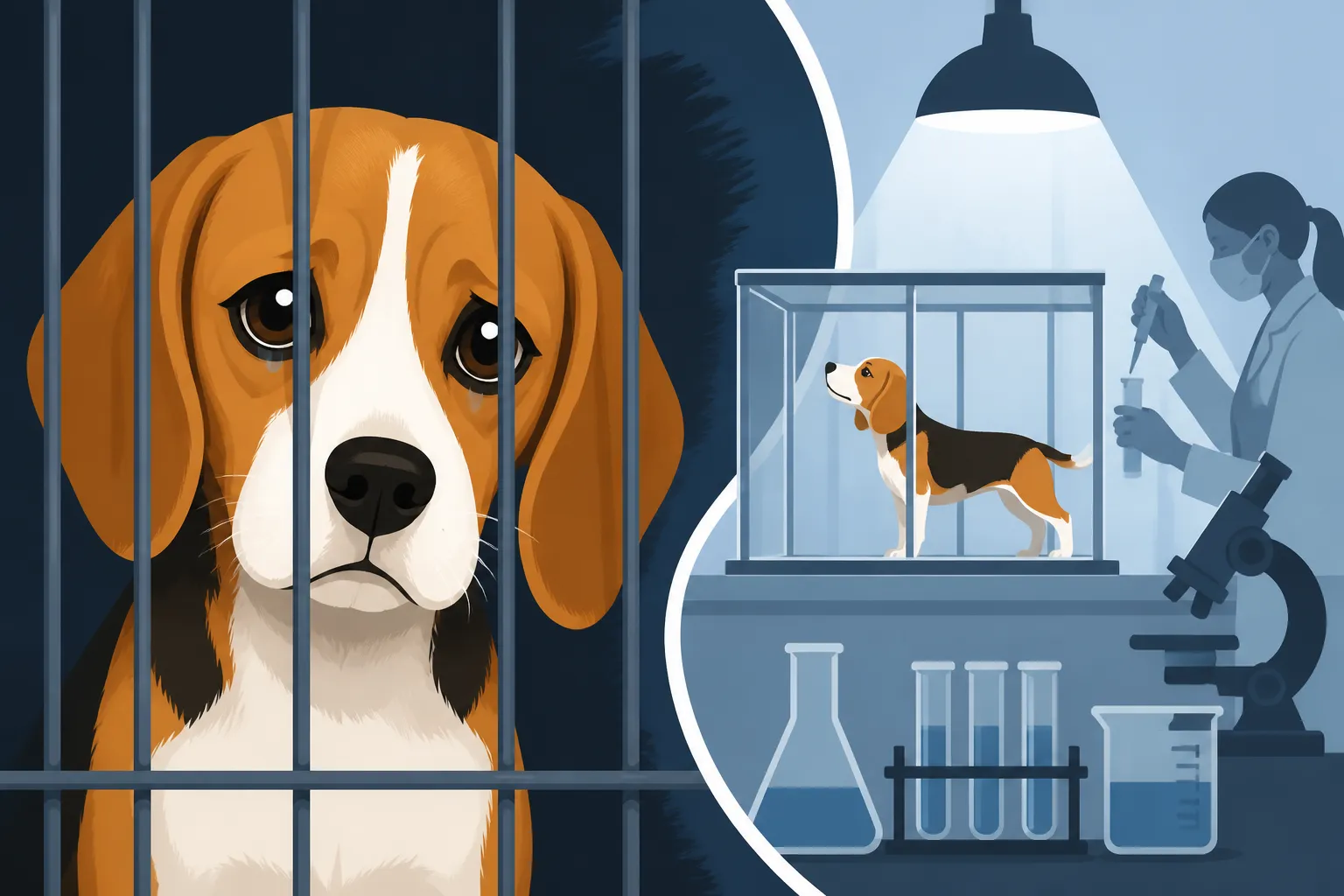
Beagles in Laboratories and the Envigo Case
It’s a truly heartbreaking reality that for decades, Beagles have been the go-to breed for laboratory research and testing across the globe. Many of us who adore these merry hounds are left grappling with the ethical questions and emotional toll this practice takes, especially after hearing stories of widespread suffering. This guide aims to shed light on why Beagles ended up in labs, delve into the harrowing Envigo case that brought so much to light, and explore the ongoing efforts to rescue and rehome these special dogs.
A History of Beagles in Research: Why Them?
It's a question that weighs heavily on the hearts of Beagle lovers: why our beloved, boisterous, sweet-natured hounds? The truth is, a combination of their physical characteristics, temperament, and historical context sadly made them a convenient choice for scientific research. It wasn't about malice, but rather a cold, calculated suitability that became entrenched in the industry. Understanding this history is crucial to grasping the depth of the issue.
The Temperament That Made Them a "Good Fit"
Beagles are renowned for their docile, forgiving nature. They are generally not aggressive, even when handled by strangers, and they tend to adapt to various environments – a trait that, in a laboratory setting, was considered an advantage. Researchers found that Beagles were relatively easy to manage, less prone to panicking or biting compared to some other breeds, which unfortunately made them seem "ideal" for handling during procedures. Their inherent desire to please, coupled with their strong pack drive, meant they often formed attachments, even in sterile and isolated conditions. This adaptability, a trait we cherish in our family pets, became a cruel paradox in the lab, allowing them to endure conditions that might break other dogs more quickly. Why Laboratories Chose Beagles in the First Place explores this further.
Furthermore, their relatively low anxiety levels, or at least their ability to appear calm under duress, meant that they were often perceived as more reliable subjects for studies where stress could confound results. This isn't to say they weren't stressed, but their outward presentation was often interpreted as less problematic. Imagine a Beagle's natural curiosity and eagerness, then picture it confined to a small cage, with those traits suppressed. It's a stark contrast to the lively, sniffing, exploring companions we know and love.
Standardization and Size for Controlled Studies
Another significant factor in the Beagle's widespread use was their consistent size and genetic uniformity. Beagles are a medium-sized breed, generally falling within a predictable weight and height range, which is extremely important for studies requiring standardized dosing of medications or assessments of physiological responses. Whether it’s a 13-inch or a 15-inch Beagle, their anatomical structure is relatively uniform, allowing for easier data comparison across different subjects and different studies. This standardization simplified experimental design and made results more comparable.
Their short, dense coats are also a practical consideration. They require minimal grooming, and the lack of long hair meant fewer complications with medical devices, injections, or skin observations. This seemingly minor detail contributed to their perceived efficiency in a lab environment. Add to this the availability of well-established breeding lines, which allowed labs to source large numbers of genetically similar animals, and you begin to see how they became the default choice. This desire for genetic consistency often led to intensive breeding programs within the lab animal industry itself, creating generations of Beagles specifically for research purposes.
Historical Acceptance and Lack of Alternatives
The use of Beagles in research is not a new phenomenon; it's a practice that dates back decades, even centuries, in some forms. Over time, it became an accepted norm within the scientific community, with protocols and methodologies built around the use of these specific animals. Once a practice is established and institutionalized, it becomes incredibly difficult to change, even as ethical considerations evolve. For many years, there was a prevailing belief that animal models were indispensable for understanding human physiology and testing drug safety.
Before the advent of advanced in-vitro testing, sophisticated computer modeling, and other non-animal alternatives, the options for comprehensive drug and chemical testing were limited. Animal testing was, for a long time, considered the "gold standard." This historical precedent, coupled with the breed's perceived suitability, created a cycle where Beagles continued to be bred and used. The regulatory landscape also played a role, often mandating animal testing for new pharmaceuticals and chemicals, further entrenching the practice. It’s a stark reminder that what was once accepted isn't necessarily what's right, and thankfully, this mindset is slowly but surely shifting.
The Ethical Dilemma of Animal Testing
The topic of animal testing is, for many, a deeply unsettling one. On one side, there are those who argue for its necessity in advancing medical science and ensuring human safety. On the other, a passionate chorus demands an end to practices they view as cruel and unnecessary. It's a complex ethical landscape, and Beagles often find themselves at the heart of this debate, symbolizing the plight of countless animals in laboratories.
The Scientific Arguments for Animal Models
Proponents of animal testing often emphasize its role in groundbreaking medical advancements. They argue that living systems, like those of Beagles, provide crucial insights into how drugs interact with complex biological processes, how diseases progress in a whole organism, and how potential treatments affect different organ systems simultaneously. Without this "whole organism" perspective, they claim, many life-saving medicines and surgical techniques might never have been developed, or would pose unacceptable risks to humans. The ability to model conditions like heart disease, diabetes, or even epilepsy (which Beagles are unfortunately prone to, as discussed in Beagle Epilepsy and Seizures From Six Months On) is cited as a key benefit.
Furthermore, regulatory bodies around the world often require animal testing before new drugs or chemicals can be approved for human use or released into the environment. This is largely driven by a concern for public safety, an attempt to catch potential toxicities or severe side effects before human trials begin. For some researchers, the Beagle's well-understood physiology and genetic background, due to generations of use, make them a familiar and reliable model to interpret results. It's a perspective rooted in a utilitarian argument: that the potential benefits to human health outweigh the suffering of the animals involved.
The Moral and Public Opposition
Despite the scientific arguments, the moral objections to animal testing are powerful and widespread. Animal welfare advocates and a growing segment of the public find the concept of inflicting suffering on sentient beings for human benefit inherently wrong. They highlight the often-unnatural and restrictive environments of laboratories, the loneliness, the lack of stimulation, and the pain and fear associated with many experimental procedures. For Beagles, a breed known for its "merry" disposition and love of family, these conditions are particularly heartbreaking. The idea of a Beagle, whose instincts are to sniff and explore, being confined to a cage and never feeling grass beneath its paws, stirs deep emotional responses.
Organized groups like the Beagle Freedom Project have been instrumental in raising public awareness, sharing stories of individual Beagles rescued from labs, and advocating for an end to the practice. These efforts resonate deeply with pet owners who see their own beloved companions in the eyes of lab animals. The public's increasing demand for ethical treatment of animals, coupled with a greater understanding of canine sentience, has fueled a strong movement against animal testing, pushing for alternatives and greater transparency. The public outcry following cases like Envigo demonstrates how profoundly people are affected by these issues.
The Push for 3Rs: Replace, Reduce, Refine
In response to both ethical concerns and scientific advancements, there's a significant global movement towards implementing the "3Rs" principle in animal research: Replace, Reduce, and Refine.
- Replace: This is the ultimate goal – finding methods that completely avoid the use of animals. This includes sophisticated computer modeling, in-vitro (test-tube) studies using human cells and tissues, organ-on-a-chip technology, and advanced AI simulations. The scientific community is investing heavily in these areas, with the hope that many animal tests can eventually be replaced entirely.
- Reduce: Where animal use is still deemed necessary, the aim is to reduce the number of animals used to the absolute minimum required to obtain statistically valid results. This involves better experimental design, sharing data, and using more efficient methodologies.
- Refine: This focuses on improving the welfare of animals still used in research. This means implementing better housing conditions, providing enrichment, minimizing pain and distress, using less invasive procedures, and offering better veterinary care. For Beagles, refinement might mean larger enclosures, opportunities for social interaction, and access to more varied food and toys, perhaps even sourced from pet supply retailers like Chewy.
The 3Rs framework represents a compromise between the perceived needs of scientific research and the ethical imperative to minimize animal suffering. While it doesn't eliminate animal testing, it pushes the industry towards more humane and scientifically advanced practices, offering a glimmer of hope for the future of Beagles in research.
Understanding the Envigo Case
The Envigo case stands as a stark and painful illustration of the abuses that can occur within the animal testing industry, bringing the plight of laboratory Beagles into the harsh light of public scrutiny. It was a pivotal moment, exposing systemic failures and galvanizing immense public outrage and action. For many, this case symbolized everything wrong with the commercial breeding of animals for research.
The Horrific Conditions Uncovered
In 2022, federal and state authorities, prompted by numerous complaints and undercover investigations, descended upon the Envigo breeding facility in Cumberland, Virginia. What they found was truly sickening. Thousands of Beagles were living in conditions described as appalling and inhumane. Reports detailed widespread neglect, including dogs suffering from untreated medical conditions, malnourishment, and living in unsanitary environments filled with waste. It wasn't just individual instances of poor care; it was a systemic failure affecting a massive population of animals.
Pregnant Beagles were reportedly dying from preventable causes, and puppies were not receiving adequate care, leading to high mortality rates. Many of these Beagles bore the identification tattoos, often in their ears, that are typical markers for laboratory animals. Beagle Tattoos and Laboratory Identification Numbers explains more about this form of identification. The sheer scale of the suffering, with approximately 4,000 Beagles housed at the facility, shocked the nation and highlighted the critical lack of oversight and accountability in some segments of the industry. These weren't just animals in a research study; these were breeding stock, often kept in conditions that even standard animal shelters would find unacceptable.
The Legal Intervention and Massive Rescue Effort
The findings at Envigo were so egregious that the U.S. Department of Justice intervened, filing a civil lawsuit alleging Animal Welfare Act violations. This legal action led to a historic order from a federal court to remove all 4,000 Beagles from the facility. What followed was an unprecedented, monumental rescue effort. Animal welfare organizations from across the country, working in coordination, mobilized to transport these Beagles to shelters and rescue partners in numerous states.
It was a logistical challenge of epic proportions, requiring thousands of volunteers, immense resources, and incredible dedication. These dogs, many of whom had never felt grass under their paws, seen the sky, or experienced a loving human touch, were finally given a chance at a different life. Organizations like the Humane Society of the United States and various local Beagle rescues played crucial roles in this massive undertaking, organizing transportation, veterinary assessments, and placing Beagles into foster and adoptive homes. The collective sigh of relief from the animal welfare community was palpable as each transport left the facility. Where the Four Thousand Rescued Beagles Went details this incredible journey.
The Aftermath and Public Outcry
The Envigo case generated widespread public outrage and condemnation. It ignited renewed calls for stronger animal welfare laws, stricter enforcement, and a complete ban on breeding animals for research. The images and stories of the rescued Beagles, some emaciated, terrified, and bearing the scars of neglect, deeply impacted the public. It put a face to the abstract concept of "lab animals," reminding everyone that these were sentient beings deserving of care and respect. This public outcry served as a powerful catalyst for change, forcing lawmakers and industry stakeholders to confront the realities of commercial breeding facilities.
For the rescued Beagles themselves, the aftermath was a journey of recovery and adaptation. Many required extensive veterinary care for a range of physical ailments, from dental issues to skin infections. Emotionally, they faced profound challenges, having lived their entire lives in confinement. They had to learn what it meant to be a pet, to trust humans, and to navigate a world full of novel sights, sounds, and sensations. The stories of their resilience and the dedication of their new families became an inspiration, showcasing the transformative power of love and patience.
The Path to Adoption and Rehabilitation
Bringing a former laboratory Beagle into a home is a unique and incredibly rewarding experience, but it comes with its own set of challenges. These dogs often have deeply ingrained behaviors and fears that are a direct result of their past lives. Understanding these hurdles and approaching their rehabilitation with patience, empathy, and consistency is paramount to their success.
The Challenges for Former Research Beagles
Imagine living your entire life indoors, in a cage, with limited human interaction and no exposure to the outside world. This is the reality for many former research Beagles. Consequently, they often arrive in foster or adoptive homes with significant gaps in their social and environmental experiences. Common challenges include:
- Fear of Novelty: Everything from stairs, open doors, cars, grass, pavement, televisions, and even the sound of a vacuum cleaner can be terrifying. They've never encountered these things. Adopting a Beagle That Had Never Seen Grass highlights this specific fear.
- House Training Difficulties: Having lived in confined spaces where they had no choice but to eliminate where they slept, the concept of going outside for potty breaks is entirely new. It takes immense patience and consistent positive reinforcement.
- Leash Reactivity/Fear: A leash and collar can be incredibly alien and frightening. Walks can be overwhelming, as they are bombarded with new smells, sounds, and sights. Their powerful Beagle nose, usually a source of joy, can become a source of overstimulation.
- Separation Anxiety: As a pack animal, the sudden isolation of a home environment after being constantly surrounded by other dogs can trigger profound separation anxiety. Beagle Separation Anxiety in a Breed Bred for Packs is a very common issue.
- Food Aggression/Resource Guarding: Having likely competed for food in a lab setting, some Beagles may develop resource guarding behaviors around food bowls, treats, or toys.
- Lack of Social Skills: While generally good with other dogs from being in a pack, they may not know how to interact appropriately with humans or even understand play cues from other dogs in a non-lab setting.
These challenges are not a reflection of the dog's inherent nature but a direct consequence of their upbringing. They require understanding, not punishment, and a commitment to slow, gentle exposure and positive reinforcement.
How Rescues Facilitated the Envigo Adoptions
The sheer volume of Beagles from the Envigo case meant that the rescue effort was a collaborative masterpiece. National organizations like the Humane Society of the United States, along with countless local and breed-specific rescues, stepped up in an incredible way. They formed networks, coordinating transportation, veterinary care, and foster placements across vast distances. Many Beagles were transported via planes, vans, and volunteer drivers, moving from Virginia to homes all over the country. The Groups That Rehome Research Beagles were critical players.
Upon arrival, each Beagle underwent a thorough veterinary assessment. Many needed immediate medical attention for parasites, dental issues, skin conditions, and chronic infections. Following initial medical care, the Beagles were placed into experienced foster homes. Foster parents played a vital role in their initial rehabilitation, providing a safe, quiet space for decompression, beginning house training, and introducing them to the sights and sounds of a normal home. This critical foster period allowed the dogs to slowly adjust before being ready for permanent adoption. The process was transparent, with regular updates sharing the Beagles' progress, captivating the hearts of potential adopters nationwide. Many foster parents stocked up on supplies from places like Chewy, ensuring the Beagles had comfortable bedding, appropriate food, and enrichment toys.
Supporting a Former Lab Beagle in a Home Environment
Adopting a former lab Beagle requires a special kind of commitment. It's not about "fixing" them quickly, but about providing a consistent, loving, and patient environment where they can learn to trust and thrive at their own pace. What a Former Research Beagle Needs First emphasizes these needs.
Here’s how to support them:
- Patience and Low Expectations: Understand that progress will be slow and may have setbacks. Celebrate small victories, like taking a treat from your hand or stepping outside without fear.
- Safe Space: Provide a quiet, comfortable crate or a designated "safe room" where they can retreat when overwhelmed. Soft bedding, a blanket that smells like you, and a gentle chew toy (many adopters found durable toys from Chewy) can make a huge difference.
- Positive Reinforcement: Use high-value treats and praise for every positive interaction, no matter how small. Never punish fear-based behaviors; instead, gently redirect and reward brave attempts.
- Slow Introduction to the World: Introduce new experiences gradually. Start with quiet walks in your backyard, then a quiet street, slowly building their confidence. Avoid busy parks or overwhelming situations initially.
- Structure and Routine: A predictable daily schedule for feeding, potty breaks, and playtime can help a former lab Beagle feel more secure and understand expectations.
- Other Dogs Can Help: Often, another well-adjusted, confident dog in the home can serve as a wonderful mentor, demonstrating appropriate behaviors and helping the former lab Beagle learn to trust.
- Professional Guidance: Don't hesitate to seek advice from a qualified positive-reinforcement dog trainer or behaviorist experienced with fearful dogs or former research animals. They can offer tailored strategies.
Building trust takes time, but watching a scared, shut-down Beagle blossom into a confident, affectionate companion is one of the most fulfilling experiences a dog owner can have.
Here’s a helpful table summarizing common challenges and potential solutions for adopted lab Beagles:
| Challenge Area | Common Manifestation | Recommended Solutions |
|---|---|---|
| Environmental Fear | Terrified of stairs, grass, loud noises, open spaces. | Create a "safe room," use gentle exposure, reward calm behavior, carry over thresholds. |
| House Training | Urinates/defecates indoors, doesn't understand "outside." | Frequent outdoor trips, lavish praise for success outside, bell training, strict routine. |
| Leash & Outdoor Skills | Freezes on leash, pulls frantically, overwhelmed by smells. | Start with short backyard "walks," focus on positive association with harness/leash. |
| Separation Anxiety | Howls, paces, destructive when left alone. | Crate training, short departures, calming aids (e.g., from Chewy), dog walker/sitter. |
| Resource Guarding | Growls over food/toys, eats very quickly. | Feed in separate, quiet areas, teach "leave it," trade items for high-value treats. |
| Socialization Gaps | Avoids eye contact, doesn't know how to play, shy with people. | Gentle, positive interactions, allow them to initiate contact, avoid forced petting. |
| Physical Condition | Dental issues, skin infections, malnourishment. | Comprehensive vet check, follow treatment plan, ensure nutritious diet (e.g., from Chewy). |
Moving Forward: Policy Changes and Future Prospects
The Envigo case, while a tragedy for the thousands of Beagles involved, also served as a powerful turning point. It brought unprecedented attention to the ethical issues of animal testing and commercial breeding for research, leading to significant policy shifts and a renewed push for alternatives. The future for Beagles in laboratories, while still uncertain for many, is slowly moving towards a more humane and responsible direction.
New Regulations and Increased Scrutiny
In the wake of public outcry and legal action like the Envigo case, there has been an increased focus on strengthening and enforcing the Animal Welfare Act (AWA) in the United States. Lawmakers and regulatory bodies are facing immense pressure to ensure that breeding facilities and research labs adhere to higher standards of care, with more frequent and thorough inspections. States are also enacting their own "Beagle Freedom Laws," which mandate that research facilities offer Beagles (and other animals) for adoption through rescue organizations once they are no longer needed for studies. Beagle Freedom Laws State by State are changing the landscape.
This heightened scrutiny means that facilities operating commercially to supply research animals are being held to a higher standard of accountability. The days of operating in the shadows with minimal oversight are increasingly coming to an end. While no regulation can eliminate all suffering, these new policies and the public's watchful eye aim to reduce the chances of another Envigo-scale tragedy. It also empowers animal welfare organizations to intervene more effectively when violations are suspected.
The Rise of Alternative Testing Methods
Perhaps the most promising development for laboratory Beagles is the rapid advancement and increasing acceptance of non-animal testing methods. Scientists are continually developing and refining sophisticated techniques that can often provide more accurate, human-relevant results than traditional animal models. These alternatives include:
- Organ-on-a-Chip Technology: Microfluidic devices that mimic the functions of human organs, allowing researchers to study drug effects without live animals.
- 3D Cell Cultures and Bioprinting: Creating complex 3D tissue models from human cells, which better replicate human biology than animal tissues.
- Computer Modeling and AI: Advanced computational programs that can predict the toxicity of chemicals and drugs based on their molecular structure and existing data.
- In Vitro Testing: Using human cells and tissues in laboratory dishes to study reactions to compounds.
These methods are not only more ethical but often more efficient and cost-effective. As these technologies mature and gain further validation, the reliance on animal testing, including the use of Beagles, is expected to significantly decrease. Pharmaceutical companies and regulatory agencies are increasingly investing in and accepting these alternatives, paving the way for a future where animal testing might become a last resort rather than a first step.
Advocacy and the Ongoing Fight for Beagle Freedom
The fight for Beagle freedom is far from over, but the momentum is clearly on the side of the animals. Advocacy groups continue to push for legislative changes, public awareness campaigns, and direct rescue operations. They work tirelessly to expose unethical practices, promote the adoption of former lab animals, and support the development and implementation of alternatives. Groups like the Beagle Freedom Project are not just reactive; they are proactive, working to prevent future cases of abuse and ensure that every Beagle has a chance at a loving home.
Many individuals are also making a difference by supporting these organizations, fostering or adopting former lab animals, and advocating for compassionate science. The stories of resilience from dogs like the Envigo Beagles serve as powerful reminders of why this work is so vital. While some Beagles may still be used in research, the hope is that stricter regulations, ethical commitments, and scientific advancements will ultimately lead to a world where these cheerful, intelligent hounds are cherished only as companions, not confined to cages. The dedication of the Beagle community ensures that the conversation continues and that the pressure for change remains constant.
Disclaimer
This article is for general informational purposes only and does not constitute professional advice. Laws, prices and regulations vary by location and change over time. Consult a qualified professional for guidance on your specific situation.