What the Beagle Standard Asked For a Century Ago
It's easy to look at today's meticulously detailed breed standards and wonder how much they've truly evolved over time, or even what qualities were originally held in such high regard. For Beagle enthusiasts, understanding the breed's origins means stepping back into a world where these merry little hounds were first and foremost working dogs. This guide will take you on a journey to explore what the Beagle standard asked for a century ago, revealing the priorities of breeders and fanciers who shaped the breed we know and love today.
The Genesis of the Early Beagle Breed Standard
When we talk about what the Beagle standard asked for a century ago, we're really delving into the late 19th and early 20th centuries, a pivotal time for many dog breeds, including our beloved Beagles. Before this era, Beagles, while recognized as a distinct type of hound for centuries, varied quite a bit in appearance and size, largely depending on the region and the specific hunting needs they fulfilled. It wasn't until dedicated groups of fanciers began to organize that a unified vision for the breed started to take shape.
Unifying a Disparate Breed Type
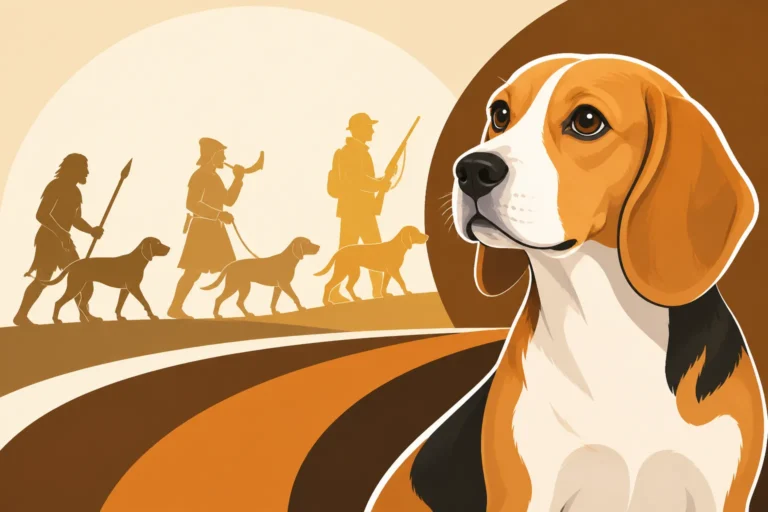
Prior to formalized standards, if you were looking for a Beagle-type hound, you might encounter a wide range of sizes and looks across different farms and hunting packs. Some were smaller, "pocket Beagles" that could be carried in a saddlebag, while others were larger, closer to a small Harrier. Their primary purpose was clear: to hunt hare and rabbit, following a scent trail with tenacity and voice. However, without a common blueprint, consistency in breeding was a challenge. Breeders often focused on working ability above all else, with appearance being a secondary, and often subjective, concern. This led to a rich diversity, but also a lack of the predictable characteristics that define a purebred dog today. The effort to create a standard was a move towards preserving what was considered the ideal working Beagle while also preparing the breed for the burgeoning world of dog shows. You can learn more about this foundational period by reading How the Modern Beagle Was Built in the 1830s.
The Role of Early Breed Clubs
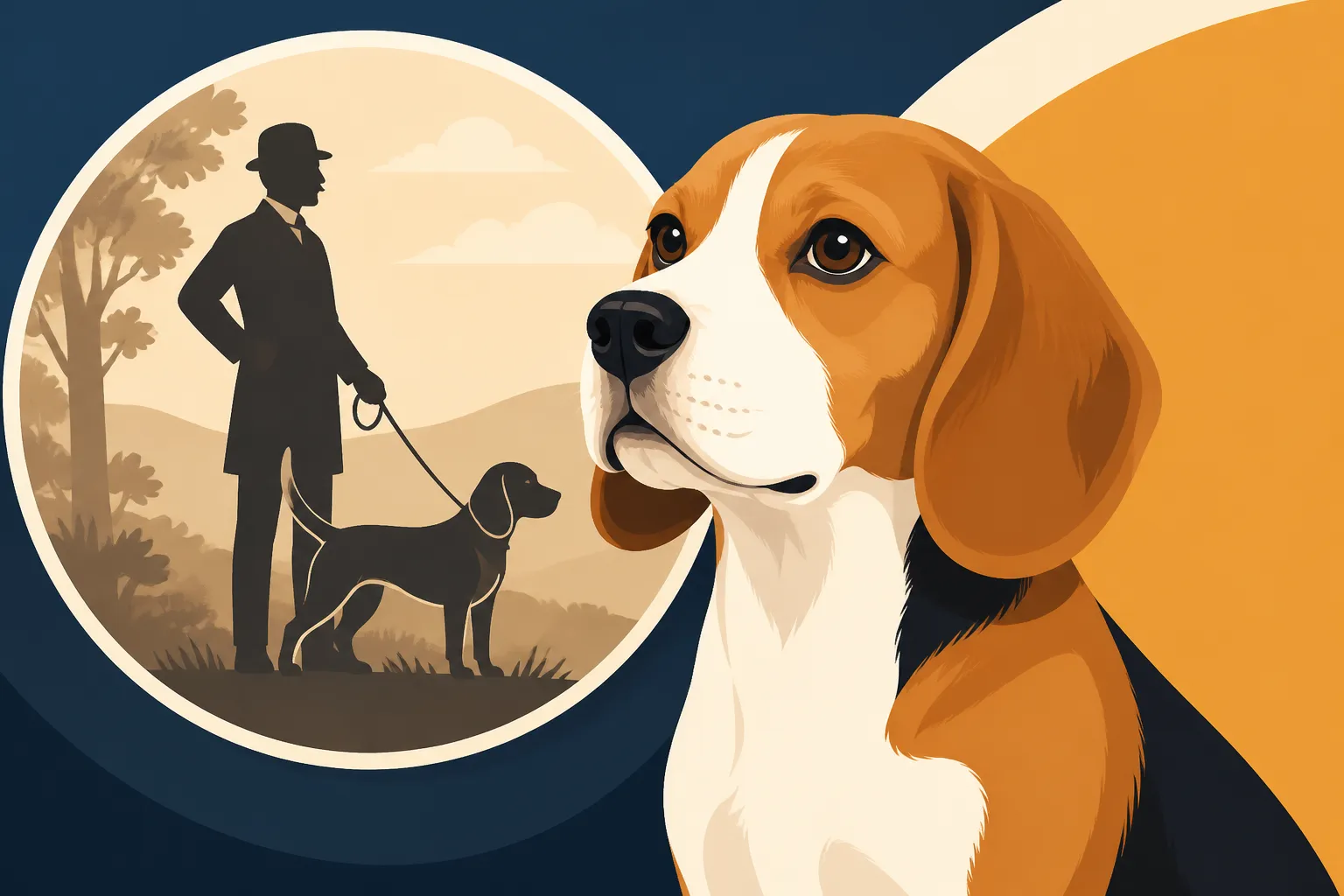
The establishment of breed clubs was the catalyst for formalizing these ideals. In the United States, the National Beagle Club was founded in 1887, playing a crucial role in bringing uniformity to the breed. These clubs weren't just about showing dogs; they were about defining, promoting, and protecting the breed's characteristics, ensuring that future generations adhered to a specific type. Their members, often passionate hunters and breeders, sat down and articulated what they believed constituted the ideal Beagle. This wasn't a sudden, arbitrary decision, but rather a consensus built on generations of experience in the field and an understanding of what made a Beagle effective at its job. The standard they drafted was a reflection of both practical working requirements and emerging aesthetic preferences for a harmonious, well-proportioned hound. It was through these collective efforts that the "what was asked for" began to solidify into written form. For details on this important organization, check out The National Beagle Club and Its 1887 Founding.
Key Physical Traits: What the Early Standard Valued
The early Beagle standard laid out specific requirements for physical traits, all aimed at describing a dog that was both capable in the field and pleasing to the eye. Every detail, from the shape of the skull to the set of the tail, was considered vital.
Head, Eyes, and Expression
The head was, and remains, a defining characteristic of the Beagle. A century ago, the standard emphasized a "fairly long" head, with a "moderate breadth" and a slight dome. The muzzle was to be of "medium length," neither snippy nor coarse. Why such specific details? A well-proportioned head was thought to house the keen nose and intelligent brain needed for tracking. The eyes were described as "large, soft, expression of pleading, of a soft, hazel or brown color." This "pleading" expression, often associated with the breed, speaks to their gentle and amiable nature, a trait valued even in hunting dogs who were also companions. Similarly, the ears were of immense importance, described as "long, set low on the head, fine in texture, reaching nearly to the tip of the nose when drawn forward." These long, pendulous ears weren't just for looks; they likely helped to funnel scent towards the nose, enhancing their tracking ability. The desire for a refined, yet functional head and expression has been a cornerstone of the breed's appeal for generations. You can dive deeper into these features with Beagle Eyes, Ears and Expression.
Body, Legs, and Feet
A Beagle's body was designed for endurance and agility in pursuit of scent. The early standard called for a "short, compact, and sturdily built" body, reflecting its heritage as a persistent hunter. The back was to be "level and strong," indicative of a dog that could cover varied terrain for hours. Loins were to be "short and muscular," providing power for propulsion, and the chest "deep and broad," allowing ample room for lung capacity. Legs were to be "straight and muscular," ensuring efficient movement without wasted effort. The feet were described as "round and compact," with "well-arched toes" and "hard pads." This specific foot structure was crucial for protection and grip during long days in the field, preventing injury and maintaining stamina. Think of a Beagle navigating dense brush or rocky paths – strong, well-formed feet were essential. Modern Beagle owners often still prioritize sturdy paws, often checking Chewy for paw balms and protective gear for their adventurous hounds. These physical attributes were a testament to the breed's working purpose, built for the rigors of the chase.
Tail, Coat, and Color
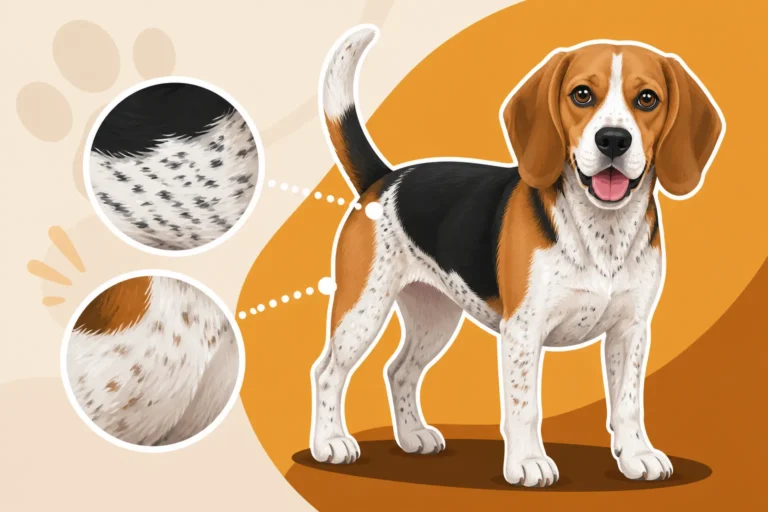
The Beagle's tail is one of its most charming and recognizable features, and the early standard paid close attention to it. It was to be "set on moderately high, carried gaily, but not curled over the back, rather short compared to the size of the dog, stout and well-feathered with brush." The distinctive white tip on the tail, often called the "flag," was a particularly valued trait, serving a practical purpose: allowing hunters to spot their dog in tall grass or dense undergrowth. It's not just a cute quirk; it was a lifeline for hunters trying to keep track of their Beagles in the field. To learn more about this, see The Beagle Tail and Its White Tip.
The coat was described as "close, hard, and medium length." This type of coat provided protection from the elements, whether it was cold rain or thorny bushes, while being easy to maintain. A short, dense coat was ideal for a dog that spent its days outdoors, as it wouldn't easily snag on brush or collect excessive mud. As for color, the standard allowed for "any true hound color," with the "tricolor" (black, white, and tan) often being the most common and sought-after, as it is today. While other colors like lemon and white or red and white were present, the tricolor was iconic. The phrase "any true hound color" allowed for natural variation while maintaining a general aesthetic of a robust, identifiable hound. Even today, regardless of color, a good quality brush is essential for managing the Beagle's shedding coat, and options from Chewy make it simple to find the right grooming tools. More on colors and markings can be found in Beagle Colors, Markings and the Tricolor Standard.
Temperament and Movement: The Working Dog's Core
Beyond physical appearance, the early standard also focused heavily on the Beagle's innate characteristics: its temperament and its movement, both critical to its function as a hunting companion.
The "Merry" Disposition
The word "merry" appears consistently in descriptions of the Beagle's temperament, both historically and in modern standards. A century ago, this wasn't just a pleasant adjective; it described a dog that was enthusiastic, cheerful, and resilient in the face of long hours of hunting. A "merry" Beagle was one that worked tirelessly with a good attitude, unfazed by difficulties and always eager to follow a scent. They were expected to be "good-tempered," never aggressive, and generally sociable, as they worked in packs and often lived alongside other dogs and humans. This disposition made them not only effective hunting partners but also amenable companions, even if their primary role was still the chase. This inherent joy and sociability remain a hallmark of the breed, making them wonderful family pets, as discussed in Beagle Temperament and Why the Breed Suits Families.
Gait and Endurance in the Field
A Beagle's movement was judged by its efficiency and endurance. The standard called for a "free, smooth, and powerful" gait. This meant a dog that could cover ground effortlessly, without any signs of clumsiness or restricted movement. The emphasis was on a tireless stride, capable of maintaining a consistent pace over varied terrain for extended periods. This characteristic directly related to their role in sustained scent work. A Beagle that tired quickly or moved awkwardly would be ineffective in a hunt. Breeders aimed for dogs with sound structure that translated into fluid, ground-covering movement, allowing them to follow a scent trail for miles without faltering. The standard ensured that the Beagle was not just a pretty face, but a highly functional athlete. Understanding Beagle Packs and How a Hunt Was Run sheds light on why this endurance was so vital.
Voice and Scenting Ability
While not always explicitly detailed in every line of the written standard, the Beagle's voice (its bay or howl) and its supreme scenting ability were the raison d'être of the breed, and implicitly, every physical and temperamental trait served these functions. The early standard recognized that a true Beagle had an unmistakable "tongue" or bay – a full, musical cry used to alert hunters to the presence of game and to mark the trail. This wasn't just noise; it was communication, a vital part of the hunt. Without that distinctive voice, a Beagle would lose much of its effectiveness as a pack hound. Similarly, the entire physical build of the Beagle, from its long ears to its powerful lungs, was geared towards maximizing its olfactory prowess. They were bred to put their noses to the ground and follow a scent no matter the distraction, a trait that continues to define them. A full life for a Beagle, even a century later, often involves engaging that incredible nose.
Evolution of the Standard: Subtle Shifts Over Time
While the core essence of the Beagle has remained remarkably consistent, breed standards do undergo subtle refinements over the decades, reflecting both changing societal roles for dogs and evolving understandings of canine health and welfare.
The "Thirteen Inch" and "Fifteen Inch" Divide
A significant point in the Beagle standard, a century ago as now, was the division by height. The standard recognized two varieties: the "thirteen inch" Beagle (not exceeding 13 inches at the shoulder) and the "fifteen inch" Beagle (not exceeding 15 inches at the shoulder). This distinction was crucial for showing and breeding, ensuring that dogs were judged against others of comparable size. This separation reflected practical considerations from hunting, where slightly smaller dogs might be preferred for certain types of game or terrain. While the specific numerical cutoffs have remained largely consistent, the emphasis on ensuring the Beagle doesn't exceed these limits is a direct carryover from earlier standards, maintaining the breed's characteristic compact size. For more on this, consult The Thirteen Inch Beagle and Its Weight Limit.
Maintaining the Working Dog Aesthetic
Even as dog shows gained popularity, the early Beagle standard steadfastly maintained an emphasis on traits that made the Beagle a superior working hound. Unlike some breeds that saw their standards drift towards purely aesthetic considerations, the Beagle's practical utility was never far from the minds of its early champions. A Beagle that looked magnificent but couldn't track a hare would have been considered a failure. This meant that structural soundness, stamina, and a keen nose were implicitly or explicitly prioritized. While today's show rings still value aesthetics, judges are always looking for a dog that could do the job it was bred for. This historical commitment to the working ideal ensures that the Beagle retains its robust, athletic build rather than becoming overly refined or fragile.
From Field to Family: Unchanging Core Traits
The most enduring legacy of what the Beagle standard asked for a century ago is the core temperament and characteristics that make them such beloved family members today. That "merry" disposition, the friendly nature, the insatiable curiosity of their nose – these traits were valued then for their utility in the field and are valued now for their charm in the home. While our Beagles might spend more time on the couch than in pursuit of rabbits, the essence of the breed remains true to its origins. The standard, then as now, sought to encapsulate a robust, cheerful, and scent-driven hound. From specialized shampoos to durable toys, modern owners on Chewy can easily access everything needed to care for a Beagle, but the fundamental nature of the dog itself, meticulously laid out in early standards, remains the same.
| Feature | Early 20th Century Standard (General) | Purpose / Rationale |
|---|---|---|
| Head | Fairly long, moderate breadth, slight dome, medium muzzle | Housing keen nose and intelligent brain for tracking. |
| Eyes | Large, soft, "pleading" expression, hazel or brown | Reflecting gentle, amiable temperament; signaling alertness and intelligence. |
| Ears | Long, set low, fine texture, reaching tip of nose | Funneling scent to the nose, enhancing tracking ability. |
| Body | Short, compact, sturdy, level strong back, deep broad chest | Endurance, agility, and lung capacity for long chases. |
| Legs & Feet | Straight, muscular legs; round, compact feet, well-arched toes, hard pads | Efficient movement, protection, and grip over varied terrain. |
| Tail | Set moderately high, carried gaily, stout, white tip | Visibility to hunters in tall grass, characteristic "flag" of the breed. |
| Coat | Close, hard, medium length | Protection from elements and brush, easy maintenance. |
| Color | Any true hound color, tricolor prominent | Allows for natural variation, maintains general hound aesthetic, practical visibility. |
| Temperament | "Merry," good-tempered, sociable | Enthusiastic, resilient, non-aggressive worker; suitable for pack life. |
| Gait | Free, smooth, powerful, effortless | Efficient, tireless ground-covering movement for sustained scent work. |
Disclaimer
This article is for general informational purposes only and does not constitute professional advice. Laws, prices and regulations vary by location and change over time. Consult a qualified professional for guidance on your specific situation.