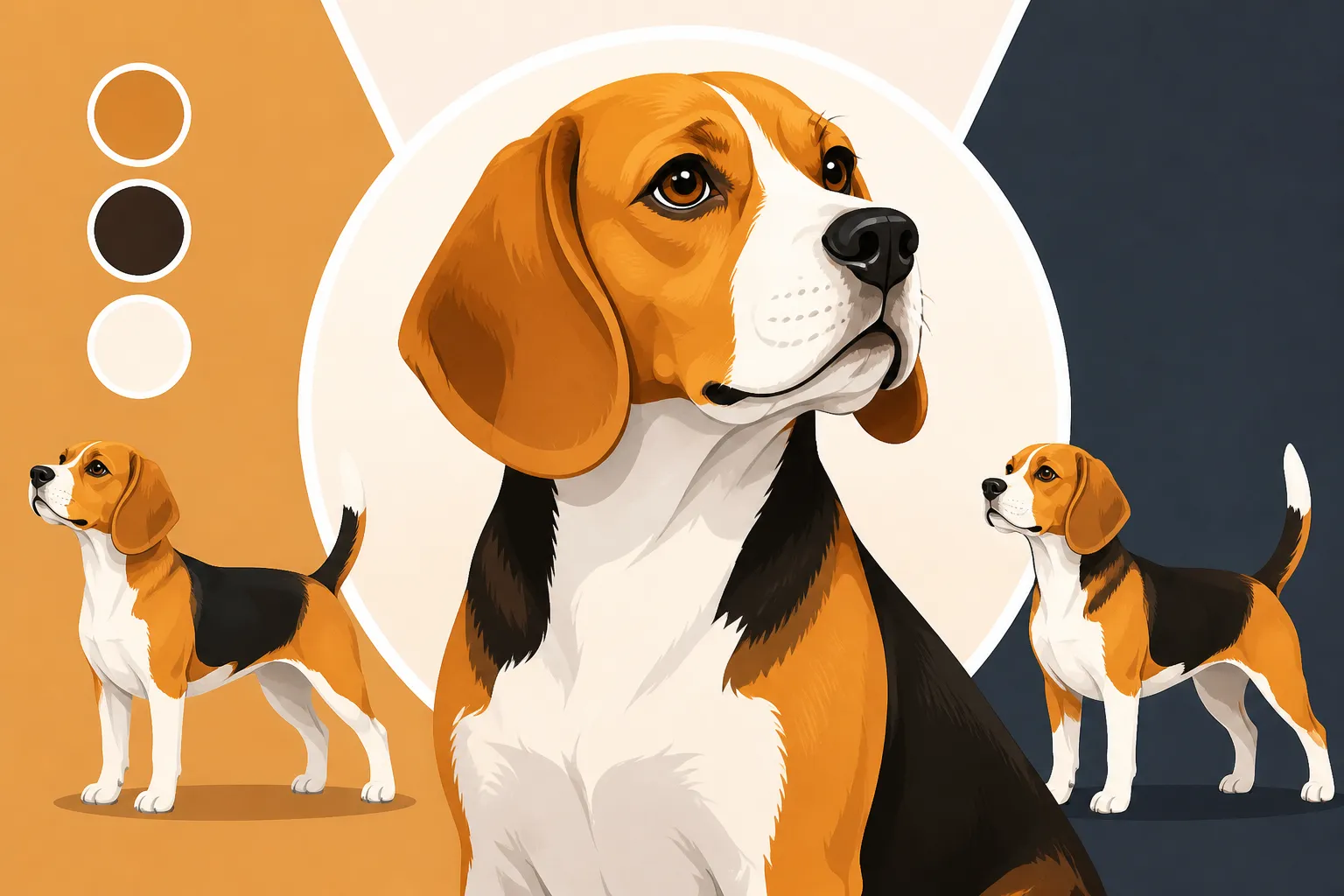
Beagle Colors, Markings and the Tricolor Standard
One of the most charming aspects of the beloved Beagle is their incredible array of colors and markings, often leading new owners to wonder what's "standard" and what's rare. It can be confusing trying to understand the kaleidoscope of patterns you see, from the classic tricolor to striking bicolors and even some less common variations. This comprehensive guide will walk you through the fascinating world of Beagle coat colors, explaining the genetics, the breed standard, and what these beautiful patterns mean for your furry companion.
The Classic Tricolor Beagle: An Enduring Image
When most people picture a Beagle, they often envision the iconic tricolor coat. It's the quintessential look, deeply rooted in the breed's history and instantly recognizable. But even within the "tricolor" label, there's a surprising amount of variation and evolution as your Beagle grows. It’s more than just three colors; it’s a living canvas that shifts and changes.
What Defines a Standard Tricolor
A standard tricolor Beagle is typically characterized by a combination of black, white, and tan. Picture a black "saddle" or blanket across their back and sides, contrasting sharply with crisp white on their chest, belly, legs, and often a blaze up their face. The tan points are usually found on their face, ears, legs, and under the tail. Think of those adorable tan eyebrows, cheeks, and the warm, coppery patches often found on their haunches and the insides of their legs.
This arrangement isn't static, though. When a Beagle puppy is born tricolor, those black patches are often very dark and distinct, almost like fresh ink. The tan might be subtle at first, just a hint around the eyes. As they mature, these colors can soften, blend, or become more pronounced. What was a solid black saddle might develop a slight brownish cast, especially if they spend a lot of time in the sun. The tan points can deepen in richness, becoming a more vibrant copper. Understanding Beagle Tricolor and the Black Saddle is key to appreciating this classic pattern. It’s the color combination that makes them look like a true hound, ready for a day in the field, even if their biggest hunt is for dropped snacks in your kitchen.
The Dynamic Nature of Tricolor Markings
It’s truly fascinating to watch a tricolor Beagle puppy grow, because their coat isn’t set in stone. Many tricolor pups are born with what’s known as a "blue" tricolor or "fading" tricolor. This isn't a true blue color, but rather a very diluted, almost gray-black, which eventually lightens or "breaks" to reveal the true black and tan. Others are born with a solid black and white appearance, and the tan points emerge later, sometimes even after several months. This is often referred to as "black, white, and tan" rather than a true tricolor at birth.
The tan patches, in particular, can be quite dynamic. They might start off as a light cream and mature into a deep, rich mahogany. Some Beagles will have very clear, distinct tan points, while others might have tan mottling or ticking mixed in with their white fur. Sunlight can also play a significant role; a Beagle who spends a lot of time outdoors might find their black fur taking on a reddish tint over time, making their tan points appear even more vivid by comparison. It's this beautiful, unpredictable evolution that makes each tricolor Beagle truly unique, even when they fit the classic mold. You'll hear owners discussing How Beagle Puppy Color Shifts With Age, and it's always a fun topic of conversation.
The Alluring World of Bicolor Beagles
While the tricolor Beagle might be the most common image, bicolors are equally stunning and have a charm all their own. These Beagles typically feature two distinct colors, almost always with white as one of the primary components. They offer a slightly different aesthetic, often appearing brighter or softer depending on the specific color combination.
Red & White: A Sunny Combination
Red and white Beagles are simply radiant. The "red" can range from a pale, almost golden hue to a deep, rich chestnut or mahogany. This warm color often blankets the Beagle's back and sides, with the crisp white typically covering the chest, belly, legs, and a prominent blaze on the face. Imagine a Beagle with a coat the color of a setting sun, highlighted by pure white – it’s a truly striking picture.
These bicolors often have a very clean, defined look, without the complexity of the tan points seen in tricolors. The contrast between the vibrant red and the stark white is quite eye-catching. Like the tricolors, the intensity of the red can vary with age and sun exposure. A puppy might start with a lighter red that deepens into a more vivid hue as they grow, or a dark red puppy might fade slightly into a softer ginger. Many people find this combination incredibly appealing, reminiscent of classic hunting hounds.
Lemon & White: A Softer Hue
Lemon and white Beagles are perhaps one of the most unique and charming bicolor combinations. The "lemon" color is a very pale, creamy yellow, almost like the inside of a lemon peel, hence the name. It's a soft, delicate hue that contrasts beautifully with their bright white areas. These Beagles often have a very gentle appearance, and their light coloring can make their expressive eyes stand out even more.
The lemon color can sometimes be so faint that it almost looks white, especially on a very young puppy. As they mature, the lemon patches become more distinguishable, though they typically remain quite light compared to a true red. This soft coloring is part of their allure, giving them a distinct look that stands apart from the more common tricolor or red and white patterns. If you're looking at a lemon Beagle puppy, you might be interested in reading about Lemon Beagles and Their Pale Markings to understand how this color develops and is officially recognized. Their charm is undeniable, making them sought-after companions.
Tan & White and Other Bicolor Variations
Beyond the popular red and white and lemon and white, there are other bicolor combinations, though they might be less frequently seen or harder to differentiate. Tan and white is another classic bicolor pattern, similar to red and white but with a more muted, earthy brown or fawn color instead of a vibrant red. The tan can range from a light, sandy shade to a deeper, more caramel tone, always set against clean white.
You might also encounter black and white Beagles, which, at first glance, can look like a tricolor without the tan. However, in a true black and white, there are no tan points at all; it's just stark black and white. Sometimes, these are actually "fading" tricolors where the tan hasn't appeared yet or is extremely minimal. Other rare bicolors can include blue and white (a diluted black, giving a grayish hue), although these are not standard and can be indicative of different genetic factors. Regardless of the specific shade, the crisp two-tone appearance of bicolor Beagles makes them incredibly striking and visually appealing.
Beyond Tricolor and Bicolor: Unique Markings
While tricolor and bicolor dominate the Beagle world, the breed's coat can present even more intricate and less common patterns. These unique markings add another layer of beauty and individuality, showcasing the broad genetic palette that makes each Beagle a distinct work of art.
Ticking: Those Adorable Freckles
Ticking refers to small, isolated spots of color on what would otherwise be a pure white background. Imagine a white leg, chest, or muzzle sprinkled with tiny dots of red, black, or lemon – like a dash of pepper on a clean plate. These spots are not large patches but rather fine specks that give a "freckled" appearance. Ticking is completely acceptable in the breed standard and adds a wonderful character to a Beagle's coat.
Often, you'll see ticking in Beagles that are predominantly white, with larger colored patches. The ticking will appear in the white areas, often more densely on the legs and muzzle. It can be quite subtle on a puppy and become more prominent as they age. For example, a red and white Beagle might develop red ticking, or a tricolor might show black or tan ticking on its white areas. This is why when you check out grooming supplies, especially for lighter coats, on sites like Chewy, you might see brushes or shampoos that highlight natural coat patterns. Ticking adds a charming, rustic appeal that many owners adore, connecting them visually to their hound heritage. In fact, if you've ever seen a "blue tick" or "red tick" Beagle, this is precisely what they're named for; a dense concentration of these small spots that give an overall impression of the color. Blue Tick and Red Tick Beagle Coats are a testament to this unique patterning.
Spotted and Pied Patterns
While ticking refers to small spots, some Beagles can display more pronounced "spotted" or "pied" patterns. A spotted pattern often means larger, irregular patches of color on a white background, without the clear "saddle" or blanket typical of a tricolor. Think of it as more like a dairy cow or a Dalmatian, but with Beagle colors. These spots might be black, red, or lemon, varying in size and distribution across the body.
A "pied" pattern is very similar, often referring to a coat that is predominantly white with large, irregular patches of color. The key difference here is the sheer dominance of white. These Beagles can look incredibly striking, with bold splashes of color seemingly "painted" onto their white canvas. While not as common as the standard tricolor, these patterns are not considered faults by major breed clubs if the colors themselves are acceptable. They present a beautiful, often more abstract, version of the Beagle's coat.
Solid Colors: Rarer Than You Think
True solid-colored Beagles are exceptionally rare, and for good reason—they are generally not recognized by breed standards. A solid-colored Beagle would be entirely one color, without any white markings, which is almost unheard of in the breed. Beagles were historically bred to have white tips on their tails, known as the "hound's flag," for visibility during hunts. This genetic trait is so deeply ingrained that a Beagle born without any white would be an extreme anomaly.
Even when you see what appears to be a "solid" black or "solid" red Beagle, upon closer inspection, you will almost always find small patches of white on their chest, chin, or paw tips. These minimal white markings still classify them as bicolors or even tricolors, albeit with very little white. The idea of Whether a Solid Colored Beagle Is Recognized usually comes down to this lack of white. If a breeder claims to have a "solid" Beagle, it's worth investigating closely, as it typically points to either a misunderstanding of the breed standard or a mix-breed heritage. The breed's genetic blueprint ensures some degree of white is almost always present.
Understanding the Genetics Behind Beagle Coats
The vibrant and varied coats of Beagles aren't just a matter of chance; they are the result of complex genetic interactions. Understanding a little about the genes at play can demystify why certain colors appear and how they combine to create the Beagle we know and love.
How Genes Influence Color Development
Beagle coat colors are primarily governed by several gene loci, or specific locations on a chromosome. The "A" locus, for instance, determines the distribution of black and tan pigment. For a Beagle to be tricolor, it needs specific alleles (versions of a gene) at this locus that allow both black (eumelanin) and red/tan (phaeomelanin) pigments to be expressed. The "B" locus affects whether black pigment is fully expressed or diluted to brown. A "bb" genotype, for example, would result in brown instead of black areas, leading to liver or chocolate bicolors/tricolors, though these are much rarer and often outside the standard.
The "E" locus controls the extension of black pigment. If a Beagle has "ee" at this locus, it will be entirely red or yellow, regardless of other genes, with no black present. This is how you get those beautiful lemon or red Beagles. The "S" locus determines white spotting patterns. Beagles are typically homozygous for a gene that produces extensive white spotting, which is why white areas are so prevalent and why Why the Tip of a Beagle Tail Is White is such a common and cherished trait. This genetic combination ensures the classic Beagle appearance is maintained, even with all the delightful variations. Responsible breeders utilize genetic testing to ensure they are producing healthy puppies with desired traits, which sometimes includes understanding the genetic basis for coat color.
The Role of the White Tip on the Tail
The white tip on a Beagle's tail, often affectionately called the "hound's flag," isn't just a charming aesthetic feature; it's a deeply ingrained and historically significant part of the breed. It's so important that the official breed standard specifically calls for it, and its absence can even be considered a fault in the show ring. But why is it there?
Genetically, the white tip is a manifestation of the piebald gene, which creates areas of unpigmented skin and hair (white). This particular allele, which is very common in Beagles, dictates where the pigment is expressed on the body. The last place for pigment to reach during embryonic development is often the extremities, and for Beagles, the very tip of the tail consistently remains white. Historically, this white tip was crucial for hunters. When Beagles were deep in tall grass or brush, hot on a scent trail, the only thing visible above the foliage might be that wagging white tail, allowing the hunter to track their dog. It’s a functional trait that became an iconic identifier for the breed, truly embedding it in their genetic makeup. So, next time you see that little white flag, remember its practical, historical roots!
What the Official Breed Standard Says About Color
Understanding the official breed standard is crucial for anyone interested in Beagles, whether you're looking for a show dog or simply curious about what makes a Beagle, well, a Beagle! The standard dictates not just conformation but also acceptable colors and markings, guiding breeders and judges alike.
Acceptable Colors According to Clubs
Most major kennel clubs around the world, including the American Kennel Club (AKC), have a surprisingly broad acceptance for Beagle colors, so long as they are "true hound colors." This flexibility allows for the beautiful diversity we see in the breed. The standard states that any true hound color is acceptable, often with the caveat that the tip of the tail should be white.
Commonly listed acceptable colors include:
- Tricolor: Black, white, and tan. This is the classic and most recognized combination.
- Bicolor: Red and white, lemon and white, tan and white, and occasionally black and white.
- Ticked: Any of the above colors with ticking (small spots) on the white areas, leading to patterns like blue tick or red tick.
It’s less about a strict list of named colors and more about the type of colors naturally occurring in hounds. The emphasis is on "true hound colors" to distinguish them from colors or patterns that might appear in other breeds but are not characteristic of a Beagle. For instance, while a blue tick Beagle is perfectly acceptable, a solid blue Beagle would not be. The focus is on the health and conformation of the dog, with color being an important but somewhat flexible component. You can learn more about The Beagle Coat as the Standard Describes It to get a full picture of what's expected.
Disqualifying Colors and Markings
While the Beagle standard is quite generous regarding color, there are certain colors and markings that are considered disqualifications or serious faults in the show ring. These usually relate to colors that are either extremely rare, indicative of mixed breeding, or considered detrimental to the breed's historical appearance and purpose.
Generally, any color not considered a "true hound color" would be a disqualification. This includes solid colors with no white whatsoever, which are virtually nonexistent in Beagles anyway. While dilute colors like blue or liver are sometimes seen, if they completely replace the standard black pigment, they might be considered a fault depending on the specific interpretation and how distinct the color is. For example, a blue tick Beagle is fine, but a solid blue Beagle is not.
Beyond color, specific markings or lack thereof can be faults. The most significant is the absence of a white tip on the tail. As discussed, this "hound's flag" is a hallmark of the breed, both visually and historically functional. A Beagle without this white tip would likely be penalized in the show ring. It's important to remember that these disqualifications are primarily for breeding and showing purposes. A Beagle with a non-standard color can still be a perfectly healthy, happy, and loving pet. However, for a serious breeder, understanding What the Beagle Standard Asked For a Century Ago and still asks for today is paramount to preserving the breed's integrity.
Caring for Different Beagle Coat Types
Regardless of their specific colors or markings, all Beagles share a similar coat type: a smooth, dense double coat designed to protect them from the elements during a hunt. However, some minor considerations can arise depending on how light or dark their fur is.
Grooming Needs Across Color Variations
The fundamental grooming needs for a Beagle remain consistent across all color patterns. They all possess that resilient, weather-resistant double coat, which is prone to shedding. Regular brushing is key to managing this shedding, especially during seasonal changes. A good deshedding brush or a rubber curry comb, readily available on platforms like Chewy, can work wonders in removing loose undercoat and keeping their topcoat shiny. Beagle Grooming and That Shedding Double Coat is a routine many owners quickly become familiar with.
While the basic care is the same, some owners find that certain colors show dirt or loose hair more prominently. For example, white areas on any Beagle can quickly show mud or grass stains, requiring more frequent spot cleaning. Darker coats might show dander more readily. The density of the coat, rather than its color, is the primary determinant of brushing frequency. All Beagles benefit from a bath every few weeks or as needed, using a gentle dog shampoo that won't strip their natural oils. Regular ear cleaning is also critical due to their long, drooping ears, which can trap moisture and debris, regardless of the ear leather's color.
Protecting Sensitive Skin Under Light Coats
While Beagle coats are generally robust, Beagles with extensive white or very light "lemon" coloring, particularly on their noses and around their eyes, can sometimes have more sensitive skin. Just like humans, pale skin is more susceptible to sunburn. If your lemon and white or predominantly white Beagle spends a lot of time outdoors, especially during peak sun hours or in sunny climates, you might need to take precautions.
This could involve applying dog-safe sunscreen to sensitive areas like the nose, ear tips, and any sparsely furred patches. You might also consider seeking shade during the hottest parts of the day or using protective dog apparel for extended outdoor adventures. Regular checks of their skin, especially on those lighter areas, for any redness, flaking, or irritation are also a good idea. While Beagles are generally hardy, recognizing that certain colorations can indicate a slightly different level of sun sensitivity is a small but important part of comprehensive care for your beloved hound.
Common Misconceptions About Beagle Colors
The world of dog breeding and pet ownership is rife with myths and misunderstandings, and Beagle coat colors are no exception. It's easy to fall for clever marketing or misinterpret genetic variations. Let's clear up a couple of the most prevalent misconceptions.
"Rare" Colors and Their True Value
One of the most common pitfalls for new puppy buyers is the allure of "rare" Beagle colors. You might see breeders advertising "rare blue Beagles," "solid black Beagles," or "silver Beagles" at inflated prices, claiming their uniqueness makes them more valuable. However, in the context of purebred Beagles, truly rare colors often indicate a deviation from the established breed standard, not an enhancement.
As discussed, the official Beagle standard accepts "any true hound color." Colors like "blue" (a diluted black) or "liver" (a diluted brown) are typically not preferred and, if lacking proper pigment in the nose and eye rims, can even be considered faults. A truly solid-colored Beagle with no white is almost genetically impossible for the breed and would likely indicate mixed ancestry. When a color is "rare" because it falls outside the breed standard, it doesn't add value; in a show or breeding context, it actually detracts from it. A reputable breeder focuses on health, temperament, and adherence to the breed standard, not on producing "rare" colors for a higher price tag. Always research the breed standard and question claims of rarity when looking for a puppy. Beagle Markings That Are Purely Cosmetic are far more common and acceptable than genuinely rare genetic oddities.
The Myth of the "Pocket Beagle" and Color
Another pervasive myth that often intertwines with discussions of Beagle size and color is the "Pocket Beagle." Historically, there were indeed very small Beagles, sometimes called "glove Beagles," that stood under 10 inches at the shoulder. However, the modern breed standard recognizes two varieties: those under 13 inches and those 13 to 15 inches. There is no official "Pocket Beagle" variety recognized by major kennel clubs today. Any breeder advertising a "Pocket Beagle" is likely using a marketing term for an undersized Beagle, which can sometimes come with health issues, or they may even be breeding mixed-breed dogs.
The color of a Beagle has absolutely no bearing on its size or whether it is a "Pocket Beagle." A tricolor Beagle is not inherently larger or smaller than a lemon and white Beagle. Size is determined by separate genetic factors, and sometimes by nutrition and overall health. The marketing of "Pocket Beagles" often focuses on their small size and sometimes on "rare" colors to create an illusion of exclusivity and justify higher prices. It's important for prospective owners to understand that a healthy, well-bred Beagle will fall within the standard size and color ranges, and any claims to the contrary should be met with skepticism. Focus instead on finding a healthy, well-socialized puppy from a breeder who prioritizes the welfare and integrity of the breed.
A Quick Guide to Beagle Coat Colors
To help summarize the various Beagle colors and patterns discussed, here's a handy table outlining the most common and recognized combinations within the breed standard.
| Color/Pattern Name | Primary Colors Involved | Description | Standard Status | Common Appearance |
|---|---|---|---|---|
| Tricolor | Black, White, Tan | Black "saddle" or blanket, white chest/belly/legs, tan points on face, ears, legs. Colors may shift with age. | Standard & Common | Classic hound look, often with distinct black, white, and tan patches. |
| Red & White | Red, White | Predominantly red (varying shades from golden to mahogany) on the body, with distinct white markings. | Standard & Common | Bright, often vibrant red patches against pure white. |
| Lemon & White | Lemon (pale yellow), White | Pale, creamy yellow markings on the body, contrasted with white. Can be very light and almost appear white on puppies. | Standard | Soft, gentle appearance with light yellow patches. |
| Tan & White | Tan (earthy brown), White | Earthy brown or fawn markings on the body, with distinct white. Milder than red, often more subdued. | Standard | Muted brown patches against white. |
| Black & White | Black, White | Stark black patches on a white base, with no discernible tan points. Can sometimes be "fading tricolors." | Standard | Clear, strong contrast between black and white. |
| Blue Tick | Blue (diluted black), White, Tick | White background heavily flecked with small, distinct blue (greyish) spots, often with larger blue patches. Sometimes with tan points. | Standard | "Freckled" or mottled grey-blue appearance on white areas. |
| Red Tick | Red, White, Tick | White background flecked with small, distinct red spots, often with larger red patches. Sometimes with tan points. | Standard | "Freckled" or mottled reddish appearance on white areas. |
| Ticking (General) | Any acceptable color, White, Tick | Small, isolated spots of color (like freckles) appearing on white areas of the coat. | Standard | Fine specks of color on white fur, often on legs/muzzle. |
| Solid Color (no white) | Single color (e.g., black) | Entirely one color with no white markings. | Not Standard/Rare | Extremely rare, almost always indicates a mixed breed if claimed. |
| Liver/Chocolate | Liver (brown), White, Tan/White | Brown pigment replaces black; nose and paw pads are liver colored. | Acceptable, but less common | Softer brown tones where black would typically be. |
As you can see, the Beagle is a breed of wonderful color and pattern variety, all within the framework of what makes them true, recognizable hounds. From the classic tricolor to the charming lemon and white, each Beagle carries a piece of history and genetics that makes them truly special. The most important thing, of course, isn't their color, but the merry, loving personality that shines through every one of them.
Disclaimer
This article is for general informational purposes only and does not constitute professional advice. Laws, prices and regulations vary by location and change over time. Consult a qualified professional for guidance on your specific situation.