The North Country Beagle That Disappeared
For many of us who adore Beagles today, it's easy to assume their lineage is a clear, unbroken line stretching back through history. But the truth is, the story of this merry hound is far more complex, filled with twists and turns, and even the disappearance of distinct lines that once played a crucial role. This guide delves into one such vanished chapter: the North Country Beagle, exploring its characteristics, its place in hound history, and the reasons why this once-prominent dog faded into obscurity, leaving behind only echoes in the breeds we cherish now.
Unearthing the North Country Beagle: A Glimpse into the Past
Imagine a world where the dog you knew, loved, and recognized as a 'Beagle' had slightly different features, a different hunting style, and perhaps even a different name. This is the reality when we look back at the origins of our beloved breed, particularly when we consider the North Country Beagle. It wasn't just a variant; it was, for a time, a significant branch of the Beagle family tree that ultimately didn't make it to the modern era as a distinct entity. Understanding this lost hound helps us appreciate the journey our Beagles have taken.
Defining a Vanished Hound: Physical Traits and Purpose
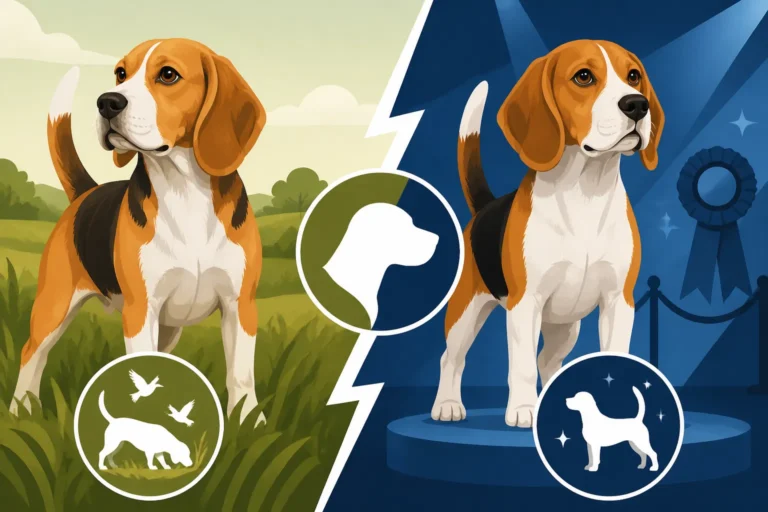
The North Country Beagle, also sometimes referred to as the Northern Hound, was generally described as a somewhat lighter-boned, more agile hound than its contemporaries, particularly the Southern Hound, which we’ll discuss later. It was believed to be quicker on its feet and possess a sharper, more piercing cry. Its coat was likely smooth and dense, built for navigating the varied terrain of the northern parts of England. While no photographs exist, historical texts suggest it was a medium-sized hound, perhaps around 12-15 inches at the shoulder, with a keen expression and an undeniable drive for the hunt. It was certainly not the heavy-set, short-legged hound some might envision when thinking of very old hunting breeds; it had a certain elegance to its build, favoring speed and endurance.
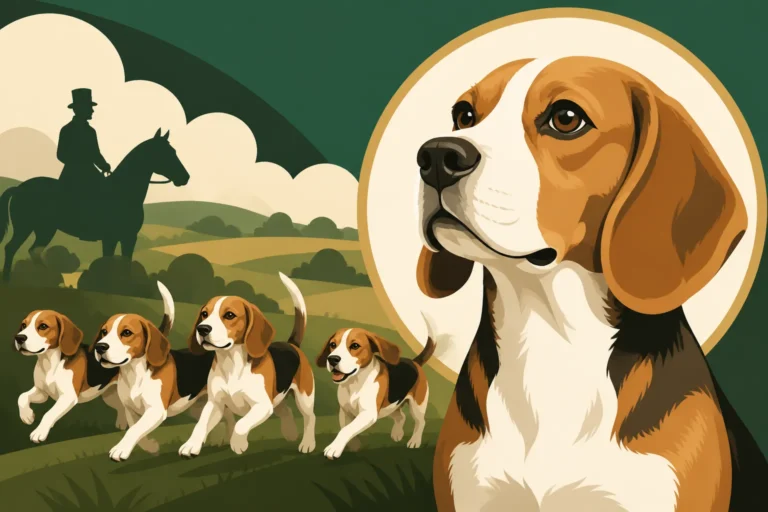
Their primary purpose, like all early Beagles, was hunting hare and rabbit. However, the North Country Beagle was renowned for its speed and ability to work in packs over open ground, often in the wilder, less enclosed landscapes of northern Britain. They were prized for their tireless pursuit and their clear, ringing voice, which allowed hunters to follow the chase on foot. These were working dogs through and through, bred for performance in the field, where their keen nose and swift pace were invaluable. The emphasis was on utility and efficiency, with aesthetics taking a backseat to pure hunting prowess.
Where the North Country Roamed: Geographic Roots and Role
The clue, of course, is in the name: the North Country Beagle was primarily found in the northern counties of England, such as Yorkshire, Northumberland, and Cumberland. These regions, with their expansive moors, dales, and often rugged terrain, provided the perfect environment for a hound that could cover ground quickly and tirelessly. Unlike the more cultivated, hedged landscapes further south, the northern countryside demanded a dog with resilience and stamina. This geographic specialization meant that the North Country Beagle developed certain traits that made it uniquely suited to its home turf.
For centuries, these hounds were an integral part of rural life, providing sport and a source of food for communities. Packs of North Country Beagles were maintained by gentry and farmers alike, each priding themselves on the quality and performance of their hounds. They weren't just pets; they were essential tools for hunting, contributing to the local economy and culture. The tradition of "beagling" – hunting hare on foot with a pack of hounds – was deeply ingrained in the northern social fabric, and the North Country Beagle was at its heart. These were the dogs that would lead their human companions across fields and through woods for hours, their melodious baying a constant soundtrack to the chase.
Early Beagles and the North Country Connection
Tracing the exact lineage of any ancient dog breed is a challenge, as formal record-keeping was inconsistent at best. However, it's widely believed that the North Country Beagle shares deep ancestral roots with other early English hounds, particularly the venerable Talbot Hound and The Southern Hound and Its Slow Deliberate Trail. These were the foundational breeds from which many of England's modern hounds emerged. The North Country Beagle likely developed as a regional variation, shaped by the specific demands of its environment and the preferences of its breeders. It was a product of selective breeding for certain characteristics – speed, voice, and endurance – that proved most effective in the northern hunting fields.
Early writers and naturalists often referred to these different types of hounds, noting their distinctions. For instance, John Mills, writing in 1845, touched on the various forms of Beagles present at the time, noting their differences in size, build, and hunting style. While he might not have used the term "North Country Beagle" explicitly in every instance, his descriptions certainly align with what we understand of this type. It was part of a diverse landscape of small hounds, each contributing to the rich tapestry of hunting dog history. These were the dogs that gradually caught the eye of breeders who sought to refine and standardize what would eventually become the modern Beagle. For insights into those early days, you might want to read What John Mills Wrote About Beagles in 1845.
The Shifting Sands of the Hunt: Why It Faded
The story of the North Country Beagle is one of evolution and adaptation, but also, ultimately, of decline. Like many specialized breeds, changes in societal preferences, hunting techniques, and breeding practices proved to be its undoing. It wasn't a sudden extinction event, but rather a gradual fading as other, more popular types of Beagles rose to prominence. This process highlights how deeply intertwined dog breeds are with human culture and agricultural practices.
The Rise of Faster, Finer Hounds
One of the primary reasons for the decline of the North Country Beagle was the emergence and growing popularity of other hound types that were considered either more stylish, faster, or simply better suited to the changing tastes of hunters. The English Foxhound, for example, gained immense popularity for its speed and stamina in hunting foxes, which became a more fashionable pursuit among the gentry. While the North Country Beagle was quick for a small hound, it couldn't compete with the raw pace of a foxhound over long distances. This shift in preference meant that breeding efforts and resources were increasingly directed towards these "finer" hounds.
Furthermore, within the Beagle family itself, other lines began to be favored. As the sport of beagling evolved, there was a growing desire for uniformity and specific traits that perhaps the diverse North Country type didn't consistently possess. Breeders started to focus on producing hounds with a more aesthetically pleasing appearance and a standardized hunting style, often drawing from Southern Hound stock. The pursuit of perfection, or at least a more predictable outcome, in breeding led to the gradual absorption or abandonment of less fashionable lines.
Evolution of Hunting Preferences and Quarry
The very nature of hunting in England underwent significant changes during the 18th and 19th centuries. As land use shifted, estates became more enclosed, and hunting became a more organized, formalized sport rather than simply a means of sustenance. This meant that the wild, open-country style of hunting with faster, free-ranging hounds like the North Country Beagle became less practical or desirable in many areas. Instead, hunters often preferred packs that worked more closely together, were easier to control in smaller, more confined spaces, and produced a more melodious "music" during the chase.
The primary quarry also played a role. While hare hunting remained popular, the methods changed. The desire for a longer, more drawn-out chase, where the hounds worked a scent meticulously, often favored dogs with a slower, more deliberate pace than the quicker North Country. This preference for a more methodical hunt, where scenting ability and persistence trumped outright speed, further diminished the appeal of the North Country Beagle. As a result, its unique skills, once highly valued, became less relevant in the evolving world of English hunting.
Breeding Trends and the Blending of Bloodlines
Perhaps the most significant factor in the North Country Beagle's disappearance was the deliberate blending of bloodlines. As breeders sought to improve characteristics like conformation, consistency in hunting, and even voice, they began interbreeding different types of Beagles and other small hounds. This was part of a broader trend in dog breeding to create more standardized, recognizable breeds. The North Country Beagle, while distinct, was not immune to this process. Its genes were likely absorbed into other emerging Beagle lines, losing its separate identity in the pursuit of a more unified "Beagle" type.
The goal was to create a dog that excelled in all aspects of beagling, rather than one specialized for a particular region or style. This meant taking the best traits from various strains and combining them. While this process ultimately led to the development of the modern Beagle, it came at the cost of the North Country Beagle's distinct existence. It wasn't that the dogs died out without progeny, but rather that their unique genetic markers and defining characteristics were diluted and eventually subsumed. This blending was key to how the modern Beagle was built, as you can explore in How the Modern Beagle Was Built in the 1830s.
Rivals and Successors: The Emergence of the Modern Beagle
As the North Country Beagle began to fade, other lines and individuals rose to prominence, shaping the breed we recognize today. This period was marked by significant efforts to standardize and refine the Beagle, driven by passionate breeders who sought to create a consistent and exemplary hound. The shift wasn't just about physical traits; it was also about establishing a clear vision for the breed's purpose and conformation.
The Ascendancy of the Southern Hound
The Southern Hound was a much older, heavier, and slower breed than the North Country Beagle, known for its deep bay and exceptional scenting ability. While it lacked the speed of its northern counterpart, it possessed an undeniable persistence and a methodical approach to tracking. As hunting preferences shifted towards a more deliberate, scent-driven chase, the traits of the Southern Hound became increasingly desirable. Its influence spread, particularly in the southern parts of England, and its bloodlines were heavily utilized in the creation of many subsequent hound breeds, including the foundational stock of what would become the modern Beagle.
The Southern Hound's robust build and powerful nose were highly valued for working thick cover and following a cold trail. Its deep, resonant voice was also considered more melodious by some hunters, adding to the aesthetic pleasure of the chase. This made it a formidable competitor to the North Country Beagle, especially as hunting grounds became more varied and demanded less sheer speed and more tracking prowess. The Southern Hound, by virtue of its enduring utility and popularity, played a pivotal role in shaping the genetics of Beagles that followed. To learn more about this ancient breed, check out The Southern Hound and Its Slow Deliberate Trail.
Reverend Honeywood's Vision and the Essex Pack
One of the most influential figures in the early development of the modern Beagle was Reverend Phillip Honeywood of Essex. Honeywood, active in the 1830s, is often credited with establishing what many consider to be the first truly modern pack of Beagles. His Essex pack was renowned for its uniformity, hunting ability, and delightful conformation. Unlike the varied types that had existed before, Honeywood's Beagles were bred with a consistent vision, emphasizing both performance in the field and a pleasing appearance. He was instrumental in demonstrating that a small hound could be both an excellent hunter and a dog of refined type.
Honeywood's meticulous breeding practices and the fame of his pack set a new standard for Beagles. His dogs were smaller, often ten inches or less, and were known for their pure white coats, a striking contrast to the more varied colors of earlier hounds. This emphasis on a distinct, uniform type marked a turning point. Breeders began to seek out and emulate the characteristics of the Essex pack, further solidifying a particular vision for the breed. This move towards standardization inevitably pushed aside lines that did not fit the new mold, including the North Country Beagle. You can delve deeper into his significant contribution by reading Reverend Honeywood's Essex Pack.
Standardizing the Breed: Thomas Johnson's Influence
While Reverend Honeywood laid crucial groundwork, the full standardization of the Beagle as we know it today was a more gradual process, with figures like Thomas Johnson playing a significant role. Johnson, an avid hunter and breeder, recognized the need for a clear breed standard to guide breeders and judges. His work, alongside that of others, focused on defining the ideal Beagle in terms of size, conformation, temperament, and hunting ability. This period saw the formalization of show rings and the establishment of kennel clubs, which further cemented the importance of a uniform breed type.
The establishment of the National Beagle Club in 1887 was a major milestone, providing a platform for breeders to discuss standards, organize field trials, and promote the breed. This era favored consistent, predictable breeding, and the diverse, regional North Country type simply didn't fit into the new, standardized framework. The focus shifted to creating a Beagle that could excel in both the show ring and the field, leading to the selection pressures that ultimately formed the two varieties we recognize today: the 13-inch and 15-inch Beagles. This careful selection and standardization meant that many of the traits of the older, regional types were either incorporated or simply left behind. To learn more about how this happened, explore Thomas Johnson and Beagles Bred to Look Right.
A Whisper in the Wind: The North Country's Lasting Legacy
Even though the North Country Beagle, as a distinct entity, is no longer with us, its story is far from irrelevant. Its existence and eventual disappearance offer valuable insights into breed evolution, the impact of human preferences on animal populations, and the rich history that underpins our modern companion animals. Every dog breed carries the echoes of its ancestors, and the Beagle is no exception.
Genetic Echoes in Today's Beagles
While the specific bloodline of the North Country Beagle has been absorbed, it's highly probable that some of its genetic material flows through the veins of modern Beagles. The traits that made it a successful hunter – its agility, speed, and keen nose – would have been valuable assets for any breeder aiming to create a top-performing hound. Even if its physical distinctiveness faded, its genetic contributions to the overall Beagle gene pool would have persisted. Many breeders in the past exchanged dogs, and regional types were often crossed to introduce desired characteristics or avoid inbreeding.
This means that the tenacity, intelligence, and even the vocalizations we appreciate in our Beagles today might carry a whisper of their North Country ancestors. Just as Beagle-Type Hounds Across Twenty-Five Centuries indicates a deep history for the breed, the North Country Beagle was a part of that long, evolving chain. It's a reminder that dog breeds are not static creations but dynamic entities constantly shaped by both natural selection and human intervention. Modern breeders conducting DNA testing might inadvertently uncover traces of these older, regional types, offering a fascinating link to the past.
Documenting a Disappeared Breed: Historical Accounts
Our understanding of the North Country Beagle largely comes from historical documents, sporting prints, and the writings of naturalists and hunters from past centuries. These accounts, though sometimes vague or subjective, paint a picture of a lively, efficient hunting dog. They describe its hunting style, its voice, and its geographical prevalence. Such historical records are invaluable because they are often the only remnants we have of breeds that didn't make it to the modern era. They serve as a testament to the diversity of working dogs that once roamed the British Isles.
Historians and canine enthusiasts continue to pore over these texts, trying to piece together the full story of breeds like the North Country Beagle. This ongoing research helps us understand the complex processes of breed formation, adaptation, and disappearance. It also highlights the subjective nature of what gets preserved and what fades into the annals of history. The tales of these vanished hounds remind us that every breed has a story, and some are more complete than others.
Lessons from a Lost Line: Understanding Breed Evolution
The story of the North Country Beagle is a powerful lesson in breed evolution. It demonstrates how dog breeds are not fixed categories but rather fluid populations constantly responding to environmental pressures, human needs, and cultural shifts. The disappearance of this specific type wasn't a failure, but rather a consequence of changing times and the deliberate choices made by breeders to create a more standardized, versatile Beagle. It highlights the importance of adaptability in the face of evolving demands.
| Characteristic | North Country Beagle (Historical) | Southern Hound (Historical) | Modern Beagle (Approximate) |
|---|---|---|---|
| Build | Lighter, more agile | Heavier, more robust | Medium-boned, sturdy |
| Speed | Quicker, faster hunter | Slower, more deliberate | Agile, good endurance |
| Scenting | Excellent, but perhaps less patient | Exceptional, methodical | Excellent, highly driven |
| Voice | Sharper, piercing cry | Deep, resonant bay | Merry, musical bay or howl |
| Geographic Focus | Northern England | Southern England | Widespread |
| Hunting Style | Faster pursuit over open ground | Slower, meticulous tracking | Versatile, pack-oriented |
| Current Status | Disappeared as distinct type | Disappeared as distinct type | Thriving, popular companion |
Today, Beagle owners are fortunate to have access to a wealth of information and resources, unlike the scattered historical records that remain for the North Country Beagle. Whether you're looking for specialized training equipment, high-quality food, or even just fun toys for your modern Beagle, online retailers like Chewy offer an incredible selection. This stark contrast underscores how much the world of dog ownership has transformed, from purely utilitarian hunting partnerships to cherished family members. Even for breeds that are no longer with us, like the North Country Beagle, their journey helps us appreciate the resilience and adaptability of the canine species, and the deep, enduring bond between dogs and humans. For instance, finding the right harness for a Beagle, which is crucial for protecting its back and preventing escapes, is now incredibly easy to do thanks to comprehensive online stores like Chewy. This accessibility ensures that modern Beagles, with their lineage stretching back through these lost breeds, receive the best possible care. Understanding where our Beagles come from, even the branches that didn't survive, enriches our appreciation for these incredible dogs. The spirit of the chase, the keen nose, and the merry disposition, these are all elements that have been honed over centuries, including contributions from those hounds now only remembered in history.
Disclaimer
This article is for general informational purposes only and does not constitute professional advice. Laws, prices and regulations vary by location and change over time. Consult a qualified professional for guidance on your specific situation.