Beagle-Type Hounds Across Twenty-Five Centuries
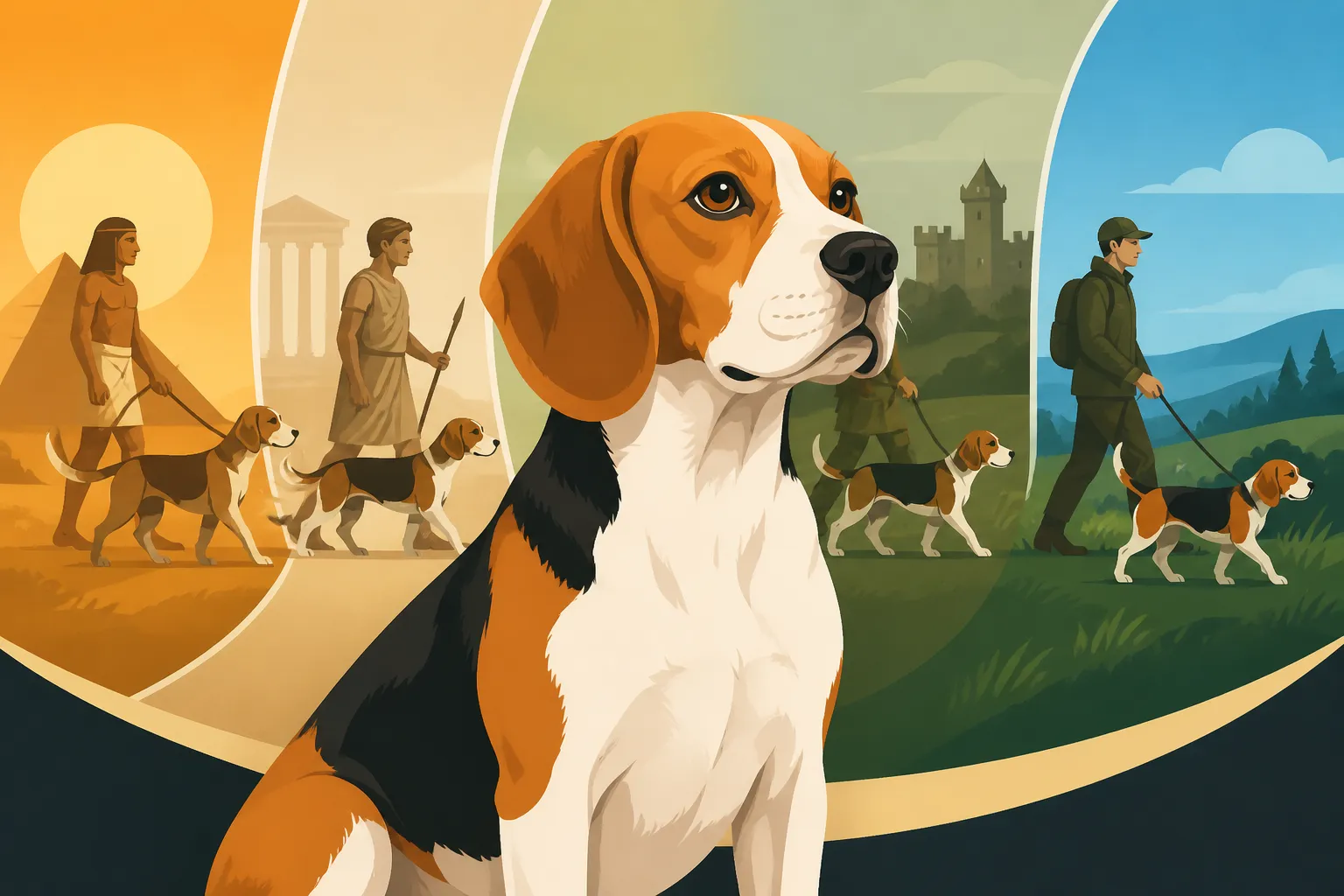
Have you ever looked at your Beagle, curled up on the couch, snoring contentedly, and wondered where that incredible nose and those deep, soulful eyes came from? It’s easy to think of breeds as static, always having been as they are, but the truth is, the Beagle we know today has a lineage stretching back through millennia, a testament to humanity's enduring partnership with the canine. This guide will take you on a fascinating journey through twenty-five centuries of Beagle-type hounds, tracing their origins from ancient hunting companions to the beloved family members they are today.
Tracing the Earliest Scent Hound Ancestry
Long before the word "Beagle" ever graced a page, or even before England was a unified kingdom, dogs that resembled our modern hounds were already making their mark. These were not Beagles as we understand them, but their distant, ancient ancestors – dogs bred for their unparalleled sense of smell and their tireless drive to follow a scent trail. It's a history rich with shadowy figures and fascinating connections that underscore just how deeply ingrained these traits are in our Beagles today.
Pre-Roman and Roman Hound Influence
The story often begins with the Roman invasion of Britain in 43 AD. The Romans certainly brought their own sophisticated hunting dogs with them, many of which would have been scent hounds. Imagine sturdy, medium-sized dogs, built for endurance, with keen noses, working alongside their masters in the vast, untamed forests of ancient Europe. These Roman hounds undoubtedly interbred with the native dog populations already present in Britain, which themselves likely included various types of hunting dogs. This early mingling of bloodlines laid a foundational genetic groundwork.
However, it's also important to acknowledge that the British Isles weren't devoid of skilled hunting dogs before the Romans arrived. Celtic tribes, for instance, were renowned hunters and would have relied on their own local varieties of hounds for centuries. These native dogs, adapted to the specific terrain and quarry of the British landscape, brought their own unique strengths to the evolving canine gene pool. The Roman influence wasn't a blank slate but rather another layer in an already complex tapestry, contributing to the development of robust, scent-driven dogs that could track game through diverse environments.
The Mystery of the Talbot Hound
Fast forward several centuries, and we start to see mentions of a legendary hound that many believe is a key ancestor to several modern scent hound breeds, including the Beagle: the Talbot Hound. The Talbot, often depicted in medieval art and heraldry, was a powerful, white, slow-trailing hound with a deep chest and a formidable nose. While no definitive Talbot Hound exists today, its image is pervasive, symbolizing the ideal scent hound of the Middle Ages.
The Talbot was likely brought to England by William the Conqueror in 1066 or perhaps even earlier by Norman settlers. These dogs were prized for their ability to follow a cold trail for long distances, making them invaluable for hunting deer and other large game. Their influence was so significant that their name became almost synonymous with "hound" itself for a time. While the pure Talbot line eventually faded, its genetic legacy undoubtedly lived on, passed down through generations of hunting dogs. Many of the characteristics we still admire in modern scent hounds – that unwavering focus on a trail, the robust build, and the incredible stamina – can be traced back to these ancient, revered animals. You can delve more into its history in The Talbot Hound and the Southern Hound.
The Rise of Distinct Hound Types in Medieval Europe
As the centuries progressed, hunting became a more formalized sport, and different regions began to develop specific types of hounds tailored to their local terrain and desired quarry. This period saw the emergence of various distinct hound lines, each contributing in its own way to the eventual development of the Beagle-type dog.
The Southern Hound: A Slower, Sturdier Tracker
One of the most direct ancestors of the modern Beagle is generally considered to be the Southern Hound, also known as the "Southen Hound." This large, heavy-boned, deep-voiced hound was common in England from at least the 12th century, flourishing through the medieval period and beyond. Southern Hounds were known for their deliberate, methodical tracking ability, possessing an almost unrivaled nose for following scent, even if it was several hours old.
Their physical characteristics reflected their purpose: large, pendulous ears that helped gather scent, a strong, heavy build for endurance, and a slow, mournful bay that could be heard over long distances. They weren't built for speed but for persistence, meticulously unraveling complex scent trails through dense undergrowth. While perhaps not as flashy as faster hounds, their unwavering dedication to the hunt made them indispensable to medieval noblemen and common hunters alike. Their bloodline is a crucial thread in the Beagle's tapestry, instilling that incredible scenting prowess we still marvel at today.
The North Country Beagle and Its Disappearance
Alongside the Southern Hound, another, slightly more agile type of hound began to emerge, particularly in the northern parts of England: the North Country Beagle. This hound was smaller and faster than the Southern Hound, though still a formidable tracker. It was better suited for hunting hares and smaller game across the open fells and dales of the north. Its size and agility allowed it to navigate different terrains more easily, making it a versatile hunting companion.
However, unlike the Southern Hound, which eventually blended into later hound types, the North Country Beagle as a distinct entity gradually faded out. Its decline was partly due to changing hunting practices and the eventual preference for more standardized breeds. While its direct line may have vanished, its influence, particularly in terms of size and speed, likely contributed to the development of the smaller, faster "beagle-type" dogs that would eventually become the modern Beagle. It's a reminder that not all ancestral lines survive intact, but their traits often endure through selective breeding and intermingling with other developing types.
The Emergence of English "Beagle" Types
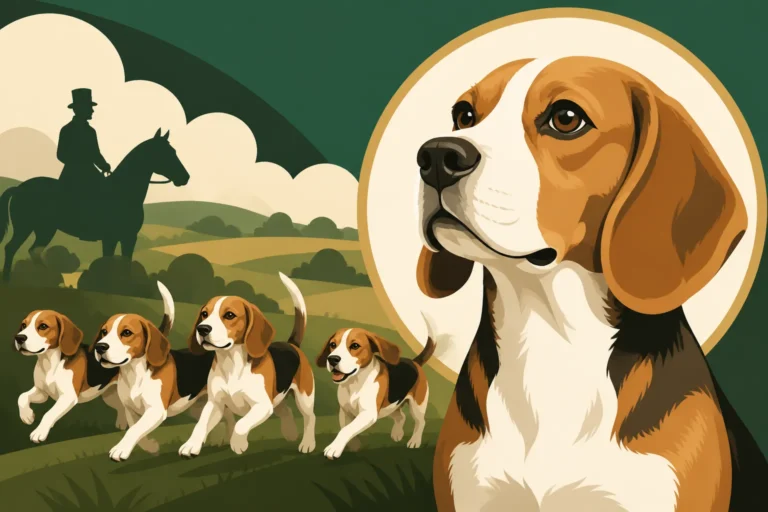
By the 16th and 17th centuries, references to smaller hounds explicitly called "Beagles" began appearing in English literature and historical records. These dogs were much closer in size and appearance to what we recognize as a Beagle today, though still with considerable variation. They were primarily used for hunting hare, a sport known as "beagling," which was often followed on foot rather than on horseback.
Pocket Beagles and Their Miniature Stature
One of the most fascinating aspects of this period was the existence of "Pocket Beagles." As the name suggests, these were truly miniature hounds, so small they could purportedly be carried in a hunter's saddlebag or even a coat pocket. Imagine a tiny dog, perhaps only 8-10 inches tall, but with all the drive and nose of its larger cousins. These little hounds were highly prized for hunting small game in dense cover where larger dogs struggled.
The appeal of the Pocket Beagle was not just their novelty but their practical application in specific hunting scenarios. They could squeeze through thickets and dense undergrowth, flushing out small game with their determined bay. While the original Pocket Beagle line eventually died out, the desire for a smaller, manageable hound with excellent scenting abilities remained. Modern breeders sometimes attempt to recreate the "Pocket Beagle" size, but it's important to understand that these are usually smaller Beagles, not a direct continuation of the historic miniature line. They serve as a wonderful example of the diversity within the early Beagle population, driven by specific hunting needs.
Reverend Honeywood's Essex Pack and Standardization Efforts
The 18th and particularly the 19th centuries saw significant efforts to standardize dog breeds. Among the most influential figures in this movement for Beagles was Reverend Phillip Honeywood of Gosfield, Essex. Honeywood established a pack of Beagles in 1830 that is often credited with laying the foundation for the modern breed. His pack was known for its uniformity and hunting prowess, marking a pivotal moment in the Beagle's history.
Honeywood focused on breeding Beagles that were consistent in size, temperament, and hunting ability. His efforts were crucial in moving away from a collection of "beagle-type" hounds towards a more defined, recognizable breed. It was from packs like Honeywood's that the breed began to take on the characteristics that would eventually be formalized in the breed standard. This period saw a shift from purely functional breeding to a more selective process, aiming for both working ability and a consistent physical appearance. His influence cannot be overstated, as he essentially provided a blueprint for what a "Beagle" should be, helping to cement the breed's identity in the eyes of enthusiasts and hunters alike. You can explore more about his work in Reverend Phillip Honeywood and His Essex Pack.
The Modern Beagle Takes Shape in the 19th Century
The 19th century was a transformative era for many dog breeds, and the Beagle was no exception. With growing interest in dog shows and formalized breeding, the characteristics of the Beagle became more defined, moving closer to the two varieties we recognize today.
Thomas Johnson's Influence and Breeding for Appearance
While Reverend Honeywood focused on working ability, another key figure, Thomas Johnson, a breeder from Shropshire, became influential in the latter half of the 19th century. Johnson was instrumental in establishing the modern appearance of the Beagle. He focused on refining the breed's aesthetics, bringing a more uniform and recognizable look to the dogs while still maintaining their keen scenting abilities. His breeding philosophy helped shape the Beagle into a dog that not only excelled in the field but also possessed the charming conformation that would make it popular in the show ring.
Johnson’s work, alongside other dedicated breeders, aimed to create a Beagle that could "win" – both on the hunt and in terms of physical judging. This was a critical step in transitioning the Beagle from a purely utilitarian hunting dog to a companion and show dog, appealing to a wider audience. The balance between maintaining working traits and refining appearance is a delicate one, and Johnson's influence helped solidify the Beagle's dual appeal. This dual focus meant that even as Beagles became popular pets, their inherent drive and nose remained intact, ready to spring into action whenever a tempting scent presented itself.
The National Beagle Club and Breed Standardization
The formal recognition and standardization of the Beagle truly took hold with the establishment of the National Beagle Club in America in 1887. Before this, "Beagle" could refer to a wide array of small hounds. The club’s founding marked a concerted effort by enthusiasts to create a definitive breed standard, outlining the ideal physical traits and temperament of the Beagle. This meant precise guidelines for everything from ear length and tail carriage to coat color and body structure.
This standardization was crucial for the breed's future, ensuring that breeders had a clear goal in mind and that the characteristics unique to the Beagle were preserved and propagated. The club's work facilitated organized breeding programs, dog shows, and field trials, which further refined the breed and cemented its place in canine history. Without such dedicated efforts, the Beagle might have remained a varied type of hunting hound rather than a distinct, globally recognized breed. The club also played a vital role in popularizing the breed beyond hunting circles, introducing it to families looking for a lively, affectionate companion. You can learn more about this in The National Beagle Club Founded in 1887.
The Beagle's Journey to America and Enduring Popularity
The Beagle's story isn't confined to the rolling hills and hunting grounds of England. Its cheerful disposition, compact size, and incredible scenting ability made it a perfect candidate for companionship and hunting in the burgeoning American landscape.
Early American Beagles and Rabbit Hunting
Beagles were first brought to America in significant numbers around the mid-19th century. American farmers and hunters quickly recognized their value, particularly for rabbit hunting. The sport of "beagling" found a new, enthusiastic home in the United States, with packs of Beagles enthusiastically trailing rabbits through fields and woodlands. These early American Beagles, often a mix of various English lines, were primarily valued for their working ability. They needed to be hardy, intelligent, and possess an unwavering focus on scent.
The American landscape, with its vast tracts of wilderness and abundance of small game, was ideally suited for the Beagle's talents. Unlike large foxhounds, Beagles were manageable for the average farmer and provided excellent sport on foot. Their persistent bay and ability to work in a pack made them highly effective hunting partners. The traditions of rabbit hunting with Beagles became deeply ingrained in American rural culture, a legacy that continues in many areas today. Their cheerful demeanor and relatively small size also began to win them favor as household pets, even among those who didn't hunt.
The Two Beagle Varieties: 13-inch and 15-inch
As the breed developed in America, a distinction began to emerge, eventually leading to the recognition of two height varieties: the 13-inch and the 15-inch Beagles. This differentiation was based purely on height at the shoulder, with all other breed characteristics remaining the same. The 13-inch variety typically weighs less and has a slightly more compact build, while the 15-inch variety is a bit larger and often more robust.
This classification allowed breeders and enthusiasts to maintain specific lines that excelled at different tasks or simply appealed to different preferences. While the height difference is significant in the show ring, in everyday life, both varieties exhibit the classic Beagle temperament and traits. Whether a Beagle falls into the 13-inch or 15-inch category, they are still fundamentally the same merry, scent-driven hound. Understanding this distinction is important for anyone considering a Beagle, as it speaks to the thoughtful development of the breed over time, catering to specific desires within the overall framework of the Beagle standard. You can learn more about these differences in The Thirteen Inch Beagle Variety and The Fifteen Inch Beagle Variety.
The Beagle's Enduring Appeal in Modern Homes
From ancient scent trailers to modern-day family members, the Beagle has truly found its niche. Today, the Beagle consistently ranks among the most popular dog breeds in many countries, and it's not hard to see why. Their cheerful, outgoing personalities, combined with their manageable size and expressive faces, make them incredibly appealing pets. They adapt well to various living situations, from suburban homes with yards to apartments, provided their exercise and mental stimulation needs are met. Many owners find that providing their Beagle with stimulating activities, such as puzzle toys or regular scent games, helps satisfy their innate drive. Online retailers like Chewy offer a fantastic array of such items, making it easy to keep your Beagle happy and engaged.
The Beagle's deep history as a pack animal also means they often thrive in multi-dog households and generally get along well with children and other pets, though proper introductions are always key. However, their strong hunting instincts, inherited from those ancient hounds, mean they are still highly driven by scent. This is why Why a Beagle Should Never Be Off Leash Unfenced is such crucial advice – that powerful nose will lead them wherever a compelling smell takes them, regardless of your calls. The modern Beagle is a wonderful blend of its working past and its beloved present, a testament to centuries of canine evolution and human companionship. Finding the right food and toys can be a journey, but platforms like Chewy make it simple to explore options that suit your specific Beagle's needs, keeping them healthy and happy for years to come.
The journey of the Beagle from its earliest ancestors to the dogs we cherish today is a story of adaptation, purpose, and enduring companionship. Each step in their history has contributed to the unique traits that make Beagles so special: that incredible nose, the melodious bay, the unwavering optimism, and the boundless love they offer their human families.
Here's a quick look at how the Beagle's journey progressed over time:
| Era/Period | Key Hound Types/Developments | Defining Characteristics | Impact on Modern Beagle |
|---|---|---|---|
| Ancient (Pre-Roman to 10th Century) | Early Celtic/Roman hunting dogs, Talbot Hound | Strong scent drive, endurance, robust build | Foundation of scenting ability and stamina |
| Medieval (11th-16th Century) | Southern Hound, North Country Beagle | Deliberate tracking, deep voice, smaller hounds | Strong nose, baying, diversity in size/speed |
| Early Modern (16th-18th Century) | "Pocket Beagles," early English "Beagles" | Miniature size, focus on hare hunting, pack work | Compact size, specific hunting focus |
| 19th Century | Reverend Honeywood's pack, Thomas Johnson's breeding, National Beagle Club | Standardization of appearance, formal breed standard | Consistent looks, temperament, recognized breed |
| 20th Century to Present | 13-inch and 15-inch varieties, widespread popularity | Family companion, continued working ability, health focus | Adaptable pet, two distinct sizes |
Choosing a healthy, well-adjusted Beagle often starts with finding a reputable breeder who understands the breed's history and genetic predispositions. For instance, knowing about Musladin-Lueke Syndrome and the Beagle DNA Test can help ensure you're getting a puppy from a responsible lineage. Modern owners benefit from readily available resources for their pets, whether it’s specialized food, training tools, or comfortable beds; resources like Chewy offer comprehensive selections that cater to every Beagle need.
Disclaimer
This article is for general informational purposes only and does not constitute professional advice. Laws, prices and regulations vary by location and change over time. Consult a qualified professional for guidance on your specific situation.