How the Modern Beagle Was Built in the 1830s
Before the 1830s, the term "Beagle" was rather broad, describing a general type of small hound used for hunting hares, without the kind of consistent appearance or temperament we recognize today. If you've ever looked at an old engraving of a "Beagle" from centuries past and wondered why it looks so different from the energetic, tri-colored dog bouncing around your living room, you're not alone. This guide aims to pull back the curtain on that pivotal era, showing how the concerted efforts of dedicated breeders in the 1830s began to shape the distinct, standardized Beagle we cherish, moving it from a loose collection of hunting hounds towards a recognized and adored breed.
The Ancestral Haze: Beagles Before Standardization
For centuries, "Beagle" was more of a functional description than a breed name with a strict standard. These small hounds were valued for their exceptional scenting abilities and their merry disposition in the field, but their physical characteristics could vary wildly. Imagine a time when you might encounter a pack of "Beagles" that ranged drastically in size, coat color, and even ear length, all hunting together in a farmer's field. Their primary purpose was utility, not uniformity.
The Melting Pot of Early Hound Types
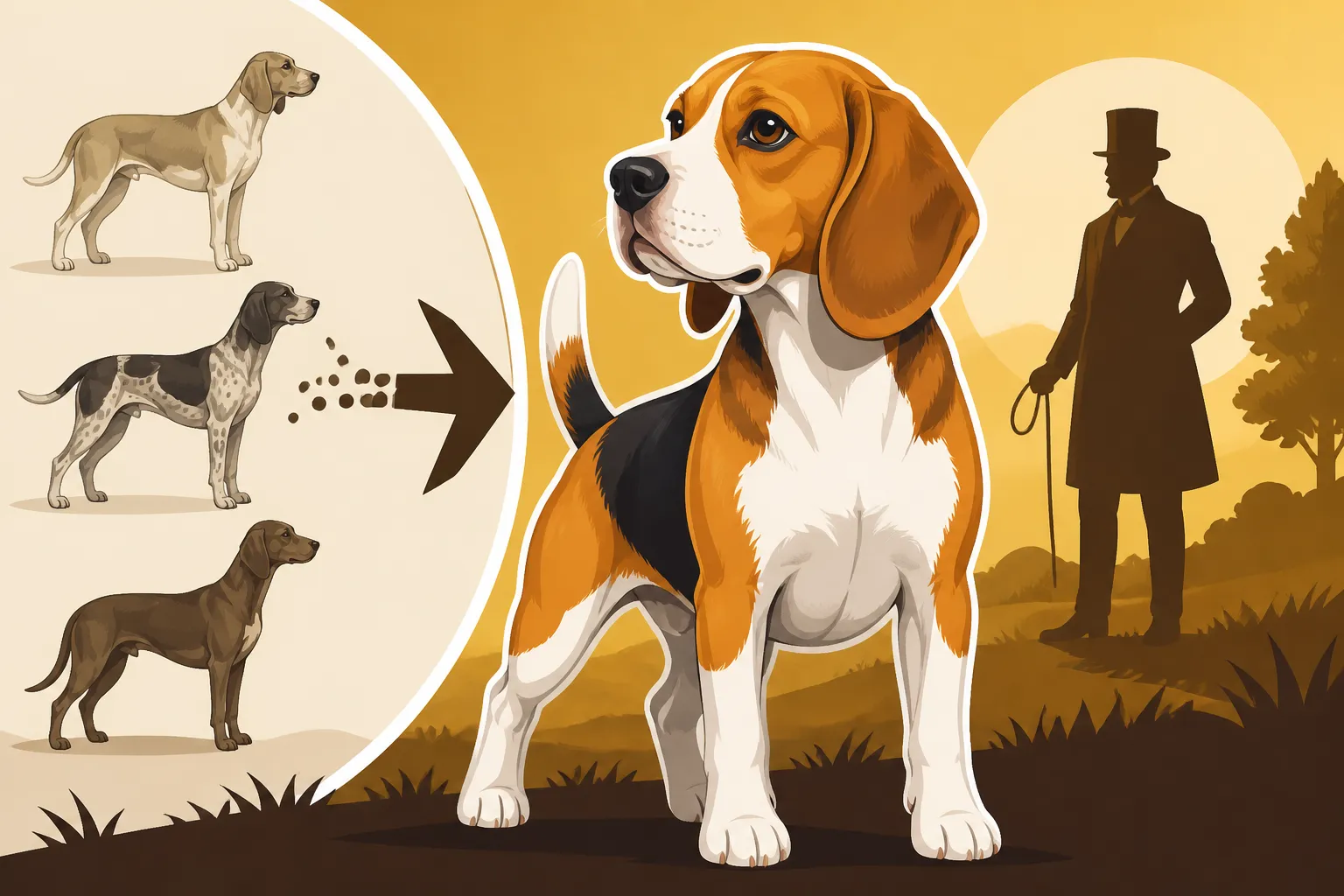
Before the structured breeding efforts of the 19th century, the genetic tapestry of what would become the modern Beagle was woven from various ancient hound types. You had your larger, slower Southern Hounds, known for their deep voices and deliberate tracking, alongside the quicker, more agile North Country Beagles. These were not distinct breeds in the way we think of them today but rather regional variations adapted to different hunting terrains and quarry. The qualities that made a good hound – a keen nose, endurance, and a robust constitution – were prioritized over aesthetic consistency. It was less about adhering to a specific look and more about whether the dog could do its job tracking rabbits or hares through dense underbrush.
Owners and hunters would often breed dogs that excelled in their local hunting conditions, sharing pups with neighbors and friends, slowly mixing these disparate lines over generations. This led to a wide array of looks and builds, all under the umbrella of "Beagle-like" hounds. The key was their ability to follow a scent trail persistently, giving voice when they found it, so the hunters could keep up on foot. The focus was entirely on working capability. You might see a tall, leggy hound next to a shorter, more compact one, both considered "Beagles" if they hunted well. Our modern understanding of breed types simply didn't exist in the same way. The influence of dogs like The Talbot Hound in a Beagle's Ancestry and The Southern Hound and Its Slow Deliberate Trail was foundational, providing the raw material for future development.
The Functional Focus of Medieval and Early Modern Beagles
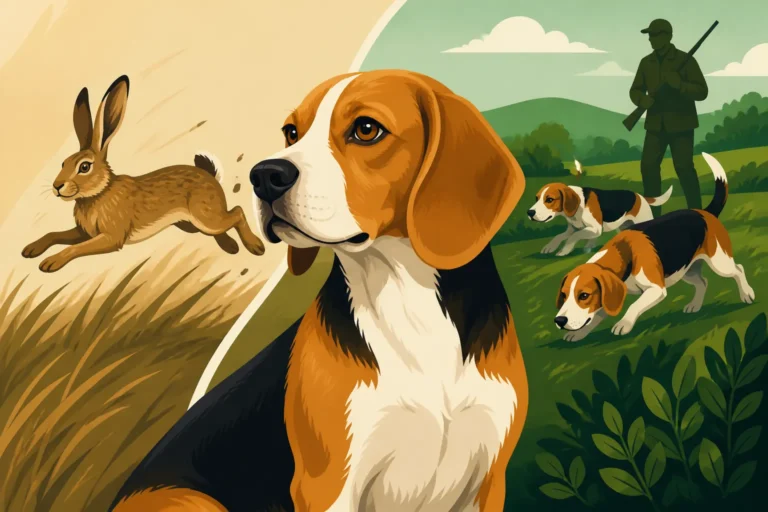
In the medieval period and well into the early modern era, Beagles were essentially working-class dogs. They were integral to the sport of "beagling," which involved tracking and hunting small game, primarily hare, on foot. Unlike grand foxhunts that might involve horses and large hounds, beagling was accessible to a wider demographic. Because the hunters were on foot, they needed hounds that were slow enough to follow, but persistent enough to stay on the scent. This meant that the dogs didn't need to be fast, but they absolutely had to have an indomitable will to follow a trail.
This focus on function dictated their conformation. A strong, compact body built for endurance was prized, as were long, pendulous ears that could sweep scent towards their powerful noses. Their voices, often described as a "merry cry," were crucial for communicating with the pack and the hunters, letting everyone know when a trail was hot or if they had flushed game. Without this utilitarian purpose, the Beagle might never have developed its signature traits. Hunters didn't care if their Beagles were all the same color or height; they cared if they could find the hare and drive it for sport. It was a raw, unfiltered breeding process driven purely by the demands of the field.
Reverend Honeywood and the Dawn of Deliberate Breeding
The 1830s marked a significant turning point, largely due to individuals who sought to bring order and consistency to these diverse hound types. One name stands out prominently in this era: Reverend Phillip Honeywood. He wasn't just a casual breeder; he was a visionary who understood the importance of selective breeding to establish a consistent "type."
Reverend Honeywood's Essex Pack
Reverend Phillip Honeywood, a clergyman from Essex, England, is often credited with establishing one of the earliest packs of Beagles that began to resemble the modern breed. His dedication to breeding for a specific type was revolutionary at a time when most "Beagles" were still a motley collection of hounds. Honeywood wasn't just collecting dogs; he was curating a lineage. He aimed for uniformity in size, conformation, and hunting style, an ambition that was quite novel for the era. His efforts were pivotal in laying the groundwork for breed standards that would emerge decades later.
He famously gathered a pack of Beagles in the 1830s that were noted for their small size and consistent appearance. Reverend Honeywood's Essex Pack became a benchmark, influencing other breeders who saw the value in creating a more recognizable and predictable type of hound. Imagine the local buzz around his kennels – other hunters and enthusiasts coming to see these remarkably uniform dogs, contrasting starkly with the varied groups they were used to seeing. This deliberate selection process, focusing on both form and function, was a critical step away from simply breeding two good hunting dogs together and hoping for the best.
Defining "Type" Beyond Mere Function
What Honeywood achieved went beyond simply breeding good hunting dogs; he instilled the concept of "type" into Beagle breeding. This meant aiming for specific physical traits, like a certain head shape, ear length, or leg structure, that would define the breed aesthetically, not just functionally. While his Beagles were still excellent hunters, they also began to look alike. This was a radical shift, as up until then, a "Beagle" was primarily defined by its job. Honeywood showed that a dog could be both a superb working hound and conform to a recognizable physical standard.
This focus on "type" was essential for the eventual establishment of a formal breed standard. Without a shared vision of what a Beagle should look like, any attempt at standardization would have been futile. Honeywood's influence helped solidify the idea that Beagles weren't just any small scent hound; they were a specific kind of small scent hound, with particular characteristics that set them apart. This commitment to consistency would be echoed by other breeders and ultimately by kennel clubs seeking to formalize breeds. It was about creating a recognizable brand for the Beagle, even before "brands" as we know them existed.
The Push for Uniformity: Size and Conformation
The 1830s also saw a growing consensus among breeders that the wide variations in Beagle size and conformation needed to be addressed. This wasn't just for aesthetics; it was also believed that a more consistent size and build would lead to more predictable hunting performance. The idea was to create a "standard" Beagle that would reliably perform its duties in the field.
Establishing Size Varieties: The Thirteen and Fifteen Inch Lines
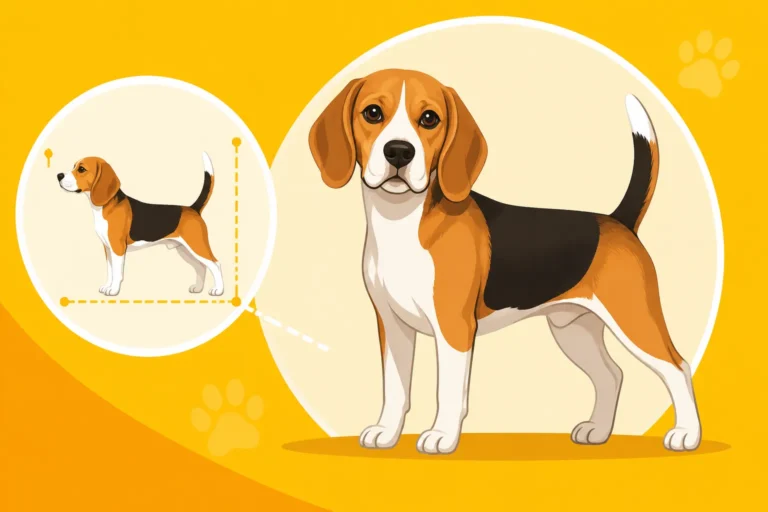
One of the most enduring legacies of this period was the informal, and later formal, recognition of different size varieties within the Beagle breed. While there had always been small and large Beagles, the 1830s saw a more concerted effort to delineate these sizes. This eventually led to the establishment of the 13-inch and 15-inch varieties, which are still recognized today. Breeders began to select for dogs that would fall consistently within these height ranges, understanding that a slightly smaller dog might be better suited for certain types of cover or game.
The distinction wasn't always rigid in the 1830s, but the idea that a Beagle could be reliably bred to a certain height became a goal. The Thirteen Inch Beagle Variety and The Fifteen Inch Beagle Variety eventually emerged as the two main categories, catering to different preferences in hunting and, later, showing. This careful selection meant breeders had to pay close attention to the lineage of their dogs, charting their sizes over generations to achieve the desired consistency. It laid the foundation for the precise measurements and descriptions found in future breed standards.
Early Efforts at Conformation Standardization
Beyond size, breeders in the 1830s also began to pay closer attention to the overall conformation of their Beagles. This included features like the shape of the head, the set of the ears, the length of the back, and the angulation of the legs. While formal written standards were still some decades away, a shared mental image of the "ideal" Beagle began to solidify. This was often driven by discussions among hunters and breeders, who would compare their dogs and informally agree on what constituted good form.
These early conformation efforts were driven by a desire for both efficiency and appearance. A well-constructed dog was believed to be more durable in the field, less prone to injury, and more capable of sustained effort. The distinctive Beagle head, with its broad skull and medium-length muzzle, started to become a hallmark. The long, low-set ears, which many today appreciate for their charming droop, were also recognized for their utility in sweeping scent. This period marked the beginning of a conscious effort to breed not just for performance, but for a recognizable and consistent physical form that would eventually define the breed.
Thomas Johnson and the Emergence of the Show Beagle
As the Beagle's "type" became more defined, some individuals began to see the potential for the breed beyond just the hunting field. Thomas Johnson was another key figure who, around the 1830s and into the mid-19th century, championed the Beagle not only as a functional hunting dog but also as an animal worthy of exhibition. This shift was crucial for the breed's eventual widespread recognition.
Thomas Johnson's Influence on Breed Purity
Thomas Johnson, a respected breeder, was instrumental in advocating for the purity and consistency of the Beagle breed during this formative period. While Reverend Honeywood focused on establishing a uniform pack for hunting, Johnson contributed to refining the breed's physical characteristics to meet emerging standards of what a "good" Beagle should look like. Thomas Johnson and Beagles Bred to Look Right highlights his focus on aesthetic qualities alongside working ability. He was less about starting from scratch and more about perfecting the existing stock, ensuring that traits considered desirable were consistently passed down through generations.
His influence was significant in shaping the Beagle's image. Johnson's Beagles were known not just for their hunting prowess but also for their striking appearance, often featuring the distinctive tri-color pattern that is so beloved today. This emphasis on appearance began to bridge the gap between purely utilitarian hunting dogs and dogs bred for conformation shows, which were slowly gaining popularity. Breeders were starting to understand that a dog could be both beautiful and functional, driving further refinement of the breed's physical attributes.
The Rise of Conformation Showing
The 1830s and the decades immediately following saw the nascent stages of conformation dog shows in England. While not as organized or prevalent as they would become later in the century, these early exhibitions provided a new arena for breeders to showcase their efforts. This created a new kind of competition: not just whose dogs could hunt best, but whose dogs most closely matched an emerging ideal of breed perfection. This added an entirely new dimension to breeding, moving it beyond purely practical considerations.
For the first time, breeders like Johnson could compare their Beagles side-by-side, discussing merits and faults based on appearance rather than solely on field performance. This competitive environment incentivized breeders to strive for greater uniformity and refinement in their lines. It also meant that documentation and pedigrees, while rudimentary, started to gain importance, as breeders wanted to track the lineage of their "champion" animals. This push for visible perfection eventually contributed to the formal establishment of breed clubs and written standards, cementing the Beagle's place as a recognized breed.
The Role of Hunting Culture in Beagle Development
Despite the emerging interest in appearance, the Beagle's primary purpose remained hunting. The culture surrounding beagling deeply influenced how the breed developed during the 1830s, shaping its inherent traits and physical attributes. The characteristics that define a Beagle today – its scent drive, its endurance, its vocalizations – are direct results of its heritage as a foot-hunting hound.
Beagling: A Sport for the People
Unlike the often aristocratic sport of foxhunting, beagling was more accessible and considered a "poor man's sport" by some, followed on foot rather than horseback. This meant that the hounds needed to be hardy, able to traverse varied terrain for hours, but also not so fast that hunters couldn't keep up. What a Beagle Was Originally Bred to Hunt confirms their role as rabbit and hare hounds. The 1830s saw this tradition continue, with local packs forming throughout the British countryside. These packs were the primary drivers of Beagle breeding, as hunters sought dogs that would improve their sport.
The communal aspect of beagling also played a role. Beagles were typically kept in packs, often kenneled together, which reinforced their strong pack drive and generally sociable nature towards other dogs. This intrinsic desire for companionship, still seen in Beagles today, was a direct result of their pack-hunting lifestyle. Breeders favored dogs that worked well together, that weren't overly aggressive towards their kennel mates, and that could follow a leader. This environment inadvertently selected for the "merry" and generally amiable temperament that is a hallmark of the breed.
Selective Breeding for Scent and Stamina
The demands of hunting hares and rabbits required very specific traits. Beagles needed an exceptional sense of smell, boundless stamina, and a distinctive voice to alert hunters to the progress of the chase. Therefore, breeders in the 1830s rigorously selected for these characteristics. Dogs that showed a weak nose, lacked endurance, or were silent on the trail were simply not kept for breeding. This natural selection, guided by human purpose, intensified the traits that make a Beagle so effective at scent work.
The long, pendulous ears, a defining feature, were thought to help gather scent particles and direct them towards the nose. Their deep chest provided ample lung capacity for sustained effort, while their powerful legs allowed them to cover ground efficiently without being overly fast. The goal was a dog that could meticulously unravel a scent trail, often for hours, without losing interest or tiring. This single-minded focus on scent, still a challenge for modern owners trying to teach recall, was perfected during this era. Even today, you'll find that if you leave a bag of tasty Chewy treats open, a Beagle's nose will lead it straight there, no matter how well hidden!
The American Connection: Beagles Cross the Atlantic
While much of the foundational breeding work in the 1830s occurred in England, this period also marked the beginnings of the Beagle's journey across the Atlantic, where it would find a new home and further development in North America. The breed's robust qualities made it highly desirable for game hunting in the New World.
Early Beagle Arrivals in North America
The exact timing of the first Beagles arriving in North America is a bit fuzzy, but by the mid-19th century, documented instances show their presence, often brought over by English settlers keen to continue their hunting traditions. The 1830s laid the groundwork for this migration, as more standardized and recognizable Beagles began to emerge from England. These early imports would have been the offspring of the refined packs like Honeywood's, carrying the genetic blueprint for consistency and specialized hunting ability.
These initial arrivals weren't about establishing a new show breed immediately; they were about bringing tried-and-true hunting companions to a land rich with small game. The American landscape, with its vast fields and forests teeming with rabbits and hares, was a perfect match for the Beagle's inherent hunting instincts. When the First Beagles Reached America details this fascinating journey. The robustness and adaptability of the Beagle, shaped by centuries of working life in England, made them excellent candidates for thriving in a new environment.
Adaptation to American Hunting Conditions
Once in America, the Beagle continued to be primarily a working dog. American hunters, many of whom were farmers or rural dwellers, quickly appreciated the Beagle's efficiency in tracking rabbits. The emphasis remained on practical hunting ability, but the American context often meant different terrain and hunting styles than in England. While English beagling was largely a social foot sport, American hunters often worked with smaller groups of dogs, sometimes individually, covering vast areas.
This environment likely reinforced the Beagle's independence and its incredible drive to follow a scent, sometimes for miles. The breed's characteristic bay, perfected to signal the pursuit of game, was just as valuable in the expansive American wilderness. The American experience would later contribute to shaping some differences in the "field" type of Beagle compared to its "show" counterparts, emphasizing speed and vocalization. This period was crucial in the Beagle becoming not just an English hound, but a truly international and adaptable hunting companion, laying the groundwork for organizations like the National Beagle Club Founded in 1887.
Shaping the Modern Beagle's Temperament and Traits
The methodical breeding efforts of the 1830s didn't just impact the Beagle's physical appearance; they also began to solidify the characteristic temperament and traits we recognize and adore today. The combination of their historical purpose and early standardization efforts resulted in a dog with a distinct personality.
The Merry Hound: Sociable and Energetic
The descriptor "merry" is almost synonymous with the Beagle, and this trait was certainly being refined during the 1830s. Bred to work in packs, these dogs needed to be amiable and cooperative with their canine companions, avoiding aggression or excessive dominance that could disrupt the hunt. This selective pressure naturally favored dogs with a more sociable and tolerant disposition. Hunters wanted a dog that was enthusiastic and eager to please in the field, even if that eagerness sometimes translated into a certain stubbornness when a scent was involved.
This inherent sociability extends to their interactions with humans. Beagles in the 1830s were often kennelled near homes, if not directly in them, and were accustomed to human interaction. This contributed to their generally friendly and affectionate nature, making them good companions even outside of hunting. Their boundless energy, essential for long days of trailing game, also became a defining characteristic. This combination of cheerfulness and vigor makes the modern Beagle a lively, engaging family member, though sometimes one with an independent streak when its nose is engaged! For keeping up with their energy, modern owners often turn to a reliable source like Chewy for durable toys and engaging puzzle feeders to keep their minds and bodies busy.
The Unmistakable Beagle Voice
One of the most distinctive and, for some, challenging traits of the Beagle is its voice – the bay, the howl, the bark. This vocal repertoire was not an accidental development but a deliberately selected trait, intensified during the 1830s because of its crucial role in hunting. Imagine being a hunter on foot, trying to follow your dogs through dense woods; their distinctive bay was your GPS system. It told you where they were, what they were doing, and whether they were hot on a trail.
Breeders, therefore, actively sought out and encouraged dogs with strong, clear voices. A silent Beagle was a useless Beagle in the field. This constant selection for vocalization led to the powerful and resonant bay that can carry for long distances. While it might be a trait that modern apartment dwellers sometimes struggle with, it is a deeply embedded part of the Beagle's heritage, a living echo of its hunting past. It's a testament to how profoundly their original job shaped every facet of their being.
Comparing the 1830s Beagle to Today's Companion
Looking back at the Beagles of the 1830s, it's clear they laid the foundation for the dogs we know today. However, centuries of evolution, changing societal roles, and continued selective breeding have also introduced subtle yet significant differences.
Field vs. Show Lineage: An Evolving Divide
While the 1830s saw the beginnings of "type" standardization, the divide between Beagles bred purely for hunting ("field lines") and those bred for conformation ("show lines") began to widen significantly in the later 19th and 20th centuries. In the 1830s, the best show Beagle was likely still a fantastic hunting Beagle. Today, while many Beagles still retain strong hunting instincts, a show-line Beagle might prioritize certain aesthetic features over raw field ability, and vice versa for field lines.
Field Beagles tend to be lighter, perhaps a bit more leggy, with an emphasis on speed and endurance for the hunt. Show Beagles, on the other hand, often have a more compact, substantial build, with particular attention paid to the breed standard's description of head, ear set, and overall symmetry. Both types ultimately trace their lineage back to the foundational Beagles of the 1830s, but their respective paths diverged as the roles for dogs expanded beyond solely working functions. Modern owners can find all sorts of specialized equipment, whether for field or show, through online retailers like Chewy, a stark contrast to the limited options available two centuries ago.
From Pack Hound to Family Member
Perhaps the most significant difference lies in their primary role. The Beagles of the 1830s were, first and foremost, working pack hounds. Their lives revolved around the hunt, often living in kennels with their fellow dogs. While they certainly interacted with humans, their existence was largely defined by their job. Today, the vast majority of Beagles are cherished family companions, living inside homes, often as the sole canine member of the household.
This shift in environment and purpose means that modern Beagles need different kinds of enrichment and training than their ancestors. Their strong pack drive translates into a need for companionship, which, if not met, can lead to issues like Beagle Separation Anxiety in a Pack Breed. Their incredible scent drive, once a vital asset in the field, now requires outlets like scent work games or long "sniffari" walks. While their inherent traits remain, how we manage and nurture them has changed dramatically. The core qualities of that merry, determined, vocal hound, solidified in the 1830s, continue to shine through, adapting beautifully to their role as beloved members of our families.
The Enduring Legacy of the 1830s
The 1830s might seem like a distant past, but the work done during this decade fundamentally shaped the Beagle breed. It was a time when dedicated individuals moved beyond merely functional breeding and began to envision a standardized, recognizable "type" for this beloved scent hound.
Key Milestones in Beagle History
The 1830s set the stage for several critical milestones in Beagle history. It was the decade when the idea of a consistent breed type gained significant traction, fueled by breeders like Reverend Honeywood and Thomas Johnson. Their efforts directly led to the establishment of the first formal breed clubs and written standards in the latter half of the 19th century. Without the foundational work of defining and refining the Beagle during this period, it's unlikely the breed would have achieved its current widespread recognition and popularity. The informal categories of The Beagle Type That Settled in the 1840s directly followed this era.
The focus on specific size varieties, particularly the 13-inch and 15-inch lines, which emerged from these early efforts, continues to define how Beagles are classified and shown today. The prioritization of their keen sense of smell, endurance, and distinctive vocalizations ensured that these core traits were deeply embedded in the breed's genetic makeup. This decade wasn't just a moment in time; it was a launchpad for the Beagle's journey from a diverse collection of hunting dogs to the globally adored breed we know.
The Beagle's Journey to Modernity
From the hunting fields of 19th-century England to the family couches and competitive show rings of today, the Beagle's journey is a testament to the foresight of those early breeders. The very characteristics that made them exceptional hunting dogs – their intelligence, their perseverance, their friendly disposition – are precisely what make them such wonderful companions today. Even when we're just enjoying a quiet evening, their charming antics and expressive eyes are a direct link to a time when every trait served a purpose in the field.
Understanding this history helps us appreciate the Beagle's unique quirks, from its tendency to follow its nose into trouble to its joyful bay. It reminds us that our modern Beagles, whether they're snoozing on the sofa or sniffing out crumbs, carry within them the spirit of those energetic, determined hounds forged in the 1830s. The effort put into their development over those pivotal years ensured that the Beagle would not only survive but thrive, captivating hearts for centuries to come.
| Characteristic | Beagle Before 1830s (General Hound Type) | Beagle Emerging from 1830s (Standardization Begins) |
|---|---|---|
| Appearance | Highly varied, loose definition | More consistent, focused on specific "type" |
| Size Consistency | Wide range, often unstandardized | Efforts to define 13-inch and 15-inch varieties |
| Breeding Focus | Primarily utility (hunting ability) | Utility + Conformation (looks and structure) |
| Temperament | Generally amiable, strong hunting drive | Refined "merry" disposition, pack-oriented |
| Voice (Baying) | Crucial for hunting, varied intensity | Strong, distinct bay encouraged and consistent |
| Documentation | Minimal, informal | Growing interest in pedigrees and lineage |
| Role in Society | Almost exclusively a working hound | Working hound + nascent interest in exhibition |
| Key Influencers | Local hunters, regional tradition | Reverend Honeywood, Thomas Johnson, organized breeders |
Disclaimer
This article is for general informational purposes only and does not constitute professional advice. Laws, prices and regulations vary by location and change over time. Consult a qualified professional for guidance on your specific situation.