The Talbot Hound in a Beagle’s Ancestry
Have you ever looked at your Beagle, nose to the ground, utterly absorbed in a scent, and wondered about the ancient instincts that drive them? It’s easy to see the modern, "merry" Beagle in our homes, but their history stretches back centuries, linking them to a powerful, almost legendary ancestor: the Talbot Hound. Understanding this distant relative helps us appreciate the depth of your Beagle's genetic heritage and those unique traits that still define them today.
Tracing the Beagle's Ancient Roots
Delving into the ancestry of the Beagle is like peeling back layers of history, searching for clues among old tapestries and faded manuscripts. The story often begins with the Talbot Hound, a breed shrouded in a certain mystique, often depicted in medieval art and literature but less understood in concrete terms.
The Elusive Talbot Hound – What We Know
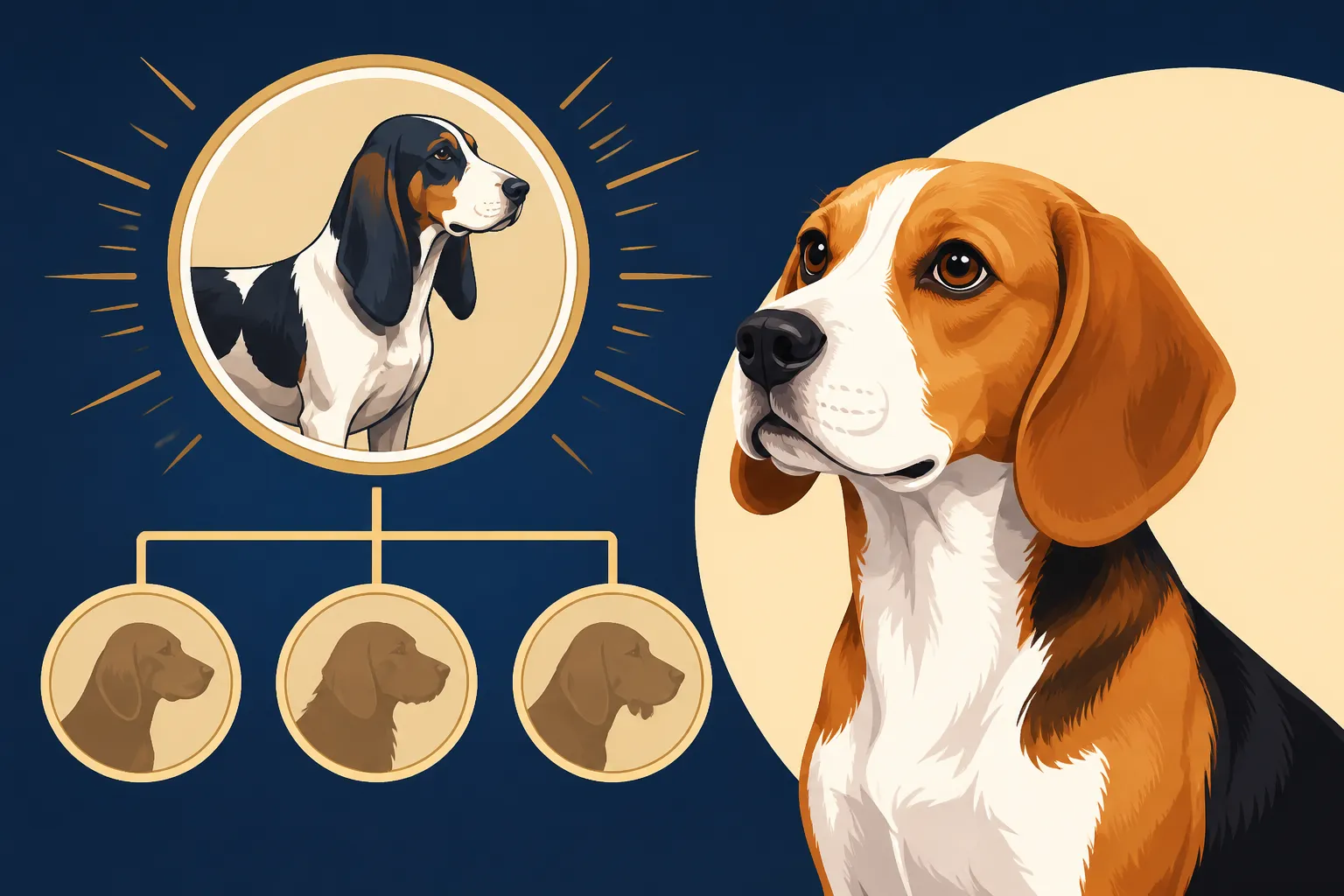
The Talbot Hound was, by most historical accounts, a large, heavy, slow-moving scent hound, primarily white or pied in color, with a deep chest and long, pendulous ears. Imagine a dog that wasn't built for speed, but for relentless, unwavering pursuit. Their purpose was clear: to track large game, sometimes for days, across vast estates. They were highly prized for their exceptional nose and their ability to stay on a cold trail, following it with a deliberate, methodical pace.
Unlike many modern breeds with clear pedigrees and photographic records, the Talbot Hound exists more in historical descriptions and artistic representations. We see them in heraldry, on family crests, and in illustrations of medieval hunts. These depictions often show them as stately, powerful dogs, a far cry from the compact, energetic Beagle we know. Their disappearance as a distinct breed isn't precisely documented, but it's believed they gradually interbred with other scent hounds, their traits absorbed into the developing lines of hunting dogs across England and France. What we're left with are hints of their profound influence, particularly in the enduring scenting capabilities of their descendants.
How the Talbot Lineage Influenced Early Beagles
Even though the Talbot Hound was much larger and slower than what would eventually become the Beagle, its impact on the development of all European scent hounds, including the Beagle, cannot be overstated. The most significant contribution was, without a doubt, that unparalleled nose and the sheer tenacity to use it. Early Beagles inherited this deep-seated drive to follow a scent trail to its conclusion. Think of it: your Beagle isn't just sniffing; they are engaging in a behavior honed over centuries, passed down from hounds like the Talbot.
Beyond the nose, certain physical characteristics likely carried over. The deep chest, while more pronounced in the larger Talbot, hints at the robust lung capacity needed for sustained scent work – a trait still evident in a fit Beagle today. The long, soft ears, which help to funnel scent towards the nose, are another clear family resemblance, albeit scaled down for a smaller dog. This inheritance isn't just about appearance; it's about function. The Talbot provided the foundational blueprint for a dog utterly dedicated to scent, a trait that remains the bedrock of The 220 Million Receptors Behind a Beagle's Nose and Why a Beagle Walks With Its Nose to the Ground. It's a testament to evolutionary staying power when you consider that your little companion still holds the echo of a grand medieval tracker in their daily life.
The Evolution from Talbot to Modern Beagle
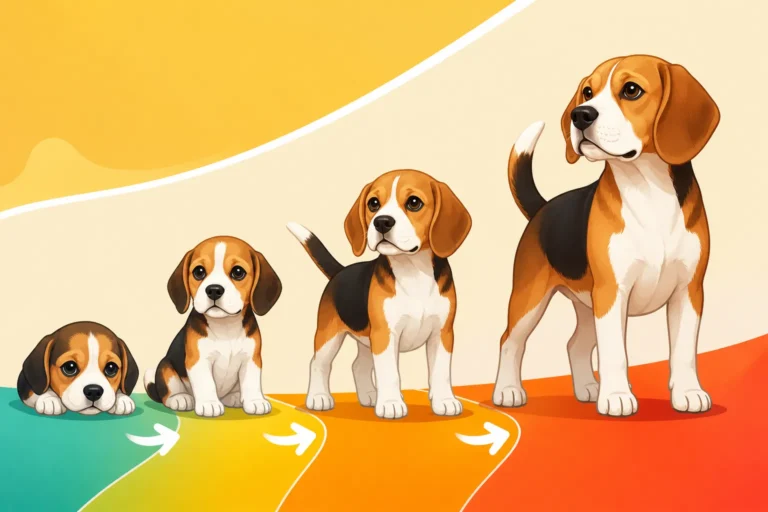
While the Talbot Hound laid some fundamental groundwork, the journey from that ancient breed to the "merry little hound" we adore today was far from a straight line. It involved centuries of selective breeding, adapting to changing hunting practices, and the influence of other burgeoning hound types.
Other Influences on the Developing Beagle Type
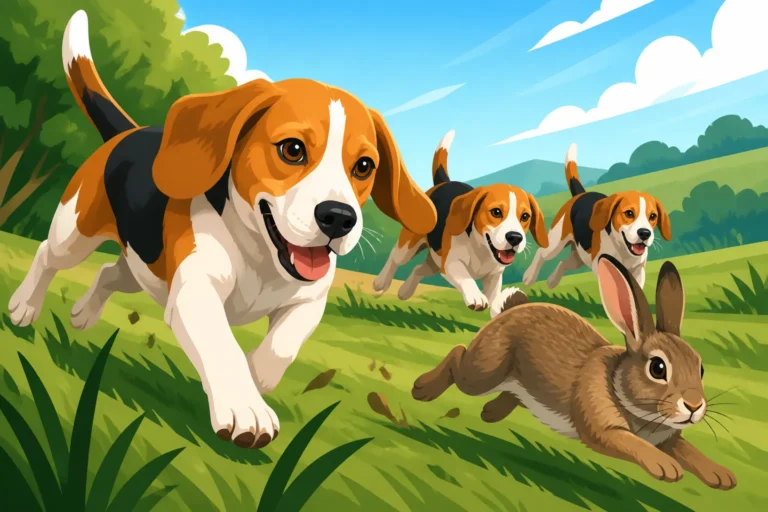
As hunting practices evolved, particularly from tracking large deer to chasing smaller game like rabbits and hares, the need arose for a different kind of hound. The heavy, slow Talbot was simply too cumbersome for these quicker, more agile pursuits. This is where other historical scent hounds entered the picture, contributing their own unique characteristics to the melting pot that would eventually yield the Beagle.
The "Southern Hound," a larger, deeper-voiced, and somewhat slower English hound, also played a significant role. It brought its formidable scenting ability and melodious bay. Then there was the "North Country Beagle," a faster, lighter hound from Yorkshire, more akin to the modern Harrier in build. These differing types were bred and cross-bred, with hunters constantly seeking a balance of nose, speed, stamina, and voice suitable for the specific terrain and quarry. It was a gradual refinement process, moving away from the pure, almost monolithic Talbot type towards a more specialized, compact hunting machine. This complex ancestry helps explain How Long Beagle-Type Hounds Have Existed and the rich tapestry of their genetic makeup.
Selecting for Size and Scenting Prowess
The shift in hunting targets towards rabbits and hares was the primary catalyst for the reduction in size that defines the Beagle. A smaller dog could navigate dense underbrush more easily, move through fields more quickly, and was simply more practical for hunts conducted on foot, rather than mounted on horseback. Breeders consciously began selecting smaller individuals from their hound packs, favoring those with excellent scenting abilities and an energetic, persistent nature. The result was a hound that could tirelessly follow a trail, often for hours, and voice its find with that characteristic bay, but in a package that was much easier to manage.
This selective breeding wasn't just about making them smaller; it was about refining their overall utility for specific game. They needed a powerful nose, certainly, but also the agility to keep up with a darting rabbit and the stamina to sustain the chase. The legend of the "Pocket Beagle" – tiny Beagles small enough to fit into a hunter's saddlebag – speaks to the extreme lengths to which breeders went in pursuit of a compact hound. While true "Pocket Beagles" as a distinct, consistently bred variety are a topic of debate, the anecdote highlights the clear desire for smaller, more manageable Beagles throughout history, distinct from their larger ancestors. This deliberate shaping for a specific purpose ultimately led to Why Hare Hunting Needed a Small Hound and the development of the Beagle as we know it today.
Distinguishing Traits: Talbot vs. Modern Beagle
Looking at the two breeds side-by-side, it's clear how much evolution has taken place. While a modern Beagle carries the genetic echoes of its ancient ancestors, many traits have been refined, altered, or simply lost over centuries of selective breeding.
Physical and Temperamental Differences
The differences between the historical Talbot Hound and the contemporary Beagle are striking, both in appearance and in their typical demeanor. Imagine the large, powerful Talbot, built like a medieval fortress, moving with a ponderous gait, versus the sleek, agile, and "merry" Beagle zipping through a field.
| Trait | Talbot Hound (Historical) | Modern Beagle |
|---|---|---|
| Size | Large, heavy-boned (likely similar to a Bloodhound) | Small to medium (13 or 15 inches at the shoulder) |
| Build | Sturdy, powerful, deep chest, long body, thick neck | Compact, athletic, well-muscled, slightly longer than tall |
| Coat Color | Predominantly white or pied (white with colored patches) | Any true hound color, most commonly tricolor or lemon/white |
| Speed | Slow, methodical, built for endurance over speed | Energetic, capable of bursts of speed, good stamina |
| Hunting Style | Tracking large, slow-moving game (deer) for long distances | Chasing smaller, faster game (rabbits, hares) with vigor |
| Temperament | Thought to be more docile, serious, perhaps less "merry" | Cheerful, curious, independent, sometimes stubborn, vocal |
| Voice | Deep, sonorous bay, often used to signal finds | Distinctive, melodious bay, bark, and howl |
The Talbot was a hound for serious, large-scale hunting, requiring immense endurance. They were probably less demonstrative than a modern Beagle, whose cheerful, inquisitive nature and tendency to bay at every interesting scent are hallmark traits. The Beagle's distinctive vocalizations are legendary, a trait selectively bred for hunters to follow their progress. Meanwhile, the Talbot's likely deeper, more resonant bay would have served to communicate across wider, wilder landscapes. Even in their domestic roles, Beagles retain that independent, sometimes stubborn, drive, especially when their nose takes over. This makes it crucial to understand Training a Beagle Around 220 Million Scent Receptors.
The Lasting Legacy in Today's Beagle
Despite these evident differences, the modern Beagle fundamentally carries the torch of its ancient ancestors. That incredible nose, often lauded as one of the best in the canine world, is a direct inheritance from breeds like the Talbot Hound. Your Beagle's relentless determination when on a scent, their ability to tune out the world around them when a compelling smell hits their nostrils, and their impressive stamina are all echoes of those early, formidable trackers. They might not be tracking deer through medieval forests, but the intensity with which they investigate a suspicious patch of grass in the park is born from that very same instinct.
This legacy means that Beagles, even as beloved family pets, require specific outlets for their ingrained drives. They thrive when given opportunities to use their noses, whether through long sniff walks, scent work games, or puzzle toys. Providing engaging toys and treats from places like Chewy can help channel that energy productively. Without such outlets, that powerful instinct can manifest as boredom, leading to behaviors like howling or attempting to follow intriguing smells right out of your yard. Even simple activities like scattering their kibble from Chewy in the grass for them to find can tap into that ancient heritage. Their ancestry isn't just a fun historical tidbit; it's a living, breathing part of who your Beagle is, influencing their needs, their joys, and yes, even their occasional mischievous independence. Understanding What a Beagle Was Originally Bred to Hunt helps you appreciate the animal in your home today.
When you see your Beagle deeply engrossed in a scent, remember that distant ancestor. It’s a connection to a proud, ancient lineage, and a reminder that even the smallest Beagle carries a powerful piece of canine history within their energetic, snuffling little body. This heritage is what makes them unique and so utterly captivating, driving their curiosity and their boundless love for exploration, often aided by a delicious treat from Chewy as a reward for a job well done.
Disclaimer
This article is for general informational purposes only and does not constitute professional advice. Laws, prices and regulations vary by location and change over time. Consult a qualified professional for guidance on your specific situation.