What Happened to the North Country Beagle
If you've ever delved into the rich, winding history of our beloved Beagles, you might have stumbled across mentions of a mysterious ancestor known as the "North Country Beagle." It’s a name that conjures images of ancient hunting grounds and forgotten hounds, leaving many owners wondering what became of this particular line. The truth is, the story of the North Country Beagle isn't one of outright extinction, but rather a fascinating tale of evolution, selective breeding, and the gradual absorption into the lineage that eventually gave us the merry, scent-driven companion we know today.
The Diverse Ancestry of Early Scent Hounds in Britain
To understand what happened to the North Country Beagle, we first have to appreciate the rather fluid state of dog breeding centuries ago. The idea of rigid breed standards and kennel clubs is a relatively modern invention. For a long time, dogs were bred purely for function, and variations existed across different regions, often named descriptively rather than as distinct, formal breeds.
More Than One "Beagle Type" in Early England
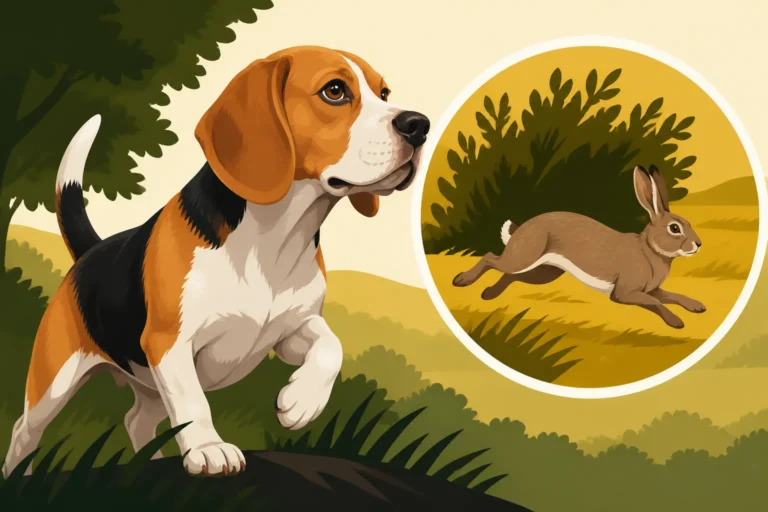
Imagine ancient England, a patchwork of forests, fields, and small settlements. Local hunters and landowners developed packs of small hounds, each tailored to the specific terrain, prey, and hunting style of their area. These weren't "Beagles" as we understand them today, but rather general "beagle-type" hounds—small, tenacious scent dogs used primarily for hunting hare and rabbit. There wasn't one universal "Beagle"; instead, there was a mosaic of regional variations. Some were faster, some had louder voices, some were smaller to follow on foot more easily. This historical context is vital, as it means the "North Country Beagle" wasn't necessarily a formally recognized breed that suddenly vanished, but one of these many local interpretations of a small scent hound. How Long Beagle-Type Hounds Have Existed reveals just how far back these lineages go.
These early hounds were often categorized by their general build, hunting prowess, and sometimes even their size or coat. For example, some were described as "pocket Beagles," tiny enough to be carried in a saddlebag, though this type eventually faded out as well. The names we find in historical texts often reflected their geographic origin or a prominent characteristic. The North Country hounds, for instance, were likely developed in the northern parts of England, adapting to the local conditions and hunting preferences, distinct from those bred further south.
The Rise of the Southern Hound and Talbot Hound
Among these early scent hounds, two significant types often appear in the historical records that directly relate to the modern Beagle's ancestry: the Southern Hound and the Talbot Hound. The Southern Hound, as its name suggests, was prevalent in the southern counties of England. It was a heavier, slower, and more deliberate hunter, known for its deep, melodious voice and incredible scenting ability. It would methodically follow a cold trail, making it excellent for long hunts but perhaps not ideal for faster game. The Southern Hound and Its Slow Deliberate Trail details its characteristics.
The Talbot Hound, on the other hand, was an ancient white hound, likely brought to England by William the Conqueror. It was a large, slow, and powerful dog, thought to be the ancestor of many modern hound breeds, including the Bloodhound. While the Talbot itself eventually became extinct, its genetic influence was profound. It contributed to the hardiness, scenting prowess, and overall hound-like qualities that would later be refined into the Beagle. These two types, with their distinct traits, formed much of the genetic bedrock from which later, more standardized beagle-like dogs would emerge, often intermingling with various local "beagle-type" populations.
The Enigma of the North Country Beagle and Its Decline
Against this backdrop of diverse regional hounds, the North Country Beagle stands out as a type that, for various reasons, didn't survive into the era of standardized breeds. It's often spoken of as a faster, more agile dog than its Southern counterpart, better suited for a different kind of hunting.
Characteristics and Hunting Style
Historical accounts suggest the North Country Beagle was generally lighter-boned and swifter than the heavy Southern Hound. It was likely prized for its speed and agility, perhaps used in areas where quick, decisive drives were preferred over the drawn-out, methodical trailing of the Southern Hound. While both were scent hounds, the North Country type might have had a slightly different approach, possibly air-scenting more, or working closer to the huntsman. Why Beagles Trail Rather Than Air-Scent notes that modern Beagles primarily trail, which might indicate a shift from ancestral types that had different capabilities.
Their voice, or "bay," might also have differed. While the Southern Hound was famed for its deep, resonant bay, the North Country Beagle might have had a lighter, perhaps sharper, call. These differences in characteristics weren't just aesthetic; they were functional, tailored to the specific hunting needs of the northern regions. However, with limited detailed records, much of what we know about their exact appearance and hunting style comes from inferences and generalized descriptions from an era before detailed breed standards were kept.
Why It Faded into History
The decline of the North Country Beagle wasn't a sudden disappearance but a gradual process influenced by several factors. One major reason was the rising popularity and influence of other hound types, particularly the Harrier, which gained favor for its speed and ability to hunt various game, often being considered a more versatile hound. As hunting practices evolved and became more formalized, certain types of hounds were increasingly favored for their consistency and performance.
Another crucial factor was interbreeding. As transportation improved and breeders began to exchange dogs across regions, the distinct regional types started to blend. The Southern Hound, with its powerful scenting ability and sturdy build, became highly influential. Its traits were often deliberately bred into other lines to enhance their hunting capabilities, leading to a homogenization of various beagle-type hounds. This meant that the unique characteristics of the North Country Beagle were likely diluted and eventually absorbed into other emerging lines, rather than being preserved as a distinct entity. Without a dedicated group of fanciers or breeders committed to maintaining its specific characteristics, it simply became part of the broader gene pool.
The Influence of Changing Hunting Practices
The way people hunted also played a significant role. Hare hunting, for which these small hounds were primarily used, began to see shifts in technique. As land use changed and larger, more organized hunting estates became common, there was a push for hounds that could perform reliably and consistently within these new frameworks. The emphasis moved towards packs that could work together in a synchronized manner, often following a specific type of quarry.
If the North Country Beagle's particular style of hunting became less relevant or less desirable compared to other, more adaptable hound types, its distinct lineage would naturally diminish. For example, if a faster, more spirited hunt became the norm, a heavier, slower hound might be crossed with lighter, quicker dogs, effectively blurring the lines between regional variations. This constant selection pressure, driven by function and changing fashion, meant that dogs with traits deemed less useful for contemporary hunting gradually lost their distinct identity.
The Ascendance of the Modern Beagle
While the North Country Beagle faded, other lines were being refined and championed, ultimately leading to the Beagle we recognize and cherish today. This process involved dedicated breeders and the eventual establishment of formal breed standards.
Reverend Honeywood and the Essex Pack
One of the most pivotal figures in the history of the modern Beagle was Reverend Phillip Honeywood, who established a highly influential pack of Beagles in Essex, England, around the 1830s. Honeywood's pack was renowned for its consistency in type and its exceptional hunting prowess. His Beagles were smaller, compact, and exhibited many of the traits we associate with the breed today. They were known for their stamina, good noses, and merry disposition, making them highly effective in the field and popular among other huntsmen. Reverend Phillip Honeywood and His Essex Pack details his contributions.
Honeywood's dedication to his specific type of Beagle helped to solidify a consistent "look" and "temperament" that would become the foundation for the breed's standardization. His careful breeding practices helped to weed out some of the extreme variations seen in earlier regional types, pushing towards a more uniform and recognizable hound. The success of his pack meant that other breeders sought out his lines, further spreading these desirable traits and reducing the prominence of other, less formalized types like the North Country Beagle.
Standardizing the Breed for Consistency
The late 19th century saw a significant shift in dog breeding, with the establishment of kennel clubs and the formalization of breed standards. In America, the National Beagle Club was founded in 1887, and the breed standard was officially adopted by the American Kennel Club (AKC) shortly thereafter. This standardization process was crucial. It provided a blueprint for what a "true" Beagle should look like, how it should move, and even aspects of its temperament. Breeders then aimed to produce dogs that conformed to this written standard, often selecting for specific physical traits like ear length, tail carriage, and coat color, as well as hunting ability.
This push for uniformity meant that types that didn't fit the emerging standard, such as the varied North Country hounds, simply weren't bred as distinct lines anymore. Their unique characteristics, if any, were either not desirable in the new standard or had already been absorbed through generations of cross-breeding. The focus shifted from regional variations to a national, and eventually international, ideal. This standardization also meant that certain traits, like the deep bay and unwavering scenting ability of the Southern Hound, were prioritized, contributing to the modern Beagle's reputation as a tireless tracker. Today, you can still observe the distinct traits of modern Beagles, often found bounding around with their favorite Chewy toy.
The Beagle's Modern Role
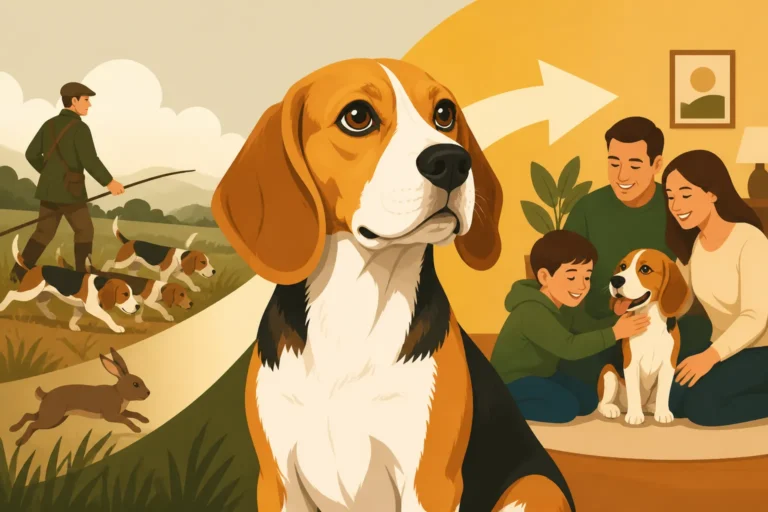
The modern Beagle, with its standardized appearance and temperament, became incredibly popular, not just as a hunting dog but increasingly as a cherished family companion. Its compact size, gentle nature, and playful spirit made it a natural fit for homes. Even though their ancestry is deeply rooted in hunting, today's Beagles are more likely to be found curled up on the couch or sniffing out treats in a puzzle feeder from Chewy than chasing rabbits in a field. The Beagle From English Rabbit Packs to American Homes outlines this transition.
The characteristics that made them effective hunters—their keen nose, intelligence, and stamina—now translate into a need for plenty of exercise, mental stimulation through games like scent work, and a secure yard where their powerful nose won't lead them astray. While the North Country Beagle may be a name from the past, its spirit, along with that of other ancient hounds, undeniably lives on in every bay, every wagging tail, and every joyful sniff of our contemporary Beagles. They are a testament to how breeds evolve and adapt, shaped by both human intervention and the changing world around them.
Comparing Historical Beagle Types
To help illustrate the differences between some of these historical types and the modern Beagle, here's a comparative overview based on available historical descriptions. Keep in mind that descriptions of historical types are often generalized and not as precise as modern breed standards.
| Feature | North Country Beagle (Historical Type) | Southern Hound (Historical Influencer) | Modern Beagle (Standardized Breed) |
|---|---|---|---|
| Size/Build | Lighter, more agile, smaller | Heavier, sturdier, slower | Compact, muscular, two size varieties (13" and 15") |
| Pace in Hunt | Potentially faster, quicker drives | Slow, methodical, deliberate trailing | Persistent, good stamina, moderate pace |
| Scenting Style | Likely a mix, possibly some air-scenting | Primarily ground-scenting, cold trails | Primarily ground-scenting, tenacious |
| Voice/Bay | Possibly lighter, sharper bark/bay | Deep, melodious, resonant bay | Musical bay or howl, distinctive |
| Primary Prey | Hare, rabbit | Hare, stag, fox | Hare, rabbit (originally) |
| Temperament | Energetic, keen | Staunch, determined | Merry, even-tempered, tenacious |
| Status Today | Absorbed/Extinct as distinct type | Major ancestral influence | Globally recognized breed |
This table highlights how the functional needs of hunting influenced the development of different hound types. The modern Beagle is a culmination, taking the best traits and refining them through centuries of selective breeding.
Living with a Modern Beagle: A Legacy of the Past
Understanding the complex lineage of the Beagle, including the mystery of the North Country Beagle, truly enriches our appreciation for the breed we share our homes with today. Our modern Beagles carry the genetic echoes of those ancient hounds, whether they were the swift North Country types or the deep-voiced Southern Hounds. This history explains so much about their inherent traits. For instance, their incredible nose and tireless drive to follow a scent are direct legacies of their working ancestors. The 220 Million Receptors Behind a Beagle's Nose isn't just a fun fact; it's a testament to thousands of years of selective breeding for scenting prowess.
As responsible owners, acknowledging this history helps us meet their needs. That strong prey drive means a reliable recall is paramount, but also that Why a Beagle Should Never Be Off Leash Unfenced is a rule to live by. Their inclination to bay or howl, which can sometimes be a challenge, comes directly from their pack-hunting origins, where voice was critical for communication. Telling a Beagle Bark From a Bay From a Howl helps distinguish their vocalizations.
Even their legendary appetite, often a source of amusement (and sometimes frustration, when they raid the trash), is rooted in a past where survival depended on seizing every opportunity for food. Many Beagle owners find themselves regularly browsing Chewy for robust puzzle feeders and slow-feed bowls to manage this instinct! These aren't quirks; they are fundamental parts of what makes a Beagle a Beagle. They represent the successful traits that endured and were refined over centuries, eventually leading to the loyal, affectionate, and sometimes mischievous companions that bring so much joy into our lives today.
Disclaimer
This article is for general informational purposes only and does not constitute professional advice. Laws, prices and regulations vary by location and change over time. Consult a qualified professional for guidance on your specific situation.