The Beagle Coat as the Standard Describes It
One of the first things you notice about a Beagle, beyond those soulful eyes and that incredible nose, is their coat. While it might look pretty straightforward, many new Beagle owners are surprised by its density, its feel, and what it truly means to maintain a coat designed for the field. This guide will walk you through what the breed standard actually says about the Beagle coat, why it's built the way it is, and how best to care for it in your home.
Understanding the Beagle Breed Standard for Coat
When you look at a Beagle, you're seeing a dog bred for a specific job: trailing game through all sorts of terrain and weather. Every aspect of their physical makeup, including their coat, reflects this history. The breed standard, which is essentially the blueprint for what a Beagle should look and be like, has very clear descriptions for the coat because it's so vital to their function. It's not just about aesthetics; it's about survival and performance in the elements.
Texture and Feel of a Beagle Coat
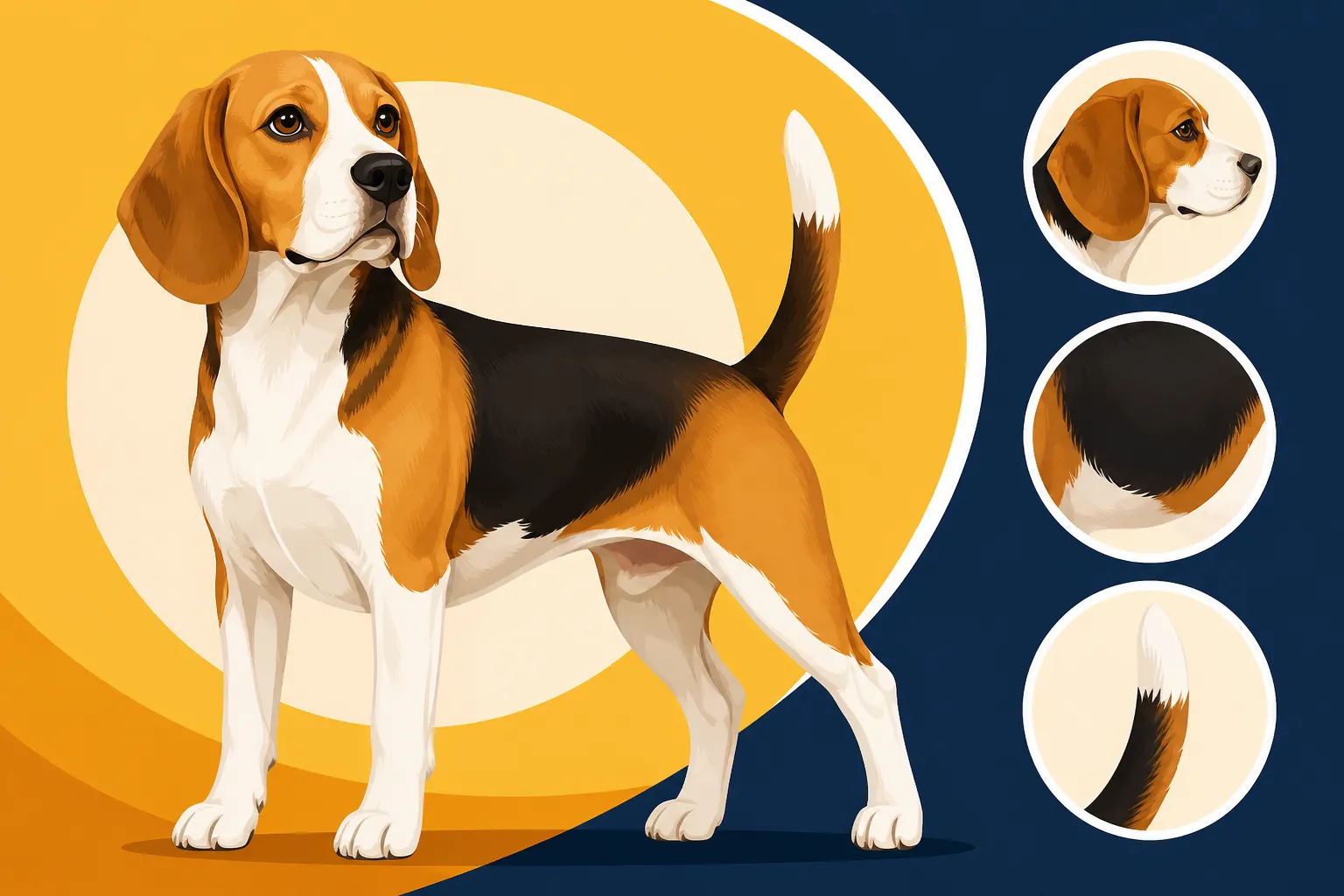
The official standard for the Beagle describes the coat as "close, hard, and of medium length." Let's break that down a bit. "Close" means the hairs lie flat and tight against the body, not standing out or fluffy. When you run your hand over a well-conditioned Beagle, it should feel smooth and sleek. It's not a soft, silky coat like some companion breeds, nor is it rough or wiry. Instead, it has a certain "hardness" to it, a resilience that speaks to its protective qualities. This texture helps the coat resist water and shed debris, which is pretty handy when your dog is plunging through underbrush or a dewy field. It's a no-nonsense, functional coat designed to protect the dog from the elements and from minor abrasions while on the hunt.
Think about it from a practical perspective: a coat that lies flat is less likely to snag on thorns or burrs. A "hard" coat, in this context, refers to the texture of the individual hairs, which are strong and somewhat stiff, contributing to its water-repellent nature. This is why, after a light rain or a romp in wet grass, a Beagle often dries off surprisingly quickly compared to dogs with a softer, more absorbent coat. It's a testament to its design for outdoor work.
The Double Coat and Its Purpose
While the standard doesn't explicitly use the term "double coat," it's understood that the Beagle possesses one, which contributes to its "close" and "hard" description. A double coat consists of two layers: a coarse outer layer of guard hairs and a softer, denser undercoat. The guard hairs are what you primarily feel when you pet a Beagle; they provide protection from rain, sun, and minor physical irritants. The undercoat, however, is the real workhorse for insulation. It's a thick, downy layer that keeps the Beagle warm in cold weather and helps regulate body temperature in warmer climates by preventing too much heat absorption.
This dual-layer system is incredibly effective, but it also means Beagles are enthusiastic shedders, especially during seasonal changes. You might wonder how a dog with such short hair can leave so much of it behind, but it's that dense undercoat turning over that creates those little "dust bunnies" that seem to accumulate everywhere. Many owners are genuinely surprised by the sheer volume of hair a small dog like a Beagle can produce! Understanding this double coat helps explain why consistent grooming is so important, not just for cleanliness but for comfort and shedding management. It also means that a Beagle is a true year-round outdoor dog, capable of handling a variety of temperatures due to this natural insulation.
The Importance of a Good Coat for Working Beagles
For Beagles, whose heritage is deeply rooted in hunting hares and rabbits, their coat is far more than just insulation; it's a vital piece of their protective gear. Imagine a pack of Beagles, nose to the ground, pushing through dense thickets, tall grasses, and muddy fields. A flimsy or overly long coat would be a liability, quickly becoming matted with debris, soaking through, or offering little defense against scratches and insect bites. The close, hard, medium-length coat described in the standard is perfectly adapted for this demanding lifestyle.
It acts like a natural suit of armor, deflecting thorns, twigs, and sharp blades of grass that would easily pierce softer fur. The density of the coat also provides a barrier against external parasites, making it harder for fleas and ticks to reach the skin, though Year-Round Parasite Prevention for a Beagle is still absolutely critical. Furthermore, in their original role, Beagles often worked in packs, sleeping together outdoors, so a robust, weatherproof coat was essential for their health and comfort. This design ethos is why modern Beagles, even those who are beloved family pets and have never seen a hunting field, still carry this incredibly practical and hardy coat. It allows them to enjoy long sniff walks in varied environments without fear of becoming overly chilled or easily injured by minor environmental hazards.
What the Standard Doesn't Say About Coat Length or Furnishings
Sometimes, understanding what a breed standard doesn't include is just as important as what it does. For the Beagle, the standard is quite specific about the coat being "short" and "close," which means certain traits are definitely outside the norm and would be considered faults in a show ring.
Why Long Hair or Feathering Isn't Standard
Unlike some other hound breeds or even various terrier types, the Beagle is not meant to have long hair, feathering, or a wiry texture. You won't find descriptions of "furnishings" – those longer tufts of hair on the legs, ears, or tail – in the Beagle standard. If a Beagle were to exhibit any of these traits, it would indicate a deviation from the purebred standard. For instance, a coat that is too soft, too long, or appears "fluffy" would not be correct. Similarly, a wiry or rough coat, often seen in terriers or some scenthound crosses, is not characteristic of the Beagle.
These longer or different textures would be highly impractical for a dog meant to navigate dense undergrowth. Long hair would collect burrs and mud, become matted, and impede movement. Feathering would offer less protection against scratches and moisture. The short, sleek coat is efficient, requires less time to dry, and minimizes the amount of debris a dog can pick up during a long day of trailing. So, if you encounter a Beagle with a noticeably different coat texture or length, it’s a good indicator that it might be a mix, or simply not true to the breed standard, which for most pet owners, is perfectly fine – just something to be aware of if you're interested in showing or preserving breed type.
Differences from Other Hound Coats
The Beagle's coat, while seemingly simple, is distinct within the diverse world of hounds. Compare it to the Basset Hound, for example, which also has a short, dense coat but often feels softer and less "hard" due to different underlying genetics and function. Or consider the American Foxhound, which has a similar short, hard coat but on a much larger scale, designed for different types of terrain and game. Then there are other hound types, like the Afghan Hound or Irish Wolfhound, with their dramatically long, flowing, or wiry coats that are a world away from the Beagle's practical, no-frills attire.
These differences highlight the Beagle's unique specialization. Their coat is not designed for elegance or for extreme weather conditions like a Siberian Husky's, but for robust utility in temperate climates where they pursue small game. It's about being tough, resilient, and low-maintenance in the field. This singular focus on function has preserved the Beagle's coat type for centuries, making it instantly recognizable and perfectly suited for its original purpose. The Beagle From English Rabbit Packs to American Homes goes into more detail about how this specific design was developed. This contrast is often striking when comparing Beagles to some of the more "designer" mixes, where coat textures can vary wildly, showcasing just how refined the purebred Beagle coat truly is.
Maintaining the Standard Beagle Coat at Home
Even though the Beagle's coat is considered "low-maintenance" compared to many long-haired breeds, that doesn't mean it's maintenance-free. It's a dense, shedding coat that needs regular attention to stay healthy, clean, and comfortable, both for your Beagle and for your home environment. Consistent care will not only keep them looking their best but also help manage the shedding that all Beagle owners quickly learn to live with.
Brushing for a Healthy Coat and Managing Shedding
Regular brushing is the cornerstone of Beagle coat care. Because they have that dense double coat, Beagles shed year-round, with heavier shedding periods often occurring in spring and fall. Without regular brushing, loose hair can become trapped in the coat, leading to mats (though less common in Beagles due to their short hair) and skin irritation. More importantly, brushing helps distribute natural skin oils, promoting a healthy, shiny coat and reducing the amount of hair that ends up on your furniture and clothes.
Aim to brush your Beagle at least 2-3 times a week, and even more frequently during heavy shedding seasons. Tools like a rubber curry brush (which acts like a magnet for loose hair and gives a nice massage) or a deshedding tool are excellent choices. Start with gentle strokes, moving in the direction of hair growth. Pay particular attention to their back and flanks where the undercoat can be densest. You'll be amazed at how much hair you can remove in a single session! This proactive approach helps keep their skin breathing and minimizes the "Beagle glitter" around your home. You can find a wide range of these grooming tools on pet supply sites like Chewy, making it easy to pick the right one for your dog. For more tips on managing their seasonal blow-outs, check out Brushing a Beagle Through Spring Shedding.
Bathing Practices for the Standard Coat
Bathing a Beagle usually doesn't need to happen very often, unless they've found something truly foul to roll in (a common Beagle pastime!). Over-bathing can strip their coat of its natural oils, leading to dry, itchy skin. Typically, a bath every 1-3 months, or when they're visibly dirty, is sufficient. When it's bath time, use a good quality dog shampoo that is gentle and formulated for their skin type. Many owners prefer oatmeal-based shampoos for sensitive skin or specific deshedding shampoos designed to help release loose undercoat.
The most crucial step after a bath is ensuring your Beagle is completely dry. Because their coat is so dense, moisture can easily get trapped close to the skin, creating a perfect breeding ground for bacteria or yeast, particularly under those long, floppy ears. Use absorbent towels to blot as much water as possible, and if your Beagle tolerates it, a low-heat hairdryer can speed up the process, especially during colder months. Always check those ears after a bath too, making sure they are dry and clean to help prevent Beagle Ear Infections and the Drooping Ear Flap. Remember, a thorough rinse is also key to prevent shampoo residue from irritating the skin.
Monitoring Coat Health for Underlying Issues
Your Beagle's coat is often a fantastic indicator of their overall health. A shiny, close-lying coat usually means a healthy, well-fed dog. Conversely, changes in the coat's condition can be one of the first signs that something isn't quite right. If you notice dullness, excessive dryness, dandruff, brittle hair, or sudden patches of hair loss, it's time to pay close attention. These symptoms could point to a variety of issues, ranging from nutritional deficiencies to skin allergies, hormonal imbalances like Beagle Hypothyroidism Symptoms Owners Notice First, or even parasites.
Be alert to constant scratching, licking, or chewing, which might indicate skin allergies from food or environmental triggers, or even fleas. A dull, sparse coat might signal poor diet or an underlying systemic illness. Regularly running your hands over your Beagle's body during grooming sessions isn't just for removing loose hair; it's also a chance to feel for any lumps, bumps, hot spots, or changes in skin texture that warrant a vet visit. Your veterinarian can help diagnose any issues and recommend appropriate treatments, which might include dietary changes, supplements (like omega-3 oils for coat health, often found on Chewy), or medication. Taking note of these subtle changes can help you catch potential health problems early, ensuring your beloved Beagle stays as healthy and happy as possible.
Beagle Coat Characteristics at a Glance
To give you a clearer picture of what the breed standard truly values in a Beagle's coat, here's a quick comparison of the ideal versus undesirable traits. This table helps to summarize the features that contribute to a healthy, functional, and breed-typical coat.
| Trait | Standard/Ideal | Non-Standard/Undesirable |
|---|---|---|
| Length | Medium-short | Long, fluffy, excessively short |
| Texture | Close, hard, smooth | Soft, silky, wiry, rough |
| Density | Dense (due to double coat), protective | Thin, sparse, lacking undercoat |
| Appearance | Healthy sheen, lies flat against body | Dull, brittle, standing out, matted |
| Function | Weather-resistant, protects against brush & debris | Collects debris easily, offers poor protection, soaks easily |
| Shedding | Moderate to heavy, seasonal | Excessive (beyond typical seasonal), patchy hair loss |
Disclaimer
This article is for general informational purposes only and does not constitute professional advice. Laws, prices and regulations vary by location and change over time. Consult a qualified professional for guidance on your specific situation.