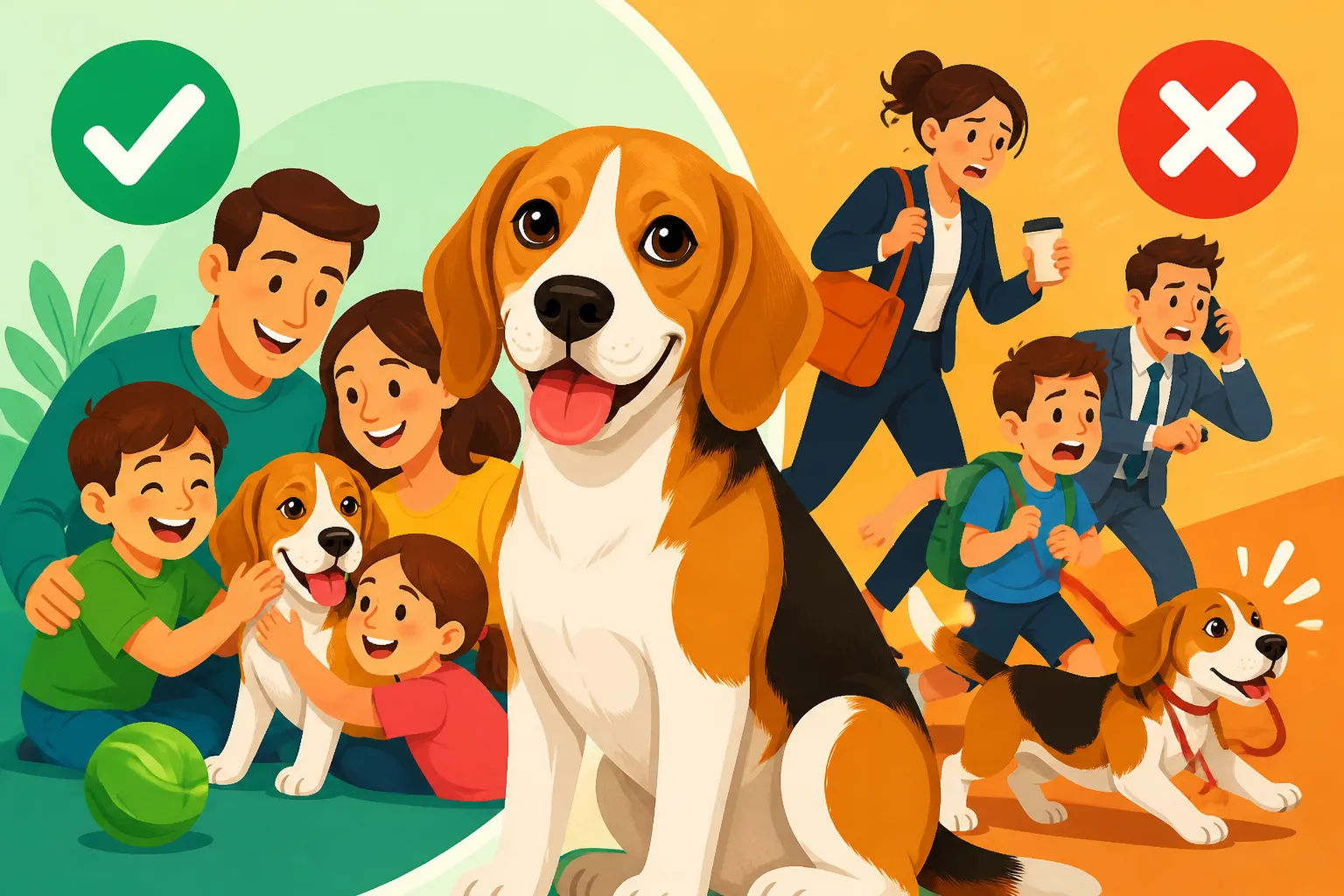
Whether a Beagle Is Right for a Busy Family
Bringing a new dog into a busy family home can be a truly wonderful experience, but it also comes with a lot of questions, especially when you're considering a breed as unique as a Beagle. Many families are drawn to their cheerful nature and compact size, imagining a playful companion easily integrated into their active lives. However, the reality of living with a Beagle, particularly when schedules are already packed, can be quite different from the picture-perfect image. This guide aims to peel back the layers of the Beagle's charming facade to help you honestly assess whether this merry hound is truly the right fit for your bustling household.
Understanding the Beagle Temperament: More Than Just a Cute Face
Before you even start thinking about logistics, it's crucial to understand the fundamental nature of a Beagle. These aren't just generic "dog-shaped pets"; they are hounds, bred for centuries with a specific job in mind: to hunt small game, primarily rabbits, by following a scent trail. This deep-seated instinct shapes almost every aspect of their personality and needs, making them wonderfully unique but also presenting specific challenges for busy families.
The Scent-Driven World of a Beagle
Imagine living in a world where smells tell entire stories, where every blade of grass, every gust of wind, every passing squirrel leaves an irresistible narrative just waiting to be read. That's a Beagle's reality. They possess an incredible sense of smell, with around 220 million scent receptors, far outstripping our own. When a Beagle gets its nose to the ground, the rest of the world, including your commands, often fades into insignificance. This isn't stubbornness; it's pure, instinctual absorption. For a busy family, this means that every walk is a scent adventure, not a brisk stroll where your Beagle is always at your heel. Off-leash time, unless in a securely fenced area, is rarely an option, as a captivating scent can send them on a miles-long journey with no regard for boundaries. Understanding Training a Beagle Around 220 Million Scent Receptors is paramount.
This powerful scent drive also means they thrive on mental stimulation that engages their nose. Simply letting them out in the yard isn't enough; they need opportunities to use their natural talents. If a busy family can't provide structured scent work, puzzle toys, or long, sniffing walks, a Beagle can become bored and destructive, channeling that unused energy and intelligence into less desirable behaviors, like tearing up furniture or investigating the garbage can. Their world is rich with information we can't even perceive, and denying them access to that world can lead to frustration for both the dog and the family.
The "Merry" and Independent Nature
The Beagle standard often describes them as "merry," and it's true! They are generally cheerful, friendly, and affectionate dogs who love being part of a pack – and your family is their pack. They are playful, good-humored, and generally adaptable to different situations once they feel secure. This merry disposition makes them wonderful companions, always ready for a game or a cuddle on the couch.
However, beneath that merry exterior lies an independent streak that's a direct consequence of their hunting heritage. They were bred to work somewhat independently of their human handler, following a scent without constant direction. This isn't the same as a highly biddable breed that lives to please. While intelligent, a Beagle will often weigh your command against the allure of a particularly interesting smell or an opportunity for adventure. This independence can be misinterpreted as stubbornness by busy families who expect instant obedience. Training requires patience, consistency, and a deep understanding of what motivates a Beagle (spoiler: it's usually food!). You might find that Beagle Recall and Why Your Voice Stops Registering becomes a major ongoing project.
Beagle Temperament Around Children and Other Pets
For families with children, Beagles often shine. Their tolerant and playful nature makes them generally good companions for kids, enjoying games and often being patient with enthusiastic little hands. They tend to form strong bonds with their human "pack members" of all ages. However, like all dogs, supervision is always key, especially with very young children who might not yet understand how to interact respectfully with a dog. Teaching both child and dog appropriate boundaries is crucial for a harmonious household.
When it comes to other pets, Beagles usually get along well with other dogs, especially if socialized from a young age. After all, they are pack animals by nature. A second dog can sometimes even help alleviate separation anxiety in a lonely Beagle. However, their strong prey drive, stemming from their hunting background, means that smaller, non-canine pets like cats, rabbits, or hamsters can be a tricky proposition. While some Beagles can learn to coexist peacefully with cats, especially if raised together, it's never a guarantee. A sudden chase instinct can kick in, making a calm coexistence challenging, particularly if the family is too busy to manage introductions and interactions carefully. If you have small pets, consider the risks seriously. For more on this, you might explore Beagles With Children and With Other Dogs.
Time Commitments for a Beagle in a Busy Household
A busy family often means less free time, and this is where the rubber meets the road with a Beagle. These dogs require significant investments of time and energy, not just for basic care, but to keep them mentally and physically fulfilled. Underestimating these needs can lead to a stressed Beagle and a frustrated family.
Exercise Needs Beyond a Quick Walk
Many people assume a small to medium-sized dog like a Beagle doesn't need much exercise. This is a common misconception that leads to many surrendered Beagles. These are active, sturdy hounds built for stamina. They need more than a quick trot around the block twice a day. A truly fulfilled Beagle needs at least an hour, if not two, of vigorous exercise daily. This isn't just about physical exertion; it's about giving them opportunities to sniff, explore, and engage their senses.
Think about it: they were bred to follow a scent trail for hours. A busy family might struggle to provide this level of engagement. A short leashed walk where they're constantly pulled away from interesting smells is actually quite frustrating for a Beagle. They need time to sniff and process their environment, which is mentally exhausting for them. Without adequate outlets, that pent-up energy will manifest in destructive chewing, relentless howling, or incessant digging. Exercising a Beagle Enough to Settle It discusses this in more detail. If your family struggles to fit in long, dedicated walks or active play sessions daily, a Beagle might not be the best fit.
The Importance of Consistent Training
Training a Beagle is an ongoing process, not a one-time event. Their intelligence and independent nature mean they need consistent, positive reinforcement training from puppyhood throughout their lives. Basic obedience classes are a great start, but the real work happens at home, every single day. A busy family might find it difficult to dedicate the necessary time for short, frequent training sessions that keep a Beagle engaged and learning.
Because they are so food-motivated, positive reinforcement with high-value treats (think tiny bits of cooked chicken or cheese) works wonders. But it requires your active participation. If training falls by the wayside due to hectic schedules, a Beagle can quickly develop undesirable habits, like counter surfing, door dashing, or selective hearing when called. Consistency is the key to shaping their behavior, and a busy family must realistically assess whether they can maintain that level of dedication. Many owners find that signing up for local dog training classes or utilizing online resources from places like Chewy can help keep them on track, but the effort still falls on the family.
Mental Stimulation for a Keen Nose
Physical exercise alone is rarely enough for a Beagle. Their powerful noses and sharp minds also need constant mental stimulation. This is where many busy families fall short without realizing it. Letting a Beagle out in a backyard for an hour while you get things done might provide physical exercise, but it offers minimal mental engagement if it's the same old smells every day.
Puzzle toys, snuffle mats, and structured scent games are invaluable for Beagles. These activities challenge their minds and satisfy their innate drive to use their nose, burning mental energy just as effectively as a long run. A busy family needs to schedule in these mental workouts. Without them, a bored Beagle is a destructive Beagle. They'll create their own "work," which often involves rearranging your furniture, excavating your garden, or exploring the forbidden delights of your kitchen counters. Investing in a variety of interactive toys can certainly help, but they require a human to set them up and engage with the dog.
Managing Common Beagle Challenges in a Family Setting
Even with the best intentions, certain Beagle traits can become significant challenges for families who lead busy lives. It's important to be prepared for these common issues.
The Vocal Nature: Howling, Baying, and Barking
Beagles are hounds, and hounds are vocal. They communicate through a distinct array of barks, howls, and bays. That characteristic "bay" is not just a bark; it's a deep, resonant sound designed to carry over long distances during a hunt, alerting their human companions to a scent trail. While charming in small doses, a Beagle's vocalizations can become a major point of contention, especially for busy families living in apartments, townhouses, or even close-knit suburban neighborhoods.
A Beagle might bay when they catch an interesting scent, howl when lonely or bored, or bark at perceived intruders. For a busy family, dealing with constant noise complaints from neighbors or trying to quiet a dog during crucial work calls can be incredibly stressful. Training can help manage excessive barking, but you cannot train the bay out of a Beagle. It's an intrinsic part of who they are. If your family values a quiet home or lives in a situation where noise is a critical concern, a Beagle's vocal nature needs serious consideration. For more on this, check out Beagle Howling, Baying and Barking Explained.
The Escape Artist: Containing a Determined Hound
Beagles are notorious escape artists. Their single-minded focus on a scent, combined with their intelligence and surprising agility, means they can find (or create) weaknesses in almost any containment system. A busy family might not have the time to consistently patrol fence lines for new digging spots, ensure gates are double-latched, or prevent door dashing.
They can dig under fences with impressive speed and determination if a captivating smell is on the other side. They can scale surprisingly tall fences, especially if there's an object to get a foothold on. They're also adept at slipping through open doors or gates the moment your back is turned. For a busy family, this means vigilance is constant. You cannot simply let a Beagle out in an unfenced yard unattended, even for a moment. A securely fenced yard is non-negotiable, and even then, regular inspections are a must. A lost Beagle can follow a scent trail for miles, putting them in serious danger. Understanding Beagle Escape Artistry and How to Contain It is vital.
The Food Obsession: Counter Surfing and Scavenging
Beagles love food. Like, really love food. This isn't just a cute quirk; it's a deeply ingrained trait that comes from their pack hunting days, where getting your share (or more!) of the meal was crucial for survival. This translates into a powerful drive to seek out and consume anything edible, often regardless of whether it's safe for them.
For a busy family, this means constantly vigilant counter-proofing. Leaving food on the counter, even for a moment, is an invitation for a Beagle to "counter surf." They're surprisingly agile and clever, and will find a way to get to that unattended sandwich. They'll also patrol the floors for dropped crumbs, investigate trash cans, and eagerly scavenge any tempting tidbits found on walks. This can be annoying, but more importantly, it can be dangerous. Many human foods are toxic to dogs, and a quick-eating Beagle can ingest something harmful before you even realize it. A busy family might not always have the time or energy to maintain a completely Beagle-proofed environment, leading to health risks for the dog and vet bills for the family. You'll find yourself needing to master Beagle Counter Surfing and Trash Raiding.
Assessing Your Family's Lifestyle Against a Beagle's Needs
Ultimately, deciding if a Beagle is right for your busy family comes down to an honest evaluation of your lifestyle, resources, and willingness to adapt. It's not about whether Beagles are "good" dogs (they absolutely are!), but whether their specific needs align with what your family can realistically provide.
Evaluating Your Energy Levels and Patience
Beagles require a family with energy, patience, and a good sense of humor. Are you a family that enjoys long walks or hikes? Do you have the patience to consistently reinforce training, knowing that a Beagle might need more repetitions than other breeds? Can you laugh off a counter-surfing incident (after ensuring their safety) rather than getting frustrated? A Beagle will test your boundaries and your patience, and a busy family might find these challenges overwhelming if they're already stretched thin.
Consider the energy output required. If your family's idea of a relaxing evening is quiet time on the couch, a young Beagle might disrupt that with their need for activity and engagement. If your schedule means everyone is out of the house for long hours, a Beagle, a pack animal, can easily develop Beagle Separation Anxiety in a Pack Breed, leading to destructive behaviors or incessant howling that further stresses a busy household.
Creating a Structured Environment
A Beagle thrives on routine and a structured environment. They do best when they know what to expect and when. This includes consistent feeding times, regular exercise schedules, and predictable training sessions. For a busy family, creating and maintaining such a consistent routine can be a significant challenge. Schedules change, unexpected events crop up, and dedicated dog time can be the first thing to be squeezed out.
A lack of structure or inconsistent attention can lead to confusion and anxiety for a Beagle, exacerbating their natural tendencies for mischief and noise. If your family's daily life is often unpredictable, with varied work hours, frequent travel, or constantly shifting commitments, it might be difficult to provide the stability a Beagle needs to truly thrive. Think about the physical environment too – is your home truly Beagle-proof? Are there secure spaces for them when you can't supervise?
Long-Term Commitment and Adaptability
Bringing a Beagle into your life is a 12-to-15-year commitment. As they age, their needs will change, but their fundamental Beagle nature will remain. A busy family needs to consider not just their current capacity, but their capacity years down the line. Will you still have the time and energy for daily walks, mental stimulation, and consistent training when your kids are older, careers shift, or other life changes occur?
| Beagle Need | Busy Family Challenge | Potential Solutions for Busy Families |
|---|---|---|
| High Scent Drive | Easily distracted, prone to getting lost | Long lines, secure enclosed yards, daily "sniffing walks," professional scent work classes |
| Vocal Nature | Noise complaints, disruptive | Soundproofing, training "quiet" cue, puzzle toys to occupy, professional dog walker/daycare |
| High Energy | Needs significant daily exercise & mental stimulation | Daily long walks, running partner, doggy daycare, interactive puzzle toys, consistent training |
| Pack Mentality | Prone to separation anxiety if left alone | Consider two Beagles, dog walker for midday breaks, doggy daycare (e.g., from Chewy), flexible work schedules |
| Food Motivation | Counter surfing, scavenging, obesity risk | Secure trash cans, strict "no human food" rules, slow feeders, structured mealtimes |
| Escape Artists | Can dig/jump fences, dart through doors | 6-foot solid fences, buried wire skirts, double-latched gates, consistent "stay" training at doors |
If your family is busy but genuinely willing to adapt, invest time, and embrace the unique quirks of a Beagle, it can be an incredibly rewarding partnership. However, if your current lifestyle leaves little room for compromise, or if the idea of constant vigilance, persistent training, and a sometimes-noisy companion feels overwhelming, then a different breed might be a better match for your busy household.
Disclaimer
This article is for general informational purposes only and does not constitute professional advice. Laws, prices and regulations vary by location and change over time. Consult a qualified professional for guidance on your specific situation.