Exercising a Beagle Enough to Settle It
If you've ever watched your Beagle tear around the yard like a furry tornado, nose glued to the ground, only to realize they still have boundless energy an hour later, you know the struggle is real. It can feel like an endless battle to truly tire out these lively hounds, often leading to destructive behaviors or persistent mischief around the house. This guide is here to demystify the Beagle's unique exercise needs and offer practical strategies to help your beloved companion achieve a state of contented calm, ensuring they are both physically satisfied and mentally stimulated.
Understanding the Beagle's Deep-Rooted Drive for Activity
Beagles aren't just pets; they're small, incredibly efficient hunting machines bred over centuries for endurance, scent detection, and a tireless drive. When you bring a Beagle into your home, you're not just adopting a cute dog with floppy ears; you're inviting a highly evolved scent hound with an innate purpose. Ignoring this fundamental aspect of their being is often where owners hit their first wall. Their historical job wasn't to lie on the couch all day, no matter how much they might enjoy a good nap after a long adventure.
The Instinctive Need to Hunt and Trail
From their earliest days, Beagles were designed for "beagling"—a sport where packs of hounds would track hares and rabbits by scent, often for hours at a time, followed by hunters on foot. This isn't just a quaint historical fact; it's hardwired into their DNA. Their entire physiology, from their powerful legs and sturdy build to their incredibly sensitive noses and vocal bay, is optimized for this task. They thrive on following a trail, deciphering a complex world of odors that we can't even begin to imagine. This deep-seated instinct means that a simple stroll around the block, while nice, rarely taps into their core drive. They need to work their nose. If you want to dive deeper into their origins, check out What a Beagle Was Originally Bred to Hunt.
For a Beagle, a walk isn't just about moving their legs; it's about processing a rich tapestry of information through their olfactory system. Every lamppost, every blade of grass, every patch of sidewalk tells a story, and your Beagle wants to read every single chapter. Denying them this opportunity can be incredibly frustrating for them. This is precisely Why a Beagle Walks With Its Nose to the Ground – they're not being stubborn; they're actively engaged in their natural-born profession. Allowing them ample time to sniff is not a luxury; it's a necessity for their mental well-being and a key part of effective exercise.
Why Their Energy Levels Can Seem Endless
It’s truly something to behold, isn’t it? That relentless energy that just seems to keep going, even after what feels like a marathon session for you. Part of this comes from their genetic predisposition for endurance. They were bred to keep going, to push through exhaustion, and to ignore minor discomforts in pursuit of a scent. This is why many owners find that a 30-minute walk simply isn't enough to calm a spirited adult Beagle. They haven't even really warmed up yet! Their bodies are built for sustained effort, not short bursts.
Furthermore, Beagles have a remarkable ability to focus intensely on a scent, sometimes to the exclusion of everything else, including your desperate calls. This single-mindedness, while a valuable trait for a hunting dog, can be baffling and frustrating for an owner trying to get them to 'settle'. It’s not disobedience in the malicious sense; it’s an overwhelming biological imperative taking over. If you’ve ever wondered why your voice just stops registering when they catch a scent, it’s because their entire world shrinks to that one, captivating odor. This deep absorption is often why Why a Beagle Ignores You Halfway Down a Trail even exists as a common Beagle owner lament. You’re competing with millions of scent receptors, and the rabbit scent is usually winning.
The Two Pillars of Beagle Exercise: Physical and Mental
When we talk about "exercising a Beagle," it's crucial to understand that it’s not just about getting them to run around. A Beagle needs both physical exertion to tire their body and mental stimulation to exhaust their incredibly active brain. Neglecting one in favor of the other often leads to an unsettled, restless, and sometimes destructive dog. Think of it like a highly intelligent person needing both a good workout and a challenging puzzle – they won’t be truly satisfied with just one.
Physical Outlets for Their Bounding Energy
For many Beagle owners, the daily routine revolves around walks. And while walks are vital, the kind of walk makes all the difference. A leisurely stroll where your Beagle is constantly being tugged along, unable to properly investigate scents, is physically active but mentally frustrating. Instead, embrace the "sniff walk" or "decompression walk." This is where you let your Beagle lead, within safe boundaries, allowing them to follow their nose wherever it takes them (within reason!). Even if it means stopping for five minutes at a particularly interesting patch of grass, let them. These walks, though often slower for you, are incredibly taxing for their brain and body.
Beyond walks, Beagles adore games that involve chasing and exploring. A securely fenced yard is a treasure trove for a Beagle, allowing them to burn off steam with short sprints, zoomies, and investigative patrols. Fetch can be fun, but remember, their primary drive isn't retrieving; it's pursuing. So, a game where you hide a favorite toy and encourage them to "find it" using their nose might be even more satisfying. Think about incorporating activities that tap into their natural stamina and love for covering ground, even if it's just in repeated circuits of your property. These Scent Walks That Wear a Beagle Out are far more effective than a forced march.
Mental Engagement for a Busy Beagle Brain
A tired body without a tired mind is still a recipe for trouble with a Beagle. Their intelligence and problem-solving skills, honed for hunting, need regular challenges. Mental stimulation can be as simple as practicing obedience commands for short, engaging sessions, or as complex as dedicated scent work. Think of it as giving their nose a job, just like their ancestors had. Puzzle feeders, which dispense kibble only when your Beagle manipulates them correctly, are fantastic for this. You can find a huge variety of these on platforms like Chewy or Amazon, ranging from beginner-friendly to truly challenging. They slow down eating and make your Beagle use their brain.
Beyond puzzle toys, structured training classes like nose work or tracking can be incredibly rewarding. These classes teach your Beagle to use their nose in a more directed, purposeful way, mirroring their ancestral role. Even if you never compete, the process of learning and problem-solving is immensely satisfying for them. Hiding treats around the house and encouraging them to "find" them is another easy, low-cost way to engage their scent drive indoors. This focused sniffing is incredibly tiring, often more so than an equivalent amount of physical activity. It’s truly amazing Sniffing Walks and Why They Tire a Beagle Out because their brains are working overtime to process all that scent information.
Tailoring Exercise to Your Beagle's Life Stage
Just like with people, a Beagle's exercise needs aren't static; they evolve throughout their lives. What’s appropriate for a rambunctious puppy could be detrimental to a senior dog, and vice versa. Understanding these shifts is key to providing safe, effective, and enriching activity at every stage. Pushing too hard too young can cause joint problems, while under-exercising an adult can lead to behavioral issues.
Gentle Foundations for Beagle Puppies
Bringing home a Beagle puppy is an adventure! They're adorable bundles of energy, but it's vital to remember that their bones and joints are still developing. Over-exercising a puppy can lead to serious long-term orthopedic issues like hip dysplasia or other joint problems. The general rule of thumb for puppies is about five minutes of structured exercise per month of age, twice a day. So, a three-month-old puppy might get 15 minutes, two times a day. This includes short, gentle walks, supervised playtime in a safe area, and short training sessions. Think quality over quantity.
Free play in a safe, enclosed space is excellent, as puppies will self-regulate and rest when they're tired. Avoid forced, repetitive activities like long jogs or excessive jumping until their growth plates have closed, usually around 12-18 months. Instead, focus on socialization, short bursts of fetch, and plenty of opportunities to explore new scents and textures on their terms. This helps build a strong, healthy body and a confident, curious mind without risking injury. You can learn more about appropriate growth and activity in How Far a Beagle Puppy Should Walk by Month.
Sustaining Activity for Adolescent and Adult Beagles
This is often where the "endless energy" frustration peaks! Adolescent Beagles (roughly 6 months to 2 years) are often at their most active and require significant physical and mental outlets. This is when they can truly handle longer walks, more vigorous playtime, and challenging scent work. Adult Beagles, from around two years onwards, generally settle into a consistent routine, though their individual energy levels can still vary. A healthy adult Beagle typically needs at least 60-90 minutes of dedicated exercise daily, often broken into two or more sessions. This could include a long sniff walk, a lively game in the yard, and a mental enrichment session.
For many adult Beagles, simply walking on a leash at a human pace isn't enough. Incorporate opportunities for them to run and explore safely, perhaps on a long line in an open field, or in a securely fenced dog park if they are well-socialized. Games of "find the hidden treat" or short bursts of scent work in the house or yard can supplement their physical activity. Remember, consistent exercise is more important than occasional bursts, as it helps maintain a steady temperament. If you're considering longer runs, be sure to check out Running With a Beagle and Sensible Pace Limits.
Mindful Movement for Senior Beagles
As Beagles enter their senior years, typically around eight to ten years old, their exercise needs will naturally shift again. They may not have the stamina for long hikes or intense games of fetch, but they still need regular, gentle activity to maintain muscle tone, joint health, and mental well-being. Short, frequent walks are often better than one long one, allowing them to stretch their legs and explore scents without overexertion.
Activities like gentle sniff walks, low-impact games, and puzzle toys remain excellent choices. Focus on comfort and accessibility. Ramps to help them onto furniture or into the car can protect their aging joints. Watch for signs of discomfort or fatigue – a slower pace, lagging behind, or reluctance to get up are all cues to scale back. Regular vet check-ups are crucial to monitor for conditions like arthritis or heart disease that might impact their exercise capacity. Adjusting their routine thoughtfully ensures they remain happy and healthy for as long as possible. Exercising a Beagle Past Ten Years Old requires a bit more thought and a lot more observation from us. For general care, you can refer to Senior Beagle Care After the Age of Ten.
| Age Stage | Recommended Exercise Type | Duration/Frequency | Key Considerations |
|---|---|---|---|
| Puppy (2-6 months) | Gentle walks, supervised free play, short training | 5 mins per month of age, twice daily | Protect developing joints, focus on positive experiences, socialization. |
| Adolescent (6-18 months) | Longer walks, vigorous play, introductory scent work, basic obedience | 60-90+ minutes daily, broken into sessions | High energy, easily distracted, channel enthusiasm positively. |
| Adult (1.5-8 years) | Long sniff walks, running, hiking, advanced scent work, agility (low-impact) | 90-120+ minutes daily, broken into multiple sessions | Maintain fitness, consistent mental challenges, prevent boredom. |
| Senior (8+ years) | Short, frequent gentle walks, puzzle toys, massage, light sniffing | 30-60 minutes daily, multiple short sessions | Monitor for discomfort, support joints, adjust for health conditions, maintain mental engagement. |
Creative Ways to Keep Your Beagle Moving and Thinking
Sometimes, the standard "walk around the block" just doesn't cut it, or you find yourself needing fresh ideas, especially when the weather isn't cooperating. Getting creative with your Beagle's exercise routine can prevent boredom for both of you and truly tap into their natural instincts, leaving them more satisfied and settled. It's about thinking outside the traditional dog park or sidewalk loop.
Engaging Outdoor Adventures Beyond the Leash Walk
While leash walks are a staple, they shouldn't be the only thing your Beagle does. Explore local hiking trails (always on a long line or leash, given their scent drive), nature parks, or even quiet urban areas with new smells. The novelty of a new environment provides immense mental stimulation. Consider introducing them to formal scent work classes, such as K9 Nose Work or tracking. These activities allow them to use their most powerful tool – their nose – in a structured, rewarding way, mimicking their ancestral job. It’s truly amazing how much mental energy a Beagle expends when focused on a scent trail, far more than just trotting along.
For Beagles who enjoy it, short, controlled bursts of running in a safe, fenced area can be fantastic. Some Beagles even enjoy slow, supervised swimming, which is a great low-impact exercise for joints. If you have access to large, safe, unfenced areas, a long line (a 20-50 foot leash) allows them to explore more freely while still under your control, offering a taste of off-leash freedom without the risk of them bolting after a scent. These types of activities not only burn physical energy but also provide a deep sense of fulfillment for a hound. If you're looking for more structured ways to challenge their nose, Beagle Tracking Titles and How to Earn Them offers some great insight into formal scent work.
Indoor Fun for Rainy Days and Active Minds
We all have those days when the weather is terrible, or you're stuck inside. But "stuck inside" doesn't mean "no exercise" for a Beagle. This is where mental stimulation really shines. As mentioned, puzzle toys are a lifesaver. Brands like Outward Hound, available widely on Chewy and Amazon, offer excellent interactive puzzles that make your Beagle work for their treats or kibble. Snuffle mats are another fantastic tool, allowing them to root around for food, mimicking natural foraging behavior.
Beyond toys, structured indoor games can be very effective. Play "hide and seek" with your Beagle, having them "stay" in one room while you hide and then call them to "find" you. Hide treats or their favorite toys around the house and encourage them to sniff them out. Practice new tricks or reinforce known commands in short, engaging sessions. Even a game of Flirt Poles and Fetch Games for a Beagle can be adapted for a larger indoor space, providing bursts of chase and focus. These activities might not look as physically demanding as an outdoor hike, but they are incredibly taxing on a Beagle's brain and can leave them wonderfully tired and content.
Essential Safety Measures for Active Beagles
As much as we want our Beagles to be active and happy, their safety must always be the top priority. Their exuberance, coupled with their powerful scent drive, can sometimes put them in risky situations. Being proactive about safety measures ensures that their adventures remain fun and beneficial, rather than leading to injuries or dangerous escapes.
Protecting Their Spine and Joints
Beagles, while sturdy, are prone to certain orthopedic issues, particularly back problems like intervertebral disc disease (IVDD) due to their slightly longer backs. Protecting their spine and joints throughout their lives is paramount, especially during exercise. Avoid activities that involve excessive jumping, twisting, or repeated impact, particularly if you have a larger or more heavily-boned Beagle. This means being mindful of how they jump off furniture, or whether they're repeatedly leaping up for toys.
Consider using ramps or steps for access to couches, beds, and vehicles to prevent jarring landings and protect their back. Many pet supply stores, including those on Amazon, offer various styles. When walking your Beagle, especially if they pull on the leash, a well-fitting harness is crucial. A front-clip harness can help manage pulling more effectively than a collar, taking pressure off their delicate neck and throat and preventing potential spinal strain. You can learn more about suitable equipment in Harnesses That Take Load Off a Beagle Neck and practical aids in Ramps for a Beagle's Bed and Couch.
Managing Overheating and Hydration
Beagles have double coats, which, while great for insulation in cooler weather, can make them prone to overheating in hot or humid conditions. Their low-to-the-ground posture also means they are closer to hot pavement, which can cause paw pad burns and contribute to heatstroke. Always be mindful of the temperature and humidity, especially during warmer months. Schedule walks and outdoor play for cooler parts of the day – early mornings and late evenings.
Always carry fresh water for your Beagle, even on short outings. Portable water bottles with attached bowls are widely available from retailers like Chewy and Amazon and are incredibly convenient. Watch for signs of overheating, such as excessive panting, drooling, lethargy, or stumbling. If you suspect your Beagle is overheating, stop activity immediately, move them to a cool, shaded area, offer water, and apply cool (not cold) water to their belly, armpits, and paw pads. Never leave a Beagle in a parked car, even for a few minutes.
Preventing Escapes During High-Energy Moments
A Beagle's nose is a powerful, almost irresistible force. Once they catch a compelling scent, their recall can vanish, and they may follow that trail for miles, oblivious to their surroundings or your frantic calls. This makes off-leash exercise incredibly risky unless you are in a truly secure, fenced area. Even then, Beagles are notorious escape artists; they can dig under fences or squeeze through surprisingly small gaps.
For walks and outdoor adventures where fencing isn't guaranteed, a sturdy leash and harness are non-negotiable. Consider using a long line (a 20- to 50-foot leash) in safe, open areas, which allows them to explore a wider range while still maintaining your control. This gives them the mental satisfaction of scenting without the danger of a runaway. Double-check gate latches and fence integrity regularly. A lost Beagle, driven by scent, can quickly wander into traffic or unfamiliar territory. For more on keeping them secure, check out The Long Line Length a Beagle Actually Needs.
Recognizing the Signs of a Well-Exercised Beagle (and an Under-Exercised One)
It's one thing to put in the time and effort for exercise, and another to truly know if you're hitting the mark. Observing your Beagle's behavior is the best way to gauge if their exercise regimen is balancing their energy levels and fulfilling their instincts. They'll tell you, through their actions, whether they're content or still craving more.
The Sweet Spot: Contentment and Calm
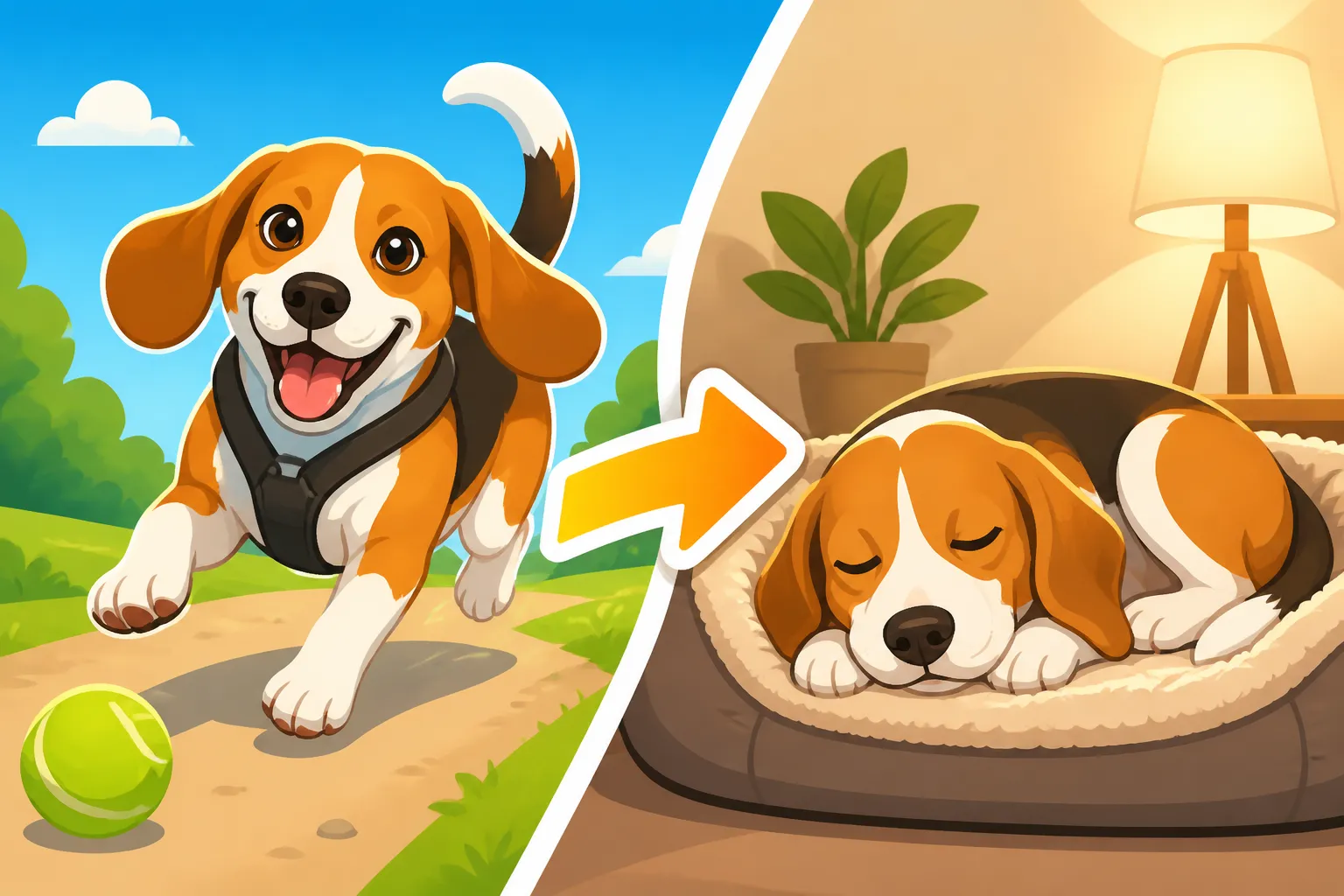
A Beagle that has received adequate physical and mental exercise will exhibit distinct behaviors. After a good session, they'll be happy to settle down for a nap, perhaps curled up in their bed or on the couch, sleeping soundly. They won't be pacing, whining, or constantly seeking attention with nudges or insistent barks. You'll notice a general sense of calm throughout the day; they might still be curious and engaged, but they won't be wound up or hyperactive. Their attention span for training might improve, and they'll be more responsive to cues.
They'll also be less likely to engage in destructive behaviors. A well-exercised Beagle isn't looking for ways to burn off excess energy by chewing furniture, digging up the yard, or counter-surfing. Instead, they'll channel their curiosity into appropriate outlets, like exploring their toys or peacefully observing their surroundings. These are the tell-tale The Signs a Beagle Has Had Enough Exercise – a contented sigh, a deep sleep, and a generally peaceful demeanor. It's the moment you realize your effort has paid off, and you have a happy, balanced dog.
Behavioral Clues of Insufficient Activity
On the flip side, an under-exercised Beagle will often be a challenge. They have a deep well of energy and an active mind, and if these aren't given appropriate outlets, they will find their own ways to cope – ways that are rarely convenient or pleasant for you. One of the most common signs is destructive chewing. That favorite pair of shoes, the leg of the coffee table, or even digging at carpets can all be attempts to release pent-up energy and boredom. They might start to raid the trash more often or become persistent counter-surfers, driven by both their nose and a need for stimulation.
Excessive vocalization is another huge indicator. Beagles are known for their baying, but if your Beagle is constantly howling, baying, or barking, especially at times when they should be resting, it often signals frustration and unmet needs. This could escalate to Beagle Howling, Baying and Barking Explained in detail. They might also exhibit restless pacing, an inability to settle down even after a short walk, or an increased tendency to seek attention through nipping or jumping. Some Beagles develop what looks like Beagle Separation Anxiety in a Pack Breed if they are left alone without enough prior exercise and mental engagement, leading to distress and further destructive behaviors. These are all clear signals that your Beagle needs more, or different, types of exercise.
Integrating Exercise with Diet and Rest
Exercise, while critical, isn't a standalone component of a Beagle's well-being. It works in tandem with proper nutrition and adequate rest to create a truly balanced and healthy hound. Think of it as a three-legged stool: if one leg is wobbly, the whole thing falls apart. A dog can't perform well, recover effectively, or maintain optimal health if these foundational elements aren't in sync.
Fueling Their Fun: Nutrition for Active Beagles
An active Beagle needs appropriate fuel to maintain their energy levels and support muscle and joint health. This means a high-quality diet that provides the right balance of protein, fats, and carbohydrates. Cheaper, filler-heavy foods might not provide the necessary nutrients, potentially leading to lower energy, poor coat health, and slower recovery after exercise. It's not just about how much they eat, but what they eat. Brands like Ollie, which offer fresh, human-grade dog food, can be an excellent option for active Beagles, providing nutrient-dense meals tailored to their needs.
Portion control is also paramount. Beagles are notoriously food-driven and prone to obesity, which can severely impact their ability to exercise and put undue strain on their joints and back. Always measure their food and factor in any treats given during training or as rewards. If your Beagle is particularly active, consult with your vet to ensure their calorie intake matches their output, avoiding both excess weight gain and insufficient energy. Understanding their caloric needs, as discussed in Daily Calories for a 13-Inch Against a 15-Inch Beagle, is fundamental to their overall health and exercise capacity.
The Importance of Downtime and Quality Sleep
Just as important as burning energy is allowing your Beagle time to recover and recharge. Consistent, quality sleep is crucial for muscle repair, mental processing, and overall well-being. An over-tired Beagle can sometimes be just as cranky and restless as an under-exercised one. Puppies and senior Beagles, in particular, need significant amounts of sleep throughout the day. Even adult Beagles benefit from dedicated downtime, especially after intense exercise sessions.
Provide a comfortable, quiet, and secure space for your Beagle to rest undisturbed. A crate, when introduced positively, can become a safe haven for sleep and relaxation, especially for a breed that was traditionally bred to sleep in packs and values a den-like space. This aligns with principles found in Crate Training a Beagle Bred to Sleep in a Pack. Establish a consistent routine that includes regular feeding times, exercise periods, and clear wind-down times in the evening. This predictability helps them understand when it's time to be active and when it's time to settle, contributing greatly to their overall contentment and health.
Disclaimer
This article is for general informational purposes only and does not constitute professional advice. Laws, prices and regulations vary by location and change over time. Consult a qualified professional for guidance on your specific situation.