How Far a Beagle Puppy Should Walk by Month
One of the biggest head-scratchers for new Beagle puppy parents is figuring out just how much exercise is enough – or, perhaps more importantly, not too much. You know your little hound has boundless energy and that incredible nose, but you also hear whispers about protecting growing joints. It's a real tightrope walk trying to balance their need to explore and burn off steam with the crucial need to keep them safe while their bodies are still developing. This guide is here to walk you through a practical, month-by-month approach to exercising your Beagle puppy, helping you nurture their adventurous spirit without risking their long-term health.
The Delicate Balance of Puppy Exercise: Growth Plates and Energy
Bringing home a wriggly, floppy-eared Beagle puppy is pure joy, but it comes with a lot of responsibility, especially when it comes to their physical development. Those first few months are critical for forming strong bones and healthy joints, and understanding why we limit exercise during this period is key.
Understanding Growth Plates and Injury Risk
Deep inside your adorable Beagle puppy's long bones, there are areas of soft, growing cartilage called growth plates. Think of them as the construction zones where new bone is being laid down, allowing your puppy to get bigger and taller. These growth plates remain open and vulnerable until your puppy reaches skeletal maturity, which for most Beagles is somewhere between 12 and 18 months of age. Until they "close" and harden into solid bone, they are incredibly susceptible to injury.
Too much high-impact activity, like jumping off furniture, long periods of running, or even excessive stair climbing, can stress these delicate areas. An injury to a growth plate can lead to long-term issues, such as uneven limb growth, lameness, or even conditions that mimic or contribute to problems like Beagle Hip Dysplasia and Everyday Joint Wear or premature Beagle Arthritis Arriving in Middle Age. It's a scary thought, especially when you see your puppy zooming around like a furry rocket! Your Beagle's genetics might predispose them to certain joint issues, but responsible management of their puppyhood exercise can go a long way in prevention. We want those joints to grow strong and healthy, not be prematurely worn down.
The "Five-Minute Rule" for Controlled Activity
So, how do you manage exercise without stifling their natural puppy exuberance? Enter the "five-minute rule." This is a widely accepted guideline among vets and breeders for structured exercise for puppies. The rule states that your puppy should get approximately five minutes of structured exercise per month of their age, typically twice a day.
Let's break that down:
- A two-month-old puppy would get roughly 10 minutes of structured exercise, twice a day.
- A three-month-old puppy would get 15 minutes, twice a day.
- A six-month-old puppy would get 30 minutes, twice a day.
It's important to clarify what "structured exercise" means here. We're talking about controlled activities like a leash walk around the block, a focused training session, or a game of fetch with a few throws, not an hour of continuous, high-intensity running or rough-and-tumble play at the dog park. This structured time helps build their stamina gradually and teaches them leash manners, while still being gentle on their developing bodies. Free play in a secure, level backyard is still vital, but that's a different category of activity, and it should still be supervised to prevent excessive exertion or risky maneuvers.
Month-by-Month Guide to Beagle Puppy Walks
Now that we understand why we're being careful, let's look at how that translates into practical walking advice for your growing Beagle puppy. Remember, these are guidelines, and you should always observe your individual puppy's energy levels and cues.
Eight Weeks to Three Months (2-3 Months Old)
When you first bring your Beagle puppy home, typically around eight weeks old, their world is brand new and full of overwhelming smells and sounds. At this age, their "structured" walks should be very short and frequent. Following the five-minute rule, a two-month-old puppy needs about 10 minutes, twice a day.
The primary goals during this period aren't about covering distance; they're about socialization, potty training, and getting comfortable with a collar and leash. Think of these as "sniffari" sessions rather than power walks. Let your puppy explore new smells on the ground, hear cars go by (from a safe distance!), and see different people. These experiences are hugely mentally stimulating and far more tiring than you might imagine. Because puppies this young also have tiny bladders, integrating short walks with frequent potty breaks naturally works well. Many new owners discover that a Beagle Puppy Sleep and Waking at Three in the morning often means they need an immediate trip outside, which is a perfect opportunity for a quick, exploratory wander. Keep the pace slow, let them dawdle and sniff, and carry them if they get tired or seem overwhelmed. Remember, their immune systems are still developing too, so be mindful of where you walk them until they're fully vaccinated.
Four to Six Months Old
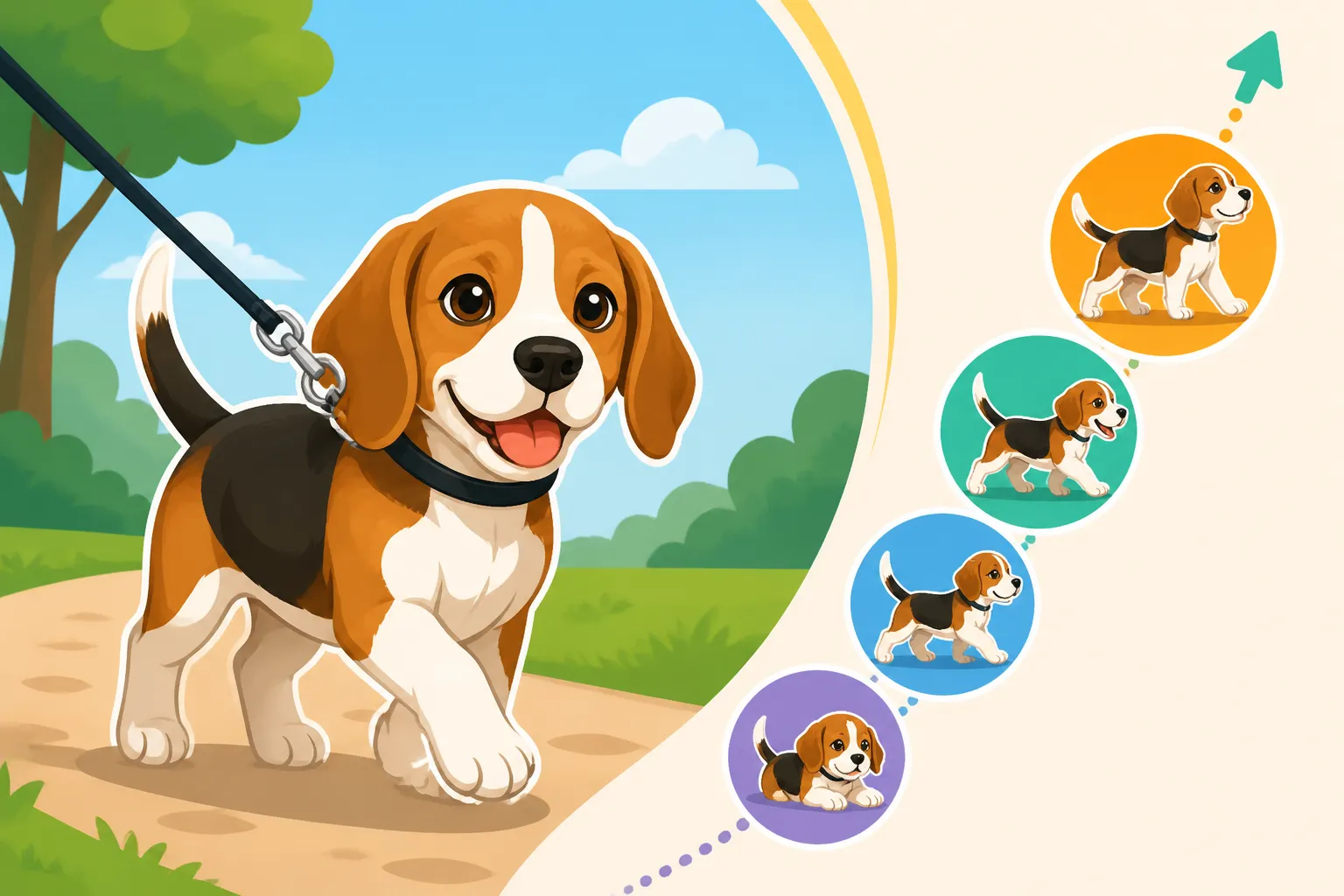
As your Beagle puppy grows, their energy levels will likely soar, and their confidence will build. At four months, you're looking at about 20 minutes of structured walking, twice a day. By six months, that increases to about 30 minutes, twice a day.
During this stage, your puppy will start to feel more robust, but those growth plates are still very much open. You can begin to extend the duration of your walks slightly and introduce a bit more variety in your routes. Focus on continuing to build good leash manners; this is a prime time for Leash Training a Beagle From Eight Weeks. A Beagle's nose is a powerful tool, and they'll want to follow every interesting scent. Allowing them dedicated sniffing time during walks is not only enriching but also helps to mentally tire them out. However, avoid long, forced marches or taking them jogging with you. Their bodies simply aren't ready for that kind of repetitive impact. Instead, mix in short bursts of faster walking with plenty of slower, investigative sniffing. Keep an eye on their stamina; if they start to lag, pant excessively, or lie down, it’s time to head home.
Seven to Twelve Months Old
This is often the adolescent phase for Beagles, a time when they possess seemingly boundless energy but are still physically maturing. At seven months, you're looking at 35 minutes of structured walking, twice daily, increasing to 60 minutes, twice daily, by the time they hit a year old.
While your Beagle might look like a miniature adult, their growth plates are still in the process of closing. You can gradually increase the length and moderate the pace of your walks. Exploring new trails, parks, or even quiet urban areas (always on leash!) can be a wonderful adventure. This is also an excellent age to introduce more structured mental stimulation alongside physical activity. Activities like beginner Beagle scent work classes can be incredibly fulfilling, tapping into their natural instincts and burning mental energy without putting undue stress on their joints. You might notice that Beagle Adolescence and Sudden Selective Hearing can make walks a bit more challenging, so consistent training and high-value treats are your best friends. Continue to avoid activities that involve high jumps, hard landings, or long-distance running on hard surfaces. The focus remains on steady, controlled exercise that strengthens their body and engages their mind.
Twelve Months and Beyond: Full-Grown Beagle Exercise
Around 12 to 18 months, most Beagles will have reached skeletal maturity, meaning their growth plates have finally closed. The Month a Beagle Stops Growing Upward typically signals the time when you can begin to transition to more strenuous exercise.
An adult Beagle is an energetic hound and generally needs at least 60-90 minutes of vigorous exercise daily, often broken into two or three sessions. This can include longer walks, moderate jogging (once cleared by your vet and after gradual conditioning), hiking on varied terrain, or more intense games of fetch. Keep in mind that "vigorous" for a Beagle doesn't always mean running flat out; often, a long "sniffari" where they are actively tracking scents can be incredibly tiring and satisfying for them.
It's absolutely crucial to remember that a Beagle's powerful nose means they should almost never be off-leash in an unfenced area. Their instinct to follow a scent trail can override any training, making Why a Beagle Should Never Be Off Leash Unfenced a golden rule for their safety. Long lines in open, safe fields can be a great way to allow them more freedom to run and explore while still keeping them connected to you.
Beyond Leash Walks: Other Forms of Puppy Exercise
While leash walks are a cornerstone of your puppy's physical development and training, they are far from the only way to help your Beagle burn energy and grow into a well-adjusted adult. A diverse exercise routine is beneficial for both their body and mind.
Supervised Free Play in a Secure Area
Free play is absolutely vital for puppies. It allows them to express natural behaviors, practice social skills, and burn energy at their own pace without the structured demands of a leash walk. If you have a securely fenced yard, allow your Beagle puppy supervised time to run, explore, and simply be a dog. This is especially important for Beagles, who are known for their ability to find any weakness in a fence, so ensuring your Beagle Escape Artistry and How to Contain It is contained is paramount.
If your puppy is social and fully vaccinated, playdates with other calm, vaccinated puppies or gentle, adult dogs can be wonderful. However, always supervise closely to ensure play remains appropriate and doesn't become too rough or overstimulating. A puppy that's constantly being chased or overwhelmed by a larger, boisterous dog can quickly become stressed or injured. The key is to let them initiate and end play, allowing them to take breaks when they need them.
Mental Stimulation and Training Games
For a Beagle, mental exercise can be just as tiring, if not more so, than physical exercise. Their incredible noses mean that engaging their minds with scent work is a fantastic way to burn energy without stressing developing joints.
- Puzzle Feeders and Snuffle Mats: Instead of just putting their food in a bowl, make them work for it. Puzzle feeders or snuffle mats (which you can find readily on Amazon or Chewy) require your puppy to use their brain and nose to extract treats or kibble. This slows down eating and provides mental enrichment.
- Hide-and-Seek: Hide small, high-value treats around the house and encourage your Beagle to find them. This engages their natural scenting abilities. Brands like Ollie offer fantastic, healthy treats that are perfect for this kind of game.
- Short Training Sessions: Break up training into short, frequent sessions throughout the day. Teaching new cues like "sit," "stay," "down," or working on Beagle Recall Games to Play in the Backyard can be surprisingly tiring for a puppy.
- "Sniffing Walks": As mentioned, even on a leash walk, allowing your Beagle to really take in the smells around them is a form of mental exercise. Sniffing Walks and Why They Tire a Beagle Out quickly, satisfying their hound instincts.
Avoiding Over-Exercise: Signs Your Puppy is Tired
It's easy to get carried away when you have an enthusiastic puppy, but recognizing the signs of fatigue is crucial to prevent injury and burnout. Your puppy won't always stop themselves!
Look for these cues:
- Lagging Behind: If your puppy usually pulls ahead but suddenly starts walking slowly or behind you.
- Excessive Panting: While normal after some activity, if it's sustained and heavy, even in cool weather, it's a warning sign.
- Seeking Shade or Lying Down: Actively trying to rest, especially if they flop down mid-walk.
- Stumbling or Uncoordinated Movements: This is a clear sign they're overexerted.
- Reluctance to Move: They might sit and refuse to get up.
- Increased Nipping or Crabbiness: Just like human toddlers, overtired puppies can become irritable and prone to misbehavior.
Always err on the side of caution. If you see any of these signs, end the activity immediately and allow your puppy to rest. Be especially vigilant in warm weather; Beagles, with their dense coats, can be susceptible to overheating, so be aware of Exercising a Beagle Through Hot Summer Weather. Pushing a puppy beyond their limits can lead to joint damage, heatstroke, or even create a negative association with exercise.
Tools and Tips for Safe and Effective Puppy Walks
Setting your Beagle puppy up for successful, safe, and enjoyable walks involves more than just knowing how long to walk them. Having the right gear and understanding environmental factors play a huge role.
Essential Gear for Puppy Walks
Before you even step out the door, gather your essentials. The right equipment can make all the difference in comfort and safety for both you and your puppy.
- Harness, Not Just a Collar: For a puppy, especially a strong-willed Beagle, a well-fitting harness is almost always preferable to a collar for walks. It distributes pressure across their chest and shoulders rather than on their delicate neck and trachea, which is important for protecting their developing spine and preventing injuries if they pull. Many trainers recommend a front-clip harness, as it gently redirects a pulling puppy back towards you, which can be very effective for a breed that tends to pull towards an interesting scent. This helps protect your Beagle's neck, especially if they suddenly lunge, which ties into the importance of Why a Harness Protects a Beagle's Neck.
- Sturdy Leash: A 6-foot nylon or leather leash is a good standard. Avoid retractable leashes for puppies, as they teach pulling and offer less control, which is not ideal when you're working on Leash Training a Beagle From Eight Weeks.
- Poop Bags: This should go without saying, but always, always carry enough poop bags. Being a responsible dog owner means cleaning up after your pet, no matter where you are.
- Water and Collapsible Bowl: For any walk longer than a quick potty break, especially on warmer days, bring water for your puppy. A small, collapsible bowl is easy to carry.
- High-Value Treats: Keep a small pouch of irresistible treats readily accessible for positive reinforcement during training moments or to reward good behavior. You can find excellent training treats on Chewy that are small, soft, and easy for puppies to eat quickly.
Weather Considerations and Paw Protection
The environment you walk in can significantly impact your puppy's comfort and safety.
- Hot Pavement: In warmer months, asphalt and concrete can get scorching hot, easily burning your puppy's paw pads. If it's too hot for your bare hand, it's too hot for their paws. Opt for walks in the grass, go out during cooler morning or evening hours, or use booties if necessary. Remember, Beagles don't cool as efficiently as humans, so avoiding Exercising a Beagle Through Hot Summer Weather during peak heat is vital.
- Cold Weather: While Beagles have a double coat, extreme cold, ice, and road salt can still be an issue. Watch for shivering, lift paws to check for ice balls, and consider paw balm for protection.
- Rainy Days: Don't force a long walk in a downpour. On rainy days, shift focus to indoor games, puzzle feeders, and short, frequent potty trips outside. A wet Beagle can lead to ear infections, which are common in the breed due to their long, floppy ears.
- Rough Terrain: Be mindful of sharp rocks, broken glass, or other hazards that could injure tender puppy paws. Beagle Paw Pad Cracks After Field Walks are something you want to avoid.
Incorporating Potty Breaks and Socialization
Every walk is an opportunity for more than just physical exercise.
- Potty Training Reinforcement: Especially for younger puppies, every outdoor excursion is a chance to reinforce good potty habits. Praise and reward them lavishly when they relieve themselves outside.
- Critical Socialization: Early exposure to a variety of safe, positive experiences is crucial for your Beagle puppy's development into a confident, well-adjusted adult. This means exposing them to different sights, sounds (like traffic, construction, children playing), smells, surfaces, and friendly, vaccinated people and dogs. Beagle Puppy Sound Exposure Before Sixteen Weeks is a vital period for this. Keep these experiences positive and don't overwhelm your puppy. If they seem scared or uncomfortable, move further away or provide comfort. The goal is positive association, not forced exposure.
By being prepared, mindful of their growing bodies, and attentive to their individual needs, you can ensure that your Beagle puppy's early walks are a foundation for a lifetime of happy, healthy adventures.
| Age of Beagle Puppy | Structured Walk Duration (Per Walk) | Frequency (Per Day) | Primary Focus | Things to Avoid |
|---|---|---|---|---|
| 8 Weeks | 10 minutes | 2-3 times | Potty training, socialization, leash comfort, sniffing | Long distances, forced jogging, high impact |
| 3 Months | 15 minutes | 2 times | Leash manners, continued socialization, exploration | Excessive running, jumping, stairs |
| 4 Months | 20 minutes | 2 times | Building stamina, basic obedience, varied routes | Rough play with large dogs, long hikes |
| 5 Months | 25 minutes | 2 times | Expanding environments, consistent leash work | Steep inclines/declines, repetitive fetch |
| 6 Months | 30 minutes | 2 times | Increasing pace, mental challenges, sniff games | Any activity causing limping or excessive panting |
| 7-12 Months | 35-60 minutes | 2 times | Longer durations, moderate pace, scent work | Marathon running, agility trials, forced strenuous activity |
| 12+ Months | 60-90 minutes | 2 times | Adult exercise, hiking, jogging (gradual intro) | Over-exertion in heat, off-leash in unsecured areas |
Disclaimer
This article is for general informational purposes only and does not constitute professional advice. Laws, prices and regulations vary by location and change over time. Consult a qualified professional for guidance on your specific situation.