Whether a Second Beagle Doubles the Baying
Bringing home a second Beagle can feel like an exciting adventure, but it often comes with a whisper of anxiety: will this double the beloved, yet sometimes deafening, baying? Many of us adore the quintessential Beagle vocalizations, but a household full of baying can test even the most patient owner, and the thought of multiplying that sound can be daunting. This guide will dive deep into whether adding another Beagle truly means twice the noise, exploring the nuances of their communication, and offering practical strategies to maintain peace in a two-Beagle home.
The Complex Answer to a Simple Question: Does Two Equal Double?
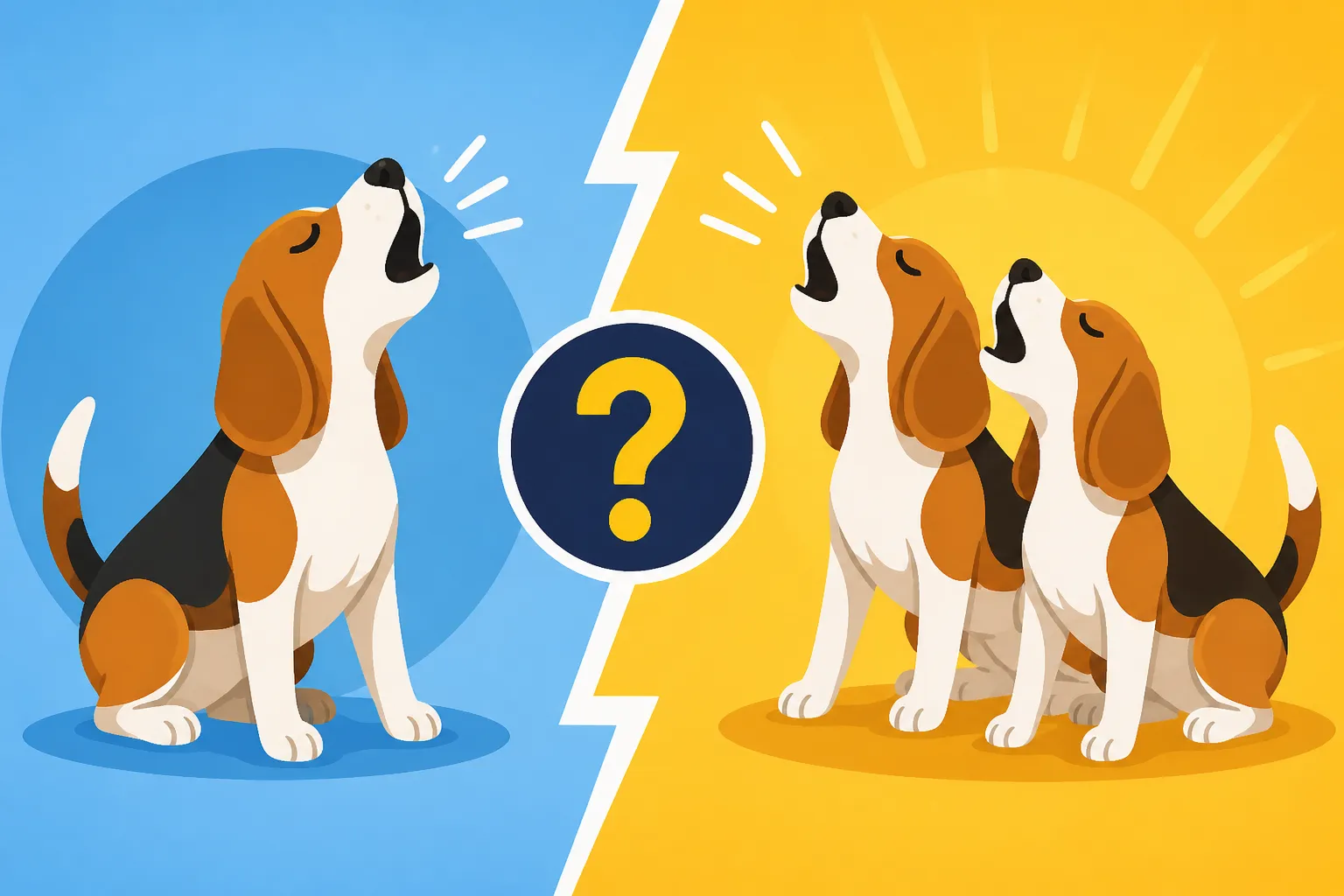
It's a common fear, and a valid one, to assume that two Beagles will automatically produce twice the baying of one. After all, if one Beagle is prone to a melodious, far-reaching howl at the sight of a squirrel, surely two will create a symphony that reaches the next county, right? The reality is a little more complicated than simple multiplication. While the potential for increased vocalization certainly exists, it's not a foregone conclusion that your ears will suffer double the decibels. Often, the interaction between two Beagles can lead to different patterns of vocalization, not just an amplification of existing ones.
The "Pack Mentality" and Vocalization
Beagles are, at their heart, pack animals. They were bred for centuries to hunt in groups, relying on their voices to communicate with their human companions and with each other across fields and through dense undergrowth. This deep-seated pack instinct can manifest in interesting ways when you introduce a second Beagle into the home. Sometimes, having a second dog can actually reduce anxiety-driven vocalizations, especially if your first Beagle suffered from separation anxiety. A companion can provide comfort and a sense of security, lessening the urge to howl lonely protests. You might find that two Beagles, when left alone, are quieter together than one was by itself, simply because they have each other for company. For a deeper understanding of their vocal nature, consider reading Beagle Howling, Baying and Barking Explained.
However, the pack mentality can also work in the opposite direction. When one Beagle starts to bay – perhaps at the mail carrier, or an intriguing scent wafting through an open window – the other might feel compelled to join in. This isn't necessarily doubling the volume, but rather creating a chorus. It's a call-and-response, an affirmation of their shared purpose (even if that purpose is just alerting you to a leaf blowing by). This "chorusing" can feel louder and more persistent than a solo performance, even if the individual volume isn't twice as high. They reinforce each other's behaviors, both good and bad, which means you'll need to be extra diligent in managing their vocal habits.
Individual Personality Still Matters
Just like people, every Beagle has a unique personality. Some Beagles are naturally more vocal than others, while some are quite reserved. You might have one Beagle who bays at everything, and another who rarely makes a sound unless truly provoked. Introducing a quiet Beagle to a vocal one doesn't guarantee the quiet one will suddenly become a chatterbox, nor does it mean the vocal one will quiet down. Instead, you'll see an interplay of their individual tendencies. A strong, confident, and more vocal Beagle might influence a shyer, quieter one to be more expressive. Conversely, a calm, settled second Beagle could potentially help temper the excitability of a more boisterous first dog.
The breed standard itself describes Beagles as "merry" and their voice as "a musical bay," but it doesn't quantify how often that bay should be heard! Factors like their genetic lineage (some lines are bred for more vocal hunting work), early socialization, and past experiences all play a huge role. For example, a rescue Beagle who has never lived with another dog might initially be overwhelmed by a vocal housemate but could adapt over time, or they might simply continue their quieter ways. The key is to assess both dogs as individuals and understand that their combined vocal output will be a product of their unique personalities and how they bond as a pair.
Understanding Why Beagles Bay in the First Place (and How a Second Changes It)
To effectively manage vocalization in a two-Beagle household, it’s crucial to understand the fundamental reasons behind a Beagle's baying, barking, and howling. These aren't just random noises; they are deeply ingrained communication tools, honed over centuries of working in packs. Once you grasp the 'why,' you can better predict and influence the 'how' when a second furry friend enters the picture. The presence of another Beagle can amplify some of these reasons, or in some cases, even mitigate them.
Scent-Driven Communication
The Beagle's nose is legendary, packing around 220 million scent receptors. This incredible olfactory ability means their world is primarily experienced through scent. When a Beagle detects an interesting trail—a rabbit that passed by hours ago, a neighbor’s cat, or even a new person on the street—their natural instinct is to announce it. This is where the bay comes in. It’s a primal announcement to the pack: "I've found something! Follow me!" For more on this, check out Training a Beagle Around 220 Million Scent Receptors.
With two Beagles, this scent-driven communication can become a collaborative effort. If one Beagle picks up an intriguing scent and starts to bay, the other Beagle, often equally nose-driven, will likely key into that excitement. They might not smell the exact same thing, but they'll certainly respond to their packmate's enthusiasm. This can lead to a synchronized "scent alert" chorus. Imagine two Beagles by the window, both baying at a distant deer scent – it's a powerful combination. It’s not necessarily twice the sound because they’re usually baying together rather than independently, but the sustained, excited vocalization feels very much amplified. Providing ample opportunities for supervised scent work, perhaps with snuffle mats or puzzle toys available on platforms like Chewy, can help satisfy this urge in a controlled way, reducing undirected baying.
Attention-Seeking and Boredom
Beagles thrive on companionship and activity. When they’re bored, under-exercised, or feeling ignored, they are experts at letting you know through their voices. A lonely howl or persistent bay can be a desperate plea for engagement, a game of fetch, or simply some affection. If you find your single Beagle bays every time you leave the room or don't engage with them, you're likely dealing with attention-seeking or boredom.
Introducing a second Beagle can sometimes alleviate this. Two Beagles can entertain each other, engage in play, and provide mutual comfort, potentially reducing the need to vocalize for human attention. This is often why people find that Whether a Second Dog Calms an Anxious Beagle can be true, especially for separation anxiety. They have a built-in companion. However, if both Beagles are under-exercised or under-stimulated, you could find yourself with two dogs vying for your attention, perhaps by "talking" to each other, or worse, joining forces to vocalize at you. It's vital to ensure both dogs receive adequate physical exercise and mental enrichment to prevent boredom from turning into a baying marathon. Daily sniff walks, interactive toys, and training sessions are paramount.
Alarm and Territory
Beagles are generally friendly dogs, but they are also alert. They'll let you know when someone is at the door, or if a stranger is walking by the house. This alarm barking is usually triggered by a visual or auditory stimulus within their perceived territory. While not typically guard dogs, their instinct to alert the "pack" (you!) is strong.
With two Beagles, this alarm response can become amplified. If one Beagle spots a delivery person, their initial bark or bay can immediately trigger the second Beagle to join in, creating a more imposing and potentially louder alert. They reinforce each other's perception of a "threat" or novelty. This is where you might truly feel the effect of "doubled" baying, as both dogs are responding to the same trigger and feeding off each other's energy. Moreover, if your Beagles are particularly bonded, they might become more territorial as a unit, feeling a stronger collective need to protect their space. Understanding How Loud a Beagle Bay Actually Measures can help you prepare for how this might sound to your neighbors. Management here often involves proactive desensitization to common triggers and teaching a "quiet" cue.
Practical Strategies for Managing Baying in a Two-Beagle Household
The good news is that living with two Beagles doesn't have to mean living with non-stop noise. While their vocal tendencies are inherent, there are many proactive steps you can take to manage and reduce excessive baying. The key is consistency, patience, and a deep understanding of your Beagles' individual and collective needs. Think of it as conducting an orchestra: you want to guide their beautiful voices, not silence them completely.
Consistent Training and Reinforcement
Training is paramount, perhaps even more so with two Beagles. What you teach one, you should aim to teach the other, and critically, you need to apply the rules consistently to both. If one Beagle learns that quiet behavior earns a treat, and the other sees its baying rewarded with attention (even negative attention), you’re sending mixed signals.
- Teach a "Quiet" Cue: Start by teaching a "quiet" command when a Beagle is barking. Wait for a moment of silence, then reward lavishly with a high-value treat. Once one Beagle understands, practice with both. When the mail carrier comes, acknowledge their presence, then immediately ask for "quiet." Reward both Beagles the moment they stop vocalizing, even if it's just for a second. Over time, they'll learn that silence, not sound, brings the good stuff.
- "Go to Place": Teach your Beagles to go to a designated "place" (like their bed or crate) on command. This can be invaluable when guests arrive or when external triggers are causing excessive vocalization. Rewarding them for calmly staying in their place while the stimulus passes teaches them an alternative, calmer behavior.
- Manage Triggers: Identify what sets your Beagles off. Is it passersby? Other dogs? Certain noises? Once you know the triggers, you can either minimize exposure (e.g., use window film, play white noise) or work on desensitization. For instance, have someone walk by the house while you reward your Beagles for remaining calm and quiet. Slowly increase the intensity of the trigger as they succeed. More tips on this can be found in Managing the Triggers That Set a Beagle Off.
- Reward Calmness: Don't just focus on stopping the noise. Actively reward your Beagles when they are not vocalizing, especially in situations where they might typically bay. If they are lying quietly while a squirrel runs through the yard, praise them and offer a calm treat. This reinforces that quiet, settled behavior is valued.
Environmental Enrichment for Two
Boredom and insufficient mental and physical stimulation are huge contributors to excessive Beagle vocalization. With two Beagles, you have twice the energy to burn and twice the brains to engage.
- Plenty of Exercise: Beagles need regular, vigorous exercise. This isn't just a quick stroll around the block. Aim for at least 60-90 minutes of active exercise daily, spread across several outings. Scent walks, where they can thoroughly investigate interesting smells, are incredibly tiring for a Beagle. Two Beagles can double the fun, but also double the energy output needed. Running, hiking on a long line, or playing structured games in a securely fenced yard are great options.
- Mental Stimulation: Their intelligent noses need a job. Provide puzzle feeders for their meals, scattering their kibble across the yard for them to sniff out, or using snuffle mats. Brands like Chewy offer a wide array of interactive toys and puzzle feeders designed to challenge their minds and noses. Long-lasting chews (appropriate for their size and chewing style) can also keep them occupied. Rotate toys to keep things fresh and exciting.
- Structured Play: Encourage appropriate play between your Beagles. Supervised rough-and-tumble can burn off energy and reinforce their bond. However, be mindful if their play becomes overly boisterous or if one dog starts to instigate excessive vocalization during play. Interrupt, redirect with a quiet activity, and then let them resume.
- Separation Practice: Even if your Beagles love each other's company, it's good for them to be comfortable spending short periods alone, even if it's just in separate crates in the same room. This prevents over-reliance on each other and ensures that if one dog needs to be away for a vet visit, the other isn't completely lost. Address Beagle Separation Anxiety in a Pack Breed proactively, even with a companion.
Noise Containment and Neighbor Relations
Even with the best training and enrichment, Beagles will still bay sometimes. Their voices are a part of who they are! But you can take steps to minimize the impact on your household and your neighbors.
- Soundproofing: Consider making one room more sound-resistant. Heavy curtains, rugs, bookshelves filled with books, and even specific sound-dampening panels can help absorb sound. This can be especially useful if your Beagles are prone to baying at external noises. For suggestions on making a dedicated quiet space, you might find Soundproofing One Room for a Vocal Beagle helpful.
- White Noise: A fan, air purifier, or a white noise machine can help mask external sounds that might trigger your Beagles. This creates a more consistent auditory environment and can make sudden noises less startling.
- Talk to Your Neighbors: Open communication with your neighbors is crucial. Let them know you're working on managing your Beagles' vocalizations. Ask them to kindly let you know if the baying becomes problematic at specific times. Sometimes, just knowing you're aware and actively trying can make a big difference in maintaining good neighborly relations, as discussed in Beagle Noise and the Neighbors Next Door.
- Secure Fencing: A securely fenced yard is non-negotiable for Beagles, especially two. Their noses will lead them far astray if given the chance. A good fence prevents them from chasing scents outside your property, which can lead to frantic baying. Double-check that there are no gaps they can squeeze through or dig under.
Beyond the Bay: Other Considerations for Adding a Second Beagle
While the potential for increased vocalization is a primary concern for many considering a second Beagle, it's just one piece of the puzzle. Bringing another dog into your home significantly changes the dynamics in numerous ways, and being prepared for these broader implications will ensure a smoother transition for everyone involved. It's about more than just managing sound; it's about managing a new family unit.
The Financial Impact of Two
It might sound obvious, but two Beagles means double the expenses in almost every category. This isn't just about food; it's about veterinary care, training, supplies, and potential emergency costs. If you think The Annual Cost of Feeding One Beagle is significant, imagine that doubled.
- Food and Treats: Two hungry Beagles can go through food at an astonishing rate. High-quality food is essential for their health, and feeding two means a larger monthly grocery bill. Treats for training and enrichment also add up quickly. Keeping an eye on Beagle Food Budgets for a Dog That Never Stops Eating will become even more important. Many owners find it cost-effective to buy larger bags of kibble or stock up on treats from retailers like Chewy.
- Veterinary Care: Routine vet visits, vaccinations, parasite prevention (flea, tick, heartworm), and dental care will all be for two. If one or both Beagles develop a chronic condition like Beagle Hypothyroidism and the Weight It Puts On or Beagle Epilepsy and Seizures From Six Months On, the medication and ongoing monitoring costs will also double. Pet insurance can help, but premiums will be for two policies.
- Supplies and Equipment: You'll need two of many things: beds, bowls, collars, harnesses, leashes (or long lines), and grooming tools. Toys will also need more frequent replacement, as two Beagles can be quite destructive in their play. Having a well-stocked supply closet makes things easier.
- Training and Boarding: If you opt for professional training classes or hire a private trainer, you might need to pay for two dogs or find a trainer comfortable working with a pair. Boarding or pet-sitting services will also charge more for two animals.
It’s prudent to sit down and realistically budget for the financial impact before committing to a second Beagle. An emergency fund is always a good idea for any pet owner, and with two, that fund should ideally be larger.
Double the Training Needs
While two Beagles might learn from each other, they also represent double the training effort. What works for one might not work for the other, and managing two energetic, scent-driven dogs simultaneously requires excellent multi-tasking skills.
- Individual Attention: While they are pack animals, each Beagle still needs individual attention and training time. This builds their bond with you and addresses their unique learning styles and behavioral quirks. Don't assume that if one learns a command, the other will automatically follow suit.
- Leash Manners: Walking two Beagles, especially if they are both prone to pulling on a scent, can be a real workout. Investing in good harnesses that discourage pulling (like front-clip harnesses) and practicing loose-leash walking with each dog individually before attempting it with both is crucial. A double leash coupler can be useful, but only once both dogs have mastered basic leash manners separately.
- Socialization: While your new Beagle will be socialized to your existing dog, remember they still need broader socialization to other people, dogs, and environments. This is particularly important for a Beagle Puppy Nipping and Where It Comes From or a rescue dog that might have limited prior exposure.
- Resource Guarding: With two dogs, there's always a potential for resource guarding – where one dog becomes protective of food, toys, sleeping spots, or even human attention. Feed them separately, provide multiple beds and toys, and ensure you give equal attention and affection to both to minimize this risk. Watch for subtle signs of tension during mealtimes or when distributing treats.
Ultimately, adding a second Beagle is a decision that brings immense joy and companionship, but it's one that requires thoughtful consideration and preparation. While the baying might not exactly double, the responsibility and the dynamic certainly shift. With consistent effort, good management, and a deep love for the breed, two Beagles can live together harmoniously, filling your home with double the love, and perhaps, a wonderfully managed chorus of contented bays.
Disclaimer
This article is for general informational purposes only and does not constitute professional advice. Laws, prices and regulations vary by location and change over time. Consult a qualified professional for guidance on your specific situation.