Walking the Beagle Fence Line Every Spring
There's a special kind of dread that washes over a Beagle owner when they realize their beloved hound has vanished from the yard. It's not just the fear for their safety, but the nagging question: "How did they get out this time?" For many of us, spring signals not only new growth and warmer weather but also a critical time to meticulously inspect our fences. This guide will walk you through exactly why a thorough spring fence line check is non-negotiable for Beagle owners and what to look for to keep your clever escape artist safely contained.
Why Spring is Prime Time for Beagle Fence Patrols
As the world wakes up after winter, so does your Beagle's innate drive to explore every scent, every rustle, and every potential adventure. This renewed vigor, combined with the subtle — and sometimes not-so-subtle — impacts of winter weather on your fence, creates the perfect storm for escapes. A fence that felt perfectly secure in the fall might now be riddled with vulnerabilities just waiting for your hound to exploit.
Thaw and Ground Shifts Creating New Weaknesses
Winter can be surprisingly harsh on fencing, even if you live in an area that doesn't get heavy snow. The freezing and thawing cycles cause the ground to expand and contract, a process known as frost heave. This constant movement puts immense pressure on fence posts, foundations, and even the earth itself. What happens when the ground shifts? Gaps, my friends, often appear right where you least expect them.
You might find posts that were once firmly anchored are now slightly tilted, creating a small space at the bottom of a panel. Wooden fences can warp and shrink as they dry out after months of moisture, leaving thin cracks or loosening boards. Chain-link fences might have posts that have lifted slightly, allowing the bottom edge to ride up just enough for a determined Beagle to squeeze under. Even seemingly solid concrete foundations can crack or shift, creating a new point of egress. It’s crucial to understand that these changes can be subtle, sometimes only a matter of an inch or two, but for a low-slung, agile Beagle, that's more than enough.
Renewed Scent-Driven Motivation in Spring
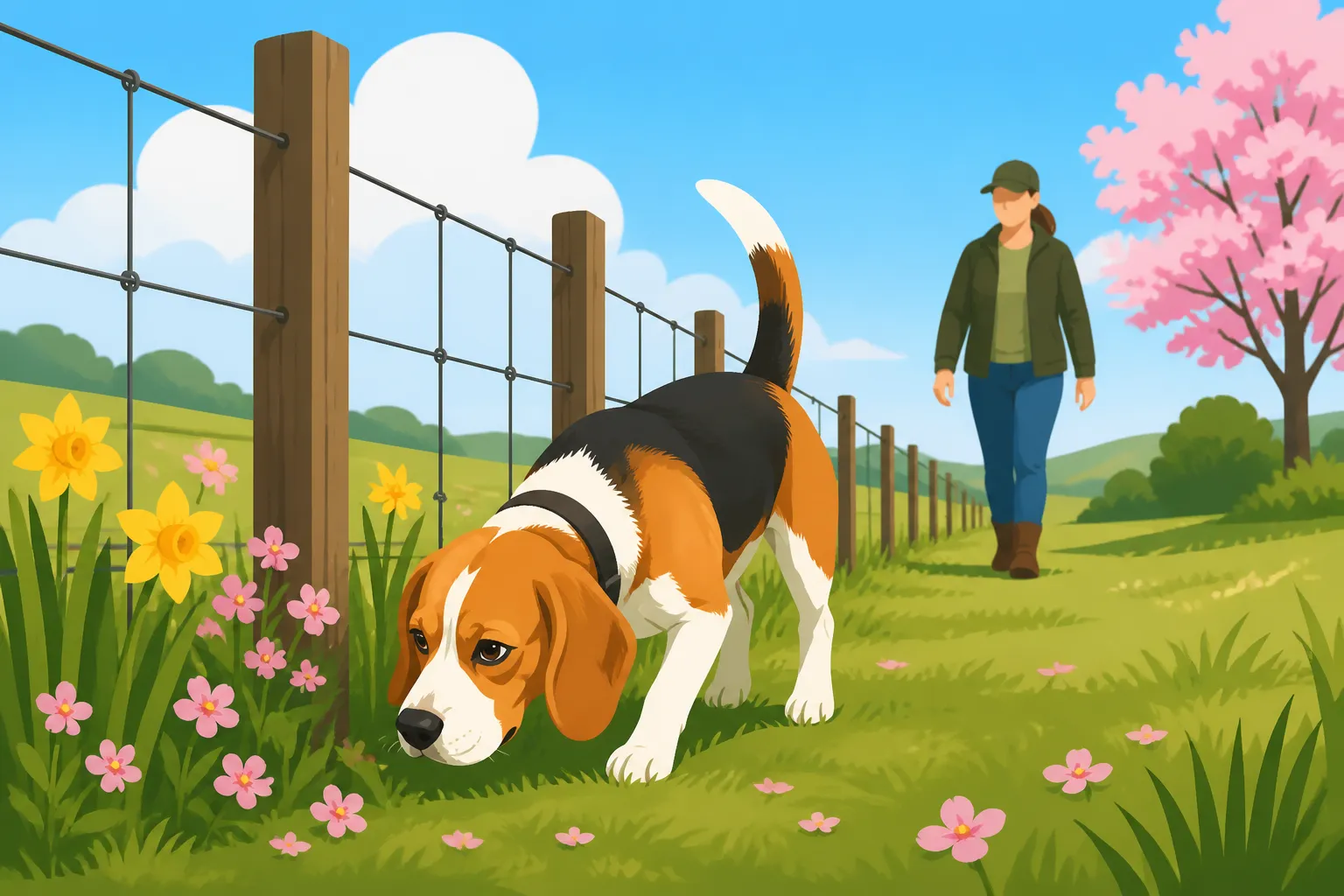
Let's be honest: a Beagle lives by its nose. All those delightful new spring smells – the awakening earth, fresh shoots, burgeoning flowers, and, most importantly, the increased activity of local wildlife – are like an irresistible siren song to a Beagle. Squirrels are more active, rabbits are out and about, and other neighborhood dogs are leaving their territorial marks with renewed gusto. For a Beagle, this isn't just background noise; it's a rich tapestry of information that must be investigated.
This heightened sensory input translates directly into a more powerful urge to follow a scent, regardless of the barriers in their way. What might have deterred them in the quieter, colder months might now seem like a minor inconvenience. Their famous single-mindedness, which makes them such excellent scent hounds, means that once a compelling scent trail is detected, their focus on you or the boundaries of the yard can diminish significantly. They are truly living in the moment, driven by ancient instincts. This is why you often hear people say Why a Beagle Will Follow a Scent for Miles. They aren't being disobedient; they are simply being Beagles.
What to Look For During Your Fence Line Inspection
Walking your fence line in spring isn't a casual stroll; it's a methodical reconnaissance mission. You need to be thinking like a Beagle, anticipating every potential weak point they might exploit. Put on your detective hat, get down on their level, and scrutinize every inch.
The Obvious and Not-So-Obvious Gaps and Holes
Start with the basics. Walk the entire perimeter, inside and out if possible. Look for broken or splintered wooden boards, loose panels, or sections of chain link that have pulled away from posts or bottom rails. Pay very close attention to the bottom edge of all fencing. Beagles are not known for their jumping prowess, but they are masters of the low crawl and the squeeze. A gap that looks too small for them from your standing height might be an open invitation to their low-to-the-ground bodies.
Check all gates thoroughly. Are the hinges secure? Is the latch working properly? Does the gate swing freely without catching, or is there a gap at the bottom or sides when closed? Sometimes, gates can sag over time, creating a gap underneath that wasn't there before. Make sure the latch you have is genuinely Gate Latches That Actually Hold a Beagle, not just one they can bump open. Look for wear and tear, rust on metal components, rotten wood at the base of posts, or cracked vinyl panels. Don't forget to check the areas where your fence meets the house or other structures; these junctions are notorious for subtle gaps that can be overlooked.
Digging Hazards and Subterranean Escape Routes
Ah, the Beagle and their digging. It's a tale as old as time. Beagles are natural diggers, not usually for dens, but to follow enticing underground scents, or simply because there's something interesting on the other side. During your spring inspection, look for any freshly disturbed earth along the fence line. Even small patches of loose dirt can indicate a Beagle's exploratory digging. These "starter holes" might seem insignificant, but they're often the first step towards a full-fledged escape tunnel.
Pay particular attention to areas under large bushes, near tree roots, or at the corners of the fence where the ground might be softer or uneven. If your Beagle has a favorite spot to relax by the fence, that's often where the digging begins, perhaps out of boredom or a strong scent. If you notice any signs of digging, even a shallow trench, it needs immediate attention. Remember, Beagle Digging Under the Fence Line is not just about getting out, it's also about satisfying their ingrained instincts.
Vegetation Overgrowth and Climbing Aids
Spring brings lush new growth, which, while beautiful, can become a security risk. Vines, shrubs, and even tall weeds growing close to your fence can inadvertently create footholds or camouflage existing weaknesses. A thick bush might hide a rotten fence post or a section of bent wire, making it harder for you to spot during your inspection. More insidiously, strong, woody vines growing on a fence can weaken its structure over time or provide a "ladder" for a more agile dog.
Trim back any vegetation that is growing on, through, or too close to your fence. This isn't just about visibility; it's about removing potential aids for an escape. For instance, if you have a retaining wall near your fence, ensure there aren't plants growing up the wall that could allow your Beagle to get enough height to clear the fence. Clearing the fence line also reduces hiding spots for small prey animals, which in turn might reduce your Beagle's motivation to breach the barrier.
Tools and Techniques for Effective Fence Maintenance
A successful fence patrol requires more than just a keen eye; it demands the right gear and a strategic approach to both inspection and repair. Thinking ahead about what you might encounter can save you a lot of frustration.
Your Essential Fence Inspection Toolkit
Before you head out, gather a few basic items. A sturdy pair of work gloves is a must, especially if you have an older fence with splinters or rusty spots. Wear comfortable, supportive shoes, as you'll be walking and crouching a lot. A notepad and pen or your phone's camera are invaluable for documenting areas that need more significant repair – it’s easy to forget a small crack or loose board if you don’t mark it down.
Bring a small tool belt with some essentials: a hammer for re-nailing loose boards, pliers for bending back errant wire, a utility knife for cutting away overgrowth, and some heavy-duty zip ties or temporary wire for quick, makeshift repairs. Having a few small pieces of scrap wood or spare chain link on hand for immediate fixes can also be incredibly helpful. The goal isn't necessarily to complete all major repairs during the inspection, but to make any immediate breach points temporarily safe until a more permanent fix can be applied. I always tell people to think of it like a first aid kit for your fence.
Repairing Gaps and Reinforcing Weak Spots
Once you've identified all the problem spots, it's time for action. For wooden fences, replace rotten boards, tighten loose screws, or add new nails. Consider reinforcing the bottom of wooden fences with an additional kickboard or a line of chicken wire buried a few inches into the ground and extending up the fence for a foot or so. This deters digging and makes it much harder for a Beagle to push through.
For chain-link fences, use heavy-gauge wire to reattach any loose sections to posts or tension bars. If there are bent sections at the bottom, try to straighten them or secure them with ground stakes. To address digging, you might need to install a wire skirt. This involves burying a section of wire mesh (like hardware cloth) horizontally along the bottom of the fence, extending it inwards into the yard by at least 12-18 inches. This creates a barrier that a digging Beagle hits before they can burrow under. For a more detailed guide on this, check out Wire Skirts Buried Along a Beagle Fence. Remember, Beagles are incredibly persistent, and if they find a weak point, they will work on it until they succeed. Addressing even tiny gaps is crucial, as How a Beagle Gets Underneath a Fence often starts with a seemingly insignificant opening.
Beyond the Fence Line: Holistic Containment Strategies
While a physically sound fence is paramount, relying solely on physical barriers is rarely enough for a clever and highly motivated Beagle. A truly secure environment for your hound involves a multi-layered approach, blending physical containment with effective training and smart management.
Training and Management as Your First Line of Defense
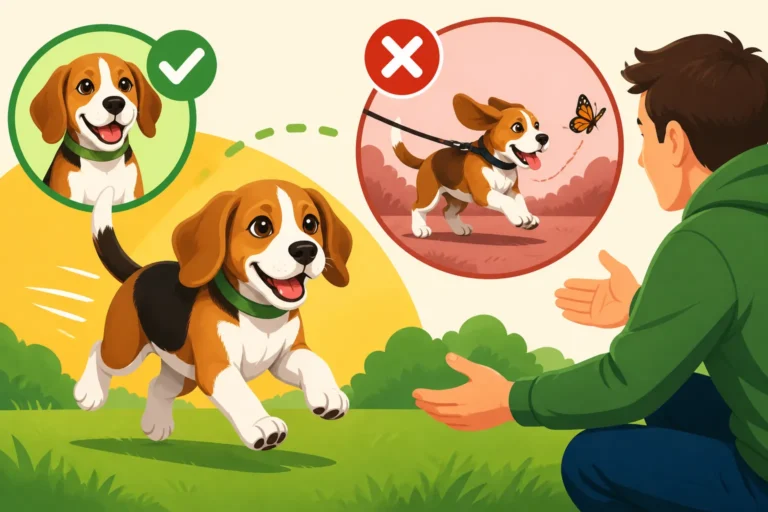
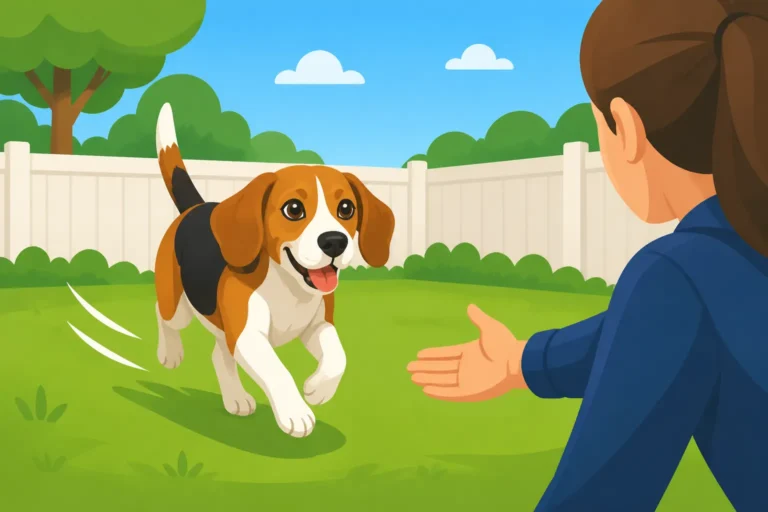
Even the most escape-prone Beagle can benefit immensely from consistent training and thoughtful management within the yard. While you might never achieve off-leash reliability outside a secure area, you can certainly train your Beagle to respond to you inside their own yard. Practice recall regularly, even if it's just calling them from one side of the yard to the other for a high-value treat. This reinforces that listening to you can be more rewarding than pursuing a scent. Beagle Recall Games to Play in the Backyard are an excellent way to make this fun and engaging.
Work on impulse control. Teach a "leave it" command for tempting smells they find on the ground within the yard. Supervise their outdoor time, especially if they are prone to digging or fence-line patrolling. Boredom is a huge motivator for escape attempts, so provide plenty of mental and physical enrichment. Puzzle toys, short training sessions, and interactive play can keep their minds busy and reduce their desire to find excitement beyond the fence. For comprehensive online training, many owners find programs like those offered by BAXTER & Bella incredibly helpful for building foundational skills that translate to better behavior in and around the yard.
Technology and Added Layers of Security
Modern technology offers excellent supplementary tools for Beagle containment. GPS trackers, like those widely available on Amazon, can be lifesavers. While they don't prevent an escape, they dramatically increase the chances of quickly locating your Beagle if they do manage to get out. Attach one securely to your Beagle's collar – ensuring it's comfortable and won't get caught on anything – and make sure it's charged and functional at all times. Remember that Beagle GPS Tracking Collar Prices vary widely, so research what features you need.
Beyond trackers, consider installing security cameras with motion detection along your fence line. These can not only alert you to suspicious activity but also help you identify where and how your Beagle is attempting to escape, allowing you to target your repairs more effectively. Some cameras even offer two-way audio, allowing you to verbally interrupt an escape attempt in progress. These technologies are fantastic backup systems, but it's crucial to view them as additional layers of security, not replacements for a strong physical fence and good training.
The Importance of a Secure Gate Protocol
Gates are statistically the weakest link in most fence systems. A momentary lapse in attention, a visitor who isn't familiar with your dog's escape artistry, or a simple malfunction can turn a secure yard into an open invitation. Establish a strict gate protocol: always ensure the gate is fully closed and latched behind you, every single time. Consider adding a second latch, a carabiner clip, or even a padlock for extra security, especially if you have kids or frequent visitors who might forget to secure it properly.
Another excellent habit is to do a quick visual check of the gate before letting your Beagle out into the yard. This takes only a second but can prevent a lifetime of regret. If your Beagle is a known "door dasher," apply the same principles to your back door that leads to the yard. Teach them to wait patiently while the door is opened and closed, preventing those heart-stopping moments when A Beagle That Bolts Out the Front Door before you can react. Consistent diligence around gates and doors is just as important as the physical integrity of the fence itself.
| Inspection Area | What to Look For (Beagle-Focused) | Action to Take |
|---|---|---|
| Ground Level | Freshly dug soil, small holes, bent wire at bottom, gaps under panels, lifted fence posts. | Fill holes, bury wire mesh (hardware cloth) along the bottom, add a kickboard to wooden fences, secure chain link with ground stakes. |
| Fence Structure | Loose, broken, or warped boards; gaps between panels; cracked vinyl; rusty, bent, or broken chain link. | Replace damaged sections, reinforce with new lumber/wire, tighten fasteners, repair cracks with appropriate sealant or panel replacement. |
| Gates & Hardware | Sagging gates, loose hinges, broken or easily manipulated latches, gaps under/around the gate. | Adjust hinges, replace broken hardware, install a more secure latch (double-latch or padlock), add a spring to make it self-closing, ensure no gaps around the gate when closed. |
| Vegetation | Vines growing on the fence, thick bushes hiding fence lines, low-hanging branches creating jump-aids. | Trim all vegetation away from the fence, clear brush along the perimeter, ensure no natural "ladders" exist. |
| Junctions & Corners | Gaps where fence meets house, shed, or other structures; corners with loose posts or easy digging access. | Seal gaps with weatherstripping, wood, or concrete. Reinforce corner posts with additional bracing or bury a wire skirt specifically in these high-risk areas where Beagles often test boundaries. Consider that The Fence Height That Actually Holds a Beagle is not just a straight line but every intersection as well. |
Spring is a season of new beginnings, and for Beagle owners, it’s the perfect time to commit to securing your yard. A thorough, proactive approach to fence maintenance, combined with smart training and technology, will give you the peace of mind that your beloved hound is safe and sound, enjoying all the wonderful scents their world has to offer without actually leaving your property. It's all part of Beagle Escape Artistry and How to Contain It, a lifelong journey for many of us.
Disclaimer
This article is for general informational purposes only and does not constitute professional advice. Laws, prices and regulations vary by location and change over time. Consult a qualified professional for guidance on your specific situation.