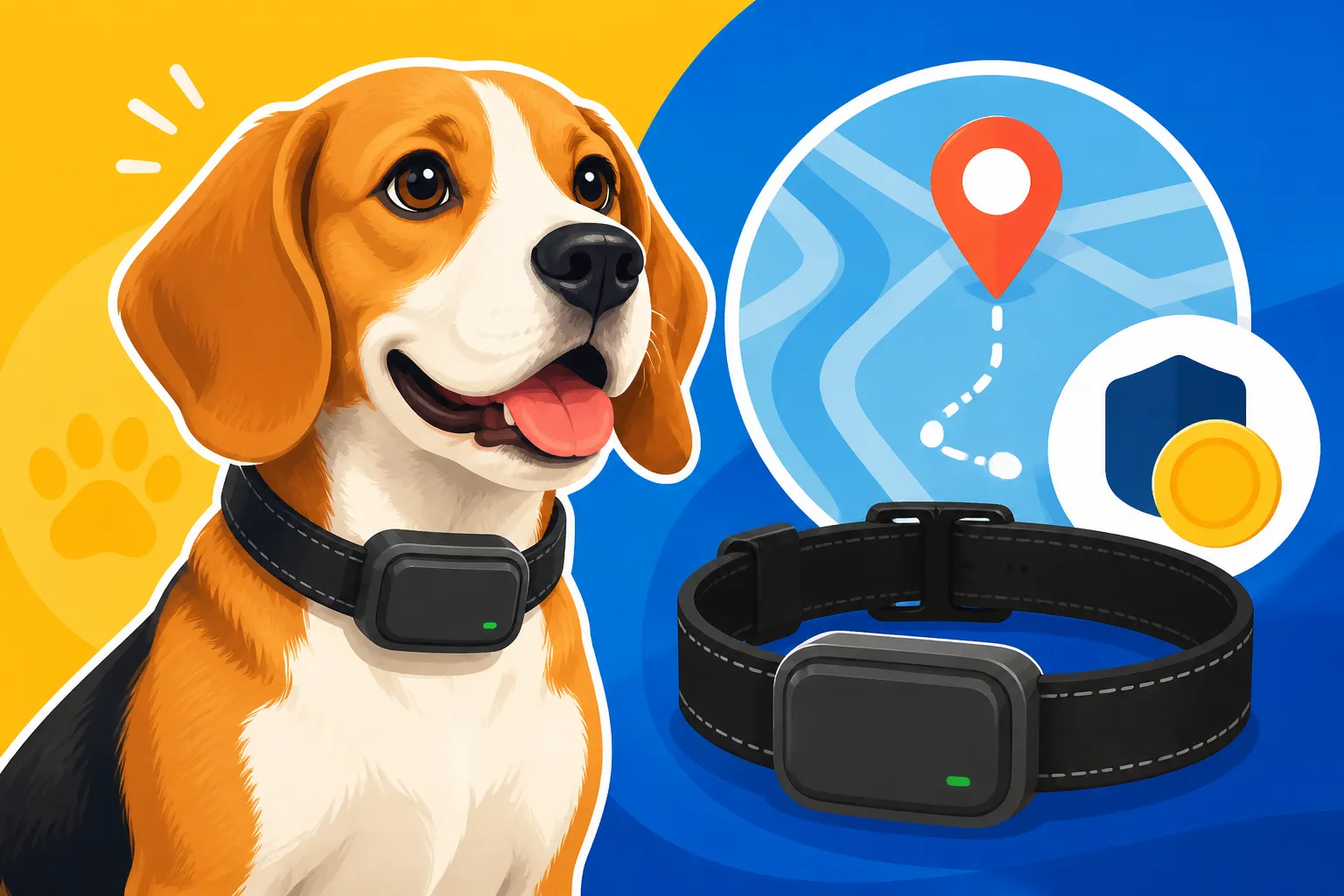
Beagle GPS Tracking Collar Prices
One of the most heart-stopping moments for any Beagle owner is that split second when you realize your dog has slipped away, nose to the ground, utterly oblivious to your frantic calls. Their legendary scent drive makes them natural escape artists, and keeping them safe once they’re on a trail can feel impossible. This guide will delve into the costs associated with GPS tracking collars for Beagles, helping you understand the investment in peace of mind and canine safety.
Why a Beagle Owner Even Needs a GPS Tracking Collar
Let’s be honest: owning a Beagle is an adventure. It’s filled with joyous bays, enthusiastic tail wags, and an unshakeable determination to follow every interesting scent. But this incredible nose, while charming, also presents one of the biggest challenges for their safety. The fear of a lost dog is a universal canine owner dread, but for Beagles, it’s a near-constant, underlying anxiety. You’ve probably already had a close call, or heard countless stories from other Beagle parents.
The Inescapable Reality of a Beagle's Nose
A Beagle's nose isn't just good; it's practically a superpower. With an estimated 220 million scent receptors, compared to our mere 5 million, they live in a world of smells we can barely comprehend. When that nose hits a compelling trail – a rabbit, a squirrel, last night's dropped hot dog wrapper – everything else, including your voice, can simply vanish from their awareness. It's not defiance; it's instinct. It’s why Why a Beagle Will Follow a Scent for Miles is such a critical read for any owner. They literally get lost in the scent, shutting down auditory input as their brain processes an intricate tapestry of odors. This profound drive means that even the most well-trained Beagle, in an unguarded moment, can be gone in a flash, dashing through an open gate, slipping a leash, or finding the smallest gap in a fence.
It’s this inherent trait that makes traditional recall training so challenging for Beagles. While you absolutely should work on Beagle Recall and Why Your Voice Stops Registering, expecting a perfect, 100% reliable recall in all environments for a Beagle is often setting yourself up for disappointment. Their ancestry as hunting hounds means they are bred to pursue, often for hours, ignoring all distractions. This powerful instinct doesn't just switch off when they become a beloved family pet.
The Fear of a Lost Beagle and Its Ramifications
The moment you realize your Beagle is missing is terrifying. Your mind races through all the worst-case scenarios: traffic, getting injured, getting lost for good. The frantic search that ensues can consume hours, days, even weeks. There's the emotional toll of the worry, the physical exhaustion of searching, putting up flyers, and checking shelters. But beyond the emotional anguish, there are very real practical and financial ramifications.
A lost Beagle might end up injured, requiring emergency veterinary care that can quickly run into thousands of dollars. They might be picked up by animal control, incurring impoundment fees. If they travel far, you might even need to arrange for long-distance transport. All these potential costs, not to mention the sheer emotional distress, highlight why proactive measures are so vital. A GPS tracking collar isn't just a gadget; it’s an insurance policy against one of a Beagle owner's deepest fears. It gives you a real-time way to locate your dog, potentially preventing hours of searching or even a tragic outcome. Remember, while microchips are invaluable for identification, they don't help you find a lost dog actively on the move, which is where a GPS tracker comes in. If you're wondering about general costs, reading about The Full Lifetime Cost of One Beagle can put this specific expense into perspective.
Understanding the Cost Factors for Beagle GPS Collars
When you start looking into GPS tracking collars for your Beagle, you'll quickly discover a wide range of prices. It’s not just about buying the device; there are ongoing costs and features that can significantly impact the overall investment. Understanding these factors will help you make an informed decision for your unique situation and budget.
Device Purchase Price vs. Subscription Fees
This is arguably the most crucial distinction in GPS tracker pricing. Nearly all effective GPS tracking devices for pets operate using cellular technology, much like your smartphone. This means they need to communicate their location data over a network.
- Device Purchase Price: This is the upfront cost of the tracker itself. You might find basic models starting in the range of one hundred dollars, while more advanced, robust, or feature-rich devices can go up significantly from there. Factors like brand reputation, battery life, waterproof ratings, and built-in sensors (like activity monitoring) will influence this initial price. Retailers like Chewy often carry a good selection of these devices, allowing you to compare different brands and their features.
- Subscription Fees: This is the ongoing cost, usually charged monthly or annually, for the cellular service that powers the GPS functionality. Think of it like a mini phone plan for your dog's collar. These fees can vary widely, from a handful of dollars per month for basic tracking to more for premium plans that include wider network coverage, longer tracking history, or additional features. It’s essential to factor this into your long-term budget. Some companies offer discounts for annual plans, which can lead to considerable savings over time compared to paying month-to-month. Some even offer "lifetime" subscriptions as part of a higher initial purchase price, so read the fine print carefully. The critical takeaway is that a cheap initial device price often comes with a higher or mandatory ongoing subscription.
Features That Add to the Bottom Line
Not all GPS trackers are created equal, and the more bells and whistles a device has, the more you can expect to pay. Here are some features that commonly affect the price:
- Real-time vs. Interval Tracking: Basic trackers might update your Beagle's location every few minutes, while premium trackers offer "live" or "real-time" tracking, updating every few seconds. This can be crucial when your Beagle is on the move, but it also consumes more battery and often comes at a higher subscription tier.
- Geofencing Capabilities: Most modern GPS trackers offer geofencing, allowing you to set virtual boundaries on a map. If your Beagle crosses these boundaries, you receive an alert. This feature is standard on most good trackers and is incredibly valuable for Beagles, especially if you have a yard that isn’t quite Beagle Fence Height and Whether They Climb. Some systems even allow multiple safe zones or temporary zones.
- Activity Monitoring: Some trackers double as fitness monitors, tracking your Beagle's steps, calories burned, and sleep patterns. While not directly related to preventing escapes, this data can be useful for managing Beagle Weight Management Across the Two Size Varieties or monitoring overall health. These added sensors can increase the device's cost.
- Light and Sound Features: Some collars include a remote-activated light or sound feature, which can be incredibly helpful for locating your Beagle in the dark or in dense undergrowth if they are visually obscured.
- Durability and Waterproofing: A Beagle is an active, scent-driven dog that will roll in mud, dash through puddles, and probably try to dig. A tracker needs to be built tough. Devices with higher IP ratings for water and dust resistance, and robust casing materials, will naturally cost more but are essential for longevity with a Beagle. You don't want a tracker failing the moment your dog splashes through a creek.
Durability and Beagle-Proof Design
When you’re buying something for a Beagle, you need to assume it will be put through its paces. They are sturdy, resilient, and famously persistent dogs. A flimsy tracker simply won't cut it. The quality of materials, the method of attachment to the collar, and the overall construction play a huge role in both the price and the effectiveness of the device.
Look for devices that are designed to withstand:
- Chewing: While most trackers aren’t chew-proof, some are more robust or offer protective casings.
- Water and Mud: A waterproof rating is non-negotiable for a Beagle, who will likely find every puddle and mud patch available.
- Impact: Beagles are energetic and can bump into things, so a device that can handle a bit of rough and tumble is important.
Investing in a more durable, albeit pricier, model upfront can save you money in the long run by avoiding frequent replacements. Reading reviews from other active dog owners, especially those with hounds, can give you a good idea of a product's real-world durability. You might also consider specific tracker holders that can be woven into a robust collar for added security.
Comparing Types of Beagle GPS Tracking Solutions
The world of pet tracking isn't one-size-fits-all. There are several different technologies and approaches to consider, each with its own price point and suited to different needs. Understanding these categories will help you narrow down the best choice for your adventurous Beagle.
Dedicated GPS Trackers with Cellular Plans
These are the most common and generally the most effective type of tracker for a Beagle, especially if your biggest concern is a dog that bolts and travels significant distances.
- How they work: These devices contain a GPS receiver to pinpoint your Beagle’s location and a cellular modem to transmit that data to your smartphone or computer. They usually come with an accompanying app that allows you to see your dog’s real-time location, set geofences, and review their movement history.
- Pros:
- Unlimited Range: As long as the device has cellular coverage, you can locate your Beagle virtually anywhere, even miles away from home. This is crucial for a breed like the Beagle known for its scent-driven excursions.
- Real-time Tracking: Many offer impressive update speeds, giving you precise, up-to-the-minute location data when it matters most.
- Feature-Rich: Often include geofencing, activity monitoring, and other smart features.
- Cons:
- Ongoing Subscription Cost: This is the primary drawback, as they require a monthly or annual fee for cellular service.
- Battery Life: Battery life can range from a few days to a week, depending on usage and tracking frequency, requiring regular charging.
- Cellular Dead Zones: If your Beagle wanders into an area with no cellular service, the tracker will lose its ability to transmit its location until it re-enters an area with coverage.
- Cost Implications: These tend to have a moderate to high upfront device cost, plus the recurring subscription fees. This combination can make them the most expensive option over time, but their effectiveness and range are unparalleled for preventing a lost Beagle scenario. Many popular brands fall into this category, with prices reflecting features and reliability.
Bluetooth and Radio Frequency Trackers
These trackers offer a different, generally lower-cost approach, but come with significant limitations for a dog like a Beagle.
- How they work:
- Bluetooth Trackers: These small tags communicate with your smartphone via Bluetooth. Your phone typically needs to be within a certain range (e.g., 30-50 feet) to detect the tag. Some leverage a "crowd-GPS" network, where other app users' phones can passively detect your tag and update its last known location.
- Radio Frequency (RF) Trackers: These systems use a dedicated handheld receiver that picks up a signal from a tag on your dog's collar. You actively "hunt" for the signal, which gets stronger as you get closer.
- Pros:
- Lower Initial Cost: Bluetooth tags are often quite inexpensive, and RF systems have no recurring fees.
- Long Battery Life: Due to their simpler technology, batteries can last for months or even a year.
- Cons:
- Limited Range: This is the biggest issue for Beagles. Bluetooth trackers are only useful for finding a dog very close by, or if it stays put long enough for someone else with the app to pass by. An RF system might give you a range of a mile or two in ideal conditions, but this is still very limited for a Beagle on a scent trail.
- No Real-time, Long-Distance Tracking: They aren't designed to tell you where your Beagle is five miles away, navigating urban streets or dense woods.
- Interference: Both technologies can be affected by physical obstacles and environmental factors.
- Cost Implications: Very low upfront cost for Bluetooth tags (often less than fifty dollars), and RF systems might be a bit more but still generally under a couple of hundred dollars with no subscription. For a Beagle that can vanish over the horizon in minutes, these are generally not recommended as a primary tracking solution for true escape prevention. They might serve as a backup for a quick dash within your immediate property, but they don’t provide the robust security needed for Beagle Escape Artistry and How to Contain It.
Integrated GPS Pet Fence Systems
These systems combine GPS tracking with virtual fencing, offering a more comprehensive solution for containment and location.
- How they work: These devices create virtual fences using GPS coordinates. When your Beagle approaches or crosses the boundary, the collar can deliver an alert, vibration, or static correction (similar to traditional invisible fences, but without buried wires). Critically, they also include full GPS tracking capabilities, so you can locate your dog if they do breach the boundary.
- Pros:
- Dual Functionality: Offers both containment and wide-area GPS tracking in one device.
- Flexibility: Virtual fences can be set up anywhere, not just your backyard, which is great for travel.
- No Buried Wires: Easier to set up and adjust than traditional physical or wired invisible fences.
- Cons:
- Higher Cost: These systems are typically more expensive than standalone GPS trackers.
- Training Required: Your Beagle needs to be trained to understand the virtual fence boundaries and the associated cues (vibration/correction).
- Battery Life: Similar to dedicated GPS trackers, they require regular charging due to GPS and cellular use.
- Subscription Fees: Almost always require a monthly or annual subscription for cellular tracking and boundary management.
- Cost Implications: These are often the priciest option, both in terms of initial device cost and ongoing subscriptions. However, for a Beagle that is prone to escaping, the combination of a virtual boundary and immediate GPS tracking can be a powerful tool. It's important to remember that Why Invisible Fences Fail With a Beagle often comes down to their sheer drive and pain tolerance when a compelling scent is on the other side. A GPS-enabled virtual fence at least provides the tracking component if they do blow through the boundary.
Here’s a quick overview of the cost shapes for different tracker types:
| Tracker Type | Initial Device Cost (Approx. Range) | Monthly/Annual Subscription | Primary Use Case for Beagles | Key Pros | Key Cons |
|---|---|---|---|---|---|
| Dedicated GPS with Cellular | Moderate to High | Required | Long-distance escapes, real-time location | Unlimited range, accurate real-time | Ongoing fees, battery life |
| Bluetooth/RF Tracker (Standalone) | Very Low to Low | None | Finding within short range, "last seen" location | Inexpensive, long battery life | Very limited range, not for active escapes |
| Integrated GPS Pet Fence | High | Required | Virtual containment + long-distance tracking | Dual function (containment & tracking) | High cost, training needed |
Making the Investment: Is a GPS Collar Worth It for Your Beagle?
After exploring the various types and costs, the big question remains: is a GPS tracking collar truly a worthwhile investment for your Beagle? For many Beagle owners, the answer is a resounding yes, purely for the peace of mind it offers. But let’s break down the tangible benefits against the costs.
Peace of Mind for Active Beagle Owners
The biggest return on investment for a GPS collar isn't measured in dollars, but in the reduction of stress and anxiety. Knowing that you have a tool to locate your beloved Beagle, often within minutes, if they manage to slip away is invaluable. This peace of mind allows you to enjoy walks more, feel less stressed when working in the yard with a slightly open gate, or even relax a bit more when traveling with your dog.
Consider the times your Beagle might be most at risk:
- During walks: A sudden rabbit scent, a dropped leash, or an unexpected loud noise can send them bolting.
- In the backyard: Even with a supposedly secure fence, Beagles are experts at finding weak spots or digging under. You might think you're safe, but they have a knack for proving otherwise.
- At new places: Vacations, dog parks (with a critical eye, as Why Off-Leash Parks Are Risky for a Beagle is real), or visiting friends and family – new environments offer new escape routes and unfamiliar scents.
- During emergencies: Fireworks, thunderstorms, or a house fire can cause panic and lead to an escape.
Having a tracker means that if your dog does get out, you’re not just yelling their name into the wind. You have a precise direction to head in, greatly increasing the chances of a swift and safe reunion. This proactive safety measure can be significantly more effective than relying solely on social media posts and missing dog flyers after the fact.
Long-Term Savings on Stress and Search Efforts
While a GPS collar has an upfront cost and ongoing fees, consider the potential costs of not having one. If your Beagle gets lost, the expenses can quickly add up:
- Vet Bills: If your dog is hit by a car, gets into a fight, or eats something harmful, emergency vet visits can be extremely expensive. While pet insurance like Healthy Paws can cover unexpected illnesses and accidents, preventing an accident is always better.
- Impoundment Fees: Animal shelters often charge daily fees for stray animals, which can accumulate quickly.
- Lost Wages/Time: The time spent frantically searching for a lost dog can mean taking time off work, missing appointments, or neglecting other responsibilities.
- Emotional Toll: The stress and heartbreak of a lost pet are immeasurable.
By investing in a GPS tracker, you're not just buying a device; you're investing in prevention and rapid recovery. This can potentially save you significant financial outlays for vet bills, shelter fees, and even the cost of replacing personal items damaged during an escape attempt. For example, if your Beagle manages to get out and then into something they shouldn't (as they often do, thanks to their insatiable curiosity), having them quickly located can prevent them from consuming something truly toxic. Products from Ollie, known for their focus on healthy, fresh food, underscore the idea of investing in your Beagle's well-being, and a GPS collar fits right into that preventative care mindset.
Ultimately, the decision to purchase a GPS tracking collar comes down to balancing the cost against the peace of mind and the potential for preventing a truly heartbreaking situation. For a breed as driven by scent and as prone to wandering as the Beagle, a GPS collar often shifts from a luxury item to a practical necessity for responsible ownership.
Disclaimer
This article is for general informational purposes only and does not constitute professional advice. Laws, prices and regulations vary by location and change over time. Consult a qualified professional for guidance on your specific situation.