Why Off-Leash Parks Are Risky for a Beagle
Oh, the dog park! It sounds like a fantastic idea on paper, doesn't it? A big, open space where your beloved Beagle can romp and play freely, stretch those legs, and socialize with other canine pals. For many dog breeds, this vision of canine utopia is often a reality. But for us Beagle parents, the thought of an off-leash park often brings a cold sweat to our brow. You're probably nodding along, knowing deep down that while the intention is good, the reality for a Beagle can be anything but. This guide is here to shed light on exactly why off-leash parks, despite their appeal, present unique and significant risks for our scent-driven, independent, and notoriously escape-prone Beagles, and to offer safer alternatives.
The Irresistible Call of the Wild: A Beagle's Nose Takes Over
Let's be honest, we love our Beagles for their merry, curious nature and that incredible nose. But that very attribute, the one that makes them such charming companions and adept scent hounds, is precisely what turns an off-leash park into a high-stakes gamble.
The Power of Their Olfactory System
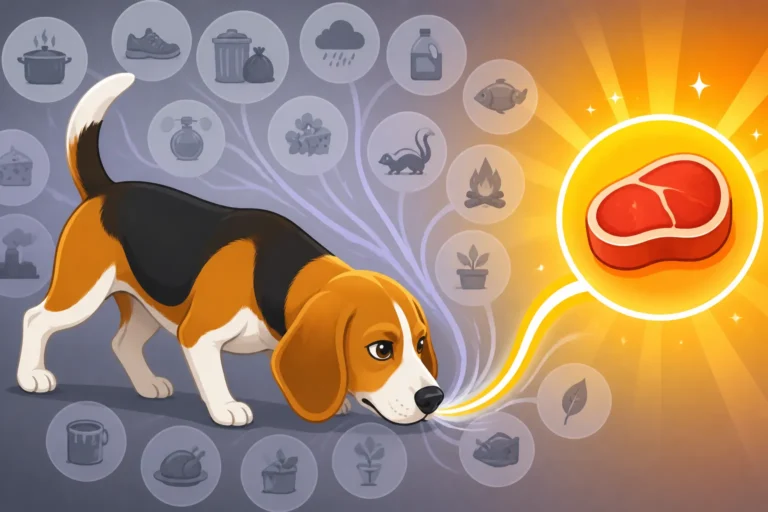
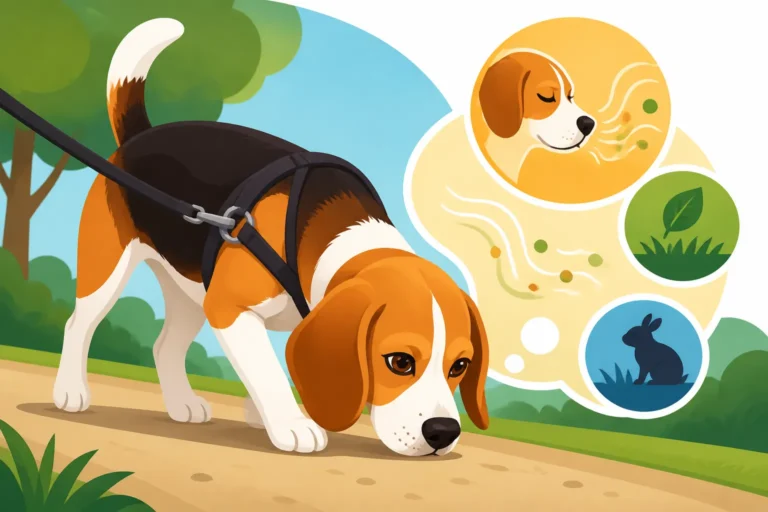
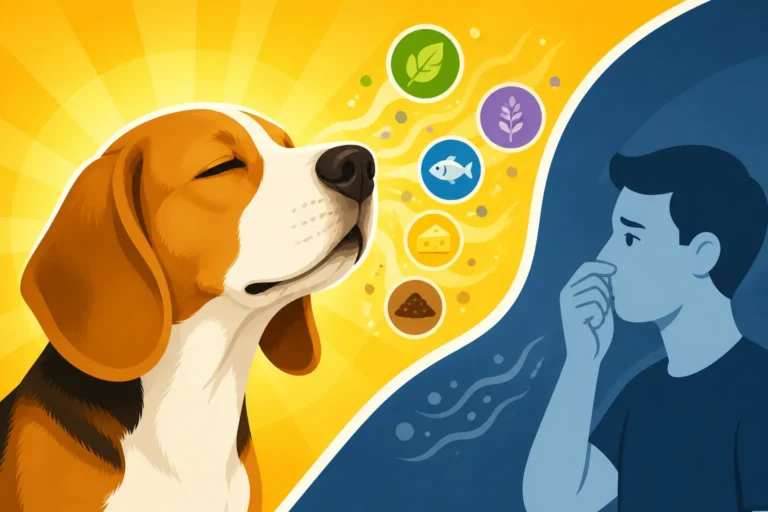
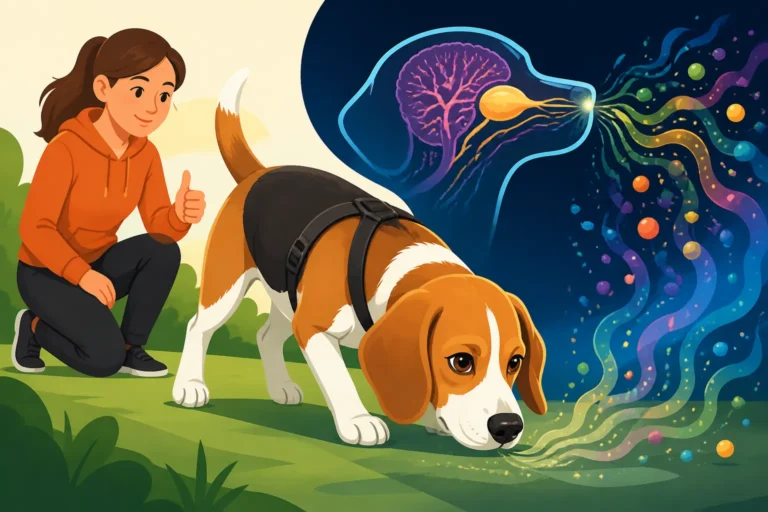
Imagine having a superpower that lets you experience the world through an entirely different lens. For a Beagle, that superpower is their nose. They possess around 220 million scent receptors, compared to our mere 5 million, and an olfactory bulb in their brain that is proportionally much larger than ours. This isn't just a slightly better sense of smell; it's an entirely different way of perceiving reality. When a Beagle enters an environment like an off-leash park, it's not just seeing trees and grass; it's inhaling a complex symphony of smells – the faint trail of a squirrel from yesterday, the fresh urine mark of a rival dog, the lingering scent of a dropped sandwich from hours ago.
Each sniff is a story, an adventure waiting to unfold, a puzzle demanding to be solved. For a Beagle, following a scent isn't a choice; it's an imperative, a deep-seated instinct honed over centuries of breeding for tracking game. Their brains are hardwired to lock onto a promising scent and pursue it with unwavering determination. This means that a slight breeze carrying the ghost of a rabbit's path from beyond the fence can become an instant, all-consuming mission, eclipsing everything else in their world. You might think you have their attention, but their primary focus is usually on the ground beneath their paws and the air currents around their powerful nostrils. It's a fundamental part of what makes them Beagles, but it's also their biggest vulnerability in an uncontrolled environment. Why a Beagle Nose Beats Ours Ten Thousand Times Over delves deeper into just how incredible and distracting this sense can be.
When "Come!" Becomes Just Noise
We've all been there. You've worked tirelessly on recall. Your Beagle comes reliably in the living room, in the backyard, maybe even on a quiet trail. You feel a surge of confidence, thinking, "Today's the day we conquer the dog park!" Then, a flicker of an ear, a sudden dip of the nose, and your Beagle transforms. They're no longer your cuddly companion; they're a hound on a mission. You call, you plead, you even try your emergency whistle, but it's as if your voice has suddenly lost all meaning. It's not that your Beagle is deliberately being disobedient or trying to spite you. In that moment, the rich, captivating tapestry of scents has completely taken over their auditory processing.
The overwhelming sensory input from a powerful new scent, combined with the excitement and novelty of a new place, literally pushes your verbal commands out of their consciousness. To them, your voice becomes just another background noise in an already noisy world of smells and sounds. This isn't a training failure on your part, necessarily; it's a fundamental aspect of the Beagle brain. Their drive to follow a scent is often far more powerful than their desire to please you, especially when the reward of the scent is so immediate and profound. The frustration for owners is real, and it's a feeling many Beagle parents can deeply empathize with. Beagle Recall and Why Your Voice Stops Registering explains this phenomenon in more detail, highlighting why traditional recall often falls short when a Beagle's nose is engaged.
Safety Hazards Beyond Your Control in an Off-Leash Environment
Even if you could guarantee your Beagle would respond to recall every single time (a dream for most Beagle owners!), off-leash parks still present a myriad of other dangers that are entirely out of your hands. These aren't just minor inconveniences; they can lead to serious health issues, injuries, or even permanent loss.
The Risk of Running Away and Getting Lost
Let's imagine the typical off-leash park scenario: a large, often unevenly fenced area, sometimes with gates that aren't quite self-closing, or worse, left ajar by another well-meaning but distracted owner. For a Beagle with its nose to the ground, a gap in the fence, a gate ajar, or even a tempting scent that leads under the fence (Beagles are champion diggers!) is an open invitation to an adventure. Once they pick up a promising trail, they can move with surprising speed and an almost trance-like focus, covering vast distances in a short amount of time. They don't look back; they don't check in; they just follow the scent.
The immediate dangers are terrifying: busy roads, aggressive stray animals, encountering unfriendly people, or simply becoming disoriented and lost in unfamiliar territory. Many Beagle owners have harrowing tales of their dog disappearing over the horizon, leading to frantic searches. To mitigate this, many owners turn to GPS tracking devices, readily available on platforms like Amazon, that attach to their dog's collar. While these can provide a crucial layer of security, they are only a recovery tool, not a preventative measure. It's a painful reality that a brief moment of distraction, or another person's oversight, can turn a fun outing into a frantic, heartbreaking search. Learning What to Do the Moment a Beagle Gets Loose becomes essential knowledge for any Beagle owner, especially if they're considering off-leash activities.
Unpredictable Interactions with Other Dogs
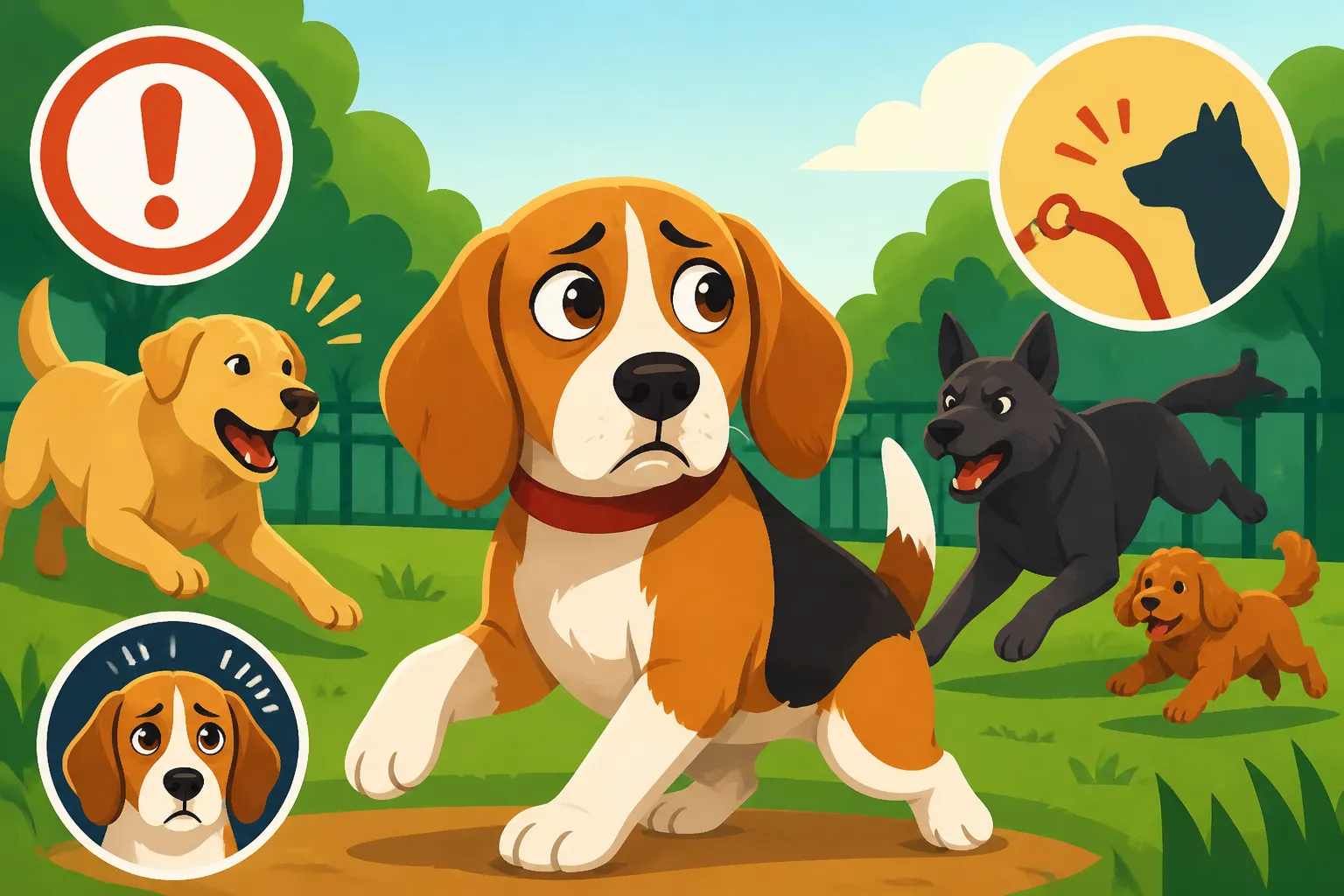
Off-leash parks are melting pots of canine personalities, and unfortunately, not all dogs (or their owners) are well-socialized or well-behaved. You might encounter dogs with unknown histories, dogs that are overly dominant, fearfully aggressive, or simply have very different play styles than your Beagle. While Beagles are generally social, merry dogs, their boisterous, often vocal, and sometimes relentless play can be misinterpreted by other breeds, leading to misunderstandings or even fights. A growl from a larger dog, a sharp nip from an insecure one, or even an accidental collision during a chase can result in painful injuries, vet bills, or lasting behavioral trauma.
Beyond physical altercations, there's also the risk of disease transmission. Parvovirus, kennel cough, canine influenza, fleas, ticks, and internal parasites can all be easily spread in communal dog spaces where dogs are in close contact. While vaccinations offer some protection, they aren't foolproof, and the risk of bringing home something unwelcome is always present. For safe socialization, it's often better to arrange controlled playdates with known, compatible dogs or participate in supervised group training classes where temperaments are assessed and managed. Thoughtful Socializing a Beagle Puppy for Pack Life means choosing environments where interactions are positive and predictable, not a free-for-all.
Ingesting Harmful Objects or Substances
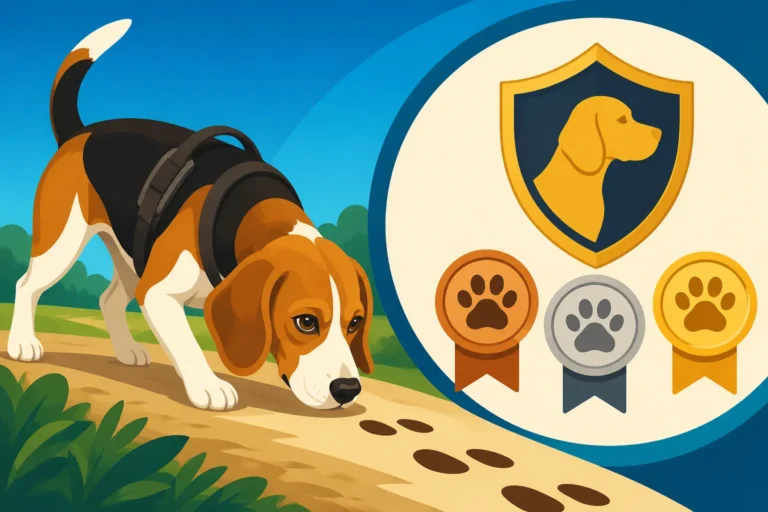
Beagles are legendary scavengers. Their powerful noses don't just find interesting animal trails; they're also masters at locating discarded food, dropped crumbs, and anything else that might have a lingering scent of edibility. This trait, which makes them such excellent detectors for the Beagle Brigade, also makes them a liability in an uncontrolled environment like an off-leash park. People can leave behind all sorts of dangerous things: chicken bones, rotting food, chocolate wrappers, chewing gum with xylitol, discarded medications, cigarette butts, or even more nefarious substances.
A Beagle's instinct is often to gulp first and ask questions later. They can ingest something harmful in a matter of seconds, before you even realize what's happening. The consequences can range from an upset stomach and vomiting to severe poisoning requiring an emergency vet visit, or even intestinal blockages from foreign objects. The sheer speed at which a Beagle can vacuum up something from the ground is astounding and frustrating. It’s nearly impossible to monitor every single square foot of an off-leash park, or to always be faster than your Beagle's lightning-quick opportunistic gobble. This danger often goes underestimated, but it's a very real threat to your Beagle's health and safety. Understanding What a Beagle Should Never Be Allowed to Eat is crucial, but preventing ingestion in a public, uncontrolled space is incredibly difficult.
Alternatives for Safe, Stimulating Beagle Exercise
The good news is that you don't need to risk your Beagle's safety in an off-leash park to provide them with the physical and mental stimulation they crave. There are plenty of fantastic, safer alternatives that cater perfectly to their unique needs and instincts.
Secure, Fenced Areas and Long Line Walks
Instead of relying on the variable security of a public dog park, consider seeking out truly secure, private fenced areas. Many communities now offer private dog park rentals for an hourly fee, allowing you and a few trusted dog friends to have exclusive, safe access. If you have your own backyard, ensure the fencing is genuinely Beagle-proof, meaning it's tall enough (at least 5-6 feet) and includes barriers to prevent digging underneath. Checking The Fence Height That Actually Holds a Beagle and adding wire skirts along the fence line are crucial steps for Beagle owners.
For walks, ditch the idea of off-leash freedom in open spaces and embrace the magic of the long line. A 20 to 30-foot long line, easily found on Amazon or other pet supply retailers, allows your Beagle to explore scents, wander a bit further, and feel a sense of freedom, all while remaining safely connected to you. It gives them the mental enrichment of a scent-rich walk without the risk of bolting. You can practice recall in a controlled way, reinforce checking in, and let them indulge their sniffing instincts without the underlying anxiety that comes with an uncontrolled environment. The Long Line Length a Beagle Actually Needs can guide you in choosing the right equipment for these enriching walks.
Embracing Scent Work and Nose Games
This is where your Beagle truly shines! Instead of fighting their powerful nose, lean into it. Scent work is not just a training exercise; it's a deeply satisfying job for a Beagle, fulfilling their innate drive in a safe and structured way. You can start with simple nose games at home: hide treats around the house and encourage them to "find it." As they get better, you can move to more complex hiding spots or even introduce specific scents.
Many communities offer scent work classes, often called "Nose Work" or "Tracking," where Beagles absolutely thrive. These classes teach them to discriminate scents and follow trails, burning mental energy in a way that regular physical exercise often can't. If in-person classes aren't available, online training platforms, such as BAXTER & Bella, often provide excellent resources and structured courses for scent work, helping you channel your Beagle's natural talents. The mental effort involved in scent work is incredibly tiring and fulfilling for a Beagle, often leaving them more satisfied and calmer than a vigorous run. Giving them Scent Work as the Job a Beagle Was Built For is one of the kindest things you can do for your hound.
Controlled Socialization Opportunities
While off-leash parks might seem like the easiest way to socialize, the unpredictable nature can often lead to negative experiences rather than positive ones. For controlled socialization, consider:
- Arranged Playdates: Set up playdates with friends or family members who have well-socialized dogs that you know are compatible with your Beagle's play style. This allows for supervised interactions in a safe, known environment.
- Small Group Classes: Obedience classes, agility classes, or even dedicated "puppy play" sessions (if your Beagle is still young) often have controlled socialization segments. These are typically supervised by experienced trainers who can intervene if interactions become too boisterous or tense, ensuring a positive experience.
- Leashed Parallel Walks: Sometimes, simply walking parallel to another calm, friendly dog on leash can be excellent socialization. It allows dogs to be in the presence of others without the pressure of direct interaction, helping them learn to coexist peacefully.
Focusing on quality over quantity in socialization ensures your Beagle builds positive associations with other dogs and people. This approach creates a solid foundation for a well-adjusted, confident dog, which is far more beneficial than random encounters in an uncontrolled environment. Establishing how Beagles With Children and With Other Dogs interact safely starts with managing their environment.
| Feature | Off-Leash Park (Typical) | Controlled Exercise (Recommended) |
|---|---|---|
| Recall Reliability | Extremely Low (Scent-driven distraction) | High (Focus on owner, fewer distractions) |
| Escape Risk | High (Open gates, fence gaps, digging opportunities) | Low (Secure fencing, long line tethered to owner) |
| Dog-Dog Interactions | Unpredictable (Unknown temperaments, play styles) | Predictable (Known, compatible dogs, supervised) |
| Ingestion Risk | High (Discarded food, trash, harmful objects) | Low (Monitored environment, owner oversight) |
| Disease Exposure | High (Close contact with many unknown dogs) | Low (Fewer dogs, known health statuses) |
| Mental Stimulation | Random sniffing, chasing | Targeted scent work, puzzle solving, structured play |
| Owner Stress Level | High (Constant vigilance, anxiety) | Low (Relaxed, enjoyable bonding time) |
So, while the idea of an off-leash park seems appealing, the unique attributes of our beloved Beagles – that incredible nose, their unwavering determination on a scent trail, and their inherent scavenging tendencies – make these environments far riskier than they are rewarding. Instead of chasing a fleeting moment of perceived freedom, embrace structured, scent-rich activities, secure environments, and controlled social interactions. You'll find that these alternatives not only keep your Beagle safer but also provide them with deeper, more fulfilling mental and physical exercise, leading to a happier, healthier hound and a less stressed owner.
Disclaimer
This article is for general informational purposes only and does not constitute professional advice. Laws, prices and regulations vary by location and change over time. Consult a qualified professional for guidance on your specific situation.