How a Beagle Sorts One Scent Out of Fifty
It's a familiar scene for any Beagle owner: you're out for a peaceful walk, your cheerful companion trotting along, and then suddenly, their nose hits an invisible tripwire. Their whole demeanor changes, tail waving furiously, nose glued to the ground, and your voice, once a beacon, becomes nothing more than background noise as they relentlessly pursue a scent you can't even perceive. It’s frustrating, bewildering, and sometimes downright alarming when they refuse to break focus. This guide is all about peeling back the layers of that incredible Beagle nose to understand precisely how they manage to pick out a single, irresistible scent from what, to us, would be a chaotic jumble of a hundred different smells.
The Incredible Beagle Nose: A Symphony of Scent
When we talk about a Beagle's nose, we're not just talking about something that's "good at smelling." We're talking about a biological marvel, a highly specialized sensory organ that operates on a completely different plane than our own. It's the very core of their being, defining how they interact with and understand their world. Trying to comprehend it with our limited human olfactory abilities is like trying to understand a symphony by only hearing a single note.
Beyond the Basic Sniff: What Makes It Different?
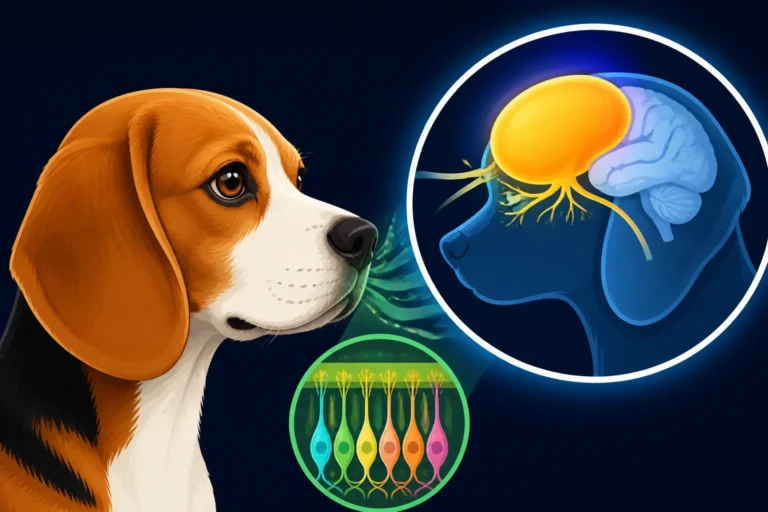
To truly grasp how a Beagle sorts through a cacophony of odors, we first need to appreciate the sheer horsepower of their olfactory system. While humans possess a paltry 5 million or so scent receptors, your average Beagle is equipped with a staggering 220 million. That's not just a numerical difference; it's a qualitative leap in sensory input. Imagine trying to identify a single spice in a complex stew. For us, it's a challenge. For a Beagle, it's like a chef meticulously identifying every ingredient.
Their nasal passages are far more intricate than ours, filled with turbinates – complex bony structures covered in olfactory epithelium. These turbinates increase the surface area available for scent reception exponentially. Think of it like expanding a single flat sheet into a sprawling, multi-layered maze designed specifically to capture and hold every single scent molecule that enters. This allows for prolonged contact between scent molecules and receptors, enabling a much more thorough "reading" of the environment. It’s how they can identify the faintest trace of a rabbit that passed by hours ago, a feat that is utterly impossible for human beings.
The Olfactory Bulb: A Supercomputer for Smell
The information gathered by those millions of receptors doesn't just get vaguely registered; it's sent to the olfactory bulb, a part of the brain dedicated solely to processing smells. In Beagles, and indeed most scent hounds, this olfactory bulb is disproportionately large compared to their overall brain size – significantly larger, in fact, than a human's. It's a true supercomputer, dedicated to deconstructing, categorizing, and interpreting every single odor particle.
This is where the "sorting" truly begins. While our brains might register "park smell," a Beagle's olfactory bulb is meticulously separating "oak leaf," "squirrel urine," "freshly cut grass," "that old hot dog from yesterday," and "new dog across the street." Each of these is a distinct data point, processed and understood independently, yet also within the context of the overall scent profile. It's why they seem so utterly absorbed when their nose is to the ground; they are literally living in a rich, detailed world of scent that we can only imagine. The sheer volume of information being processed is incredible, allowing them to differentiate subtle nuances that are completely lost on us.
The Mechanics of Scent Discrimination: Deconstructing a Smell
A Beagle's ability to discriminate between scents isn't just about having more receptors; it's also about the sophisticated way their nose is designed to capture and analyze scent molecules, almost like a specialized laboratory. The physical act of sniffing itself is a masterclass in information gathering.
Inhaling and Exhaling: A Continuous Scent Stream
One of the most remarkable features of a Beagle's nose, crucial for tracking, is its ability to separate the act of inhaling for breathing from inhaling for smelling. When a Beagle sniffs, air enters through the nostrils and is then internally divided. A small portion goes directly to the lungs for respiration, while the majority is directed to the olfactory turbinates for scent analysis. Crucially, when they exhale, the air doesn't exit through the front of the nostrils, blowing away potential scent trails. Instead, it exits through slits at the sides of their nose.
This unique airflow mechanism means that a Beagle can breathe continuously while still maintaining a constant, uninterrupted flow of new scent molecules into their olfactory chamber. They don't have to lift their nose to breathe, breaking the scent trail. It allows them to maintain continuous contact with a scent source, essentially creating a seamless "read" of the environment as they move. Imagine trying to read a book but having to lift your head and blink every few words – you'd lose your place. A Beagle doesn't have that problem; they can keep their nose down and What a Beagle Experiences on a Scent Trail without interruption, gathering every possible piece of information along the way.
The Vomeronasal Organ and the "Taste" of Scent
Beyond the primary olfactory system, Beagles, like many mammals, possess a secondary olfactory sense: the vomeronasal organ, also known as Jacobson's organ. This specialized organ is located in the roof of their mouth, just behind their incisors, and connects to the nasal cavity. It's particularly adept at detecting pheromones and other heavy, non-volatile scent molecules that don't easily become airborne.
When a Beagle engages in the classic "flehmen response" – curling their upper lip and sometimes dropping their jaw slightly – they are actively drawing these scent molecules into the vomeronasal organ. This organ bypasses the regular olfactory bulb and sends signals directly to a different part of the brain, associated with instinctual behaviors like mating, identifying prey, or recognizing the emotional state of another animal. This is why a Beagle might seem to "taste" a particularly interesting urine mark or a patch of ground where another dog has been. It adds another profound layer to their ability to discern specific information from the myriad of smells around them, almost like having a specialized chemical sensor for critical social and biological data.
Scent Layers and The "Smell Picture"
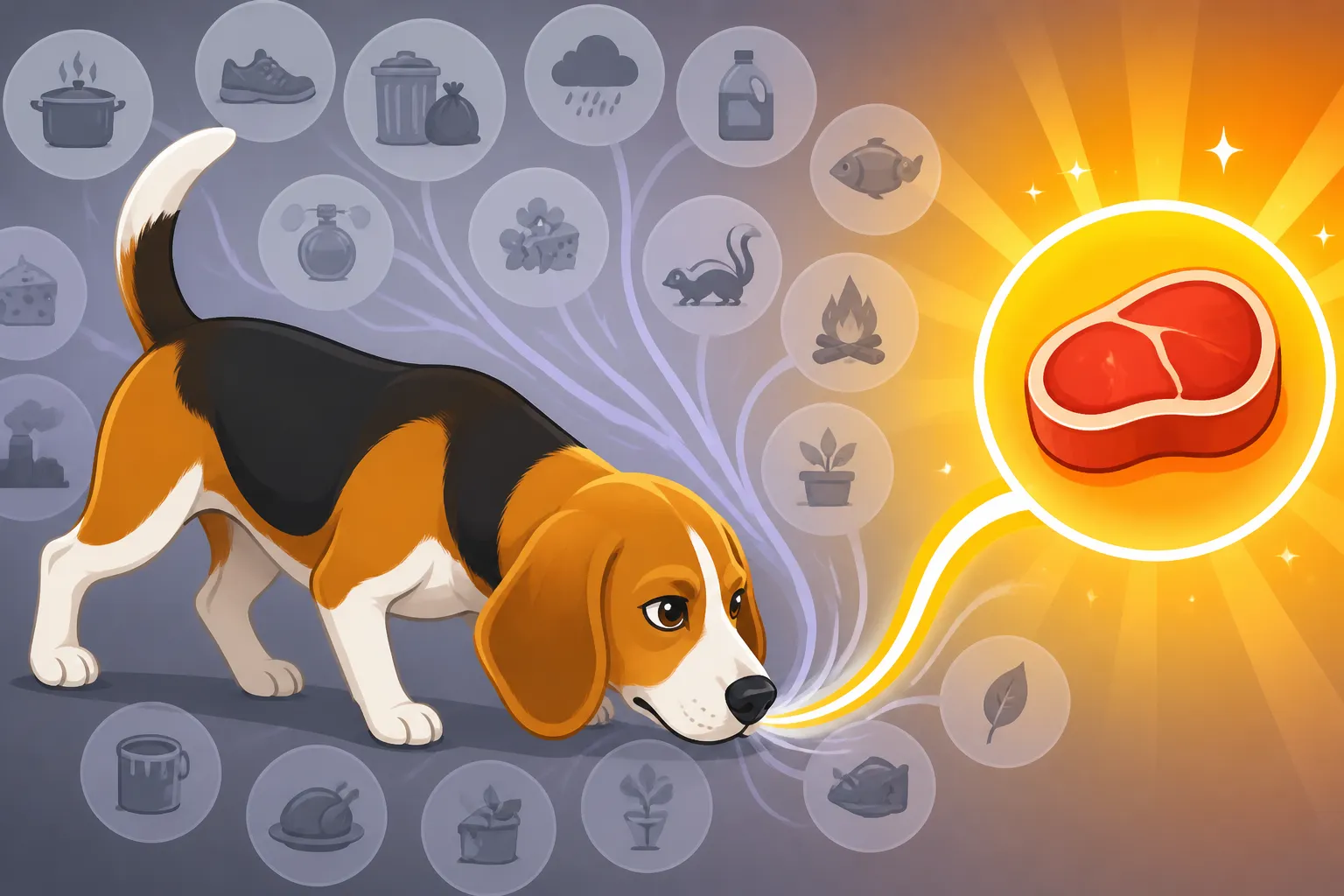
So, how does a Beagle differentiate one specific odor from a complex mix, say, a fresh rabbit trail from old deer scent, wet leaves, and faint human perfume? It’s not just about detecting all the smells; it's about being able to perceive them as individual, distinct components within a complex "smell picture." They don't just smell a blended fragrance; they smell each individual note.
Think of it this way: when you listen to an orchestra, you hear a beautiful symphony. But a professional conductor can distinguish the individual sound of the oboe, the violins, and the timpani, even when they're all playing simultaneously. A Beagle's nose works similarly with scent. They can identify the distinct signature of a rabbit's glandular secretions, the crushed plant matter under its paws, the disturbed soil, and the airborne particles, all while sifting out the background noise of the forest floor. They essentially have a multi-layered perception of scent, allowing them to isolate and focus on the specific target odor they are tracking. Why a Beagle Walks With Its Nose to the Ground so intently is because they are literally dissecting this "smell picture" at the molecular level, creating a mental map of their environment based entirely on odor.
Sorting the Scent Cocktail: How Beagles Prioritize
With such an astounding ability to detect and differentiate, the real question becomes: how do they choose which scent to follow when faced with fifty tempting trails? This is where instinct, training, and environmental factors all come into play, shaping what might seem like random selective deafness into a highly complex decision-making process.
The Hierarchy of Instinct and Training
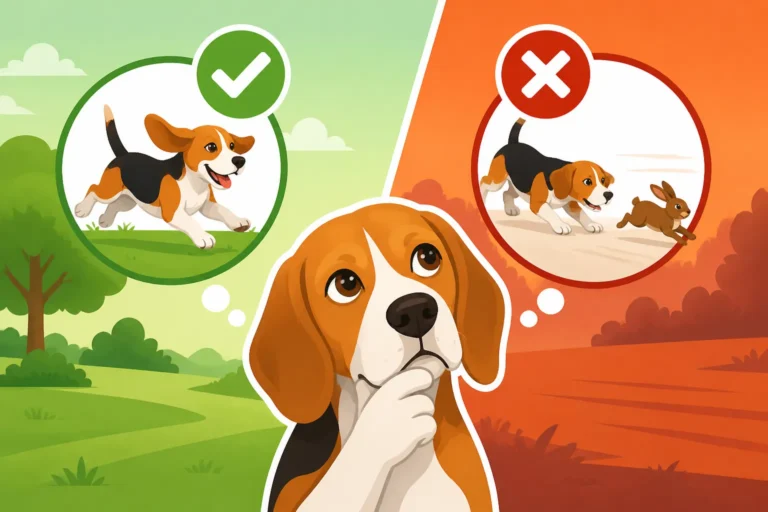
When a Beagle's nose lights up with a new scent, there's an immediate internal ranking system at play. High on this list are the scents that speak to their primal instincts: prey animals (rabbit, squirrel, deer), potential mates, and the scent marks of other dogs. These are the "loudest" signals in their world, often overriding everything else. This is why a Beagle might be perfectly behaved one moment, and the next, completely oblivious to your existence as they lock onto a fresh rabbit track.
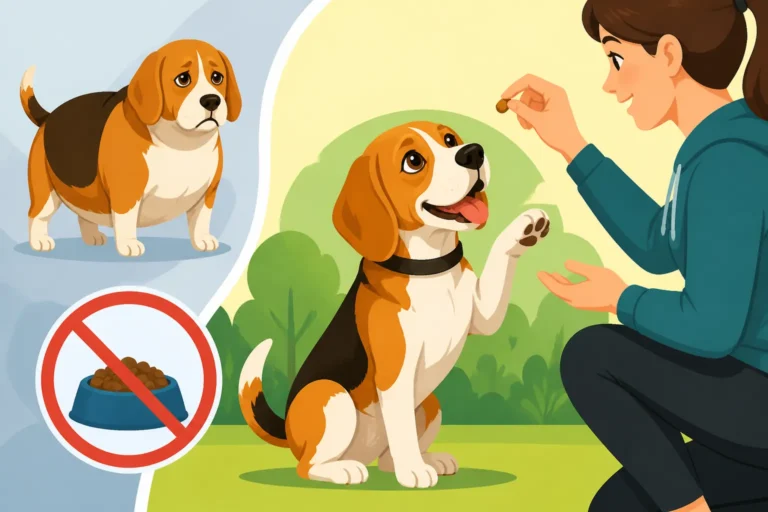
The challenge for us, as owners, is to insert ourselves into that hierarchy. We can't eliminate their natural drive, nor would we want to. Instead, we aim to make our commands, our presence, and our rewards even more compelling than the call of the wild. This requires consistent, high-value reinforcement. If you're trying to call your Beagle away from the most exciting rabbit scent they've ever found, a boring "good boy" or a piece of dry kibble isn't going to cut it. You need something truly irresistible, like a piece of cooked chicken or a favorite squeaky toy. High-Value Food and How Fast a Beagle Learns is not just a saying; it's essential for breaking through that scent-driven focus. The goal isn't to punish their natural drive, but to teach them that checking in with you is even more rewarding than chasing that fleeting scent.
Environmental Factors and Scent Persistence
The environment plays a significant role in how easily a Beagle can sort through and follow a particular scent. Scent molecules are affected by a multitude of external factors, influencing their strength, duration, and dispersion.
- Temperature: Warm air allows scent molecules to rise and dissipate more quickly, making trails fainter. Cooler, denser air tends to hold scent closer to the ground, making it easier to follow.
- Humidity: High humidity traps scent molecules, keeping them "sticky" and making trails much stronger and easier for a Beagle to work. Dry conditions cause scents to evaporate and break down faster.
- Wind: Wind can be a friend or foe. A steady breeze can carry scent a long way, but a swirling, gusty wind can scatter it, making a consistent trail difficult to follow. Beagles learn to work into the wind to maximize their scent intake.
- Terrain: Hard surfaces like pavement absorb less scent and allow it to dissipate quickly. Porous surfaces like grass, soil, and leaf litter hold scent much longer. Water can completely wash away a trail, but sometimes Beagles can detect scent particles floating on the surface.
A skilled Beagle tracker unconsciously factors in all these elements. They understand, for instance, that a faint scent on a hot, windy day needs more intense focus than a strong scent on a cool, damp morning. This adaptability is part of their inherited hunting prowess, allowing them to keep track of their target despite challenging conditions. Letting a Beagle Sniff on Every Single Walk allows them to practice these skills and refine their understanding of the scent world.
Focusing on the Target: The "Single Purpose" Dog
While a pet Beagle might chase any interesting scent, working Beagles demonstrate an astonishing ability to ignore dozens of competing odors to focus solely on their target. This is the result of highly specialized training that hones their natural talent into a precision instrument. Think of the famous The USDA Beagle Brigade at the Airport. These dogs are walking through terminals filled with hundreds of thousands of human scents, perfumes, food smells, baggage odors, and yet they are trained to key in on one specific target: prohibited agricultural items.
This isn't about suppressing their ability to smell other things; it's about conditioning them to prioritize a specific scent above all others, and to indicate when they find it. Through countless repetitions and consistent rewards, they learn that finding, say, a mango in a suitcase is far more rewarding than investigating the lingering scent of last night's fast food wrapper. This level of focus is achieved through meticulous conditioning, where every other scent becomes irrelevant background noise, and only the target scent matters. This makes them incredibly effective at their jobs, proving just how much control can be layered over their powerful natural drives.
| Feature | Human Olfactory System | Beagle Olfactory System |
|---|---|---|
| Scent Receptors | ~5-6 million | ~220 million |
| Olfactory Bulb Size | Proportionately small | Proportionately very large |
| Breathing/Smelling | Interrupted (one combined process) | Continuous (separated airflows) |
| Vomeronasal Organ | Largely vestigial/limited | Highly functional (detects pheromones) |
| Scent Discrimination | Broad categories, limited detail | Highly detailed, component separation |
| Dominant Sense | Vision | Olfaction |
Living with a Scent-Driven Super Sniffer
Understanding how your Beagle's nose works isn't just a fascinating academic exercise; it's absolutely crucial for providing them with a fulfilling life and managing their unique behaviors. Ignoring their primary sense is like asking a human to live without sight – it's fundamentally against their nature.
Managing the Obsession: Walks and Enrichment
Since a Beagle's world is dominated by scent, denying them the opportunity to use their nose is a source of frustration and boredom. Those daily walks shouldn't just be about exercise; they should be "sniffing walks." Let your Beagle take their time, meandering and investigating every interesting smell. This mental stimulation is incredibly tiring for them, far more so than a brisk walk where they are constantly pulled along. Sniffing Walks and Why They Tire a Beagle Out because their brain is working overtime, processing a constant stream of complex data.
Beyond walks, incorporate scent games into their daily routine. Snuffle mats, puzzle feeders, and hiding treats around the house engage their natural foraging instincts. You can easily find a wide array of options on platforms like Amazon, from simple snuffle balls to complex interactive feeders, all designed to make them work for their food using their nose. Even something as simple as scattering their kibble in the grass can turn mealtime into a stimulating scent game. These activities not only provide enrichment but also help channel that powerful drive in a constructive way, reducing the likelihood of them seeking out less desirable "scent adventures" like counter surfing or trash raiding. If you're looking for more structured ways to engage their nose, consider joining a local class in Beagle Tracking and Nose Work Titles – they absolutely thrive in these environments.
Training for Communication, Not Suppression
It's tempting to try and "train out" the intense scent focus, but that's like trying to train a bird not to fly. Instead, the goal is to build a strong communication system that allows you to redirect their focus when necessary. This means investing heavily in reliable recall and a solid "leave it" cue.
Start recall training in a low-distraction environment, gradually increasing the challenge. Make coming to you the most rewarding thing ever. When you call your Beagle, it should feel like winning the lottery, not just a mundane task. Beagle Recall That Works Before the Nose Wins is an ongoing process, especially during adolescence when their independent streak often clashes with their burgeoning scent drive. You might explore online training programs, such as those offered by BAXTER & Bella, which provide structured, positive reinforcement methods that can be invaluable for working with a scent hound. Remember, you're not trying to stop them from smelling; you're teaching them that responding to you is always the best choice, even when a fascinating scent calls. A strong bond and consistent, positive reinforcement are your most powerful tools.
Safety First: Understanding the Risks
The flip side of that amazing nose is the inherent risk it poses to your Beagle's safety. A Beagle with its nose on a hot trail is often deaf to the world, utterly oblivious to cars, other animals, or even where they are going. This is why the advice is always firm: Why a Beagle Should Never Be Off Leash Unfenced. Even in seemingly safe, open areas, a captivating scent can send them on a miles-long journey with dangerous consequences.
Secure fencing is non-negotiable for a Beagle home. They are expert escape artists, and if their nose tells them there's something interesting on the other side, they will find a way through, under, or even over. When out and about, a sturdy harness and a long line or leash are your best friends. These tools allow them to explore and sniff safely, without risking an impulsive chase. For an added layer of security, especially if your Beagle is prone to going on solo scent adventures, consider investing in a GPS Collars as a Backup for Beagle Recall. These devices can offer immense peace of mind, allowing you to track their location should they manage to slip away. Always ensure they wear an ID tag with up-to-date information, and that their microchip details are current. A lost Beagle will follow its nose, and getting them back often relies on these crucial identifiers.
Disclaimer
This article is for general informational purposes only and does not constitute professional advice. Laws, prices and regulations vary by location and change over time. Consult a qualified professional for guidance on your specific situation.