Beagle Fence Height and Whether They Climb
It’s a universal truth for Beagle owners: these adorable, floppy-eared hounds are escape artists of the highest caliber. One moment they’re happily sniffing around the yard, the next they’ve vanished in pursuit of an irresistible scent, leaving you with a pounding heart and a frantic search. This guide is here to help you understand why your Beagle is so determined to roam and, more importantly, how to build and maintain a secure outdoor space that can actually keep your furry friend safely contained.
Understanding the Beagle's Escape Artist Tendencies
If you’ve ever watched your Beagle follow a scent with single-minded devotion, you understand just how powerful their instincts are. It’s not about being disobedient; it’s about being a Beagle. Their entire genetic makeup screams "find that scent and follow it!"
Why Beagles Are Born Escapists
Let's be real, Beagles weren't bred to sit quietly in a suburban backyard. They were developed over centuries to hunt rabbits and hare, often working in packs, covering vast distances, and using their unparalleled noses to track quarry. That deep-seated drive means that any interesting smell – a rabbit, a squirrel, last night’s discarded fast food wrapper – can become an irresistible siren call. Once they catch a whiff, their world narrows to that single trail, and very little else registers. Your calls, your pleas, even the looming fence, often fade into the background. It's truly incredible how far they'll go; Why a Beagle Will Follow a Scent for Miles is not an exaggeration. This isn't naughtiness; it's instinct. And that instinct is the driving force behind most Beagle escapes. They're not running away from you; they're running towards an adventure their nose promised.
The Myth of the "Unclimbable" Fence for a Beagle
Many new Beagle owners assume a standard four-foot fence will do the trick. Perhaps they've owned other breeds that respect boundaries, or they simply haven't witnessed the sheer ingenuity of a determined Beagle. The reality is, a Beagle often sees a fence not as a barrier, but as a puzzle to be solved. They won't just stand there and lament their inability to get to the juicy scent on the other side. They’ll assess it. They'll look for weak spots, for footholds, for opportunities.
It's a myth to think a Beagle won't climb. While they might not scale a sheer wall like a mountain goat, they are incredibly agile and clever. A chain-link fence, with its easily gripped mesh, can become a ladder. A wooden fence might have horizontal rails on the inside that serve as steps. Even seemingly solid structures can be breached if there's enough motivation and a slight imperfection. It’s not just about jumping over; it's about leveraging whatever is available to get to the other side. Don't underestimate their physical capabilities or their problem-solving skills when a really good scent is involved.
Observing Your Beagle's Unique Escape Methods
Before you rush to install the highest fence imaginable, take some time to really observe your Beagle in the yard. Every dog is an individual, and while Beagles share common traits, your particular hound might have a preferred method of Houdini-ing their way out. Do they persistently dig along the fence line, nose to the ground, creating tunnels under the barrier? Do they test the gates, nudging and pushing until a latch gives way? Or do they look for things to climb on, turning a trash can or a stack of firewood into a convenient launching pad?
Understanding how your Beagle attempts to escape will be key to designing an effective containment strategy. For example, if you have a digger, focusing on burying wire might be more important than simply adding height. If you have a climber, addressing potential footholds and fence toppers will be crucial. Sometimes, they even combine methods, digging a little, then climbing a little, all to get to that tantalizing scent. Pay close attention to their behavior when they're left unsupervised, even for short periods. That’s often when their true escape artist persona emerges.
Recommended Fence Height and Materials to Contain a Beagle
When it comes to keeping a Beagle safe and sound in your yard, a "good enough" fence often isn't good enough. You need to think proactively, anticipating their clever tactics and building a barrier that truly stands up to their escape attempts.
The Minimum Height for a Beagle Fence
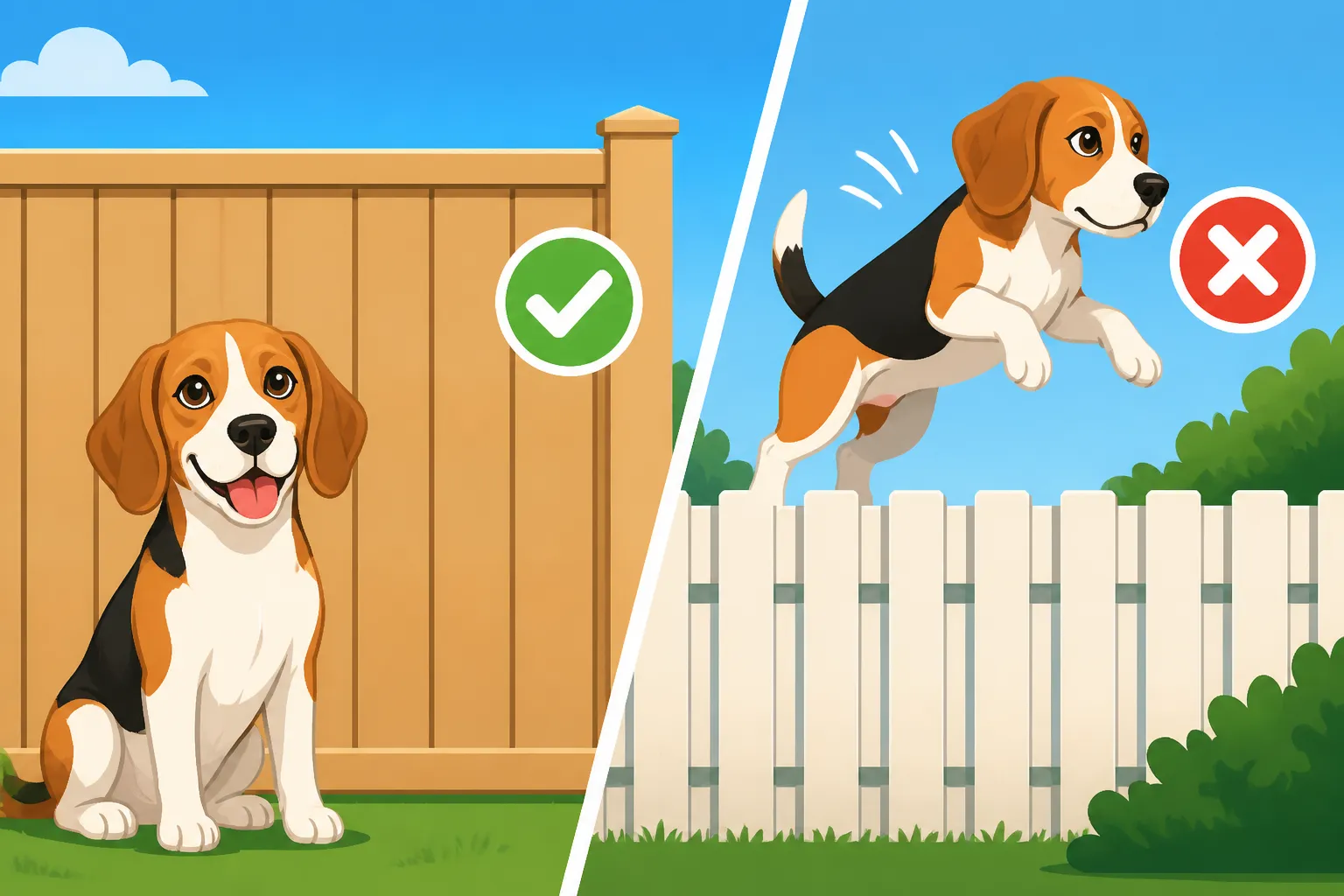
For most Beagles, a standard four-foot fence is simply not going to cut it. Many Beagles, especially the larger 15-inch variety, can easily clear a four-foot fence with a running start, fueled by adrenaline and the promise of an exciting smell. Even smaller 13-inch Beagles can be surprisingly athletic when motivated. To provide a reasonable level of security, most experts recommend a minimum fence height of five feet, with six feet being ideal, especially if your Beagle has shown any jumping prowess.
This extra height helps deter casual jumps and makes it more difficult for them to get enough leverage to clear the top. Remember, it's not just about their jumping height from a standstill, but what they can achieve when they really want to get out. That five or six-foot barrier needs to be consistent all the way around, with no dips or lower sections that could offer an easier exit. When you're considering The Fence Height That Actually Holds a Beagle, think about their full capacity, not just their average everyday bounce.
Materials That Deter Climbing and Digging
The type of material your fence is made from significantly impacts its effectiveness against a Beagle.
- Chain-link fences are often seen as problematic because the mesh provides easy footholds for climbing. A determined Beagle can scale these surprisingly quickly. If you have a chain-link fence, consider adding a smooth, non-climbable barrier on the inside, or adding a "coyote roller" to the top.
- Wooden privacy fences can be a good option as they offer no visible footholds, but you must ensure the vertical boards are flush with no gaps. Crucially, the horizontal support rails should be on the outside of the fence, not on the inside where your Beagle could use them as a ladder.
- Vinyl fences offer similar benefits to wooden fences in terms of smooth surfaces and lack of footholds.
- Solid masonry or brick walls are excellent for preventing climbing, but they can be expensive to install and may still present digging challenges.
Regardless of the material, addressing the digging potential is paramount. Beagles are natural excavators. Burying at least 12-18 inches of wire mesh (like hardware cloth) or L-footing (a short section of fencing bent at a 90-degree angle and buried horizontally) along the bottom of the fence line can create effective Digging Barriers Along a Beagle Fence Line. Another option is to pour a concrete footer, although this is a more permanent and costly solution. The key is to make it impossible for them to tunnel their way out.
Gate Security and Overlooked Weak Points
A fence is only as strong as its weakest point, and for many yards, that weak point is the gate. Beagles are incredibly adept at testing gate latches. They'll push, pull, nudge, and even stand on their hind legs to reach and manipulate closures. A simple hook-and-eye latch is usually no match for a clever Beagle.
You need robust gate security. This means:
- Double-latching mechanisms: Install a strong, spring-loaded latch at standard height, and then add a secondary, barrel bolt or padlock higher up, out of your Beagle's reach.
- Self-closing hinges: These ensure the gate swings shut automatically, even if you forget to close it completely.
- Tight gaps: Ensure there are no large gaps around the gate where a small Beagle could squeeze through. Check the bottom clearance as well; if your Beagle can get its nose under and lift, it might find a way.
- Regular inspection: Routinely check your gate for wear and tear, loose hinges, or signs of your Beagle attempting to chew or dig under it.
Remember, a Beagle's determination knows no bounds when a scent is calling. Investing in secure Gate Latches That Actually Hold a Beagle is not an extravagance; it's a necessity for their safety and your peace of mind. Many a Beagle has made their grand escape through a gate left ajar or easily manipulated.
Addressing the Climbing Factor: More Than Just Jumping
We've talked about height and digging, but a truly Beagle-proof fence also needs to address their surprising ability to climb. It's not always a graceful leap; sometimes it's a strategic ascent.
Beagles as Opportunistic Climbers
When we think of climbing dogs, we often imagine breeds that scale walls like Border Collies on an agility course. Beagles are different. Their climbing isn't usually a direct vertical assault, but rather an opportunistic use of their environment. They are master strategists when it comes to finding a way over. That stack of firewood piled against the fence, the discarded wheelbarrow, the doghouse placed a little too close to the boundary, or even heavy snowdrifts in winter can all become a perfect stepping stool. If there's a loose board on a wooden fence, they might pry it open just enough to get a paw in and hoist themselves up.
The key here is to meticulously scan your fence line, both inside and out, for anything that could aid an escape. Clear away any objects that could serve as a boost. Trim back tree branches that hang over the fence, as some Beagles are surprisingly agile enough to pull themselves up or even climb a low-hanging branch if it offers a path to freedom. Think like a Beagle: where's the easiest way up and over?
Fence Toppers and Rollers to Prevent Escapes
For Beagles that excel at climbing or jumping, adding a fence topper can be a game-changer. These aren't just for aesthetics; they actively make the fence harder to clear.
- Angled extensions: Some fence toppers are designed with an inward angle, making it impossible for a dog to get a firm grip or clear the top. These can be particularly effective.
- Coyote rollers: These are often made of metal or thick PVC pipe, installed along the very top of the fence. When a dog tries to hoist itself over and puts weight on the roller, it spins, denying them a stable perch. These are available through various suppliers, and you can often find kits or materials on sites like Amazon to DIY.
- Smooth surfaces: If you have a chain-link fence, adding smooth material like polycarbonate sheeting to the top section can remove those crucial toeholds that Beagles use to climb.
The goal is to eliminate any stable purchase point at the very top of the fence, making it not only taller but also physically impossible to get a grip and pull themselves over. It adds another layer of security that often makes the difference between a secure yard and a constant headache.
Training and Management as Part of the Solution
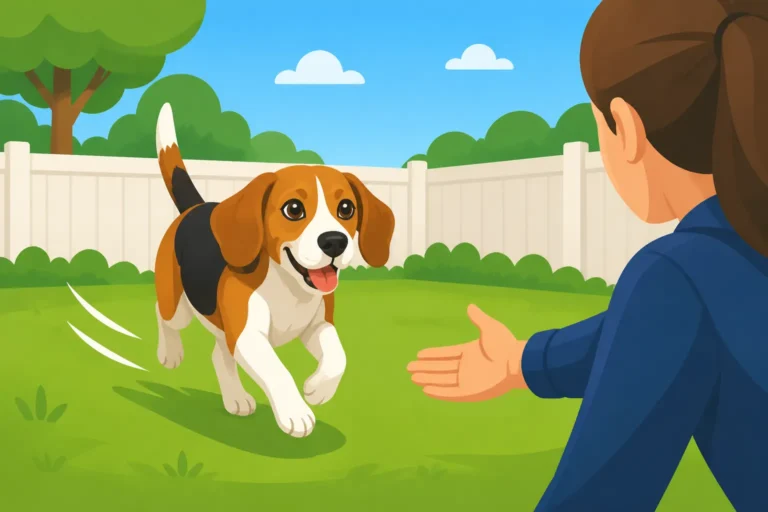
While physical barriers are essential, don't underestimate the role of training and consistent management in keeping your Beagle contained. A dog that understands boundaries and has good impulse control is less likely to constantly test the limits of your fence. Start with basic obedience, focusing on a strong "leave it" command and reliable recall, even within the confines of your yard. Practice Impulse Control Exercises That Suit a Beagle regularly, teaching them to wait and resist immediate gratification.
Make your yard a place they want to be. Provide ample enrichment, such as puzzle toys, scheduled sniff sessions, and regular play. Supervise them, especially when they are young or newly introduced to the yard, interrupting any attempts to dig or climb the moment you see them. Reward them heavily for ignoring the fence and choosing to stay engaged with you or their toys. Building a strong bond and a clear communication system can go a long way in reducing their drive to escape, making them more likely to respond even if a tempting scent wafts by. Working on Building Beagle Focus in a Distracting Place can translate to better behavior near the fence line.
Beyond the Physical Fence: Layered Security and Training
Even with the most robust fence, a Beagle's legendary nose and determination mean that a multi-pronged approach to security is always the smartest strategy. Think of it as layers of protection, each backing up the other.
The Limitations of Invisible Fences for Beagles
Many owners, frustrated by persistent escapes, consider invisible or electronic fences. While these systems can be effective for some breeds, they often prove woefully inadequate for Beagles. The primary issue is their incredible scent drive. An invisible fence works by delivering a static correction (a mild shock) when the dog crosses an invisible boundary. The idea is that the unpleasant sensation deters them.
However, a Beagle, when fully engaged on a compelling scent trail, can and often will "blow through" the static correction. The intense desire to follow that scent often outweighs the discomfort of the shock. They might yelp, but they'll keep going, driven by instinct. Once they're on the other side, there's often no deterrent to coming back, creating a dangerous situation where they're loose and confused. Furthermore, invisible fences offer no protection from other animals or people entering your yard. While they might seem like a convenient solution, for a Beagle, Why Invisible Fences Fail With a Beagle often comes down to their overpowering genetic programming. It’s simply not a physical barrier and a motivated Beagle will ignore the discomfort.
GPS Trackers as a Safety Net
Given a Beagle's propensity for escape, a GPS tracking collar is an invaluable tool for peace of mind, not as a primary containment method, but as a critical backup. These devices attach to your dog's collar and use satellite technology to allow you to track their location in real-time via a smartphone app.
Should your Beagle manage to make an escape, a GPS tracker can drastically reduce the time and anxiety involved in finding them. Instead of frantically driving around the neighborhood, you can pinpoint their location and go directly to them. Some popular brands offer features like geofencing, which alerts you if your dog leaves a designated safe zone, giving you an early warning. While there are Beagle GPS Tracking Collar Prices to consider, many owners find the investment well worth it for the added security. Think of it as your Beagle's personal homing beacon—a vital piece of their safety gear, alongside a sturdy harness and a secure, physical fence. Products found on sites like Amazon offer a range of options, allowing you to choose one that fits your budget and specific needs.
Training and Enrichment to Reduce Escape Drive
Ultimately, a truly secure Beagle is one that is well-trained, well-exercised, and mentally stimulated. While physical barriers are necessary, addressing the root causes of their escape attempts—boredom and an unfulfilled scent drive—is crucial.
- Scent Work: Remember, a Beagle's nose is their world. Engaging them in regular scent work activities, even simple games in the backyard or structured classes, can provide immense mental fulfillment. Scent Work as the Job a Beagle Was Built For is not just a saying; it's how they are wired. When their nose is tired, their mind is often more content to stay home.
- Consistent Training: A reliable recall is your most powerful tool, but it takes consistent practice in various environments, starting in low-distraction areas. Many owners struggle with Beagle Recall and Why Your Voice Stops Registering when that nose hits the ground, which is why a fenced yard is non-negotiable. Work with a professional trainer if you're struggling; resources from trainers like BAXTER & Bella can offer structured programs and support.
- Adequate Exercise: A tired Beagle is a good Beagle. Ensure they get enough physical exercise every day, beyond just yard time. This could be long walks (on a secure leash, of course!), running in a securely fenced area, or playing fetch.
- Indoor Enrichment: On days when outdoor adventures aren't possible, provide plenty of indoor mental stimulation with puzzle toys, chew items, and training sessions. A bored Beagle is a creative Beagle, and that creativity often leads to escape plans.
By combining a truly secure physical environment with consistent training, enrichment, and the backup of a GPS tracker, you create the safest possible world for your adventurous Beagle. It’s always best to assume your Beagle is smarter than your fence and plan accordingly; after all, Why a Beagle Should Never Be Off Leash Unfenced is a lesson many owners learn the hard way.
Fence Security Options for Beagles
Here's a quick comparison of common fence types and features, considering a Beagle's unique talents:
| Feature/Type | Description | Beagle Suitability (Pros/Cons) |
|---|---|---|
| Height | Minimum recommended height | 5-6 feet: Crucial for deterring jumping. Four feet is often too low for a motivated Beagle. |
| Wood Privacy Fence | Solid panels, offering visual barrier | Pros: No visual distractions, harder to climb if rails are on the outside. Cons: Can be dug under. Boards can warp, creating gaps. Needs regular maintenance. |
| Chain-Link Fence | Woven wire mesh | Pros: Affordable, easy to install. Cons: Very easy for Beagles to climb using the mesh as a ladder. Can be dug under. Not visually appealing to some. |
| Vinyl Fence | Solid, low-maintenance panels | Pros: Smooth surface (hard to climb), durable, low maintenance. Cons: Can be expensive. Can be dug under at the base. |
| Wrought Iron/Metal | Decorative, open design with vertical bars | Pros: Difficult to climb if bars are close together, durable. Cons: Can be expensive. Gaps between bars must be small enough to prevent squeezing through. Can be dug under. |
| Digging Barrier | Buried mesh, L-footing, or concrete footer along the base of the fence | Pros: Essential for preventing tunneling escapes. Cons: Requires significant installation effort (digging trenches). |
| Climbing Deterrent | Coyote rollers, angled extensions, smooth sheeting at the top | Pros: Prevents Beagles from getting purchase to hoist themselves over. Cons: May alter fence aesthetics. Requires additional installation. |
| Gate Security | Double latches, self-closing hinges, small gaps | Pros: Prevents manipulation and accidental escapes. Crucial weak point addressed. Cons: Requires diligent checking and proper installation. |
| Invisible Fence | Underground wire with static correction collar | Pros: No physical barrier, relatively easy installation. Cons: Not recommended for Beagles. Scent drive often overpowers static correction. Offers no protection from external threats. Can cause confusion and anxiety. |
| GPS Tracking Collar | Device worn on collar, tracks location via app | Pros: Excellent safety net in case of escape. Provides peace of mind. Alerts if dog leaves geofenced area. Cons: Not a primary containment method. Requires charging. Subscription fees may apply. Can be lost if collar comes off. |
Ultimately, keeping a Beagle safely contained in your yard requires a diligent, multi-layered approach. It's not just about erecting a barrier, but understanding their unique drives, anticipating their clever escape tactics, and providing enough mental and physical stimulation to keep them happy and content within their boundaries. With the right strategies, you can enjoy the peace of mind that comes with knowing your beloved scent hound is safe at home.
Disclaimer
This article is for general informational purposes only and does not constitute professional advice. Laws, prices and regulations vary by location and change over time. Consult a qualified professional for guidance on your specific situation.