What to Teach a Beagle Puppy Before It Finds Its Nose
Bringing home a Beagle puppy is a joyous occasion, full of wagging tails and curious nudges. However, many new Beagle owners quickly discover a unique challenge: these little hounds are born with an incredible sense of smell, and once that nose truly "switches on," it can feel like your carefully laid training plans go right out the window. It's a common frustration to have a puppy who listens perfectly indoors, only to become utterly deaf to your commands the moment a fascinating scent trail crosses their path. This guide will walk you through the crucial foundational training and socialization you need to implement before your Beagle puppy becomes entirely absorbed by their powerful nose, setting them up for a lifetime of responsiveness and good habits.
Understanding the Beagle Puppy's Unique Development
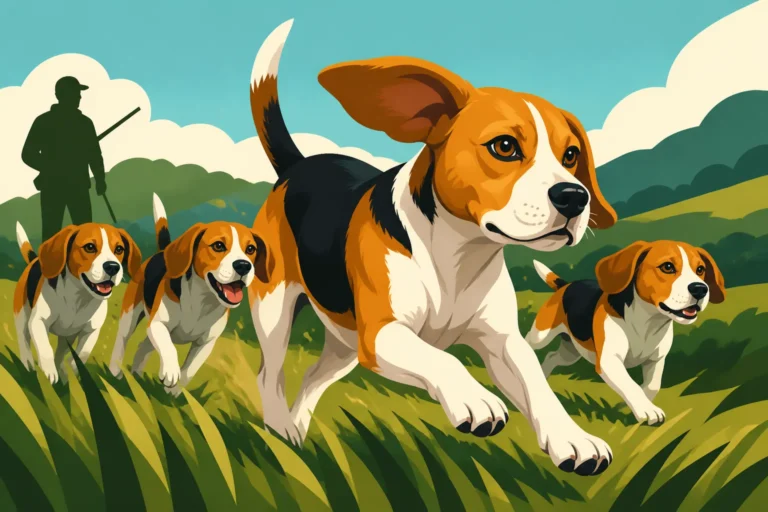
Your adorable, floppy-eared Beagle puppy might look like any other cute canine, but beneath that soft fur and earnest gaze lies a highly specialized working nose. Beagles were bred for centuries to follow scent trails, and this instinct is deeply ingrained in their DNA. Understanding how this sensory world develops is key to tailoring your early training approach.
The Primacy of Scent in a Beagle's World
For a Beagle, the world is primarily a landscape of odors, a rich tapestry that tells stories we humans can only guess at. From the moment they’re born, even before their eyes are fully open, a puppy’s sense of smell is guiding them to their mother and littermates. As they grow, this becomes their primary way of gathering information, understanding their environment, and processing experiences. While other breeds might rely heavily on sight or sound, a Beagle processes the world through its nose first and foremost. This isn't just a strong sense of smell; it's a profound, all-encompassing way of perceiving reality.
Imagine stepping outside and reading an entire novel about everything that has passed by – every squirrel, every dog, every person, every dropped crumb – all through your nose. That’s what a Beagle is doing, and it’s why a seemingly innocuous patch of grass can become an irresistible siren song. This genetic predisposition means that their attention is constantly drawn downwards, to the intricate details of the ground beneath their paws. They aren't being stubborn; they are simply fulfilling their deepest, most ancient drive.
When the Olfactory Bulb Truly "Wakes Up"
While a Beagle puppy has a functional nose from birth, there's a developmental phase where their olfactory system becomes acutely powerful and truly dominant. This often happens as they transition from early puppyhood into adolescence, typically between four to six months of age, though some Beagles might start exhibiting this intense focus on scent even earlier. It's not a switch that flips overnight, but rather a gradual increase in their ability to discern and be captivated by complex scent trails. Before this "switch" really engages, puppies are often more pliable and less scent-distracted, making it the perfect window for laying down crucial obedience groundwork.
This period is often likened to a child discovering a favorite new toy – suddenly, everything else pales in comparison. For your Beagle, that "toy" is the entire world of scent. Once they're fully immersed in it, calling their name might be akin to trying to get a toddler's attention while they're deeply engrossed in building a magnificent castle of blocks. Their brain is literally wired to prioritize that information, making your verbal cues secondary unless they've been deeply ingrained. This is why the window for effective early training, before the nose truly wins out, is so critical. You want to build a strong foundation of positive associations with your voice and presence that can compete with the allure of a captivating odor. How Far a Beagle Can Actually Smell gives you a deeper insight into just how powerful this sense is.
Early Socialization: Building a Confident Canine Citizen
Socialization is arguably one of the most important things you can do for your Beagle puppy, especially before their natural instincts become fully entrenched. A well-socialized Beagle is more adaptable, less prone to fear or aggression, and generally happier in a variety of situations. This window of opportunity, typically before 16 weeks of age, is paramount for shaping a well-adjusted adult dog.
Exposing Your Puppy to the World Safely
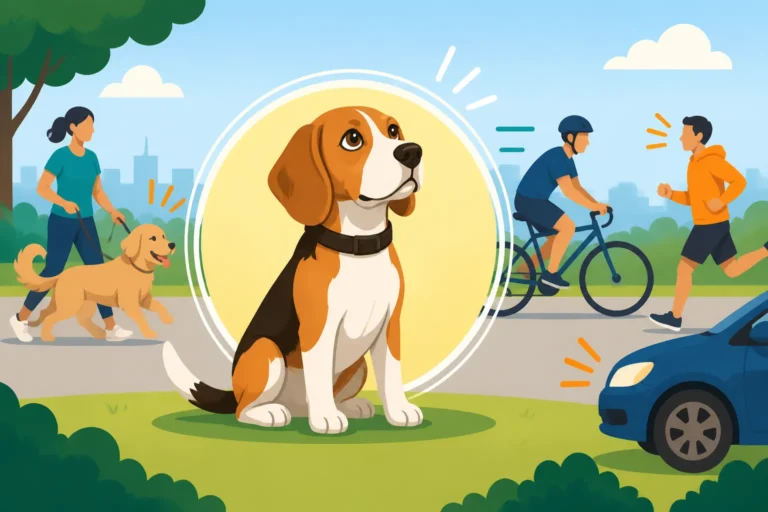
Early and positive exposure to a wide variety of sights, sounds, textures, and experiences is crucial. Think beyond just "meeting other dogs." This means carefully introducing your puppy to different types of people (men, women, children, people wearing hats, people on bikes, people with umbrellas), different environments (parks, quiet streets, vet clinics for happy visits), and different noises (traffic, vacuums, doorbells, thunderstorms played softly on a speaker). The key here is positive exposure. Each new experience should be paired with high-value treats and praise, ensuring your puppy forms positive associations.
For instance, if you live in a bustling urban area, take your puppy to a quiet corner of a park or a low-traffic sidewalk to simply observe. Don't force interactions. Let them watch from a safe distance, rewarding calm curiosity. If they seem nervous, simply increase the distance and continue with the treats until they relax. The goal is not to overwhelm them, but to show them that the world is generally a safe and interesting place. A reputable online program like BAXTER & Bella can offer structured guidance on socialization activities, helping you navigate these critical early weeks with confidence.
The Importance of Meeting New People and Dogs
Beyond general environmental exposure, deliberate positive interactions with a diverse range of people and vaccinated, friendly dogs are vital. For people, this means inviting friends and family over, having them offer treats, and engaging in gentle play. Teach your puppy that hands are for petting, not for nipping, by rewarding calm interactions. When meeting new dogs, ensure they are calm, healthy, and have good social manners. Puppy classes are an excellent, controlled environment for this, allowing your puppy to interact with littermates and other young dogs under supervision.
These interactions teach your Beagle crucial canine communication skills and help them develop confidence around different personalities and play styles. A puppy that misses this crucial window might grow up fearful or reactive, making every walk a stressful event. Remember, for a pack-oriented breed like the Beagle, positive interactions with both humans and other canines are fundamental to their emotional well-being and ability to thrive in a family setting. Socializing a Beagle Puppy for Pack Life delves further into this topic.
Foundation Obedience: The Building Blocks of Control
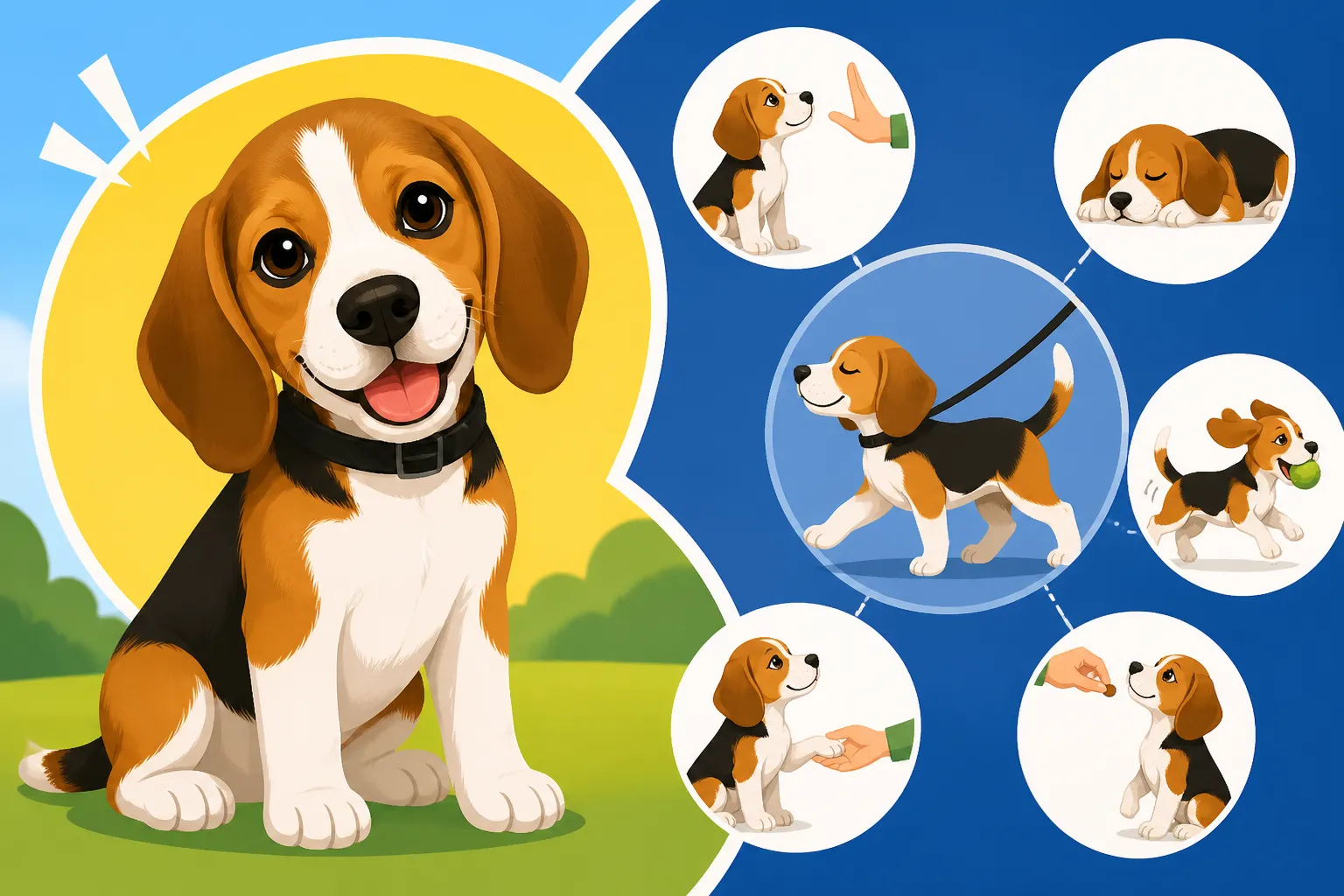
Before that powerful Beagle nose takes over completely, it's essential to establish a strong foundation in basic obedience. These early commands aren't just tricks; they are communication tools that build trust and provide you with a way to safely manage your Beagle in a world full of tantalizing scents.
Mastering the "Come" Command Indoors
"Come" (or "Recall") is hands-down the most critical command for a Beagle. Their instinct to follow a scent trail can be incredibly powerful, making a reliable recall a matter of safety. Start training "come" in a low-distraction environment, like your living room or kitchen, right away. Make it the most exciting thing ever! Use a happy, high-pitched voice and immediate, high-value rewards – think tiny pieces of cooked chicken, cheese, or specialized training treats from Amazon.
Practice frequently in short, fun sessions. Call your puppy, enthusiastically praise them the instant they start moving towards you, and reward them lavishly when they reach you. Never use "come" to do something unpleasant, like giving medication or ending playtime, otherwise, they’ll learn to associate it with negative experiences. The goal is to build such a strong positive association with coming to you that it becomes their default, joyful response, even when there's an interesting smell beckoning. This foundational work will be invaluable when you transition to outdoor environments.
Teaching "Sit," "Stay," and "Down"
While "come" is paramount, "sit," "stay," and "down" are equally important for manners and impulse control. "Sit" is often the easiest to teach. Hold a treat near their nose and slowly move it back over their head. As their nose follows the treat, their rear end will naturally lower into a sit. Mark the moment with a verbal cue ("Sit!") and reward instantly. "Down" can be taught by luring them from a sit position with a treat moving towards the floor and then away from them.
"Stay" is the trickiest and requires building up duration and distraction incrementally. Start with just a second or two, then gradually increase the time and add slight distractions. Always return to your puppy to reward them, rather than calling them to you during a "stay" (which can accidentally teach them that "stay" means "come when you feel like it"). These commands help your Beagle learn to focus on you, even when there are other things vying for their attention. They are the bedrock of good behavior and will serve you well as your Beagle's nose becomes more powerful.
Introducing the Leash and Collar
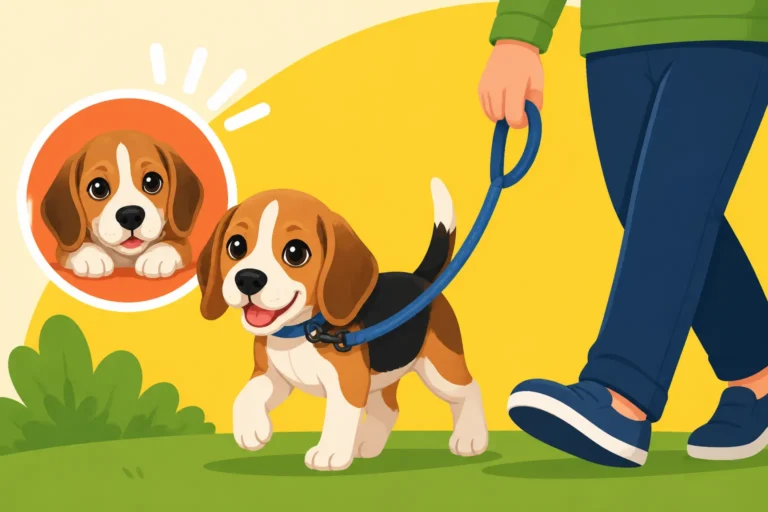
Your Beagle puppy needs to get comfortable with a collar and leash long before you rely on them for walks. Start by letting your puppy wear a lightweight, comfortable collar for short periods, gradually increasing the time. Distract them with play or food while they're wearing it. Once they're used to the collar, attach a lightweight leash and let them drag it around indoors under supervision for brief periods. This helps them get used to the feel and weight.
Next, hold the leash and walk a few steps, praising and rewarding them for following. Don't pull or drag them; make it a positive experience. The goal is to teach them that the leash means good things happen when they walk with you. You'll want a sturdy, well-fitting harness for walks, especially for a Beagle that might try to pull towards a scent. Look for quality options on Amazon. Leash Training a Beagle From Eight Weeks provides further detail on making leash walks enjoyable.
House Training and Crate Comfort: Essential Life Skills
Establishing good potty habits and a positive relationship with their crate early on are non-negotiable for a Beagle puppy. These foundational skills prevent accidents and provide a safe, secure space for your dog, which is especially important for a breed prone to separation anxiety.
The Potty Training Process for a Scent-Driven Pup
Beagles, like all puppies, need frequent potty breaks, but their curious noses can sometimes make outdoor potty breaks a challenge. They might get so engrossed in sniffing that they forget to relieve themselves! To combat this, take your puppy out frequently: first thing in the morning, last thing at night, after every meal and drink, after waking from a nap, and after any play session. Take them to the same designated potty spot each time. The scent of previous eliminations will encourage them to go there again.
When they do potty, praise them calmly and reward them immediately with a high-value treat. Avoid exuberant play until after they've done their business, so they learn that going potty outside is the priority. If they start sniffing excessively without relieving themselves, keep them on a short leash, walk them around the designated area, and once they've finished, then you can allow for a short sniffy walk as a reward. Consistency is key, and if you're struggling, check out House Training a Beagle That Gets Distracted Outside for more tips.
Making the Crate a Safe Haven
The crate should be a comfortable, safe, and positive space for your Beagle, not a punishment. Beagles are pack animals and naturally enjoy having a den. Introduce the crate slowly and positively. Place soft bedding and a few enticing, safe chew toys inside. Start by feeding meals near the crate, then just inside, eventually with the door closed for short periods. Never force your puppy into the crate.
The crate is excellent for managing potty training, providing a secure place when you can't supervise directly, and for ensuring they have a quiet place to rest. When you leave, put your puppy in the crate with a durable chew or a puzzle toy stuffed with treats to create positive associations with your absence. Avoid prolonged crying; if your puppy is distressed, you might be moving too fast in your crate training. A properly sized crate (allowing them to stand, turn around, and lie down comfortably) is essential. Beagle Crate Size and Crying Through the Night offers guidance on selecting the right crate and managing initial crate adjustment.
Managing Nipping and Chewing: Redirecting Puppy Instincts
Puppy nipping and chewing are completely normal behaviors, but they need to be managed and redirected from the start. For a Beagle, who loves to use their mouth to explore and investigate, early intervention is key to preventing these habits from becoming problematic.
Understanding Puppy Biting and Mouthing
Puppies explore the world with their mouths, and nipping is how they learn bite inhibition from their littermates. When a puppy bites too hard, another puppy will yelp, and play will stop. You can mimic this. If your puppy nips you too hard during play, let out a high-pitched "ouch!" or "yip!" and immediately remove your attention (turn away, stand up, leave the room for 10-20 seconds). This teaches them that hard bites make the fun stop. When they mouth gently, reward that soft mouth with praise and continued play.
It's also important to understand that Beagles can be quite mouthy as puppies, and this often ties into their strong prey drive and desire to "catch" things with their mouths. Make sure you're providing plenty of appropriate outlets for this natural instinct. Consistent and immediate redirection is crucial so they learn what is acceptable to bite and what isn't. Beagle Puppy Nipping and Where It Comes From offers more strategies for dealing with this common puppy behavior.
Providing Appropriate Chew Outlets
Chewing is a natural and necessary behavior for puppies, especially during teething. If you don't provide appropriate things for them to chew, they will find their own, which often means your furniture, shoes, or hands. Invest in a variety of durable, puppy-safe chew toys. Look for options on Amazon that cater to strong chewers. Different textures and shapes can keep them engaged.
Rotate their toys to keep things interesting. Puzzle toys that dispense treats can be particularly engaging for a food-motivated Beagle, keeping them occupied for longer periods. When you see your puppy chewing something inappropriate, calmly interrupt, say "no" (or whatever consistent verbal cue you use), and immediately redirect them to an appropriate chew toy. Praise them when they take the toy. Ensuring they always have access to acceptable chew items will significantly reduce unwanted chewing behaviors.
Impulse Control and Attention: Competing with the Nose
This is where the rubber meets the road for Beagle owners. Their incredible scent drive means you need to actively work on impulse control and teach them to focus on you even when the world is screaming "sniff me!"
Games That Build Focus and Eye Contact
To compete with that powerful nose, you need to make yourself incredibly interesting and rewarding. Games that build focus and eye contact are vital. Start in a quiet room with no distractions. Hold a high-value treat near your nose. The moment your puppy looks at your eyes, even for a split second, mark it with a verbal cue like "yes!" or a clicker, and give them the treat. Gradually increase the duration of eye contact you expect before rewarding.
The "watch me" command is invaluable. Practice this throughout the day, in various locations, building up to more distracting environments. When you're out on a walk and your Beagle's nose is glued to the ground, a strong "watch me" can help you regain their attention. Make it a fun game, not a chore. Using their meal portions for training these games can also help keep them lean while rewarding their focus. The Treats a Beagle Will Work Hardest For can guide your choices.
"Leave It" and "Drop It" for the Curious Sniffer
These two commands are absolute lifesavers for a Beagle who is constantly discovering interesting (and potentially dangerous) things with their nose. "Leave It" teaches your puppy to ignore something tempting, while "Drop It" teaches them to release something they already have in their mouth.
To teach "Leave It," hold a low-value treat in your closed fist. When your puppy tries to get it, ignore them. The moment they look away from your hand, even for a second, mark and reward with a different, higher-value treat from your other hand. Repeat until they reliably look away. Then, try placing a low-value treat on the floor, covering it with your hand if they lunge. When they look at you, reward with a high-value treat. Gradually remove your hand and introduce the verbal cue "Leave It."
For "Drop It," get two identical toys. Offer one to your puppy. Once they have it, offer the second, more exciting toy. As they drop the first to take the second, say "Drop It!" and reward. Practice frequently, and soon your Beagle will learn that dropping something often leads to an even better reward. These commands are critical for preventing them from eating something harmful found on a walk or counter-surfing for forbidden snacks.
Early Exposure to Gentle Handling and Grooming
Beagles, with their long ears and dense coats, require regular grooming and handling. Getting your puppy accustomed to these routines from a young age makes these experiences positive and stress-free for both of you down the line.
Brushing and Ear Cleaning Routines
Start introducing gentle brushing sessions early. Use a soft puppy brush and make it a positive experience with treats and praise. Focus on short sessions, gradually increasing the duration as your puppy tolerates it. This not only gets them used to the brush but also helps you bond and allows you to check for any skin issues or parasites. Regular brushing will also help manage their shedding, which can be quite considerable with their double coat.
Beagles are particularly prone to ear infections due to their long, floppy ears which trap moisture and debris. Start handling their ears gently from day one. Lift the ear flap, look inside, and gently rub the ear canal opening. Follow with a treat. Once they are comfortable with this, you can introduce a veterinarian-approved ear cleaner. Apply a small amount to a cotton ball and gently wipe the visible parts of the ear. Never insert anything into the ear canal. Beagle Ear Cleaning as a Weekly Job emphasizes the importance of this routine.
Paw Handling and Nail Trims
Many dogs dread nail trims, but it doesn't have to be that way for your Beagle. Start by simply touching your puppy's paws and toes frequently. Gently massage them, spread their toes, and press lightly on their nail beds. Do this daily, pairing it with treats and praise. The goal is to make paw handling a non-event. Once they're comfortable, introduce the nail clippers or grinder. Don't actually clip anything at first; just let them see and smell the tool, then reward.
When you do start trimming, take off only the very tip of one or two nails at a time, making it a quick, positive experience. If you accidentally cut too close to the quick (the sensitive part of the nail), it can be painful and set back your training significantly. If you're unsure, ask your vet or a groomer for a demonstration. Building this tolerance for paw handling is also crucial for inspecting their paw pads after walks and removing any debris or ticks.
The Role of Play and Enrichment in Early Development
Play is not just fun; it's a vital part of your Beagle puppy's development, helping them burn energy, learn social skills, and engage their minds. For a scent hound, enrichment that taps into their natural instincts is particularly important.
Interactive Toys and Puzzle Feeders
Beagles are intelligent and highly food-motivated, making interactive toys and puzzle feeders excellent tools for mental enrichment. These toys require your puppy to think and problem-solve to get a treat or their meal. This engagement can be incredibly satisfying for them and helps to tire them out mentally, which is just as important as physical exercise. Look for different types of puzzle feeders – some they push, some they flip, some they roll. Variety keeps them interested.
Using puzzle feeders for some or all of their meals can also help slow down a Beagle who gulps their food, promoting better digestion. It also gives them a "job" to do, channeling their energy into a productive task. This kind of enrichment is particularly valuable on days when the weather prevents long outdoor adventures, helping to prevent boredom and destructive behaviors. Puzzle Feeders That Genuinely Slow a Beagle has some great recommendations.
Supervised Play with Appropriate Toys
Beyond puzzle feeders, ensure your Beagle puppy has a variety of appropriate toys for supervised play. Tug toys can be great for building a bond and teaching "drop it," as long as you set clear rules (you initiate and end tug, and the toy goes away when play is over). Soft plush toys are good for carrying around, and durable rubber toys can satisfy their chewing needs.
Engage in active play sessions with your puppy. This isn't just about letting them run wild; it's about interactive games that involve you, like gentle fetch or hide-and-seek with a favorite toy (or even with yourself!). These games strengthen your bond, build positive associations with your presence, and allow you to practice those early obedience commands in a fun context. Remember to supervise all play, especially with new toys, to ensure they are safe and don't pose a choking hazard.
| Training Priority | Why it's Important for a Beagle | Key Strategies |
|---|---|---|
| Recall (Come) | Critical for safety; competes with strong scent drive. | High-value treats, joyful tone, practice indoors first, never punish recall. |
| Socialization | Prevents fear/reactivity; promotes adaptability as their world expands. | Diverse positive exposure to people, dogs, sights, sounds; puppy classes; pair new experiences with treats. |
| "Leave It" / "Drop It" | Prevents ingestion of dangerous items; manages scavenging. | Start with low-value items, reward with high-value; make it a game; consistent practice. |
| Crate Training | Provides a safe den; aids potty training; manages separation anxiety. | Positive association with treats, toys, meals; gradual introduction; never use as punishment. |
| Leash & Collar Comfort | Prepares for safe walks; prevents stress on leash. | Introduce gradually with positive reinforcement; let puppy drag leash indoors initially; use a comfortable harness. |
| Handling & Grooming | Essential for health (ears, nails); makes vet visits less stressful. | Daily gentle handling of paws, ears, mouth; short, positive brushing sessions; use treats. |
| Impulse Control Games | Teaches focus on handler; helps them ignore distractions. | "Watch Me" games, treat lures, short training sessions, rewarding calm behavior. |
| Appropriate Chewing | Satisfies natural instinct; prevents destruction of household items. | Provide a variety of durable, safe chew toys; redirect immediately from inappropriate chewing; use puzzle feeders. |
As your Beagle puppy grows and their incredible nose fully develops, the early groundwork you lay in these first few months will be invaluable. A well-socialized, crate-trained, and obedience-savvy Beagle puppy is far better equipped to navigate the scent-filled world and still choose to listen to you. It takes patience, consistency, and a deep understanding of what makes a Beagle, well, a Beagle!
Disclaimer
This article is for general informational purposes only and does not constitute professional advice. Laws, prices and regulations vary by location and change over time. Consult a qualified professional for guidance on your specific situation.