Using a Beagle’s Food Drive as the Training Lever
One of the most common frustrations Beagle owners face is feeling like their lovable hound has a bottomless pit for a stomach, and that everything edible is fair game. This intense food drive can feel like a constant battle against counter-surfing, trash raiding, and general insatiable hunger. But what if I told you that this very characteristic, often seen as a problem, is actually your greatest asset when it comes to training? This comprehensive guide will show you how to ingeniously leverage your Beagle's profound love for food to transform training challenges into rewarding opportunities, building a well-behaved companion who's eager to learn.
Understanding the Beagle's Epic Food Drive
Let's be real, Beagles are notorious for their obsession with food. It’s not just a cute quirk; it’s a deep-seated instinct that has been honed over centuries. Understanding why your Beagle is so food-motivated is the first step in truly harnessing this powerful drive for positive training outcomes. It’s not about them being "greedy" or "naughty" in a human sense; it's about their very nature.
The Evolutionary Roots of a Bottomless Stomach
Imagine a time when Beagles weren't pampered pets living in cozy homes, but working hounds in packs, sometimes going long stretches without a guaranteed meal. Their ancestors, bred for hunting small game like rabbits, needed every ounce of energy and every calorie they could get. When food was scarce, those with a stronger drive to seek it out and consume it quickly were the ones who survived and thrived. This means that your modern-day Beagle carries the genetic blueprint of a highly efficient scavenger and consumer. Their bodies are essentially programmed to never miss an opportunity to eat, because they don't know when the next one will come.
This isn't a flaw; it's a feature. They weren't just expected to find the scent of a rabbit; they were expected to be robust, able to work all day, and capitalize on any caloric intake. This deep-seated instinct means that the appeal of food goes far beyond simple hunger. It's a primal reward system that's incredibly difficult to override with mere praise or affection alone, especially when competing with the tantalizing scent of something truly delicious.
Why a Beagle Never Feels "Full"
You might swear your Beagle is always hungry, even right after a meal. You put down their kibble, they inhale it in 30 seconds flat, and then look at you with those big, pleading eyes as if they haven't eaten in days. This feeling isn't entirely imagined. While their stomachs do fill, their brain's reward system, deeply tied to food, often doesn't register "full" in the same way ours might. For a Beagle, the act of acquiring and consuming food is so intrinsically rewarding that the drive can persist even when their physical needs are met.
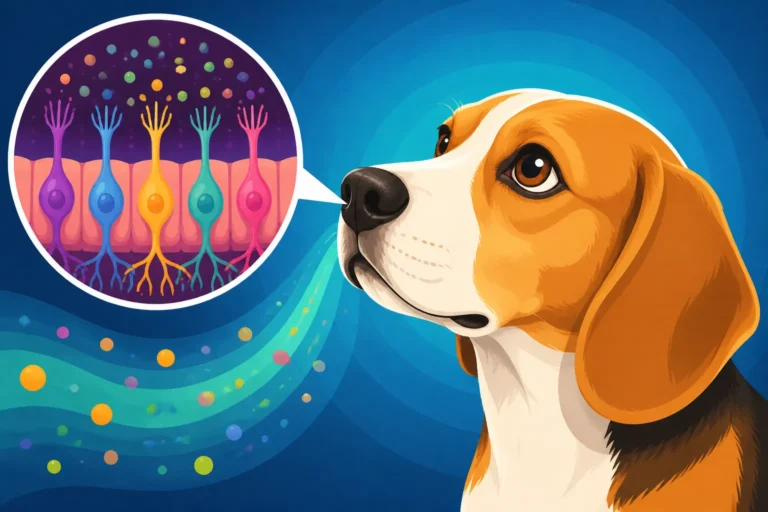
Furthermore, Beagles have an incredible sense of smell – we're talking about 220 million scent receptors, compared to our mere 5 million. This means they are constantly bombarded by the smells of potential food sources, both real and imagined, which perpetually stimulates their food drive. A crumb under the couch that we can't even see is a beacon of deliciousness to them. Their world is a buffet of tantalizing aromas, making it incredibly hard for them to ignore the siren call of something edible. It's not that they don't feel physically full; it's that the psychological and olfactory pull of food is so overwhelmingly powerful that it often overshadows that feeling.
When Food Becomes the Ultimate Motivator
Given this powerful history and sensory input, it's clear that food isn't just a basic need for a Beagle; it's often the ultimate motivator. Trying to train a Beagle without acknowledging this is like trying to push a car uphill without gas. When a Beagle's nose is to the ground, following an irresistible scent trail, your voice might as well be background noise. But offer a high-value treat, and suddenly, you have their undivided attention, at least for a moment. This is where the magic happens.
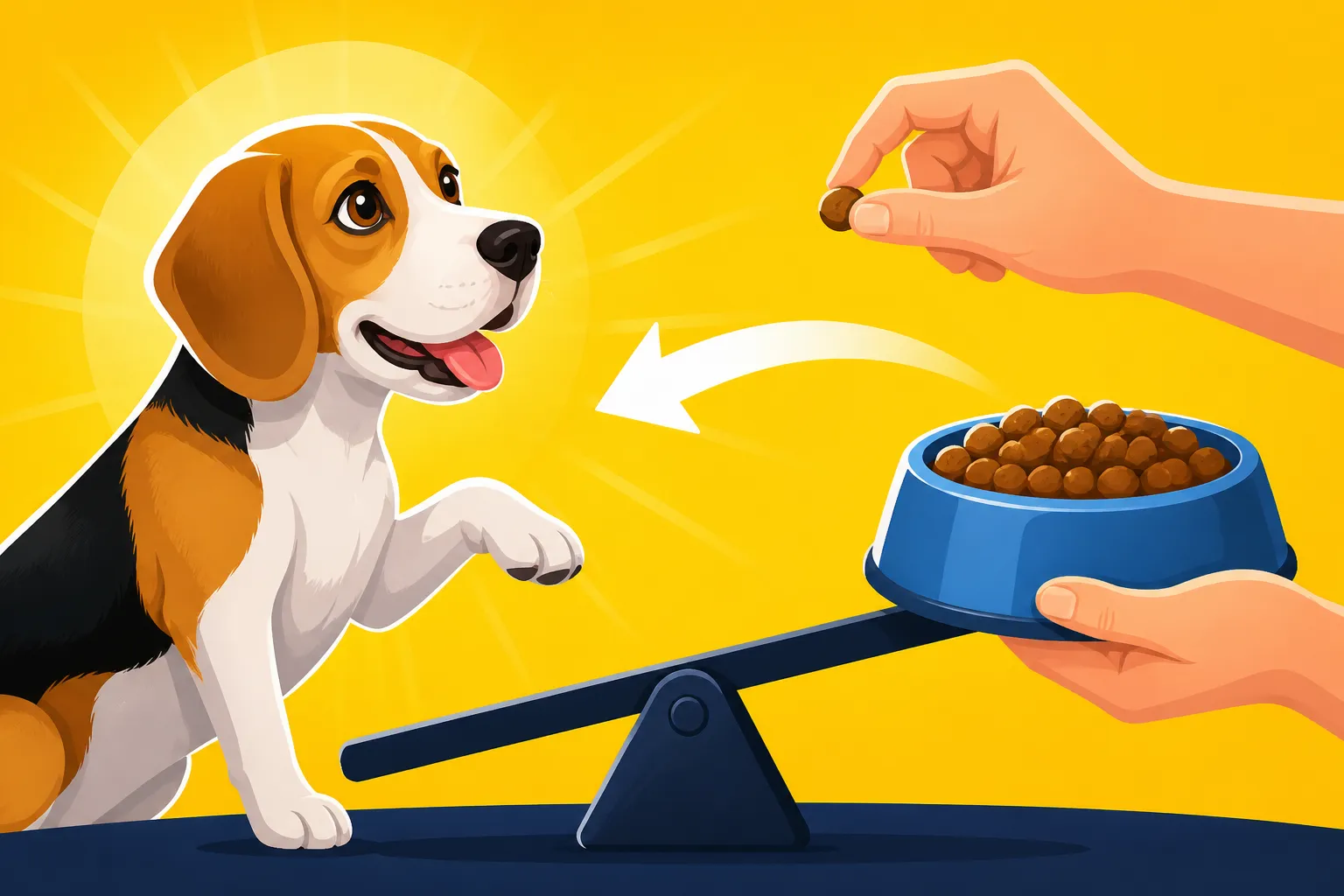
Instead of fighting against their nature, we embrace it. Food provides a tangible, immediate reward that your Beagle understands instinctively. It's clear, it's consistent, and it satisfies a core drive. This isn't about bribing your dog; it's about using a powerful, positive reinforcer to teach desired behaviors. When your Beagle associates performing a command with receiving something incredibly delicious, they are far more likely to repeat that behavior. It creates a strong, positive feedback loop that accelerates learning and strengthens your bond, as they see you as the benevolent provider of all things wonderful.
Harnessing the Power of High-Value Treats
Once you accept that food is your Beagle's love language, the next step is to speak it fluently. This means understanding what truly motivates them and how to use it effectively without turning them into a furry little blimp. It's an art, not a science, and it requires a little experimentation and smart management.
Identifying Your Beagle's Absolute Favorite
Not all treats are created equal in the eyes of a Beagle. While they might tolerate a dry biscuit, they'll work for a piece of cooked chicken. Identifying your Beagle's "high-value" treats is crucial. These are the rewards that they would practically sell their soul for, the ones that make their ears perk up and their tails wag with an intensity usually reserved for squirrels. Typically, these are soft, smelly, and easily digestible. Think small pieces of:
- Cooked chicken breast (plain, no seasoning)
- Hot dogs (cut into tiny pea-sized pieces)
- Cheese (small cubes)
- Peanut butter (xylitol-free, on a lick mat or in a Kong)
- Commercially available soft training treats (look for brands with strong scents)
The key is variety and novelty. What's high-value today might just be "medium-value" tomorrow if it's overused. Keep a rotation of a few super-special treats saved only for the most challenging training scenarios, like recall in a distracting environment. For everyday training, a good quality, moderately smelly treat will often suffice. Experiment to see what truly makes your Beagle's eyes light up. You can often find a wide array of options, from freeze-dried liver to various soft chews, on platforms like Amazon, allowing you to discover your Beagle's ultimate preference without leaving home.
Portion Control and Calorie Management
This is where many owners understandably worry: "If I use so much food, won't my Beagle get fat?" It's a valid concern, especially since Beagles are prone to obesity. Beagle Obesity Treated as a Health Problem is a real issue. The trick is smart portion control. When training with treats, those treats become part of their daily caloric intake, not an addition. This means you need to adjust their regular meal portion accordingly.
For example, if you're doing a 15-minute training session, estimate the caloric value of the treats you use and subtract that amount from their breakfast or dinner kibble. Cut treats into tiny, pea-sized pieces. For a Beagle, even a sliver of cheese is incredibly rewarding because of the taste and smell. You're not aiming for a full stomach with each treat, but a quick burst of flavor and reward. For an average adult Beagle, a single training session might use no more than 10-20 small pieces of high-value treat, which is a minuscule amount of calories if managed properly. Keeping a Beagle Lean While Training With Treats is entirely possible with careful planning.
Using Mealtime as a Training Opportunity
Instead of just putting down a bowl of food for your Beagle to inhale in seconds, turn every meal into a training session. This is an incredible, low-effort way to reinforce good behavior and work on impulse control without adding extra calories. For instance, before setting down their bowl, ask for a "sit" and a "stay." Only release them to eat once they've performed the command patiently.
You can also hand-feed portions of their meal for various commands throughout the day. Ask for a "down," a "paw," or a "spin" for a small handful of kibble. This makes mealtime engaging and teaches your Beagle that you are the source of all good things, and that working with you leads to rewards. It also slows down their eating, which can be beneficial for digestion. Using puzzle feeders or snuffle mats for their meals is another fantastic way to engage their brains and make them work for their food, turning a quick chow-down into a mentally stimulating activity. We'll delve into these later.
Foundation Training with Food Rewards
Food is especially effective for teaching basic obedience cues because it provides immediate, unambiguous feedback. Your Beagle performs the desired action, and boom – deliciousness appears. This clear association helps them understand what you want much faster than verbal praise alone, especially in the initial stages of learning.
Teaching Basic Cues: Sit, Stay, Come
Let's break down how food helps with common cues:
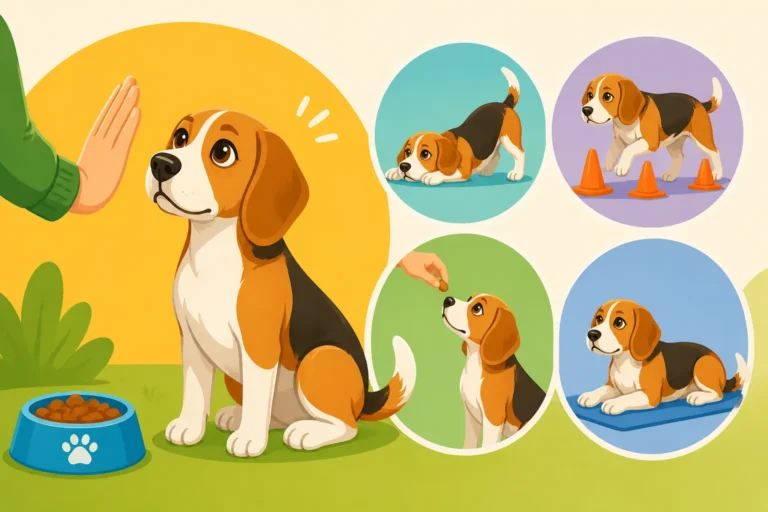
- Sit: Hold a high-value treat near your Beagle's nose. Slowly move the treat upwards and slightly back over their head. As their nose follows the treat, their rear end will naturally lower into a sit. The moment their rear touches the ground, say "Sit!" and give them the treat. Repeat this many times. Soon, you'll be able to make the hand motion without the treat, and eventually just say the word.
- Stay: Once your Beagle reliably sits, ask them to "Sit." Then, with an open palm facing them, say "Stay." Take one step back. If they remain, step forward and reward them with a treat. Gradually increase your distance and the duration of the stay. If they break the stay, calmly guide them back to the original spot and try again. The treat reinforces the holding of the position.
- Come (Recall): This is vital for a Beagle, especially considering their strong scent drive. Start in a low-distraction environment, like your living room. Get down on their level, open your arms, and enthusiastically say "Come!" or "[Your Beagle's Name], Come!" As they move towards you, encourage them with praise. The moment they reach you, reward them with a super high-value treat. Practice this dozens of times a day. Gradually increase the distance and introduce mild distractions. The consistent, highly rewarding payoff for coming to you is what makes recall reliable. Beagle Recall That Works Before the Nose Wins is built on this foundation.
The key across all these is timing. The treat must be delivered within 1-2 seconds of the desired behavior for your Beagle to make the correct association.
Lure and Reward Techniques for Quick Learning
Luring is a fantastic way to physically guide your Beagle into a position using a treat, then immediately rewarding them. This technique is particularly effective because it minimizes frustration for both of you. Instead of trying to push or pull your dog into position, the treat acts as a magnet.
For instance, to teach "down," you might hold a treat at your Beagle's nose while they are in a sit. Then, slowly move the treat down to the floor between their paws, and then slightly forward. Most Beagles will follow the treat, lowering their body into a down position. The instant their elbows touch the floor, praise and reward. This method is incredibly intuitive for Beagles because it leverages their natural desire for food. The process is clear: follow the food, get the food. Once they consistently follow the lure, you can start adding the verbal cue just before the lure, and then gradually fade the physical lure, so they respond to the voice alone.
Phasing Out the Lure and Introducing Verbal Cues
Once your Beagle reliably performs a behavior following a lure, it’s time to start fading the physical lure and introducing the verbal cue. If you continue to rely on the treat to guide them into position every single time, they'll never learn the verbal command.
Here's the process:
- Add the Verbal Cue: Start saying the verbal cue (e.g., "Sit") just before you perform the lure. For example, "Sit!" (then move the treat up and back). Reward when they sit.
- Minimize the Lure: Over several repetitions, start making your lure motion smaller and smaller. Instead of a big sweeping motion, it becomes a subtle hand gesture. Your Beagle should start anticipating the action from the verbal cue.
- Fade the Lure Completely: Eventually, try giving only the verbal cue. If your Beagle performs the action, great! Reward generously. If they don't, go back to the minimized lure, then try the verbal cue again.
- Vary the Reward: Once they consistently respond to the verbal cue, you don't need to reward with a high-value treat every single time. Start using a variable reinforcement schedule. Sometimes they get a treat, sometimes just enthusiastic praise, sometimes a quick game of tug. This actually makes the behavior stronger, as they learn that the reward might come, making them more motivated to try. It's like a slot machine – you keep playing because you never know when you'll hit the jackpot!
This systematic approach ensures your Beagle understands the command and isn't just following the treat around.
Advanced Training and Behavior Modification
The power of food extends far beyond basic obedience. It can be a vital tool in addressing more complex behavioral challenges, from reactivity to impulse control, by creating positive associations and reinforcing calm, desired responses.
Counter-Conditioning for Reactivity and Fear
If your Beagle reacts negatively to certain triggers – maybe they bark excessively at other dogs on walks, or they're nervous around strangers – food can be used for a technique called counter-conditioning. The goal is to change your Beagle's emotional response from negative (fear, anxiety, aggression) to positive (calm, happy anticipation).
Here's how it works:
- Identify the Trigger: What specifically sets your Beagle off? Another dog, a loud noise, a person wearing a hat?
- Find the Threshold: Determine the distance at which your Beagle notices the trigger but before they react negatively. This is their "threshold."
- Positive Association: When your Beagle is at their threshold and not reacting, present the trigger (e.g., another dog appears in the distance) and immediately give them a high-value treat. The trigger predicts the treat! The moment the trigger disappears, the treats stop.
- Repeat and Adjust: Repeat this many times. Slowly, very gradually, you can try to decrease the distance or intensity of the trigger, always ensuring your Beagle stays below their reaction threshold. If they react, you've gone too far too fast; increase the distance again.
Over time, your Beagle learns that the appearance of the trigger isn't something to be feared or reacted to, but rather a signal that delicious food is coming. This changes their emotional state and, consequently, their behavior. This approach needs patience and consistency, but food is the crucial lever here.
Managing Counter-Surfing and Resource Guarding
Beagles are master counter-surfers and notorious for raiding trash cans. Their food drive means any unattended food is an irresistible temptation. While prevention (e.g., never leaving food out, securing trash cans) is key, you can also use food in training to teach impulse control.
For counter-surfing:
- "Leave It" Command: This is a powerful command. Start by placing a low-value treat on the floor and cover it with your hand. When your Beagle tries to get it, say "Leave It." The moment they look away from your hand, uncover the treat and give them a higher-value treat from your other hand. They learn that ignoring the less desirable item leads to a better reward. Gradually progress to leaving treats uncovered, then placing them on a low table, then on the counter. Beagle Leave It Training With Real Food Down is a game-changer.
- "Go to Your Bed/Mat": Teach your Beagle to go to a designated spot and stay there, especially when you're preparing food in the kitchen. Reward them heavily with treats when they stay on their mat while you're busy.
For resource guarding (where a Beagle might growl or snap if you approach their food bowl or a coveted chew):
- Positive Associations with Approach: While your Beagle is eating their meal, calmly approach the bowl and toss an even better treat into it (e.g., a piece of chicken into their kibble). Then walk away. Repeat this often. Your Beagle learns that your approach doesn't mean you're taking their food, but that good things happen when you come near. This helps build trust and reduce anxiety around their resources. Beagle Resource Guarding at the Food Bowl can be a serious issue, and this positive reinforcement method is far safer and more effective than simply trying to assert dominance.
Building Focus and Impulse Control
Given a Beagle's intense focus on scent, getting their attention in distracting environments can be a real challenge. Food, again, provides that crucial bridge.
- "Watch Me" Command: Hold a high-value treat near your nose. When your Beagle looks at your eyes, say "Watch Me!" and immediately give them the treat. Practice this in increasingly distracting environments. This teaches them to make eye contact and focus on you, even when there are tempting smells or sights around.
- Impulse Control Games: Games like "It's Your Choice" teach your Beagle to wait for permission before taking a treat. Hold a treat in a closed fist. When your Beagle paws or nudges, keep your fist closed. The moment they back off, even for a second, open your hand slightly. If they go for the treat, close your hand. The moment they back off, open your hand and reward them. They learn that calm waiting leads to the reward. This helps immensely with situations like waiting at the door, or not bolting for a dropped crumb. Many excellent online programs, such as those offered by BAXTER & Bella, integrate these food-driven impulse control games into their comprehensive puppy and dog training modules, making it easier for owners to implement them at home.
These exercises, built on food motivation, are key to developing a well-mannered Beagle who can control their natural instincts in a human world.
Integrating Food-Based Training into Daily Life
The beauty of using food for training isn't just about structured sessions; it's about weaving it seamlessly into your Beagle's everyday routine. This maximizes learning opportunities and ensures that good behavior is constantly being reinforced, making it a natural part of their existence.
Puzzle Feeders and Snuffle Mats for Mental Stimulation
Beagles need mental stimulation just as much as physical exercise. Without it, their intelligent, scent-driven minds can get bored, leading to destructive behaviors or excessive baying. This is where puzzle feeders and snuffle mats become invaluable tools, turning mealtime into an enriching activity.
- Puzzle Feeders: These devices require your Beagle to manipulate them – nudging, flipping, or sliding parts – to release kibble or treats. They slow down eating, prevent gulping, and engage your Beagle's problem-solving skills. There are various difficulty levels, from simple wobble feeders to complex multi-stage puzzles. You can find a huge selection on Amazon for every budget and skill level. Starting with easier ones and gradually increasing the challenge keeps your Beagle engaged and prevents frustration. This makes them "work" for their food, satisfying that hunting instinct in a safe, constructive way.
- Snuffle Mats: These fabric mats have numerous cloth strips and pockets where you can hide kibble or small treats. Your Beagle then uses their incredible nose to "snuffle" through the fabric to find their meal. This is an excellent way to tap into their natural scent-hunting abilities, providing significant mental fatigue. A 15-minute snuffle mat session can be as tiring as a 45-minute walk for a Beagle, especially on a rainy day when outdoor exercise is limited. Snuffle Mats and Scatter Feeding for a Beagle is a great way to prevent boredom and give their nose a job.
Structured Mealtimes and "Work to Eat" Principles
Moving beyond just putting food in a bowl, adopting a "work to eat" philosophy can profoundly impact your Beagle's behavior and their appreciation for food. This means your Beagle consistently understands that good things (like meals) don't just appear; they are earned through polite behavior and cooperation.
Instead of free-feeding, stick to two to three structured meals a day. Before each meal, ask for a few simple commands: "sit," "down," "stay." Only when they perform these calmly do they get their bowl. You can also incorporate short training bursts during meals, hand-feeding a portion for a successful "touch" or "watch me." This reinforces your role as the benevolent leader and provider. It also teaches them patience and self-control, which are valuable traits for a breed as impulsive as the Beagle. This method also aids in preventing Beagle Gulping Food and the Choking Risk often associated with Beagles that eat too fast.
Carrying Treats on Every Walk and Outing
Never underestimate the power of a pocket full of treats. Every walk, every trip to the vet, every social outing is a training opportunity for your Beagle. Carrying high-value treats allows you to:
- Reinforce Good Leash Manners: When your Beagle walks nicely by your side, reward them frequently. If they get distracted by a scent, use a treat to regain their attention and redirect them. Front-Clip Harnesses for a Beagle That Pulls Toward Scent can help manage the pulling, but treats reinforce the desired loose-leash behavior.
- Practice Recall: Even if your Beagle is always on a long line or in a fenced area, randomly call them to you for a super-special treat. This keeps their recall sharp and reinforces that coming to you is always worth it.
- Manage Distractions: If you encounter a squirrel, another dog, or a child on a bike that would normally trigger barking or lunging, use treats to distract your Beagle and reward calm behavior. "Watch me!" followed by a treat can prevent a full-blown reaction.
- Positive Associations with Novelty: Meeting new people, experiencing new environments, or hearing unusual sounds can be made positive if they're associated with delicious treats. This builds confidence and reduces anxiety. A small pouch or fanny pack for treats and poop bags becomes an indispensable part of your Beagle-walking gear.
Common Pitfalls and Troubleshooting
While using a Beagle's food drive is incredibly effective, there are common mistakes and challenges that owners face. Being aware of these and knowing how to troubleshoot them will make your training journey much smoother.
Over-Treating and Weight Management
This is perhaps the biggest concern for Beagle owners. It's easy to get carried away with treats, especially when you see how well your Beagle responds! The key, as mentioned before, is integrating treats into their overall daily caloric intake. If your Beagle is getting a lot of training treats, you must reduce their main meal portions.
- Cut Treats Smaller: Seriously, a crumb can be enough. Beagles have such sensitive noses and taste buds that even a tiny morsel of something delicious is highly rewarding.
- Use Their Kibble: For less challenging training, or for reinforcing already learned behaviors, use small amounts of their regular kibble. This is especially useful during mealtime training sessions.
- Be Mindful of Calories: Familiarize yourself with the caloric content of your chosen treats and your Beagle's daily caloric needs. If you're unsure, consult your veterinarian for guidance on how many calories your Beagle should be consuming to maintain a healthy weight. Regularly Weighing a Beagle at Home Between Vet Visits can help you catch any upward creep in their weight early.
- Prioritize Exercise: Combine food-based training with plenty of appropriate exercise. Exercise That Actually Burns Beagle Calories helps maintain a healthy weight and satisfies their physical needs.
Distraction Overpowering the Food Drive
Sometimes, even the most delicious treat might not be enough to compete with an overwhelming distraction, like a rabbit darting across the park or an incredibly potent scent trail. This doesn't mean your food drive training has failed; it just means you've hit your Beagle's current limit.
- Start in Low-Distraction Environments: Always introduce new commands or behaviors in a quiet place, like your living room, where the food is the most interesting thing around.
- Gradually Increase Distraction: Once your Beagle is consistent in a low-distraction setting, slowly introduce more distractions. Work in your backyard, then a quiet park, then a busier area. Don't jump from zero to one hundred immediately.
- Increase Treat Value: When moving to more distracting environments, up the ante with your treats. What works in the living room might not cut it at the dog park. This is when those super high-value, reserved-only-for-emergencies treats come into play.
- Manage the Environment: Sometimes, you simply need to move further away from the distraction. If your Beagle is over-threshold and reacting, no treat in the world will get through to them. Your goal is to work below that threshold.
- Build Foundation: A strong foundation of "watch me," "leave it," and "come" in less distracting environments will eventually give your Beagle the tools to respond even when highly tempted. Beagle Recall in a Field Full of Rabbit Scent is the ultimate test, and it requires countless repetitions with high-value rewards in many different settings.
When Your Beagle Just Isn't Motivated (Rare!)
It's extremely rare for a Beagle to be completely uninterested in food for training. If your Beagle suddenly shows no interest in even their favorite treats, especially if coupled with other symptoms, this is a red flag and warrants a vet visit. It could indicate an underlying health issue.
However, sometimes a Beagle might seem less motivated for other reasons:
- Over-Satiation: Perhaps they just ate a huge meal, or you've been practicing for a very long time and they're genuinely full. Keep training sessions short and spaced out.
- Low-Value Treat: The treat you're offering just isn't exciting enough. Re-evaluate and try something new and smellier.
- Environmental Stress: If your Beagle is feeling overwhelmed, anxious, or fearful in a particular environment, they might be too stressed to take food. In these situations, food won't be an effective reinforcer. Focus on removing them from the stressful situation and working on counter-conditioning with the trigger at a much greater distance.
- Boredom: If you're doing the same repetitive drills with the same boring treats, your Beagle might lose interest. Mix it up! Introduce new games, new tricks, new locations, and new high-value rewards.
Remember, a Beagle's food drive is powerful. If it seems absent, there's usually a good reason, and it's worth investigating.
Beyond Food: Expanding Your Training Toolkit
While food is an incredibly powerful training lever for your Beagle, it’s important to remember that it's just one tool in your training toolkit. As your Beagle matures and becomes more proficient, you'll want to diversify your rewards and ensure they're responding to more than just the promise of a treat.
Incorporating Praise and Play Rewards
As your Beagle understands commands more consistently, you can start to incorporate other forms of reinforcement. The goal isn't to stop using food entirely, but to vary the rewards so that your Beagle isn't solely dependent on it.
- Enthusiastic Praise: Genuine, excited praise from you can be incredibly motivating for a Beagle. Use a happy, upbeat tone, say "Good dog!" or "Yes!" and pair it with a physical reward like a gentle scratch behind the ears or a belly rub. At first, pair praise with food, then gradually use praise alone for easy, well-known behaviors.
- Play: For many Beagles, a quick game of tug, a toss of a favorite squeaky toy, or a short chase in the yard can be just as rewarding as a treat. Use play as a reward for successful commands, especially after more complex tasks. This also helps to burn off some of their boundless energy. For instance, after a reliable "come," instead of just a treat, initiate a quick game of fetch. This adds excitement and variety to your training sessions.
- Life Rewards: These are everyday things your Beagle wants to do anyway. Want to go for a walk? Ask for a sit-stay at the door. Want to greet a friend? Ask for a polite sit first. The reward for performing the command is access to the desired activity. This teaches your Beagle that being polite and listening to you opens doors to all the fun things in life.
The key is to still ensure these non-food rewards are meaningful to your Beagle. What one Beagle finds rewarding (e.g., a squeaky toy) another might not. Observe your dog and see what truly excites them.
The Role of a Consistent Training Program
No matter what rewards you use, consistency is absolutely paramount in Beagle training. Beagles thrive on routine and clear expectations. If rules change from day to day, or person to person, your Beagle will become confused and less likely to respond reliably.
- Everyone on Board: Ensure every member of the household uses the same commands, rewards, and rules. If one person lets the Beagle counter-surf while another punishes it, your Beagle will be confused.
- Short, Frequent Sessions: Instead of one long, grueling training session, aim for multiple short bursts throughout the day (5-10 minutes each). Beagles have relatively short attention spans, especially when their nose is involved, so short, positive sessions are far more effective.
- Practice Everywhere: Don't just train in the living room. Practice commands in the backyard, on walks, at the park, and even at the vet's office. This helps your Beagle generalize behaviors so they understand that "sit" means "sit" no matter where they are.
- Patience and Persistence: Beagles are intelligent but can be stubborn, especially when their nose has other plans. Don't get discouraged if progress feels slow. Celebrate small victories and remember that every consistent interaction builds upon the last.
A structured online program, like the BAXTER & Bella Online Puppy School or similar offerings, can provide invaluable guidance and a step-by-step curriculum to ensure consistency in your training approach, regardless of your experience level.
Seeking Professional Guidance
Sometimes, despite your best efforts, you might encounter a training plateau or a behavioral issue that feels beyond your scope. There is absolutely no shame in seeking professional help! A certified professional dog trainer or a veterinary behaviorist can provide tailored advice, identify nuances you might be missing, and help you develop an effective training plan.
- Group Classes: Beagle Training Class Fees can be a worthwhile investment. These classes offer a structured environment to work on obedience with distractions, and a trainer can observe your interactions and provide real-time feedback. It's also great for socializing your Beagle.
- Private Sessions: If you have specific, complex issues (like severe reactivity or separation anxiety), private one-on-one sessions with a trainer can be highly beneficial. They can come to your home and address issues in the environment where they occur.
- Online Resources: As mentioned, online programs like BAXTER & Bella offer comprehensive resources that can guide you through various training stages from the comfort of your home. They often include video tutorials, printable guides, and even access to trainers for questions. This can be a flexible and cost-effective way to get expert advice.
Remember, a professional trainer is there to teach you how to train your dog effectively. They can help you fine-tune your use of food rewards, address specific behavioral challenges, and build an even stronger, more rewarding relationship with your food-loving Beagle.
| Treat Type | Description | Best Use | Calorie Consideration |
|---|---|---|---|
| High-Value | Soft, smelly, often human-grade (e.g., cooked chicken, cheese) | Distracting environments, new commands, recall, behavior modification | Reduce main meal significantly; use in tiny quantities |
| Medium-Value | Soft commercial training treats, small pieces of hot dog | Everyday obedience practice, less distracting environments, puzzle toys | Factor into daily calories; use in small amounts |
| Low-Value / Kibble | Your Beagle's regular dry kibble, dry biscuits | Reinforcing known commands, mealtime training, sniff walks, basic manners | Can be used more generously, especially as part of meal portions |
| Play Reward | Tug toy, squeaky ball, chase | After successful, energetic commands; to build engagement and bond | No calories, but ensure physical exertion is appropriate for age/health |
| Praise/Affection | "Good dog!", belly rubs, ear scratches | For consistent, easy behaviors; paired with other rewards initially | No calories, but may not be sufficient on its own for strong motivation |
Disclaimer
This article is for general informational purposes only and does not constitute professional advice. Laws, prices and regulations vary by location and change over time. Consult a qualified professional for guidance on your specific situation.