Exercising a Beagle Through Hot Summer Weather
Oh, summer! The longer days, the sunshine, the joy of being outdoors… for us humans, it's often a delight. But if you're a Beagle owner, you know that the rising temperatures bring a unique set of challenges. That incredible nose still needs to explore, those endless reserves of energy still need burning off, but the oppressive heat can turn a fun outing into a dangerous situation in a heartbeat. It’s a constant tightrope walk between fulfilling their need for activity and keeping them safe from overheating. This guide is all about navigating those tricky summer months, offering practical tips and creative solutions to keep your beloved Beagle exercised, happy, and cool, even when the mercury climbs.
Understanding Why Heat Is Such a Risk for Beagles
It’s easy to look at our Beagles, with their short coats, and think they're relatively hardy in the heat. But don't let appearances fool you; they are surprisingly susceptible to overheating, sometimes more so than larger, fluffier breeds, and certainly more than many other dogs. Their unique physiology, combined with that boundless Beagle enthusiasm, creates a perfect storm for heat-related illness if we're not vigilant.
Their Natural Physiology and Overheating
One of the biggest misconceptions about Beagles is that their short fur makes them immune to heat problems. While a shorter coat might seem like an advantage, Beagles actually have a dense double coat. This coat, originally designed to offer protection from the elements during long hunts, can trap heat close to their body, making it difficult for them to cool down. It's a bit like wearing a thick wool sweater in summer; it doesn't look heavy, but it retains warmth.
Compounding this is the fact that dogs don't sweat like humans do. Their primary method of cooling down is panting. When a Beagle is actively exercising in warm weather, their body temperature rises rapidly. The air they're panting to cool themselves is already warm, making the process less efficient. Add to this their low-to-the-ground stature, meaning they are closer to heat radiating off the ground, and their natural eagerness to follow a scent, which can make them ignore early signs of discomfort. They don't have the self-preservation instinct to stop when they're getting too hot; their nose simply dictates their next move. This combination means they can go from seemingly fine to dangerously overheated in a shockingly short amount of time, especially if they're particularly excited by a new trail. You see this often with how a Beagle responds to stimulation; their drive to follow that scent can be intense, overriding other sensations. You'll find more on their history in The Beagle From English Rabbit Packs to American Homes.
The Dangers of Heatstroke and Exhaustion
Heat exhaustion is the first stage of heat-related illness, and while serious, it's a warning sign that can often be managed at home if caught early. Symptoms might include heavy panting, increased drooling, a slightly elevated heart rate, and some lethargy. Your Beagle might seem a bit uncoordinated or seek out shade more insistently. This is their body telling you, "I'm working too hard to stay cool, and I need help!" Ignoring these signs can quickly escalate the situation to the far more dangerous heatstroke.
Heatstroke is a medical emergency that can lead to rapid organ damage, brain damage, and even death if not treated immediately. In a Beagle, heatstroke can manifest with more severe symptoms such as vomiting, diarrhea (which might be bloody), dark red or purple gums, a dazed or confused expression, a wobbly or stumbling gait, and eventually, collapse or seizures. Their body temperature can soar to dangerous levels, causing cells to break down and vital organs like the kidneys, liver, and brain to fail. It's a terrifying experience for any owner, and the recovery can be long and complicated, even with prompt veterinary intervention. Preventing it is always, always better than trying to treat it. If you suspect heatstroke, knowing Beagle Emergency Signs That Cannot Wait Until Morning is crucial.
Smart Strategies for Outdoor Exercise in Summer
Just because it's hot doesn't mean your Beagle has to become a couch potato. It simply means we, as their human companions, need to be smarter and more strategic about when and how we get them out and about. A little planning goes a long way in ensuring their safety and happiness.
Timing Your Walks and Activities
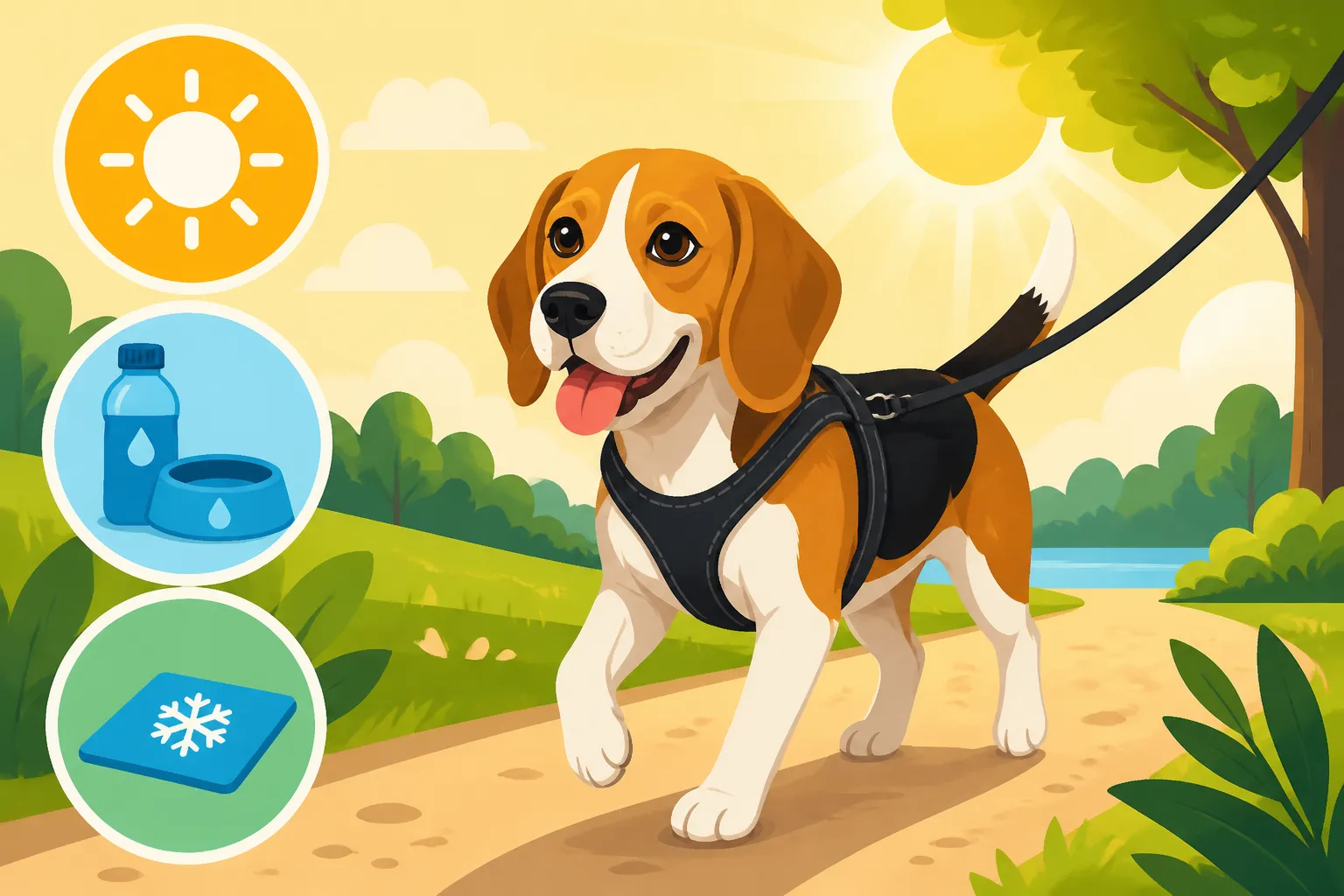
This is perhaps the most critical adjustment you can make during hot weather. The midday sun, typically between 10 AM and 4 PM, is the enemy. During these hours, the sun's rays are strongest, and pavement, asphalt, and even sand can become scorching hot. A good rule of thumb is the "seven-second rule": if you can't hold the back of your hand comfortably on the pavement for seven seconds, it's too hot for your Beagle's paws. Not only can hot surfaces cause painful burns, but the heat radiating from the ground directly affects your low-slung Beagle, making them absorb even more warmth.
Instead, aim for early morning walks, ideally before 8 AM, or late evening strolls after the sun has begun to set and the ground has cooled down. On particularly sweltering days, you might even consider splitting their exercise into several shorter, more frequent outings rather than one long one. A brisk 15-minute walk at dawn can be far more beneficial and safer than an hour-long trek at noon. Keep an eye on the humidity too, not just the temperature. High humidity makes it much harder for dogs to cool themselves through panting, as the air is already saturated with moisture. Even on a seemingly mild temperature day, high humidity can make it feel much hotter and more dangerous for your Beagle. Think about the overall How Much Daily Exercise a Beagle Really Needs and adjust for the conditions.
Hydration is Non-Negotiable
Just as crucial as timing is ensuring your Beagle stays properly hydrated. We all know how much a Beagle loves to sniff and explore, and they can easily become so engrossed in a scent trail that they forget to drink. It's our job to remind them and make water readily available. Always, always carry water with you on any outing, no matter how short.
There are many portable water bottles and collapsible bowls available that make this easy to do. Brands found on platforms like Amazon or Chewy offer a wide variety of practical solutions. Offer water frequently, even if your Beagle doesn't seem to be asking for it. Encourage them to take sips every 10-15 minutes during a walk. If you're going for a longer adventure, consider freezing a water bottle overnight; it will stay cold longer and provide a refreshing chill as it melts. Some owners find that adding a few ice cubes or a tiny splash of low-sodium chicken broth to their Beagle's water can make it more appealing, encouraging them to drink more. Remember, keeping them well-hydrated is key to preventing heat exhaustion, and you can learn more specific advice in Beagle Water Intake and Staying Hydrated.
Choosing Safe Environments and Surfaces
The environment where your Beagle exercises makes a huge difference in their ability to stay cool. Concrete jungles and open, sun-baked fields are best avoided during warmer times. Instead, seek out cooler, more natural settings.
Grassy areas, especially those with ample tree cover, are ideal. The shade from trees can significantly lower the ambient temperature, and grass doesn't absorb and radiate heat in the same way asphalt or concrete does. Look for trails that wind through wooded areas or local parks with mature trees. If you're lucky enough to live near a dog park that offers plenty of shaded spots and perhaps even a dog-friendly splash pad, that can be a fantastic option. Just remember to still monitor your Beagle closely, as excitement can lead them to overdo it. Avoid sandy beaches during the hottest parts of the day; while water might be nearby, the sand itself can get incredibly hot, and Beagles, with their hunting instincts, might ingest too much sand or saltwater while exploring. Also, be mindful of their paws; even cool-looking surfaces can hide hazards. Pay attention to Beagle Paw Pad Cracks After Field Walks during any outdoor activities.
| Activity Type | Best Time (Summer) | Safe Surfaces | Hydration Tips |
|---|---|---|---|
| Walks | Early Morning / Late Evening | Grass, shaded trails, dirt paths | Carry water, offer frequently |
| Scent Work | Early Morning / Indoor | Cool grass, indoors | Access to fresh, cool water |
| Playtime | Shaded yard / Indoor | Grass, cool flooring | Water breaks every 10-15 mins |
| Running | Only coolest parts of day | Grassy fields, natural trails | Mandatory and frequent water |
| Swimming | Any time (monitored) | Pool, lake (shallow entry) | Rinse after, ensure clean water |
Creative Indoor and Shade-Based Enrichment
When outdoor exercise just isn't safe or feasible due to extreme heat, it’s time to get creative! Beagles are intelligent, food-motivated hounds with an incredible sense of smell. We can tap into these natural instincts to provide mental and physical stimulation without risking overheating.
Engaging Their Mighty Nose Indoors
A Beagle’s nose is arguably its most powerful asset, boasting around 220 million scent receptors. This means they are designed to work, and working their nose is far more tiring for them than a simple walk around the block. Harnessing this indoors is a fantastic way to burn energy when it’s too hot outside.
Scent games are your best friend here. Start simple by hiding small, high-value treats around a room and letting your Beagle sniff them out. As they get better, you can increase the difficulty by hiding treats under blankets, inside cardboard boxes, or behind furniture. Snuffle Mats and Scatter Feeding for a Beagle are also excellent tools for engaging their nose and making mealtime last longer, turning a quick gobble into a mental exercise. You can find a great selection of these on Chewy or Amazon. Another idea is to use puzzle toys; these toys require your Beagle to manipulate them in some way to get a reward, providing both mental stimulation and a small physical challenge. Look for durable, food-dispensing toys that your Beagle can't simply destroy in five minutes. More on these fantastic options can be found in Puzzle Feeders That Genuinely Slow a Beagle. Remember, these activities satisfy their innate drive, leaving them mentally tired and content, even if they haven't run miles.
Short Bursts of Play and Training
While longer, continuous exercise is out of the question, short bursts of indoor play and training can still make a difference. Think of it as interval training for your Beagle, offering quick energy release followed by rest.
Indoor fetch with soft, lightweight toys is a great way to let them run off some steam. Just make sure you have enough clear space and no obstacles they can crash into. Tug-of-war is another excellent option, providing a satisfying physical and mental outlet. Keep these sessions brief – 5 to 10 minutes at a time – and follow them with a cool-down period. Training sessions are also incredibly effective. Beagles are smart, and they love to learn, especially when high-value treats are involved. You can work on basic obedience cues like sit, stay, or come, or teach them new tricks. Even practicing Impulse Control Exercises That Suit a Beagle can be tiring for them, requiring mental focus and self-control. Consider using their daily kibble as rewards during these short training bursts to avoid overfeeding, as Beagle Obesity and the Diseases It Brings On is a common issue for the breed. Breaking up their meals into small training portions throughout the day can make a big difference in managing their weight and keeping them engaged.
Cooling Aids and Resting Spots
Beyond just modifying activity, proactively providing cooling comfort for your Beagle is essential. Sometimes, even just being inside a warm house can be too much if they don't have a specific cool retreat.
Cooling mats, which are often pressure-activated, can be a godsend. Your Beagle simply lies on them, and the mat absorbs their body heat, providing a cool surface without needing refrigeration or electricity. These are widely available from retailers like Amazon. You can also dampen a towel with cool (not icy cold) water and drape it over your Beagle or have them lie on it. Ensure they have access to air-conditioned rooms or, at the very least, a fan to help circulate air. Creating a cool, dark "den" for them in a quiet part of the house can give them a safe haven to retreat to when they feel too warm. This could be their crate with a cooling mat inside, covered to block out light, or simply a spot on a tile floor. And don't forget frozen treats! KONGs stuffed with plain yogurt, peanut butter (xylitol-free!), or even their wet food and then frozen, can provide a long-lasting, cooling distraction. Brands like Ollie, which offer fresh food, can be used to fill KONGs for a nutritious and cooling treat.
Recognizing Warning Signs and When to Seek Help
No matter how careful we are, sometimes the heat can still get the better of our Beagles. Knowing the signs of overheating, from the subtle early indicators to the critical symptoms of heatstroke, is vital. Quick recognition and action can literally be the difference between life and death.
Early Indicators of Overheating
Catching overheating early can prevent a much more serious situation. The moment you notice any of these signs, it's time to stop whatever you're doing and get your Beagle cooled down immediately. The most common early indicator is heavy, excessive panting, often louder and more rapid than usual. This is their body working overtime to expel heat. You might also notice increased drooling, sometimes thick and stringy. Their gums may appear brighter red than normal, indicating increased blood flow as their body tries to dissipate heat.
Other subtle signs include lethargy, a lack of interest in continuing an activity they usually love, or an insistent desire to seek shade or lie down. Your Beagle might start to seem a bit dazed or confused, or their movements might become slightly uncoordinated. Their ears might feel unusually hot to the touch. Pay close attention to these cues, especially if they’ve been out in the sun or active. A Beagle's general Beagle Temperament and Why the Breed Suits Families usually involves a lot of exuberance, so a sudden change to listlessness should always be a red flag. Don't wait for more severe symptoms; early intervention is key.
Advanced Symptoms of Heatstroke
If the early warning signs are missed or ignored, a Beagle can quickly progress to full-blown heatstroke, a life-threatening emergency. At this stage, symptoms become much more severe and alarming. You might observe persistent vomiting or diarrhea, which can sometimes contain blood. Their gums may turn a dark, brick red or even purplish, and their tongue might look bright red. Their heart rate will be very rapid, and their breathing extremely labored, often with noisy gasping.
Neurological signs become apparent, such as a severely wobbly gait, stumbling, disorientation, or even seizures. The Beagle might collapse, unable to stand or respond to commands. Their body temperature will be dangerously high, typically over 105°F (40.6°C). At this point, irreversible organ damage is a very real and immediate threat. This is not a situation where you can "wait and see"; your Beagle needs immediate veterinary attention. Every minute counts when dealing with heatstroke.
First Aid Before the Vet
If you suspect your Beagle is experiencing heatstroke, immediate action is crucial while you prepare to get to the vet. First, move your Beagle to the coolest available area immediately – ideally an air-conditioned space, or at least a shaded, well-ventilated spot.
Begin cooling them down by applying cool (not ice cold) water to their body, especially focusing on areas with less fur and high blood flow, such as their paw pads, armpits, and groin. You can use a hose on a gentle setting, wet towels, or even just your hands. Fans can help evaporate the water, increasing the cooling effect. Offer small amounts of cool water for them to drink, but do not force them to drink, especially if they are disoriented or unresponsive, as they could aspirate it. Do not use ice water or immerse them in cold water, as this can cause blood vessels to constrict, trapping heat inside their core, and can induce shock. Monitor their temperature if you have a rectal thermometer; stop active cooling once their temperature drops to around 103°F (39.4°C) to prevent overcooling. Even if your Beagle seems to improve, a vet visit is still absolutely essential. Heatstroke can have delayed effects and cause internal damage that isn't immediately visible. Call your vet or the nearest emergency clinic while you are administering first aid so they can be prepared for your arrival.
Disclaimer
This article is for general informational purposes only and does not constitute professional advice. Laws, prices and regulations vary by location and change over time. Consult a qualified professional for guidance on your specific situation.