How Much Daily Exercise a Beagle Really Needs
It's a common misconception that because Beagles are on the smaller side, they don't need a huge amount of exercise. Owners often find themselves scratching their heads when their sweet-faced hound becomes a destructive, howling escape artist, seemingly out of nowhere. The truth is, Beagles are little powerhouses of energy and intelligence, bred for a very specific, demanding job. This guide will walk you through exactly what kind of daily exercise your Beagle truly needs to be a happy, well-behaved member of your family, going far beyond just a quick stroll around the block.
Beyond the Casual Walk: Understanding a Beagle's Innate Drive
If you've ever watched your Beagle's nose glue itself to the ground, pulling you determinedly towards an invisible trail, you've witnessed their true calling. These aren't just cute, cuddly companions; they are finely tuned scent detection machines, and their exercise needs are deeply rooted in that heritage.
The Scent-Driven World of a Beagle: Why Their Nose Rules
Imagine living in a world primarily defined by smells, where every blade of grass, every gust of wind, every passing creature tells a rich, complex story. That's a Beagle's reality. With an olfactory bulb that runs significantly larger than many breeds and an incredible number of scent receptors, their world is an intricate tapestry of odors that we can barely comprehend. A simple walk on a leash, where they're constantly pulled away from fascinating smells, isn't just boring for them; it's mentally frustrating. It's like asking a human to read a thrilling novel but only allowing them to skim the chapter titles.
This profound connection to scent means that physical exercise for a Beagle isn't just about moving their legs; it's about engaging their most powerful sense. If their nose isn't working, their brain isn't either, and that's when trouble starts brewing. They need opportunities to follow those tantalizing trails, to investigate, and to solve the scent mysteries of their environment. Without this mental engagement, all that physical energy, combined with an unfulfilled drive, can quickly manifest as problem behaviors at home. For more on this, consider exploring Why a Beagle Nose Beats Ours Ten Thousand Times Over.
The History of the Hunt: What Beagles Were Bred For
Beagles weren't originally bred to be couch potatoes, no matter how good they are at it once they're tired! Their lineage traces back to hounds used in packs to hunt small game, primarily rabbits and hare, across vast fields for hours on end. This wasn't a sprint; it was a marathon of consistent, methodical tracking, baying, and persistence. They had to have immense stamina, an unwavering focus on the scent, and the physical fortitude to cover miles.
This historical purpose is why your Beagle possesses such incredible endurance. They're built for sustained activity, not just short bursts. When people complain about their Beagle "never getting tired," it's often because they're not providing the right kind of exercise to tap into this ancestral drive. A quick twenty-minute trot around the block might get their heart rate up, but it doesn't satisfy the deep-seated need to work their nose and body in harmony. Neglecting this part of their heritage can lead to frustration for both you and your dog, as their instinctual behaviors bubble to the surface in less desirable ways.
Tailoring Exercise to Your Beagle's Age and Stage
Just like with people, a Beagle's exercise requirements aren't static; they change throughout their life. What's perfect for a boisterous puppy might be too much for a wise old senior or not enough for a young adult in their prime.
Puppy Energy vs. Adult Stamina: What to Expect at Each Phase
Beagle puppies are bundles of boundless energy, but it's crucial to remember that their bones and joints are still developing. Over-exercising a young puppy can lead to long-term orthopedic issues like Beagle Hip Dysplasia and Everyday Joint Wear. Instead of long, strenuous walks, focus on shorter, more frequent play sessions throughout the day. Think five minutes of active play for every month of their age, two to three times a day. So, a four-month-old puppy might get 20-minute play sessions. These bursts of activity, combined with plenty of supervised exploration in a secure yard, will help them burn off steam without damaging delicate growth plates.
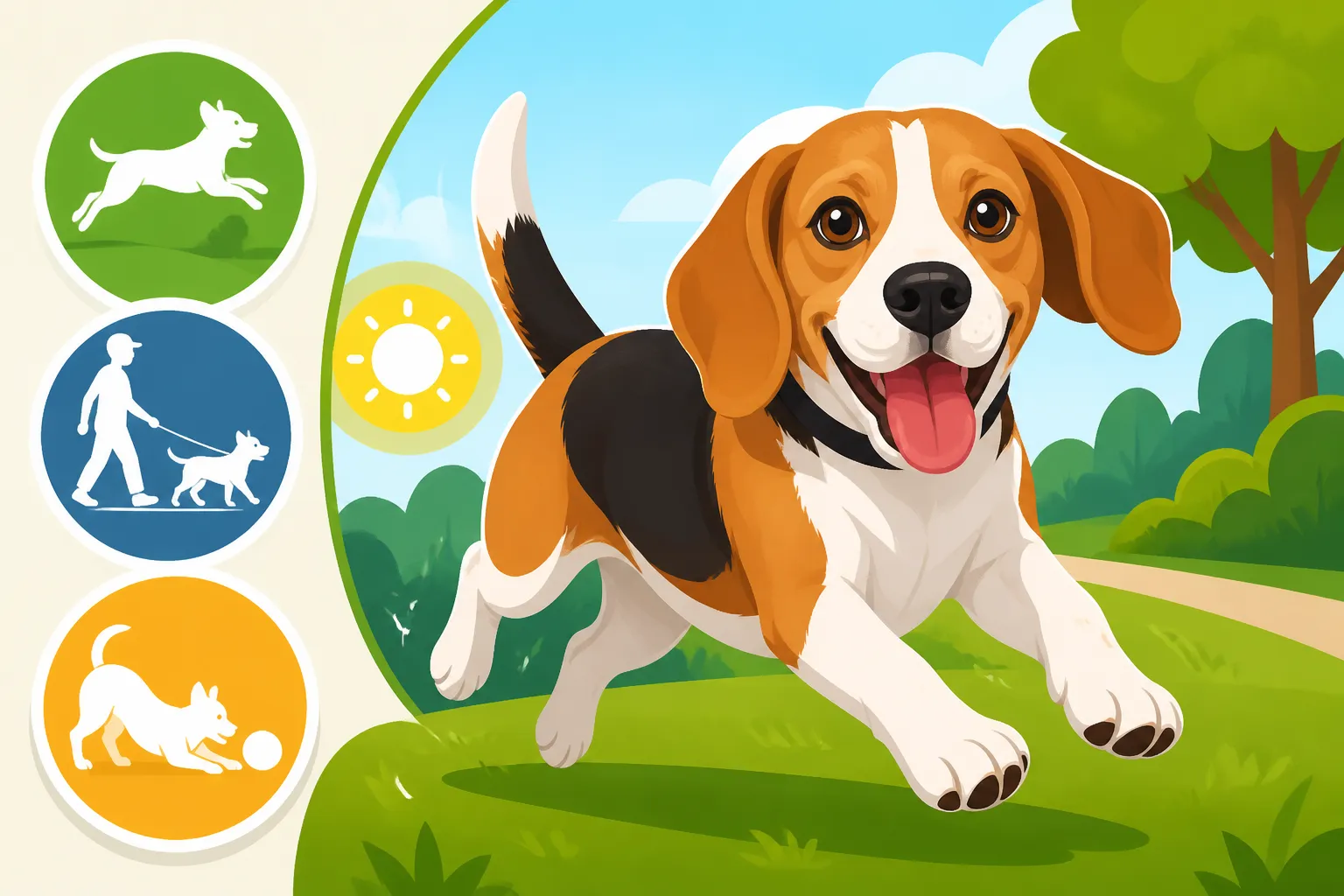
As your Beagle matures into adulthood (typically around 12-18 months), their stamina will increase significantly. This is when their true exercise needs kick in. Most adult Beagles require at least 60-90 minutes of dedicated, engaging exercise daily. This isn't just a cumulative number of potty breaks; it means intentional activities that get their heart pumping and their brain working. This might look like two solid 45-minute walks or one long hike combined with a dedicated scent work session. They need consistent activity to maintain a healthy weight, strong muscles, and a calm demeanor at home.
Senior Beagles: Adjusting Exercise for Comfort and Health
As your Beagle crosses the threshold into their senior years (around age 8-10), their exercise needs will naturally begin to shift. While they might not be chasing scents with the same youthful vigor, they still need and benefit from daily activity. The key here is quality over intensity, and comfort over endurance. Longer, slower walks are often preferred, allowing them to sniff and explore at their own pace without overstraining their joints. Instead of demanding a fast pace, let them dictate it.
Swimming can be an excellent low-impact exercise for senior Beagles, as it strengthens muscles without putting stress on aging joints. Mental stimulation remains incredibly important, perhaps even more so. Short scent games indoors, puzzle toys, and gentle training sessions can keep their minds sharp. Regularly consult your vet about any signs of Beagle Arthritis Arriving in Middle Age or other age-related health issues that might impact their exercise capacity. Paying close attention to how your senior Beagle moves and behaves after activity will help you adjust their routine to ensure they remain comfortable and happy in their golden years. For more detailed guidance, check out Senior Beagle Care After the Age of Ten.
Practical Strategies for Fulfilling Your Beagle's Exercise Needs
Now that we understand the 'why' behind their exercise, let's dive into the 'how.' It's about being creative and consistent, tapping into their natural instincts.
Scent Work and Nose Games: Tiring Out the Mind and Body
This is where your Beagle truly shines, and it's perhaps the most underestimated form of exercise. Scent work doesn't just tire their body; it absolutely exhausts their brain, which is far more effective at calming a busy Beagle. You can start simple with hide-and-seek games. Hide treats (high-value ones are best, perhaps from a brand like Ollie, or small training treats you might find on Amazon or Chewy) around the house or yard and encourage your Beagle to find them. Gradually increase the difficulty by hiding them in more challenging spots or using multiple steps.
Another fantastic option is using puzzle feeders or snuffle mats. These force your Beagle to "work" for their food, engaging their nose and problem-solving skills. Instead of just devouring their dinner in 30 seconds, they spend 15-20 minutes sniffing, nudging, and manipulating the feeder to get their kibble. This transforms mealtime into a mental workout. Brands like Chewy and Amazon offer a wide variety of excellent puzzle feeders, from simple treat balls to more complex sniff-and-solve designs. These activities are not only great for exercise but also build confidence and reinforce good behavior.
Structured Walks and Adventures: Making Leash Time Count
While scent work is paramount, good old-fashioned walks are still vital. However, for a Beagle, a walk needs to be more than just a quick trot. Aim for at least two substantial walks daily, ideally 30-45 minutes each. During these walks, allow your Beagle ample opportunity to sniff. Seriously, let them stop and smell everything! These "sniffing walks" are incredibly enriching and mentally fatiguing, often more so than a brisk, non-stop walk. Think of it as allowing them to read their daily newspaper. For more on this, you might enjoy Sniffing Walks and Why They Tire a Beagle Out.
For Beagles, safety is non-negotiable, especially when it comes to being off-leash. Their prey drive and incredible nose mean that one captivating scent can send them off on an adventure, completely deaf to your calls. This is why a secure, fenced area is critical, or using a long line in open, safe spaces. Never underestimate the power of their nose to override all training, which is why we often say Why a Beagle Should Never Be Off Leash Unfenced. If you enjoy hiking, a long line of 15-30 feet can give them the freedom to explore scents safely while still under your control. Remember to always bring water, especially on longer adventures, and keep an eye on the weather; Beagles can overheat, just like any dog.
The Importance of Mental Stimulation: Beyond Physical Activity
Physical exercise is only half the equation for a well-rounded Beagle. Their intelligence and problem-solving abilities also need regular engagement. This is where training, even short, fun sessions, comes in. Teaching new tricks, practicing obedience commands in different environments, or even enrolling in a basic obedience class can provide excellent mental stimulation. Beagles respond very well to positive reinforcement and food motivation, so having The Treats a Beagle Will Work Hardest For on hand will make training a breeze.
Interactive toys that challenge them to figure out how to get a treat, or simply rotating their toys to keep things fresh, can also help. Think about setting up a mini agility course in your backyard with household items or playing a game of fetch. The goal is to keep their minds active and prevent boredom, which is often the precursor to destructive behaviors. A tired Beagle is often a well-behaved Beagle, and a mentally stimulated Beagle is often a calm one.
Avoiding Common Exercise Mistakes with Beagles
Even with the best intentions, it's easy to fall into traps that either leave your Beagle unfulfilled or, conversely, overexerted. Understanding these pitfalls can help you fine-tune your approach.
The Dangers of Under-Exercising: Behavioral Issues
This is perhaps the biggest mistake new Beagle owners make. If your Beagle isn't getting enough appropriate physical and mental exercise, you'll know it. That sweet, sleepy pup can transform into a whirlwind of destructive energy. Common signs of an under-exercised Beagle include:
- Excessive Howling and Barking: They might bay at every passing squirrel, car, or leaf, or howl mournfully when left alone. This isn't just "being a Beagle"; it's often a cry for more engagement. For insights into their vocalizations, see Beagle Howling, Baying and Barking Explained.
- Destructive Chewing: Your furniture, shoes, or anything they can get their mouths on becomes fair game. They're releasing pent-up energy and boredom.
- Escape Artistry: Beagles are notorious escape artists. A bored Beagle will find a way out of even the most secure yard, driven by their urge to explore scents.
- Hyperactivity and "Zoomies" Indoors: If they're constantly racing around the house, unable to settle, it's a clear signal they need more outdoor activity.
- Digging: They might dig holes in your yard, trying to entertain themselves or follow underground scents.
It's incredibly frustrating when your home feels like a battlefield, and you feel like you're constantly correcting your dog. But remember, these behaviors are usually symptoms of an underlying need for more appropriate exercise and stimulation, not defiance. Address the root cause, and you'll often see a dramatic improvement in behavior.
Over-Exercising and Health Risks: Knowing When to Stop
While under-exercising is a common issue, it's also possible to overdo it, especially with young puppies, senior Beagles, or during hot weather. Beagles will often push themselves to keep going, particularly when a compelling scent is involved, so it's up to you to monitor them and know when to call it a day.
Signs of overexertion include excessive panting, lagging behind, limping, stiffness after activity, or reluctance to get up. In warm weather, Beagles are prone to overheating due to their dense double coat. Always carry water, take frequent breaks in the shade, and avoid the hottest parts of the day.
For younger Beagles, stick to the age-appropriate exercise guidelines to protect their developing joints. For seniors, be mindful of any existing conditions like arthritis or heart issues. If your Beagle is on a specialized diet, perhaps due to weight management or other health concerns (you might find some great options at Ollie, which focuses on fresh, portion-controlled meals), ensure their exercise routine complements their dietary needs. Over-exercising can exacerbate joint problems, cause injuries, and even lead to heatstroke. It's about finding that sweet spot where they're happily tired, not painfully exhausted. For help understanding healthy body composition, check out Beagle Weight Management Across the Two Size Varieties.
By understanding your Beagle's unique needs and adapting their exercise routine throughout their life, you'll foster a happier, healthier, and much more well-behaved companion.
Disclaimer
This article is for general informational purposes only and does not constitute professional advice. Laws, prices and regulations vary by location and change over time. Consult a qualified professional for guidance on your specific situation.