Measuring Beagle Food by Weight Rather Than Cups
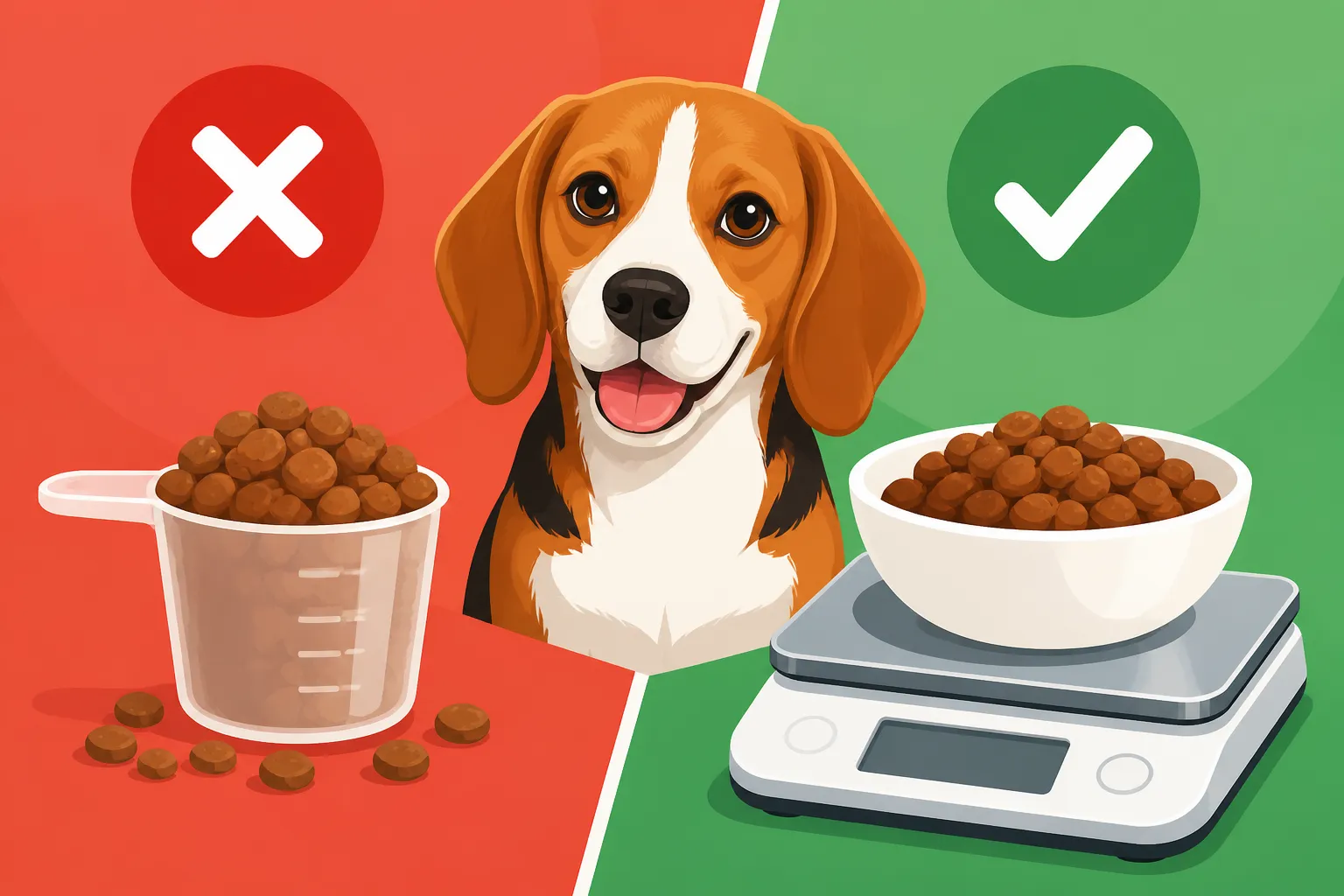
One of the trickiest things about feeding our beloved Beagles is making sure they're getting just the right amount of food. You try your best, diligently scooping out kibble with that cup that came with the bag, only to find your Beagle is either still a little too chunky or, frustratingly, not quite maintaining their ideal weight. It's a common struggle, and it often comes down to one often-overlooked culprit: the sheer inaccuracy of measuring food by volume (cups) instead of by weight. This guide will walk you through why cups are so unreliable and how switching to a digital scale can make a world of difference for your Beagle's health and your peace of mind.
Why Your Measuring Cup Isn't Giving You the Whole Picture
It sounds simple enough, doesn't it? The feeding guide says "1 cup for a 20lb dog," so you grab that plastic cup and scoop. But here's the kicker: what is a "cup" in terms of actual food? It's far less consistent than you might think, and for a breed like Beagles, who often live to eat and are prone to weight gain, those small inconsistencies can really add up over time.
The Problem With Kibble Density and Shape
Not all kibble is created equal. Some brands produce dense, heavy pellets, while others might have lighter, airier pieces. Some are small and uniform, packing tightly into a cup, while others are larger and irregularly shaped, leaving more air pockets. Imagine trying to measure a cup of sand versus a cup of popcorn kernels – you can get a lot more sand into that cup. The same principle applies to dog food. The manufacturer's "cup" is an average, and your specific bag of food might be denser or lighter, meaning your scoop could be over- or under-feeding your Beagle significantly. If you're trying to hit The Daily Calorie Target for a Twenty Pound Beagle, relying on a loose cup measure can lead to frustrating weight fluctuations.
Let's say one scoop of your kibble, when loosely filled, weighs 3.5 ounces. But if you pack it down slightly, or if the kibble pieces are smaller and settle more, that "same" cup might now hold 4.0 ounces. Over the course of a day, that half-ounce difference might not seem like much, but for a Beagle, who has a famously robust appetite and is susceptible to packing on extra pounds, that's potentially hundreds of calories difference over a week or a month. This hidden variation can easily contribute to Beagle Obesity Treated as a Health Problem, even when you think you're following the guidelines perfectly.
Inconsistent Scooping Habits
Beyond the kibble itself, we humans are naturally inconsistent in how we scoop. Are you leveling off the cup perfectly with a knife? Or are you just grabbing a heaping scoop and calling it good? Even if you try to be precise, the way you dip the cup into the bag, the angle, and how much you tap it can all affect the final volume. One day you might pack it down more, the next you might be in a rush and just lightly skim the top. These small human variables introduce further error into an already imprecise measurement system.
Think about it: if you were baking a cake, would you just eyeball a "cup" of flour? Probably not, because you know precise measurements are key to a good outcome. Your Beagle's health and weight management are just as important as that cake, if not more so! The struggle is real when you feel like you're doing everything right, but your Beagle still seems to be struggling with their weight. You might be asking yourself, Why an Overweight Beagle Still Looks Normal, but the hidden calorie creep from inaccurate scooping could be a major factor.
The Clear Benefits of Measuring Beagle Food by Weight
Making the switch from volume to weight might seem like an extra step, but it's one of the most impactful changes you can make for your Beagle's long-term health and your own peace of mind. The precision it offers takes the guesswork out of feeding, allowing you to fine-tune their diet with confidence.
Unparalleled Precision and Consistency
When you measure food by weight, you eliminate all the variables we just discussed. A gram is always a gram, regardless of kibble shape, density, or how you scoop. This means that every single meal you prepare for your Beagle will be exactly the same, down to the last calorie, if you're consistent. This level of precision is invaluable for managing your Beagle's weight, especially if your vet has recommended a specific calorie intake or if you're trying to get them to a healthy weight range.
For Beagles, who are known for their love of food and their ability to gain weight easily, this consistency is a game-changer. It removes the potential for accidental overfeeding, which can lead to serious health issues down the line like Beagle Diabetes and Blood Sugar Control or even exacerbate conditions like Beagle Arthritis Arriving in Middle Age. When you know exactly how much your dog is eating, you can adjust their portions with confidence based on their activity levels, age, and individual metabolism.
Better Weight Management and Veterinary Recommendations
Vets often talk in terms of calories and grams, not cups. When your veterinarian recommends a specific daily calorie target for your Beagle, or if they suggest a weight loss plan, translating that into a consistent, accurate daily food amount becomes simple with a digital scale. Instead of guessing how many "cups" correspond to, say, 700 calories, you can accurately weigh out the exact number of grams that provides those 700 calories.
This makes working with your vet much more effective. You can report precisely how much your Beagle is eating, allowing for more accurate adjustments and better progress tracking. It helps you understand exactly How Extra Weight Raises Beagle Disc Pressure and empowers you to actively manage your Beagle's weight to prevent such complications. This is especially true for Beagles who might be prone to back issues due to their slightly longer backs. Maintaining an ideal weight is a critical preventative measure.
Easier Tracking and Budgeting
Beyond health benefits, measuring by weight makes tracking your food consumption much simpler. If you're trying to figure out how long a bag of food will last or sticking to a Beagle Food Budgets for a Dog That Never Stops Eating, knowing the exact weight you're dispensing each day allows for accurate projections. You'll know precisely when to order your next bag from Chewy or Amazon, ensuring you never run out unexpectedly.
Furthermore, if you ever switch dog foods, the transition is smoother because you're dealing with universal units (grams/ounces) rather than trying to decipher different brands' interpretations of a "cup." Some premium brands, like Ollie, might even provide precise weight-based feeding instructions tailored to your dog, making the switch even easier.
How to Transition to Weight-Based Feeding
Making the switch to weighing your Beagle's food is straightforward, but it does require a little initial setup and a commitment to a new routine. Trust me, once you get the hang of it, you'll wonder why you ever did it any other way!
What You'll Need: A Digital Kitchen Scale
The most important tool you'll need is a good quality digital kitchen scale. You don't need anything fancy or expensive; a basic model that measures in grams and ounces will work perfectly. You can find these easily on Amazon or at most kitchen supply stores. Look for one that has a "tare" function, which allows you to zero out the weight of the bowl, so you're only measuring the food.
Once you have your scale, practice using it. Place your Beagle's food bowl on it, hit the tare button to zero it out, and then add your kibble until you reach the desired weight. It will quickly become second nature.
Finding the Correct Weight Information for Your Dog Food
This is the crucial step. You need to find out how many grams (or ounces) are in a "cup" of your specific dog food. Do NOT assume one cup universally equals 3.7 oz or any other generic number. This information is typically found on the back of your dog food bag, usually in the feeding guide section. It might say something like "1 cup (approx. 100 grams)" or "1 serving = 3.5 oz (99g)." If it only gives an ounce equivalent, a quick conversion online can help you get the gram amount (1 ounce is approximately 28.35 grams).
If your bag doesn't explicitly state the weight per cup, you can do it yourself:
- Set your empty food bowl on the digital scale and hit "tare."
- Carefully measure out one level cup of your kibble using the actual measuring cup provided with the food (or a standard kitchen measuring cup).
- Pour it into the bowl on the scale and note the weight in grams. This is your baseline. Repeat a few times to get an average.
- Write this down somewhere handy! This is the most accurate representation of your kibble's density.
Once you have this number, you can then divide your Beagle's recommended daily calorie intake by the calories per gram (which you can usually find on the food bag or manufacturer's website, often listed as kcals/cup or kcals/kg). This will give you the exact daily gram amount. If you're unsure, or if your Beagle has specific dietary needs, always consult your veterinarian to confirm the correct daily caloric intake. They can help you calculate the precise amount for your individual Beagle, especially if you're dealing with Beagle Obesity and the Diseases It Brings On or other health concerns.
Calculating Daily Portions by Weight
Let's walk through an example.
- Step 1: Know your Beagle's ideal daily calories. Your vet suggests your 25-pound Beagle needs 750 calories per day to maintain their weight.
- Step 2: Find your food's calorie density. The back of your kibble bag says "375 kcal per cup." You've also determined that one level cup of this kibble weighs 100 grams.
- Step 3: Calculate calories per gram. If 100 grams = 375 kcal, then 1 gram = 3.75 kcal (375 / 100 = 3.75).
- Step 4: Calculate daily grams needed. To get 750 calories, your Beagle needs 200 grams of food per day (750 kcal / 3.75 kcal/gram = 200 grams).
- Step 5: Divide into meals. If you feed twice a day, that's 100 grams per meal.
Now, every time you feed your Beagle, you'll simply weigh out 100 grams for each meal. No more guessing, no more inconsistent scoops. It's precise, reliable, and puts you in control of your Beagle's nutrition. Remember to consider Beagle Weight Management Across the Two Size Varieties and adjust these numbers appropriately for your specific Beagle.
| Measurement Method | Pros | Cons | Accuracy | Consistency |
|---|---|---|---|---|
| Measuring Cup | Easy, no extra tools needed | Highly inaccurate, inconsistent results | Low | Low |
| Digital Scale | Highly precise, consistent every time | Requires initial purchase of scale, small habit change | High | High |
Tips for Consistent Weight-Based Feeding and Managing Your Beagle's Diet
Switching to weight-based feeding is a fantastic first step, but managing a Beagle's diet effectively is an ongoing process that involves a bit more than just precise measurements. Their love for food is legendary, and it requires a vigilant owner to keep them at their ideal body condition.
Stick to a Routine (and Get the Whole Family On Board)
Consistency is key, not just in measurement, but in timing. Beagles thrive on routine. Feeding them at the same times each day helps regulate their metabolism and manage their expectations. If you have multiple people in the household, make sure everyone understands and follows the new weight-based feeding protocol. It's easy for well-meaning family members to "top off" the bowl or give extra treats, undoing all your careful measurement. A shared understanding of Family Members Who Keep Slipping the Beagle Food is crucial for success! Post a chart on the fridge, or keep the daily food portion pre-weighed in separate containers for each meal.
This routine also extends to treats. Many owners forget to factor in the calories from treats, which can quickly derail a diet. If you're using treats for training, opt for very small, low-calorie options, and deduct those calories from their daily food allowance. Treats from Chewy, for instance, often have calorie counts listed, making it easier to integrate them into your Beagle's overall daily intake.
Monitor Your Beagle's Weight and Body Condition
Even with precise feeding, it's vital to regularly assess your Beagle's body condition. Don't just rely on the number on the scale; actually feel your dog. You should be able to easily feel their ribs with a slight layer of fat over them, their waist should tuck in behind their ribs when viewed from above, and they should have an abdominal tuck when viewed from the side. If you're unsure, check out guides on Feeling for a Beagle's Ribs and Waistline. This hands-on check helps catch subtle changes that might indicate you need to slightly adjust their food up or down.
Regular veterinary check-ups are also indispensable. Your vet can provide an objective assessment of your Beagle's weight and overall health. They can help you determine Whether a Beagle Can Ever Be Too Thin or if they're still carrying a bit too much weight, offering professional guidance on further dietary adjustments.
When to Consult Your Vet
There are times when even the most diligent owner needs professional help. If your Beagle is struggling with weight loss despite accurate feeding, gaining weight unexpectedly, or showing changes in appetite, it's time for a vet visit. These could be signs of underlying health issues like Beagle Hypothyroidism and Sudden Weight Gain or other metabolic conditions that require medical intervention, not just a dietary tweak.
Similarly, if you're transitioning your Beagle to a new food, especially a prescription diet, always discuss the feeding amounts with your vet. Brands like Ollie, for instance, often tailor meal plans, but it's always good to cross-reference with your vet, particularly if your Beagle has specific health concerns or is on Supplements Aimed at a Beagle Back and Joints. They can help you ensure the new food perfectly aligns with your Beagle's needs and weight goals.
By embracing weight-based feeding, you're not just being more accurate; you're taking a proactive step in safeguarding your Beagle's health, ensuring they live a long, active, and merry life.
Disclaimer
This article is for general informational purposes only and does not constitute professional advice. Laws, prices and regulations vary by location and change over time. Consult a qualified professional for guidance on your specific situation.